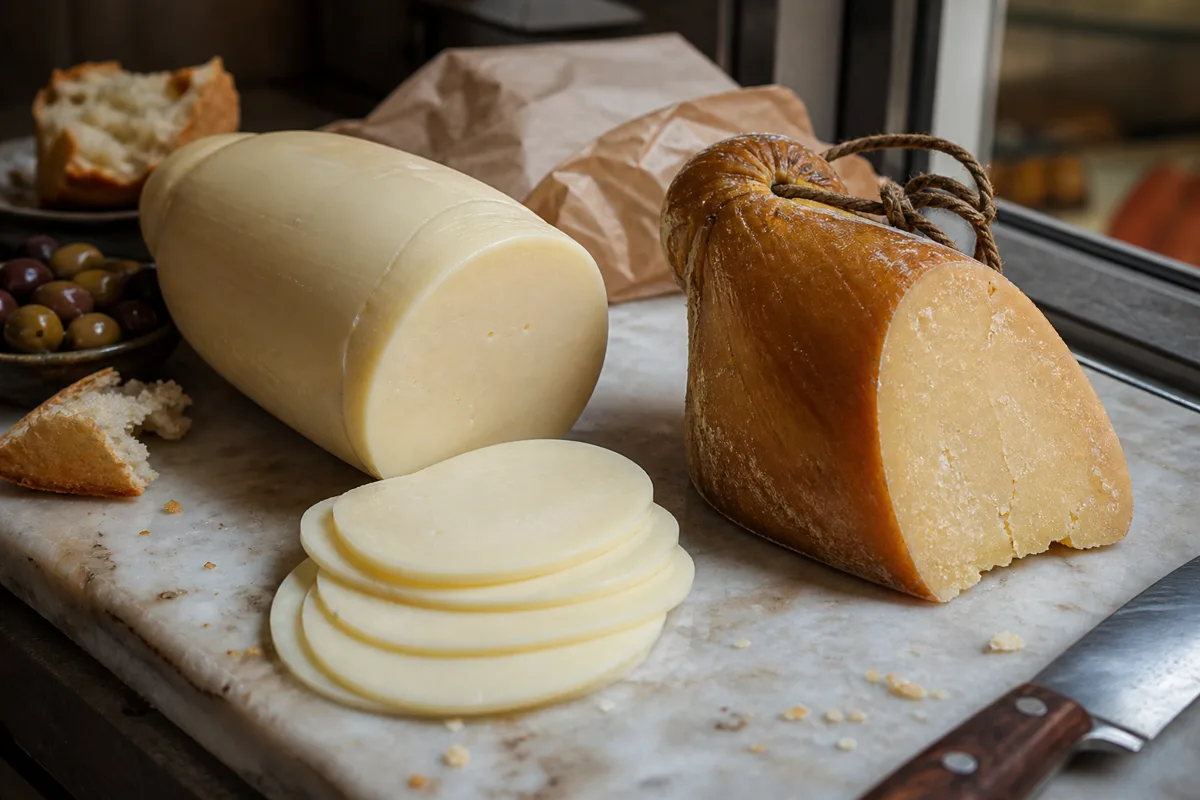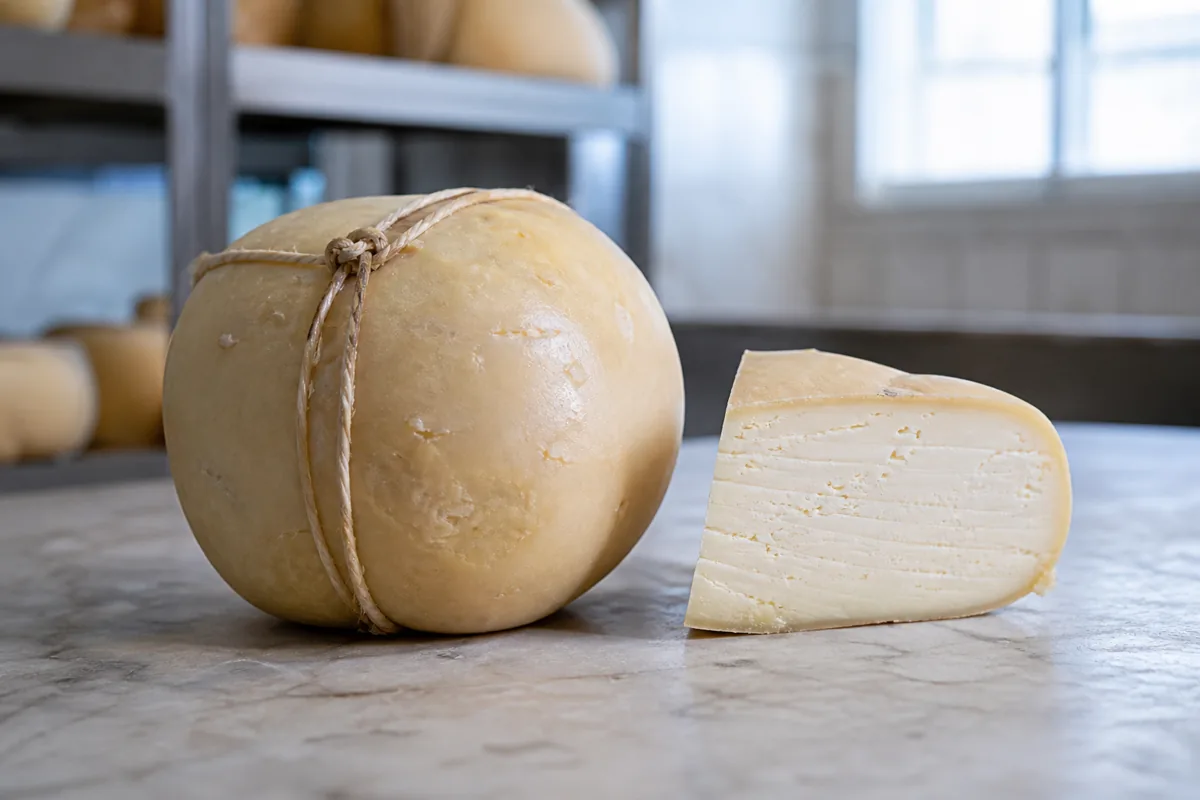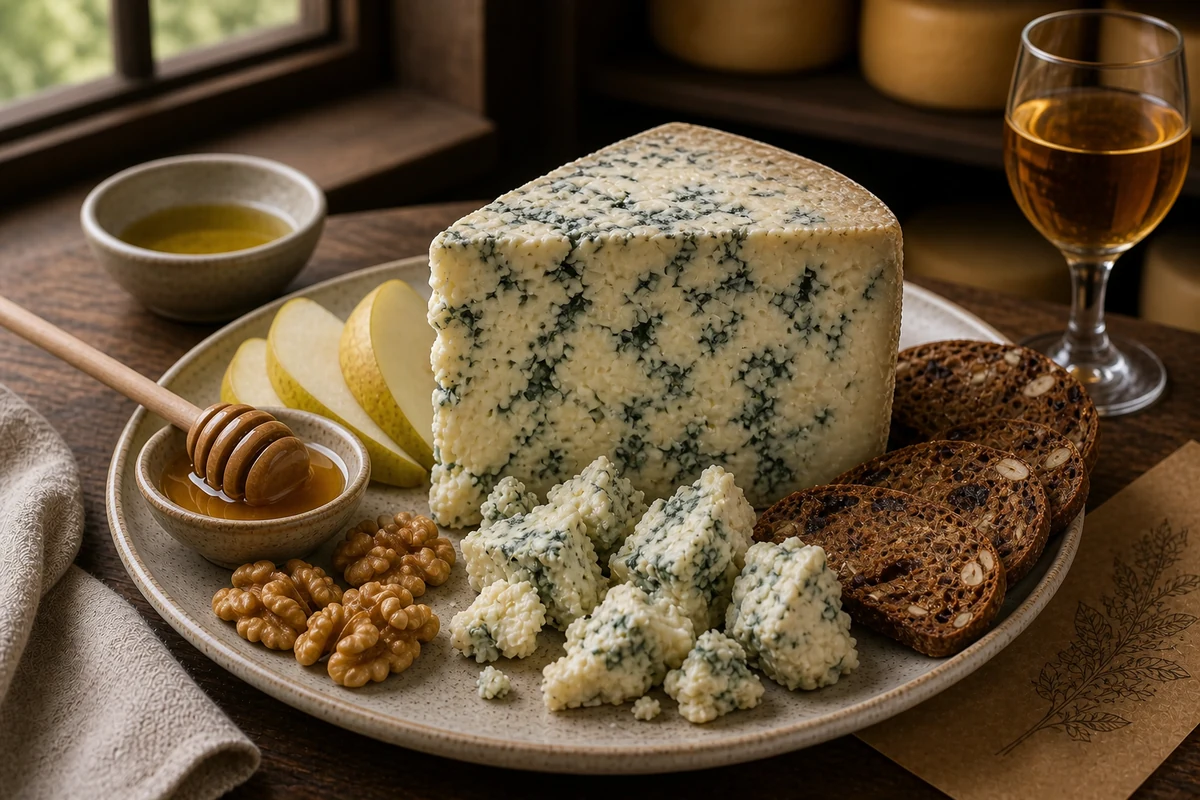
Caciobufala is a semi-hard Italian cheese that Casa Madaio makes in Campania from pasteurized water buffalo milk, calf rennet and salt.
Like buffalo mozzarella, it is a stretched-curd cheese made from buffalo milk, but where buffalo mozzarella is a fresh cheese, Caciobufala matures for four to twelve months by Casa Madaio's own listing, or 8 to 12 months in natural caves by Cheese.com's account.
In This Article
What Is Caciobufala?
Caciobufala is Casa Madaio's buffalo milk cheese, which the house describes as an evolution of Mediterranean draw-curd cheeses, and Cheese.com compares its production with caciocavallo and provolone.
Provolone and caciocavallo silano are among the stretched-curd cheeses that are aged, and sometimes brined or smoked, after shaping.
Cheese.com lists Casa Madaio as the only producer, so check for the maker's name on the label.
Culture magazine's cheese library describes Casa Madaio as both a producer and an affineur, a business that matures cheese, which also buys cheeses from small mountain dairies nearby and ages them at Castelcivita. Cheese.com credits the house with making Caciobufala itself.
How Is Caciobufala Made from Buffalo Milk?
Casa Madaio makes it only from buffalo milk from Piana del Sele dairies, and the curd is drained, a step Cheese.com ties to the natural maturing process.
As a draw-curd cheese, Caciobufala belongs to the stretched-curd family, and the family's general method runs in this order.
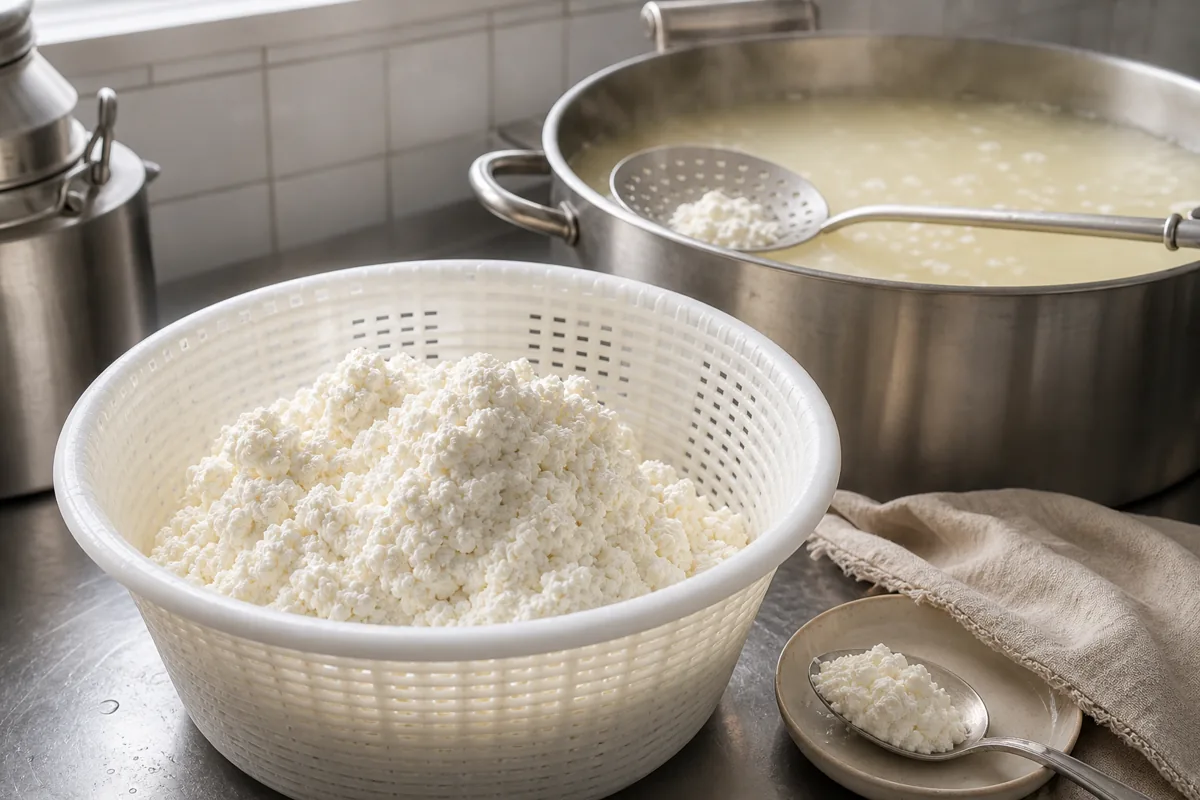
Before the stretching, the milk is warmed and curdled, left to rest for an hour, and the curd is cut small so the whey can drain, then left for a number of hours. It then steeps in very hot whey or water until it floats, a bath of 95°C for mozzarella di bufala campana, and most of the liquid is removed before the kneading.
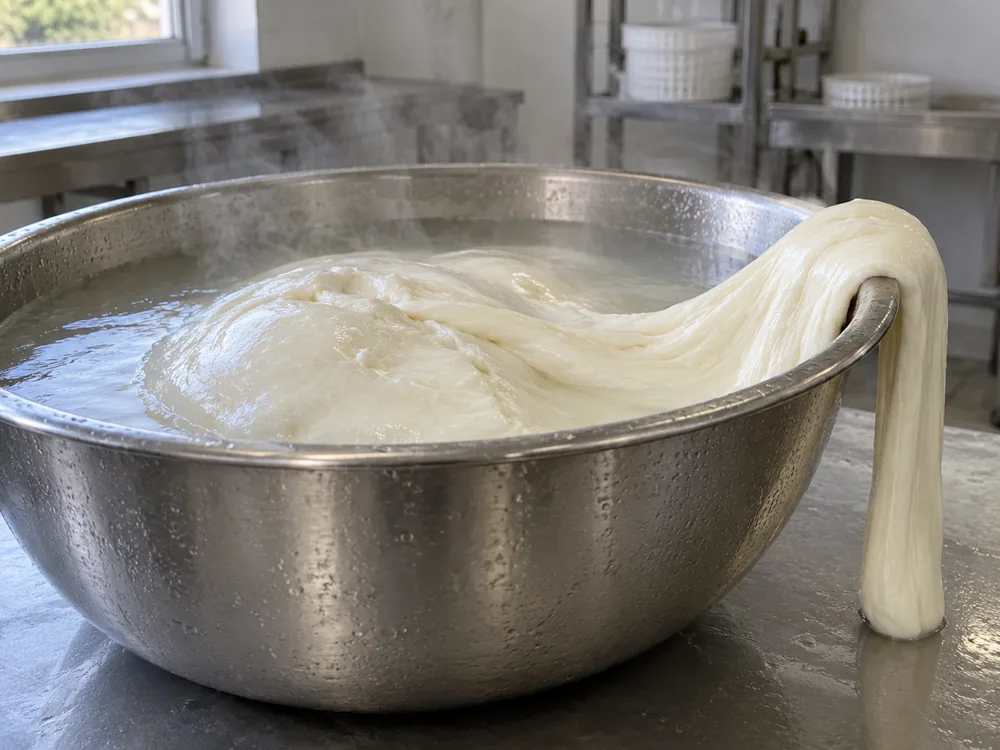
The kneading is the stretch itself: fresh curd is kneaded in hot water until it turns soft, elastic and stringy, then divided into individual cheeses. Scamorza is among the cheeses that are aged after that step.
The curd stretches because pasta filata production removes calcium ions, which leaves the casein micelles, the protein clusters in the curd, less dense and more extensible. The hot-water kneading then gives the curd its fibrous structure.
Where Does Caciobufala Age, and for How Long?
Casa Madaio's cheesemaking is in Eboli and its ageing caves are at Castelcivita, inside the National Park of Cilento and Vallo di Diano. The Madaio family has used those caves to age cheese for four generations.
In 2012 the Luciano Pignataro wine blog described Eboli as the site for fresh cheese production and the ageing of medium-aged cheeses, and Castelcivita as the site for long ageing and the finest pieces, in living-rock caves with what it called ideal temperature and humidity.
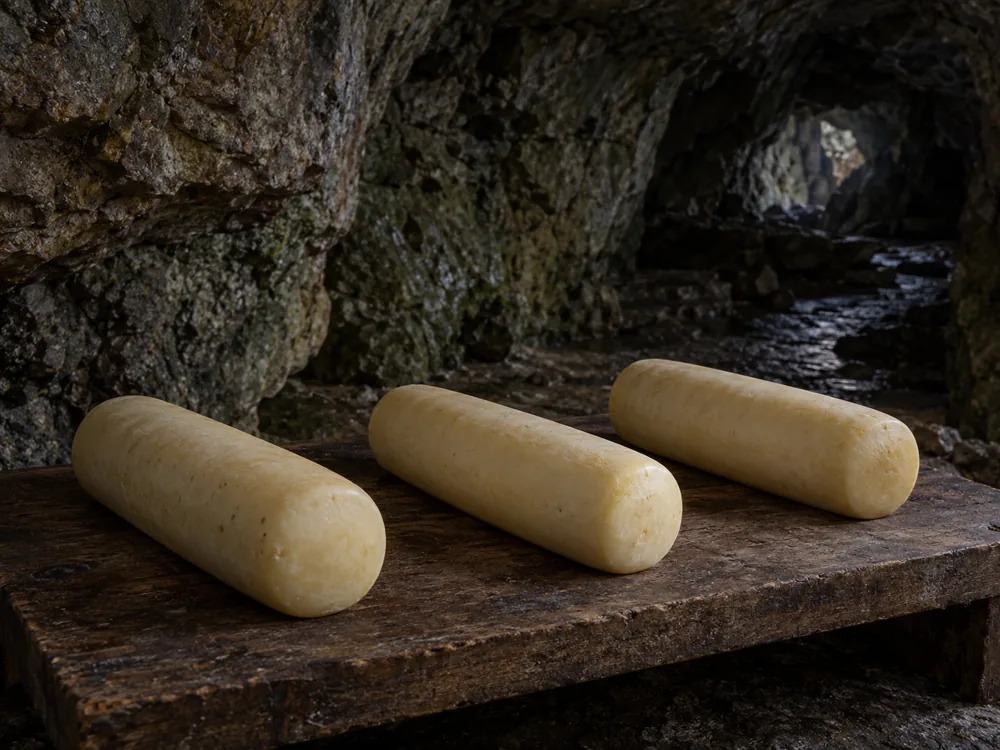
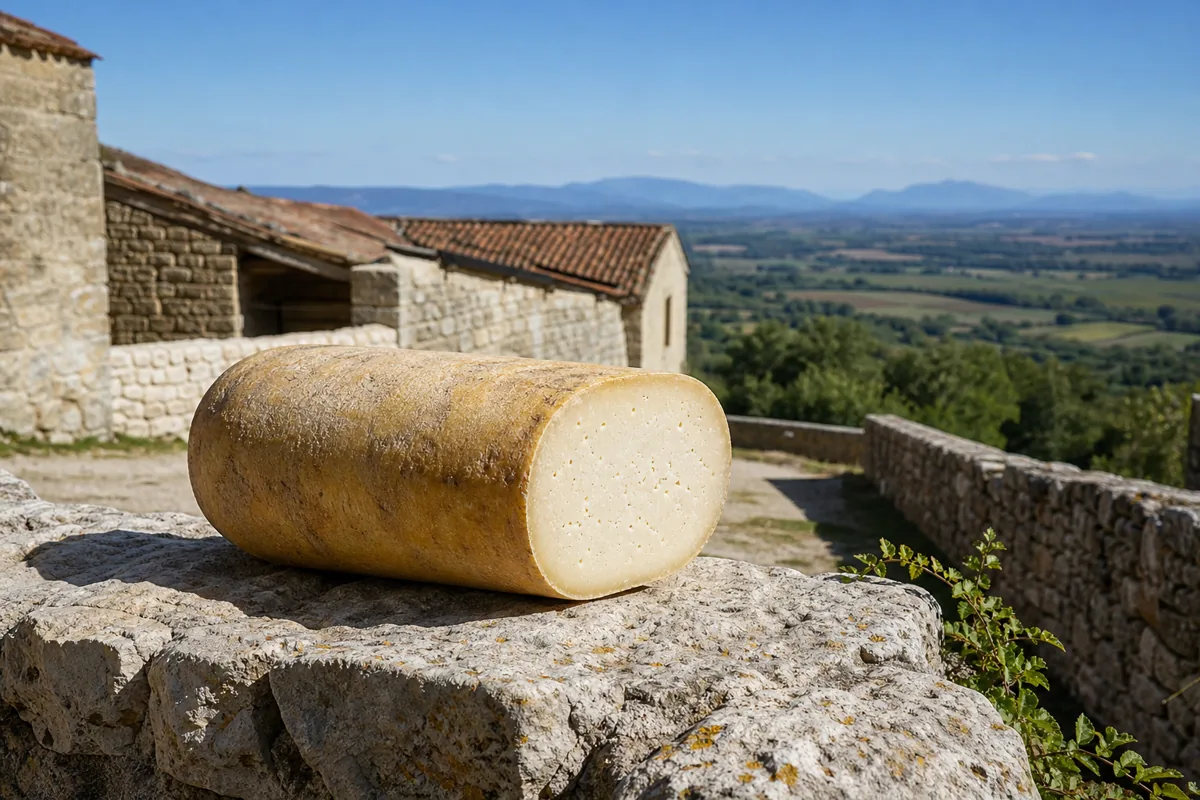
Casa Madaio describes a round and long shape that forms during ripening, and Cheese.com says the cheese takes a drum-like shape while it matures in natural caves and calls it a yellow ivory cheese with slight marking.
| Question | Value or range | Given by |
|---|---|---|
| How long it matures | Four to twelve months; 8 to 12 months in natural caves | Casa Madaio's English shop listing (four to twelve); Cheese.com (8 to 12, in natural caves) |
| Shape after ripening | Round and long; drum-like | Casa Madaio's English shop listing (round and long); Cheese.com (drum-like) |
| Colour | Yellow ivory with slight marking | Cheese.com |
Both ranges end at twelve months, but Casa Madaio's own listing starts at four and Cheese.com's at eight. Ask the seller how old your piece is.
How Is It Different from Buffalo Mozzarella?
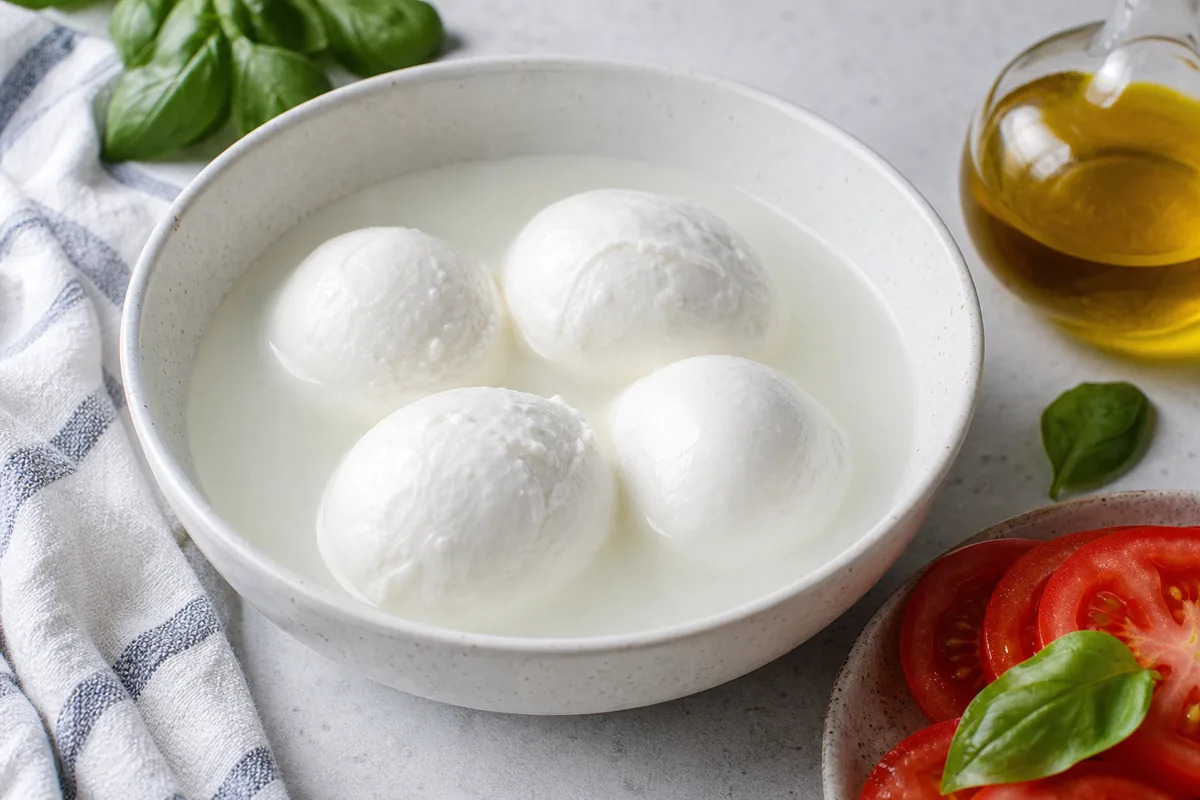
Buffalo mozzarella is a fresh cheese and Caciobufala an aged one: Mozzarella di Bufala Campana, the DOP buffalo mozzarella, is a fresh stretched-curd cheese produced in Campania and other regions, with a porcelain-white, smooth and compact surface.
The DOP Consortium says the surface is resistant when cut, then soft and enveloping when eaten, and the flavor is decisive yet delicate with sweet and savory notes.
Wikipedia's stretched-curd entry says mozzarella is essentially finished once the stretched curd is shaped and is ideally eaten within a few days, and the DOP Consortium says it reaches peak freshness within 60 hours of production.
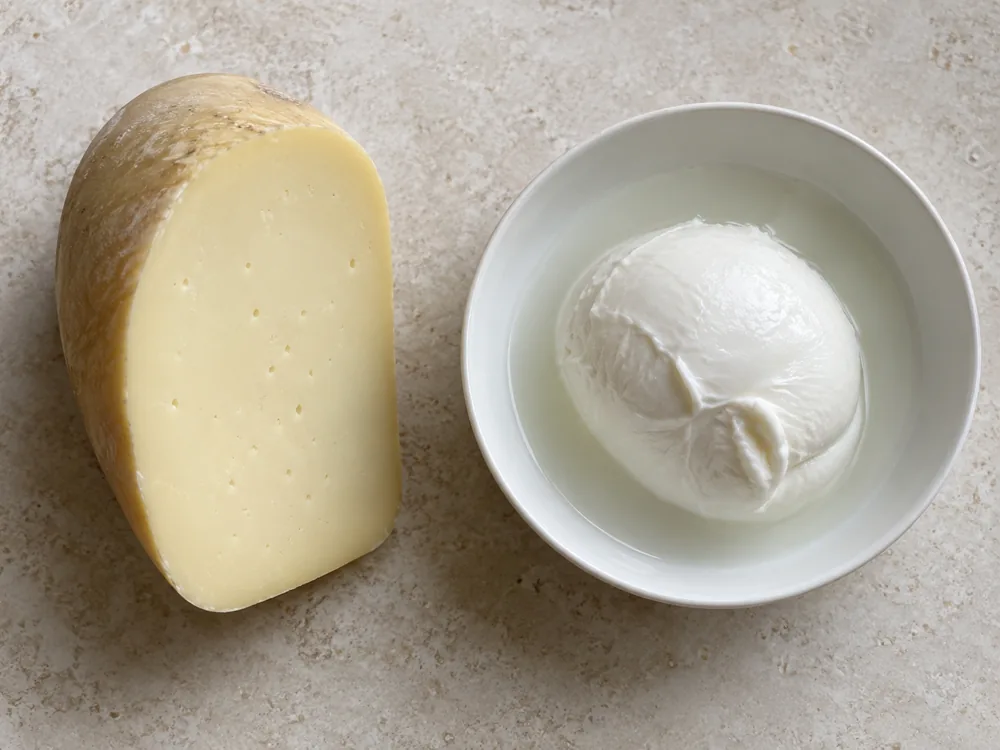
| Feature | Caciobufala | Buffalo mozzarella |
|---|---|---|
| Age | Four to twelve months, or 8 to 12 months in natural caves | Fresh |
| Type | Semi-hard | Soft, brined stretched-curd cheese |
| Texture | Compact | Smooth and compact; soft and enveloping when eaten |
| Colour | Ivory | White |
| Flavour | Sweet, with an aromatic, buttery aroma | Decisive yet delicate; sweet with savory notes |
Casa Madaio makes both cheeses, and its Mozzarella di Bufala is a hand-pulled fresh cheese with no rind. The name Mozzarella di Bufala Campana carries an EU protected designation of origin.
The formats differ as well: Casa Madaio's mozzarella comes in no fewer than eight sizes, from the 30 g ciliegine to the 1 kg zizza di Battipaglia, while the shop lists Caciobufala as a 440 g piece.
How Does Caciobufala Compare to Caciocavallo and Provolone?
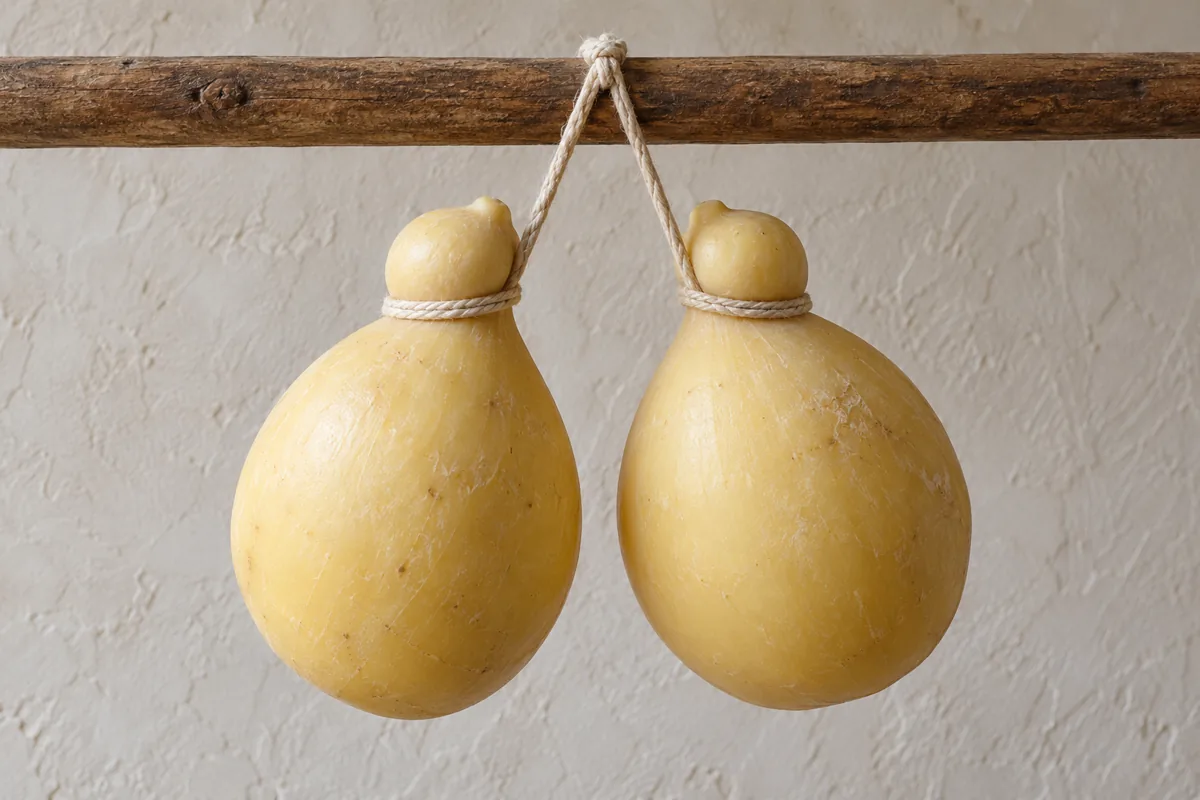
Caciobufala differs from caciocavallo in milk and shape: caciocavallo is made from sheep's or cow's milk and shaped like a tear-drop with a hard edible rind, while Caciobufala is made from buffalo milk and is described as drum-like, or as round and long. Wikipedia describes caciocavallo as similar in taste to aged southern Italian provolone.
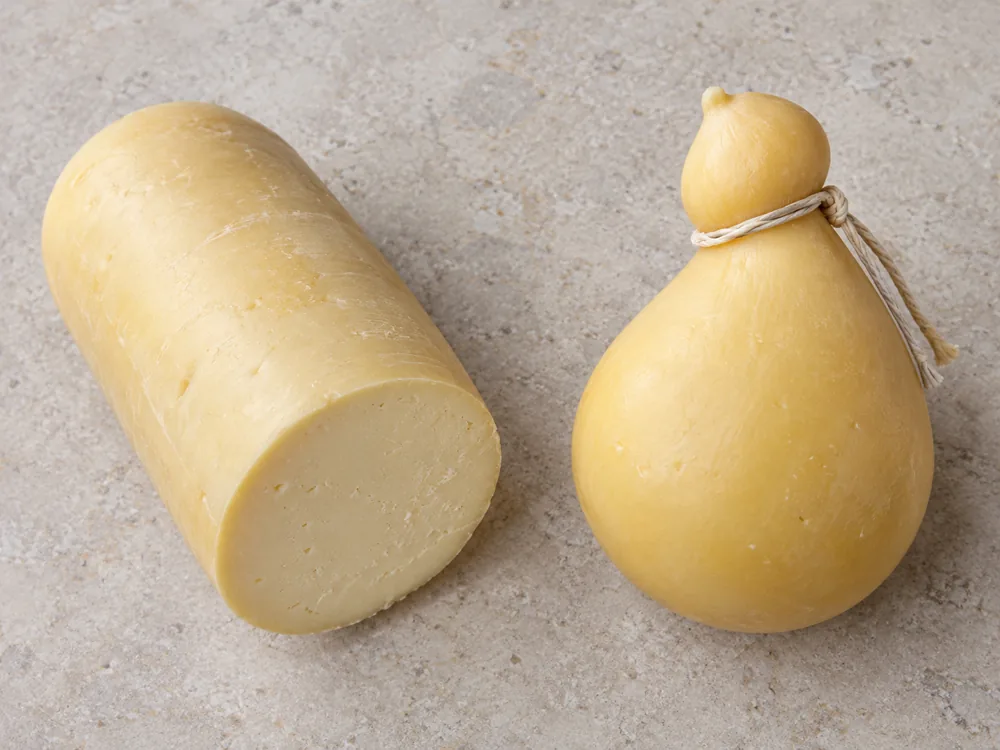
Provolone is an aged semihard cheese in pear, sausage or cone shapes 10 to 15 cm long. Wikipedia describes its taste as running from sharp provolone piccante, aged at least four months and made with goat lipase, an enzyme, to mild provolone dolce, made with calf lipase.
| Feature | Caciobufala | Caciocavallo | Provolone |
|---|---|---|---|
| Milk | Pasteurized water buffalo | Sheep's or cow's | Not stated |
| Shape | Drum-like, round and long | Tear-drop | Pear, sausage or cone, 10 to 15 cm long |
| Taste | Sweet, aromatic, buttery | Similar to aged provolone | Sharp (piccante) to very mild (dolce) |
| Ageing | 8 to 12 months, or four to twelve | Aged; length not stated | At least four months for piccante |
What Does Caciobufala Taste Like?
Both descriptions call it sweet: Cheese.com lists the flavour as sweet and the aroma as aromatic, buttery and pleasant, and in 2012 the Luciano Pignataro blog called the cheese dolce e odoroso, Italian for sweet and fragrant.
Cheese.com's description adds a very pleasant taste of buffalo milk, with creamy and buttery notes that dissolve quickly on the palate.
Which Other Casa Madaio Cheeses Use Buffalo Milk?
Among the cheeses the Luciano Pignataro blog named on its 2012 tour of Casa Madaio, sbronzo, ficaccio and barilotto used buffalo milk, and bufalino and accasciato used cow's milk alongside the buffalo milk.
| Cheese | Milk | What the blog said |
|---|---|---|
| Caciobufala | Buffalo | Sweet and fragrant |
| Sbronzo | Buffalo | Aged in Aglianico grape pomace |
| Ficaccio | Buffalo | Wrapped in fig leaves |
| Barilotto | Buffalo | A salted ricotta |
| Bufalino | Cow's and buffalo | Kept in a linen bag |
| Accasciato | Cow's and buffalo | Soft and aromatic |
If you want a Casa Madaio cheese made with buffalo milk alone, read the milk line on the label.
The same 2012 list named caciocavallo podolico vetus, a Casa Madaio caciocavallo made with cow's milk.
Is Caciobufala Safe During Pregnancy?
Cheese.com lists Caciobufala as made from pasteurized buffalo milk and calls it semi-hard and compact. Check the milk line on the label of the piece you buy.
The NHS lists pasteurised semi-hard cheeses, such as edam, as safe to eat, along with pasteurised or unpasteurised hard cheeses, such as cheddar, gruyère and parmesan, and pasteurised soft cheeses, such as mozzarella.
For safer cheeses during pregnancy, the CDC lists hard cheese, when made with pasteurized milk, such as Asiago, Cheddar, Parmesan, or Swiss/Gruyere/Emmental; cottage cheese, cream cheese, string cheese, feta and mozzarella, when made with pasteurized milk; and pasteurized soft cheeses heated to an internal temperature of 165°F or until steaming hot.
The CDC also says pregnant women are 10 times more likely to get a Listeria infection. Served cold, Caciobufala is described as a pasteurized semi-hard and compact cheese, a type the CDC list does not cover, so ask a midwife or doctor.
How Should You Buy Caciobufala?
- Maker Casa Madaio, the only producer Cheese.com lists
- Milk Pasteurized water buffalo milk, per Cheese.com
- Age 8 to 12 months per Cheese.com, four to twelve months per the Casa Madaio shop
- Rennet Calf rennet, so not vegetarian
- Size Casa Madaio's English shop lists a 440 g piece
Look for it in a specialty shop or order it from the house: Casa Madaio sells mainly to small specialty shops and restaurants in Italy and abroad, and its own online shop lists Caciobufala.
That English listing showed 18 euros for the 440 g piece in October 2026, which works out to about 41 euros per kilogram.
SOURCES & REFERENCES
Caciobufala is a semi-hard cheese that Casa Madaio makes in Campania from water buffalo milk. It matures for four to twelve months by the house's own listing, or 8 to 12 months in natural caves by Cheese.com's account.
No. Cheese.com lists buffalo mozzarella as a fresh, soft, brined cheese, while Caciobufala is a semi-hard cheese matured in caves.
Casa Madaio's English shop listing gives four to twelve months, while Cheese.com says 8 to 12 months. Ask the seller how old the piece you buy is.
Cheese.com lists pasteurized water buffalo milk, so check the milk line on the label of your piece. Served cold, Caciobufala is described as a pasteurized semi-hard and compact cheese, a type the CDC list does not cover, so if you are pregnant, ask a midwife or doctor.
No. Cheese.com lists calf rennet and marks the cheese as not vegetarian.