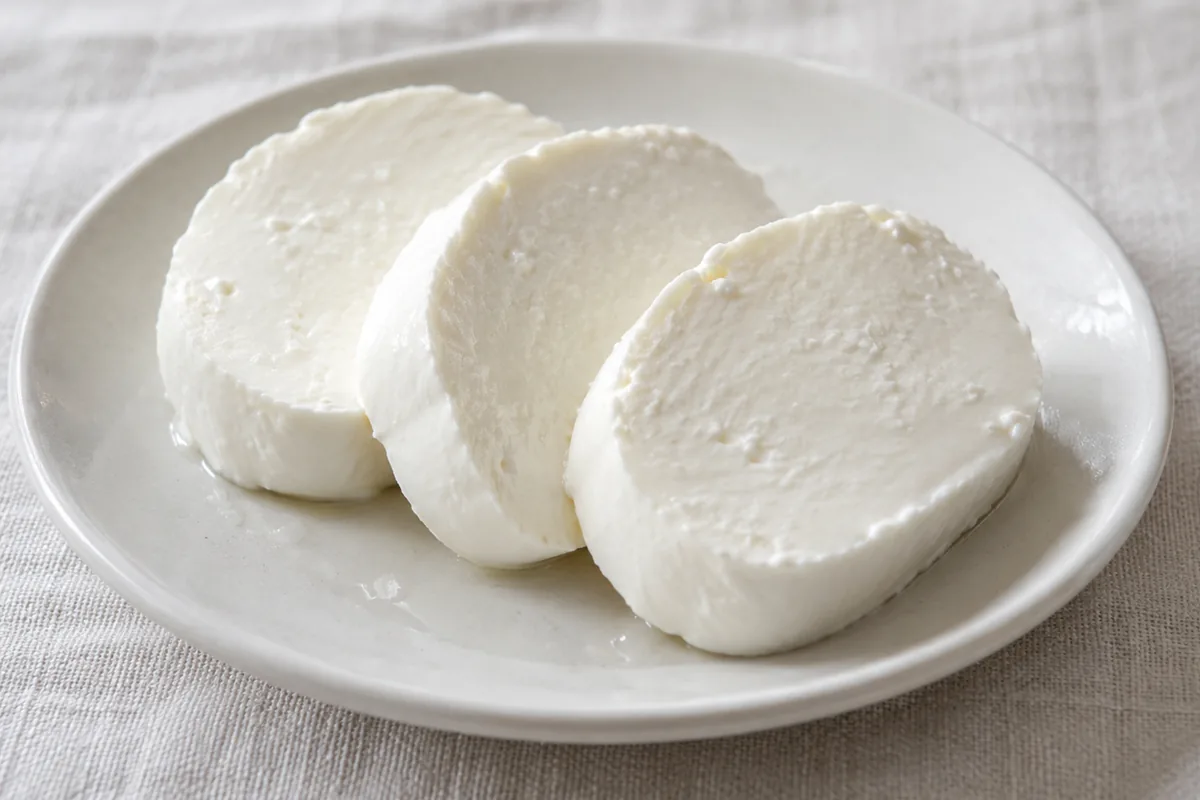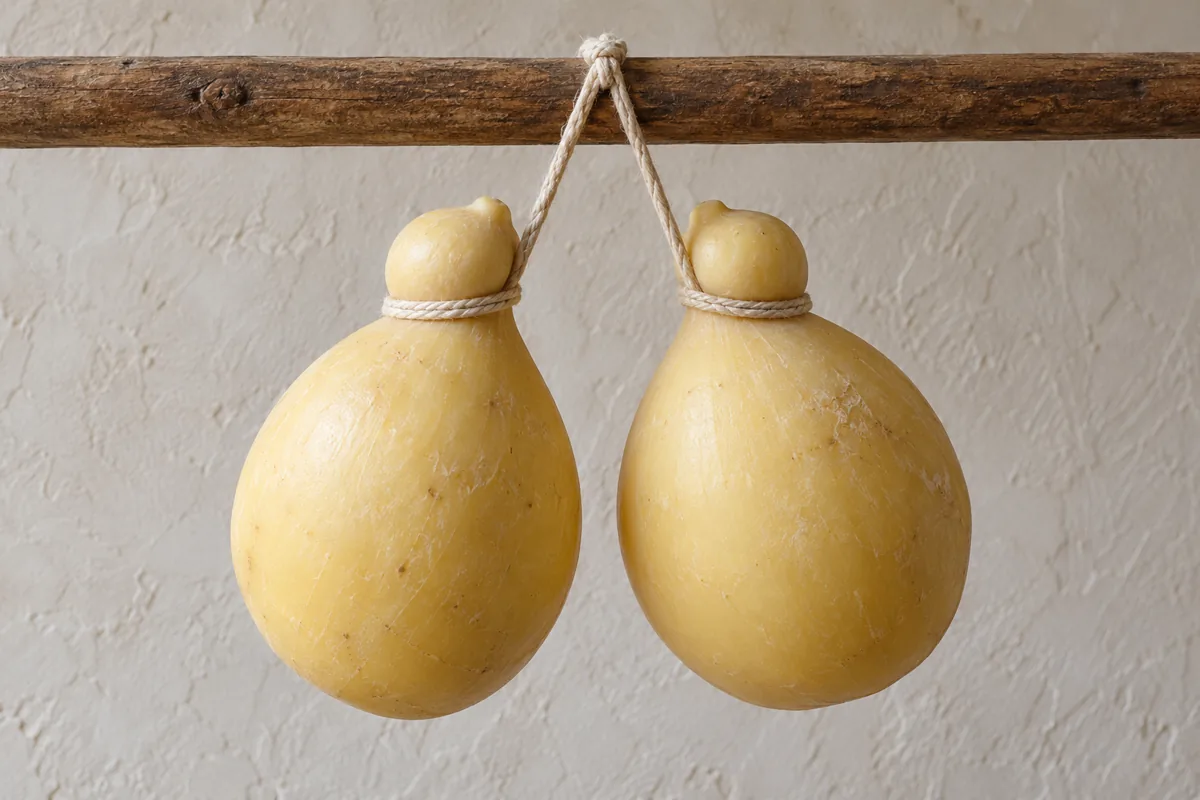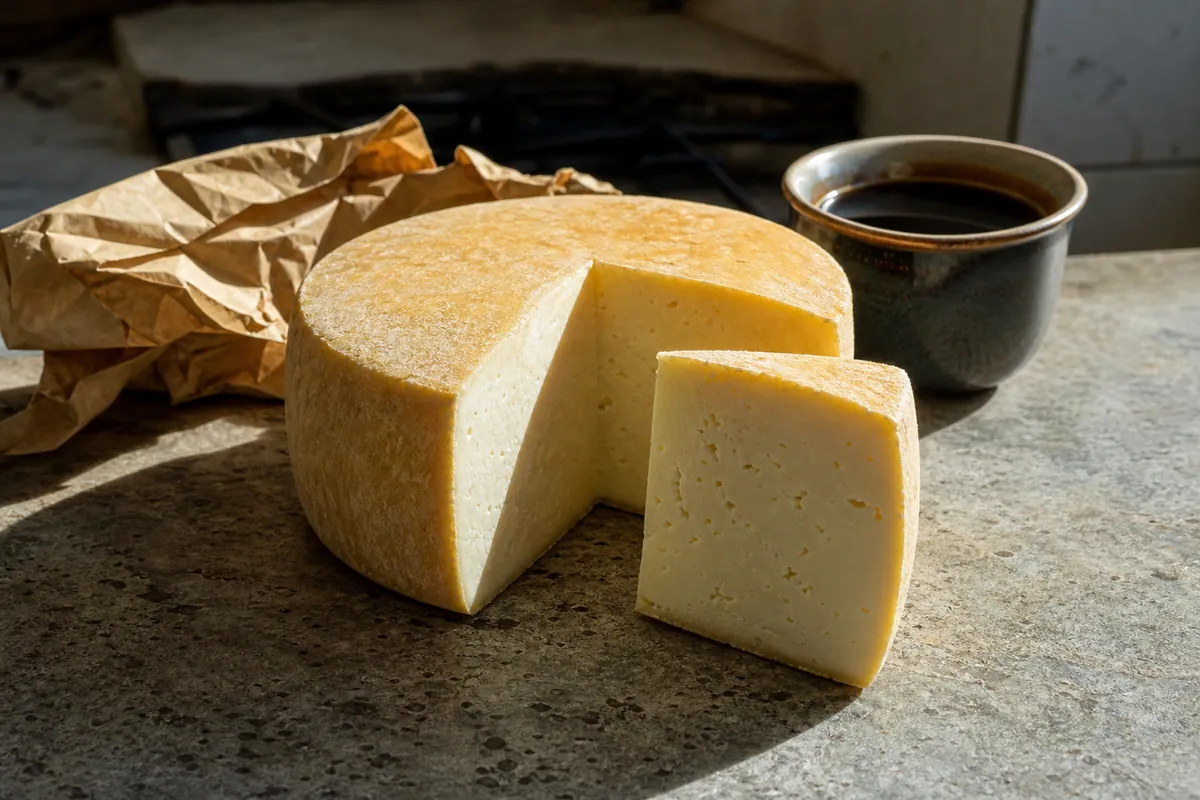
Canastra is a raw cow's milk cheese from the Serra da Canastra highlands of Minas Gerais, Brazil. Its signature ingredient is pingo, whey kept from the previous day's cheeses and added to the next day's milk.
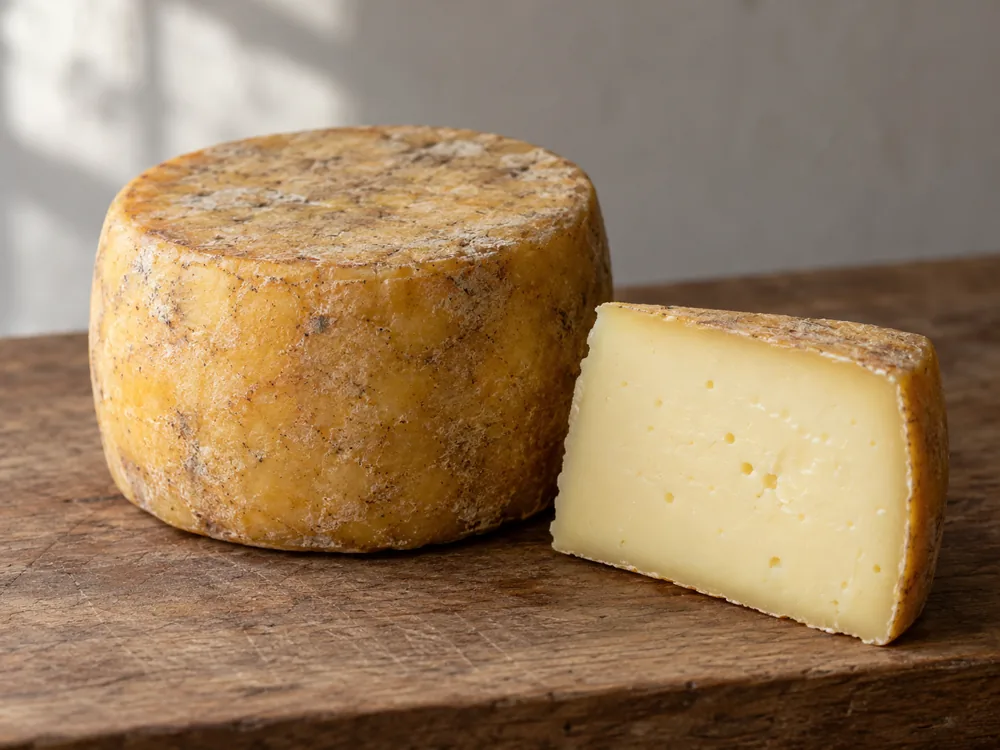
Age changes it a lot, from a soft white cheese of up to four days to a golden-rinded one aged past 22 days.
In This Article
What Is Canastra Cheese?
The INPI technical sheet for the Canastra geographical indication says the cheese is made from whole raw cow's milk produced and processed on the farm of origin, freshly milked and filtered. Pingo, industrial rennet and common salt are the three additions the sheet lists, and the cheese is matured for the minimum period the law requires.
INPI registered the name as an indication of provenance on 13 March 2012 for the producers' association APROCAN. The area covers eight municipalities in southwest Minas Gerais: São Roque de Minas, Vargem Bonita, Medeiros, Bambuí, Delfinópolis, Piumhi, Tapiraí and São João Batista do Glória.
Brazil's heritage institute IPHAN recognized the cheesemaking method as national intangible heritage in 2008, according to INPI. In 2024 UNESCO added the wider tradition of artisan Minas cheese to its Representative List, noting the use of raw milk and pingo.
The same INPI sheet allows three sizes, each with its own mould and weight.
| Size | Mould (diameter by height) | Weight |
|---|---|---|
| Canastra (standard) | 17 cm by 7 cm | 900 g to 1.3 kg |
| Canastra Merendeiro | 10 cm by 6 cm | 300 g to 400 g |
| Canastra Real | 28 cm to 35 cm by 10 cm to 18 cm | 5 kg to 7 kg |
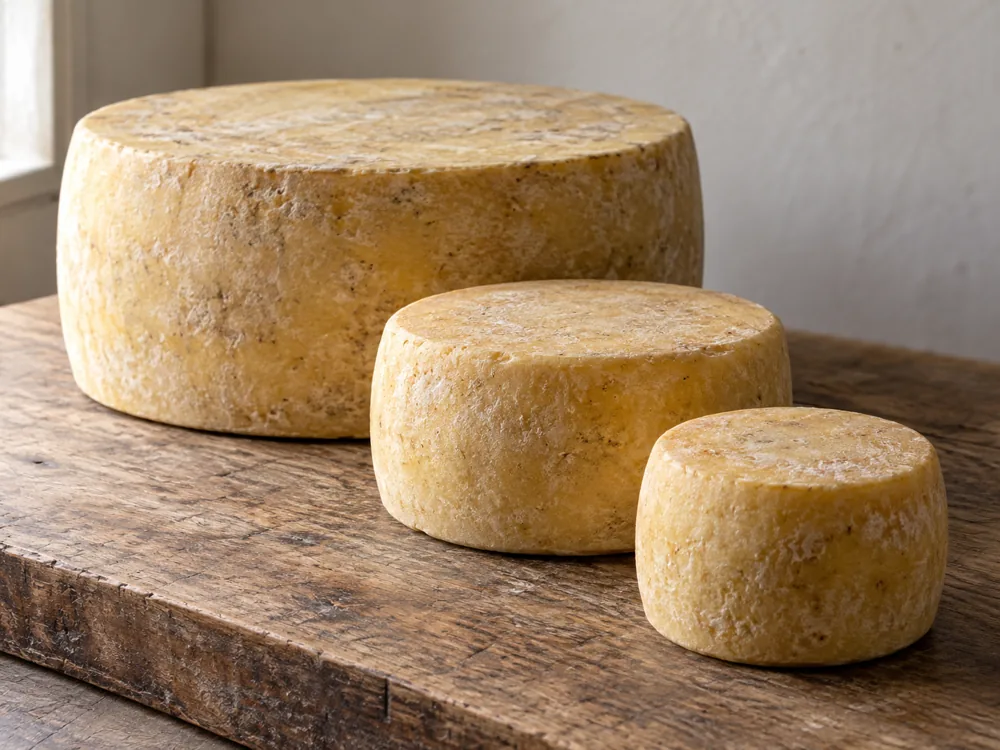
Slow Food's Ark of Taste gives other dimensions for the same formats: a standard wheel 15 cm to 17 cm across and 6 cm to 9 cm high at 1 kg to 1.3 kg, and a Merendeiro 10 cm across and 5 cm high.
The Real is where the pages differ most: INPI allows a mould 28 cm to 35 cm across and up to 18 cm tall. Slow Food, which also calls it Canastrão, describes a wheel 26 cm to 30 cm across and 7 cm to 8 cm tall.
Both pages give 5 kg to 7 kg for the Real and the Serra da Canastra site says 5 kg to 6 kg, so weight is the steadier figure.
Slow Food adds that the Real is made in São Roque de Minas, Medeiros and Vargem Bonita, and that local history ties it to special occasions such as visits from Church authorities, royalty or captains.
Cheese Scientist traces the name Merendeiro to the Portuguese merenda, snack, and presents the 300 g to 400 g wheel for packed lunches and quick bites.
How Is Canastra Made?
Pingo is whey from the previous day's make. A 2025 study in the journal Foods says it is collected after the second salting of the previous day's cheese and carries lactic acid bacteria and yeasts.
UNESCO's file calls pingo a natural ferment of region-specific bacteria. It says the ferment, the maturation period and the local climate together shape the cheese's flavor, color and aroma.
The Foods study names the bacteria as Lactobacillus, Enterococcus and Weissella and lists yeasts such as Candida, Pichia and Kluyveromyces, among others. The loop stays on one farm, because whey from today's cheeses goes into tomorrow's milk.
Put together, the sources describe this sequence:
- Milk: raw milk from a single morning milking is filtered straight into the vat (Slow Food, Serra da Canastra site), and a traditional wheel of about 1 kg 300 g takes roughly ten litres (Serra da Canastra site).
- Setting: rennet and pingo go in, and the curd sets for about 90 minutes before it is cut and stirred with a wooden or metal stirrer (Slow Food).
- Moulding: the whey drains off and the curd is divided into portions and pressed by hand, usually with a cloth, into bottomless moulds in the sizes above (Slow Food, INPI).
- Salting: coarse salt goes on the surface (Cheese Scientist, Slow Food), which the Foods study calls dry salting.
- Finishing: the makers sand the outside of each cheese in a step called grosar (Serra da Canastra site, Cheese Scientist).
- Second side: after 6 to 12 hours the cheese is turned and salted on its other side, and the pingo whey is collected at that point; the next day the salt is wiped off and the mould is turned again (Slow Food).
- Unmoulding: one or two days later the cheese leaves the mould for a wooden shelf in a well-ventilated room (Slow Food).
- Turning: each cheese is turned daily on a wooden board so both sides cure evenly (Serra da Canastra site).
The accounts differ on how long the cheese stays in its form: Slow Food has it leave one or two days after the second turning, a longer stay than the 24 hours the Serra da Canastra site gives for the draining stage. The INPI sheet gives mould sizes but no time.
The Serra da Canastra site says each producer makes pingo from the whey that drains from their own cheeses, and that this is why every cheese has its own flavor.
How Does Canastra Change With Age?
The Serra da Canastra tourism site, quoting the producers' association Aprocan, sorts Canastra into four stages.
| Stage | Age | Described as |
|---|---|---|
| Fresco | Up to 4 days | White and soft with a fresh-milk taste that melts in the mouth; easy to confuse with industrialized Minas cheese |
| Meia cura | About 10 days | Turning golden and firming from the outside in as the days pass |
| Curado | More than 22 days | Marked flavor, a golden, firm rind and a centre that stays soft |
| Extra-matured | More than 1 year | Dry, very intense, long and slightly sweet, sandy inside; made by some producers |
The Serra da Canastra site explains the traditional style by the road: to reach other villages by oxcart or mule without being squashed, wheels needed more than 30 days of cure, when they were firmer and yellower. Cheese Scientist gives the same account and says it is why the traditional wheel has a yellow natural rind and a semi-soft paste.
The same page says that today the cheese is eaten sooner, so few people taste it at its ripest.
Sources place the start of fully cured close together: Slow Food says the cheese is usually eaten after 21 days, and the Serra da Canastra site puts curado at more than 22 days. The old transport figure of 30 days sits above both.
Cheese Scientist treats Canastra Real as a cheese matured beyond 12 months. INPI and Slow Food define the Real by size, and the Serra da Canastra site lists the over-one-year cheese as an extra-matured stage that only some producers make, so size and age are two separate questions.
The Serra da Canastra site says the cheese dries as the days pass, which sharpens its flavor, and that it firms from the outside in. The Foods study points the same way, listing water loss that lowers water activity, rising salt concentration and a change in pH, with yeast and bacteria counts in all its test cheeses falling by day 45.
In that study's pingo-only cheeses, lactose fell from about 45 g/kg on the first day to about 4 g/kg by day 15. Lactic acid, which the authors call the main acid behind a cheese's low pH, rose from about 29 g/kg to about 41 g/kg by day 30.
Most of the sugar change in that test came in the first two weeks, which is the span the 14-day sale minimum now covers, though one factory's test cannot stand for every farm.
At day 45 the pingo-only cheese had the lowest hardness of the three test batches, and the authors tie that to its higher lactic acid, which they say leaves a more fragile protein network.
What Does Canastra Taste Like?
The sources describe two different cheeses, one lightly acidic and not spicy and the other strong and peppery, and the INPI sheet and Slow Food do not say which age they mean.
| Source | Flavor and aroma | Age it ties the flavor to |
|---|---|---|
| INPI technical sheet | Slightly acidic, not spicy and pleasant | Not stated |
| Slow Food Ark of Taste | Lightly acidic, not spicy | Not stated; the cheese is usually eaten after 21 days |
| Serra da Canastra site | Strong, somewhat peppery, dense and full-bodied | Stronger and more peppery the longer it matures |
| Cheese Scientist, on the Real | Intense and subtly sweet, ending in bitterness and gentle spiciness | Matured beyond 12 months, as it describes the Real |
The Serra da Canastra site ties flavor to age most directly, saying that the longer the cheese matures, the stronger, more marked and more peppery it becomes.
Age explains part of the gap on that account, and the next section covers the other cause the sources give, differences from farm to farm.
INPI describes the smell of the rind as mild, with touches that recall milk fat.
Why Does Canastra Taste Different From Farm to Farm?
Each producer sets the salt level, using coarse salt alone, and the Serra da Canastra site says the quantity is what makes one maker's cheese differ from another's. Cheese Scientist makes the same point, and the INPI sheet lists common salt without an amount.
A Federal University of Lavras thesis followed freshly made cheeses from farms in Bambuí and Tapiraí and found that each farm's cheeses carried a different mix of microorganisms, which directly influenced how they matured.
The thesis ties lactic acid bacteria to organic acids, and ties aerobic bacteria, yeasts and, where present, filamentous fungi to aroma compounds and to protein breakdown. In the Foods study, five aroma compounds appeared only in the batches made with an added yeast mix, which fits that finding.
Slow Food describes mixed-breed cattle kept mainly on pasture, with sugar cane, silage, soy and corn bran added in droughts. It says traditional producers see native grass species as a way to keep the best cheeses tasting better, while cultivated grasses such as Brachiaria have partly replaced the native pasture.
INPI credits the region's physical and environmental conditions with favoring the typical bacteria behind the flavor, and Slow Food notes that the rind can crack depending on whether the climate is dry or humid.
A buyer comparing producers is therefore comparing salt, starter and pasture as well as age.
How Do You Buy Real Canastra?
The casein label is the Aprocan marker, and the Serra da Canastra site says its producers put a label made of an edible substance on the cheese. The label carries an eight-digit code: three digits for the producer and five for product data such as the make date and place.
According to the same site, the label shows the cheese was made inside the delimited area, and producers must follow the rules of use and be registered with the inspection bodies to receive it.
The site also tells buyers to look for Aprocan members and to know where the cheese comes from, because raw-milk artisan cheese demands many sanitary controls in production.
The site counts about 800 artisanal producers and its 2024 news item counts 65 Aprocan members, so the label marks a minority of makers, although the two counts come from different pages. It also says Aprocan certifies authorized sales points, which it calls guardian partners.
Until a Minas Gerais portaria changed the rule, Canastra could only be sold at 22 days of age, the same site says. The new minimum is 14 days, which it calls the choice for everyday eating, while it recommends cheese older than 22 days for a stronger palate.
Both the Serra da Canastra page and Cheese Scientist say the curado of over 22 days is the only stage that can carry the IP seal, and neither says whether a 14-day cheese now carries it.
A casein label with its eight-digit code, a seller tied to Aprocan, and an age that fits the use, which the producers' association puts at 14 days for everyday eating and over 22 days for a stronger palate.
Can Canastra Be Sold Outside Minas Gerais?
Cheese Scientist, writing in 2024, says Brazil's national food-safety rules do not separate family dairies from industrial ones, so many Canastra producers lack the Federal Inspection Service seal needed to sell beyond Minas Gerais.
Slow Food describes the same squeeze from the producers' side: small farms struggle with hygiene rules designed for large-scale industry and so tend to sell outside the official channels.
The Serra da Canastra news item describes the legal route that opened after the state portaria: a cheese dairy can register with the state agriculture institute IMA and then obtain the Selo Arte, which lets it sell legally across Brazil.
The item counts 40 Minas Gerais dairies with the Selo Arte, more than 260 under state inspection and three depots serving about 30 dairies that sell outside the state, figures for all of Minas Gerais rather than for Canastra alone.
None of the pages cited here says where Canastra is sold outside Brazil, so a buyer abroad has no sourced list of stockists.
How Should You Store Canastra?
The Serra da Canastra site says to keep the cheese in a cool, ventilated place, resting on a plate or wooden board and turned once a day so it ripens evenly.
It warns that Canastra spoils if it stays closed in a plastic bag for more than a day, and that it dries out in the refrigerator.
Slow Food says producers age the cheese on wooden shelves in a cheese room built near or attached to their home, and the Foods study ripened its test cheeses at room temperature, 18 to 22 °C, turning them every day.
That advice comes from a regional tourism site, not a food-safety agency, and it gives no temperature or time limit.
It also describes a whole cheese ripening at home. For a cut wedge, ask the seller how long it keeps and fall back on general cheese storage rules for anything the seller does not cover.
What Goes With Canastra?
The Serra da Canastra site matches partners to age. Fresh Canastra goes with doce de leite at breakfast or a snack, meia cura with freshly brewed coffee or goiabada cascão, a guava paste, and aged cheese with special wines and beers.
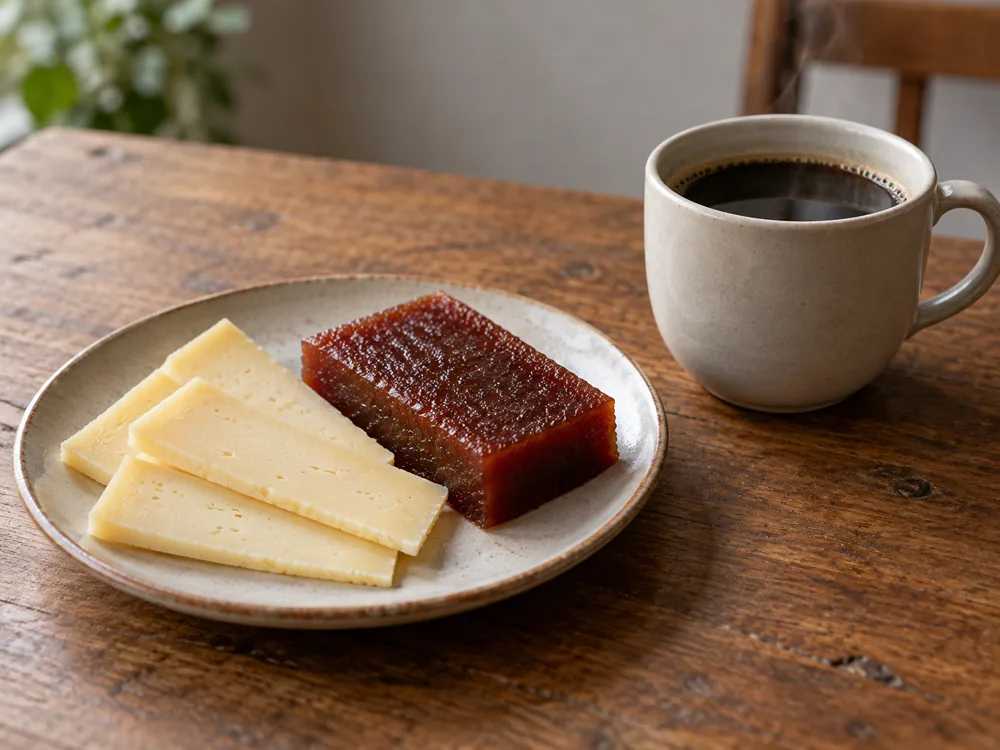
The same page adds cold beer, cachaça and red wine for the cured and half-cured cheese, and UNESCO's file says artisanal Minas cheese is commonly eaten with sweets and drinks at gatherings and on special occasions.
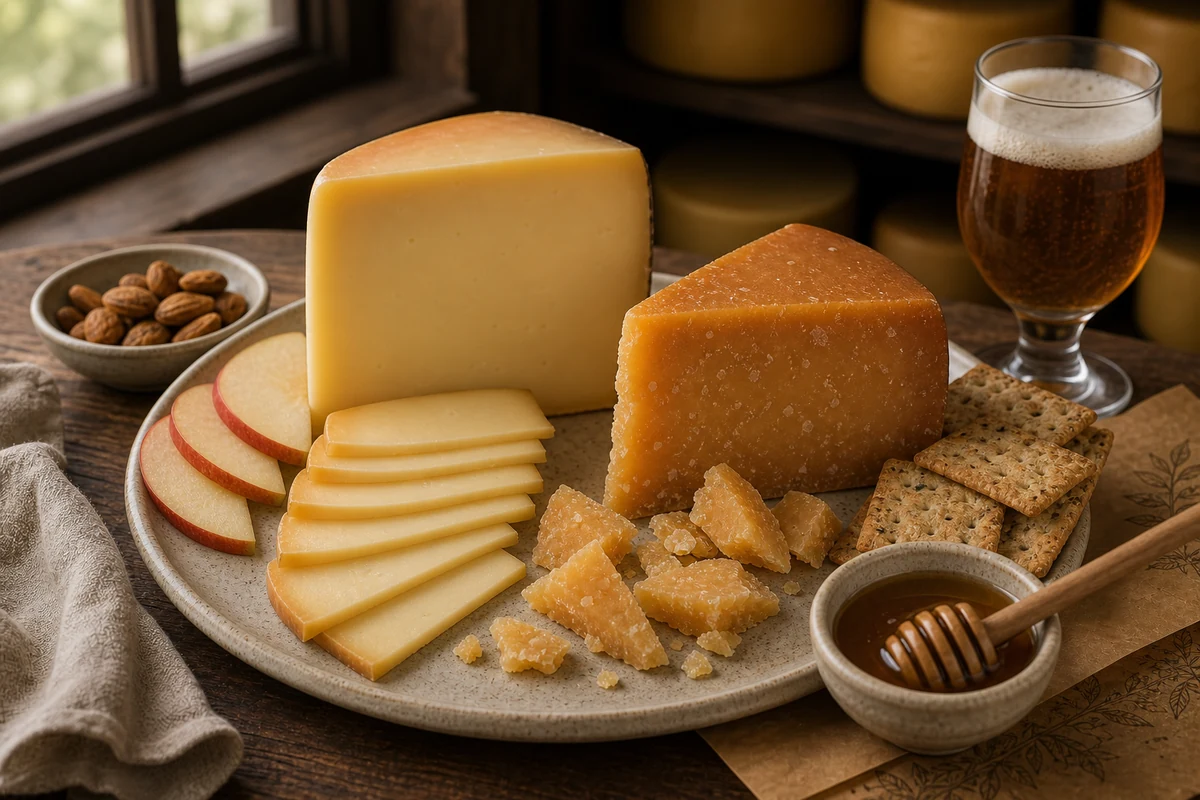
Cheese Scientist pairs it with fruit such as apples, pears, grapes and guava, saying their sweetness balances the cheese's savory notes, and with artisanal crackers or crusty bread for crunch.
For savory partners it lists charcuterie such as prosciutto, salami and thinly sliced smoked ham, plus olives and toasted almonds, walnuts or pecans.
On the wine side it names a light red wine such as Pinot Noir, a fruity white such as Sauvignon Blanc or Chardonnay, and sparkling Prosecco or Champagne, which it says suit the cheese's creamy texture.
It lists a crisp lager, pale ale or Belgian-style witbier for beer, herbal tea or black coffee without alcohol, and cachaça for a Brazilian choice, and says to let the cheese come to room temperature before serving.
Set on a wooden or slate surface with a label to tell it from other cheeses, those partners make a ready-made cheese board around one wheel.
| Pairing | Why It Works |
|---|---|
| Wine | Red wine (Serra da Canastra site); Pinot Noir, Sauvignon Blanc, Chardonnay, Prosecco or Champagne (Cheese Scientist) |
| Beer | Cold beer (Serra da Canastra site); crisp lager, pale ale or witbier (Cheese Scientist) |
| Fruit | Guava paste or goiabada cascão; apples, pears or grapes |
| Extras | Brewed coffee, cachaça, doce de leite, artisanal crackers, nuts, olives, charcuterie |
Is There a Substitute for Canastra?
No page cited here names a substitute for Canastra, and none calls another cheese a replacement.
The INPI specification requires raw milk, pingo and production on the farm of origin, so a pasteurized or factory-made cheese is a different product.
The Foods study adds that Canastra needs a longer maturation than other Brazilian artisanal cheeses, with the legal minimum then at 22 days at room temperature.
Is Canastra Safe During Pregnancy?
Canastra is made from raw milk, and the sources we read do not class it as a hard cheese. INPI describes the paste as semi-hard tending to soft.
The CDC lists soft cheese made from raw milk as riskier and says pregnant women are 10 times more likely to get a Listeria infection. The NHS says pasteurised or unpasteurised hard cheeses are safe, but its list does not name Canastra.
A Brazilian university study of artisanal Canastra cheese added Staphylococcus aureus and Listeria monocytogenes and followed them through 30 days of ripening. Lactic acid bacteria and filamentous fungi reduced the pathogens, but the authors say 30 days is not enough to eliminate them, which is longer than the 14-day and 22-day sale minimums above.
Neither agency lists raw-milk Canastra as safe, so ask a midwife or doctor about raw-milk cheese during pregnancy before eating it.
SOURCES & REFERENCES
Canastra FAQ
Pingo is whey from the previous day's cheeses, used as a natural starter for the next make, according to Slow Food and the Foods study.
No. The INPI specification requires whole raw cow's milk produced and processed on the farm of origin.
The Serra da Canastra site says the minimum sale age is 14 days, down from 22, and that fresh cheese of up to 4 days and extra-matured cheese of over a year also exist.
INPI lists three sizes: the standard at 900 g to 1.3 kg, the Merendeiro at 300 g to 400 g and the Real at 5 kg to 7 kg.
INPI delimits eight municipalities in southwest Minas Gerais, from São Roque de Minas to São João Batista do Glória.