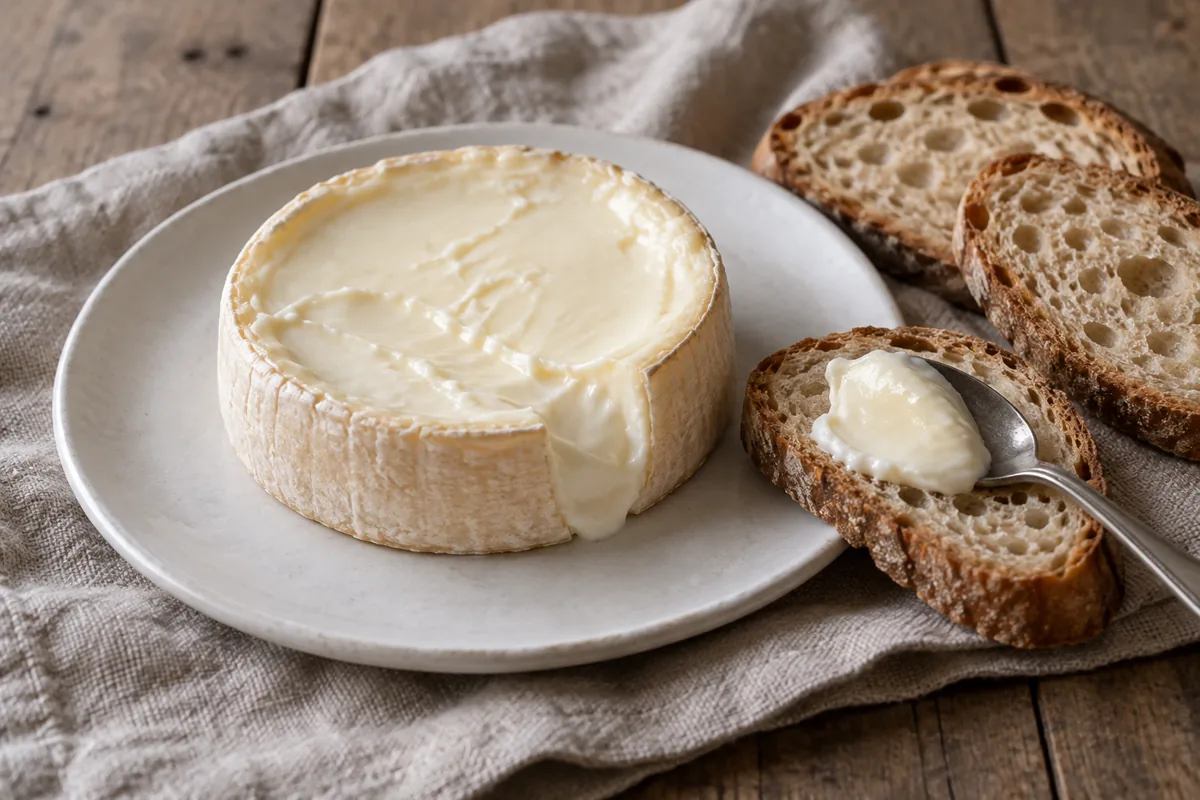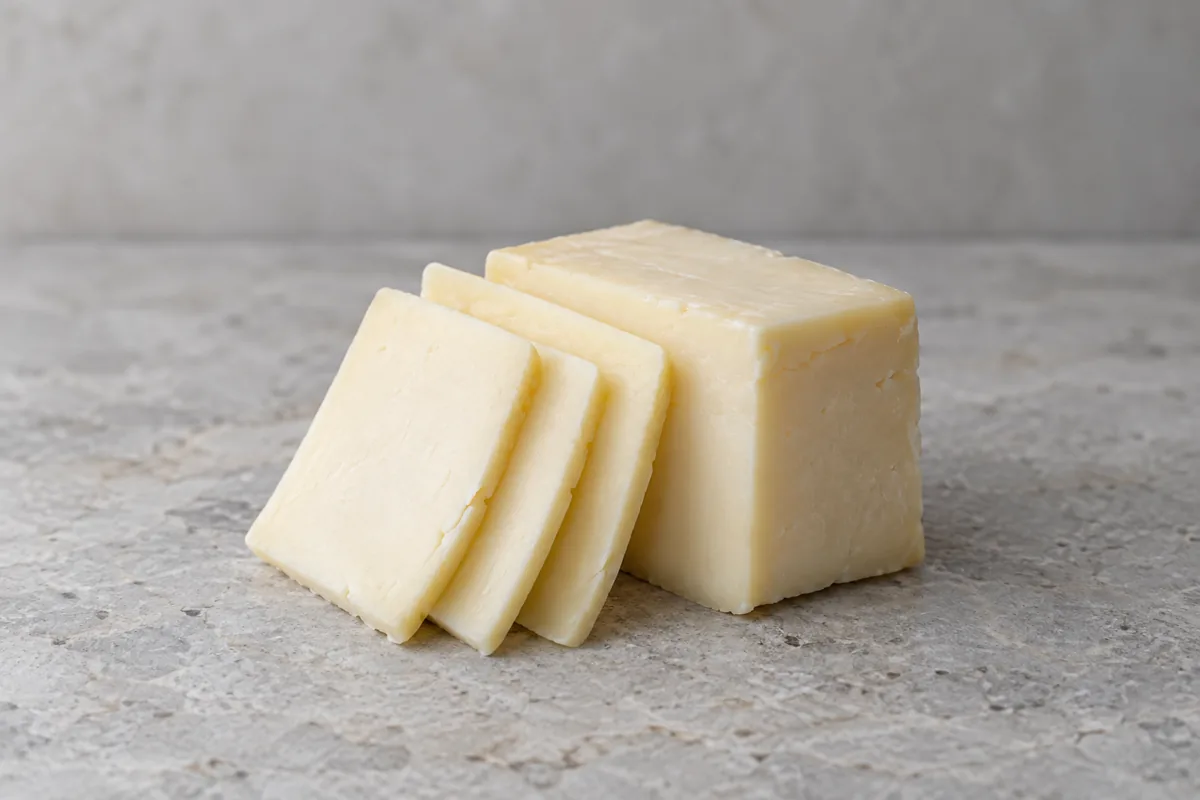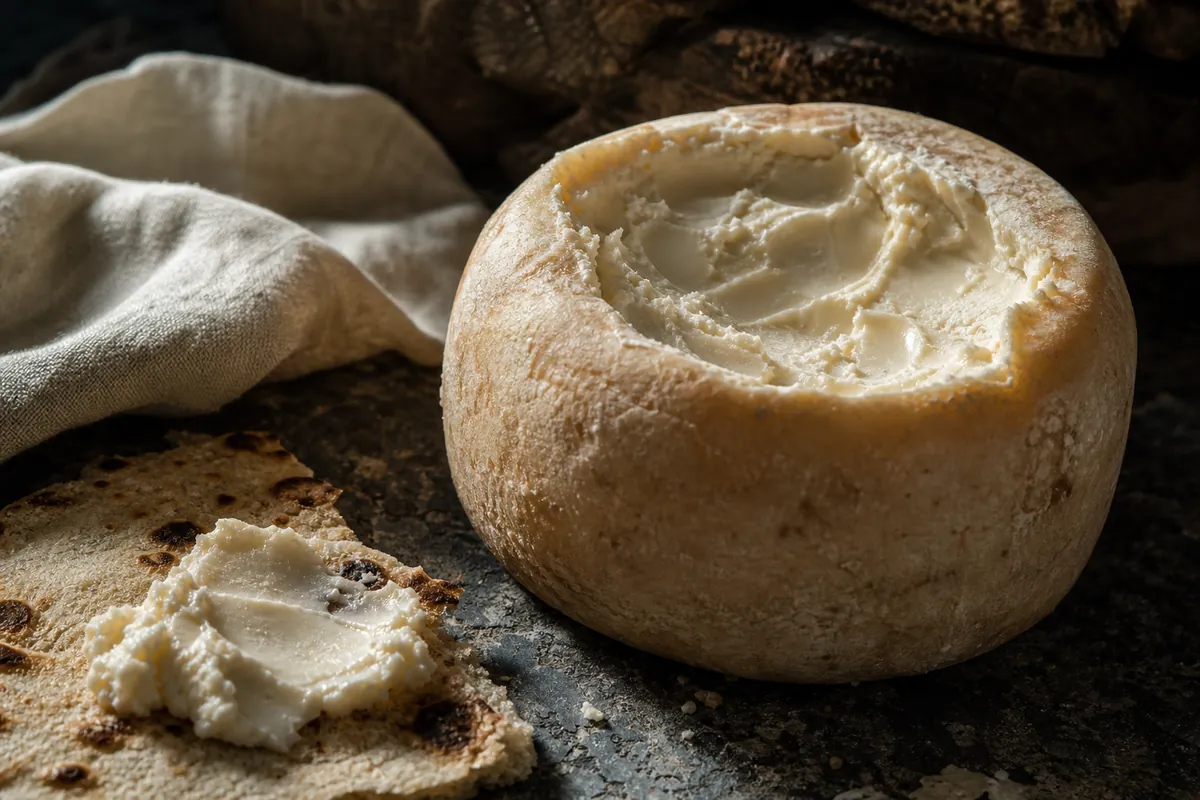
Casu marzu is a Sardinian sheep's milk cheese that cheese-fly larvae soften from the inside, and selling it has been prohibited in Italy since 1962. English Wikipedia describes the ban as part of laws against selling infested food.
Italy's national traditional-products database still lists it and Sardinia's tourism site presents it among the island's cheeses, so the same cheese is promoted locally and barred from shops.
In This Article
What Is Casu Marzu and How Is It Made?
The starting point is a whole pecorino with part of the rind removed, according to English Wikipedia, so the cheese fly Piophila casei can lay eggs in the exposed paste. A 2015 study in the Italian Journal of Food Safety describes the casu marzu it sampled as made in Sardinia from whole ewe's milk.
Italian Wikipedia lists the other steps that favour the fly: a shorter salting time, small holes filled with oil to soften the rind and attract the insect, fewer turns of the wheel, and open rooms where the fly can reach it.
English Wikipedia titles the cheese casu martzu and lists casu modde, casu cundídu and casu fràzigu as other names. Italian Wikipedia leads with casu frazigu, calls the spelling casu marzu erroneous, and adds regional names such as casu mùchidu and casu bèiu.
Pecorino Sardo is a separate cheese with its own PDO, granted in 1996. Some sources name Pecorino Sardo as the base for casu marzu and others say only pecorino, and casu marzu itself carries no PDO.
When Is Casu Marzu Made and How Long Does It Take?
The 2015 study says casu marzu is prepared in summer, when higher temperatures favour the fly's life cycle, with the pecorino left uncovered in the warmer rooms of the plant so flies can reach it. Italian Wikipedia gives a longer season, spring and summer and sometimes into late autumn.
English Wikipedia adds two local beliefs about quality. Pecorino from milk collected toward the end of June is most desirable because of how the sheep's reproductive cycle affects lactation, and a warm sirocco wind is thought to soften the cheese and encourage more maggot activity.
The nine casu marzu samples in the 2015 study had ripened for 60 to 90 days, English Wikipedia puts the whole fermentation at about three months, and Italian Wikipedia gives three to six months.
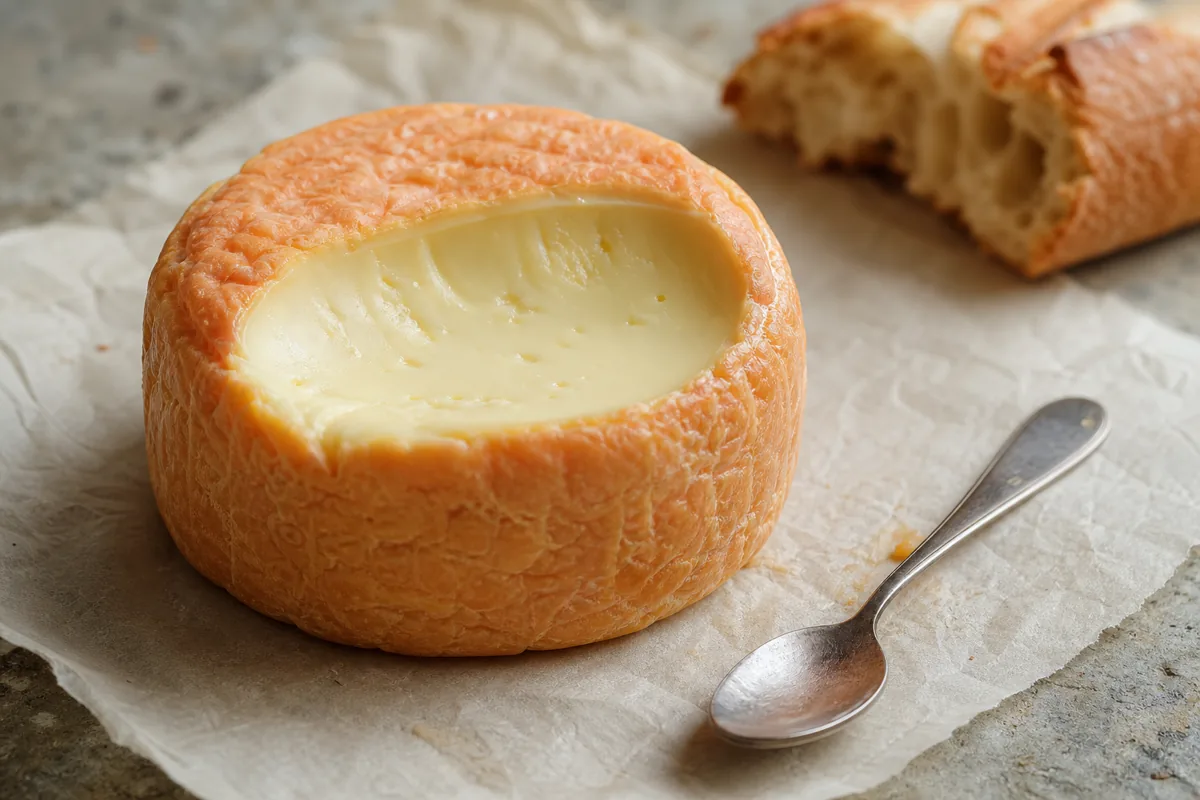
Italian Wikipedia says the wheel is opened by cutting off the top (su tappu) once it is mature and the larvae have clearly dwindled, which shows a soft, homogeneous, yellowish cream.
English Wikipedia says a typical wheel still holds thousands of maggots when it is ready, and Food Republic says live maggots usually remain at the bottom when it is served.
English Wikipedia adds that modern preservation techniques have stretched the shelf life to several years, where the cheese was once unobtainable outside late summer and early autumn.
What Do the Larvae Change?
English Wikipedia says the acid from the larvae's digestive system breaks down the cheese's fats and makes the texture very soft.
The 2015 study used total free amino acids as its index of how far the proteins had broken down, and the casu marzu samples had the highest levels. The authors attribute that most probably to the larvae's strong proteolytic activity and the warm storage.
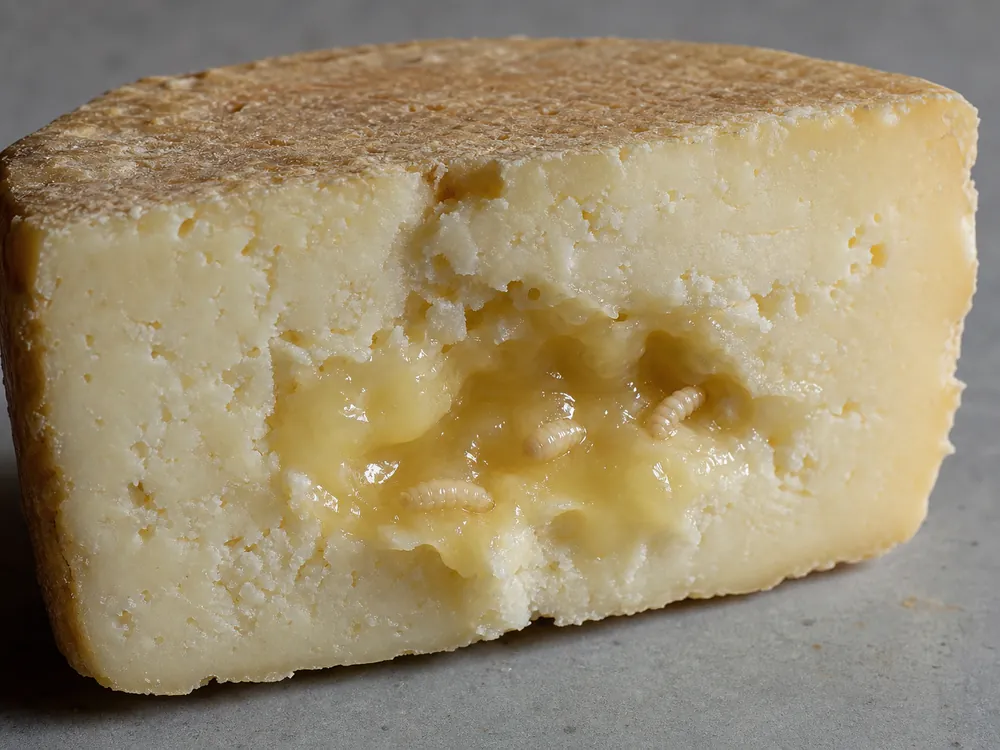
A University of Sassari team (Mazzette and colleagues, 2010) exposed three batches of two cheese types to Piophila casei under controlled conditions and sampled them at 0, 10, 30, 60 and 90 days. Cheeses with a holed paste were colonised more easily and showed more proteolysis and lipolysis than firm-paste cheeses, and colonisation differed between batches.
Italian Wikipedia describes four stages in the fly's life on the wheel: eggs laid on the cheese, larvae that feed on it, pupae, and adults that emerge and must find another cheese before they die.
The Cheese fly article says late-stage larvae leap by hooking their mouths into their own rear segments and releasing, a movement believed to explain the name "cheese skippers". They also use it when dispersing to the dark, dry places where they pupate, a stage that lasts around 12 days.
Italian Wikipedia says Sardinian breeders and the university's agricultural entomology institute began work in 2005 on breeding the fly in controlled conditions, so production could meet hygiene rules.
| Point | One source | Another source |
|---|---|---|
| Larval jump distance | Up to 15 cm (English Wikipedia, Casu martzu) | 10 to 12 cm (English Wikipedia, Cheese fly) |
| Larva length when fully grown | 9 to 10 mm long and 1 mm wide (English Wikipedia, Cheese fly) | — |
How Does It Taste and How Is It Served?
The taste is intense, with Mediterranean, pastoral and spicy notes and an aftertaste that English Wikipedia says lasts for hours. Cheese.com calls it creamy and pungent, with ammonia-like undertones in the aroma.
Food Republic describes flavours from earthy and tangy to spicy and lingering, and says casu marzu is generally reserved for village festivals and family celebrations.
Cheese.com says the texture runs from smooth and spreadable to semi-liquid, and that the larvae add a flavour reminiscent of Gorgonzola or other blue cheese. A liquid called làgrima ("teardrop") may seep out, according to English Wikipedia.
Casu marzu is served cut into thin strips and spread on moistened pane carasau, the Sardinian flatbread, with a strong red wine such as Cannonau, according to English Wikipedia. Because the larvae can launch themselves up to 15 cm when disturbed, diners hold a hand over the bread.
| Pairing | Type | Why It Works |
|---|---|---|
| Pane carasau | Food | English Wikipedia says the strips are spread on moistened Sardinian flatbread. |
| Cannonau | Wine | English Wikipedia names a strong red wine such as Cannonau as the usual match. |
Is Casu Marzu Legal?
Selling casu marzu is prohibited in Italy. English Wikipedia dates the ban to 1962, and Italian Wikipedia cites Article 5 of Law 283/1962 and EU regulations 852, 853, 854 and 882 of 2004.
Italian Wikipedia says the ban rests on the potential health risks to consumers from the presence of Piophila casei. English Wikipedia says offenders face heavy fines, though the laws are sometimes not enforced.
The same fly is a pest elsewhere in the industry: the Cheese fly article says its larvae burrow and are hard to detect until they are large enough to disperse. Italian Wikipedia adds that dairies fear them because they attack every type of cheese, so whole batches can be lost and the rooms have to be disinfested.
The official Sardinia tourism site still lists casu marzu among the island's cheeses. Italian Wikipedia says it is entered in the Ministry of Agriculture's national database of traditional food products, which certifies at least 25 years of production, and it states the sale ban separately.
Italian Wikipedia reports that Sardinia has asked the EU for PDO status, and English Wikipedia says attempts have been made to get around the ban by declaring it a traditional food. English Wikipedia's cheese infobox lists its certification as none.
English Wikipedia cites a 2019 estimate of 100 tonnes a year of illegal production, worth 2 to 3 million euros, and says the black-market price can reach double that of an ordinary pecorino. It also lists casu marzu among the cheeses that are not legal in the United States.
That leaves a buyer with no labelled, inspected product, because the only wheels on offer, per these estimates, come from illegal production.
What Has Been Measured About Safety?
Manca and colleagues (Italian Journal of Food Safety, 2015) compared three Sardinian ewe's milk cheeses and measured nine casu marzu samples. The highest values they found for each amine are below, in milligrams per 100 grams.
| Compound | Highest value (mg per 100 g) |
|---|---|
| Tyramine | 231.4 |
| Histamine | 126 |
| Putrescine | 165.8 |
| Cadaverine | 470.7 |
| Total biogenic amines | 1,035.7 |
Two samples reached totals of 1,035.7 and 923.0 mg per 100 g, far above the 75 to 90 mg threshold the paper cites. The authors conclude that casu marzu can be considered unsafe, especially for people treated with monoamine oxidase inhibitor drugs (MAOIs).
The 2015 Sardinian study names people treated with MAOI drugs as the group most at risk from casu marzu.
English Wikipedia adds that larvae may survive stomach acid and reach the intestine, a condition called pseudomyiasis that can cause nausea, vomiting and gastrointestinal upset. It also notes documented pseudomyiasis cases with P. casei.
Guinness World Records named it the world's most dangerous cheese in 2009, according to English Wikipedia. Food Republic quotes the producer Sergio Bituleri saying no one has ever got sick from eating it, which is a producer's claim rather than a measured rate.
English Wikipedia says Sardinian aficionados consider the cheese unsafe to eat once the larvae have died, though it also notes that some eaters seal the cheese in a paper bag to starve the larvae of oxygen.
English Wikipedia describes casu marzu's paste as very soft, and the CDC lists soft cheese made from unpasteurized milk as riskier during pregnancy. It says pregnant women are 10 times more likely to get a Listeria infection.
How Do Casu Marzu Amine Levels Compare With Other Sheep's Milk Cheeses?
The same 2015 study measured two other Sardinian ewe's milk cheeses, Pecorino Sardo PDO from cheese factories and farmhouse pecorino, and the total biogenic amines differ sharply across all three.
| Cheese | Samples | Ripening in the study | How it was made and ripened | Total amines (mg per 100 g) |
|---|---|---|---|---|
| Pecorino Sardo PDO, cheese factory | 13 | 30 to 360 days | Thermised milk with a starter culture, rooms held at 6 to 12 °C and 80 to 95% humidity | 3.1 to 33.5 |
| Farmhouse pecorino | 12 | 60 to 360 days | Raw milk without a starter culture, rooms with no control over temperature or humidity | 9.4 to 287.8 |
| Farmhouse casu marzu | 9 | 60 to 90 days | Pecorino left uncovered in warm rooms so flies can lay eggs | 62.9 to 1,035.7 |
Four of the 12 farmhouse pecorino samples also exceeded the 75 to 90 mg threshold the paper cites.
The authors link the gap to conditions. The enzymes of amine-forming bacteria need free amino acids from protein breakdown plus a suitable pH and temperature, which ripening can supply.
They add that insects and raw milk combined with a high storage temperature seem to favour amine formation, while the PDO cheese, made from thermised milk in controlled rooms, kept its totals low. They also treat high amine totals as a sign of poor hygiene in the raw material or the manufacture, because the bacteria behind them are often contaminants.
Casu marzu itself varied widely: besides the two highest samples, the other seven totals ran from 62.9 to 282.1 mg per 100 g, which the authors compare with artisanal Italian cheeses such as Formaggio di Fossa and Pecorino di Farindola.
The paper calls blue cheese one of the richest in biogenic amines, citing highest values of 158.5 mg per 100 g for tyramine, 210.4 for cadaverine and 25.7 for putrescine. The highest casu marzu values listed above exceed all three, and the authors say some samples hold the highest contents found in cheese up to then.
Are There Other Cheeses Made With Fly Larvae?
English Wikipedia lists casgiu merzu in southern Corsica, especially around Sartène. It also names similar Italian cheeses such as brös ch'a marcia in Piedmont, cacie' punt in Molise, casu puntu in Salento, casu du quagghiu in Calabria, furmai nis in Emilia-Romagna, marcetto in Abruzzo and salterello in Friuli-Venezia Giulia.
Italian Wikipedia adds gazta-ustela from the Basque Country, whose name means "rotten cheese". English Wikipedia describes a goat's milk cheese elsewhere in Europe that is left in the open air until the fly lays eggs and is then aged in white wine with grapes and honey, which keeps the larvae from emerging and gives a strong flavour.
English Wikipedia also cites Daniel Defoe's 1724 account of Stilton brought to table with mites or maggots round it. It names the German Milbenkäse and French Mimolette as cheeses that rely on cheese mites.
How Does Larval Ripening Compare With Other Cheeses?
Blue, washed-rind and mite-ripened cheeses each hand the breakdown to a different agent, and casu marzu uses insect larvae.
| Cheese | What does the work | Time the source gives |
|---|---|---|
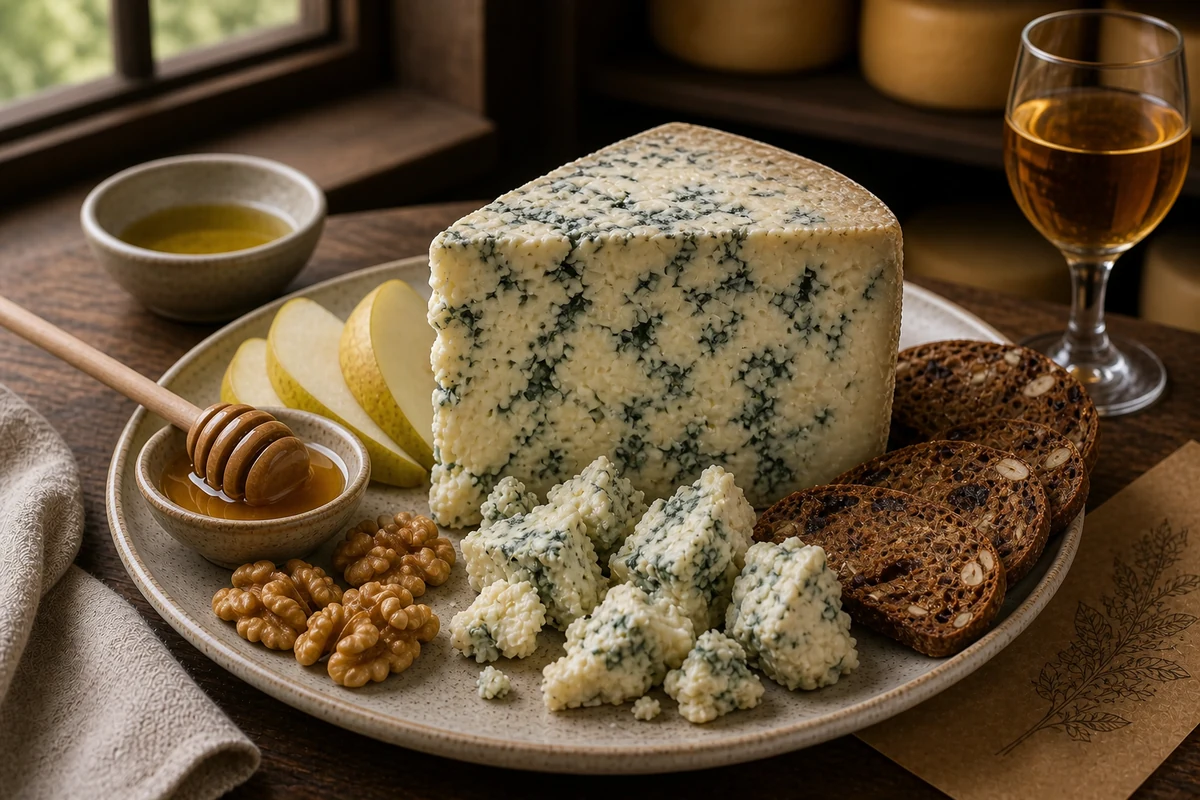
| Blue cheese | Penicillium roqueforti mould along air tunnels made by piercing | 60 to 90 days before the typical flavour develops |
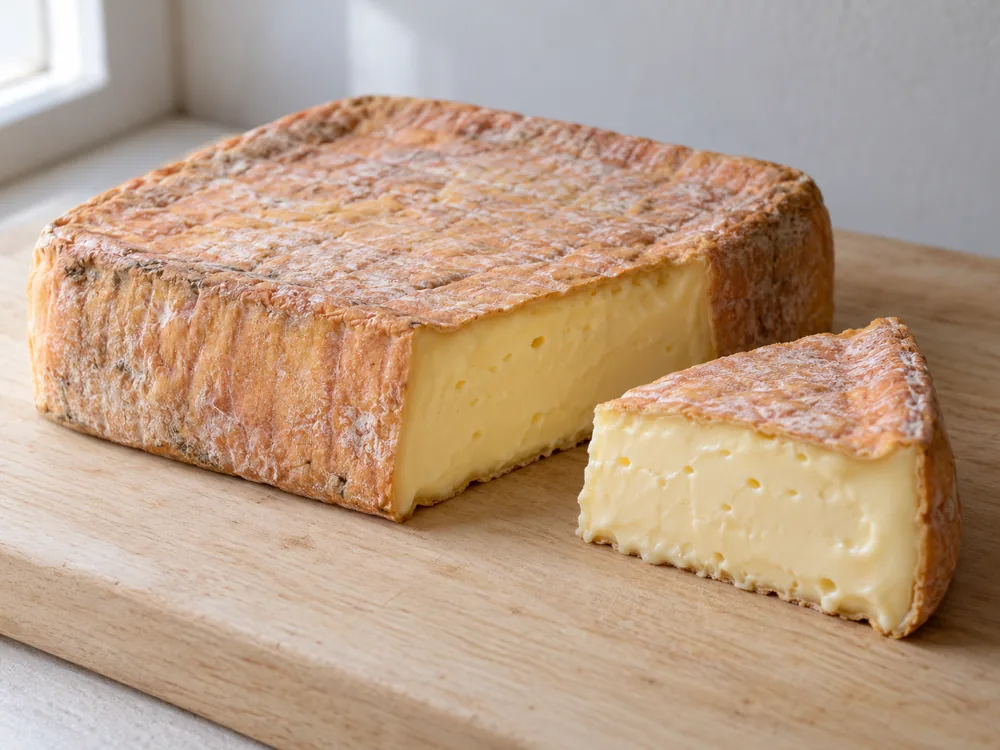
| Taleggio | Surface washed once a week with brine (Taleggio PDO) | At least 35 to 40 days |
| Mimolette | Cheese mites added to the surface | 2 months to 2 years |
| Casu marzu | Cheese-fly larvae feeding in the paste | About 3 months to 6 months, depending on the source |
Blue cheese loaves are punctured at the start of ripening so air reaches the Penicillium roqueforti mould, according to Wikipedia.
Wikipedia puts blue cheese ripening at around 8 to 10 °C and 85 to 95% relative humidity, while casu marzu is placed in the warmest rooms of the plant.
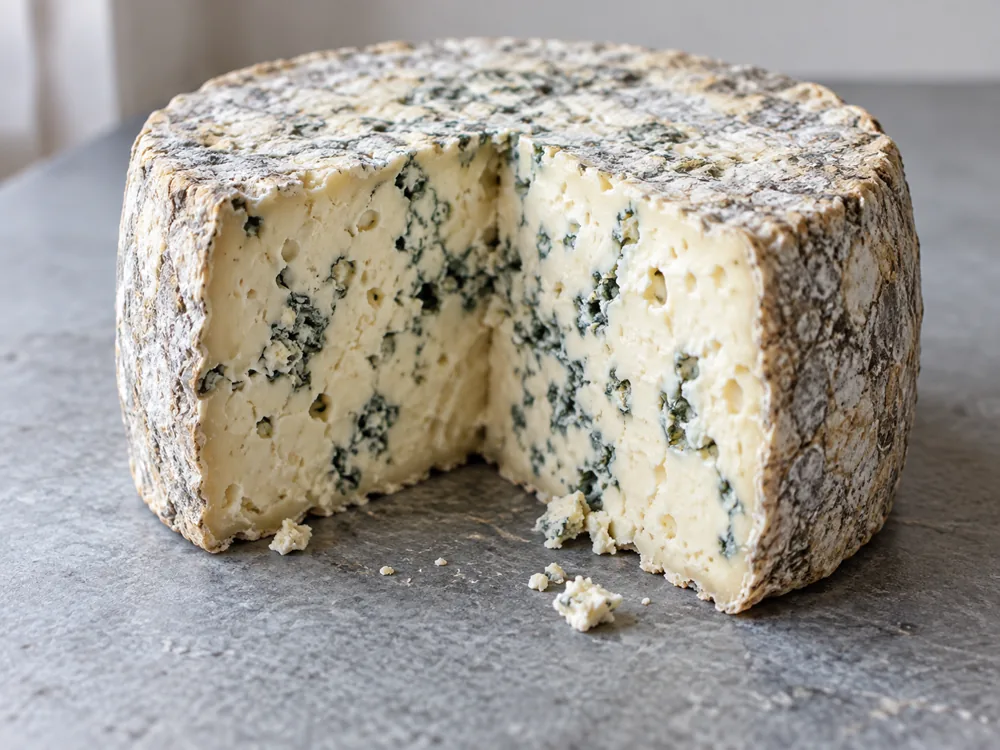
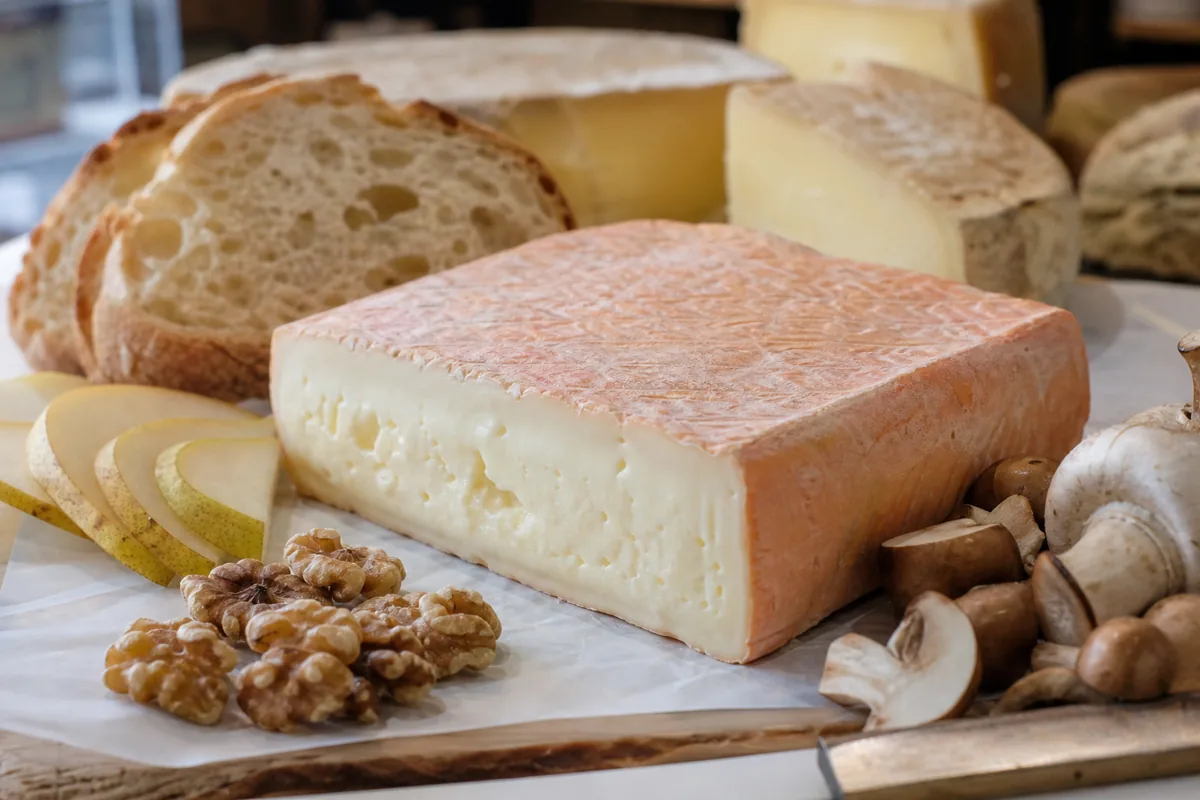
cooksinfo.com says a Taleggio PDO wheel is washed once a week with brine, which promotes the growth of mould on the rind and gives it an orangey-pink colour.
cooksinfo.com describes a thin, edible, orangey-pink rind around a pale interior, with a flavour that ranges from mild when young to sharper with extended aging.
Wikipedia says the grey rind of aged Mimolette comes from cheese mites added to the surface to enhance flavour, while its bright orange colour comes from annatto. In 2013 the FDA detained about a ton of it because the cheese was above a standard of six mites per cubic inch, and the restriction was lifted in 2014.
The same page says Mimolette is made from pasteurised cow's milk and tastes like Parmesan when young, taking on a hazelnut-like flavour when extra-old.
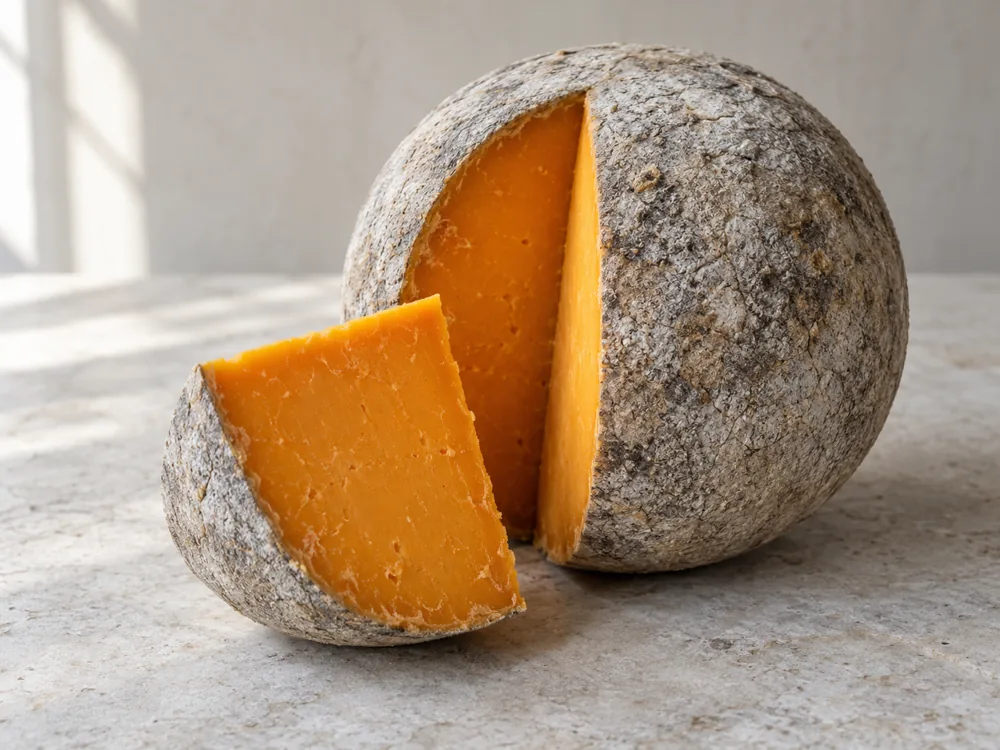
That contrast shows where casu marzu differs. Mimolette's mites work on the rind, while casu marzu lets larvae feed through the paste, and Italian law treats that as infestation.
What Is the Closest Substitute?
Pecorino Sardo is the nearest regulated match for milk and origin. Wikipedia says it is made from the milk of the local Sarda sheep, has had PDO protection since 1996, and comes as dolce (20 to 60 days) or maturo (more than two months), with sharpness rising as it matures.
Wikipedia describes the rind as deep yellow to dark brown around a white to straw-yellow paste, and gives the dolce wheel as 1.0 to 2.3 kg and the maturo as 1.7 to 4.0 kg. In the 2015 amine comparison above, Pecorino Sardo PDO had the lowest totals of the three cheeses.
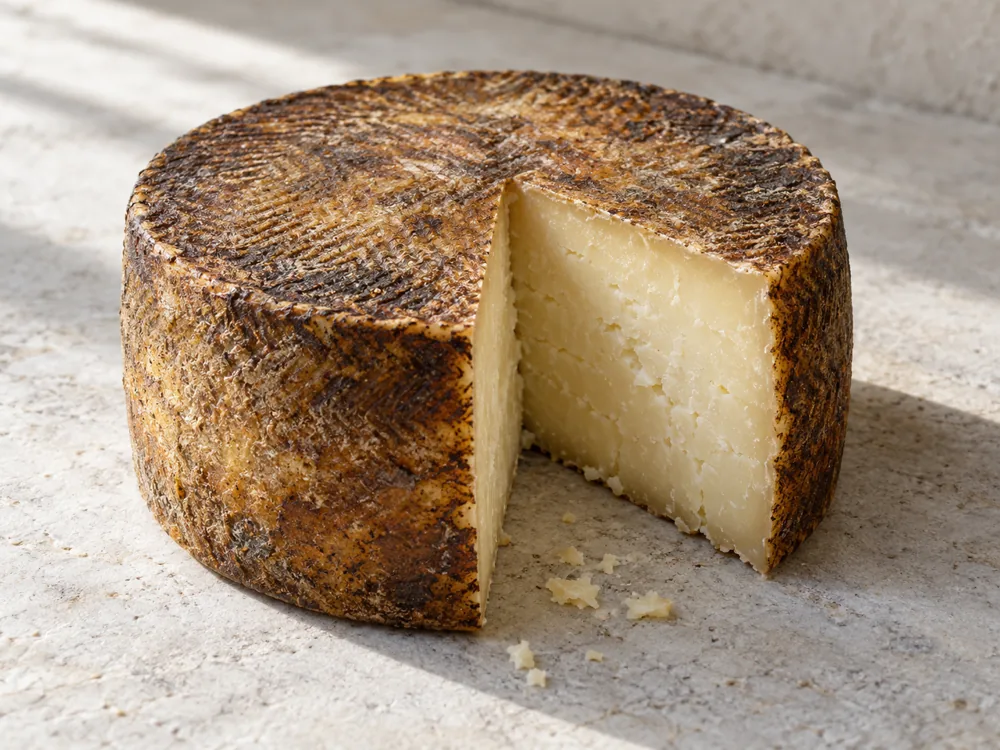
Both of the closest Italian cheeses are made only from sheep's milk, and both are firmer than casu marzu.
Pinna Formaggi's Pecorino Romano PDO page says the wheel matures from five months, when it is a table cheese, to eight months for grating. The paste is white, hard and compact, with an intense, spicy and salty flavour.
It originated in Lazio, and about 95% of production is now in Sardinia.
If you want a legal Sardinian sheep's milk cheese, these match the milk and the island, though neither has the soft, larvae-ripened paste.
SOURCES & REFERENCES
They are larvae of the cheese fly Piophila casei. English Wikipedia says the acid from their digestive system breaks down the cheese's fats and makes the paste very soft.
No. Selling it is prohibited in Italy under Article 5 of Law 283/1962, according to Italian Wikipedia, even though Italy's national database lists it as a traditional product.
A 2015 study measured very high biogenic amines in nine samples and called it unsafe, especially for people treated with MAOI drugs. English Wikipedia also notes larvae may survive in the gut.
The sources differ: the nine samples in a 2015 study had ripened for 60 to 90 days, English Wikipedia says about three months and Italian Wikipedia says three to six months.
Italian Wikipedia says Sardinia has requested PDO status, and English Wikipedia's infobox lists its certification as none. It is entered in the national traditional-products database, which is a separate listing.
Yes. English Wikipedia lists casgiu merzu in Corsica and similar Italian cheeses such as casu puntu in Salento and marcetto in Abruzzo.
No regulated cheese replicates the soft, larvae-ripened paste. Pecorino Sardo and Pecorino Romano match the sheep's milk and the island, but both are firmer.