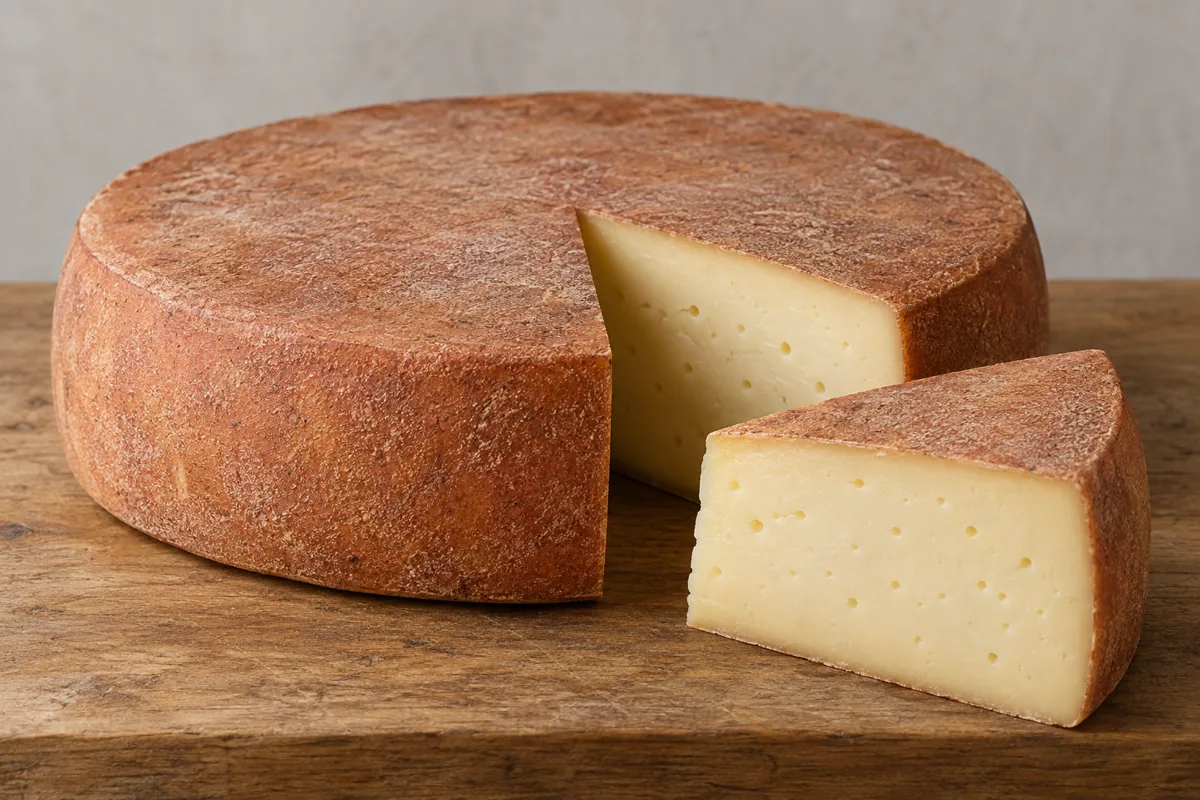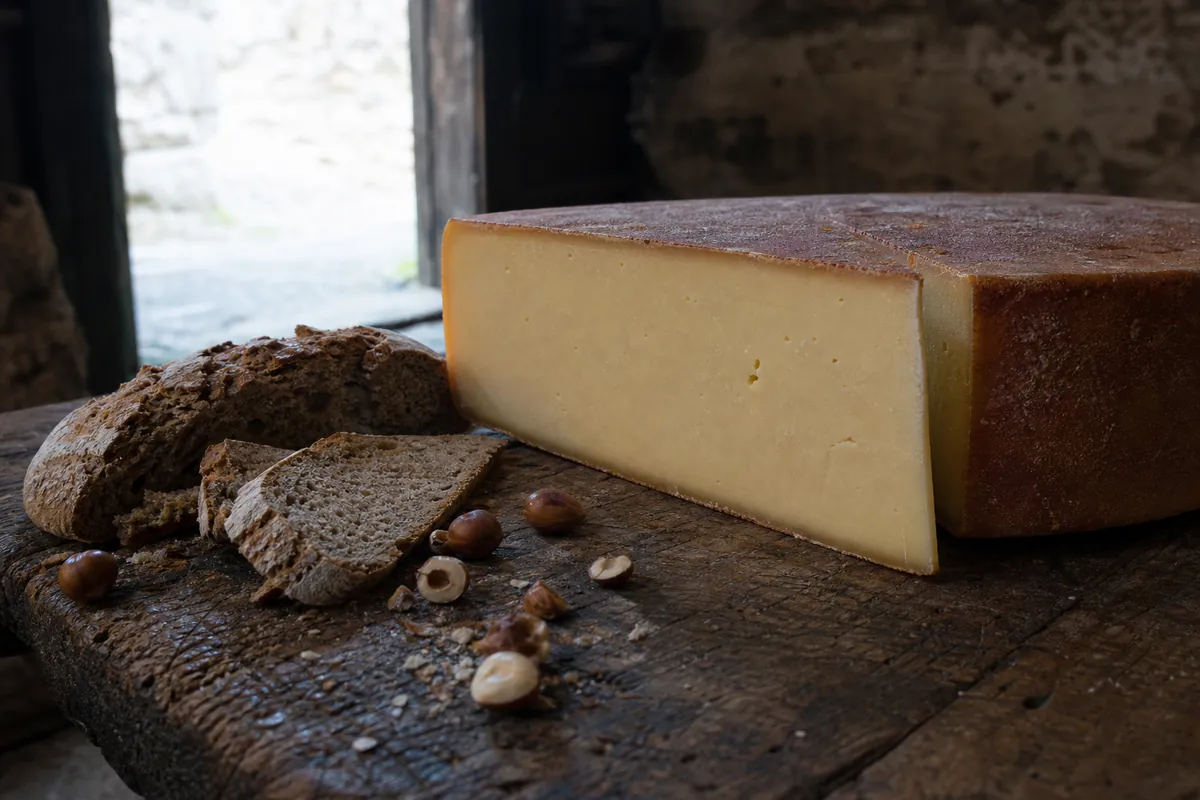
Chällerhocker is a long-aged cow's-milk cheese from eastern Switzerland, with a dense sliceable paste and a thin washed brown rind. As it warms, roasted nuts and caramel give way to brown butter, onion and the savoury depth of stock.
Käserei Tufertschwil makes every wheel in Lütisburg, canton St Gallen, calling it semi-hard even though some Swiss catalogues file its long-matured wheels as hard cheese.
At the counter, at least eight months of age gives you the clearest starting point. You should also read the milk treatment carefully: the maker says roughly half of the milk, specifically the evening delivery, is thermized, so a shop label that says only “raw milk” leaves out part of the make.
In This Article
What Kind of Cheese Is Chällerhocker?
Chällerhocker sits near the practical boundary between semi-hard and hard cheese. Its maker uses the German term Halbhartkäse, while the official Swiss cheese finder files it as hard, so the category changes with the authority you are reading.
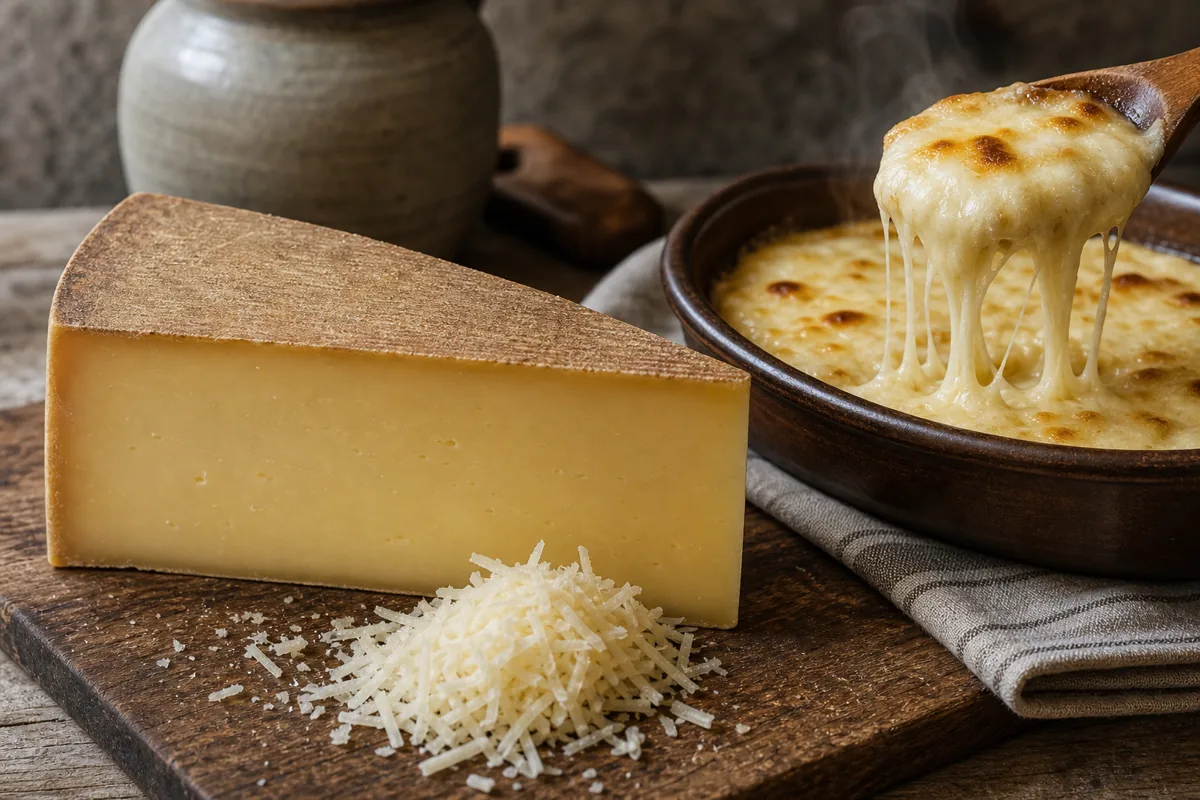
What reaches your plate is less ambiguous: the paste is firm enough for thin slices and neat wedges, yet more supple than a dry grating cheese. That texture is also why it works both as a table cheese and in dishes where you want a cohesive melt.
As the house cheese of one family dairy rather than a protected regional style, Chällerhocker is best identified by the Käserei Tufertschwil name instead of a PDO or AOP mark.
How Did Chällerhocker Start?
Cheese has been made at Tufertschwil since 1896, and the Räss family has owned the dairy since 1987. Their long Appenzeller background gave Chällerhocker its washed-rind foundation, but the new cheese took a slower, more concentrated direction.
That direction emerged from a 2001 experiment with Jersey milk whose final wheel, opened at 13 months, had enough mature texture and flavour to justify a product of its own.
A distributor came aboard once the cheese had a name and label, and full production began on 19 February 2003. The first wheels reached the market that November, initially from just one make day each month.
Growing demand led Tufertschwil to stop making Appenzeller in 2014 and concentrate on Chällerhocker and Tufertschwiler, which explains the family resemblance you may taste without turning Chällerhocker into an aged Appenzeller.
What Milk and Age Should You Expect?
Chällerhocker uses whole cow's milk, with the evening delivery receiving the heat treatment. The regional specification records the make as 50% thermized and 50% raw milk.
Thermization is gentler than pasteurization, and that mixed treatment explains why shop descriptions can look inconsistent. One seller may focus on the untreated share and say raw milk, while another highlights the heated share; your cut label is the best guide to the piece in front of you.
| Detail | Practical reading | What may vary |
|---|---|---|
| Milk | Whole cow's milk; about half thermized | Retailers may shorten this to raw or thermized |
| Age | At least 8 months | Many listings place sale age between 9 and 12 months |
| Wheel weight | Roughly 5.7 to 7 kg | Shops normally sell cut portions |
| Fat | 53% fat in dry matter in the regional listing | This is not the fat percentage of the moist wedge as sold |
Treat eight months as the age floor rather than a universal sale date. The Swiss cheese finder lists 9 to 11 months, and specialist shops may release wheels at 10 months or later.
Those numbers describe different points in one production range, with extra cellar time usually giving you a drier, more concentrated paste and stronger savoury notes.
How Is Chällerhocker Made and Ripened?
Nearby farms deliver fresh milk twice daily. A 1998 merger with the Lütisburg dairy raised annual milk volume from about 700,000 kilograms to 1.10 million, although production still stops at roughly 60 wheels a day.
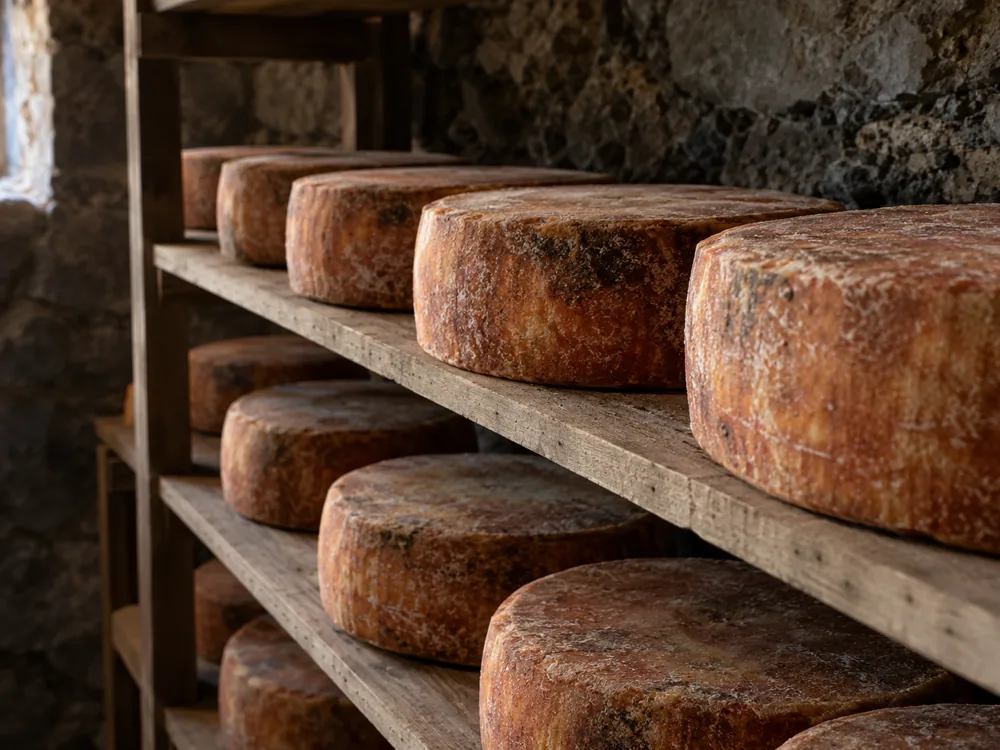
After cultures and animal rennet set the milk, the curd is formed into wheels and salted. Workers then wash the rind repeatedly with brine and spices, encouraging the surface culture that turns it reddish brown and builds the earthy, savoury aroma.
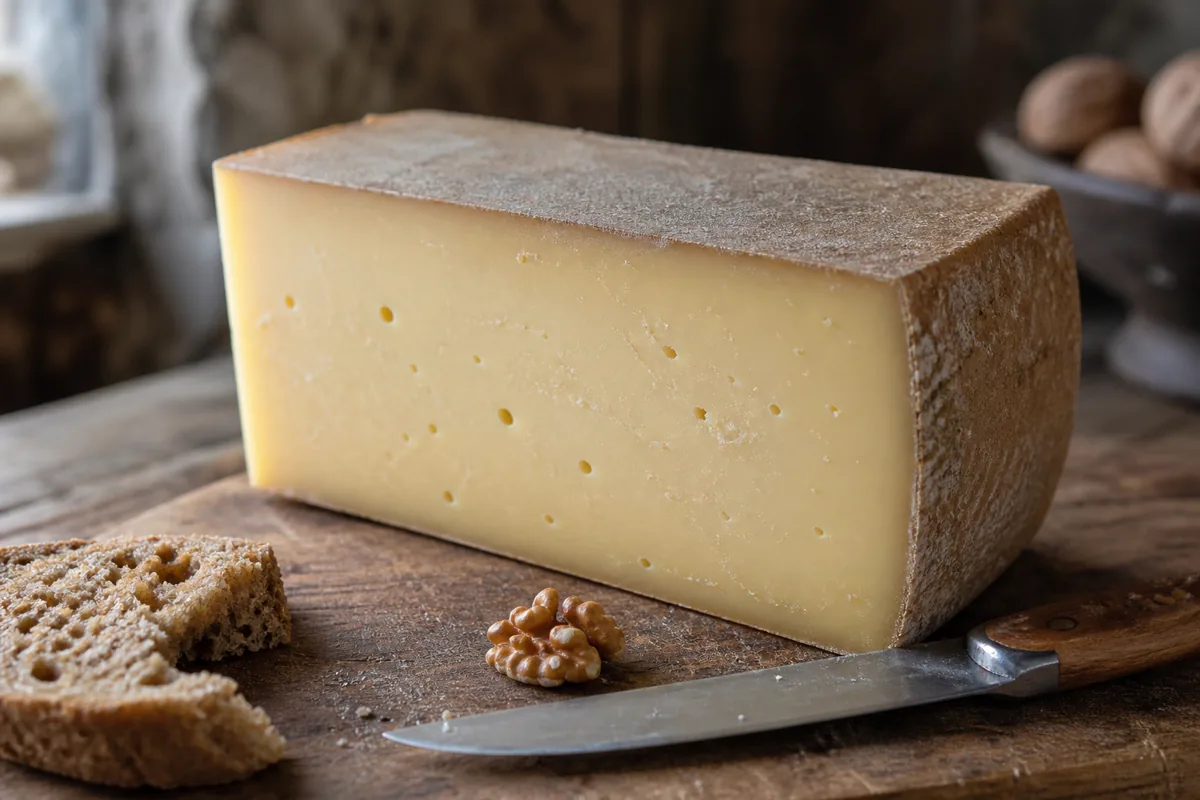
Months on cellar shelves remove moisture and break down proteins, so an older cut may show slight graininess or small crystals while remaining supple enough to slice.
What Does Chällerhocker Look and Taste Like?
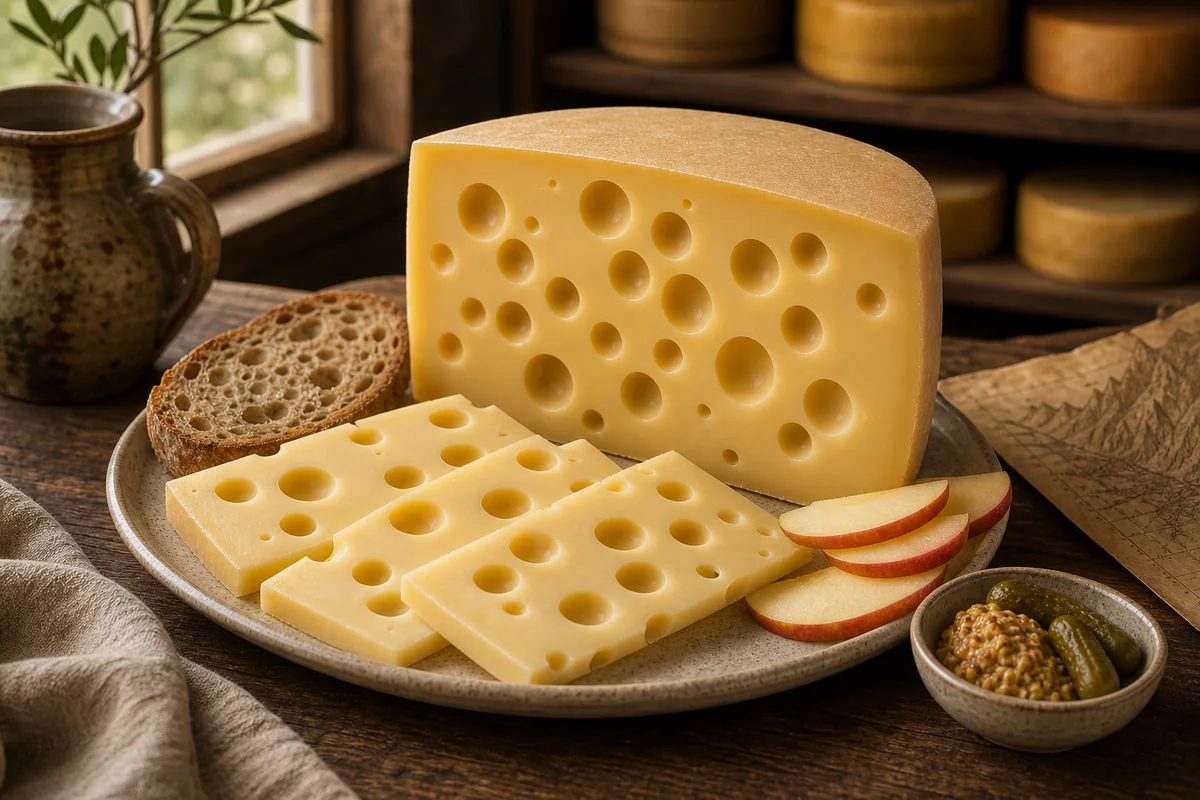
A good cut shows a dense, smooth paste with only a few small openings. Its colour can run from pale ivory to golden yellow, so a darker wedge may reflect season, lighting or age rather than a different cheese.
You do not have to eat the thin, slightly tacky brown rind to experience it because the wash has already shaped the earthy aroma and savoury flavour beneath the surface.
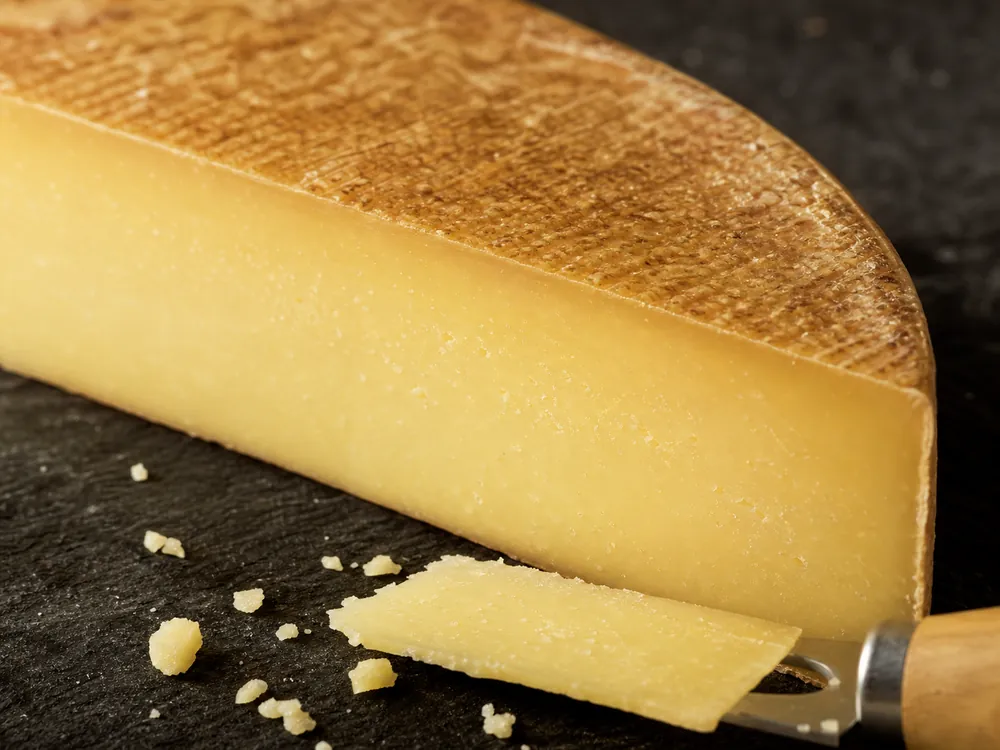
Your first impression is likely to be toasted nuts, butter and caramel. Give the wedge a little time to warm and the sweetness can shift toward caramelized onion, followed by salt, mild tang and a stock-like depth.
- Younger end of the range: creamier, smoother and easier to slice, with caramel and butter ahead of the savoury notes.
- Older end of the range: drier and more concentrated, with crystals, roasted-nut flavour and a longer stock-like finish.
- Rind-adjacent paste: earthier and more aromatic than the centre because it sits closest to the washed surface.
Chällerhocker vs Appenzeller: What Is the Difference?
The two cheeses come from the same part of Switzerland and share a washed-rind tradition, so the resemblance is real. The difference begins with identity: Chällerhocker belongs to one dairy, while Appenzeller production is limited to approved areas across several cantons.
Appenzeller uses unpasteurised milk and a secret herbal brine in a process lasting at least three months. Chällerhocker combines raw and thermized milk, a brine-and-spice wash and at least eight months of maturation, giving you a denser and more deeply roasted cheese.
| Attribute | Chällerhocker | Appenzeller |
|---|---|---|
| Maker | One dairy, Käserei Tufertschwil | Approved dairies in the protected production area |
| Milk | Whole milk, about half thermized | Unpasteurised cow's milk |
| Age | At least 8 months; commonly 9 to 12 | Process lasts at least 3 months |
| Rind | Washed with brine and spices | Rubbed with a secret herbal brine |
| Taste | Nutty, caramel, brown butter and savoury stock | Tangy, aromatic and herbal |
We would choose Chällerhocker when age, dense texture and roasted savoury flavour matter most. Appenzeller makes more sense when you want brighter tang and the herbal identity of its brine.
How Should You Serve Chällerhocker?
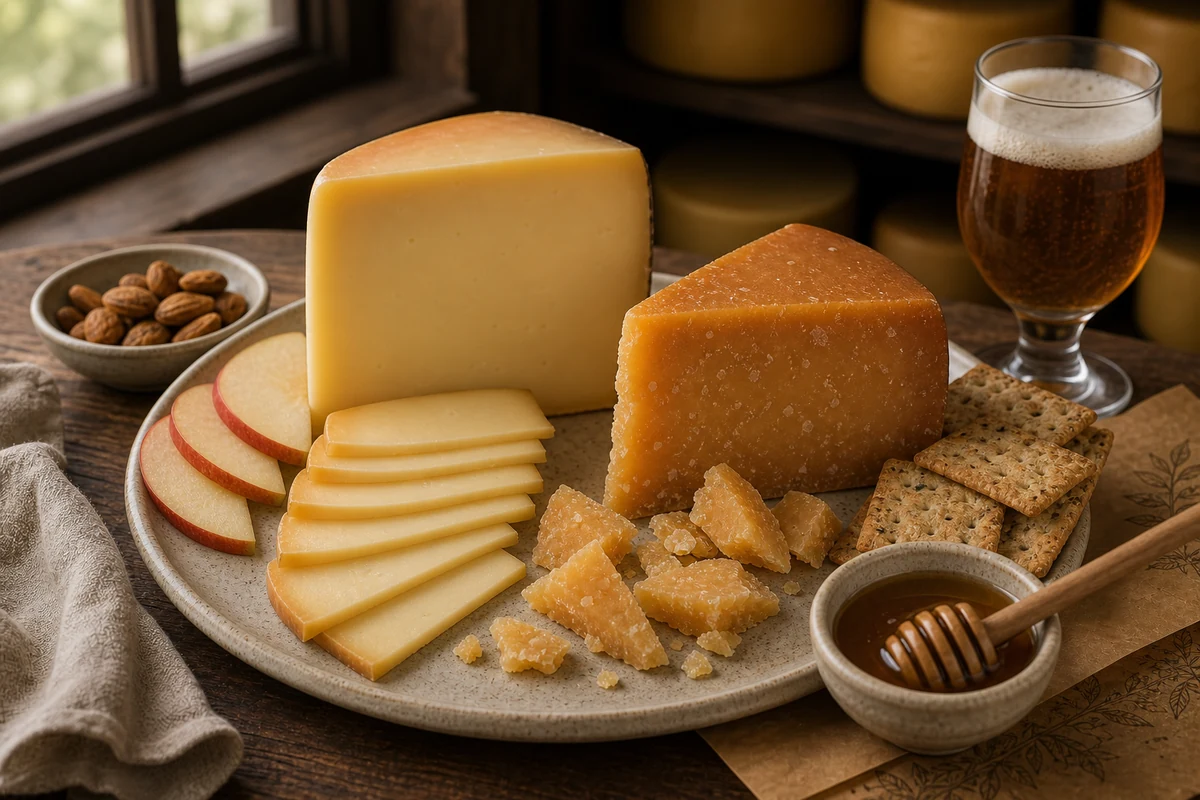
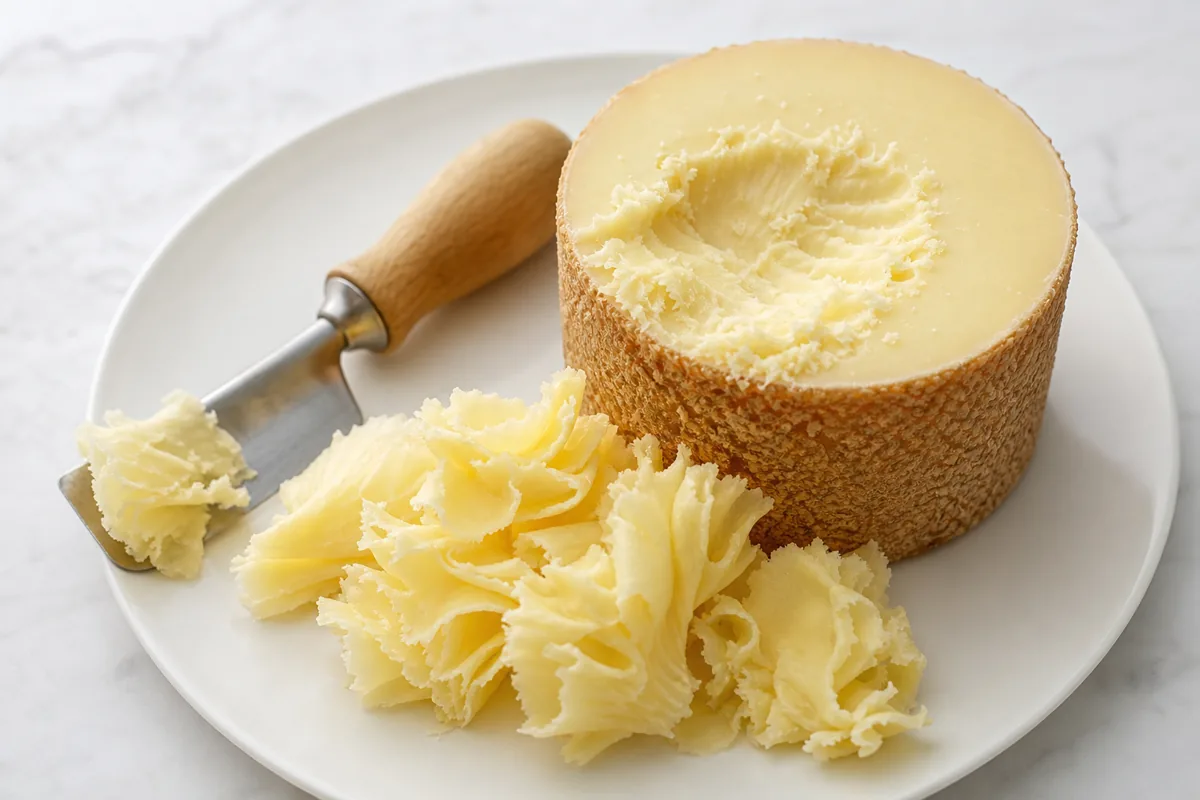
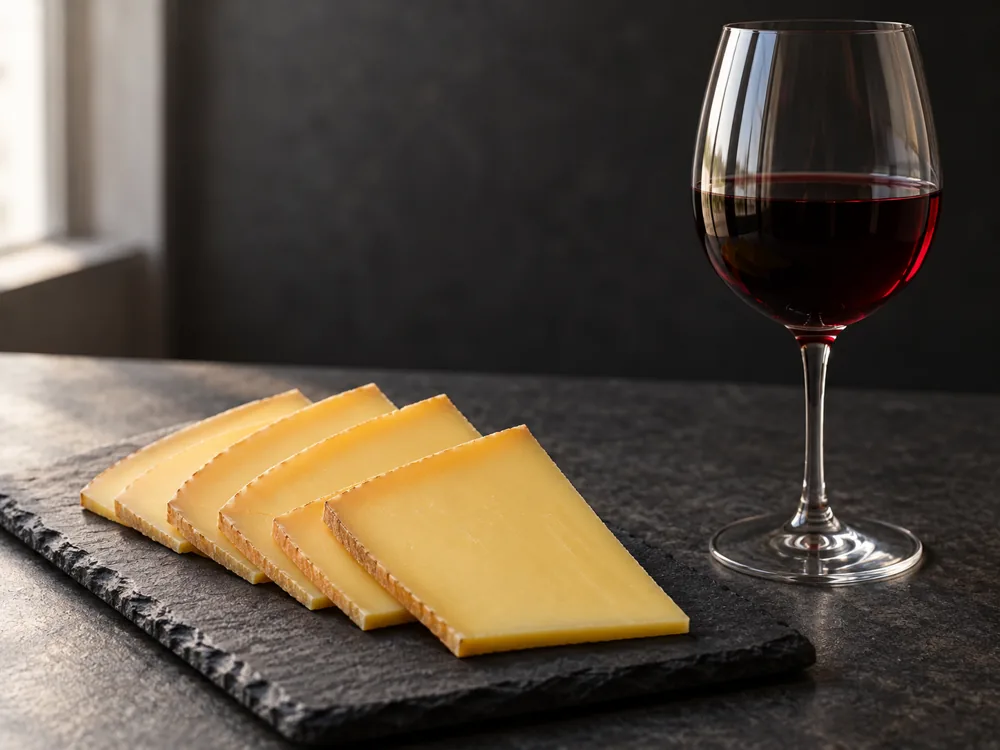
Let your cut lose its refrigerator chill before serving, because the butter, caramel and toasted-nut aromas stay muted when the fat is cold. Thin wedges keep the texture smooth on a plate, while coarse shavings give you more aroma and a firmer bite.
Acid and fruit keep this rich cheese from feeling heavy. Dry Riesling or Chenin Blanc brings freshness, while Pinot Noir and Gamay add red fruit without covering the caramel notes.
If you prefer beer, a sturdy ale meets the roasted flavour without disappearing beside it. Cider works through a different balance, using apple and acidity to refresh the palate.
| Pairing | Type | Why It Works |
|---|---|---|
| Dry Riesling or Chenin Blanc | Wine | Acidity cuts the richness, while mineral, apple and honey notes sit comfortably beside caramel and toasted nuts. |
| Pinot Noir or Gamay | Wine | Moderate tannin and bright red fruit complement the supple paste without hiding its savoury finish. |
| Oloroso sherry or port | Wine | Oxidative nut flavours and sweetness echo the cheese's caramel side; pour a small serving. |
| Ale or cider | Drink | Malt supports the roasted flavours, while cider supplies acidity and apple fruit. |
| Apple and onion jam | Food | Sweetness meets the caramelized-onion note, but a thin layer keeps the cheese in front. |
| Finocchiona | Food | Fennel-scented salami reinforces the savoury, spiced character without adding another creamy texture. |
When heated, Chällerhocker forms a cohesive layer rather than a long mozzarella-style pull. Grate it into fondue, over potatoes or onto a gratin when you want the nutty flavour to stay noticeable after melting.
Best Substitutes for Chällerhocker
Gruyère is the closest practical substitute for cooking because it gives you a firm Alpine body, savoury depth and a dependable melt. Your dish will lose some of Chällerhocker's earthy washed-rind aroma, but its structure will remain convincing.
For a cold plate, Manchego gives you a firm, nutty slice. Its sheep's-milk flavour and drier texture move in another direction, so use it for structure rather than as an exact flavour match.
Appenzeller is the better substitute when washed-rind character matters most, giving you a younger tang when brightness matters more than Chällerhocker's mature caramel and stock notes.
Can You Eat Chällerhocker During Pregnancy?
The classification and mixed milk treatment make a cold serving hard to answer with one blanket rule. NHS guidance permits pasteurised or unpasteurised hard cheese, permits pasteurised semi-hard cheese and permits any cheese cooked until steaming hot.
Chällerhocker is catalogued as hard in one Swiss directory but called semi-hard by its maker, and thermized milk is not the same term as pasteurised milk.
CDC food-safety guidance also treats pasteurised hard cheese as a safer choice. If you are pregnant, the clearest option is to ask your clinician about a cold cut with this mixed treatment, or use the cheese in a dish heated until it is steaming throughout.
What Should You Check When Buying Chällerhocker?
Start with the producer name, Käserei Tufertschwil AG. Because Chällerhocker has no protected designation, the maker is your most reliable identity cue on a cut label or shop listing.
Next, check the stated age: eight months is the useful minimum, while 9 to 12 months points toward a drier paste and stronger savoury flavour. If no age appears on the label, ask when the wheel was cut and whether the rind is included in the listed weight.
Whole wheels weigh about 5.7 to 7 kilograms, so you will normally see 0.5-kilogram, half-pound or one-pound cuts. Compare prices by weight, then read the full milk description and cold-shipping terms instead of treating “raw” or “thermized” in a short title as the complete specification.
Look for Käserei Tufertschwil AG, at least 8 months of age, the milk treatment on the actual label, the cut weight and refrigerated shipping.
You will often hear it approximated as “holler-hocker”. The Swiss German name refers to a cheese that sits in the cellar, which fits its long maturation.
The regional product record lists Chällerhocker as lactose-free. It still contains milk protein, so it is not suitable for someone with a milk allergy.
No, not under the documented specification. The regional record lists animal rennet; check your cut label if the coagulant determines what you buy.