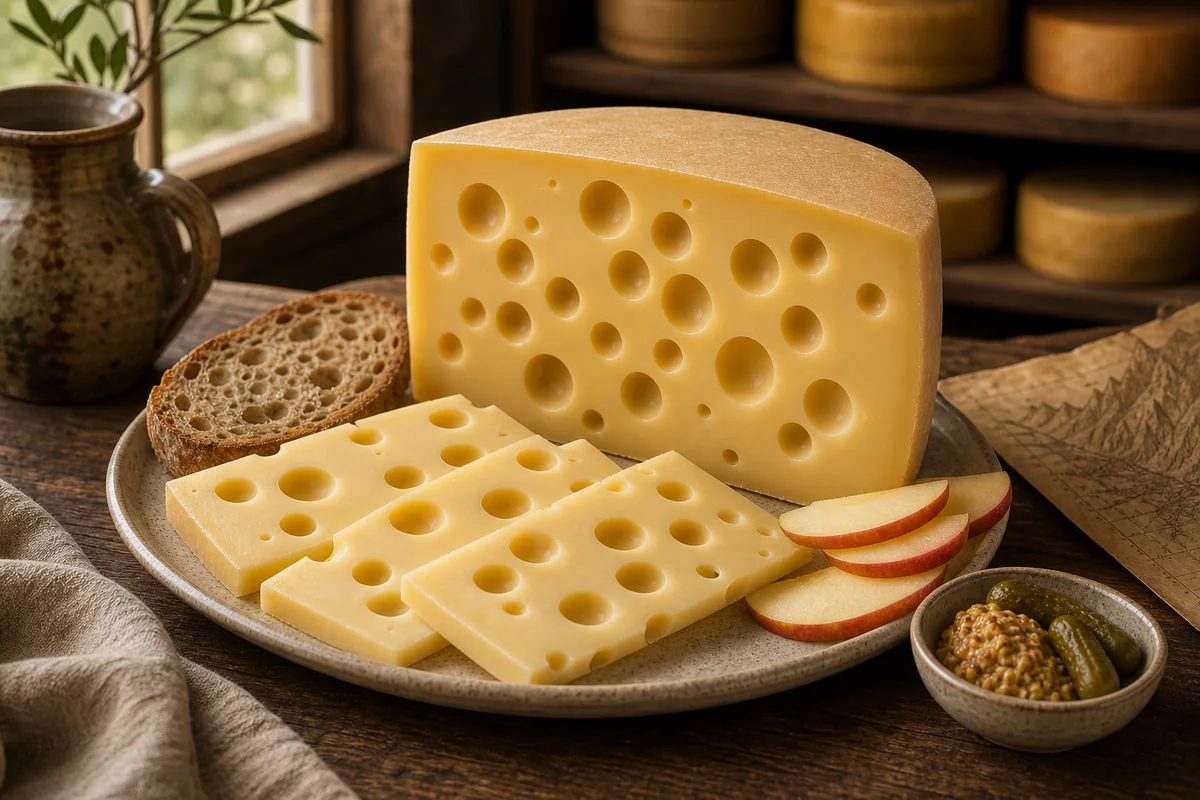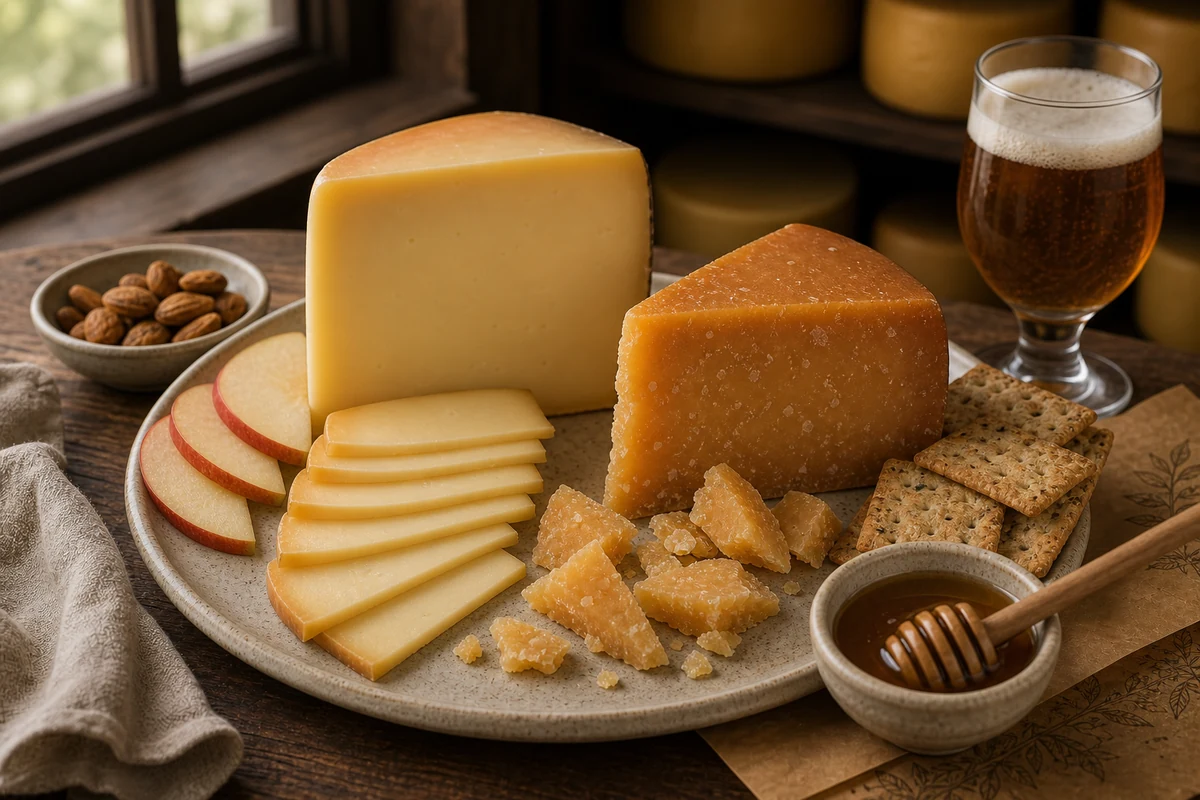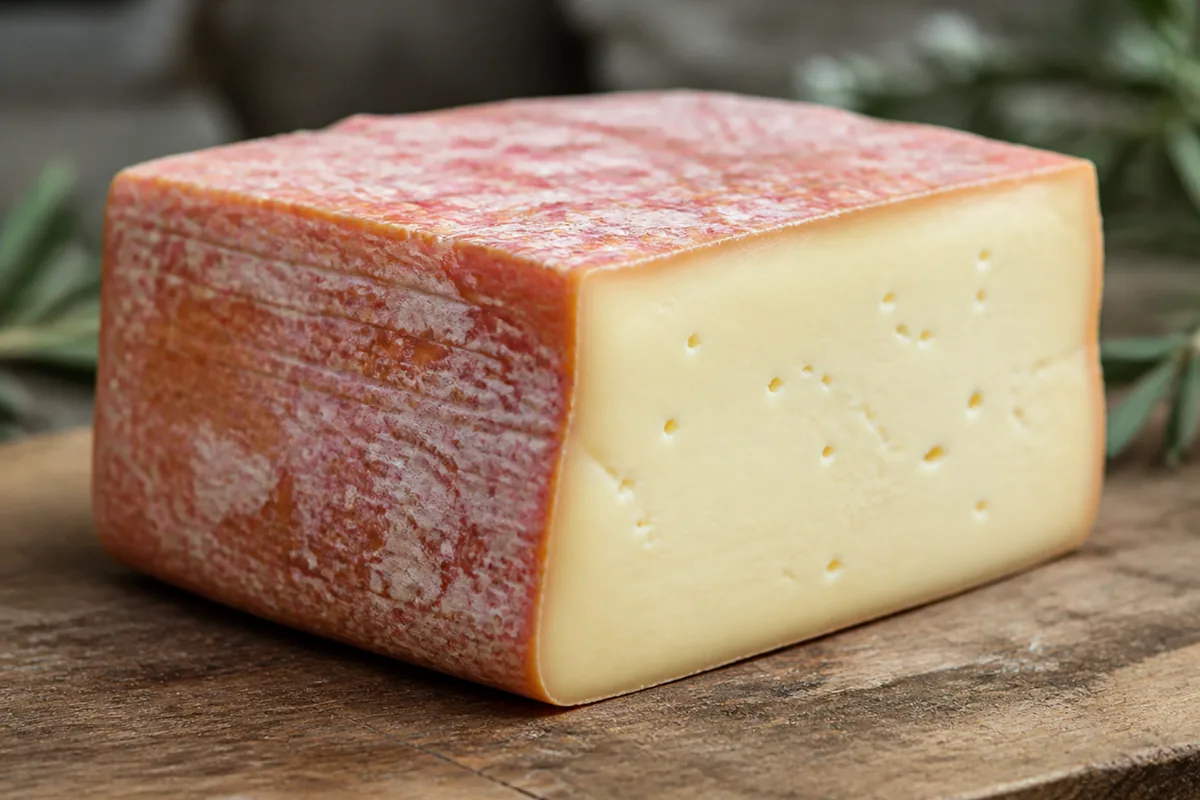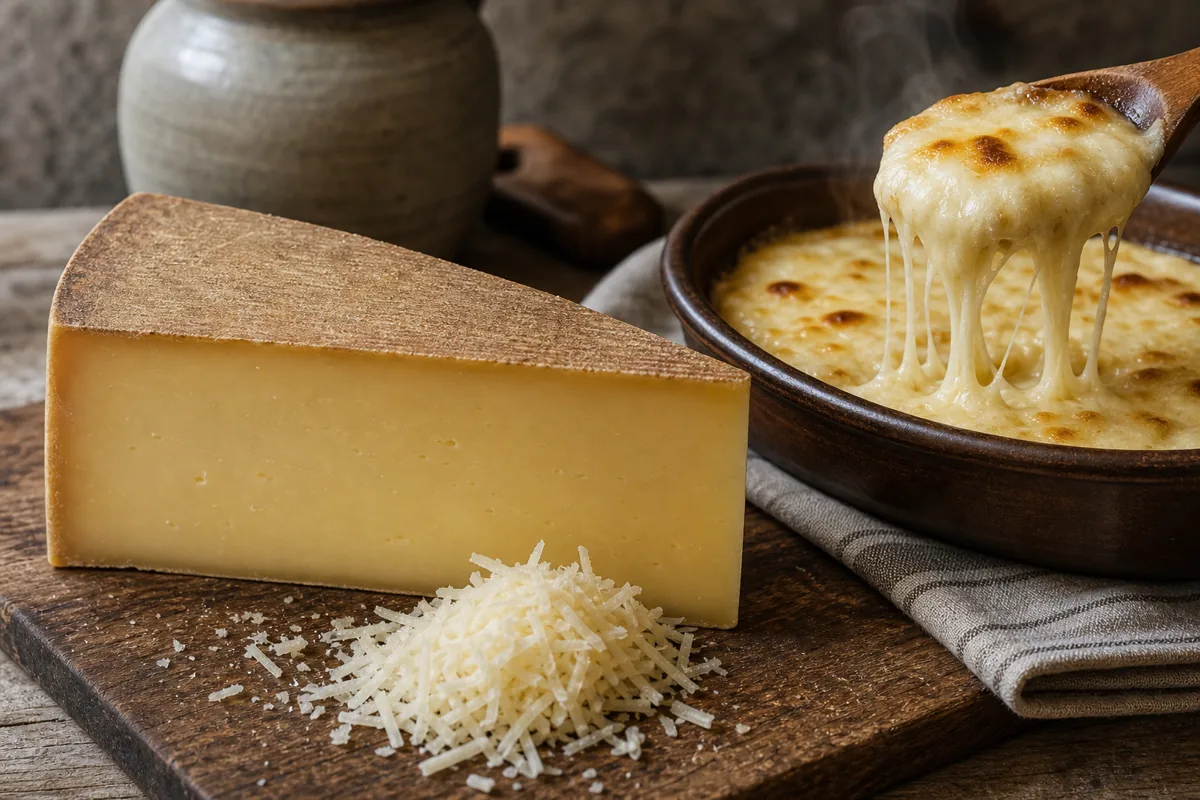
Coolea is a pasteurised cow's milk cheese made by the Willems family in County Cork from a Dutch Gouda recipe.
The name covers cheeses of very different ages. The age on the label tells you more than the name does.
In This Article
What Is Coolea Cheese?
Coolea is handmade on the Willems family's mountain farm in Coolea, County Cork. The family business dates to 1981 in Bord Bia's profile, while the maker's own site says Helene and Dick Willems started making cheese in 1979.
The milk is pasteurised cow's milk. Bord Bia says the cheesemaker, Dicky Willems, buys it from one herd of Holstein and Friesian cows, and Neal's Yard Dairy describes a local herd on a nearby farm.
The first cheeses used the family's own milk: the maker's site says the cheese began in 1979 with milk from the Willems family's own small farm, and Culture says it came from their own herd of cows.
The maker's site adds that the milk is full cream, with nothing taken out and nothing added to it. Only milk from grass-fed cattle goes in, because Bord Bia says silage-fed milk can taint the cheese as it ages.
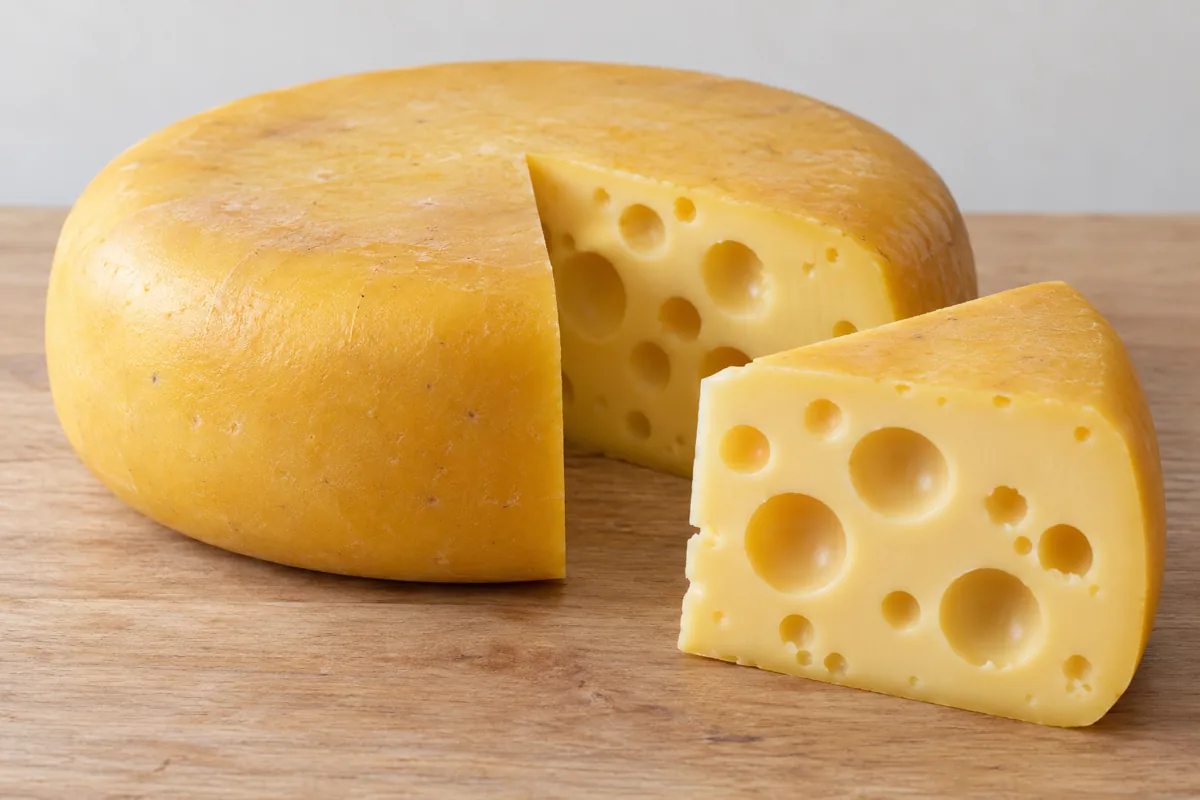
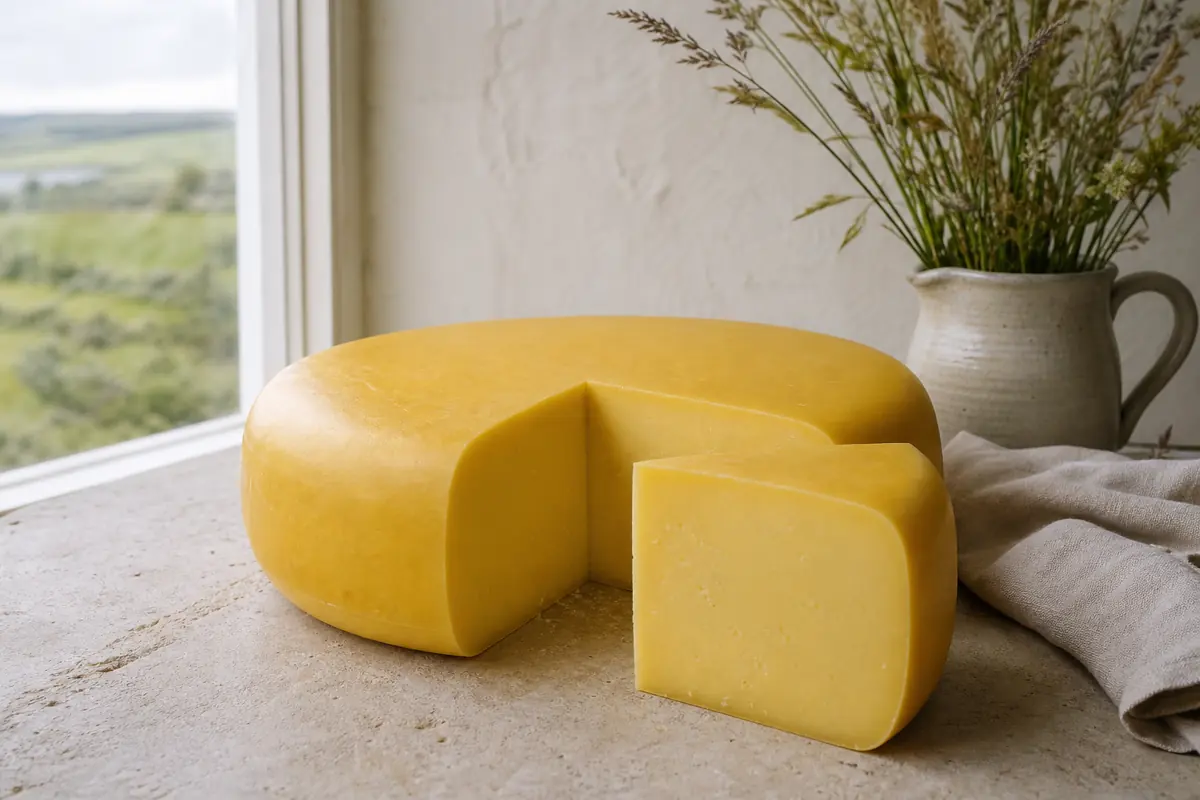
Bord Bia classes Coolea as a hard cheese with a firm, closed paste and a yellow or orange wax rind. A whole wheel weighs 8 kg in Bord Bia's profile and 6.5 to 7.6 kg in Neal's Yard Dairy's listing.
How Did a Dutch Gouda Recipe Become an Irish Cheese?
Helene and Dick Willems moved to Ireland from their native Holland in the late 1970s and settled on a small farm in the Derrynasaggart Mountains. The cheese takes its name from the village of Cúil Aodha, anglicised as Coolea, and Culture says they decided to make cheese in 1979.
Bord Bia gives 1981 for the family business, while the maker's site and Culture give 1979 for the first cheese. Both say their son joined in 1991, but the maker's site says he was main cheesemaker by 1993 and Culture says 1998.
Coolea's recipe is tied to Gouda in all four descriptions, in different words. The maker's site calls it a very old Dutch Gouda recipe and Bord Bia a standard Gouda recipe, while Neal's Yard Dairy says it mirrors a traditional Dutch Gouda make and Culture calls it an Irish twist on Gouda.
A new, larger cheese plant dates to 1987, with air-conditioned storage for 15 tons and a production capacity of 25 tons.
Which Awards Has Coolea Won?
The awards below, from 1983 to 2014, are as the maker's site lists them.
| Year | Result | Event |
|---|---|---|
| 1983 | Best Irish farmhouse cheese | Clones, Co. Monaghan |
| 1990 | First prize | London International Cheese Show |
| 1991 | Supreme Champions | Dublin Springshow |
| 1997 | Best Modern British Cheese and Best Irish Cheese | British Cheese Awards |
| 1999 | Gold standard; supreme champion | British Cheese Awards; IFEX in Belfast |
| 2000 | Supreme champion, after best Irish and best modern British | British Cheese Awards |
| 2007 and 2010 | Best Irish and Best Modern British | British Cheese Awards |
| 2008 | Best Matured Gouda, on its first entry | World Cheese Awards |
| 2008 and 2009 | Supreme champion | Listowel Food Fair |
| 2012 | Gold medal | Blas na hÉireann (Taste of Ireland) |
| 2014 | Gold medal | Irish Food Writers' Guild |
The 2008 entry was in the Matured Gouda category, so judges set Coolea against other Goudas, which fits its Gouda recipe.
The maker lists Best Irish and Best Modern British as separate titles at the British Cheese Awards, and says Coolea took both in 1997, 2000 and 2007.
How Does Coolea Change with Age?
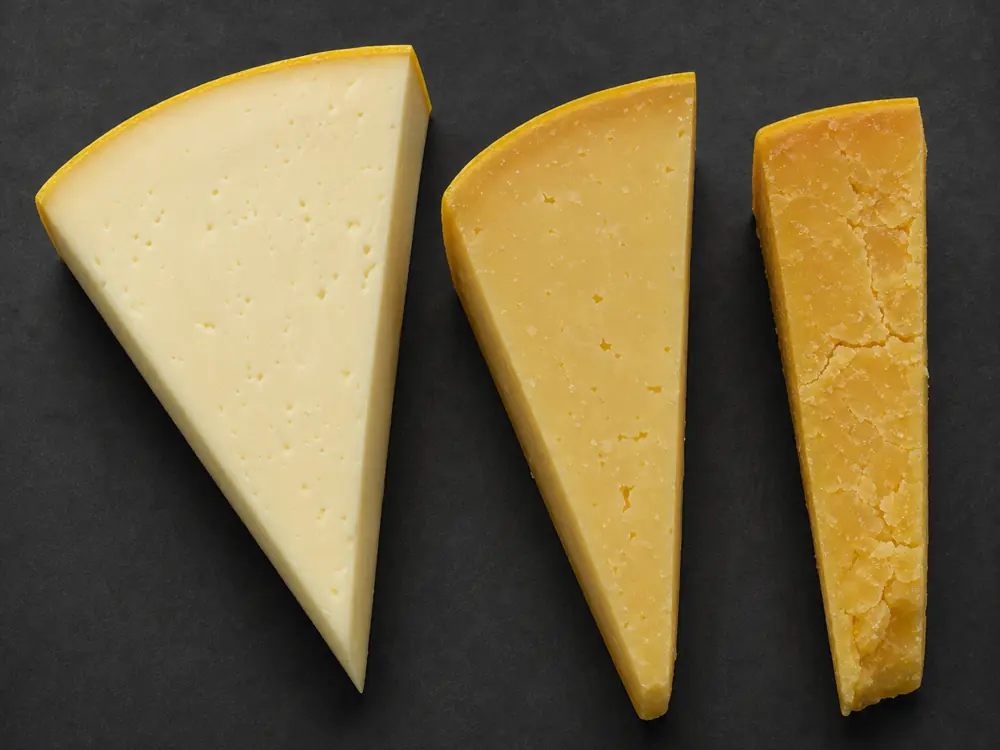
Bord Bia lists Coolea in three bands: young at 3 to 6 months, young matured at 7 to 11 months, and matured at 12 to 17 months. Its paste gets slightly deeper in colour and drier from one band to the next.
| Source and band | Age | What it says |
|---|---|---|
| Bord Bia, young | 3 to 6 months | Creamy, mild, semi-firm and buttery |
| Bord Bia, young matured | 7 to 11 months | Creamy and sweet, with a slightly drier paste |
| Bord Bia, matured | 12 to 17 months | Sweet, with intensifying flavour; toffee and caramel with a long finish |
| The maker | 12 months to two years | Coolea Matured can mature this long and still improve |
| Neal's Yard Dairy | Average 18 to 24 months | Sells wheels matured for at least a year and often longer |
| Culture | 4 months up to about 18 months | Sold at various levels of maturity |
The youngest Coolea is two months old by the maker's minimum, three by Neal's Yard Dairy's and Bord Bia's, and four by Culture's.
With that spread, a 5-month wedge and an 18-month wedge can both be sold as Coolea.
The shop and the maker both push toward older cheese. Neal's Yard Dairy says it helped the Willems family extend their maturing store so the cheese can age longer, and the maker's site gives its own reason: Coolea can only grow slowly, so it steers more production toward long maturation for the export market.
When Does Coolea Taste Sweet, and How Is It Made?
Bord Bia, the maker, Neal's Yard Dairy and Culture all call Coolea sweet, and in Bord Bia's and the maker's accounts the sweetness comes with age: Bord Bia calls the older bands sweet, and the maker says that at up to 18 months the taste becomes sweet, almost like toffee. For that sweetness, buy an older band.
Neal's Yard Dairy names caramel, butterscotch and honey, and remarks that the family brought the Dutch tradition of making sweet, buttery cheeses. It adds that the milk is at its best between April and September.
The maker's photo captions show milk from outside producers pumped into a tank and hauled to the farm, ready for the next morning's production.
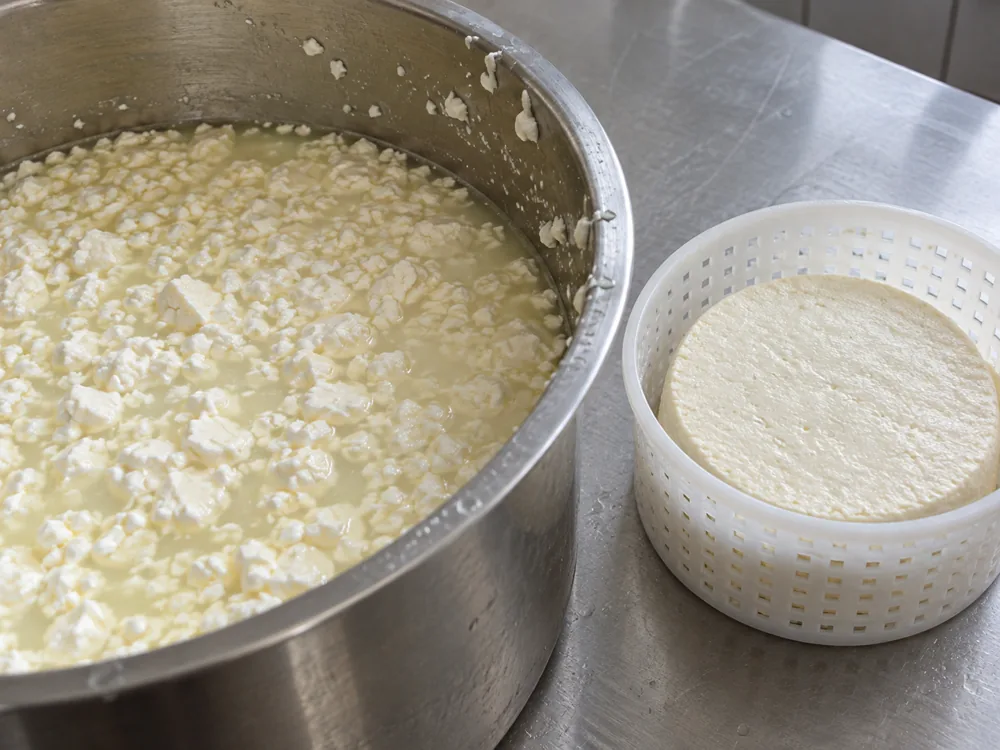
The maker pasteurises the milk at around 7am before production, then adds a starter culture and natural rennet.
After about thirty minutes the milk becomes a curd cake, which is cut into small pieces and drained of its whey. The curds are then washed and heated until they are ready for the moulds.
Washing changes the curd: water is added to the vat to slow acidification, and reheating expels more moisture. Neal's Yard Dairy says scalding and washing also removes some lactose and reduces acidity.
Pressing takes about six hours. Culture says the cheese then goes into a salt brine and is painted with wax, and Neal's Yard Dairy says the yellow coating is brushed on by hand.
What Should You Expect from Coolea's Flavour and Texture?
What you taste depends on which Coolea you buy. Bord Bia calls young Coolea mild, semi-firm and buttery, a very pleasant everyday cheese, and calls a matured one intensely full flavoured, deep and meaty.
Culture adds grass, endive, chocolate and toasted brioche to the caramel and butterscotch in Neal's Yard Dairy's description. It describes the interior as a deep, rich, golden caramel colour, which fits Bord Bia's note that the paste deepens with time.
| Point | Source | What it says |
|---|---|---|
| Texture | Bord Bia | Firm, closed texture with a smooth paste |
| Texture | Culture | Very firm and dense, with occasional holes |
| Texture | Neal's Yard Dairy | Smooth and close textured, reminiscent of Dutch Gouda |
| Flavour | Neal's Yard Dairy | Sweet and rich, with caramel, butterscotch and honey |
| Flavour | Culture | Rich, sweet, smooth and complex, and less assertive than many tangy Goudas |
| Rind | Bord Bia | Yellow or orange wax |
| Rind | Culture | Plastic in its fact box, although its text says the cheese is painted with wax |
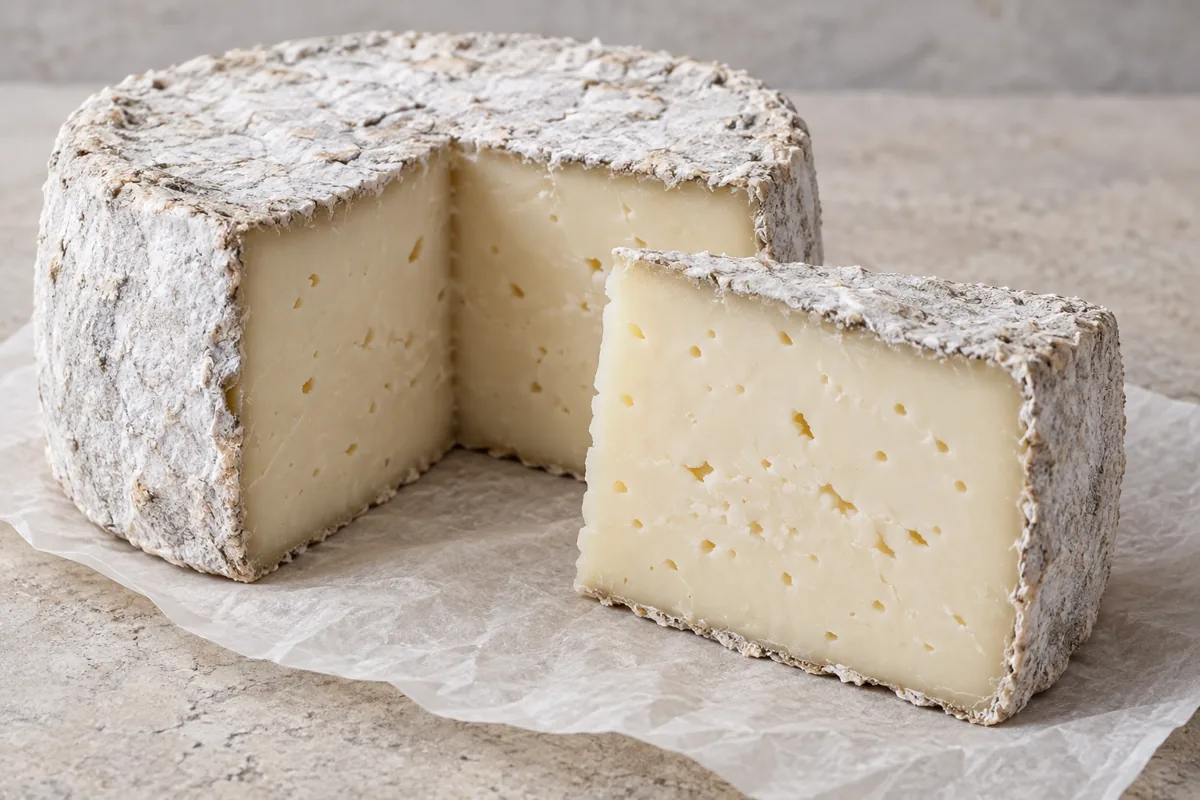
Coolea's paste is closed and smooth in Bord Bia's and Neal's Yard Dairy's descriptions, while Culture reports occasional holes. So if the cut face of your wedge shows a few small holes, it matches Culture's description, and a closed face matches the other two.
Culture calls Coolea less assertive than many tangy Goudas, and Bord Bia calls its matured band intensely full flavoured. Culture is comparing it with tangy Goudas and Bord Bia is describing its oldest band, so in our reading depth and sweetness are the safer expectation than sharpness.
Coolea's rind is a yellow or orange wax in Bord Bia's profile, while Culture's fact box says plastic, although its text says the cheese is painted with wax. Ask the seller whether the coating is meant to be eaten before you treat it as edible.
What Should You Check Before Buying Coolea?
Ask for the age first. Bord Bia lists three bands and Neal's Yard Dairy sells wheels matured for at least a year, so one name can cover very different Coolea.
Neal's Yard Dairy sells cuts from a twenty-fourth of a wheel (270 to 317 g) up to a quarter (1,635 to 1,902 g), plus the whole wheel. Each cut is given as a range because it is a fraction of a wheel whose weight varies.
Choose the cut by how fast you will eat it. Neal's Yard Dairy's 14-day guidance for cut pieces does not change with size, so the portion you pick decides how much cheese you have to eat in that time.
Coolea is not a vegetarian cheese. Neal's Yard Dairy's ingredient list and Culture's fact box both name animal rennet, and the maker describes its rennet as natural, an enzyme from the stomach of a calf.
Bord Bia says only traditional rennet is used because it makes far more age-worthy cheeses.
Herbs and Garlic is a Coolea variety on the maker's Who We Are page, introduced as the business expanded, but it is not among the four on its home page, so ask the seller if that is the one you want.
You can buy Coolea well beyond Cork: cheesemongers carry it across Ireland, the United Kingdom and much of the world.
Its exporters include Neal's Yard Dairy in London and Sheridans Cheesemongers in Galway and Dublin, and Neal's Yard Dairy has bought Coolea from the Willems family since the 1980s.
Ask for the age of the cut, choose among the four varieties the maker lists, and read the ingredient line: animal rennet means the cheese is not vegetarian.
What Should You Drink with Coolea?
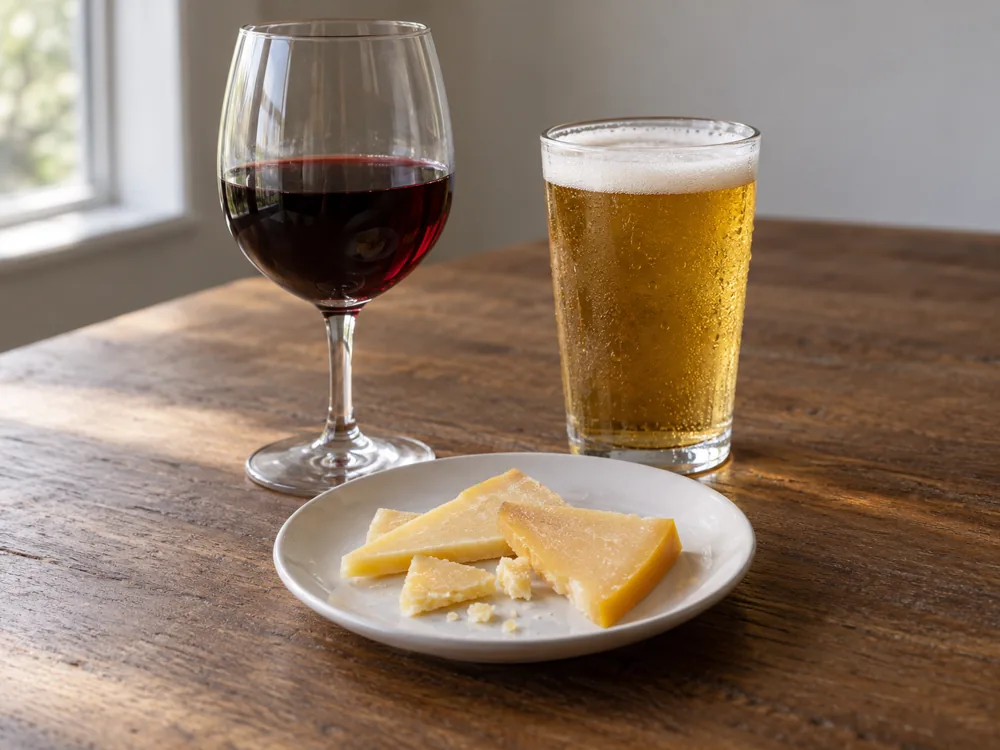
Match the wine to the age of your wedge. Bord Bia suggests a table red with the young cheese and a full-bodied red wine with the young matured and matured bands, so the wine gets heavier as the cheese turns sweeter and deeper.
Culture calls Coolea a beer-friendly cheese and suggests a rich pale ale or a blonde ale.
| Pairing | Type | Why It Works |
|---|---|---|
| Table red | Wine | Bord Bia, for the 3 to 6 month cheese. |
| Full-bodied red | Wine | Bord Bia, for the 7 to 11 and 12 to 17 month cheese. |
| Rich pale ale or blonde ale | Drink | Culture, which calls Coolea a beer-friendly cheese. |
How Do You Store and Serve Coolea?
For storing Coolea, you can follow the home care advice Neal's Yard Dairy gives for its cut cheese in general.
- Wrap the cheese in waxed cheese paper; parchment or greaseproof paper is the best substitute.
- Avoid cling film and foil, which can make cheese sweat and harm its flavour and texture.
- Keep it in the fridge in the salad drawer or a cardboard box, and away from the door, which is overly drying.
- Unbox it on arrival and re-wrap any paper that came loose in transit.
Neal's Yard Dairy says cut pieces are meant to be eaten within 14 days of arrival when stored this way.
When you serve it, two pieces of advice pull against each other. Neal's Yard Dairy says cold cheese can taste bland, while the CDC says perishable food should not be left out for more than 2 hours, or 1 hour above 90°F.
Each time a piece comes up to room temperature, its cultures and moulds become active. That can shorten the time it stays at its peak, so keep it wrapped while it warms and take out only what you will eat.
Is Coolea Safe During Pregnancy?
Bord Bia and the maker both say Coolea is made with pasteurised milk, and Bord Bia classes it as a hard cheese. Neither the NHS nor the CDC names Coolea, so their lists do not settle whether it counts as a hard cheese in pregnancy.
Coolea is made from cow's milk, so check the label if you have a milk allergy. For calorie, fat, sodium or lactose figures, use the label on the wedge you buy.
SOURCES & REFERENCES
What Else Do People Ask About Coolea?
It is an Irish farmhouse cheese made in County Cork. The Willems family came from Holland and use a Gouda recipe, according to the maker, Bord Bia, Neal's Yard Dairy and Culture.
Bord Bia lists young at 3 to 6 months, young matured at 7 to 11 months and matured at 12 to 17 months. Neal's Yard Dairy sells wheels averaging 18 to 24 months.
No. Bord Bia marks it as not made with raw milk, and the maker, Neal's Yard Dairy and Culture all call the milk pasteurised.
No. Bord Bia says traditional rennet is used, Neal's Yard Dairy and Culture name animal rennet, and the maker says natural rennet, an enzyme from the stomach of a calf.
In our view, a Gouda of a similar age is the nearest style to try, because all four sources tie the recipe to Gouda.