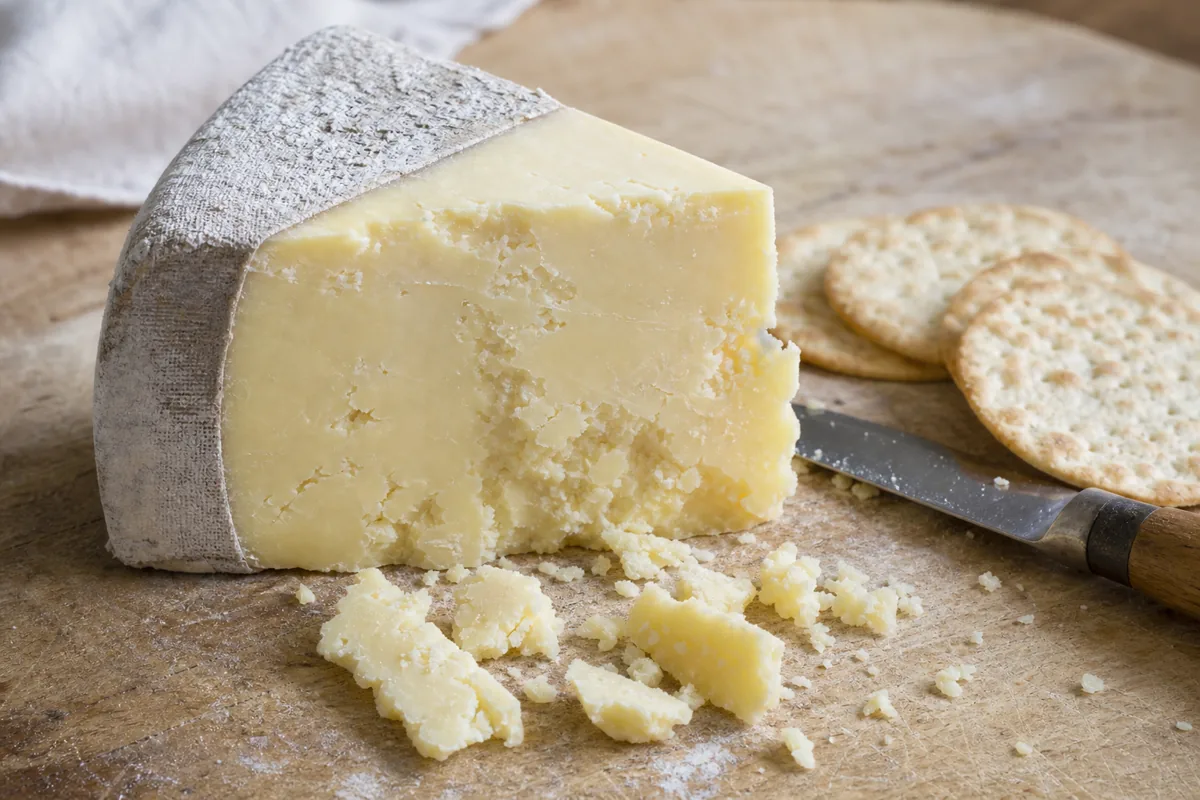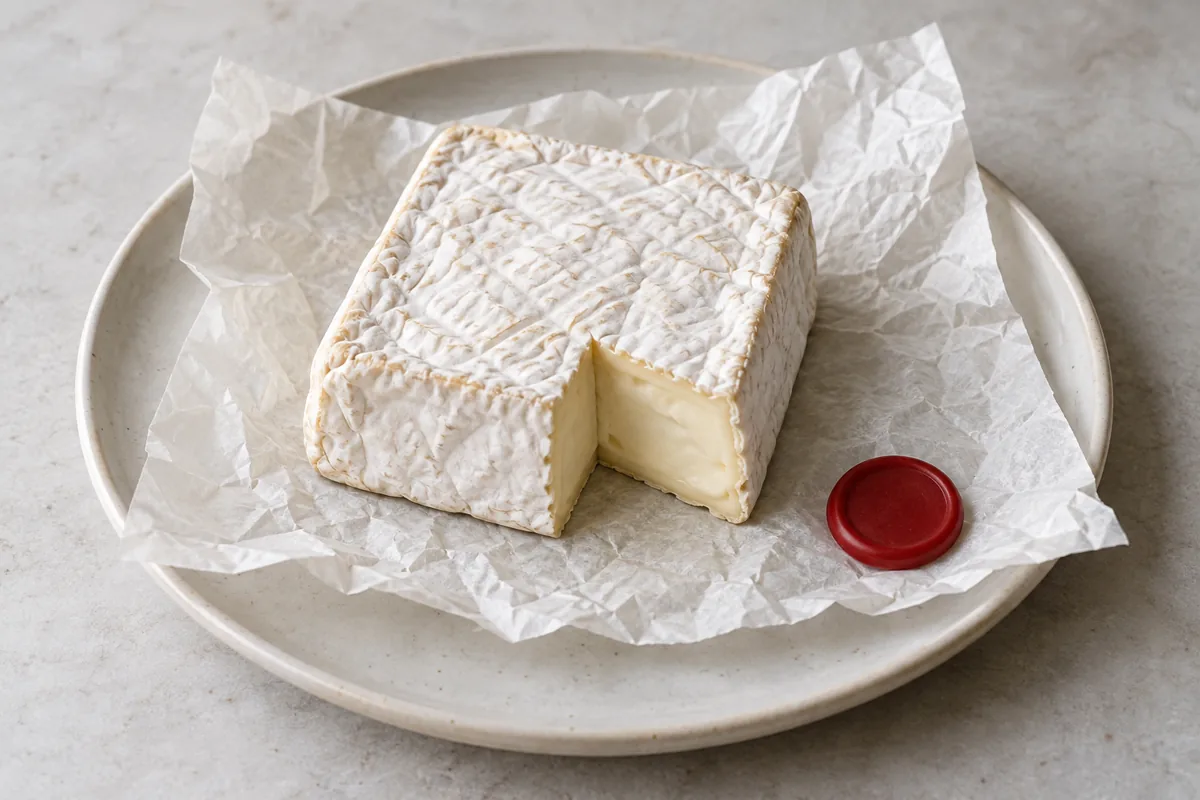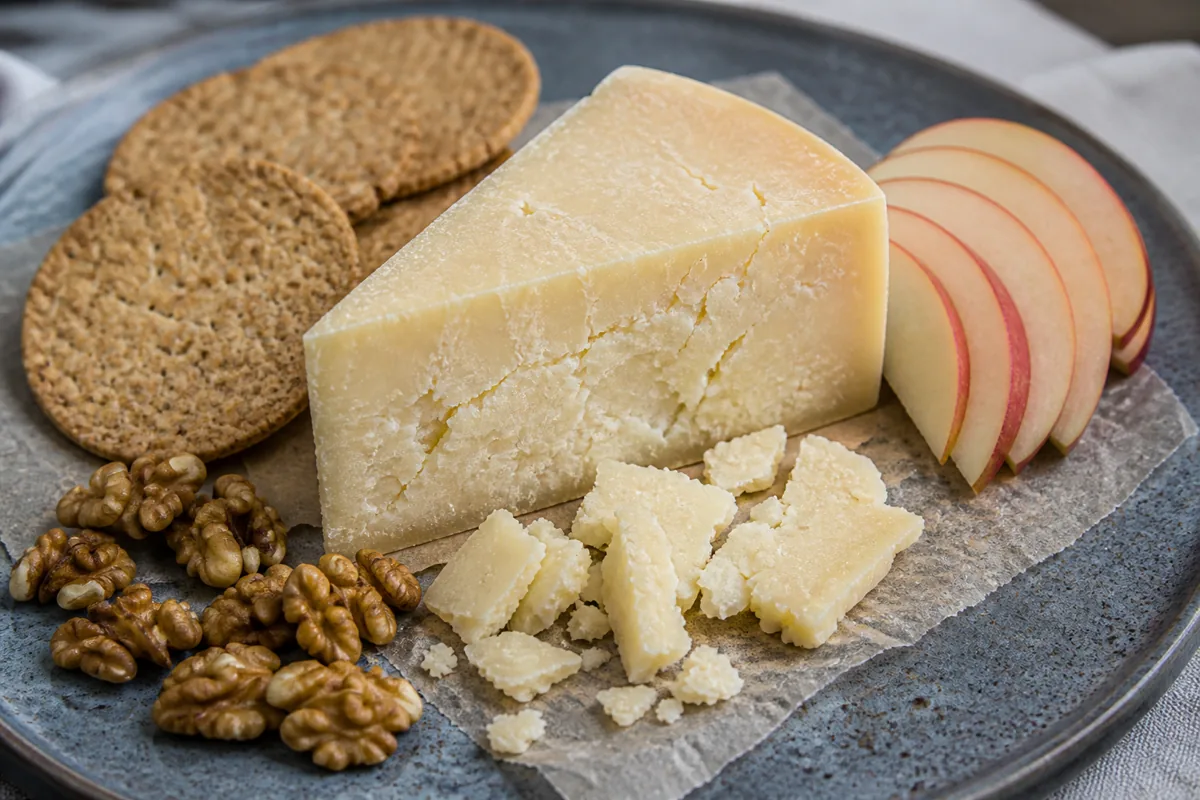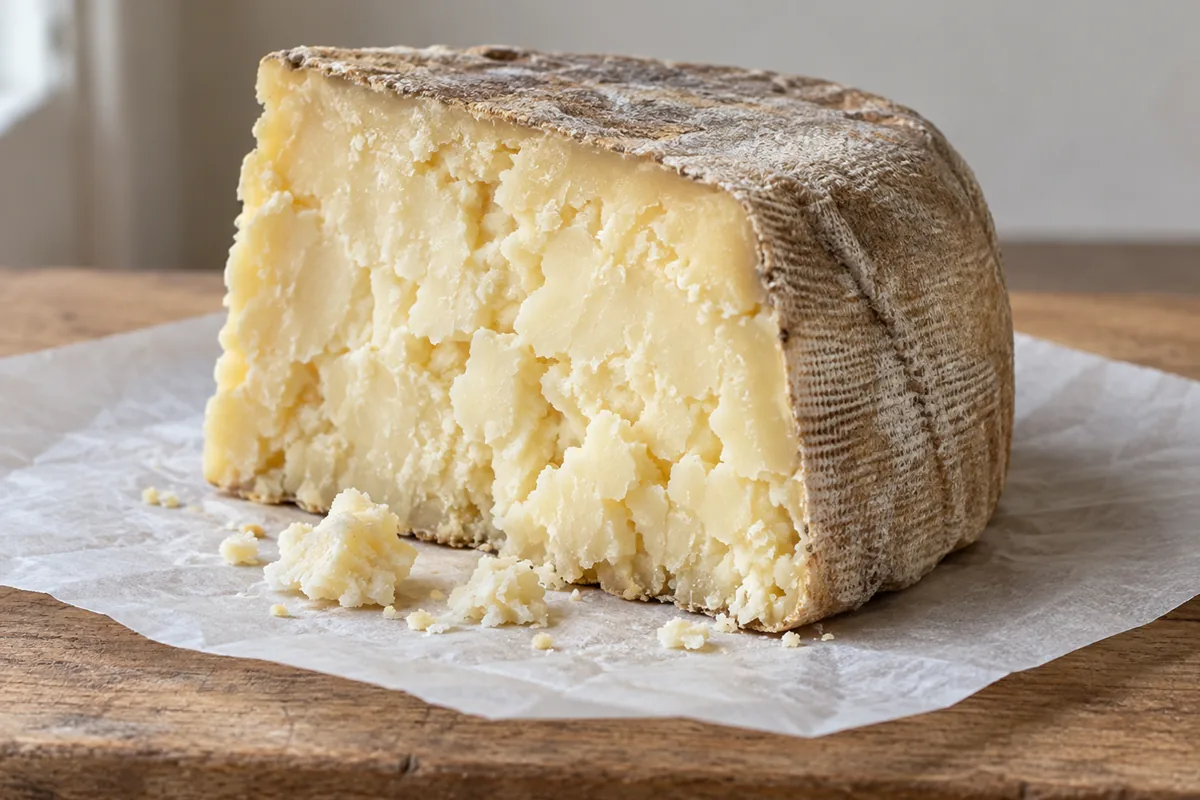
Kirkham's Lancashire is a farmhouse cheese made from raw cow's milk at Lower Beesley Farm, near Goosnargh in Lancashire, by Graham Kirkham, the third generation of his family to make it.
Culture magazine calls the texture moist, rich, crumbly and creamy, and the family's own name for it is buttery crumble.
It is bound in cloth and set with animal rennet, so it is not vegetarian, and if you are pregnant, its unpasteurised milk raises a question, because the NHS and the CDC word raw-milk cheese differently.
In This Article
Who Makes Kirkham's Lancashire?
Graham Kirkham makes it on the family farm, using milk from the farm's own Holstein Friesian herd.
Cheese.com describes him as a third-generation cheesemaker and the son of Mrs Kirkham, whose name is on the cheese.
Culture dates the family's cheesemaking to Ruth Kirkham in 1978, on a farm the family has owned for more than 70 years. Neal's Yard Dairy, which says it has worked with the Kirkhams for over 30 years, adds that Graham's father John managed the cows while Ruth made the cheese.
Neal's Yard Dairy puts the family's position in numbers: 202 farmhouse producers made Lancashire in 1939, and today, it says, only the Kirkham family still make raw-milk Lancashire by the traditional method.
The collapse dates to the Second World War, which ended most British farmhouse cheesemakers.
Can You Eat Kirkham's Lancashire While Pregnant?
Kirkham's is made from unpasteurised milk, which puts it outside the NHS lists of safe pasteurised soft and semi-hard cheeses. The NHS does list pasteurised or unpasteurised hard cheeses, such as cheddar, gruyère and parmesan, as safe, so the question is whether Kirkham's counts as hard.
Kirkham's is hard and Cheddar-like in Culture magazine's table and semi-soft in Cheese.com's listing, and for an unpasteurised cheese that is not hard, the NHS says foods made from unpasteurised milk must be thoroughly cooked, so ask your midwife or doctor before you eat it uncooked.
The CDC table is stricter about milk. It lists hard cheese as a safer choice only when made with pasteurized milk, and it puts "unpasteurized (raw) milk and dairy products made from raw milk" in its riskier column, the row that covers Kirkham's.
Both agencies treat heat as a way out, with a difference in scope. The NHS counts any cheese cooked until steaming hot as safe, including soft or blue cheese, while the CDC's matching line covers only pasteurized soft cheeses heated to an internal temperature of 165°F or until steaming hot.
The reason is listeria. The NHS says unpasteurised or soft ripened dairy foods may contain listeria, which can cause listeriosis, and the CDC says pregnant women are 10 times more likely to get a Listeria infection.
Was Kirkham's Lancashire Recalled for E. Coli?
Yes. A recall was issued in December 2023 after UK investigators linked an outbreak of Shiga toxin-producing E. coli (STEC) O145:H28 to unpasteurised cheese made by Mrs Kirkham's, according to Food Safety News.
Food Safety News's report counts 36 confirmed and one probable infection, with 28 confirmed cases in England and eight in Scotland. One person who developed haemolytic uraemic syndrome died, and 15 were admitted to hospital.
In July 2024 four later cases took the total to 40 sick people, including two deaths, but investigators did not find a food-chain link between those four and Mrs Kirkham's products.
Genome sequencing placed the 36 human isolates and two bovine isolates from two cattle faecal samples taken at the dairy farm in the same cluster, which pointed to cattle as the likely source of infection through contaminated unpasteurised cheese.
Of 29 patients whose questionnaires were reviewed, 18 reported travelling first class on trains run by one company, and 16 had eaten the same meal, which included an unpasteurised Mrs Kirkham's cheese. One more patient, who had not travelled by train, had bought cheese from a farm shop.
Only two patients named raw-milk cheese when first asked what they had eaten, and the report says this may reflect poor recall or not knowing the cheese was unpasteurised. The train operator's menu did not say so in the main description of the grazing-plate items, although it appeared elsewhere on the menu.
Testing of the cheese did not detect the outbreak strain, and the report says scientists called isolating STEC from food, dairy products included, challenging. A different strain, E. coli O109:H16, was isolated from one cheese and did not match the human cases.
The firm ran a regular sampling programme, and researchers reported unsatisfactory milk results and very high E. coli findings in cheese during the likely production period. Nine of 34 cheese samples exceeded the Specialist Cheese Makers Association's guidance levels, although raw-milk cheese has no legal limit.
Mrs Kirkham's resumed sales of five raw-milk cheeses in February 2024.
The outbreak involved E. coli, not listeria, which is the germ the NHS names for unpasteurised dairy.
How Is Kirkham's Lancashire Made?
Milk Trekker, a newsletter that visited the farm, reports that evening milk is held at 8°C (46°F) so it sours slightly before it meets the morning milk.
The milk is never fully chilled on purpose. The newsletter's author argues that refrigeration changes the microbial ecology of raw milk for the worse, and says that when the farm first used a bulk tank and cooled the milk fully, the cheese developed problems with pseudomonas, a cold-tolerant bacterium.
Starter culture and rennet go in, and the curd is cut by hand. The starter goes in at a very low rate, and the soft curd is cut with small hand harps, fluffed gently at intervals for ten minutes and left under the whey for over an hour.
The curd mass is then cut into 6 to 8 inch cubes and broken by hand three times over three hours, which releases whey mechanically while little acid has formed. Because the acidity stays low at this stage, Milk Trekker's author writes, the minerals stay in the curd instead of leaving with the whey.
The defining step is the curd blend: Kirkham's combines curd from several days' milkings, a method that began when Lancashire farms were much smaller and could not fill a mould from one day's milk.
The split between the days is given three ways.
| Source | What it says about the blend |
|---|---|
| Culture magazine | Curd from the previous day's make is mixed in equal quantities with the current day's curd |
| Milk Trekker | The moulded cheese is 50% two-day-old curd and 50% three-day-old curd |
| The Fine Cheese Co. | A two-day method using a third of the curd from each day |
Wikipedia credits the blending of curd of varying maturity with Lancashire's distinctive character, and Neal's Yard Dairy says it adds complexity to the flavour.
Milk Trekker's author calls Kirkham's the only cheese he knows of in the UK that blends curds from several days. He says the two- and three-day curds differ in pH, aroma and texture, and that acidity builds slowly over those days instead of racing ahead as it does in most cheesemaking.
The curd is not yet salted during that hold, so some yeastiness enters, and he guesses this helps ripening, which is his inference rather than a tested result. He names slow acidification, gentle handling and the blend of days as the three things that produce the texture, with no shortcut.
Milk Trekker reports that the curd goes through a peg mill with salt and the 10kg cheeses are pressed overnight in screw presses. Culture says the cloth bandage is applied between pressings.
Culture says the finished cheese is coated with a liberal layer of butter. The Fine Cheese Co. describes a cloth-bound cheese rubbed with butter, which it says lets the cheese breathe as it matures.
Neal's Yard Dairy's product page contradicts itself: a photo description says "lard bound outer-casing", while its tags list the cheese as "Lard Free (Pork)". Culture and Milk Trekker both name butter, but if you avoid pork, ask the seller what the rind is rubbed with.
Is Kirkham's Lancashire Vegetarian?
No. Neal's Yard Dairy, Culture and The Fine Cheese Co. all list animal rennet, and Cheese.com marks the cheese as not vegetarian.
What Should a Wedge of Kirkham's Lancashire Look Like?
On a cut face, look for uneven curd: Milk Trekker describes a variable, fluffy and flaky texture in which firmer and softer curd fade into one another. That unevenness follows from the make, because the blended curds are different ages.
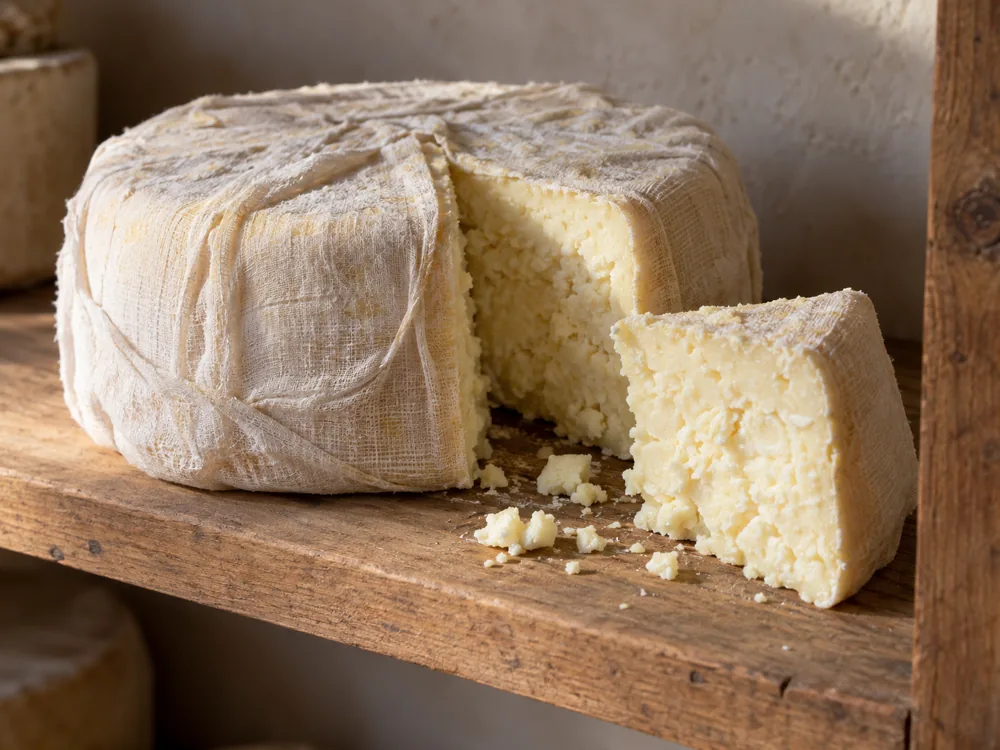
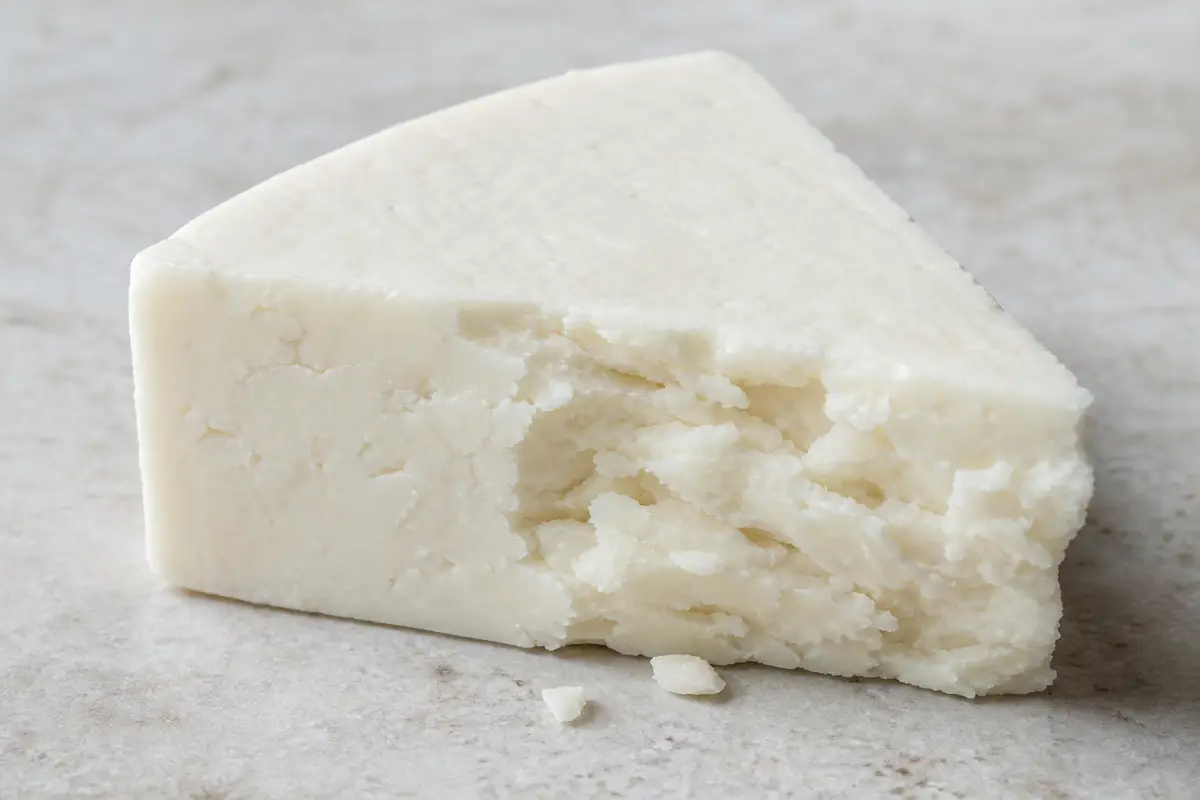
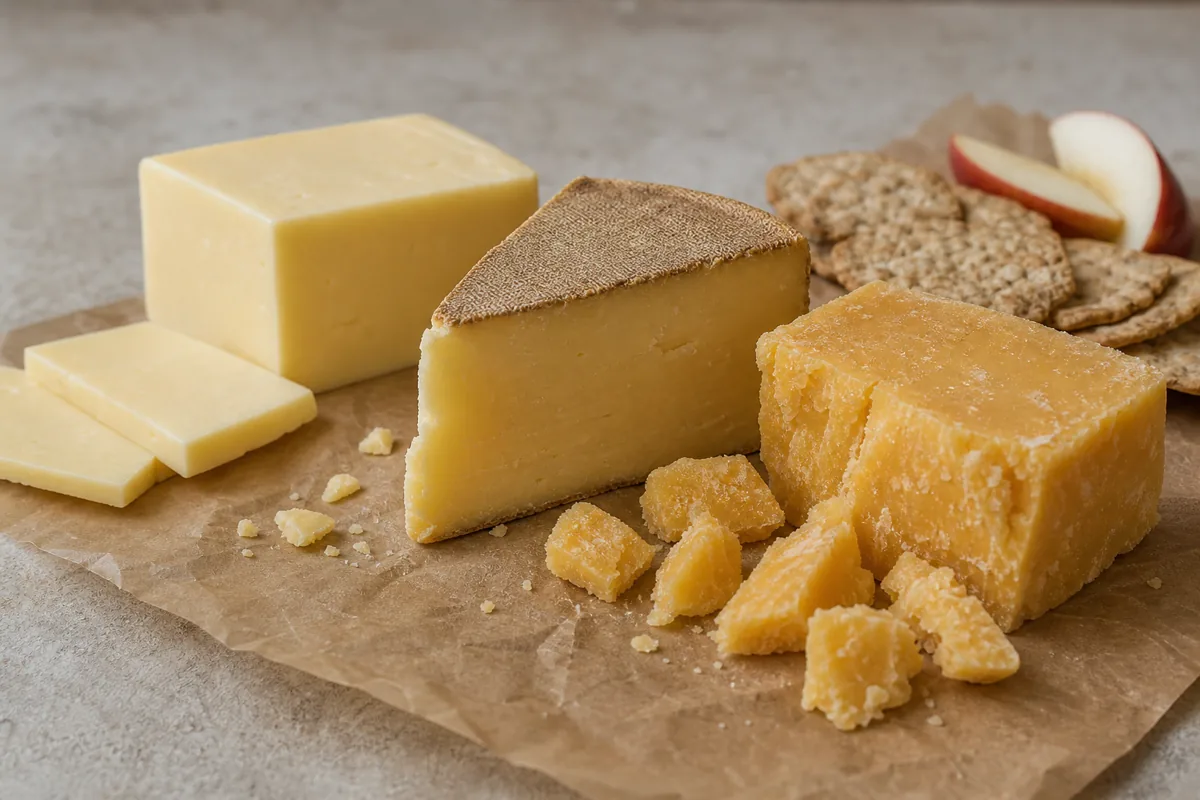
Colour is the weaker cue: The Fine Cheese Co. lists a creamy yellow paste in its specification but calls the cheese a white Lancashire in its description, and Cheese.com lists the colour as yellow.
A cut face of uneven firmer and softer curd and a cloth rind point to the traditional make; colour is the weakest cue, because sources call the paste both white and creamy yellow.
What Does Kirkham's Lancashire Taste Like at Different Ages?
Culture describes the flavour as buttery, lemony and yogurty with a pronounced tang and a long, rounded finish. Neal's Yard Dairy describes a bright, full flavour with a light, yoghurty tang.
Milk Trekker found the flavour mild but full, made of sour milk, yogurt and amplified butter, and relays the maker's comparison to small pieces of popcorn almost soggy with butter. The Fine Cheese Co. calls the flavour clean and lactic.
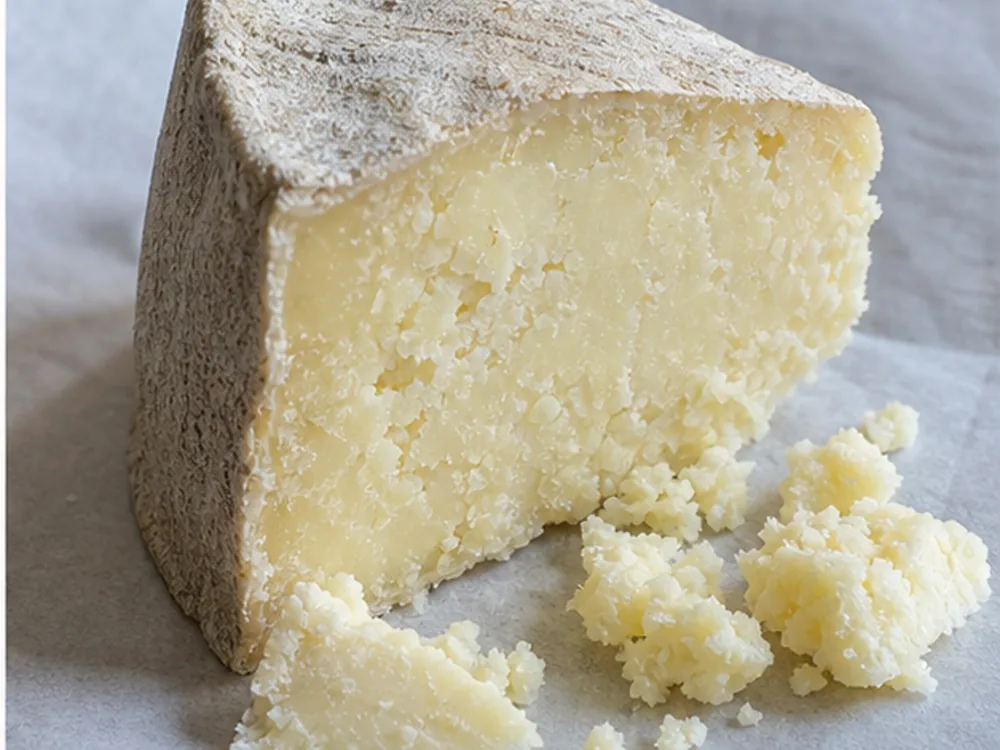
Texture carries as much of the identity as flavour. Neal's Yard Dairy calls it crumbly-yet-creamy, and Milk Trekker found it fluffy and flaky.
Age shifts both, so choose by it: Neal's Yard Dairy says the cheese at 3 to 4 months tastes fresh and gentle, while a 9 to 12 month cheese moves closer to the crumbly side of buttery crumble with more upfront, punchy flavours.
Each month Neal's Yard Dairy tastes the farm's batches at one to two months old and picks the ones it likes. Most sell the following month, and the few it ages in its own Bermondsey maturing arches become Mature Kirkham's Lancashire.
Milk Trekker's author noticed remarkable flavour development at two months, with the character of the two-day-old curd easy to taste. He says longer ageing adds depth and lets the texture develop, while the final flavour stays a step from milk, cream and butter.
| Source | Age stated |
|---|---|
| Neal's Yard Dairy | 3 to 4 months on average; 9 to 12 months for longer-aged cheese |
| Cheese.com | Matures in 3 to 4 months |
| The Fine Cheese Co. | A maturation period of two to six months |
| Culture magazine | At least six weeks before leaving the farm; midi wheels typically sold after three months; large wheels up to 12 months |
Part of the spread may come from who is speaking: Culture describes the farm's formats, Neal's Yard Dairy describes batches it chooses and sometimes ages itself, and The Fine Cheese Co. gives one window for the cheese it sells.
The figures run from six weeks to a year, so ask how old your piece is: its age says more about its flavour than the cheese's name does.
Is Kirkham's Creamy, Tasty or Crumbly Lancashire?
Wikipedia divides Lancashire into three types. Creamy and Tasty follow the traditional multi-day curd method, while Crumbly is a later creation suited to mass production.
By our reading, Kirkham's fits the traditional pair, because it blends curd from different days. Wikipedia gives Creamy as four to twelve weeks and Tasty as 12 weeks to 24 months, so a cheese sold at 3 to 4 months sits in the Tasty window, though those are ranges for the styles and not Kirkham's own labels.
The word crumbly causes the confusion. Cheese.com and Neal's Yard Dairy both call Kirkham's texture crumbly, yet Crumbly Lancashire is a separate style that Wikipedia says dates from the 1950s.
Wikipedia says Crumbly Lancashire is made from a single day's milk, matures in only 6 to 8 weeks into a fresh, high-acid cheese and resembles other crumbly cheeses such as Cheshire. It is also the only Lancashire variety made outside the county.
Milk Trekker's author goes further and calls crumbly the wrong word for Kirkham's. The crumbly texture people associate with Lancashire, he says, belongs to the industrial versions, which in the 20th century replaced the slow, multi-day make with a single-day, fast-acid cheese.
He still places it among the British crumblies, but says its signature texture has no counterpart in another cheese he has seen.
What Do You Serve with Kirkham's Lancashire?
Put it on toast or beside an Eccles cake: The Fine Cheese Co. calls it a connoisseur's cheese on toast because it bubbles rather than melts, and Culture and Wikipedia pair Lancashire with Eccles cake.
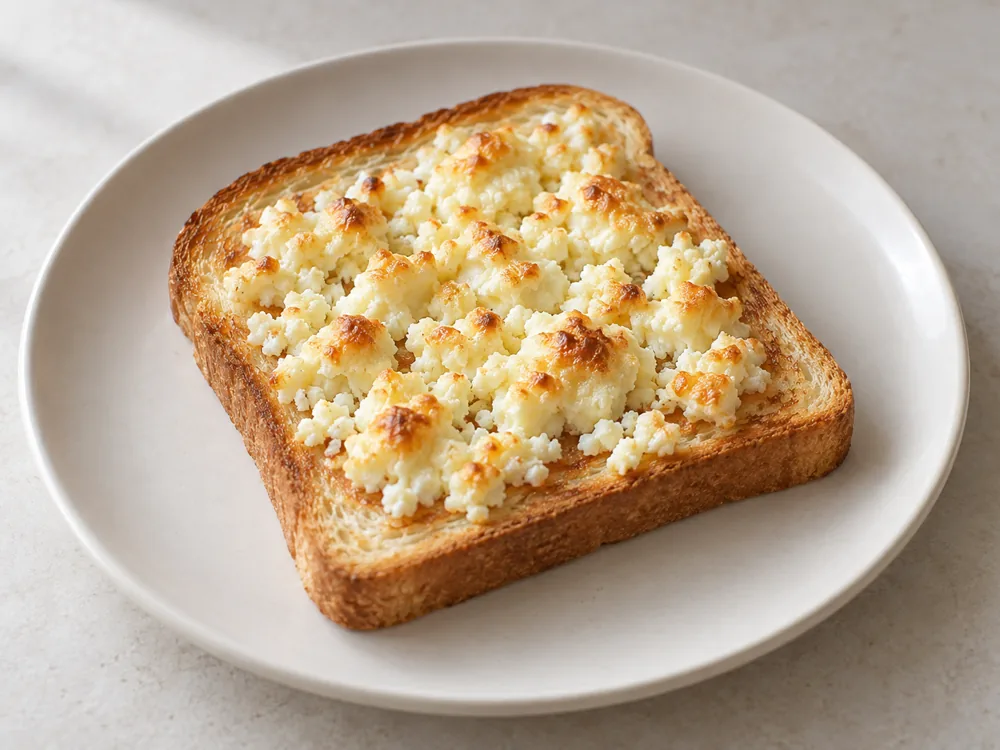
Wikipedia says Creamy Lancashire is good for toasting because it does not turn stringy when melted, which matches the retailer's description.
Cheese.com, The Fine Cheese Co. and Milk Trekker all say it melts in the mouth, which sits oddly beside the toast description: it dissolves on the tongue yet puffs under a grill instead of flowing into a smooth, stringy melt.
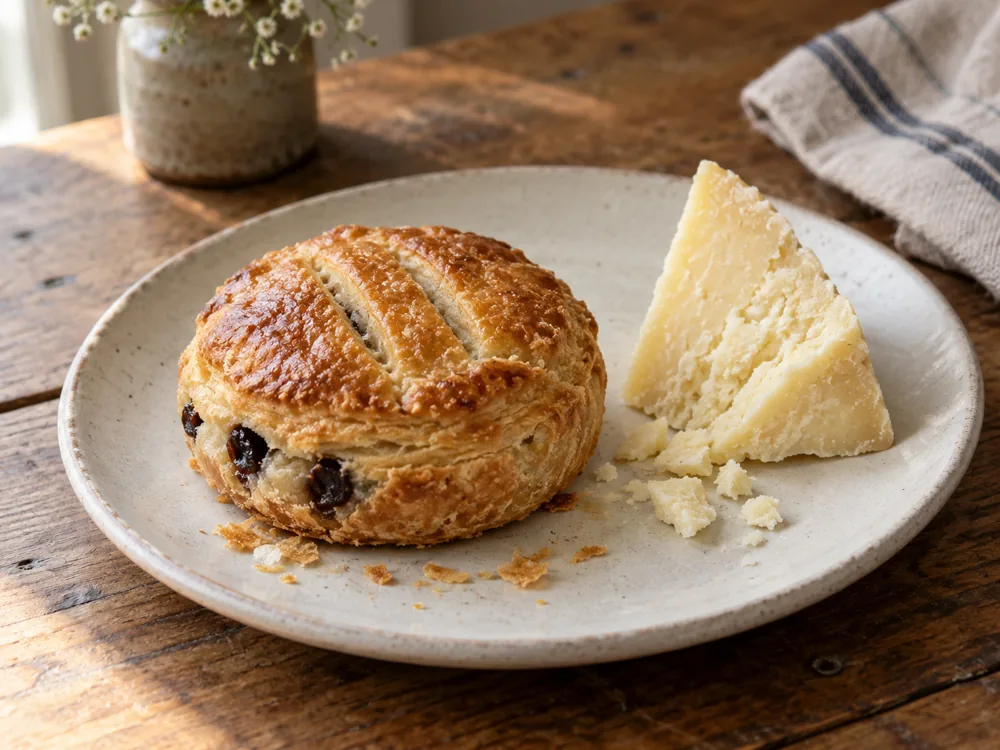
Culture describes Eccles cake as a flaky, currant-studded pastry, and if you want something less sweet, it adds Chorley cake as an alternative.
| Pairing | Why It Works |
|---|---|
| Cheese on toast | The Fine Cheese Co. says it bubbles rather than melts. |
| Eccles cake | Named by Culture and Wikipedia as the traditional partner. |
| Chorley cake | Culture's less sweet alternative to Eccles cake. |
| Damson paste | Tagged as a pairing on Neal's Yard Dairy's product page. |
| Rosebud piccalilli chutney | Also tagged as a pairing on Neal's Yard Dairy's product page. |
Where Can You Buy Kirkham's Lancashire, and How Long Does It Keep?
Neal's Yard Dairy and The Fine Cheese Co. both list Kirkham's. The Fine Cheese Co. sells 275g, 550g and 1.1kg pieces, freshly cut and wrapped to order, while Neal's Yard Dairy sells fractions of the wheel from a smallest piece to the whole cheese.
| Piece | Weight range |
|---|---|
| Smallest piece | 280g to 328g |
| Sixteenth | 560g to 657g |
| Eighth | 1,125g to 1,313g |
| Quarter | 2,255g to 2,626g |
| Half | 4,515g to 5,252g |
| Whole | 9,030g to 10,504g |
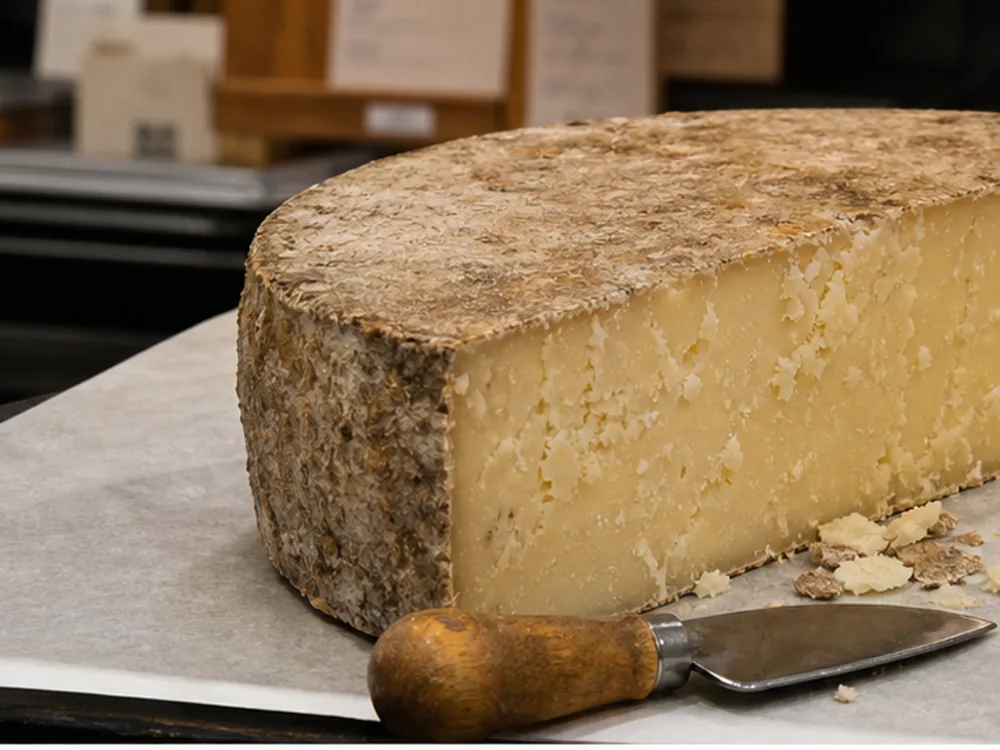
Portions come from large wheels: The Fine Cheese Co. puts a whole Kirkham's at approximately 9kg, Milk Trekker describes 10kg cheeses, and the table shows Neal's Yard Dairy's wheel at about 9 to 10.5kg.
Culture lists three wheel formats of 25 pounds (about 11kg), 40 pounds (about 18kg) and 6.5 pounds (about 3kg), and says the smallest is kept for the Christmas market. If the wheel size matters to you, ask the shop which format its piece is cut from.
The Fine Cheese Co.'s buying guide allows 70 to 120g per person: 70g after a large meal or at a buffet, and at least 100g when cheese is the main part of the meal. By that guide a 275g piece serves roughly two to four people and a 550g piece five to eight.
Neal's Yard Dairy sells it as raw-milk cheese, and the NHS says packaging shows whether a dairy product is pasteurised, so check the label on the piece you buy.
At home, The Fine Cheese Co. says to keep Kirkham's refrigerated below 8°C and eat it within 7 days of receipt. The CDC's general advice is stricter, a refrigerator at 40°F (about 4°C) or below.
The CDC adds that perishable food, dairy included, should be back in the refrigerator within 2 hours, or within 1 hour when the surroundings are above 90°F.
What Is in Kirkham's Lancashire?
The Fine Cheese Co. lists the ingredients as raw cow's milk (99%), salt, starter, animal rennet and butter.
These are the retailer's typical values, and of the 32.4g of fat, 20.45g is saturated, with sugars at trace level. Applied to its 70 to 120g portion guide, they work out to roughly 280 to 475 kcal and 1.3 to 2.2g of salt per serving.