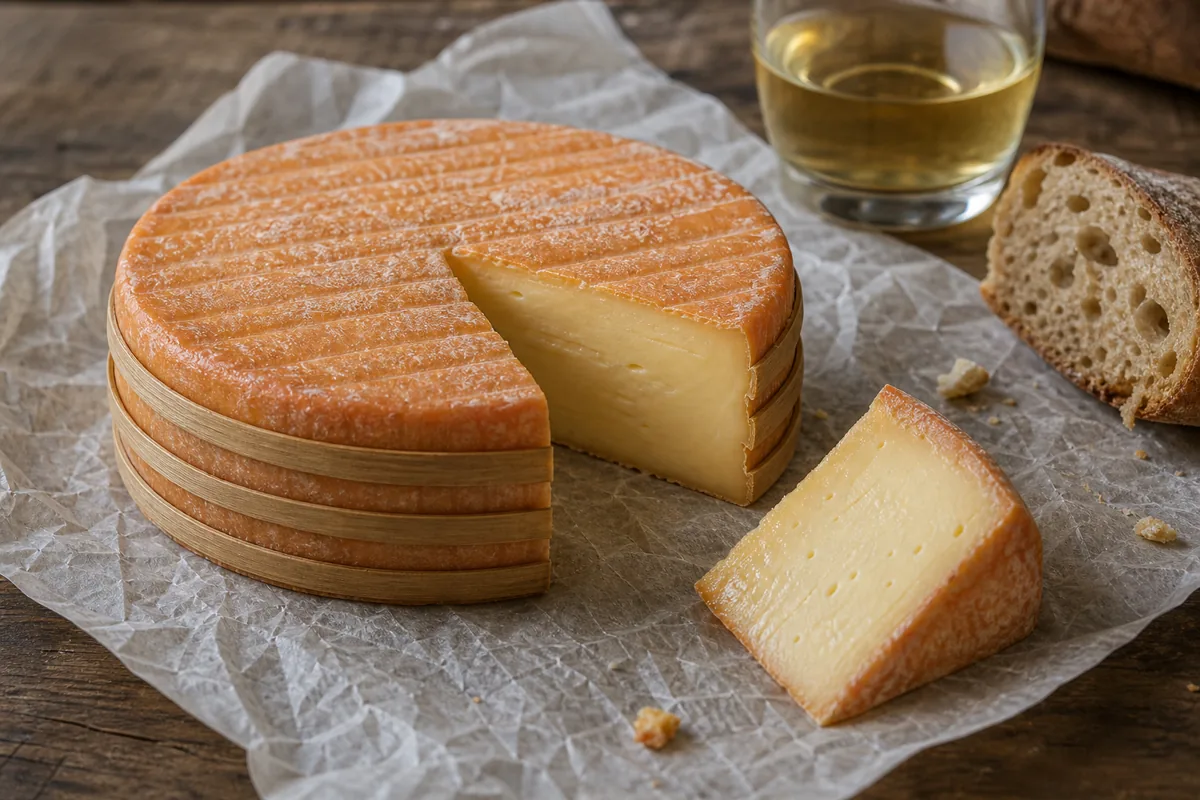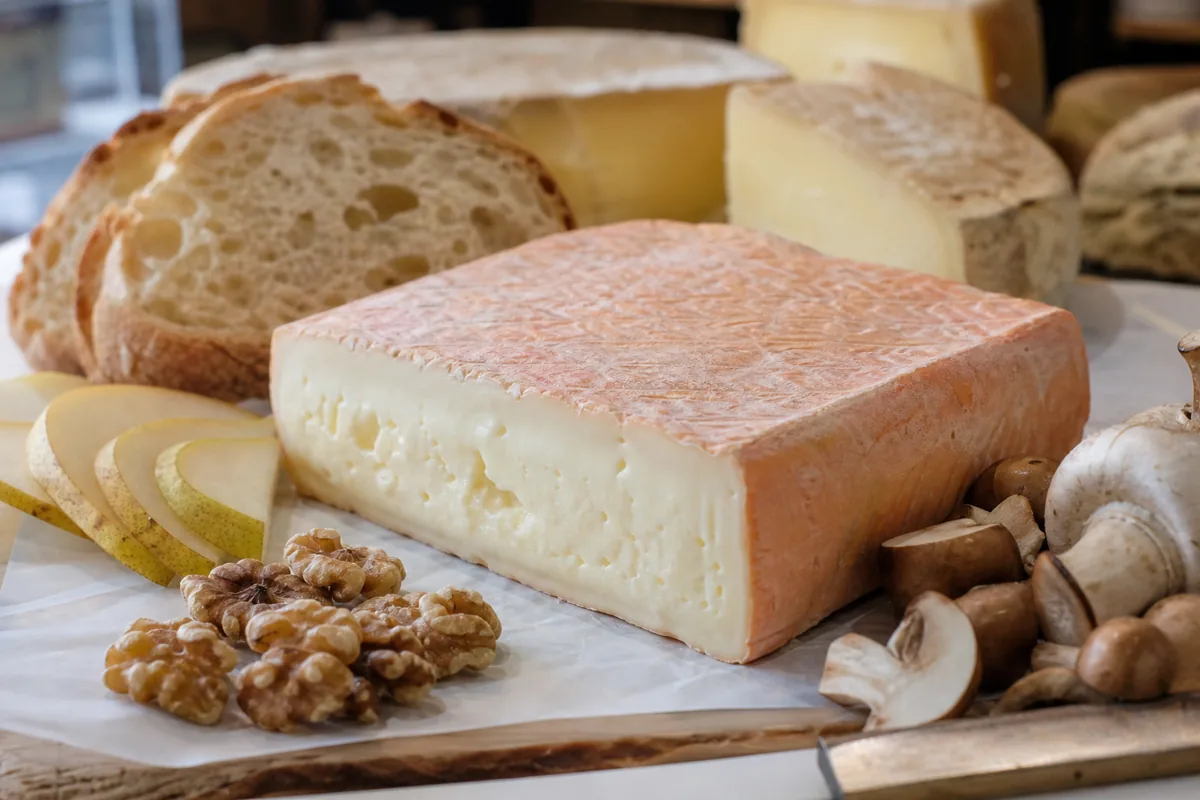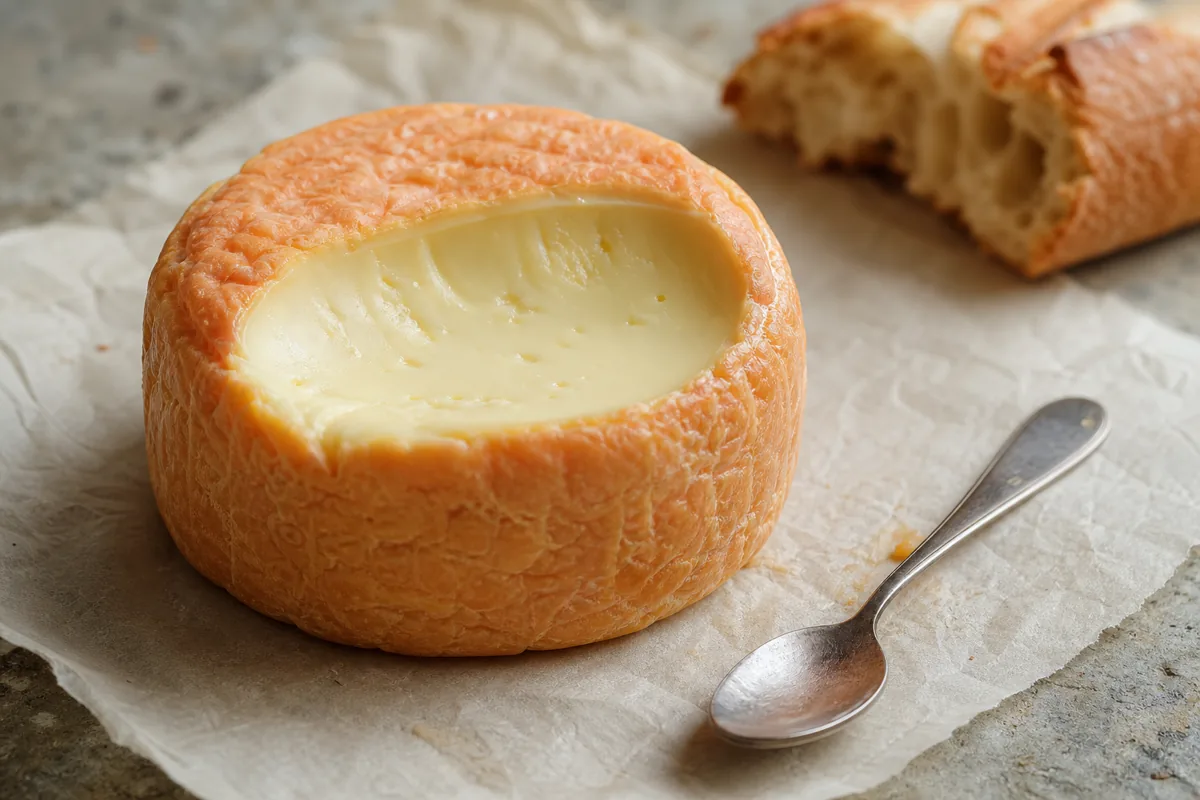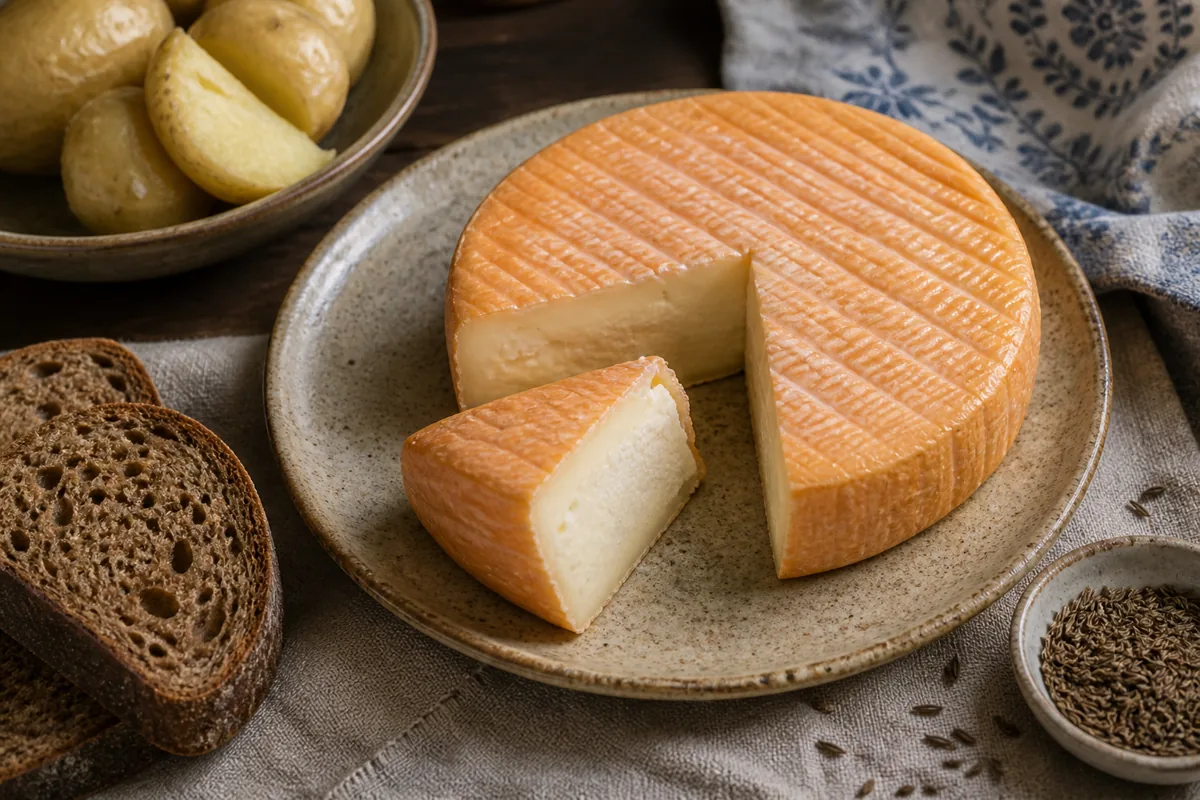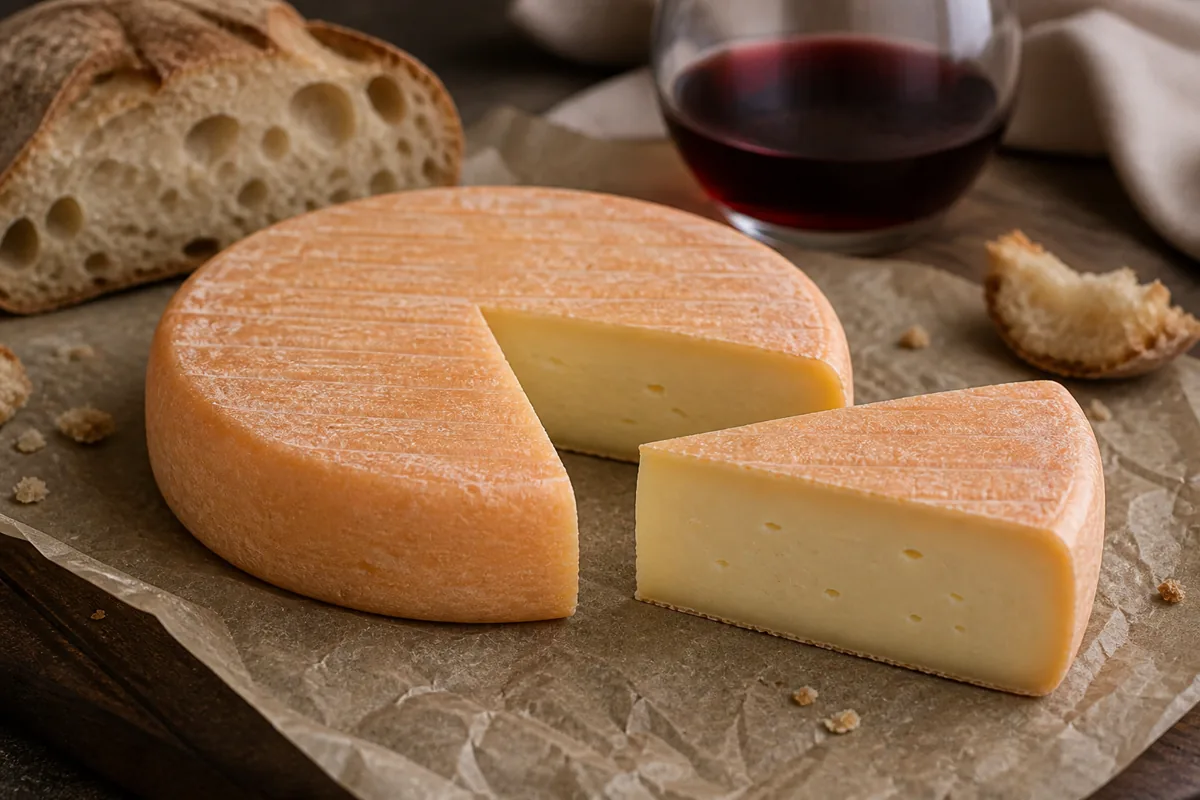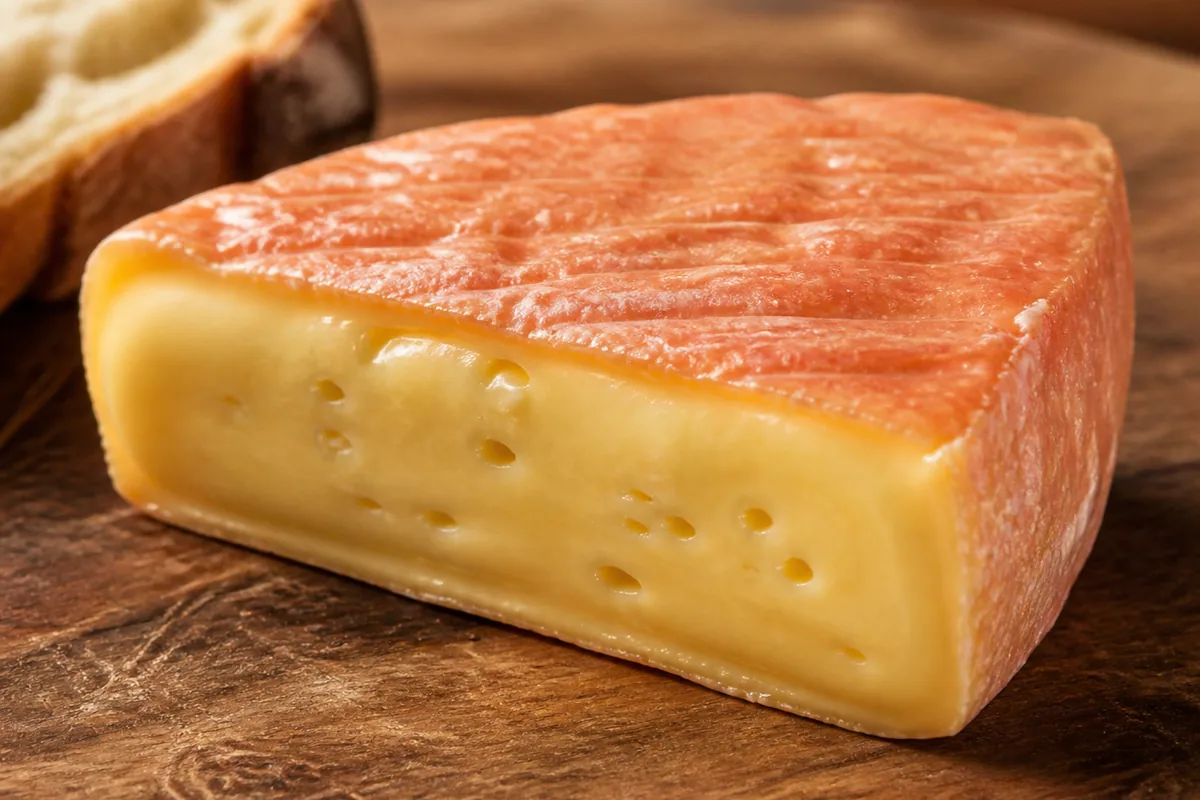
Gubbeen is a semi-soft washed-rind cheese made from pasteurised cow's milk at Gubbeen Farm near Schull in County Cork, Ireland, where Tom and Giana Ferguson make it. You will know it by a sticky, orange-pink rind over a golden, pliable paste with small holes.
A bacterium described in 2001, Microbacterium gubbeenense, is named after the Gubbeen farm and dairy, according to Neal's Yard Dairy.
In This Article
Who Makes Gubbeen, and Where Does the Milk Come From?
Gubbeen is made on the Ferguson family's 100-hectare (250-acre) Gubbeen Farm in Schull, from the milk of a mixed herd, which Culture calls a great asset to cheesemaking because of its balance of butterfat and proteins.
The herd is British Friesian, Simmental, Jersey and Kerry cows in Wikipedia's list, with Shorthorn added in Culture's, while Cork Billy, a West Cork food blog, reports it as mostly Friesian, with a few Jerseys kept "for their cream".
The milk comes from the Fergusons' own herd, all of it in Wikipedia's account and the majority in that of Ardkeen, an Irish retailer, which says extra supplies are occasionally bought from a neighbouring farm.
The farm sits where the Gulf Stream regularly comes ashore from the Atlantic, so grass arrives early in the year and the herd goes out to pasture sooner. The cows are outside on pasture for at least eight months of the year.
Gubbeen dates from 1979 in Wikipedia's and Culture's accounts and from 1980 in Ardkeen's, which gives that year twice. Giana Ferguson first made cheese as a child in Spain.
Cork Billy reports Giana Ferguson telling a Munster Wine and Dine tour that Irish cheese regulation is geared towards cheddar production, while her own tradition comes from small farms in France and Spain.
Gubbeen won gold in the washed-rind category at the 2002 British Cheese Awards, according to Ardkeen. Wikipedia lists British Cheese Awards gold medals in 2010 and 2016, with the 2016 medals going to the rind-washed and the mature smoked versions, and a silver at the 2011 Irish Cheese Awards for semi-soft cheese.
Where Does the Name Gubbeen Come From?
Gubbeen is the English spelling of goibín, an Irish word Wikipedia glosses as "a small beak or mouth". The name comes from the townland the Gubbeen farm stands in.
What Does Gubbeen Cheese Taste Like?
On Culture's account, the cheese you unwrap smells stronger than it tastes. It compares the aroma to an old cellar, slightly musty and earthy, and lists mushrooms, butter, peat and nuts as the flavours, "not as strong as the aroma would suggest".
Nuts turn up in other descriptions too: Neal's Yard Dairy gives "a medley of savoury and nutty flavours with a pleasing bite at its pink rind" and Sheridans Cheesemongers a "medium nutty flavour", while mushrooms appear in Culture, Wikipedia and Ardkeen, and only Culture lists peat.
Neal's Yard Dairy describes the paste as "bouncy, unctuous and smooth", and Culture describes it as semi-soft and pliable, golden and straw-coloured, with small holes.
Gubbeen is called semi-soft by Neal's Yard Dairy, Culture, Wikipedia and Ardkeen and semi-firm by Sheridans, but Ardkeen quotes Giana Ferguson on a texture that is "buttery and soft, not runny or cloying", which together with Neal's Yard Dairy's "bouncy" suggests the two labels describe the same springy paste.
How Does Gubbeen Change as It Matures?
You can buy Gubbeen at more than one stage. Cork Billy describes it as basically one cheese that can be bought young, more mature or smoked, in different sizes.
Age moves the flavour away from butter and milk. Ardkeen quotes Giana Ferguson on a "real buttery milky taste especially when young", while Wikipedia says the flavours vary with maturity and that the cheese develops deeper flavours as it matures.
Neal's Yard Dairy says the cheeses are matured for several weeks, which softens the paste into the bouncy, unctuous, smooth texture it describes. It gives an average age of two to three months for the wheels it sells.
Neal's Yard Dairy receives its wheels from Ireland every two weeks, unwraps them onto racks and keeps them in its warmest maturing room, where it finds the meaty flavours peak after a week or two.
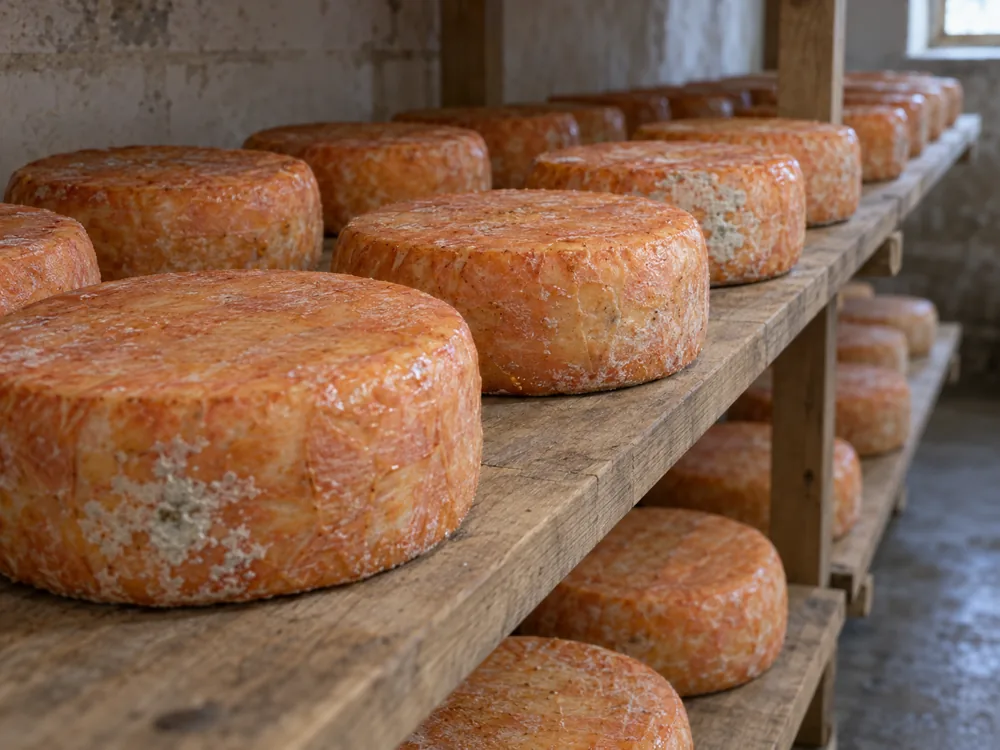
On these accounts a young wheel leans towards the buttery, milky end and a wheel held a week or two in a warm room towards the meaty end, so if you want one end or the other, ask the seller how long a wheel has been kept.
How Is Gubbeen Made?
Starter culture and rennet set the milk, the curd is cut and stirred, and Wikipedia says the cheese then ripens in curing rooms where the rind is washed daily. Neal's Yard Dairy and Ardkeen both state that the milk is pasteurised.
The wheels are washed regularly with a solution of the natural Gubbeen rind flora, which the farm has isolated and made up as a rind wash, together with white wine, salt and water in Culture's account, while Neal's Yard Dairy describes the washing as being in brine, Cork Billy quotes Giana Ferguson on water and white wine, and Ardkeen says white wine is used when washing the rind.
That wash shapes the rind you see and smell. In Culture's account it stimulates Bacterium linens growth, which produces the sticky orange-pink rind and its pungent aroma, and Wikipedia adds that the washing gives rise to the distinctive surface bloom and develops the characteristic flavours.
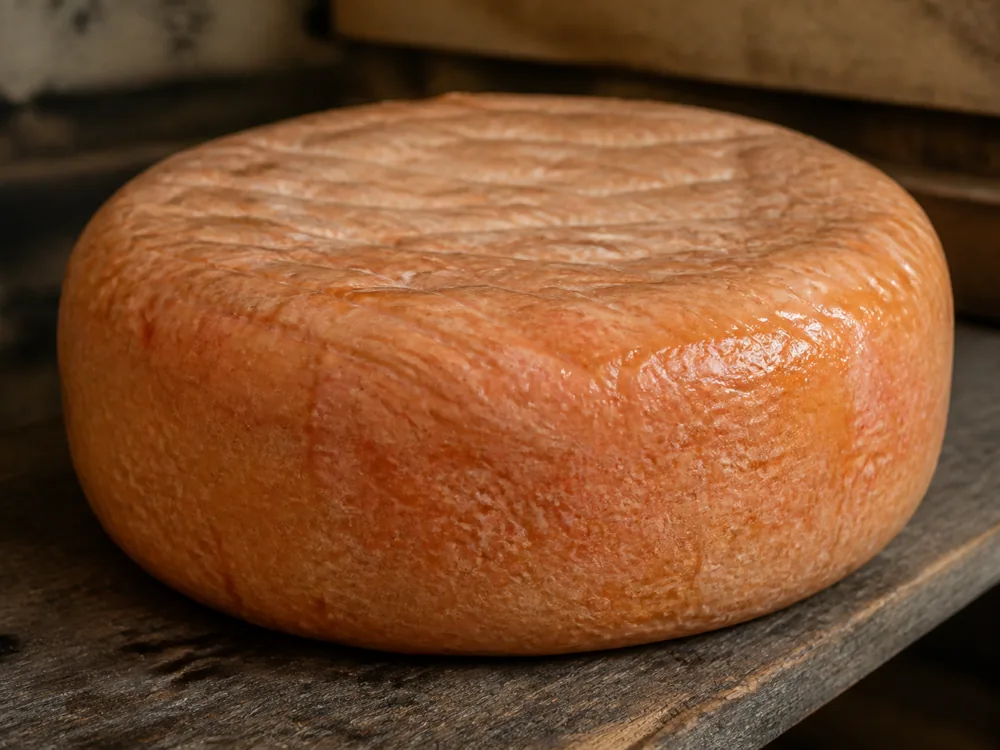
Sheridans Cheesemongers says the wheels are matured in controlled conditions after salting, and are turned as well as washed. Ardkeen's and Sheridans' ingredient lists both name a Gubbeen smear culture beside lactic bacteria, traditional rennet and salt, so the rind culture is declared as an ingredient.
Can You Eat the Rind on Gubbeen Cheese?
You can, by the maker's own word. Giana Ferguson, quoted by Cork Billy in 2017, says of the rind: "It is edible", and adds that "it is a different texture" and that she respects why people may not eat it.
If you trim it, you taste only one side of the pairing in which Ardkeen puts the secret of Gubbeen's flavour: the interaction between the mushroom-scented rind and the semi-soft, buttery paste.
Is Gubbeen Cheese Vegetarian?
No. Neal's Yard Dairy lists Gubbeen under animal rennet, and the ingredient lists on Ardkeen's and Sheridans' product pages both name traditional rennet.
Ardkeen says the Fergusons released a new format of the cheese in 2008, and that where they previously used vegetarian rennet they now use a traditional version. Cork Billy, in 2017, quotes Giana Ferguson: "We tried it vegetarian rennet but it didn't work for us."
When Gubbeen's ingredient list says "traditional rennet", read it as an animal source: in the same account she describes the traditional rennet as "made from an enzyme that grows in a calf's stomach".
Culture still describes the rennet as vegetable, for both the plain and the smoked wheel, which conflicts with Neal's Yard Dairy, with her account and with the current ingredient lists. One possible explanation is that its entries predate the change Ardkeen dates to 2008.
If you avoid animal rennet, the current evidence points to both plain and smoked Gubbeen containing it, since Cork Billy describes the smoked wheel as the same cheese as the plain one.
Neal's Yard Dairy lists animal rennet, and Ardkeen and Sheridans list traditional rennet, which Giana Ferguson describes as made from an enzyme in a calf's stomach. Only Culture still calls the rennet vegetable, so the rennet line on the ingredient list is the check.
What Is Microbacterium Gubbeenense?
Wikipedia cites a 2001 paper by Brennan and colleagues in the International Journal of Systematic and Evolutionary Microbiology that named a new species, Microbacterium gubbeenense, from the surface of "a smear-ripened cheese".
Neal's Yard Dairy says the organism is native to Gubbeen Farm, flourishes on the rind of Gubbeen cheese and was named after the farm and dairy, and Wikipedia says the name came from research into Gubbeen's smear-ripening.
Neal's Yard Dairy adds that the organism influences the cheese's texture and flavour, and that regular brine washing encourages its growth. Wikipedia and Cork Billy both call it a lactic acid producing bacterium.
Cork Billy reports that Giana Ferguson was "totally delighted" with "Gubbeen's own bug" when she heard of it around 2001, and that the bacteria is inoculated by hand into each wheel four times.
How Is Smoked Gubbeen Made?
Culture says wheels are chosen for smoking at five days old, brined and dried to give a dry surface, then smoked for four days over locally gathered beech and oak wood stored for a season. The smokehouse uses the Pinney method, which diverts any tar away from the cheese.
Culture says each wheel is then waxed with three thin coats per side and spends about five months in a humidity-controlled room at 41-46°F (5-8°C), against the two to three months Neal's Yard Dairy gives for the plain cheese.
Culture describes "light notes of smoke, butter, mushrooms, bog and a fudgy sweetness on the finish" and quotes the producer's aim as "Cheese with smoke, not smoke with cheese".
Sheridans names Gubbeen Smokehouse as the producer even of its plain Gubbeen, so when you see that name on a listing, it does not by itself tell you the cheese is smoked.
What Do You Serve with Gubbeen?
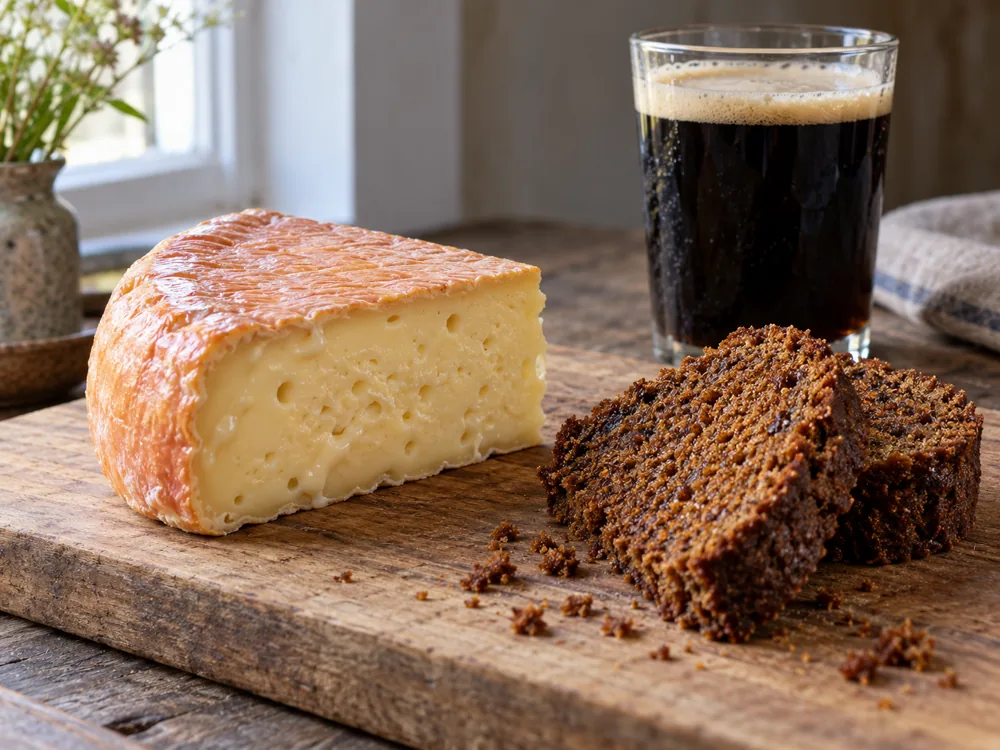
When you plate Gubbeen, put something sweet or fruity beside it, as both retailers that suggest pairings do: gingerbread at Ardkeen and orange compote at Sheridans.
| Pairing | Type | Why It Works |
|---|---|---|
| Gingerbread | Food | Ardkeen says the combination is nothing short of perfection. |
| Darker beers | Beer | Ardkeen calls Gubbeen wonderful with darker beers. |
| Orange compote | Food | One of Sheridans' team pairings, a Prunotto orange compote. |
| Charcoal crackers | Food | Sheridans lists Millers Damsel charcoal crackers. |
| Sampagnino Bianco Frizzante | Wine | Sheridans lists this white frizzante wine from Bulli. |
Ardkeen also recommends darker beers, and Sheridans' cheesemongers list three pairings they say they have tasted.
Can You Eat Gubbeen Cheese When Pregnant?
Gubbeen is made with pasteurised milk, which matters because the CDC's riskier list names soft cheese from unpasteurized milk. Neither the NHS nor the CDC names washed-rind cheese as a category, so Gubbeen does not map cleanly onto either list.
The NHS says pasteurised or unpasteurised mould-ripened soft cheeses with a white coating, such as brie and camembert, must be thoroughly cooked. It lists pasteurised soft cheeses such as cottage cheese, mozzarella and feta as safe, and pasteurised goats' cheese as safe only when it does not have a white coating (rind) on the outside.
Culture says white candidum mould patches often appear on Gubbeen's rind with age, and Wikipedia describes the rind as pink and white. That leaves it unclear which NHS group an unheated wheel belongs to.
If you are pregnant, both agencies state one condition that holds either way. The NHS says any cheese cooked until steaming hot, including soft cheese, is safe, and the CDC lists pasteurized soft cheeses heated to an internal temperature of 165°F or until steaming hot as safer.
Served cold, Gubbeen is described as a pasteurized semi-soft or semi-firm washed-rind cheese, a type the CDC list does not cover, so ask a midwife or doctor.
How Much Gubbeen Should You Buy for a Table?
Allow 53 to 80 g a person for a board or a shared plate, the portion the serving guide Sheridans publishes for its Gubbeen assumes. Dividing each size by the number of people it names gives that portion.
| Size | Serves | Sheridans' use | Grams per person |
|---|---|---|---|
| 160 g | 2 to 3 | A cheese board pairing | 53 to 80 g |
| 320 g | 4 to 6 | A starter or shared plate | 53 to 80 g |
| Whole wheel, 1.2 kg | 12 to 16 | A centrepiece for entertaining | 75 to 100 g |
The whole wheel assumes a little more, 75 to 100 g a person.
If you would rather have an uncut piece, Sheridans sells its mini Gubbeen, at 170 g or 390 g, as a single unit that is not cut, and Wikipedia lists a 400 g mini-truckle. Neal's Yard Dairy instead sells cut portions of the wheel as quarters, halves and wholes.
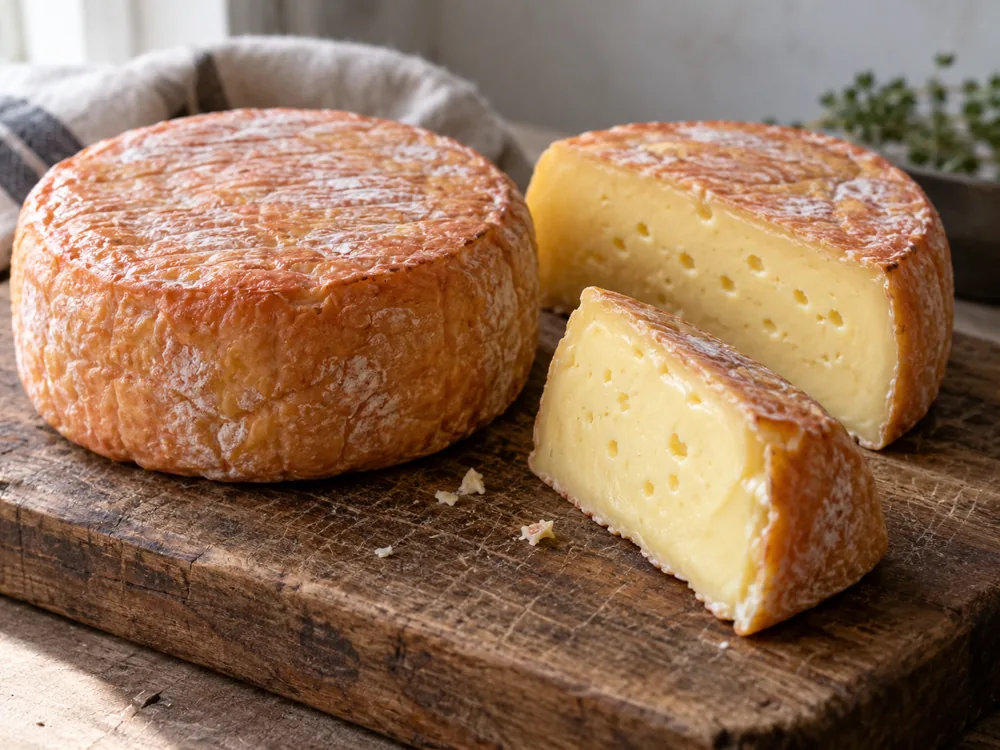
If you order a whole wheel, expect its weight to vary. Neal's Yard Dairy puts it at 1,160 to 1,324 g, Wikipedia and Sheridans at 1.2 kg, and Culture at 3 lb (about 1.4 kg), while Wikipedia gives 15 cm across and 5 cm high, narrower than the 8-inch wheel Culture describes.
Where Can You Buy Gubbeen, and How Do You Store It?
Gubbeen is stocked by Neal's Yard Dairy in the UK and by Ardkeen and Sheridans Cheesemongers in Ireland. The sizes and prices their pages listed on 1 October 2026 are below.
- Neal's Yard Dairy: quarter wheel 290 to 331 g, half 580 to 662 g, whole 1,160 to 1,324 g, from £13.00, shown as sold out on that date.
- Ardkeen: 450 g at €11.50, shown as sold out on that date.
- Sheridans Cheesemongers: 170 g mini at €5.45, with 390 g and 1.5 kg portions also offered.
At home, Ardkeen's pack says to keep Gubbeen refrigerated between 0 and 4 degrees.
The CDC advises a refrigerator at 40°F (about 4°C) or below. Read as Celsius, Ardkeen's 4 degrees is roughly the CDC's 40°F, so the two limits agree at the warm end.
If you leave a wedge out on a board, the CDC says perishable food such as dairy should go back in the refrigerator within 2 hours, or within 1 hour once it has been above 90°F.
What Are the Nutrition Facts for Gubbeen?
Sheridans Cheesemongers lists these figures per 100 g.
- Energy: 271 kcal (1,130 kJ)
- Fat: 30.6 g, of which 20.5 g is saturated
- Carbohydrate: 0.8 g
- Protein: 21.1 g
- Salt: 0.769 g
Saturated fat is about two thirds of the fat. A 53 to 80 g portion, the size Sheridans' serving guide assumes, works out to roughly 145 to 215 kcal.
Gubbeen's fat is 30.6 g per 100 g on Sheridans' label but 48% in Wikipedia's figure, and the two do not line up. Ardkeen quotes Giana Ferguson calling Gubbeen low in salt.