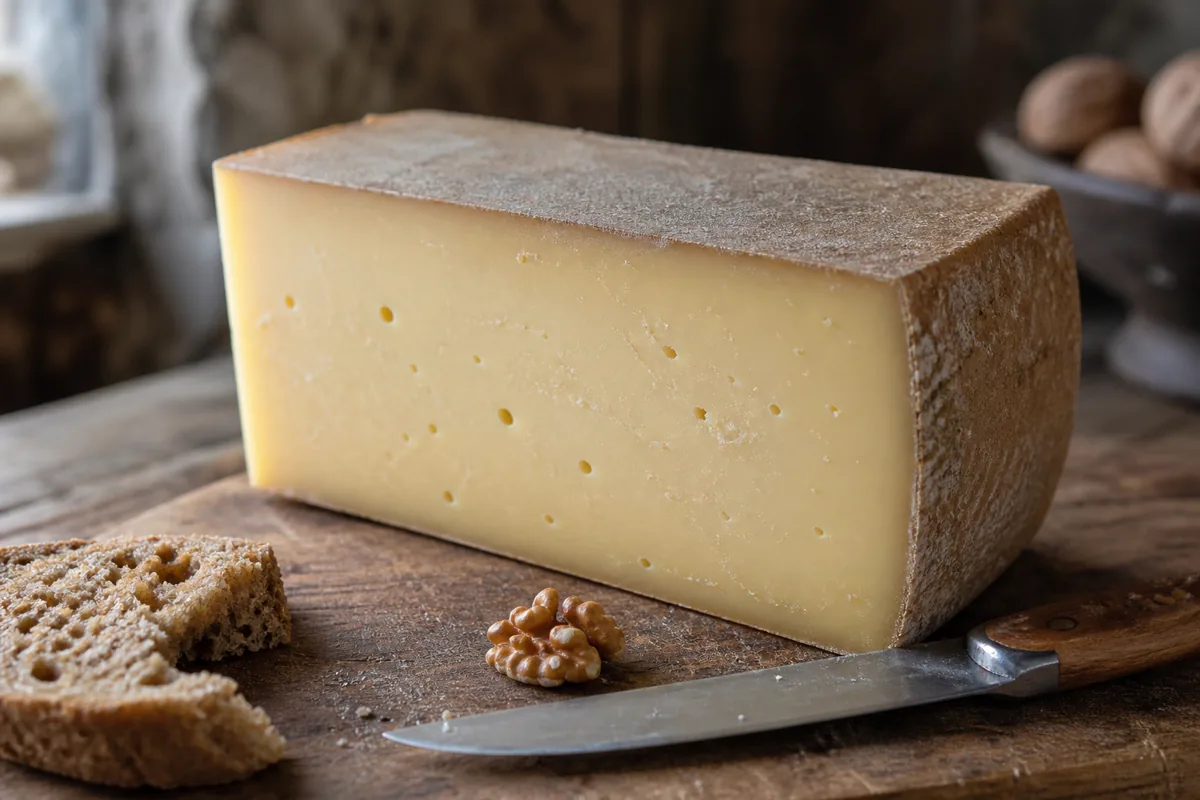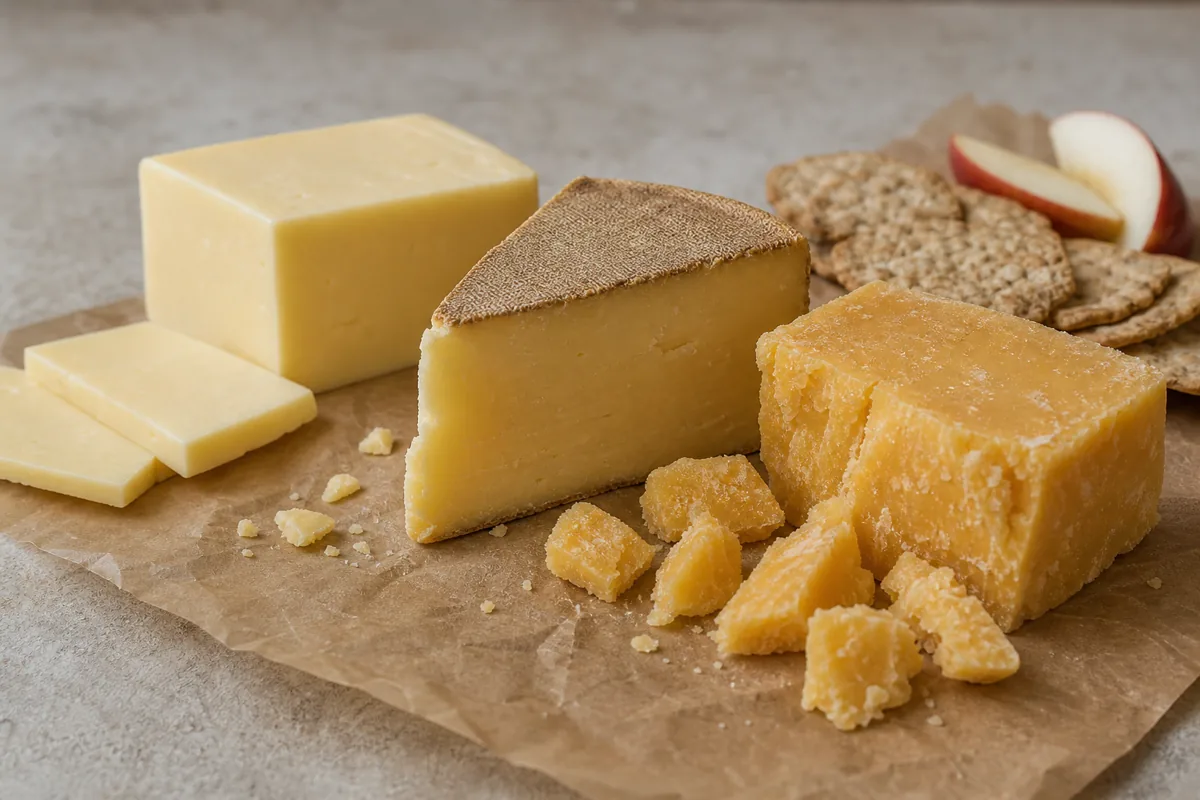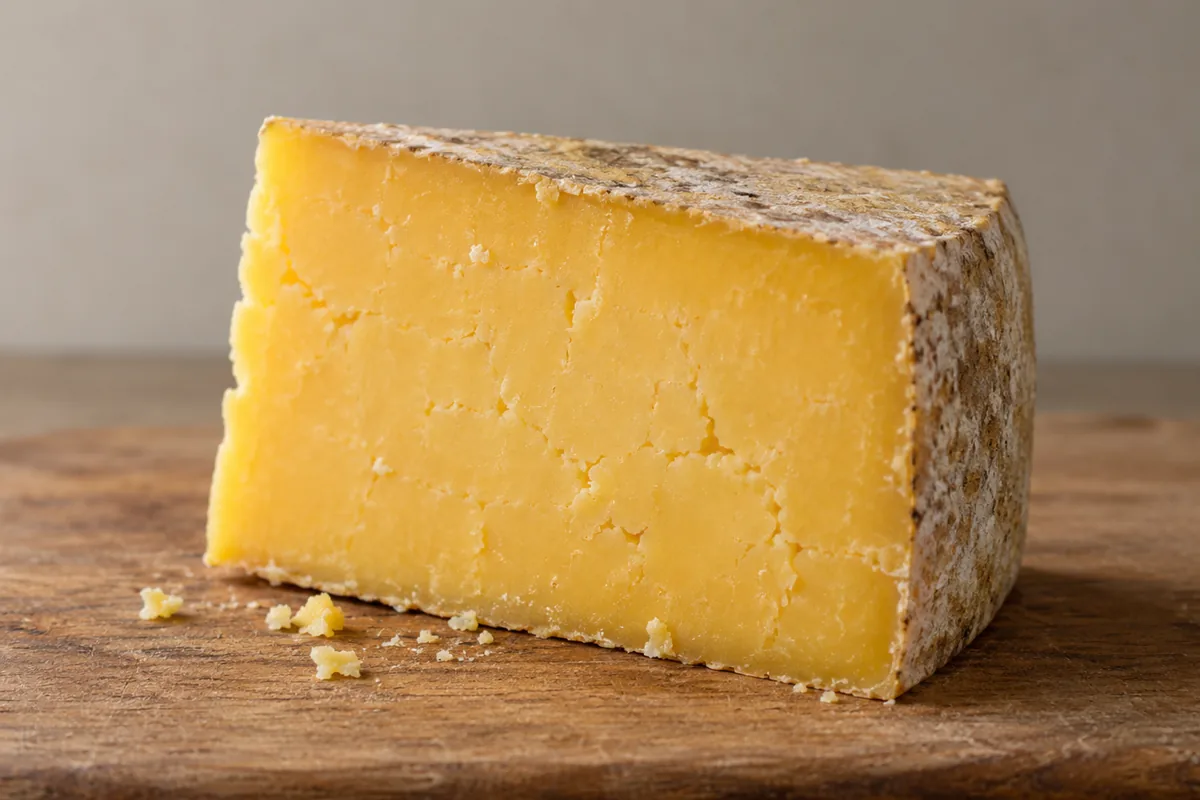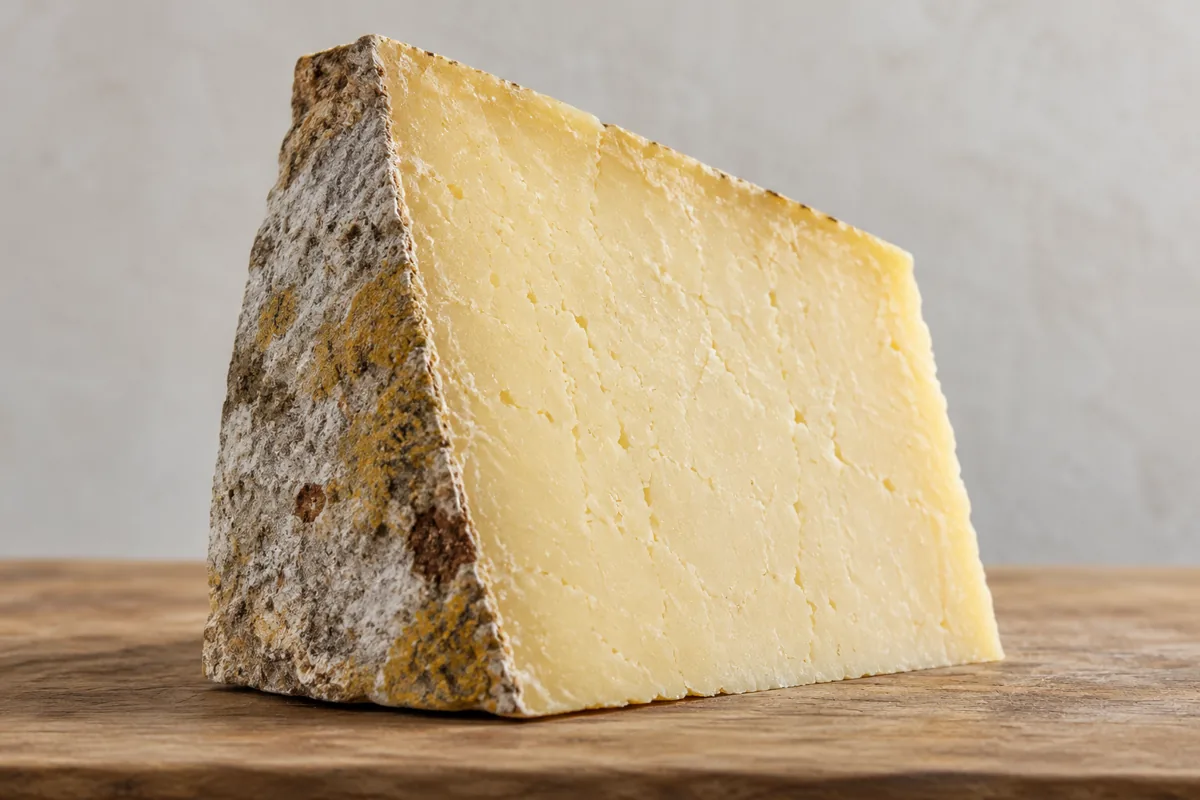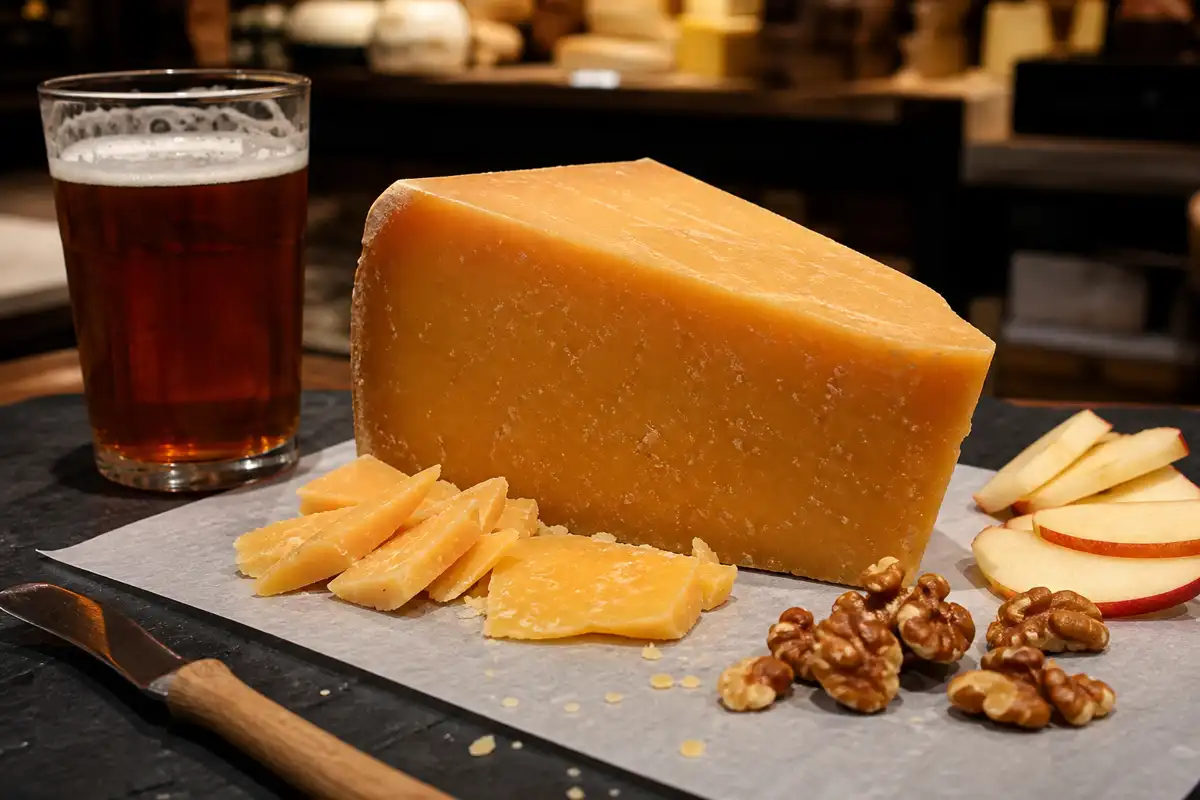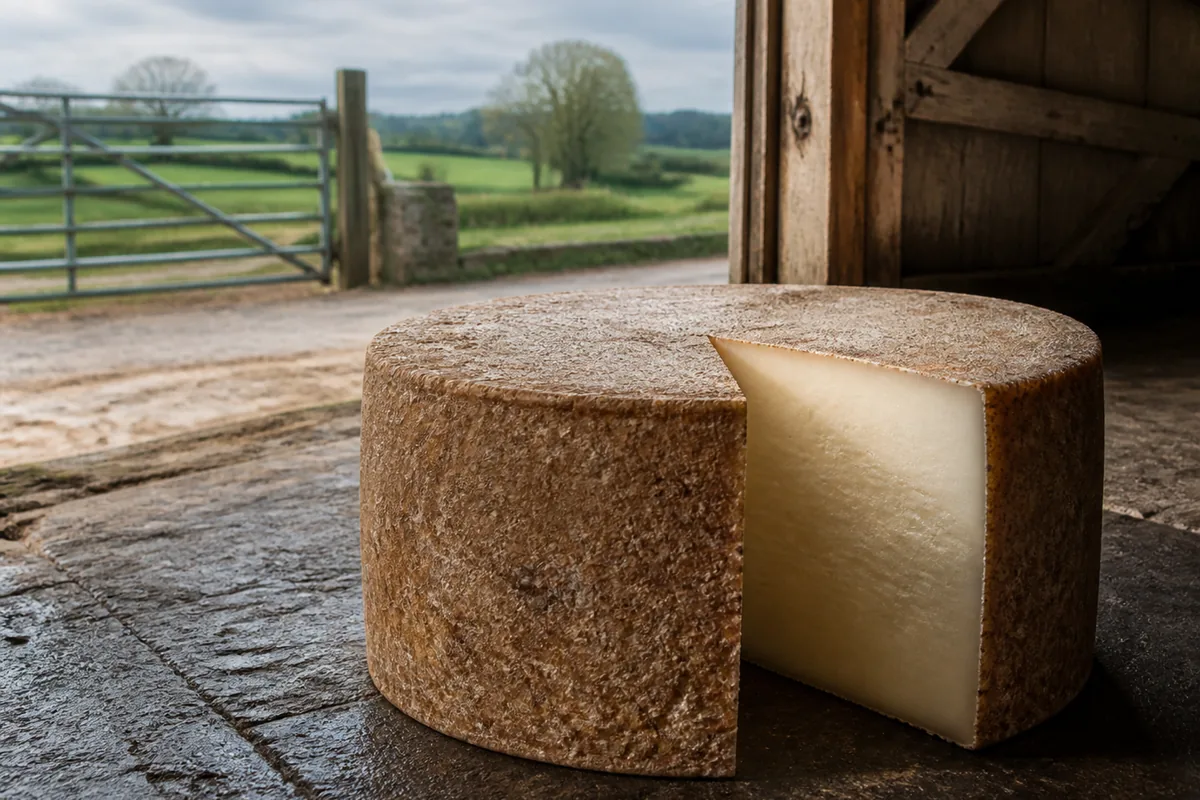
Lincolnshire Poacher is a hard raw cow's milk cheese made at Ulceby Grange, a family farm on the edge of the Lincolnshire Wolds. The producer describes its recipe as a cross between traditional West Country Cheddar and an Alpine cheese such as Comté.
The farm sells it as standard Poacher, Vintage and a cold-smoked version. It is made with animal rennet, so it is not vegetarian.
In This Article
Where Is Lincolnshire Poacher Cheese Made?
It is made at Ulceby Grange, near Alford, about ten miles from the east coast. The farm has been in the Jones family since 1917, and its history page says the chalky land lets it keep a dairy herd in an area where dairy farms are very scarce and cheese making is virtually unknown.
Neal's Yard Dairy counts it among the very few cheeses made on the east coast of the country, where it says the loamy or clay soils suit arable farming.
Dairying began in 1970 under Richard Jones. His son Simon, back from agricultural college, researched cheese making on a course at Reaseheath College and on visits to dairies in the South West, then set up a small dairy with a 1,000-litre vat.
Simon made the first batch of cheese on 17 February 1992 with help from Welsh cheesemaker Dougal Campbell, who arrived, according to the farm, with a tonic bottle of rennet and a sachet of starter. The recipe was based on Dougal's own cheese, Tyn Gryg.
The cheese sold so well that the local cheese shop rationed customers to a quarter of a pound each, according to the farm. The farm then hired a full-time cheesemaker and in 1995 created a larger dairy in an old farm building.
Today nearly all of the farm's milk becomes Lincolnshire Poacher, apart from a small quantity bottled and sold at farmers' markets. Neal's Yard Dairy describes a 230-strong herd of mostly Holstein Friesians.
Simon's brother Tim joined in 2000 on the sales and marketing side. A 2020 Financial Times profile that CooksInfo quotes counts 16 full-time and eight part-time staff and has Tim saying that the farm grows the crops that feed its cows.
CooksInfo records that the cheese won Supreme Champion at the 1996 British Cheese Awards, ahead of 450 other entries according to a Dundee Courier report it quotes, and Best British Cheese at the 2001 World Cheese Awards.
Is Lincolnshire Poacher a Cheddar?
CooksInfo calls Lincolnshire Poacher a long-aged cheddar cheese and files it under Cheddar within its firm cheeses.
The farm's own wording is that the recipe is a cross between a West Country Cheddar and a continental alpine cheese such as Comté, with a number of small technical differences in the make that give the cheese its own texture and flavour.
Neal's Yard Dairy describes it as bringing the hallmarks of a hard mountain cheese into a traditional West Country Cheddar.
The farm and Neal's Yard Dairy describe a cross, while CooksInfo files it as a Cheddar.
The sources place the two parents in different parts of the cheese. The farm's make includes a step it calls cheddaring, in which the drained curd mat is cut and piled into blocks three times, while Fine & Wild puts the Alpine side in the flavour, describing the sweet, nutty notes of an Alpine cheese.
So the Cheddar label tells a buyer the family but little about taste, and the sellers' descriptions in the taste section say more.
How Is Lincolnshire Poacher Made?
A day's make moves about 600 kilos of curd by hand several times. The farm says the cheesemaker needs a good feel for the curd because that decides when the whey is drained, and that the timing is critical for the texture and flavour.
The dairy team is a head cheesemaker, Jon, whom Neal's Yard Dairy names as Jon Collins, and three assistants. The farm calls the work an unusual blend of art and science, with the right temperatures and acidities vital throughout.
Milk from the afternoon milking is held at chill temperature in a bulk tank overnight, and in the morning it is piped into the vat, where warm milk from the morning milking is added straight from the milking parlour. CooksInfo puts that morning milking at 5 am and the start of cheese making at 6 am.
Starter culture first turns the lactose into lactic acid. Traditional animal rennet follows at 1 litre to 5,000 litres of milk, and the milk is heated to about 41°C.
Temperature is also a setting the makers are still testing. Neal's Yard Dairy says one of its tasting visits included cheeses scalded to a much higher temperature, part of the brothers' effort to understand the parameters of temperature in their cheese making.
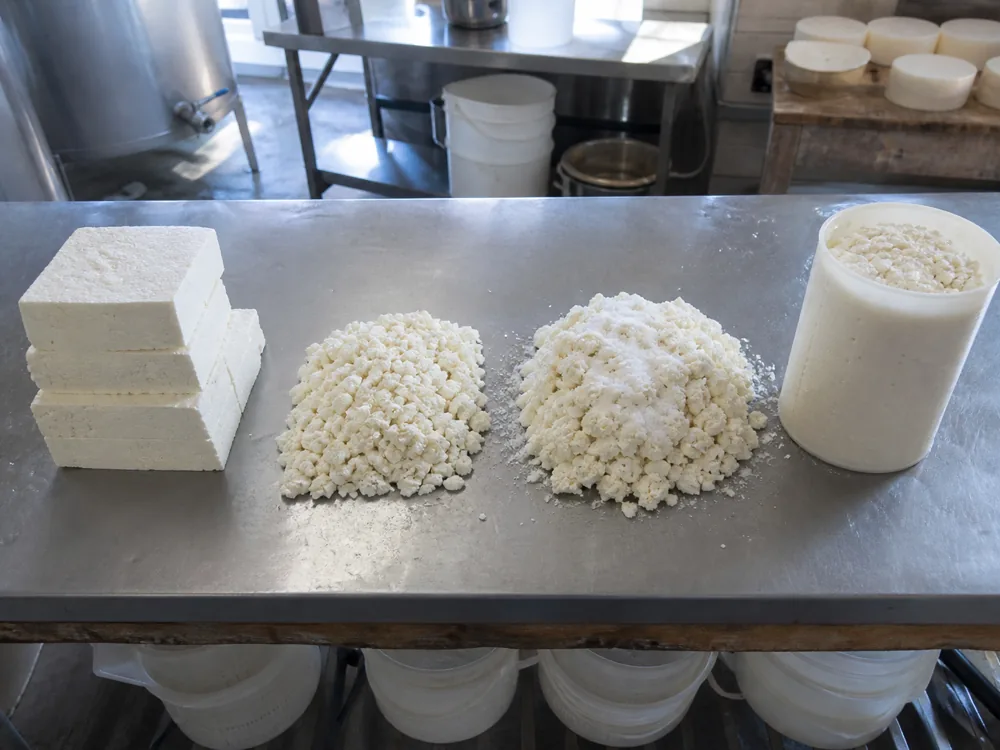
Once the milk has set into a junket, knives cut the curd to the size of a pea. The vat is then stirred for about an hour until the pieces are about the size of a grain of wheat.
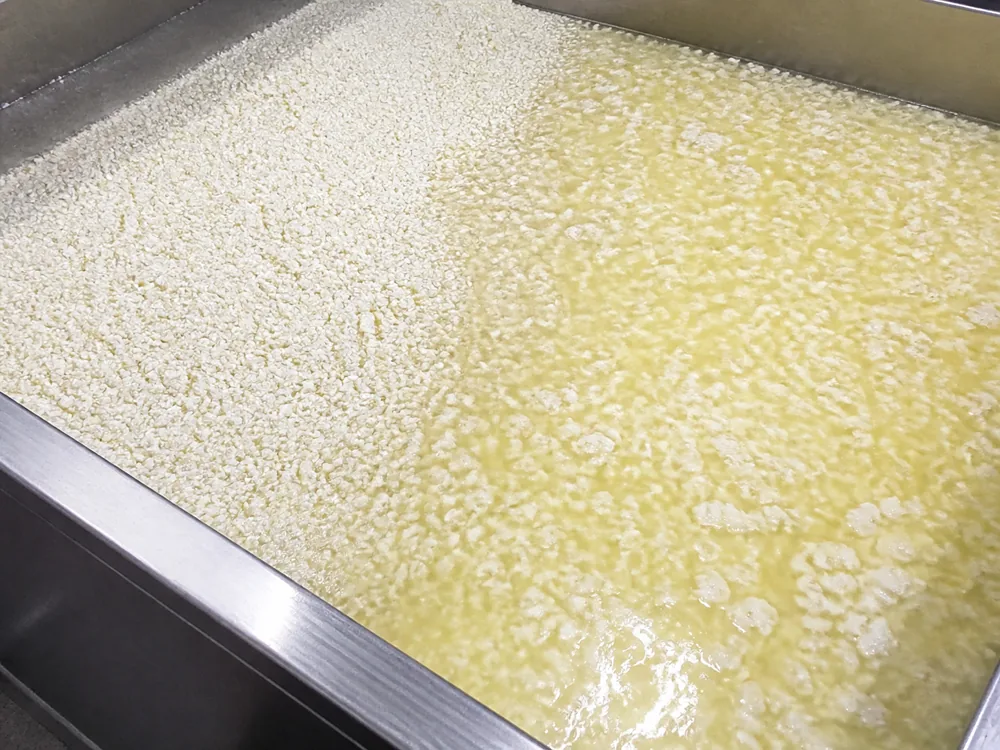
After the whey is drained off, a mat of curd is left at the bottom of the vat, and the farm describes five more stages.
- Cheddaring: the mat of curd is cut and piled into blocks three times.
- Milling: the blocks are milled into chip-sized pieces.
- Salting: salt is mixed in by hand.
- Pressing: moulds are filled with 20 kg of salted curd and pressed for 36 hours.
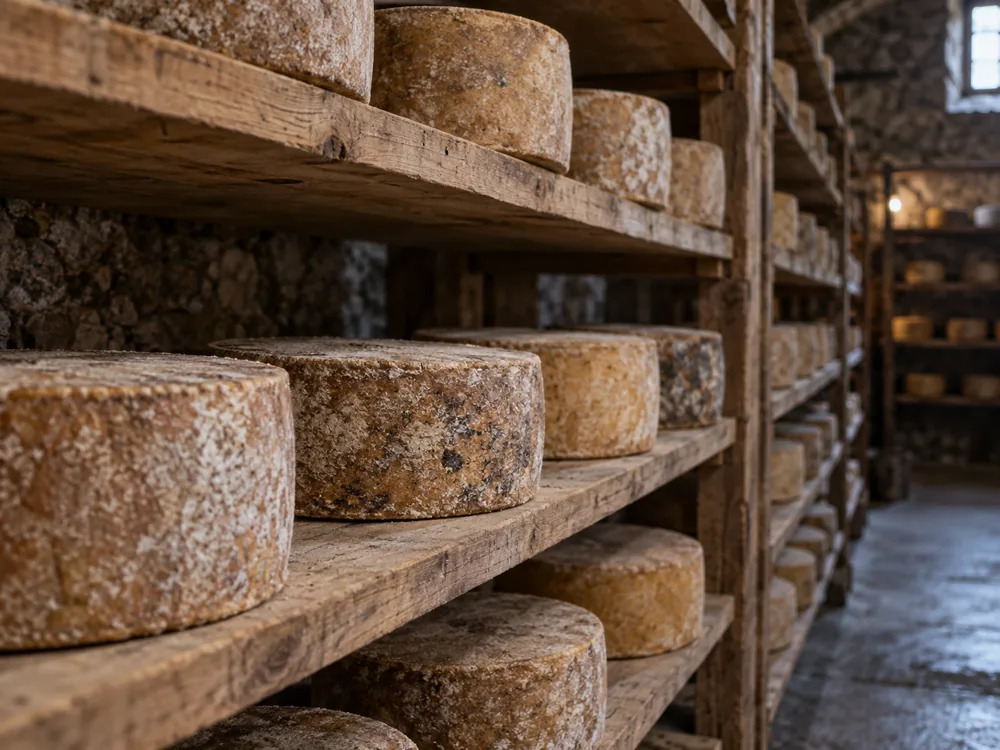
- Maturing: the cheeses sit on wooden shelves and are turned once a month by a cheese-turning robot called Florence, installed in May 2020 and partly funded by the European Agricultural Fund for Rural Development.
Neal's Yard Dairy says the regular turning on wooden boards evens out the maturation, and that the robot has improved consistency still further.
Third-party summaries differ from the farm on two figures. CooksInfo gives a 48-hour press and curd the size of a grain of rice, while the farm's cheese-making page says 36 hours and a grain of wheat, and Neal's Yard Dairy also gives 36 hours, so the numbers above follow the farm.
CooksInfo also reports that a batch takes 9,700 imperial pints (5,512 litres) of milk and yields about half a ton of cheese, or 20 wheels of around 20½ kg (45 pounds) each. Twenty wheels at that weight come to roughly 410 kg, so the half-ton figure looks rounded, and the wheel weight is the one that sits close to the farm's 20 kg of salted curd per mould.
What Does Lincolnshire Poacher Taste Like?
The farm says the flavour and texture of the cheese vary both daily and seasonally, depending on the time of year, the stage of lactation, the weather and other factors. It describes standard Poacher as having plenty of upfront flavour and a good bite.
| Source | Texture and look | Flavour |
|---|---|---|
| Lincolnshire Poacher Cheese (farm) | A good bite | Plenty of upfront flavour, rich and full |
| Neal's Yard Dairy | Smooth, densely creamy | Rich, savoury and brothy to long, sweet and almost pineapple-like |
| CooksInfo | Pale yellow inside, brownish rind | Sweetness with a touch of bitterness |
| Fine & Wild (retailer) | Firm, crystalline | Toasted nuts, caramel and grassy undertones, with a long finish |
The descriptions overlap on sweetness, which Neal's Yard Dairy, CooksInfo and Fine & Wild all mention, and part on texture, where Neal's Yard Dairy says creamy and Fine & Wild says crystalline.
Age does not explain that gap, because Fine & Wild ties its crystalline texture to the extended ageing of a cheese it sells at 14 to 16 months, while Neal's Yard Dairy describes a creamy cheese that it says averages 18 to 24 months. The only explanation any of the sources offers is the farm's note on daily and seasonal variation.
Neal's Yard Dairy adds that when it tastes shortlisted cheeses at the farm it looks for one of two styles: big and forward with lots of tropical fruit, or warm mountain-cheese flavours similar to Comté.
On the outside, CooksInfo gives a brownish rind over pale yellow paste, and Fine & Wild says the cheese develops a natural rind and a firm texture.
How Old Is Lincolnshire Poacher When You Buy It?
The farm's product page says standard Poacher is usually matured for about 14 to 16 months, and published descriptions elsewhere give other ranges.
| Source | Age stated |
|---|---|
| Farm product page | Usually about 14 to 16 months |
| Fine & Wild (retailer) | 14 to 16 months |
| Neal's Yard Dairy | 18 to 24 months on average, some up to 36 months |
| CooksInfo | 12 to 24 months on wooden shelves |
The figures cannot all describe the same wedge, so the farm's 14 to 16 months is the reference for standard Poacher and not a guarantee for any particular piece.
Part of the spread comes from the farm's own method. It tastes every batch at 12 months and decides how long to keep it.
The seller adds to the spread. Neal's Yard Dairy says Tim and Simon Jones manage different profiles of cheese to sell at different ages, and that on its three tasting visits a year they have already picked a shortlist for it to choose from.
Neal's Yard Dairy's own view is that the finest wheels are between a year and 24 months old.
How Do Vintage and Smoked Lincolnshire Poacher Differ?
| Version | Age and treatment | Farm description |
|---|---|---|
| Standard | The farm's traditional Lincolnshire Poacher, with no added step | Quite a lot upfront with a rich full flavour |
| Vintage | Taste selected and matured on for 18 to 22 months | More depth and complexity, a smooth lingering aftertaste, often with a hint of sweetness |
| Smoked | Mature cheeses cold smoked for 24 hours over untreated dampened oak chips at a local family-run smokehouse | Golden brown colour and a delicate smoked aroma, with the Poacher character still evident |
Vintage is not a separate recipe. It is the cheese that the 12-month tasting selects for longer maturation, from 18 to 22 months.
On the farm's shop, Vintage is priced about 6 percent above standard at both ends of the range, £6.27 to £50.20 against £5.91 to £47.25.
Smoked is an added step applied to mature cheeses, not an older grade, so age alone does not identify it. The farm's shop lists Standard, Vintage and Oak Smoked as separate products.
Standard is the 14 to 16 month cheese, Vintage is the 18 to 22 month selection at about 6 percent more on the farm's shop, and Smoked is an added cold-smoking step on mature cheese that age alone does not identify.
What Can You Cook With Lincolnshire Poacher?
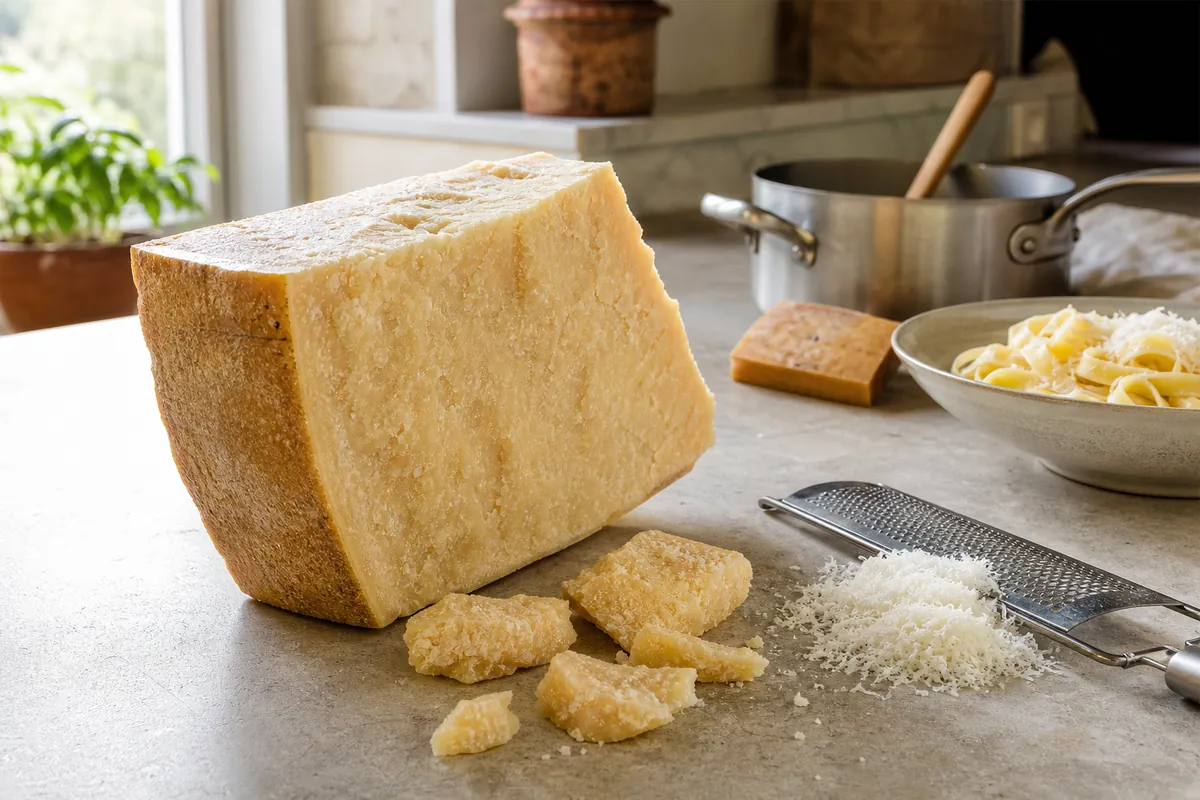
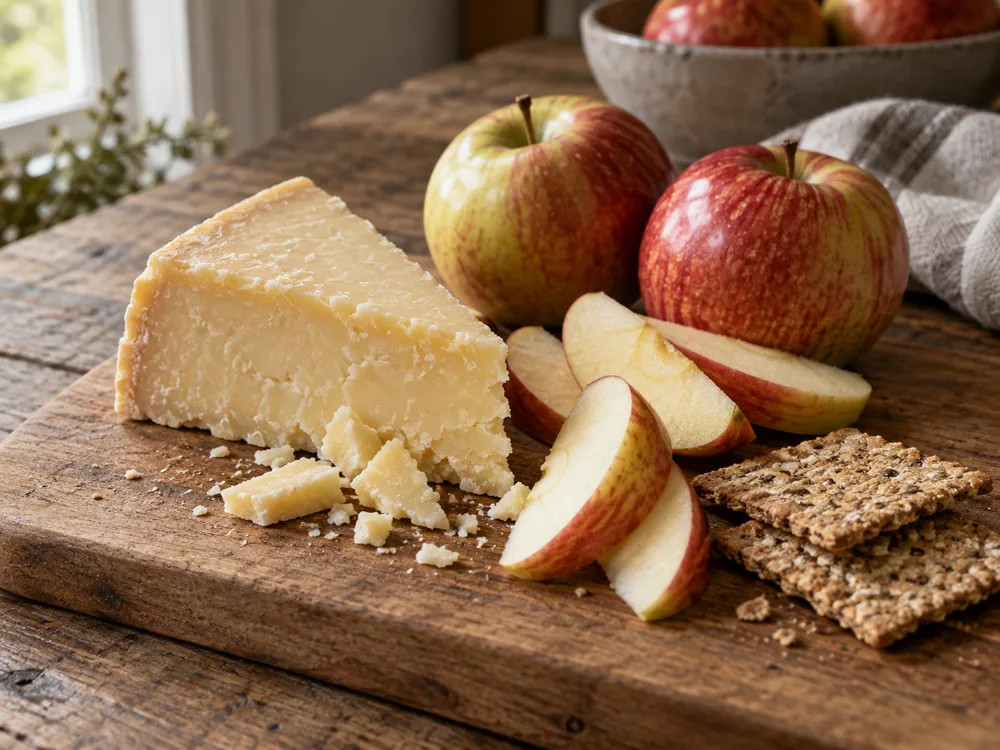
Fine & Wild suggests grating it over pasta or melting it in toasties.
It also suggests serving the cheese on a cheeseboard at room temperature with crisp apples and wholemeal crackers.
Is Lincolnshire Poacher Vegetarian?
No. The farm's cheese-making page says traditional animal rennet is added to the milk, and Neal's Yard Dairy's ingredient list reads raw cow's milk, salt, cheese cultures and animal rennet.
The farm's shop page says only "traditional rennet", so the cheese-making page is the source that names the type. Vintage and Smoked are chosen from the same cheese, so the same rennet applies to them.
Is Lincolnshire Poacher Pasteurised, and Is It Safe in Pregnancy?
It is unpasteurised. The farm says it uses its own fresh unpasteurised milk, and the cheese-making page describes the milk in the vat as unpasteurised (raw).
CooksInfo and Fine & Wild classify Lincolnshire Poacher as a hard cheese, and the NHS and the CDC treat a raw-milk hard cheese differently.
The NHS lists pasteurised or unpasteurised hard cheeses, such as cheddar, gruyère and parmesan, as safe in pregnancy, while the CDC names hard cheese made with pasteurized milk as the safer choice and lists dairy products made from raw milk among the riskier ones.
The CDC adds that pregnant women are 10 times more likely to get a Listeria infection.
Where Can You Buy Lincolnshire Poacher?
The farm's online shop sells cut standard Poacher in 250 g, 500 g, 750 g, 1 kg and 2 kg sizes, listed on 1 October 2026 at £5.91 for the smallest and £47.25 for the largest.
Every size on that list works out to about £23.63 a kilo, so a larger piece brings no discount per kilo.
Neal's Yard Dairy lists a 250 g piece at £9.35, which is £37.40 a kilo and about 58 percent above the farm's price per kilo, and it also sells 500 g, 1 kg and 2 kg cuts.
Its standard delivery is free to most UK postcodes on orders over £44.50 and costs £8.00 below that, while collection from its London shops is free. CooksInfo adds that the farm regularly sells at farmers' markets in its local area.
How Long Does Lincolnshire Poacher Keep?
The farm's shop lists a minimum shelf life of 2 months on receipt for its cut cheese. It does not say how long a wedge lasts once opened.
Fine & Wild says to keep its Poacher refrigerated below 5°C and to take it out 30 minutes before serving. The CDC advises keeping a refrigerator at 40°F or below.
For time out of the refrigerator, the CDC says perishable food, which it lists as including dairy, should be refrigerated within 2 hours, or within 1 hour above 90°F, so the 30 minutes Fine & Wild allows uses a quarter of the 2-hour window.
Neither the farm nor Fine & Wild says whether it can be frozen.