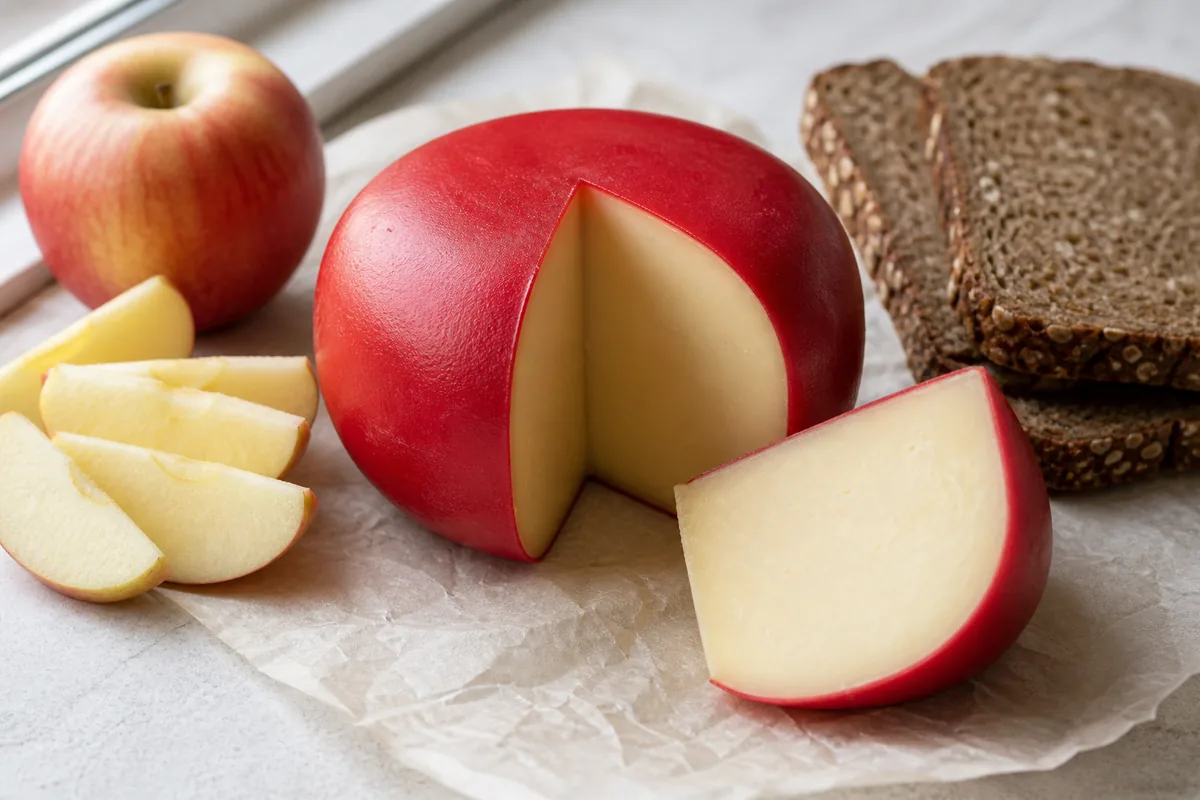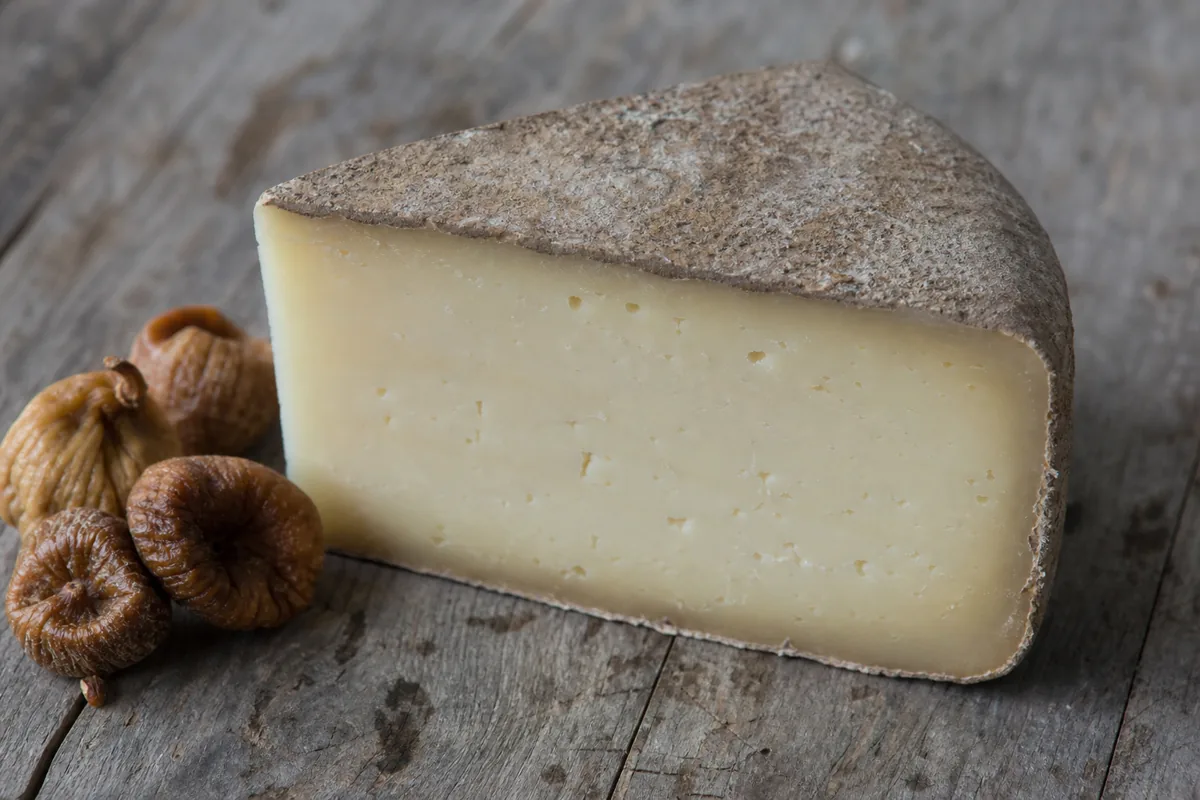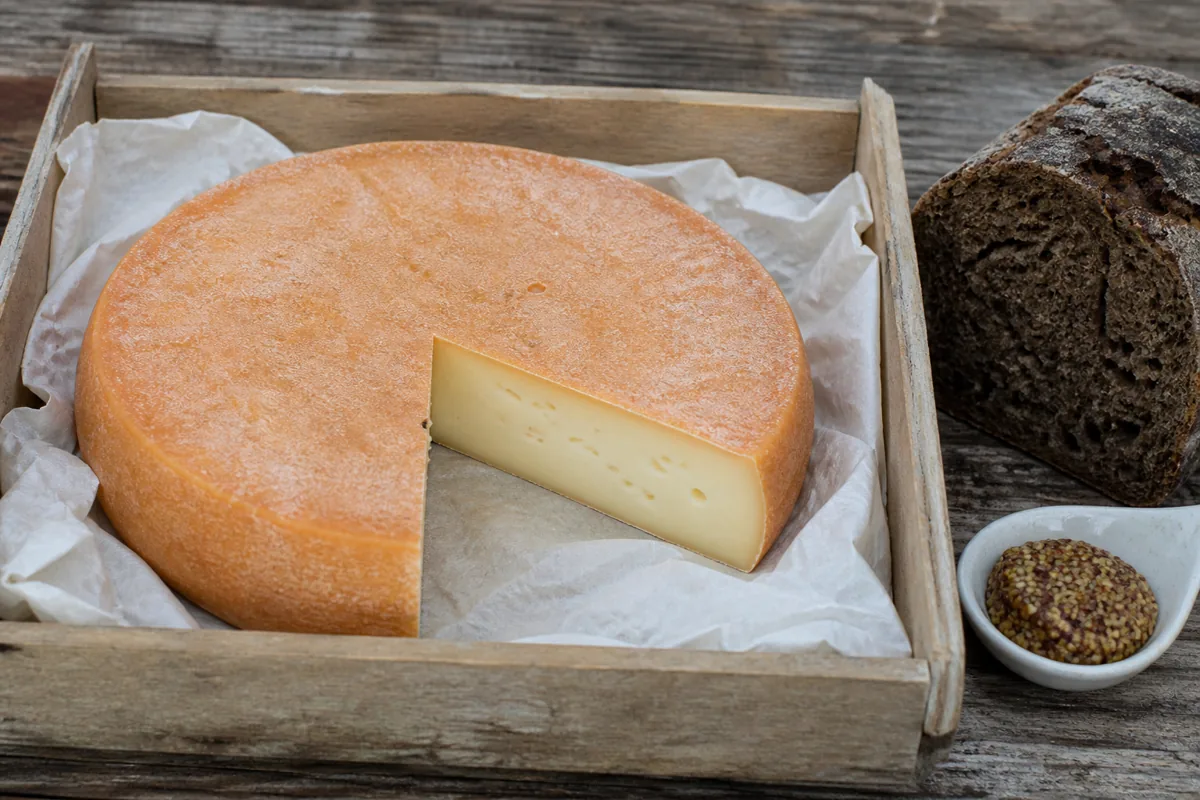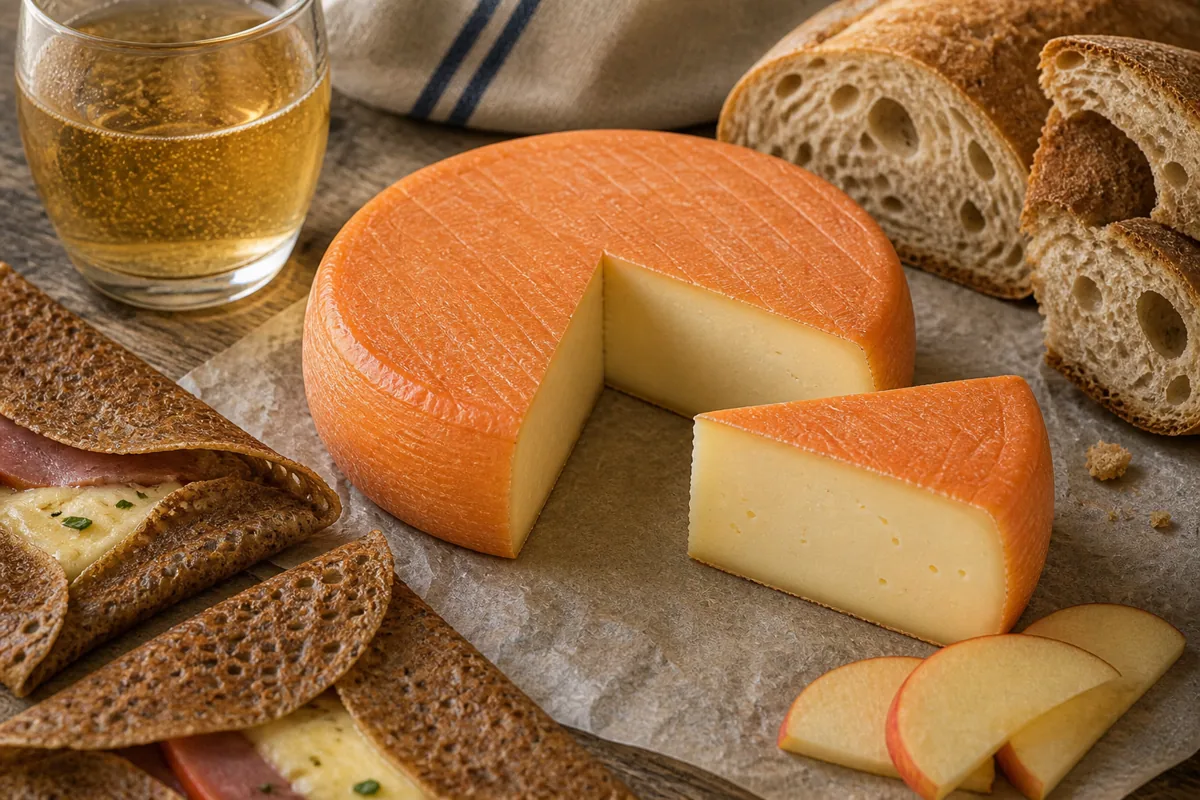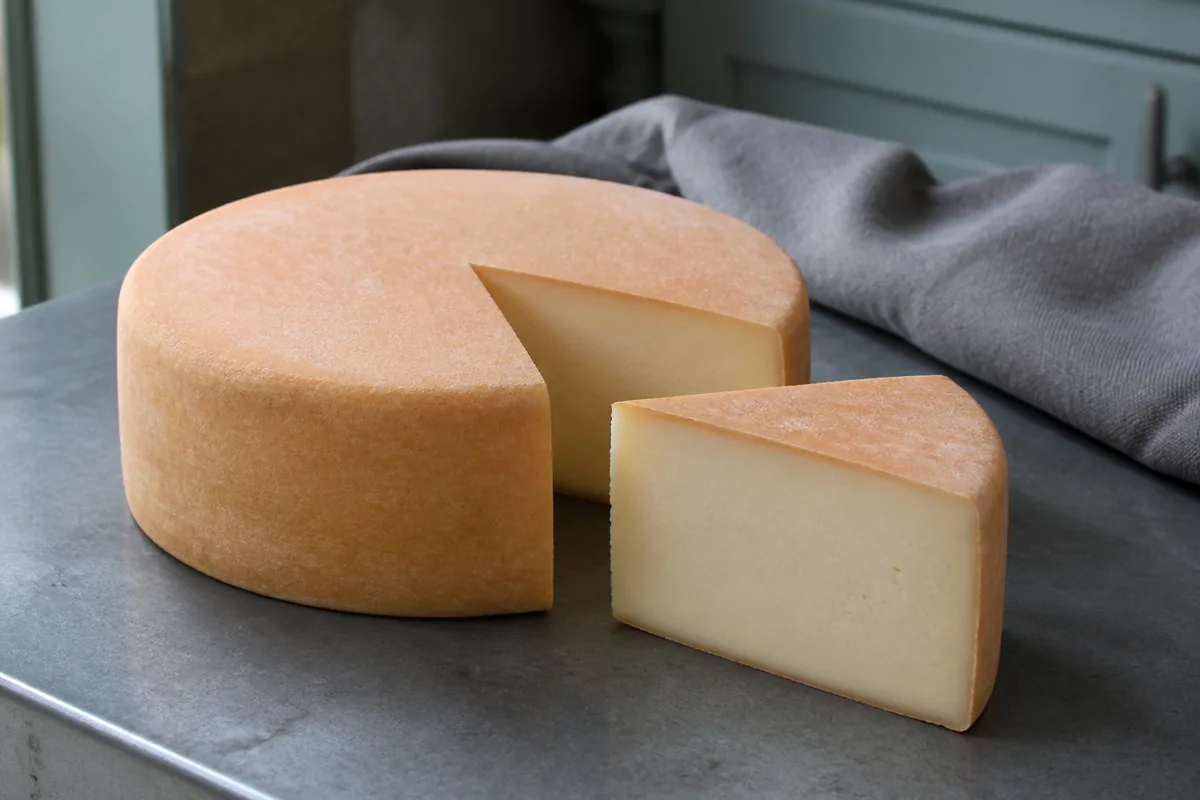
Trappiste de Bricquebec is a mild, pressed cow's milk cheese from the Manche in Normandy, sold as a straight-sided tomme of roughly 1.4 to 2kg with a thin rind described as orange or greyish-yellow.
The name promises a monastery cheese. The monks stopped making it in 1961.
In This Article
What Is Trappiste de Bricquebec?
Trappiste de Bricquebec is a pressed, uncooked cheese made with pasteurised cow's milk, and it ripens for at least six weeks. On its class, Cheese.com gives two answers: semi-hard in one field and semi-soft in its text.
A whole cheese is a tomme with straight sides rather than a curved wheel, 19.5 to 22.5cm across, 4 to 5cm thick and 1.4 to 2kg in weight.
French Wikipedia's figures, about 1.4kg, 22cm across and 4cm thick, fall inside those ranges at the light and thin end.
Do the Monks Still Make It?
No. The Trappist fathers stopped making the cheese in 1961, and production passed to the co-operative dairy in Valognes.
Why they gave it up differs by account. French Wikipedia says the monks sold the brand to concentrate on livestock, mostly pigs, and on charcuterie, while Cheese.com blames post-war competition from other monastic cheeses and names the buyer as the Valco society in Valognes.
- 1824: the year the Trappist order gives for the abbey's foundation at Bricquebec, and the year Produits Laitiers gives for the cheese itself
- Mid-19th century: when French Wikipedia says the monks began making the cheese
- 1961: the monks stop making the cheese, and production passes to the co-operative dairy in Valognes
The Trappist order dates the abbey's foundation to 1824, so read that year as the abbey's start and the cheese as a product of the nineteenth century, whichever date you meet for it.
The milk changed too. The monks' cheese used raw milk, while the cheese sold under the name is made with pasteurised milk.
The cheese is made by Les Maîtres Laitiers du Cotentin, a co-operative that La Boite du Fromager places 13km from the abbey. The abbey is still active, with charcuterie production and a shop for monastic products and religious books.
The word Trappiste on a label therefore tells you where the cheese began, not who made the wedge in your hand.
What Names Is It Sold Under?
The same cheese goes by Trappe de Bricquebec, Abbaye de Bricquebec and Fromage de la Providence, and La Boite du Fromager says it was first called Providence and became popular around Cherbourg.
The 190g retail pack recorded on Open Food Facts joins two of those names as Providence de la Trappe de Bricquebec, and Cheese.com files the cheese as Trappiste de Bricquebec, with La Trappe Bricquebec as a synonym.
Trappe de Bricquebec is a commercial trademark rather than a protected origin, and it carries no AOP.
A label with any of these names and a Valognes manufacturing code, like the one on the Open Food Facts record, describes the same cheese.
What Is on the Rind, and What Colour Is It?
The 190g retail pack recorded on Open Food Facts declares a preservative and a rind colourant, and the rind itself is described as either orange or greyish-yellow.
The ingredients on that pack read pasteurised milk, salt, lactic and ripening ferments, a preservative listed as E235 and a rind colourant listed as E160b. E160b is annatto and E235 is natamycin.
Regulation (EU) 1129/2011 lists E 235 natamycin for the surface treatment of hard, semi-hard and semi-soft cheese, at 1mg per square decimetre of surface, and writes the limit as not present at a depth of 5mm.
| Question | Description | Given by |
|---|---|---|
| What colour is the rind? | Orange; or greyish-yellow | Orange: Produits Laitiers and La Boite du Fromager. Greyish-yellow: Cheese.com |
| What is its surface like? | Thin, smooth and dry; a fine crust; glossy, and natural in another field | In that order: Produits Laitiers, La Boite du Fromager, Cheese.com |
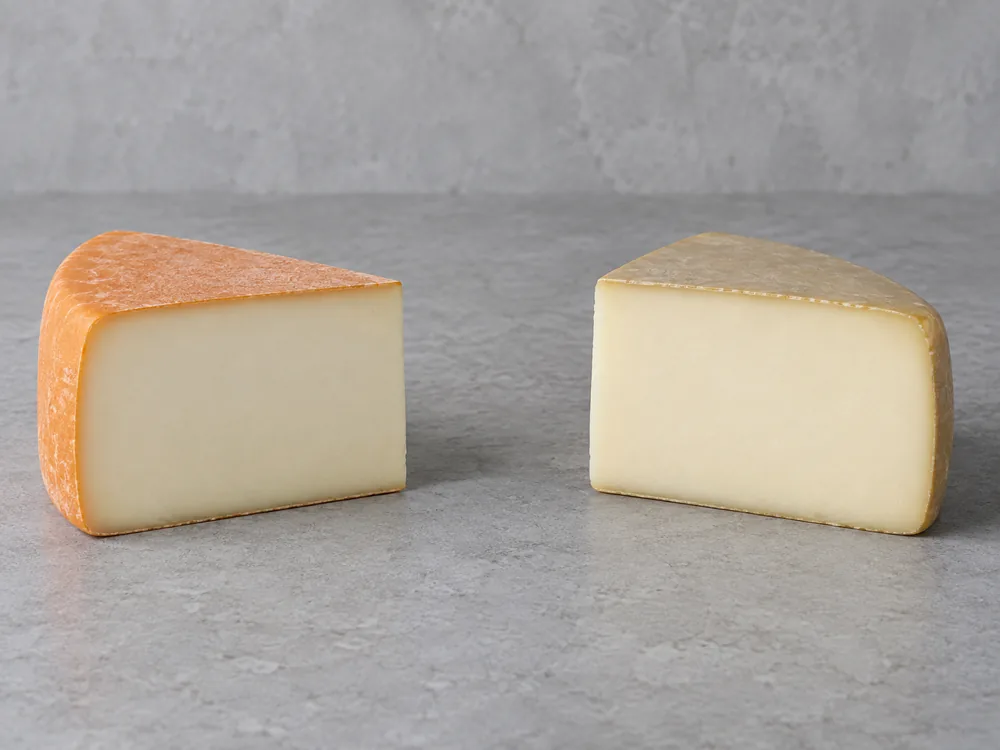
A wedge with an orange rind and one with a greyish-yellow rind therefore both match a published description of this cheese.
What Does It Taste Like?
Descriptions agree that it is mild: Produits Laitiers and La Boite du Fromager write doux et léger, mild and light, and Cheese.com calls the flavour mild, nutty and spicy, with a buttery taste.
Produits Laitiers pairs that mild taste with marked cellar notes in the smell, and La Boite du Fromager also records a cellar smell. Nutty and spicy come from Cheese.com alone.
Both French pages call the texture moelleuse, soft. Produits Laitiers adds regular, smooth and dense for the paste, and Cheese.com dense, firm and supple.
How Is Trappiste de Bricquebec Served?
La Boite du Fromager gives it three roles: a cheese-board cheese, a table cheese, or cubes handed round with an apéritif.
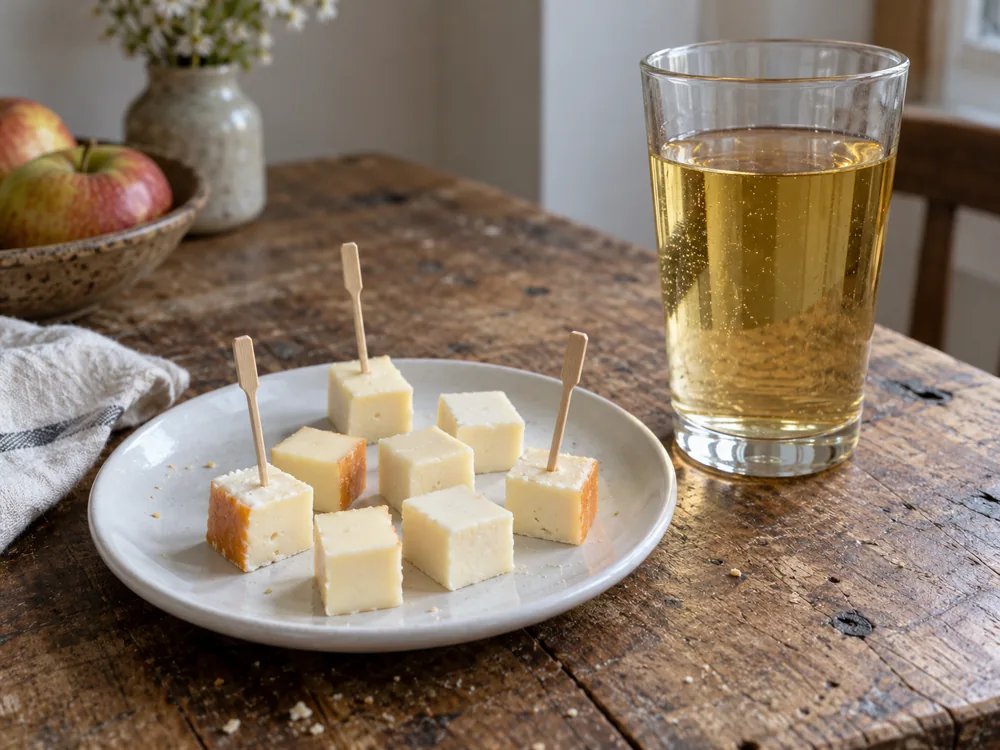
Muscadet appears in both drink lists. La Boite du Fromager names Muscadet sur Lie, a dry white, and a dry Norman cider, and Cheese.com lists Muscadet with Saint-Émilion and light red or dry white wines.
Cheese.com adds bread, fruit and nuts, and La Boite du Fromager's site carries a caramelised onion cake made with the cheese.
How Is It Different from Saint-Paulin?
The rind and the smell set them apart. The Saint-Paulin Cheese.com describes has a washed, yellow-orange rind and a milky aroma, while Bricquebec's rind is dry in Produits Laitiers' description and glossy in Cheese.com's, and both French pages give it a cellar smell.
Cheese.com describes both as pasteurised cow's milk cheeses with a Trappist background, and Saint-Paulin as semi-soft and buttery. It gives Saint-Paulin four to five weeks of ripening, against at least six for Bricquebec.
| Feature | Trappiste de Bricquebec | Saint-Paulin (Cheese.com) |
|---|---|---|
| Milk | Pasteurised cow's milk | Pasteurised cow's milk |
| Rind | Thin, smooth and dry (Produits Laitiers) | Washed, yellow-orange |
| Ripening | At least six weeks | Four to five weeks |
| Aroma | Marked cellar notes | Milky |
| Flavour | Mild and light, nutty and spicy per Cheese.com | Buttery, with a tangy finish and sweet notes |
The Saint-Paulin in that entry is Saint-Paulin Fritz, a Fromagerie Fritz Kaiser version, so the comparison is with one maker's cheese and not every Saint-Paulin.
How Much Fat and Salt Is in It?
The 190g retail pack recorded on Open Food Facts gives 23g of fat and 1.88g of salt per 100g, with protein almost level with fat. Open Food Facts gives the pack a Nutri-Score of D.
Published fat figures run from 23 to 45 percent: Produits Laitiers and La Boite du Fromager give 23 percent, Cheese.com 28 percent and French Wikipedia 45 percent.
La Boite du Fromager gives its 23 percent as fat in total weight, the same basis as the pack's 23g per 100g, so 23 percent is the figure for the cheese as sold. The 28 and 45 percent figures do not match fat as a share of the whole cheese.
At those per-100g figures, the whole 190g pack holds about 3.6g of salt and about 44g of fat.
Is Trappiste de Bricquebec Safe in Pregnancy?
It matches an NHS safe-to-eat line provided the milk is pasteurised, and the retail pack lists pasteurised milk.
The NHS lists pasteurised semi-hard cheeses, such as edam, and pasteurised soft cheeses, such as mozzarella and feta, as safe to eat. Filed as semi-hard and described as semi-soft, Trappiste de Bricquebec falls under one of those two lines either way.
The CDC lists pasteurized soft cheeses heated to an internal temperature of 165°F or until steaming hot as safer. Eaten cold, a pasteurized semi-hard or semi-soft cheese is a type the CDC list does not cover, so ask a midwife or doctor.
Besides foods made from unpasteurised milk, the cheeses the NHS says must be thoroughly cooked, pasteurised or not, are mould-ripened soft cheeses with a white coating on the outside, such as brie and camembert, and soft blue-veined cheeses, such as gorgonzola. Bricquebec's rind is described as orange or greyish-yellow; if a piece shows a white coating or blue veining, cook it thoroughly.
The raw milk belonged to the monks' cheese, and the NHS says you can check the packaging to make sure a cheese is pasteurised: on the 190g pack, the ingredients list begins with pasteurised milk.
A piece that is not marked pasteurised falls outside those two NHS safe-to-eat lines.
What Should You Check When Buying It?
On any format, read the ingredients line for the E235 and E160b declared on the 190g pack, and if you avoid animal rennet, ask the seller which coagulant the cheese uses.
La Boite du Fromager's listing gave 24.50 euros per kilo, which put its 300g portion at 7.35 euros. The listing showed the item out of stock, so treat the figure as a listed price rather than an offer you can buy.
At that rate a whole 1.4 to 2kg tomme would come to roughly 34 to 49 euros, and the 190g retail pack is the small format.
Cheese.com marks the cheese as not vegetarian, while Open Food Facts flags the 190g pack as vegetarian from an ingredients list that names ferments and no rennet.
Is There Still a Trappist Cheese Made in France?
Yes. The International Trappist Association lists Mont des Cats abbey at Godewaersvelde in France as producing Trappist cheese under its Authentic Trappist Product label.
That label requires products to be made within the immediate surroundings of the abbey, under the supervision of the monks or nuns, with profits going to the monastic community, the Trappist Order or charitable works.
Bricquebec is not on the association's list, and the monks no longer make the cheese.