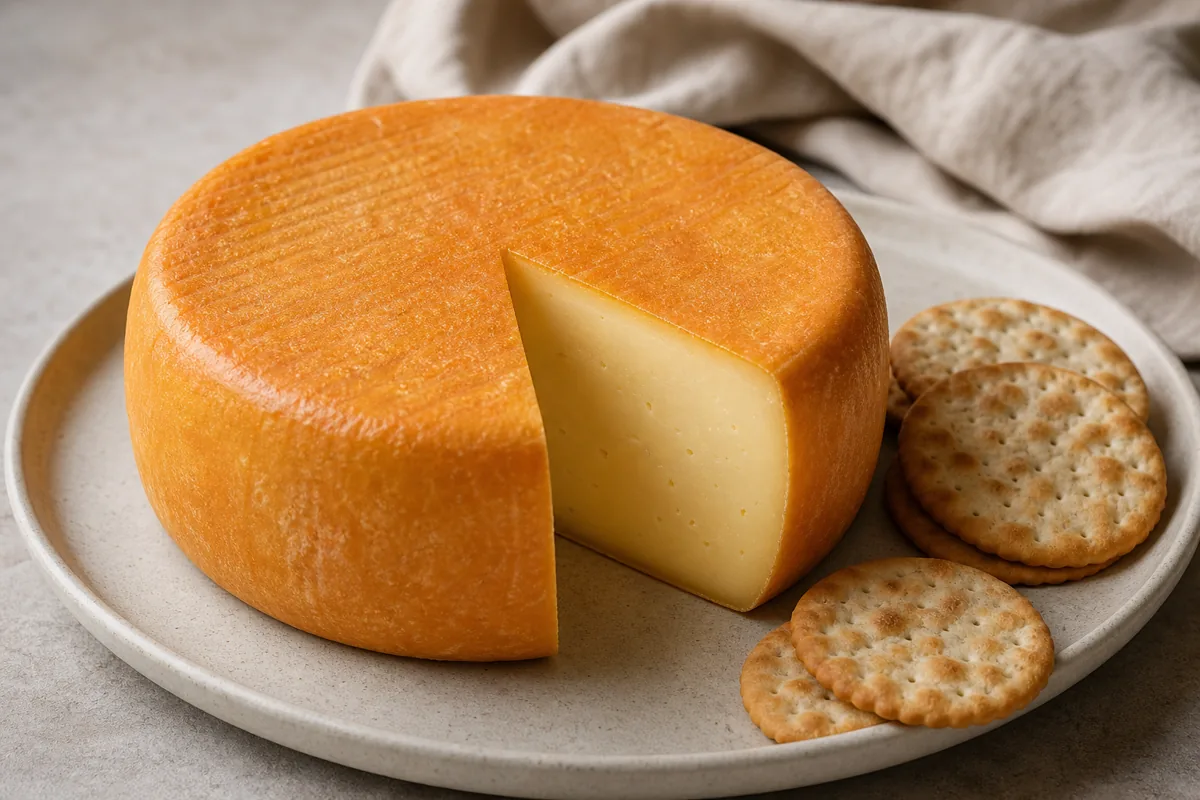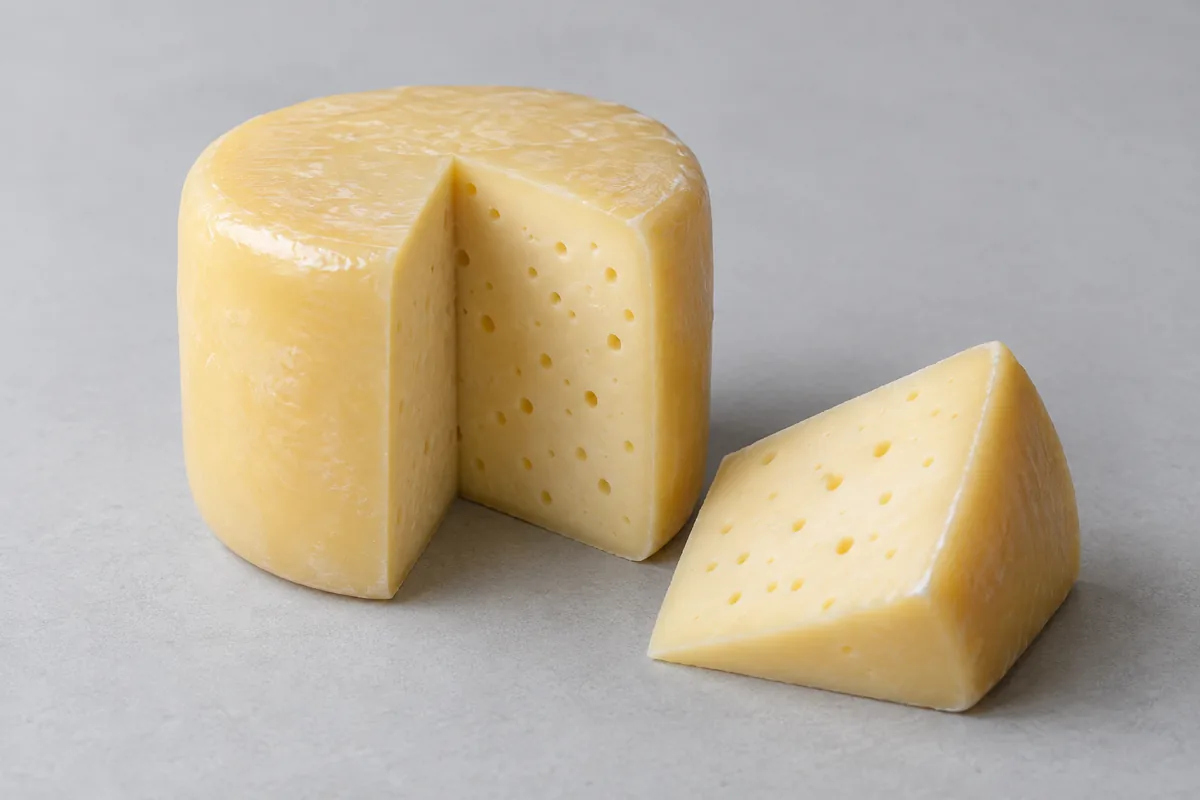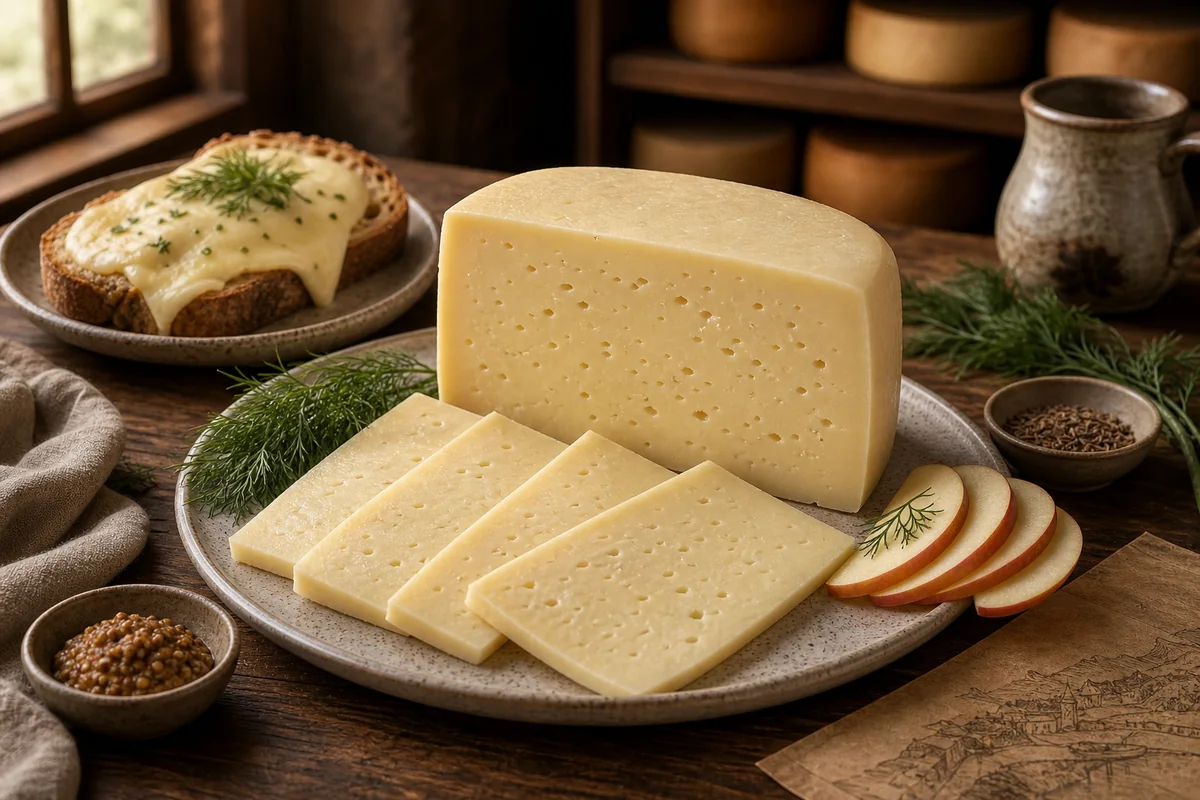
Oltermanni is a mild, semi-soft cow's milk cheese that Valio makes in Haapavesi, Finland, and sells as cylinders, slices and grated cheese. Valio Aimo's magazine calls it the favourite cheese of Finns.
It began in 1980 as an anniversary gift for Valio's milk producers and went on sale in 1981. Today the brand covers several versions, so the number and style on the label decide which cheese you are buying.
In This Article
What Kind of Cheese Is Oltermanni?
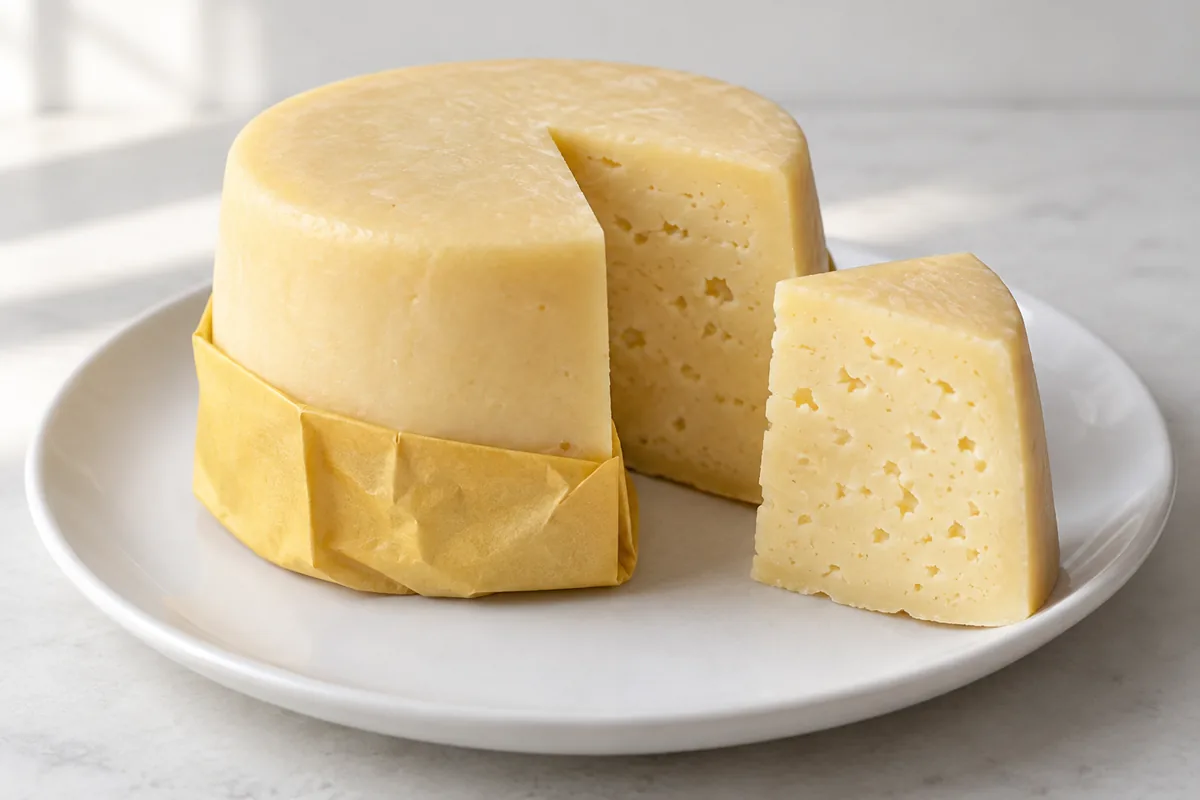
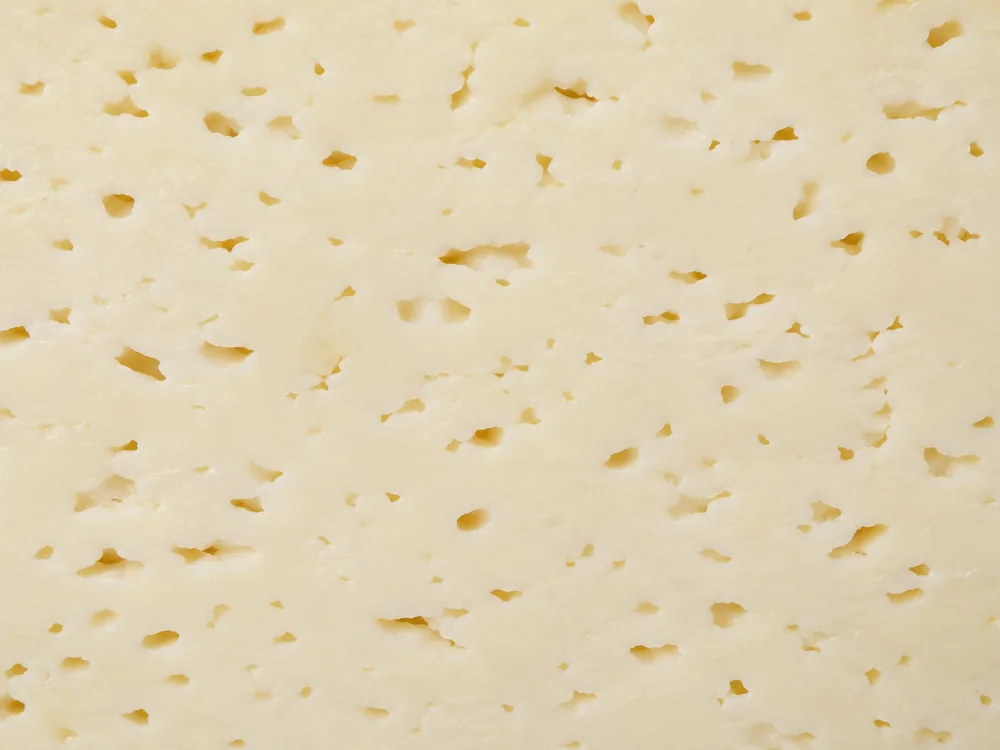
Oltermanni is a ripened, semi-soft cheese with small crumb-like holes, which Valio's product page calls murukoloinen. Cheese.com lists it as rindless, pale yellow and made from pasteurised cow's milk.
On the labels for the original, the 17% and the Saint Paulin versions, the ingredients are pasteurised milk, culture and salt. Valio's Finnish pages say every Oltermanni cheese is made from Finnish milk without additives.
Valio's brand page describes the classic Oltermanni as a cylinder in a yellow wrapper, and says its recent pack refresh keeps each version's familiar identifying colour.
Valio's Finnish pages call Oltermanni a kermajuusto, which means cream cheese word for word. English-speaking shoppers use cream cheese for a fresh spreadable cheese, and this one is a ripened cheese sold in pieces and slices.
No single family name covers it. Cheese.com files it under the Havarti family and lists the nickname Baby Muenster, and Estonia's Rimi online shop describes it as a Havarti-type cheese.
Valio Aimo's magazine adds a Swedish link: the cylinder shape was modelled on Hushållsost, the Swedish household cheese.
Cheese.com's entry also mentions a spreadable version sold in tubs. Valio's brand page lists a lactose-free Oltermanni processed cheese as its own product, and a spread is not the ripened cheese described above.
How Is Oltermanni Made?
Valio collects the milk from about 650 farms, mostly within 50 km of its Haapavesi dairy, and a kilo of cheese takes about 10 litres of it. At Haapavesi, according to Valio Aimo's magazine, about 700,000 litres of milk a day move through steel vats, moulds and a draining tunnel.
Automation does the work and an information system steers the process, but Valio says quality control still needs its cheesemasters' expertise.
Valio's brand page says the cheese then ripens for at least four weeks, which makes it a ripened cheese and not a fresh one.
On the packing line the finished cheeses get the yellow wrapper, while a separate slicing line makes bars almost half a metre long that Valio's Vantaa factory slices and packs.
Haapavesi was not the first dairy. Valio Aimo's magazine says demand pushed production beyond Isokyrö to Valio's Ylitornio and Mikkeli dairies, and that in 1993 Valio concentrated it at Haapavesi, whose capacity it then raised several times in the 2000s.
Valio's product pages for the original, 17% and Saint Paulin cheeses all list Valio Oy, Haapavesi as the manufacturer.
Why Is Oltermanni Called Oltermanni?
Oltermanni began in 1980 as a present for Valio's milk producers on the company's 75th anniversary, not as a product. Valio gave the job to the Isokyrö dairy, which specialised in Edam, and the dairy made about 120,000 kilos on a tight schedule, according to Valio Aimo's magazine.
Valio Aimo's magazine calls that gift cheese mild and lace-like, with the crumb-like holes that Valio's product page still describes today. Producers and dairy staff received it with delight.
Valio's commercial department soon asked why the cheese was not on sale, and it reached shops in 1981. Valio Aimo's magazine says a million kilos sold at once and emptied all stocks.
The picture on the original wrapper showed the Isokyrö dairy, according to Valio Aimo's magazine, and today's wrapper shows the dairy museum at Saukkola.
The word oltermanni means the eldest member of a trade, a village or a guild, according to Valio Aimo's magazine. Valio later turned the name into a character, Herra Oltermanni, who first appeared in its advertising in 2001.
Which Oltermanni Should You Buy?
Valio's Finnish product pages give a fat percentage for each version, and the original cheese is 29%. Cheese.com lists 34%, which matches none of the 29%, 17% or 33% figures on those pages.
| Version | Fat | Saturated fat | Energy | Protein | Salt |
|---|---|---|---|---|---|
| Original | 29 g | 17 g | 364 kcal | 25 g | 1.3 g |
| 17% | 17 g | 10 g | 272 kcal | 29 g | 1.3 g |
| Saint Paulin | 33 g | 19 g | 392 kcal | 23 g | 1.4 g |
Going from the original to the 17% cheese cuts 92 kcal per 100 g, drops saturated fat from 17 g to 10 g and lifts protein from 25 g to 29 g. Valio describes it as the same cheese in a lighter version.
The 33% cheese is a separate style rather than a richer original. Valio describes Saint Paulin as soft and creamy, with French cheese tradition behind it, and its 19 g of saturated fat per 100 g is the most of the three versions.
Valio's brand page describes its 17% plant-oil cheese as made from milk with part of the milk fat replaced by plant oil, so it is a different product from the 17% cheese in the table. The page also names Monterey Jack, smoked and plain slices, ValSa slices and a lactose-free processed cheese.
Valio Aimo's 2022 magazine adds 9%, organic and reduced-salt versions and cheddar, tilsit and Port Salut flavours. Its timeline puts the lighter 17% cheese in 1997, the organic 17% in 2012 and Monterey Jack in 2021.
Read the fat percentage on the pack first: 29% is the original, 17% is the lighter cheese with 92 kcal less per 100 g, and 33% is the softer, creamier Saint Paulin with the most saturated fat.
What Nutrients Does Oltermanni Provide?
Calcium carries the largest share of the daily intake recommendation on Valio's labels, and across the three versions it falls as fat rises, so the lighter 17% cheese lists the most per 100 g and Saint Paulin the least.
The original's and the 17% cheese's pages list phosphorus, zinc, vitamin B12 and riboflavin as well, each a little higher on the 17% cheese. Saint Paulin's page lists calcium only, so those four cannot be compared across all three.
All three labels list 0 g carbohydrate and 0 g sugars per 100 g.
| Nutrient | Original | 17% | Saint Paulin |
|---|---|---|---|
| Calcium | 770 mg (96%) | 910 mg (113%) | 640 mg (80%) |
| Phosphorus | 480 mg (68%) | 560 mg (80%) | Not listed |
| Zinc | 3.5 mg (35%) | 4.1 mg (41%) | Not listed |
| Vitamin B12 | 0.65 µg (26%) | 0.75 µg (30%) | Not listed |
| Riboflavin | 0.24 mg (17%) | 0.27 mg (19%) | Not listed |
Is Oltermanni Lactose-Free, Gluten-Free and Vegetarian?
Valio's product pages for the original, 17% and Saint Paulin cheeses each carry a lactose-free tag, a gluten-free tag and a vegetarian-diet tag that Valio words as lacto-vegetarian. Cheese.com's entry matches on the last point, listing the cheese as vegetarian and not vegan.
| Lactose | 0 g per 100 g on the original and 17% pages; the Saint Paulin page gives the lactose-free tag but no figure |
| Rennet | Microbial rennet, declared separately from the ingredients on all three pages |
| Allergens | Milk and milk products, listed on all three pages |
What Does Oltermanni Taste Like?
Valio describes it as mild, slightly sour, creamy and pleasantly fresh, and Cheese.com adds buttery, with a fresh and pleasant aroma. Valio Aimo's account of the first cheese in 1980 used the same three words, slightly sour, creamy and fresh.
Valio's brand page says a gentle, mild taste links all its Oltermanni products, including the softer Saint Paulin.
Texture is where Cheese.com gives two readings: its information box lists creamy, smooth and spreadable, while its description calls the traditional cheese only moderately smooth and not as soft or spreadable as goat cheese. Valio sells the standard form for planing into thin sheets, which fits the firmer description, and the spreadable form belongs to the tubs mentioned above.
How Is Oltermanni Eaten and Cooked?
Valio lists sandwiches and warm breads first among its uses, and Cheese.com says the cheese is often eaten with rye bread or with meals such as rice pies.
Valio Aimo's magazine calls the standard form höylättävä juusto, planing cheese, and says grated and sliced Oltermanni came later alongside it. Valio's brand page likewise tells readers to höylää, or plane, its 17% plant-oil cheese onto bread.
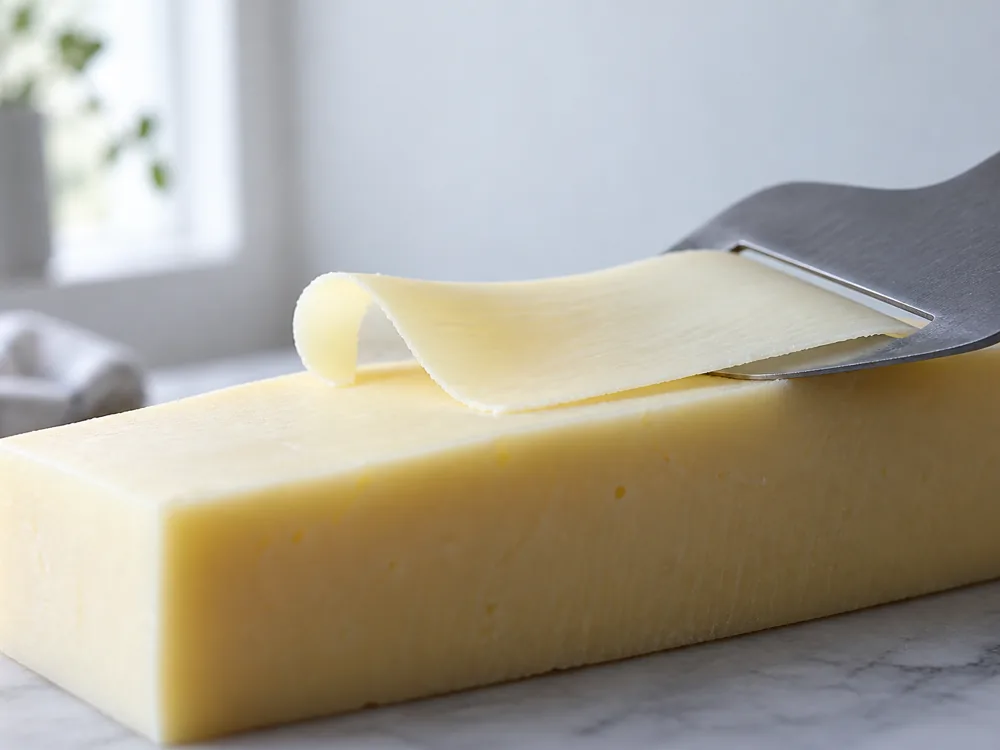
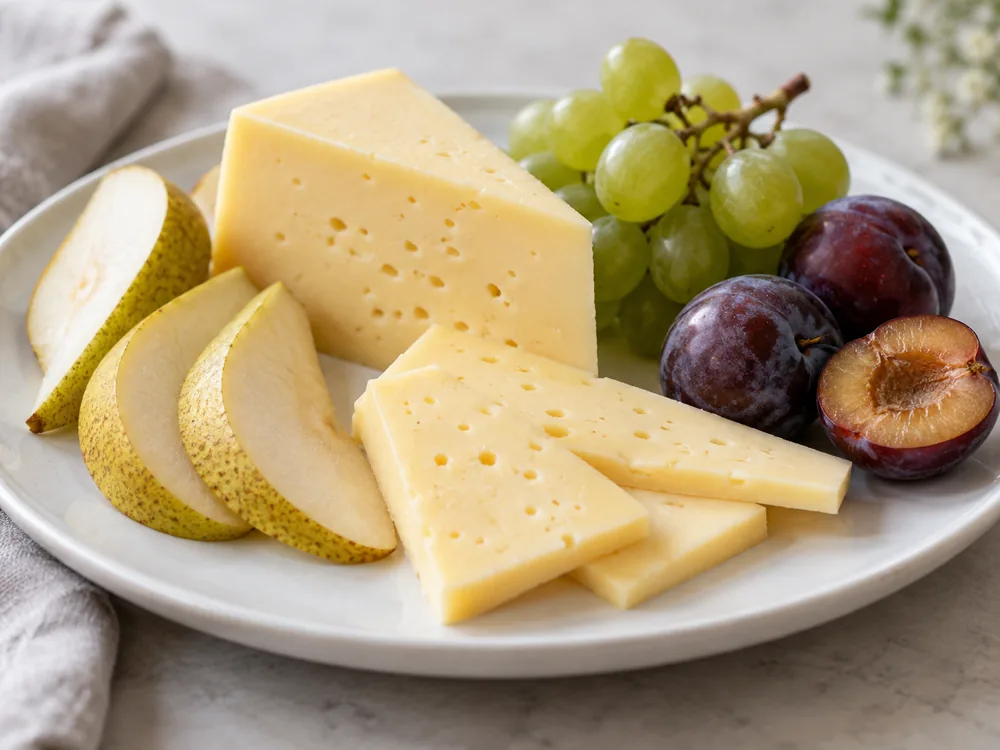
Salads and cheese boards are the other uses Valio's product pages list. Cheese.com suggests serving it in wedges or slices with fresh fruit or alongside wine.
| Pairing | Type | Why It Works |
|---|---|---|
| Pears, grapes and plums | Fruit | Cheese.com suggests serving wedges or slices of the cheese with these fresh fruits. |
| Merlot and Pinot Grigio | Wine | Cheese.com names these two wines to serve alongside the cheese. |
For cooking, Valio's 17% page suggests trying the cheese on bread or in cooked dishes, with warm breads among its examples. Its only melting claim is for Saint Paulin, which it says melts evenly into toasts and warm dishes.
Valio's page for the original lists four of its recipes with the cheese: cocktail sticks, ground-meat nachos, cheese pockets and a tuna-onion pie.
Can You Eat Oltermanni When Pregnant?
The Valio pages for the original, 17% and Saint Paulin cheeses all list pasteurised milk, and Cheese.com describes the cheese as made from pasteurised cow's milk.
The NHS lists pasteurised semi-hard cheeses, such as edam, and pasteurised soft cheeses, such as cottage cheese, mozzarella and feta, as safe to eat. Oltermanni is a pasteurised, semi-soft, rindless cheese, a texture the NHS lists do not use, and the NHS does not name it, so its lists do not say whether the semi-hard or the soft line covers it.
The NHS asks for thorough cooking of pasteurised or unpasteurised mould-ripened soft cheeses with a white coating and of pasteurised or unpasteurised soft blue-veined cheeses.
The CDC lists pasteurized milk and dairy products made from pasteurized milk as the safer choice. It names soft cheese from unpasteurized milk, any queso fresco-type cheese and unheated deli-sliced cheese as riskier.
The CDC's cheese list names hard cheese and cottage, cream, string, feta and mozzarella cheese made with pasteurized milk as safer, plus pasteurized soft cheeses heated to an internal temperature of 165°F or until steaming hot. Cold Oltermanni, a pasteurised semi-soft cheese, is not one of those safer entries by name, so the CDC lists do not settle it either.
Where to Buy Oltermanni and How to Store It
Estonia's Rimi online shop lists a 500 g piece of Oltermanni and recommends it for snacks and sandwiches.
That listing is not the Finnish original: its nutrition panel gives 33 g of fat and 390 kcal per 100 g, within 2 kcal of Valio's Saint Paulin figures, and it names Valio Oy, Äänekoski as the producer where Valio's product pages name Haapavesi.
Its ingredient line also includes an acidity regulator, E509, which Valio's Finnish ingredient lists do not, and it gives salt as 1.3% in the ingredients but 0.6 g in the nutrition panel.
Russia was once a large market. Valio Aimo's magazine says more than half of production crossed the border into Russia.
Cheese.com calls the cheese a favourite in Finland and Scandinavian countries.
Valio's labels say an unopened pack keeps below +8 °C (about 46°F) until the date printed on it. The CDC advises keeping a refrigerator at 40°F (4°C) or below, which is 6°F colder than that label ceiling, so the CDC figure is the one to set the fridge to.
What Can You Use Instead of Oltermanni?
Havarti is the cheese Cheese.com files Oltermanni under and compares its flavour to, and Rimi calls Oltermanni a Havarti-type cheese, so it is the nearest named swap for the sandwich and warm-bread uses Valio lists.
Hushållsost is the Swedish household cheese that Valio Aimo says the cylinder was modelled on, which makes it the other named comparison.
A swap does not carry the label facts across. The lactose, rennet and allergen lines above belong to Valio's own cheese, so a lactose-free, vegetarian or rennet-conscious cook has to read the substitute's own label.