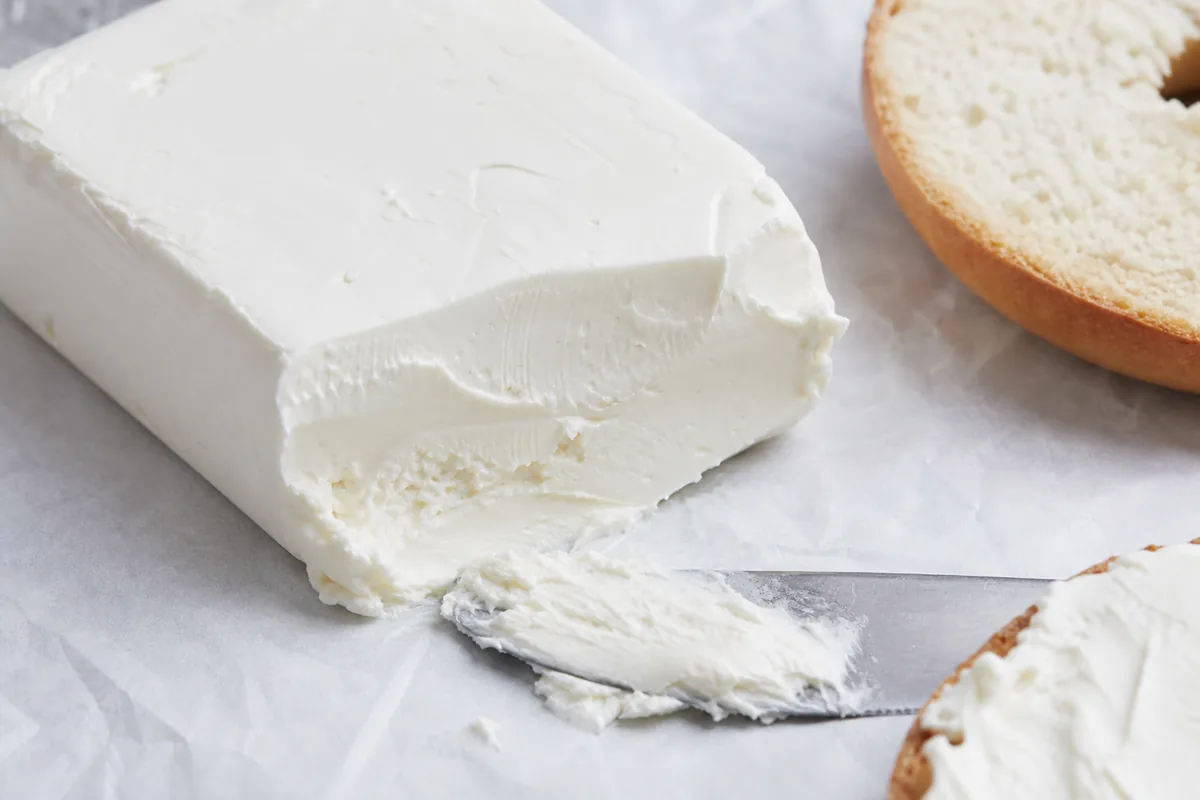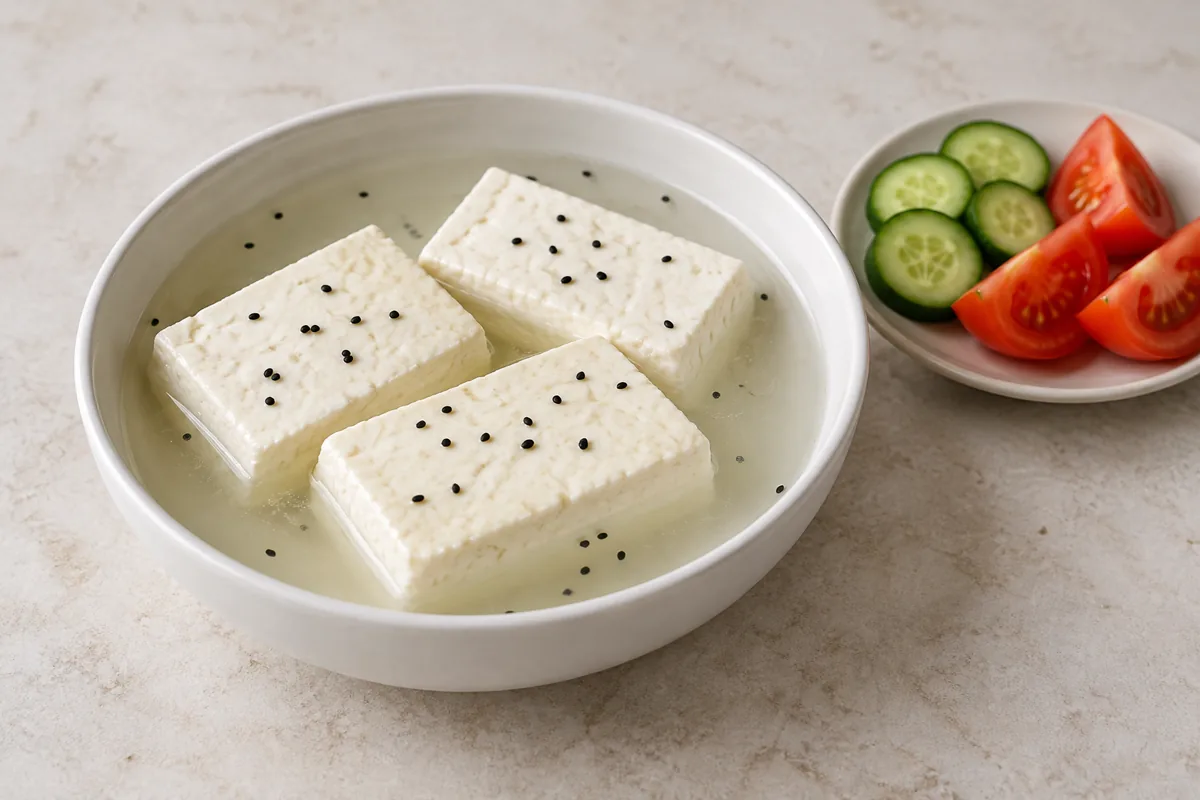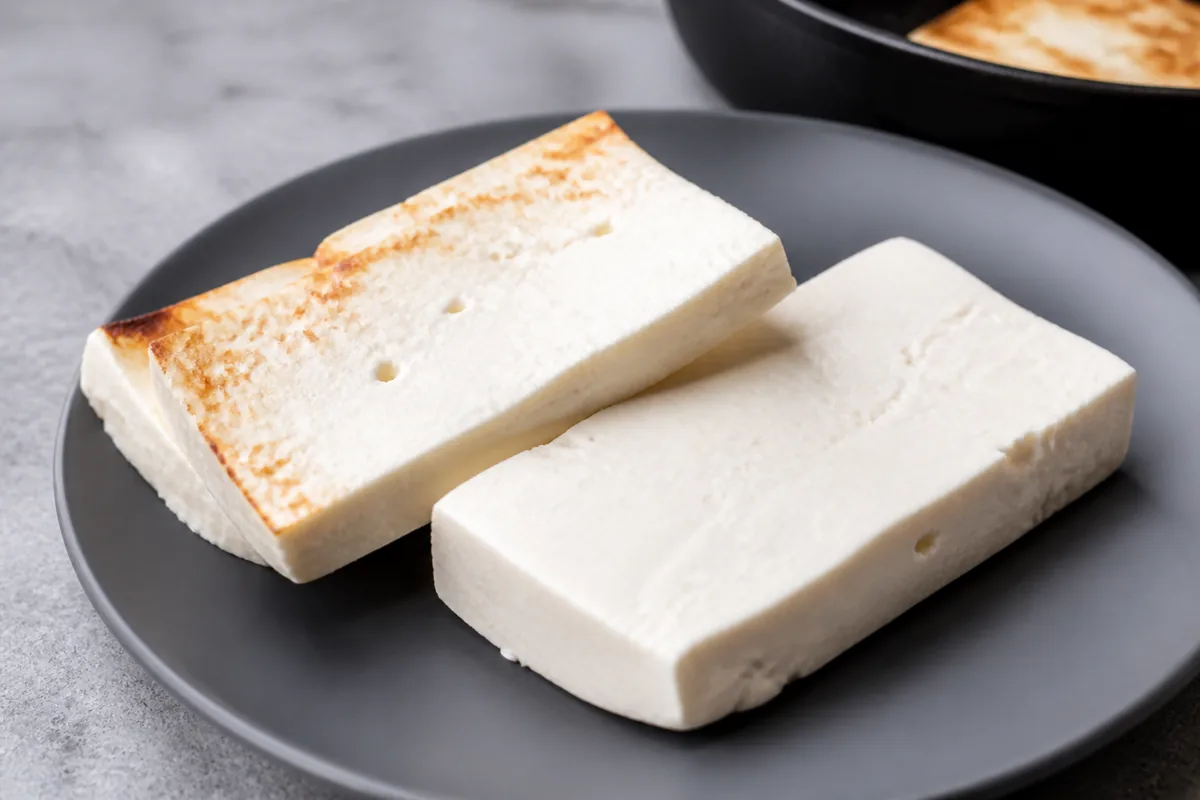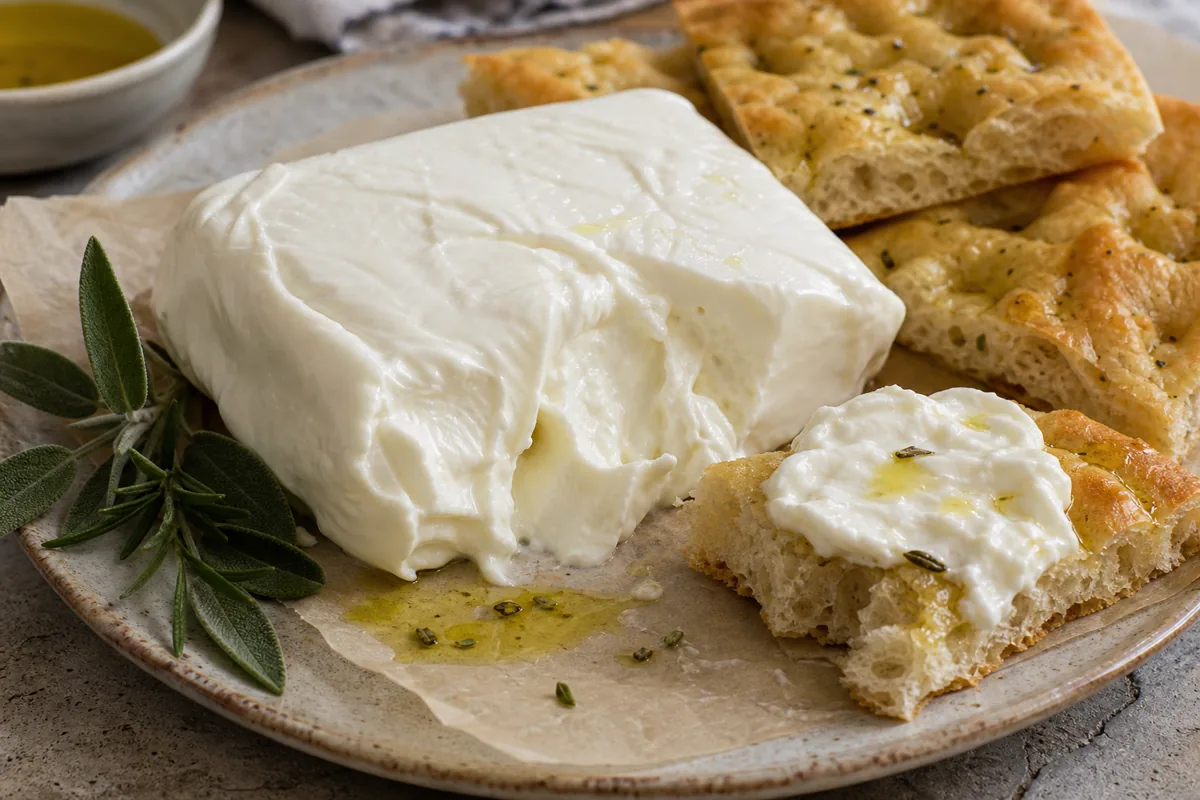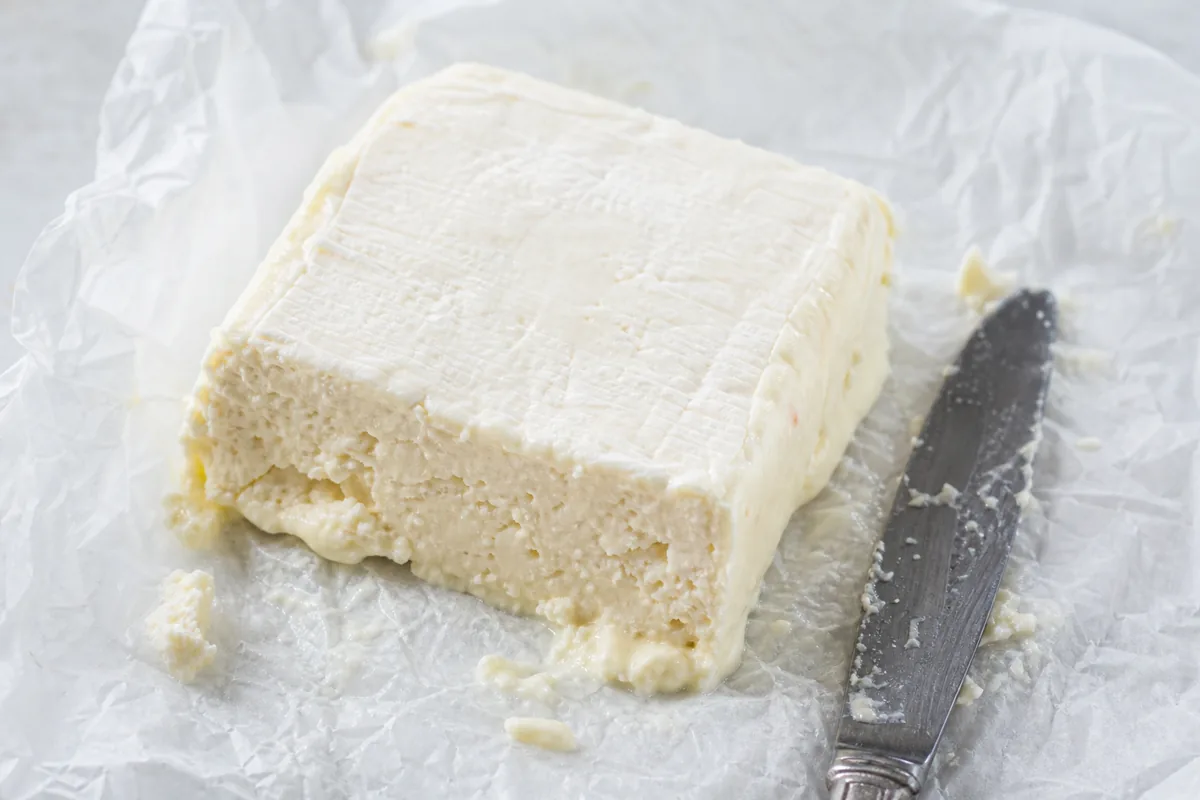
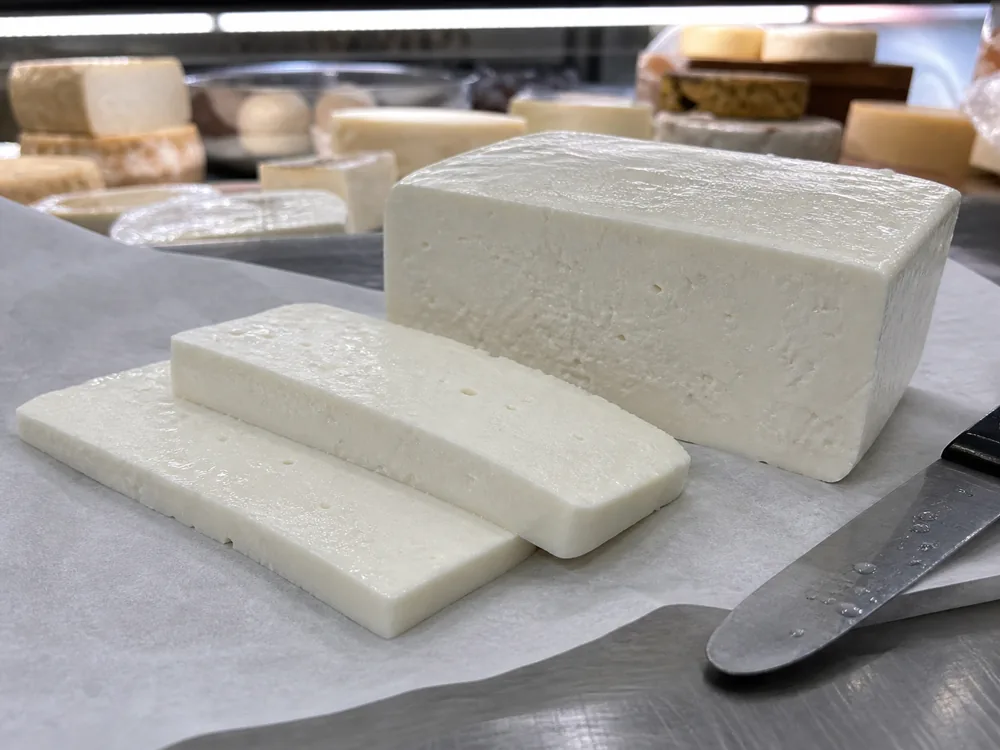
California Teleme is a soft-ripened cow's-milk cheese formed as a large square and dusted with rice flour. A younger piece holds a slice, while a ripe piece turns creamy and can become runny enough to need a bowl.
That identity matters because the name is often confused with brined white cheeses from southeastern Europe. The California cheese documented by the 2026 ACS judging standard, Real California Milk, and its current producer is a distinct soft-ripened style, not a feta-like block stored in brine.
The useful buying question is how ripe the piece is because ripeness controls whether it will slice, spread, slump into polenta, or leak across a board.
In This Article
What Is California Teleme?
The ACS competition category defines Teleme around cow's milk, a square format, a rice-flour-dusted surface, and an interior that becomes creamy or runny when ripe. Real California Milk also describes Teleme as a California original with a mild, slightly tangy flavor and notes that large pieces may carry a rice-flour crust.
Mid-Coast Creamery's Franklin's Teleme is the best documented current example. California Cheese Trail lists cultured pasteurized cow milk, salt, and microbial enzymes as its ingredients, with a thin rice-flour coat around a soft-ripened square aged for about three or four weeks.
The rice flour is a handling and ripening cue, not evidence of a protected designation or one universal recipe. Read the producer name and ingredient label because a generic Teleme listing does not prove that a cut piece is Franklin's product or that it follows the same schedule.
How to read Teleme ripeness
Teleme changes more dramatically with ripeness than a firm grating cheese. The surface can remain thin and dry while the center softens, so a neat exterior does not guarantee a sliceable interior.
| Cut-face cue | Likely texture | Best job |
|---|---|---|
| Even, soft paste that holds an edge | Younger and sliceable | Younger Teleme portions for sandwiches, toast, or clean board portions |
| Creamy paste that yields under the knife | Ripe and spreadable | Bread, crackers, or folding into hot polenta |
| Center beginning to flow | Very ripe | Serve in a shallow bowl or use as a finishing cheese |
| Harsh ammonia, colored growth, or damaged packaging | Quality or handling concern | Do not buy the piece |
Ask the counter to show the cut face and explain when the square was opened. A center cut can be softer than an exposed edge, and two portions from the same square may suit different dishes.
Which Dishes Work Best with Teleme?
Serve a younger piece in thick slices with bread or fruit. A ripe portion behaves more like a soft-ripened board cheese, so give it a rimmed plate and a spoon or spreading knife instead of expecting tidy cubes.
California Cheese Trail names polenta as a traditional use, and ripe Teleme makes sense there because heat lets the soft paste disappear into the grain without requiring hard grating. Add it near the end and adjust salt only after tasting the finished dish.
On pizza, use small pieces after accounting for the cheese's moisture and ripeness. A young portion can be cut, while a flowing piece works better when you control Teleme's moisture on pizza and add it as a finishing dollop.
- Bread or crackers: Choose a creamy but contained piece that can be spread without running off the plate.
- Polenta: Fold in ripe Teleme after cooking so its butter and tang remain noticeable.
- Pizza: Use modest pieces and protect the crust from a very wet, overripe center.
- Cheese board: Place the portion in a shallow dish if it is already slumping, then add a separate knife.
For a broader board, pair Teleme with one firmer cheese and one sharper cheese. These contrasts keep Teleme's light tang and soft texture distinct.
Is Teleme the Same as Feta or Telemea?
Greek feta cheese is a brined, crumbly cheese with its own protected specification. California Teleme is soft-ripened cow's-milk cheese with a rice-flour-dusted surface, so feta cannot establish Teleme's milk, manufacture, texture, or storage.
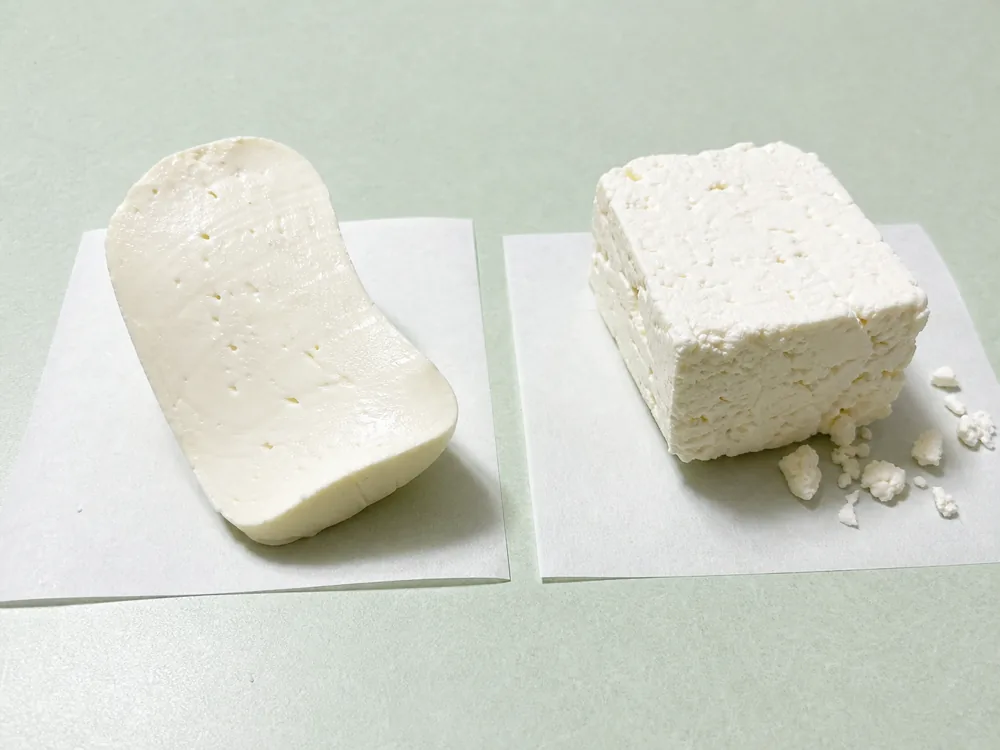
Telemea is also a separate name. European Union records register the full Romanian name Telemea de Ibanesti as a PDO and describe Greek Telemes as white cheese in brine.
Those records do not turn California Teleme into a brined Eastern European cheese.
If a package says Telemea, Telemes, or white cheese in brine, use that product's label and specification. The extra letter changes which product record you need, and a shared-looking name is not enough evidence to swap identity facts.
| Label and structure | What it indicates |
|---|---|
| Teleme, square, rice-flour dusting | California soft-ripened style; check the producer and cut face |
| Feta, packed in brine | Greek brined crumbly cheese; use the exact package |
| Telemea or Telemea de Ibanesti | Romanian name; follow its own label or protected specification |
| Unlabeled white deli cheese | Identity, milk treatment, and storage remain unknown |
What Should You Check When Buying Teleme?
Look first for the producer name, an intact date or lot record, a pasteurization statement, and cold handling. Then choose the ripeness that fits the meal rather than assuming the softest piece is automatically the best one.
A large square may be cut at a deli, but the counter should still be able to identify the original product. If staff cannot show the label or tell you whether the milk is pasteurized, treat those facts as unknown.
- For slices: Ask for a younger portion that holds an edge when cut.
- For spreading: Choose a ripe piece with a creamy center and no harsh aroma.
- For polenta: A softer piece is useful, but avoid damaged or temperature-abused cheese.
- For later in the week: Buy less ripe cheese and follow the retailer's date and storage directions.
Availability can be limited. California Cheese Trail lists Mid-Coast Creamery as the maker of Franklin's Teleme, but stock at an individual shop can change, so call ahead rather than relying on an old store list.
How Should You Store Teleme Safely?
Keep Teleme covered at 40°F (4°C) or below. FDA guidance says refrigerated foods should stay covered, package directions should be followed, and ready-to-eat foods should be used promptly because Listeria can grow during extended cold storage.
No current producer source used here gives one universal after-opening day count for every Teleme portion. Keep the original date and retailer instructions, buy only what you can use promptly, and do not replace that product-specific information with a fixed four-day or six-day rule.
Bring out only the amount you plan to serve. The cheese may soften quickly as a quality change, while the two-hour room-temperature limit is a food-safety boundary from FDA guidance.
For pregnancy in the United States, the CDC lists unheated cheese sliced at a deli as a riskier choice, and pasteurized soft cheeses heated to an internal temperature of 165°F (74°C) or until steaming hot and deli-sliced cheeses heated to 165°F or until steaming hot as safer choices. Franklin's documented ingredient list says pasteurized cow milk, but a cut portion still needs its original identity and handling record.
Served cold, Teleme is described as a pasteurized soft-ripened cheese, a type the CDC list does not cover, so ask a midwife or doctor. The NHS lists pasteurised soft cheeses and any cheese that's been cooked until steaming hot as safe to eat, and says foods made from unpasteurised milk must be thoroughly cooked.
Public producer records used for this article do not supply a current nutrition panel for the exact cheese. Use the label on the portion you buy for calories, fat, protein, sodium, and serving size instead of applying figures from feta, Telemea, or another Teleme product.