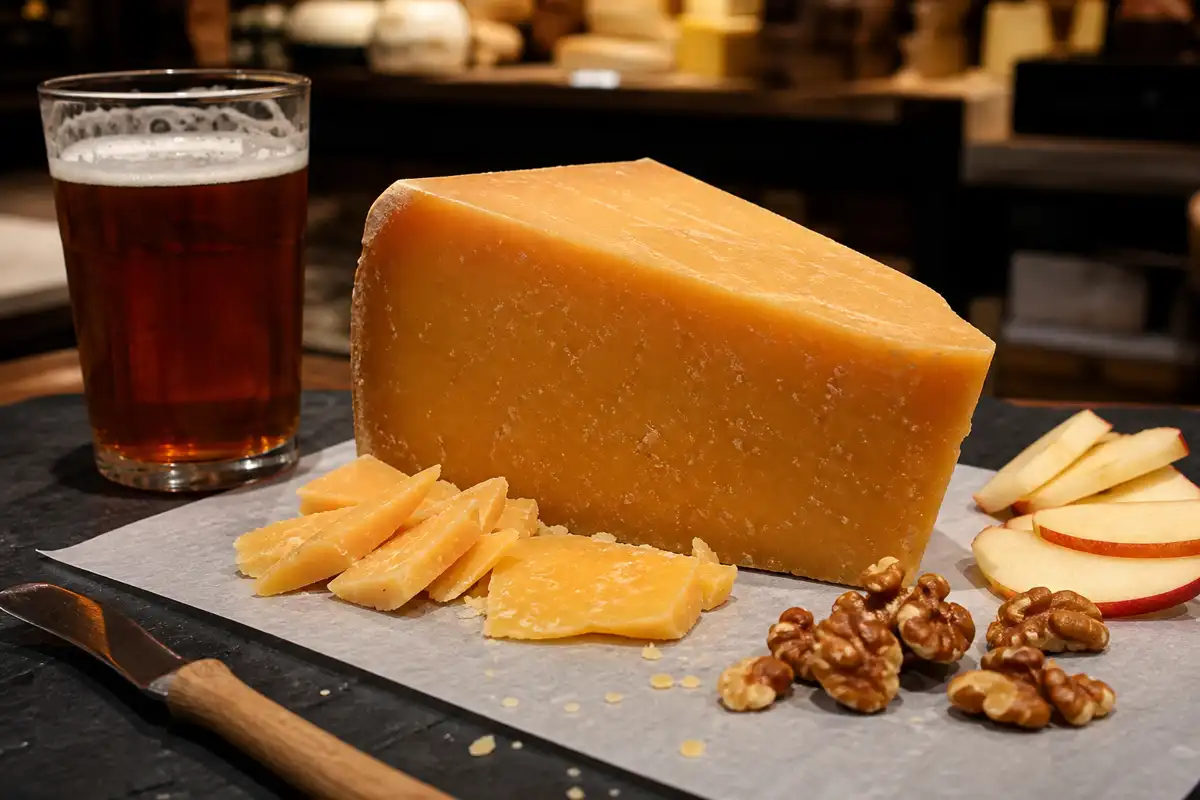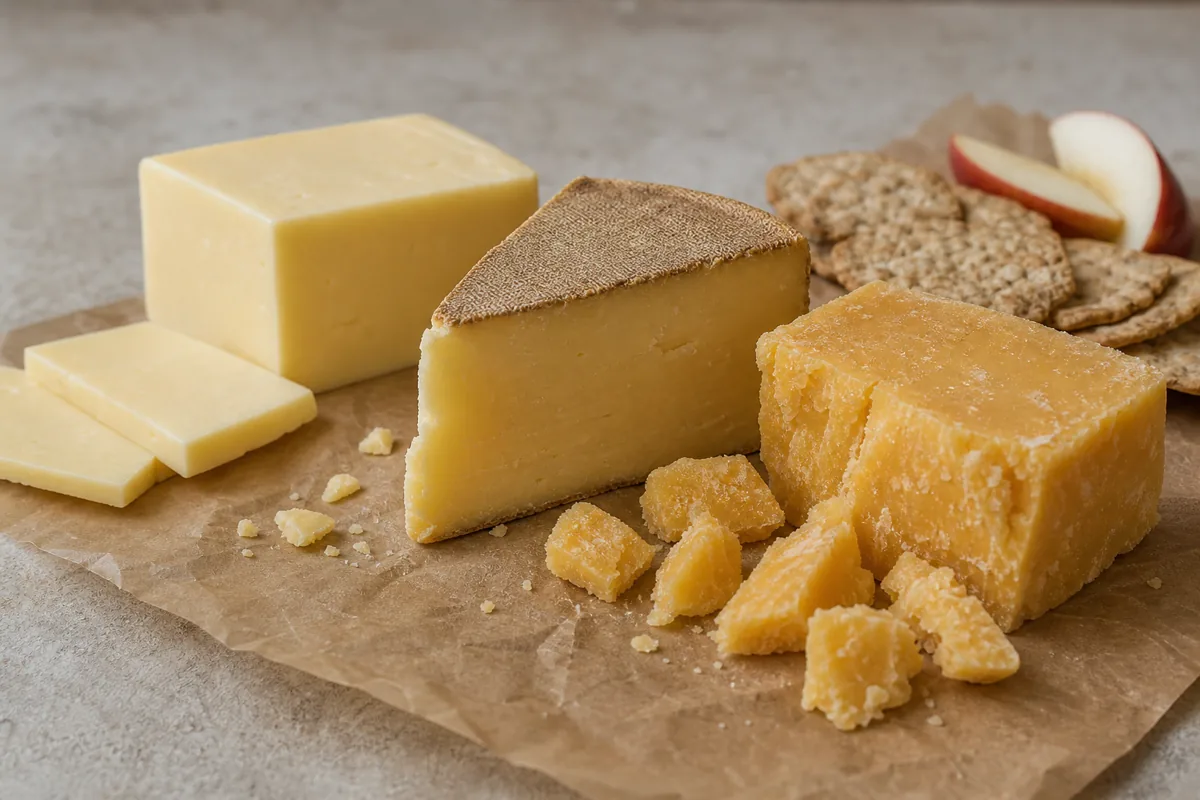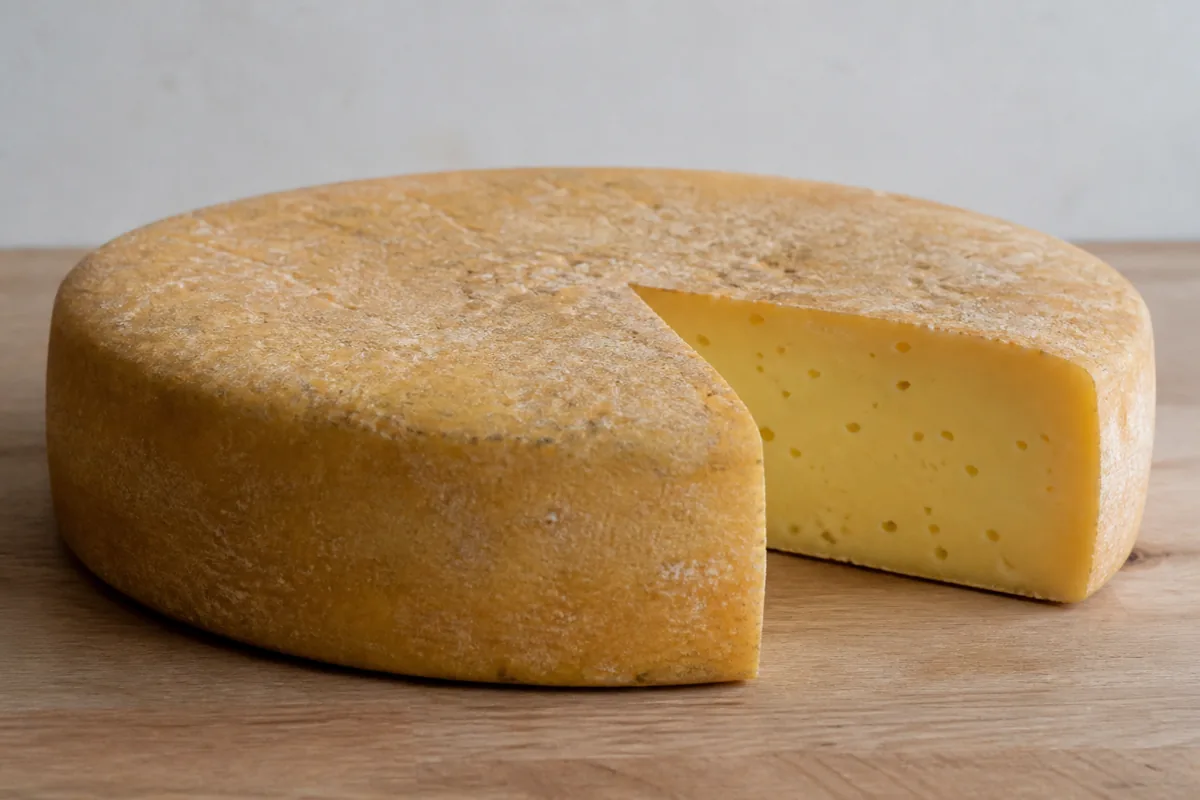
Boerenkaas is Dutch for farmer's cheese, and since 2007 the name has been protected in the EU as a Traditional Speciality Guaranteed. When you see it on a label, it fixes where the milk comes from and that it stays raw.
The regulation says the name is "specifically linked to a product traditionally made on the farm from raw milk obtained mainly from the farm's own herd."
In This Article
What Does the Boerenkaas Name Protect?
The Dutch word boeren means farmers, so the specification reads Boerenkaas as cheese made by farmers on the farm.
The regulation describes it as a (semi-)hard cheese made from raw milk from cattle, goats, sheep or buffalo. Its fat content varies with the fat content of the milk, and it may contain cumin or other seeds, herbs and spices.
The protected name is not tied to a region, so where the farm sits is not part of the rule. It gives these product names as examples: Goudse Boerenkaas, Goudse Boerenkaas met kruiden, Edammer Boerenkaas, Leidse Boerenkaas, Boerenkaas van geitenmelk and Boerenkaas van schapenmelk.
Why Does the Name Exist?
Until 1874, all milk was processed on the farm. After that, milk gradually began to be processed industrially, and cheese milk began to be pasteurised in the first few years of the 20th century.
According to the specification, pasteurisation meant the character of dairy-made cheese was lost, while farms carried on with the traditional method of processing raw milk.
Dutch rules from 1982 on cheese quality, milk origin and production method added milk from goats, sheep and buffalo to cow's milk, and allowed raw-milk cheese with a lower fat content.
What Rules Does Boerenkaas Milk Have to Meet?
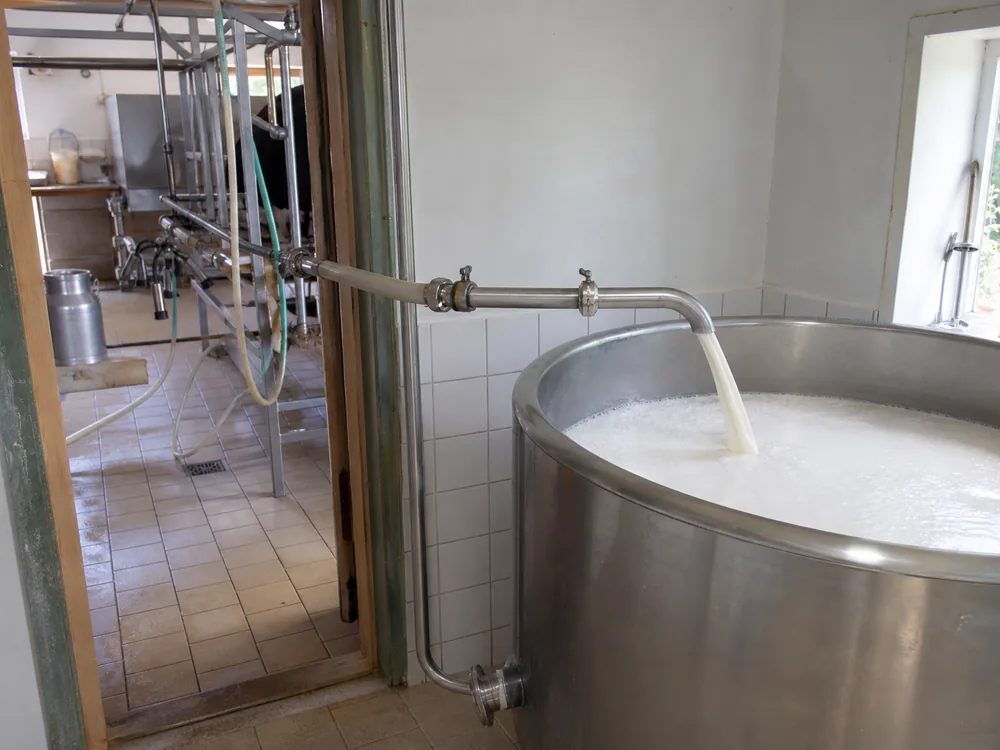
The milk must be raw. The specification allows no heat treatment above 40 °C, and the milk must be processed into cheese within 40 hours of milking.
Cream or skimmed milk taken directly from that milk, and water, are the only other raw materials.
At least half of the milk must come from the farm's own herd. A farm may buy in milk from no more than two other dairy farms, and the bought-in total may not exceed the farm's own production.
Put together, those clauses cap bought-in milk at half of the total, so a dairy that mostly buys its milk cannot use the name.
Every six to eight weeks each farm is inspected for fresh raw milk and for use of the casein mark, and once a year administrative checks confirm which farms the milk came from. Seasonal producers are checked every six to eight weeks during production, and a farm making under 25,000 kilograms a year is checked twice a year.
Which Types Does Boerenkaas Cover?
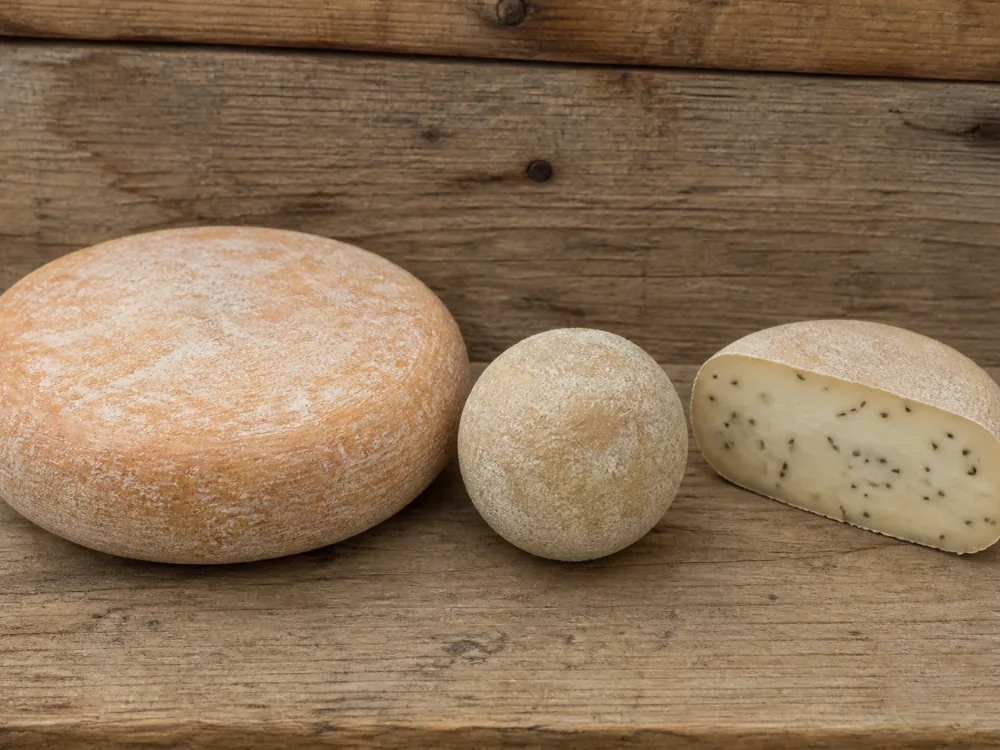
Boerenkaas comes in four types: Goudse, Leidse, Edammer, and a version made from goat, sheep or buffalo milk. The specification allows a cheese coating on each rind if required.
| Type | Shape | Rind | Texture | Fat in dry matter |
|---|---|---|---|---|
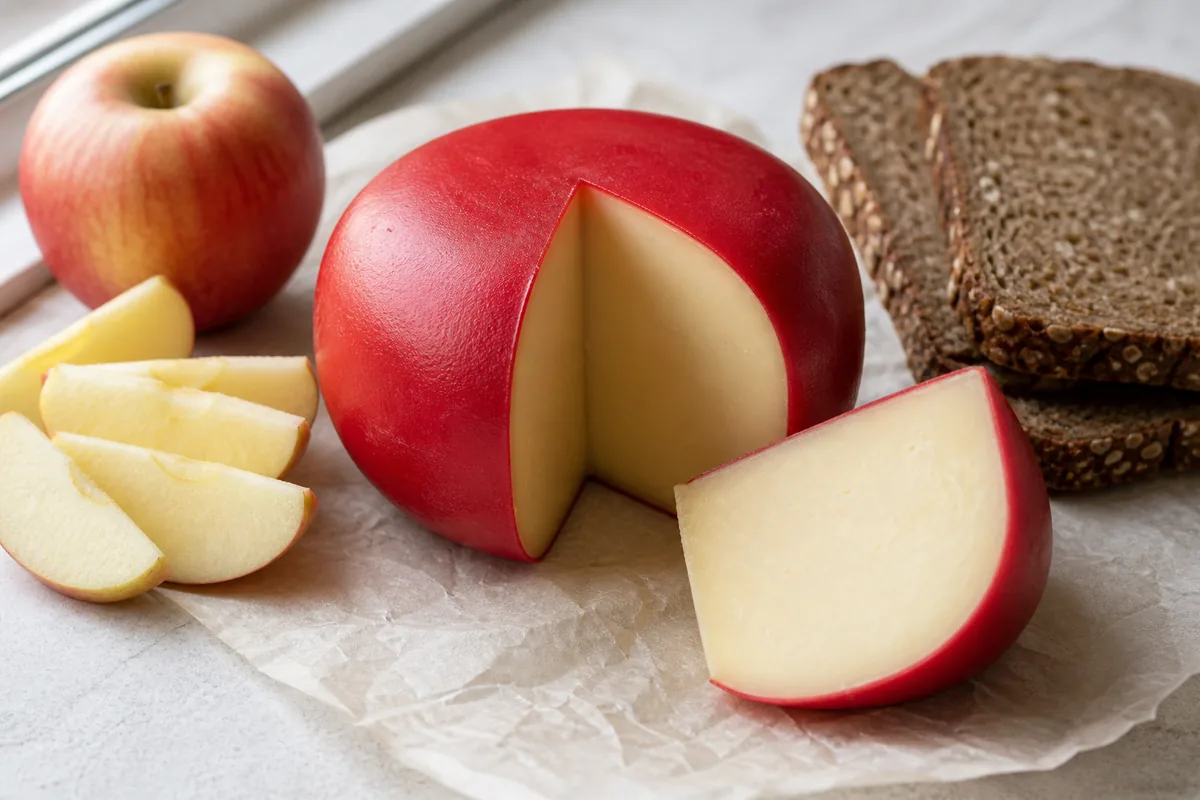
| Goudse Boerenkaas | Flat cylinder with rounded edges | White to yellow | Firm to soft and malleable | At least 48% |
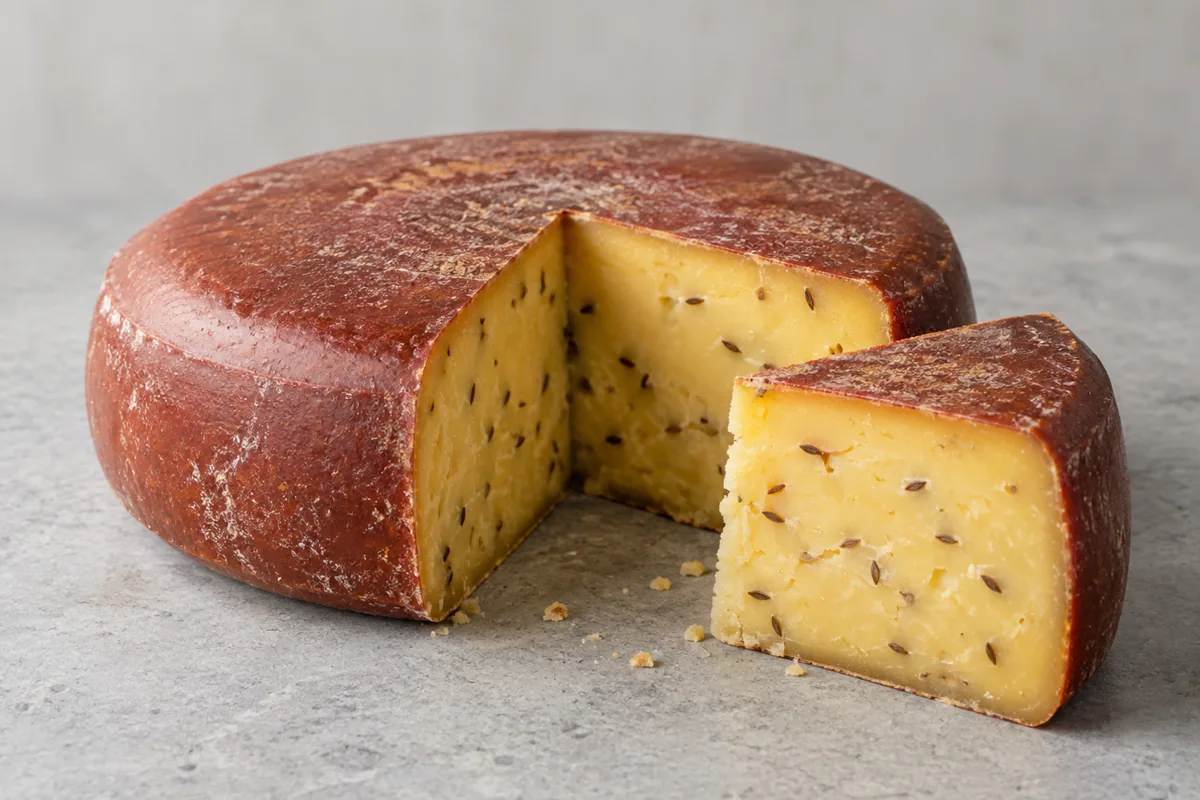
| Leidse Boerenkaas | Flat cylinder with sharp edges | Red | Firm to hard, sliceable | More than 30% but under 35%, or more than 35% but under 40% |
| Edammer Boerenkaas | Ball- or loaf-shaped | White to yellow | Soft to firm or hard, sliceable | More than 40% but under 45% |
| Goat, sheep and buffalo | Not stated | White to yellow | Firm to soft and malleable | At least 45% |
Goudse Boerenkaas takes the Gouda shape, with holes that are regular throughout the cheese, 2 to about 15 mm across, and no cracks longer than 1 cm.
Leidse Boerenkaas is the cumin type, with a limited number of small holes of 1 to 3 mm. Traditional farm-made Leiden cheese also has its own protected designation, Boeren-Leidse met sleutels, which IamExpat says carries an impression of Leiden's keys on the wax.
The Edam type, Edammer Boerenkaas, has holes of 2 to about 8 mm and allows up to 5% salt in the dry cheese, against 4% for the other types.
Versions from goat's milk, sheep's milk and buffalo milk are grouped together, with holes spread evenly through the cheese or a closed body.
What Do the Dutch Age Words Mean?
The specification says ripening runs from a few weeks to over a year, and that the older and longer-ripened the cheese becomes, the firmer and drier it gets. Dutch counters use finer steps, which IamExpat lists in weeks and months, so you can ask for a cheese by its Dutch age word.
| Word | Age | What IamExpat says |
|---|---|---|
| Jong | About 4 weeks | Very soft and mild |
| Jong belegen | 8 to 10 weeks | Stronger flavour |
| Belegen | 16 to 28 weeks | Soft yet flavourful, a cheese for sandwiches |
| Extra belegen | From 7 months | Harder and crumbly, with a pronounced taste |
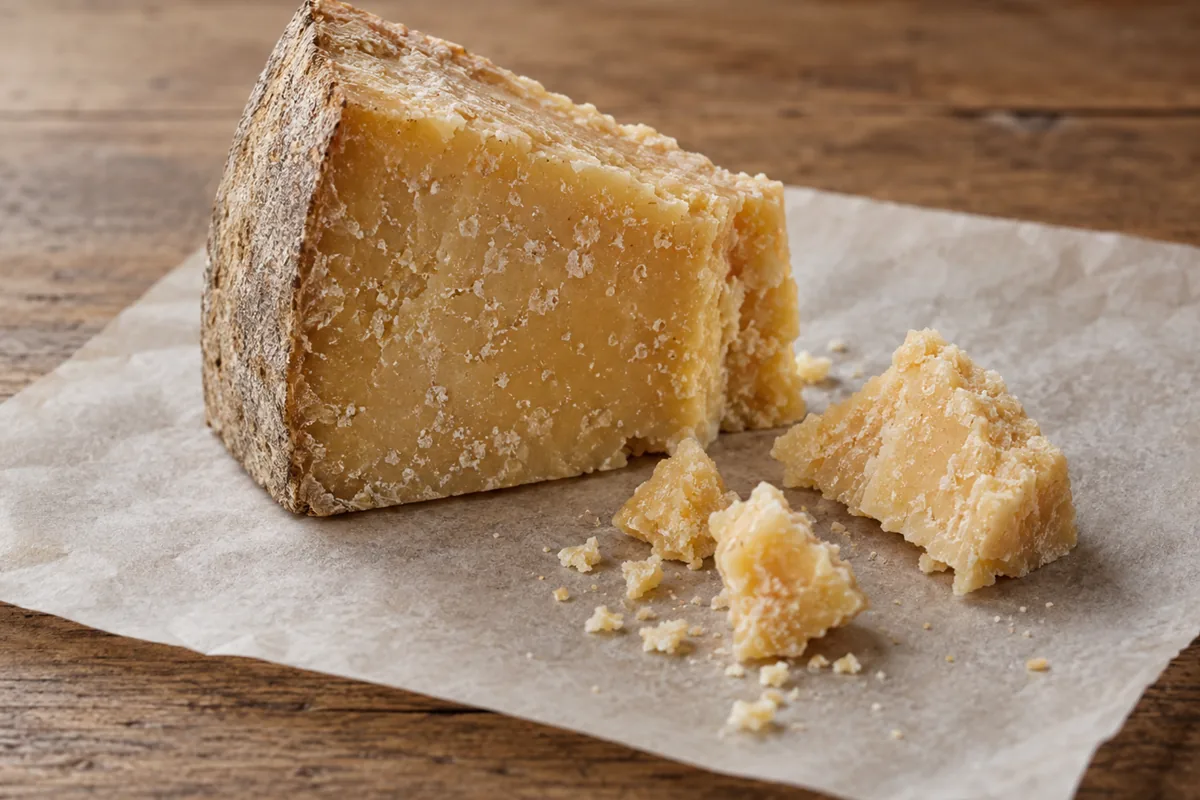
| Oud | 10 to 12 months | Caramel sweetness with a slight crunch |
| Overjarig | 18 months and up | The strongest, suited to a cheese platter |
Overjarig goes past a year and a half, and the specification's own range stays open-ended at "over a year."
A wheel sold as boerenkaas can be a few weeks old or well over a year old, so the age word on the label says more about the cheese than the name does.
Does the Name Say How It Will Taste?
Partly, and the specification gives the reason. It says cheese made from raw milk has more taste, described as fuller, stronger and tangier, because of milk lipase and the bacteria that enter the milk during and after milking.
It adds that many consumers see this as what separates boerenkaas from industrially made cheese, and that the taste gets stronger as ripening goes on.
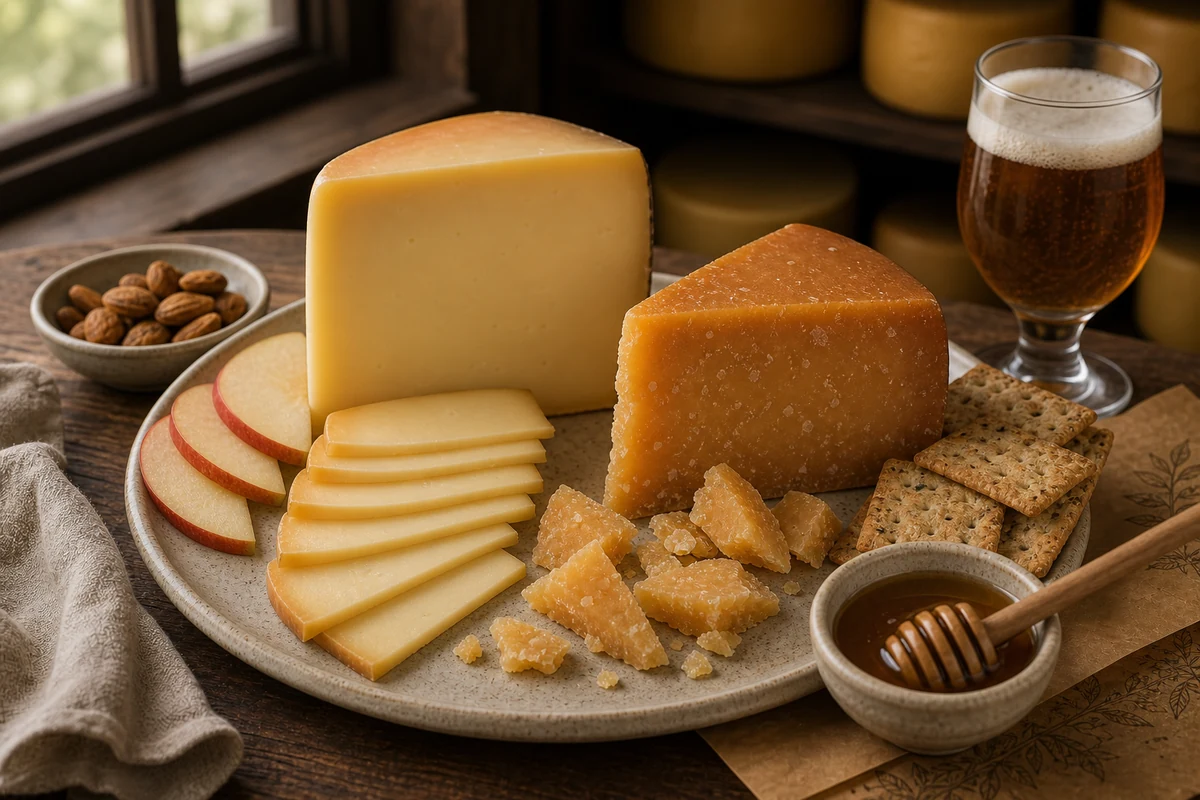
Cheese.com calls the taste buttery and tangy, mild in young versions and more pronounced and complex in older ones. Texture moves with age too: the specification says the cheese firms and dries until it is hard cheese, and IamExpat describes salt-like crystals in the older steps.
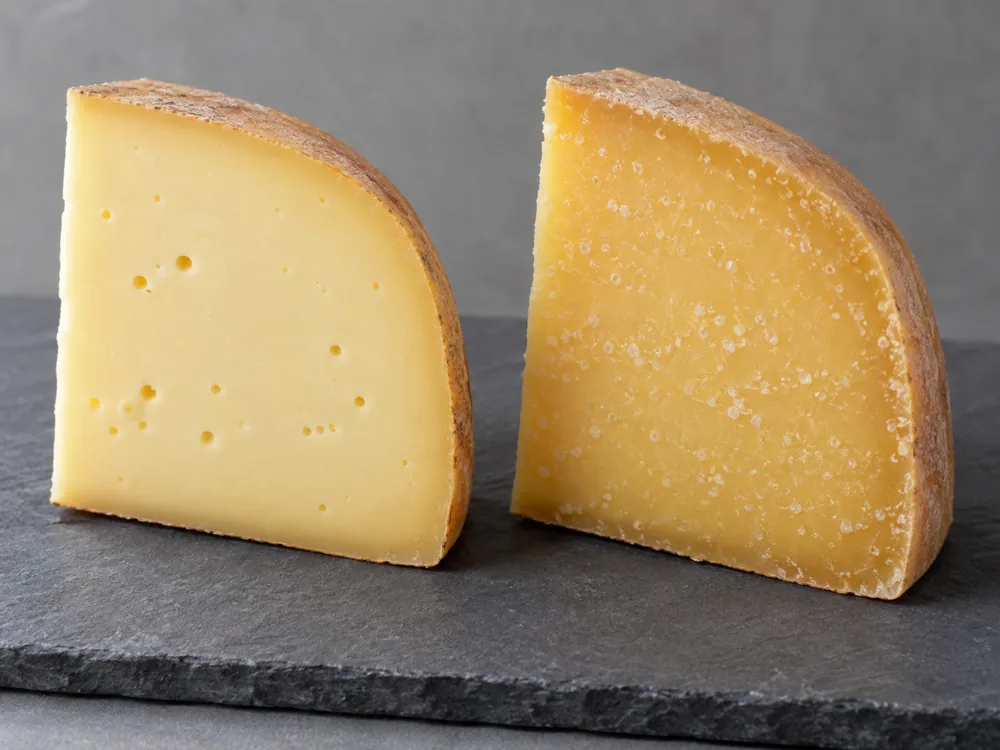
Type, milk and age all move the result and the name settles none of them, so read the second word on the label and the age word to judge what you are buying.
What Do the Casein Mark and the KB Mark Show?
Two different marks can sit on a wheel. A casein mark bearing the name Boerenkaas, and possibly the type of milk, is put on the cheese before or during pressing.
KB is a separate quality mark. Kaas.nl says it shows that farm-made cheese meets the standards of the Stichting Kwaliteitszorg Boerenkaas, with Dutch milk processed fresh and untreated, natural ripening and regular expert inspection of the make and ripening.
Cheese carrying KB is guaranteed to be of Dutch origin. If you are checking that a wheel is boerenkaas itself, though, the casein mark is the one that bears the name.
Kaas.nl also shows a GTS logo, from Gegarandeerde Traditionele Specialiteit, the Dutch name for the TSG. It says that mark guarantees boerenkaas made in an artisanal way with fresh raw milk on the farm.
Is Boerenkaas Safe in Pregnancy?
Boerenkaas is always raw-milk cheese, so the pasteurised answer that covers most supermarket cheese does not apply here. The NHS lists pasteurised or unpasteurised hard cheeses such as cheddar, gruyère and parmesan as safe to eat, and lists pasteurised semi-hard cheeses such as edam as safe.
Under foods to be careful with, the NHS says any foods made from unpasteurised milk must be thoroughly cooked, and gives soft ripened goats' cheese with a white coating as its example.
The CDC lists hard cheese as a safer choice when it is made with pasteurized milk, such as Asiago, Parmesan or a Swiss-style cheese like Emmental. It puts dairy products made from raw milk, and soft cheese from unpasteurized milk, in its riskier column.
The CDC adds that pregnant women are 10 times more likely to get a Listeria infection.
Neither agency names boerenkaas, and the specification describes the Gouda type as firm to soft and malleable, so the answer depends on the wheel you buy.
Heat is a separate route. The NHS lists any cheese cooked until steaming hot as safe to eat, which is why cheese in pregnancy depends on how a cheese is served as well as how it is made.
The CDC's line on heated soft cheese is narrower: it lists pasteurized soft cheeses heated to an internal temperature of 165°F or until steaming hot, and boerenkaas is always made from raw milk.
What Should You Ask for at the Counter?
The name settles the milk, so the useful questions are the ones it leaves open. Ask for the type, the age word from the table above, and the milk species, then check the wheel for the casein mark or the KB mark.
SOURCES & REFERENCES
What Else Should You Know About Boerenkaas?
Goudse Boerenkaas is one of the types the specification lists, but the name also covers Leidse and Edammer versions and cheese from goat, sheep and buffalo milk.
Yes. The specification allows no heat treatment above 40 °C, which rules out pasteurisation.
It depends. It is always raw-milk cheese: the NHS lists hard cheese as safe whether pasteurised or not but says any foods made from unpasteurised milk must be thoroughly cooked, and the CDC lists dairy products made from raw milk as riskier, so ask a midwife or doctor about a specific wheel.
No. Boerenkaas is the protected name and its casein mark, while KB is a separate quality mark of the Stichting Kwaliteitszorg Boerenkaas.