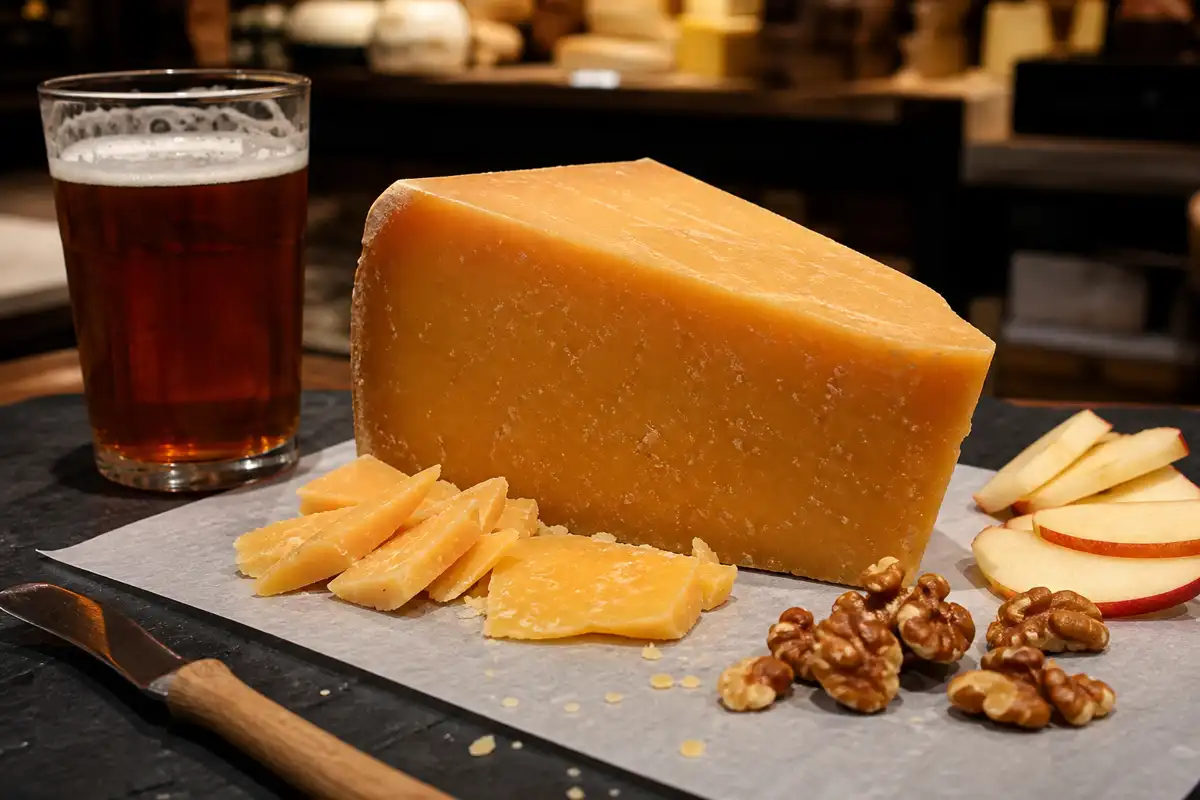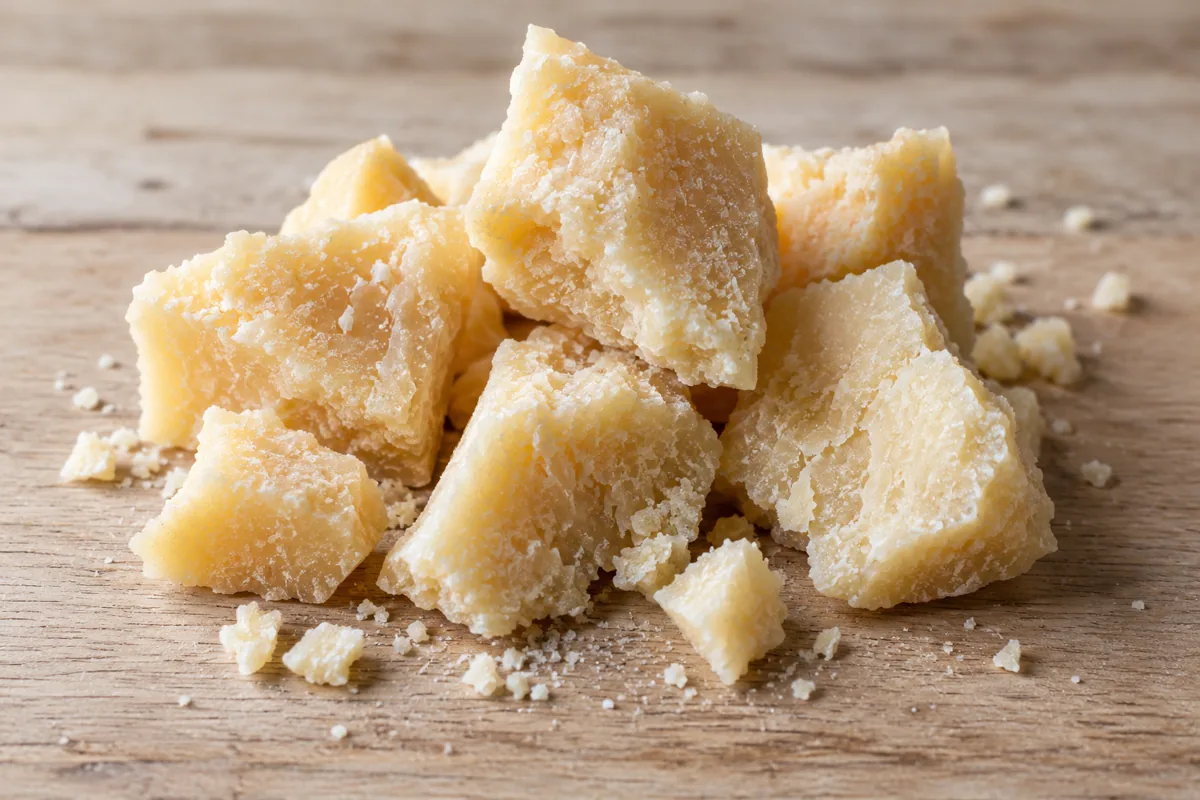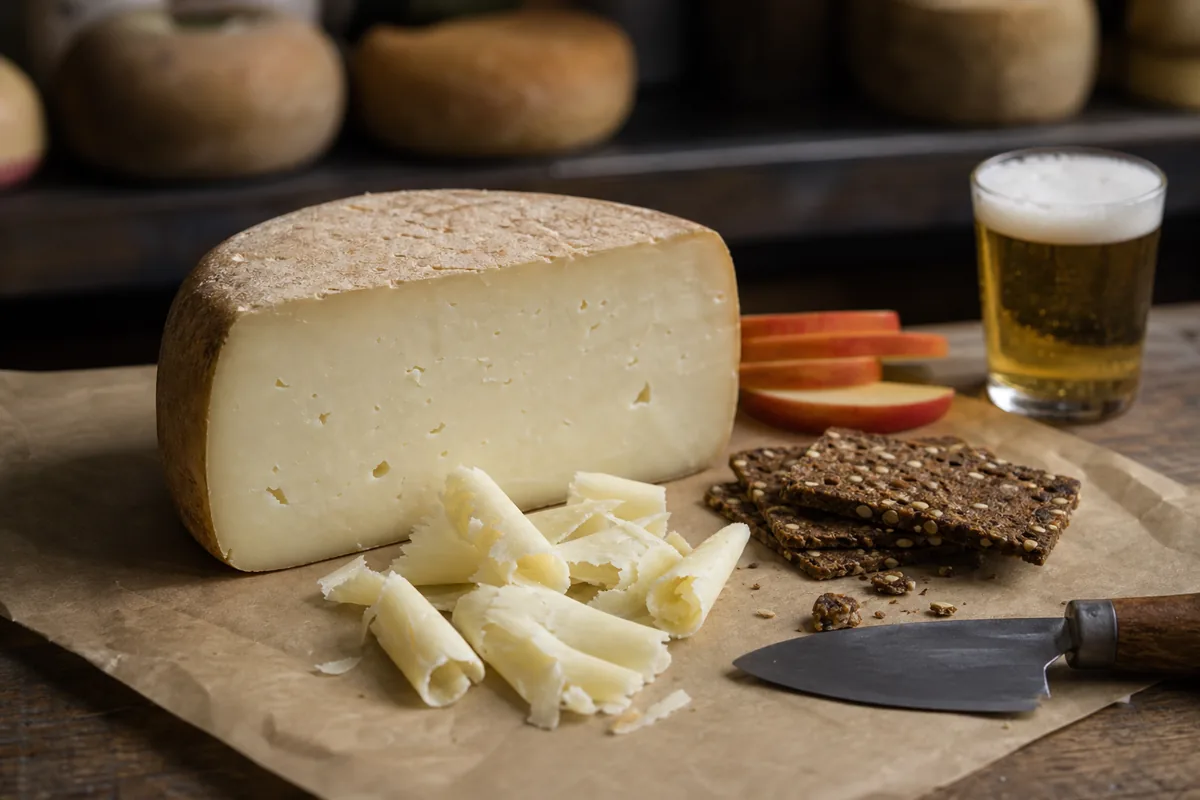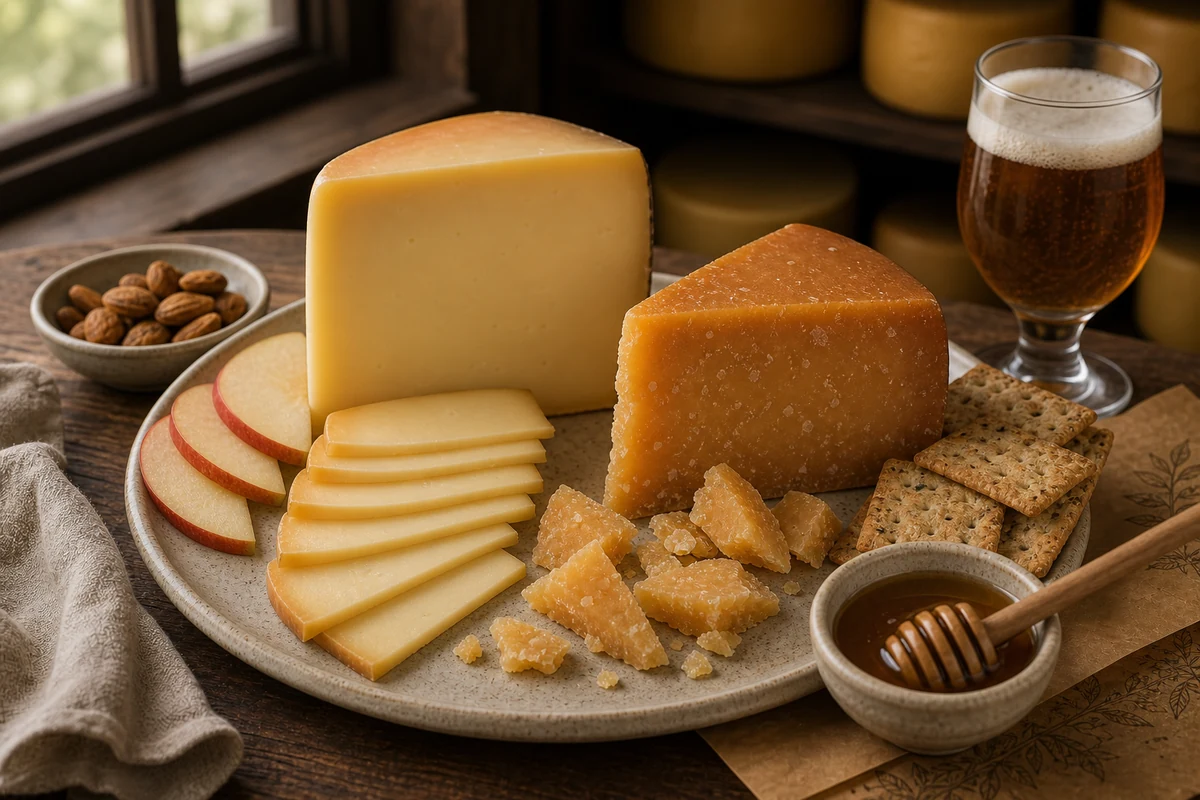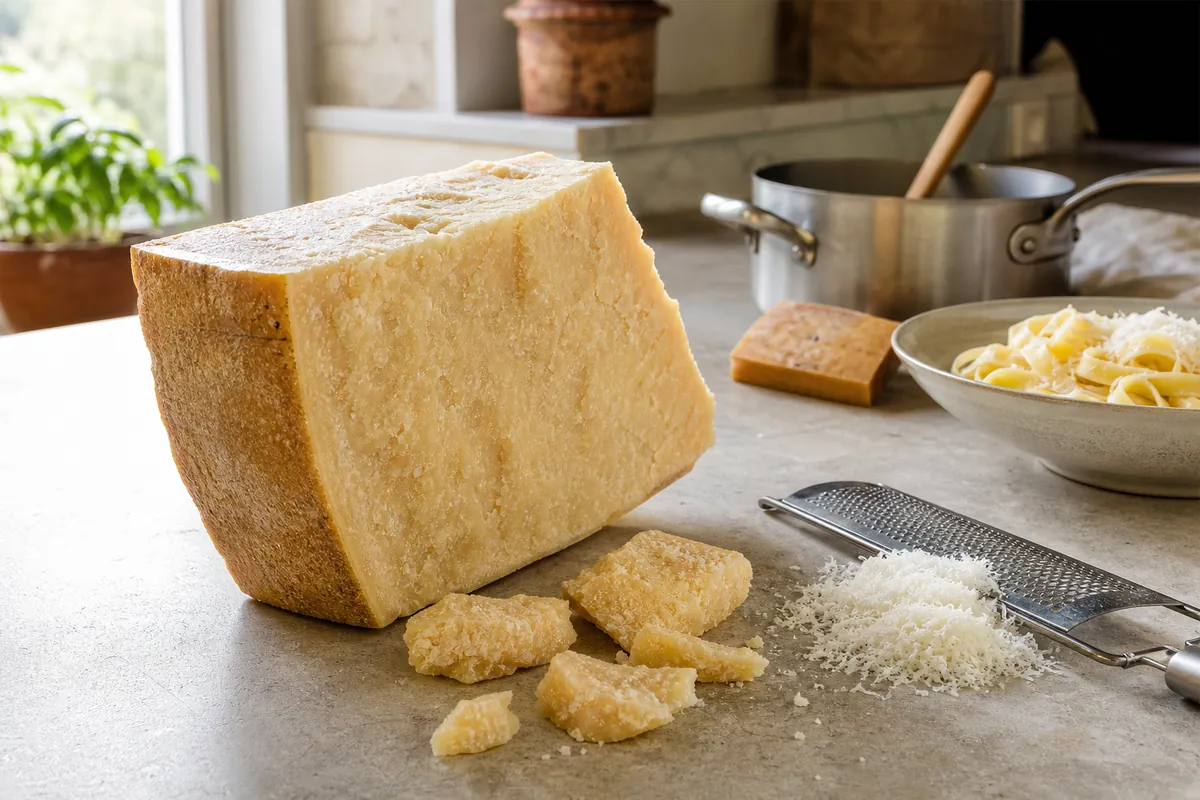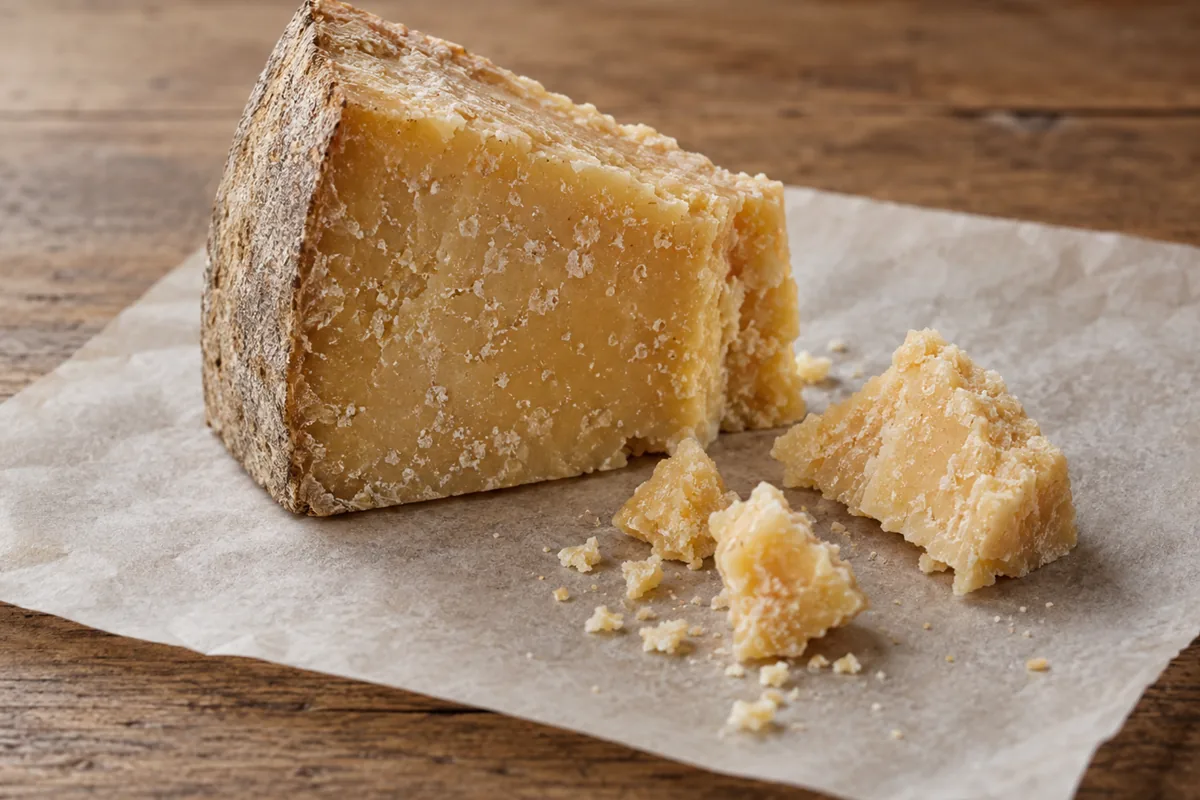
Unpasteurised Farmhouse 4 Year Old is a hard Dutch cheese made from raw cow's milk and aged for four years. Cheese.com lists it as a Gouda-style cheese with a natural rind, brownish-yellow paste, and a caramel, creamy, crunchy and salty flavour.
You can order it from Dutch Cheeseman UK, which sells it as a 4-year-aged Gouda that is strong, hard and crumbly, in 250 g, 500 g and 1 kg pieces. The listings stress its raw milk, its crunchy crystals and its use as a grating cheese.
In This Article
Who Makes Unpasteurised Farmhouse 4 Year Old, and What Does the Name Tell You?
Cheese.com credits Dutch Cheeseman UK as the producer, but that business describes itself as a family firm with a shop in Evesham that brings Dutch cheeses to UK customers, working with producers and artisan cheesemakers. If you want to know which cheesemaker made your piece, ask the seller.
The name itself tells you two things: the milk is unpasteurised and the age is four years. Cheese.com adds that the cheese is from the Netherlands, hard, with a natural rind, and made from cow's milk.
Wikipedia describes Gouda as a family of yellow cow's milk cheeses that runs from young and elastic to old and hard, and Cheese.com and the seller both place this cheese at the old, hard end.
The word Gouda is not restricted to Dutch cheese, which is why the Netherlands origin of this cheese has to come from the listing and not from the word Gouda.
Does Farmhouse in the Name Mean Boerenkaas?
Not by itself, because the protection covers the name Boerenkaas, Dutch for farmer's cheese, and not the English word farmhouse. Boerenkaas has been protected as a Traditional Speciality Guaranteed by the European Union since 2007.
Wikipedia describes boerenkaas as a cheese mostly handmade from raw milk, with at least half of the milk coming from the farm where the cheese is made. While most Dutch Gouda is now made industrially, about 300 Dutch farmers still make it.
If certification matters to you, ask Dutch Cheeseman UK whether this cheese is made as a Boerenkaas.
Is Unpasteurised Farmhouse 4 Year Old Vegetarian?
The seller's ingredient page marks its Unpasteurised Farmhouse line vegetarian and lists it as made with unpasteurised cow's milk, salt, microbial rennet, starter and sodium nitrate, with dairy and salt as the allergens.
Before you rely on that mark, ask the seller to confirm that the four-year cheese is the Unpasteurised Farmhouse line it lists.
Is Unpasteurised Farmhouse 4 Year Old Safe in Pregnancy?
It depends on which agency you follow and on how the cheese is classed, because it is made from raw cow's milk.
The NHS lists pasteurised or unpasteurised hard cheeses, such as cheddar, gruyère and parmesan, as safe to eat in pregnancy. Its line for semi-hard cheeses such as edam names pasteurised ones only, and the NHS page does not mention Gouda in either form.
The NHS gives the reason: unpasteurised or soft ripened dairy foods may contain listeria bacteria, which can cause listeriosis, and listeriosis can cause miscarriage or stillbirth, or make a newborn baby very unwell.
Cheese.com and the seller both call this cheese hard, which would put it under the NHS hard-cheese line, but Wikipedia gives Gouda's texture as semi-hard to hard, which would put it under the line for pasteurised cheeses only.
Which line applies is our reading of the category and not an NHS statement about this cheese, so if you are pregnant, ask your midwife or doctor which one they would apply to it.
The CDC frames it more narrowly: its table lists hard cheese made with pasteurized milk as a safer choice and puts dairy products made from raw milk among the riskier ones. It also says pregnant women are 10 times more likely to get a Listeria infection.
Dutch Cheeseman UK's FAQ reads the rule more strictly than the NHS list does: it says the chief medical officer suggests avoiding all soft and blue cheeses and all other cheeses made with unpasteurised milk.
What Does Four Years of Ageing Do to a Gouda?
As Gouda ages, Wikipedia says, it becomes more crumbly and firm, moves from pale ivory or light yellow towards a richer golden hue, and takes on a harder, crystalline appearance with small visible crystals.
This cheese's paste is brownish yellow, a deeper tone than the pale ivory to light yellow Wikipedia gives for young Gouda.
Four years takes it past the end of the Dutch age scale. Wikipedia says Dutch cheesemakers sort Gouda into six grades by age, and its infobox gives an ageing range of 1 to 36 months.
- Young: 4 weeks
- Young matured: 8 to 10 weeks
- Matured: 16 to 18 weeks
- Extra matured: 7 to 9 months
- Old: 10 to 12 months
- Very old: 12 to 21 months
The top grade ends at 21 months, so a cheese aged 48 months is more than twice as old as anything on the scale and sits beyond the infobox's 36-month ceiling as well.
What Are the Crunchy Crystals in This Cheese?
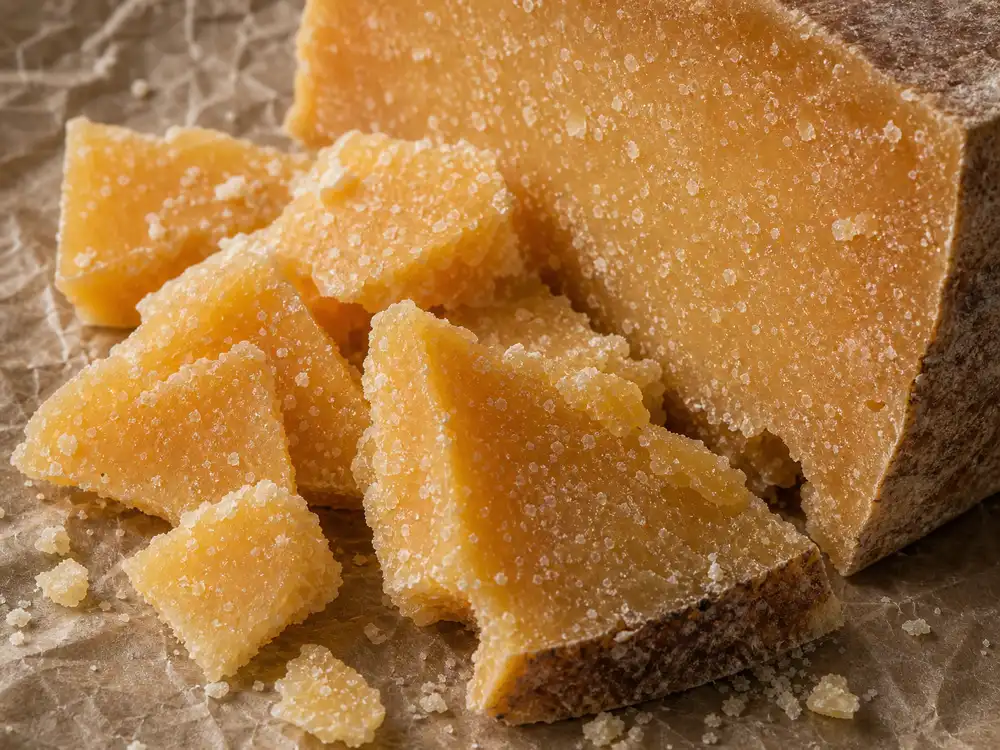
Cheese.com calls the crunch natural salt crystals, and the seller's page for this cheese reads "natural salt crystal caves".
What Does Unpasteurised Farmhouse 4 Year Old Taste Like?
Cheese.com lists the flavour as caramel, creamy, crunchy and salty with a rich aroma, and Dutch Cheeseman UK describes it as nutty with caramel notes.
Wikipedia's Gouda entry says prolonged ripening gives a rich, caramel-like flavour with brothy, malty or nutty undertones, and a finish that runs from silky to sharp depending on age.
For farmhouse Gouda aged over two years, the same entry quotes a tasting description of "an almost butterscotch flavour"; that describes the style in general and not this cheese.
Gouda is a washed-curd cheese: after some whey is drained, water is added to the curds, which removes some lactose and leaves less lactic acid, and Wikipedia says that makes the cheese sweeter.
The same entry says the pressed cheese is soaked in brine, which gives the cheese and its rind a distinctive taste. Both points describe Gouda as a family and not this particular cheese.
What Is the Fat and Salt Content of a Four-Year Gouda?
Gouda as a whole runs from 25 to 46% moisture, 21 to 49% fat by weight, and 0.9 to 2.4% salt. Those ranges describe the family, not this wheel, so for a figure for this cheese itself, ask Dutch Cheeseman UK.
What Should You Serve with Unpasteurised Farmhouse 4 Year Old?
For pasta, grate it: Cheese.com and Dutch Cheeseman UK both name grating over pasta dishes, and the seller goes further and calls it one of the best cheeses for grating on pasta. To drink with it, both name wine or a sweet port.
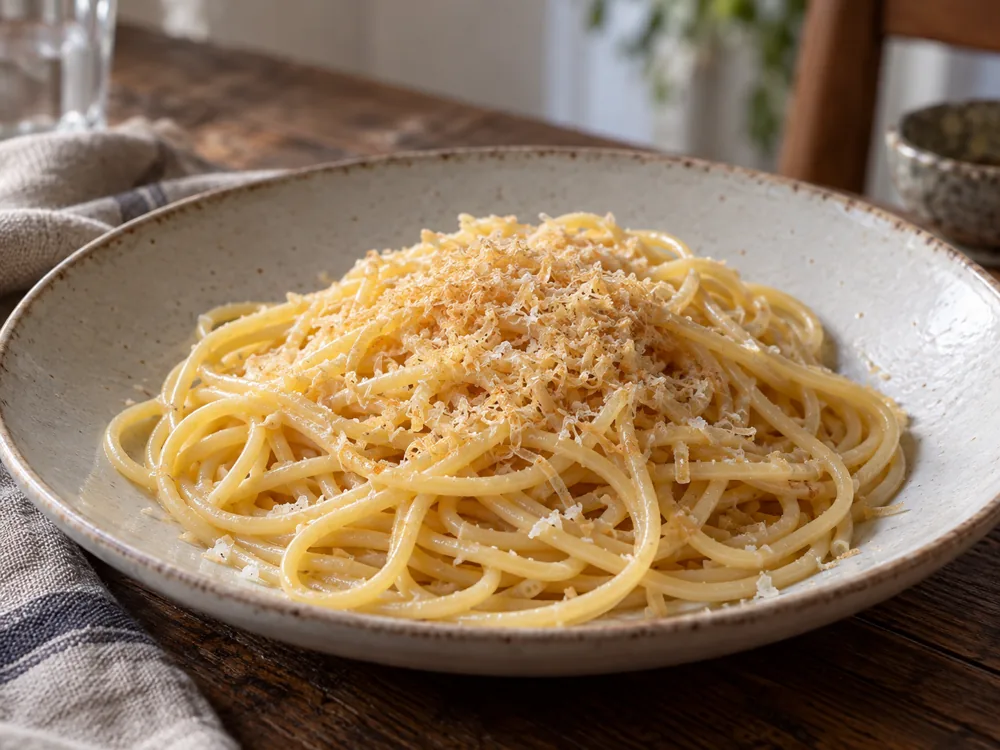
For Gouda in general rather than this cheese, Wikipedia records Dutch habits: cubes eaten as a snack with Dutch mustard and with beer in Dutch bruin cafés, and older varieties sometimes topped with sugar or apple butter.
| Pairing | Type | Why It Works |
|---|---|---|
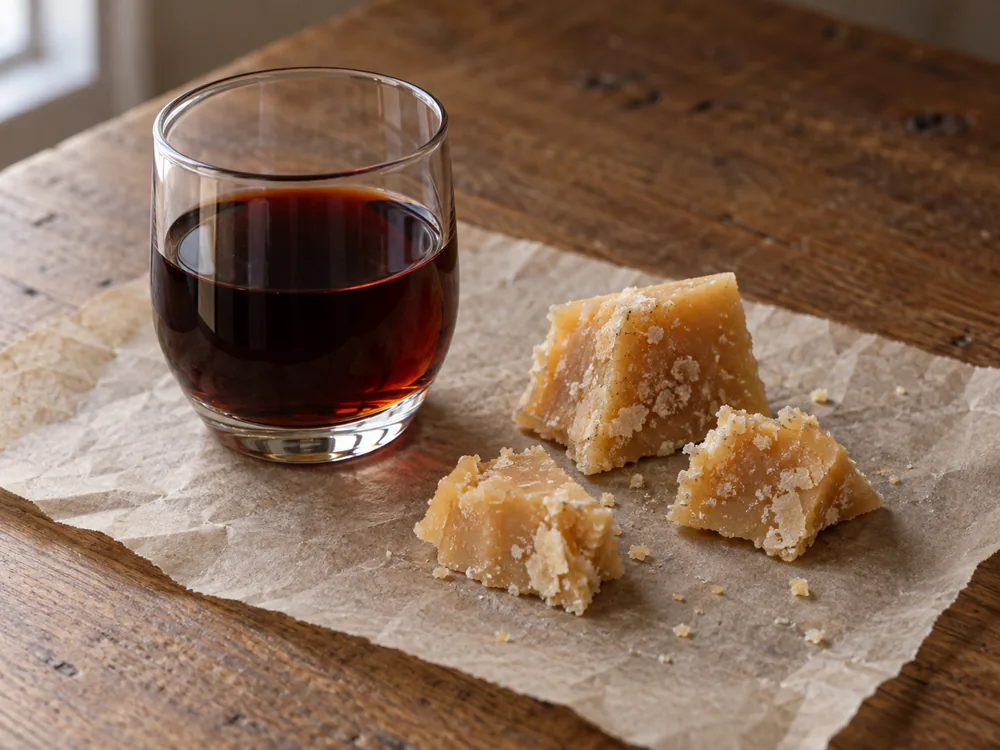
| Sweet port | Drink | Named by Cheese.com and Dutch Cheeseman UK. |
| Wine | Wine | Named by Cheese.com and Dutch Cheeseman UK. |
| Dutch mustard | Food | Eaten with Gouda cubes as a snack, per Wikipedia's Gouda entry. |
| Beer | Drink | Served with Gouda cubes in Dutch bruin cafés, per Wikipedia's Gouda entry. |
| Sugar or apple butter | Food | Sometimes topped on older Gouda, per Wikipedia's Gouda entry. |
Raw Four-Year or Pasteurised Three-Year: Which Gouda Should You Buy?
If you are buying from Dutch Cheeseman UK, it also sells a 3-Year Aged Vintage Gouda, and its product pages describe the two cheeses in nearly the same words, while its ingredient page lists differences beyond age.
| Listed detail | 3-Year Aged Vintage Gouda | Unpasteurised Farmhouse 4 Year Old |
|---|---|---|
| Age | 3 years | 4 years |
| Milk | Pasteurised cow's milk | Unpasteurised cow's milk |
| Description | Hard, crumbly cheese with a strong, nutty flavour and caramel notes | Strong, hard, crumbly cheese, nutty with caramel notes |
| Crystals | Crunchy natural salt crystals | Crunchy natural salt crystal caves, as the page prints it |
| Ingredients | Salt, rennet, starter | Salt, microbial rennet, starter, sodium nitrate, listed as the Unpasteurised Farmhouse line with no age |
| Sizes | 250 g, 500 g, 1 kg, or a 10 kg whole wheel | 250 g, 500 g or 1 kg |
| Uses named | Wine or sweet port, grating on pasta, snacking, charcuterie | Wine or sweet port, grating on pasta |
On that ingredient page, the 3yr Vintage Gouda has pasteurised cow's milk and plain rennet, and the Unpasteurised Farmhouse line has unpasteurised milk and microbial rennet.
Price will not decide it in the sizes both come in: each is listed at £8.75 for 250 g, £17.50 for 500 g and £35.00 for 1 kg, which works out at £3.50 per 100 g. If you want a whole wheel, only the 3yr page adds one, 10 kg at £275.00.
Each piece is cut by hand, so the seller's FAQ allows a margin of up to 10% between the ordered weight and the weight of a single cheese, with the order total at or above what was ordered. Orders close on Wednesday at 10:00 am for dispatch that week by DHL next-day delivery, and the seller ships to mainland UK addresses only.
Three checks settle the choice: the milk and rennet (unpasteurised with microbial rennet here, pasteurised in the 3yr Vintage Gouda), the age (4 years against 3 years), and the size, since the price per 100 g is the same at 250 g, 500 g and 1 kg.
How Long Does Unpasteurised Farmhouse 4 Year Old Keep?
The seller cuts each order fresh, vacuum packs it and ships it with a cool pack that it says is subject to season, and says vacuum-packed cheese keeps for 8 to 10 weeks.
Once you open it, the seller gives 3 to 4 weeks and supplies wax paper for rewrapping. Both are the seller's figures, not NHS or CDC guidance for a raw-milk cheese.
For perishable food in general, the CDC says to keep a refrigerator at 40°F or below and not to leave food out for more than 2 hours, or 1 hour above 90°F.