Queso de Burgos is a fresh cheese from Burgos province in northern Spain, made by setting whole pasteurized milk from cows and sheep with enzymes and draining the curd without pressing or maturing it. The European Union registered the name as a protected geographical indication in September 2025.
Foods & Wines from Spain says the cheese is ready to eat once the whey has drained and it has taken its shape, so it has no ripening period.
In This Article
What Is Queso de Burgos?
Queso de Burgos weighs 250 to 2,300 grams in Spain's application to the EU, as Interempresas reports it, while Foods & Wines from Spain, in an undated entry, gives a wider range of 1 to 3 kilograms with about 2 kilograms usual.
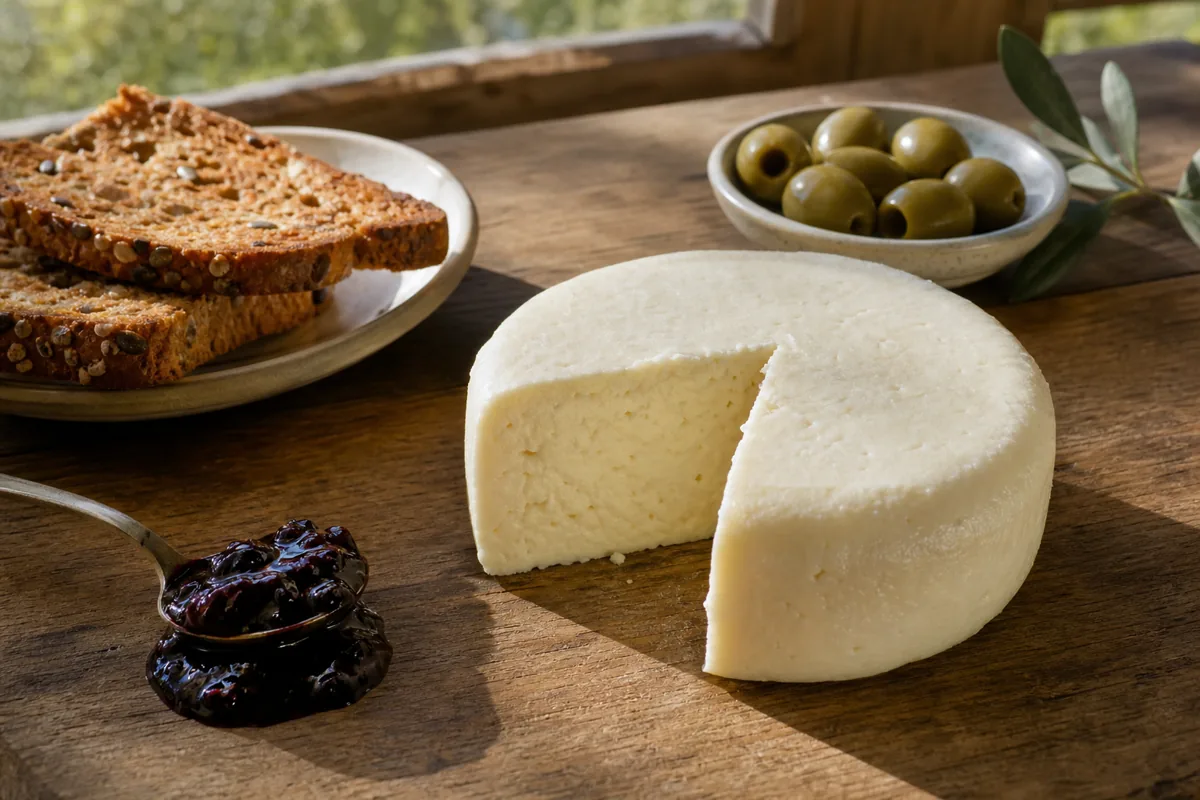
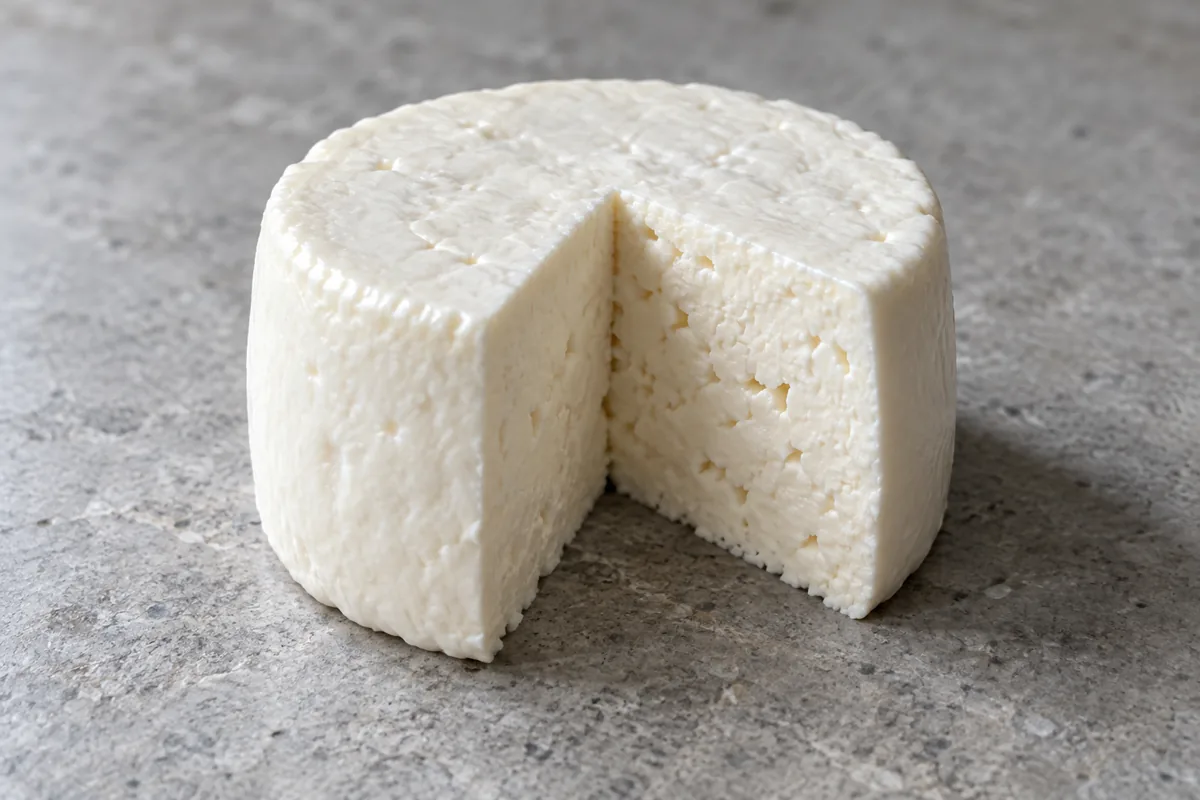
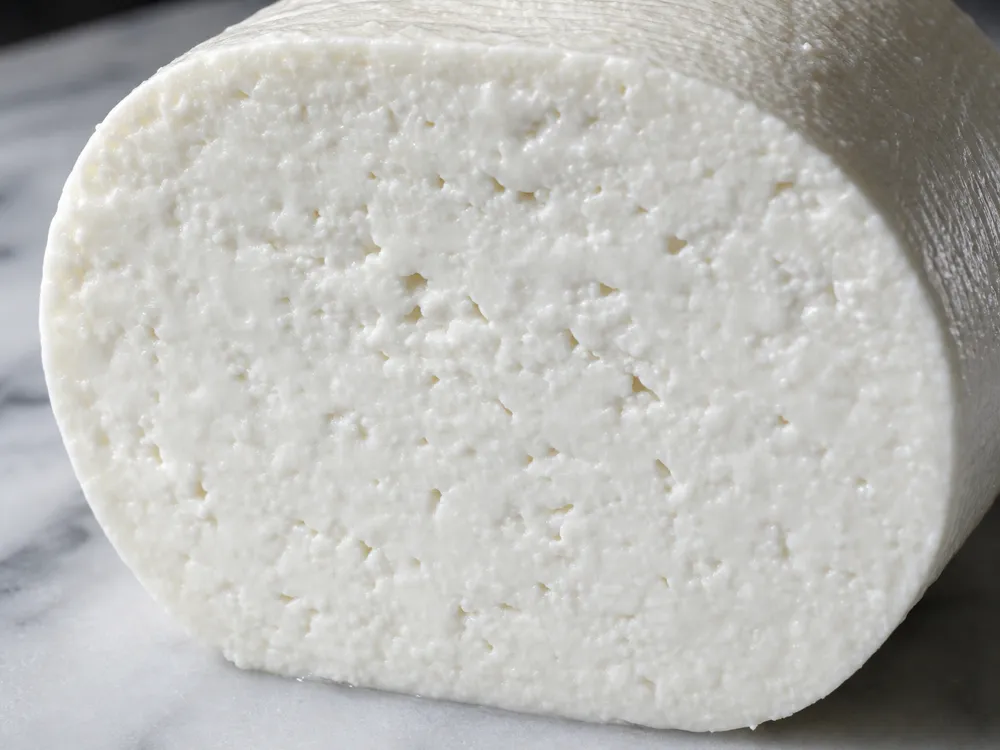
The application describes a cylindrical or cylindro-conical cheese with no maturation and low dry matter. The paste is only slightly grainy and buttery, and the outside is white or slightly yellowish.
There is no rind. Agronews Castilla y León says the smooth surface may show cloth marks, and QCom calls the exterior moist.
QCom quotes the registered flavor as mild, lactic, and slightly sweet. Foods & Wines from Spain adds that an unaged cheese has no aromas from curing, only some from salting.
It is a different cheese from Mexican queso fresco, which is made from cow milk or cow and goat milk. Queso de Burgos blends cow and sheep milk under the PGI.
How Do People Eat Burgos Cheese?
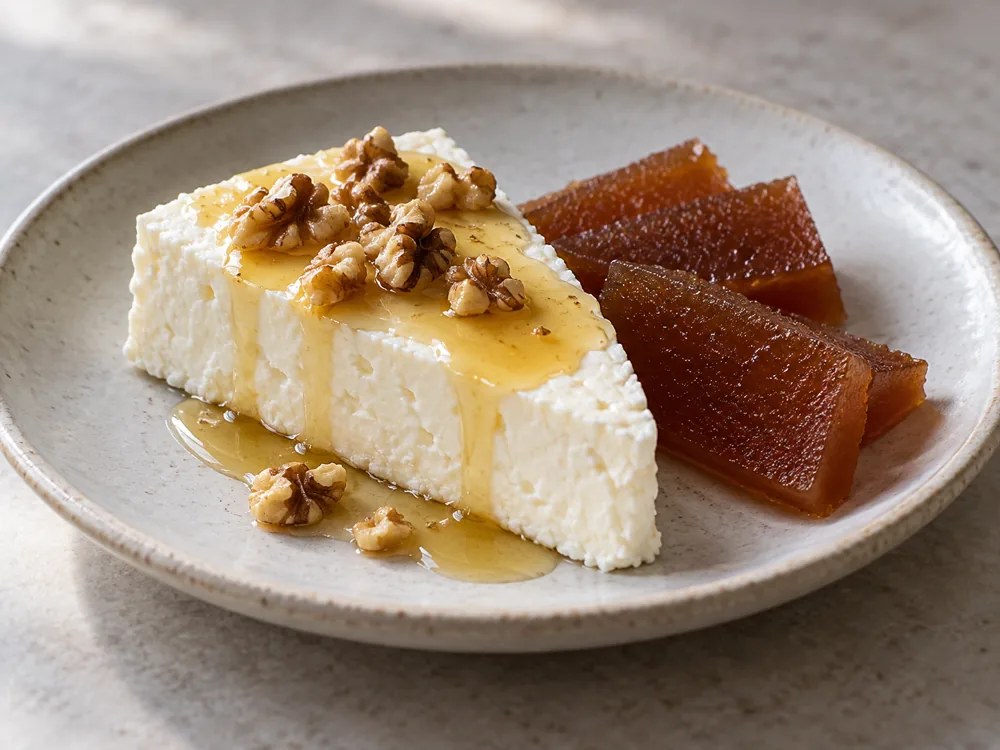
Queso de Burgos is traditionally served with honey, quince paste or walnuts and also goes into salads, according to Wikipedia's Spanish entry. Cookipedia gives the same list of honey, quince, walnuts, and salad.
For wine, Cheese.com suggests sparkling, dry white, or young red.
| Pairing | Type | Why It Works |
|---|---|---|
| Honey | Food | Named by Wikipedia (Spanish), Cookipedia, and Cheese.com. |
| Quince paste | Food | Named by the same three sources; Wikipedia (Spanish) specifies paste. |
| Walnuts | Food | Named by the same three sources. |
| Salad | Food | Listed as a use by Wikipedia (Spanish) and Cookipedia. |
| Sparkling wine | Wine | Cheese.com's suggestion. |
| Dry white wine | Wine | Cheese.com's suggestion. |
| Young red wine | Wine | Cheese.com's suggestion. |
What Does the PGI Guarantee?
The EU published the registration on September 10, 2025, and the regulation was due to enter into force about 20 days later.
The protected area is every municipality in Burgos province, in northern Spain, with estimated annual production near 35,000 tons.
Agronews Castilla y León reports that the specification requires whole, fresh, natural, pasteurized milk from cows and sheep, set with enzymes. It bans ultrafiltration and vegetable coagulants, and the curd is not pressed.
The cheese's link to Burgos province goes back to the 18th century. The original recipe used sheep milk alone, and cow milk joined as the region's livestock changed.
Spain lists Manchego among its PDO cheeses, yet the application calls Queso de Burgos the only fresh cheese with a geographic name in Spain.
Interempresas also reports that nine companies may keep using the name for a three-year transition, and one of them, Mantequerías Arias, does so for plants outside the protected area.
During that period the name alone does not prove the cheese you buy came from inside the province.
The president of the producers' association, Roberto Ovejero, told COPE that makers elsewhere in Spain sold cheese made in Toledo or Málaga as Queso de Burgos. The PGI ends that practice for cheese made after the transition.
Which Sheep-Milk Tier Should You Buy?
The three tiers differ in one measurable way: how much of the cow-and-sheep blend is sheep milk, from 5 to 10 percent in plain Queso de Burgos to more than 30 percent in Supremo.
| Label | Sheep milk | Aroma |
|---|---|---|
| Queso de Burgos | 5% to 10% | Base tier; least sheep aroma (2013 draft) |
| Queso de Burgos Selecto | 11% to 30% | More sheep aroma than the base tier (2013 draft) |
| Queso de Burgos Supremo | More than 30% | Most sheep aroma (2013 draft) |
| Burgos-style product | Not set by the PGI | Set by each maker |
A 2013 draft of the specification, reported by Oviespaña, said sheep-milk notes in the aroma increase with the tier.
The choice comes down to how much sheep aroma you want, and by that draft the base tier should be the mildest and Supremo the most sheep-forward.
Read the tier name on the label to tell them apart. A Burgos-style product outside the PGI sets its own milk mix.
How Is Queso de Burgos Made?
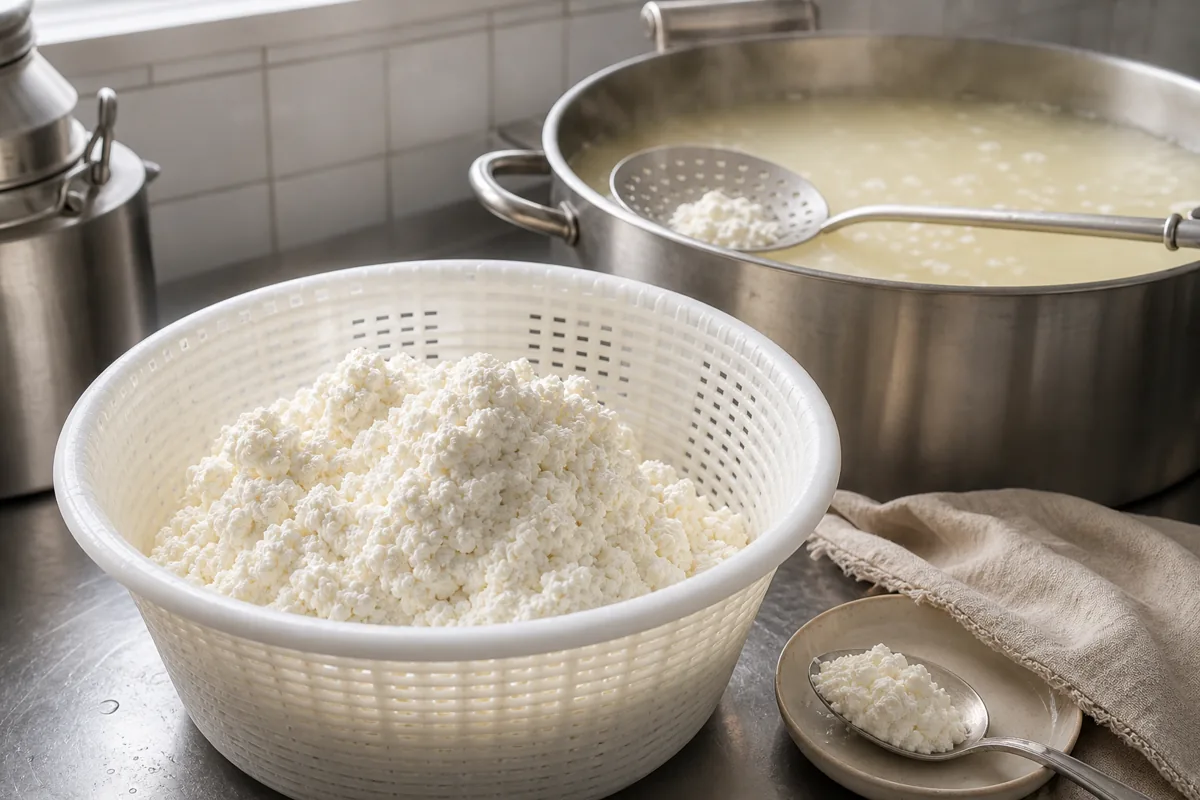
The curd is set, cut and drained in molds but not pressed, and Agronews Castilla y León says leaving it unpressed creates the small cavities and the fresh sensation that mark the cheese.
The milk is set at 28 to 30°C and the curd cut into large pieces in Foods & Wines from Spain's description, but at 30 to 35°C with pieces of about 1 cm in Oviespaña's 2013 draft specification. That draft may also differ from the final registered text.
| Point | Foods & Wines from Spain | 2013 draft specification (Oviespaña) |
|---|---|---|
| Milk | Most commonly pasteurized cow milk with calcium salts; raw milk also possible | Whole, fresh, natural pasteurized cow and sheep milk |
| Setting | Animal rennet at 28 to 30°C, firm curd in at least half an hour | Natural rennet or microbial enzymes at 30 to 35°C for 15 to 60 minutes, starting within 48 hours of the milk arriving at the dairy |
| Cutting | Large pieces, rested so they shrink | Pieces of about 1 cm, stirred with rests |
| Molding and salt | Curd may be salted, then drained in molds for several hours | Perforated cylindrical molds; sodium chloride optional |
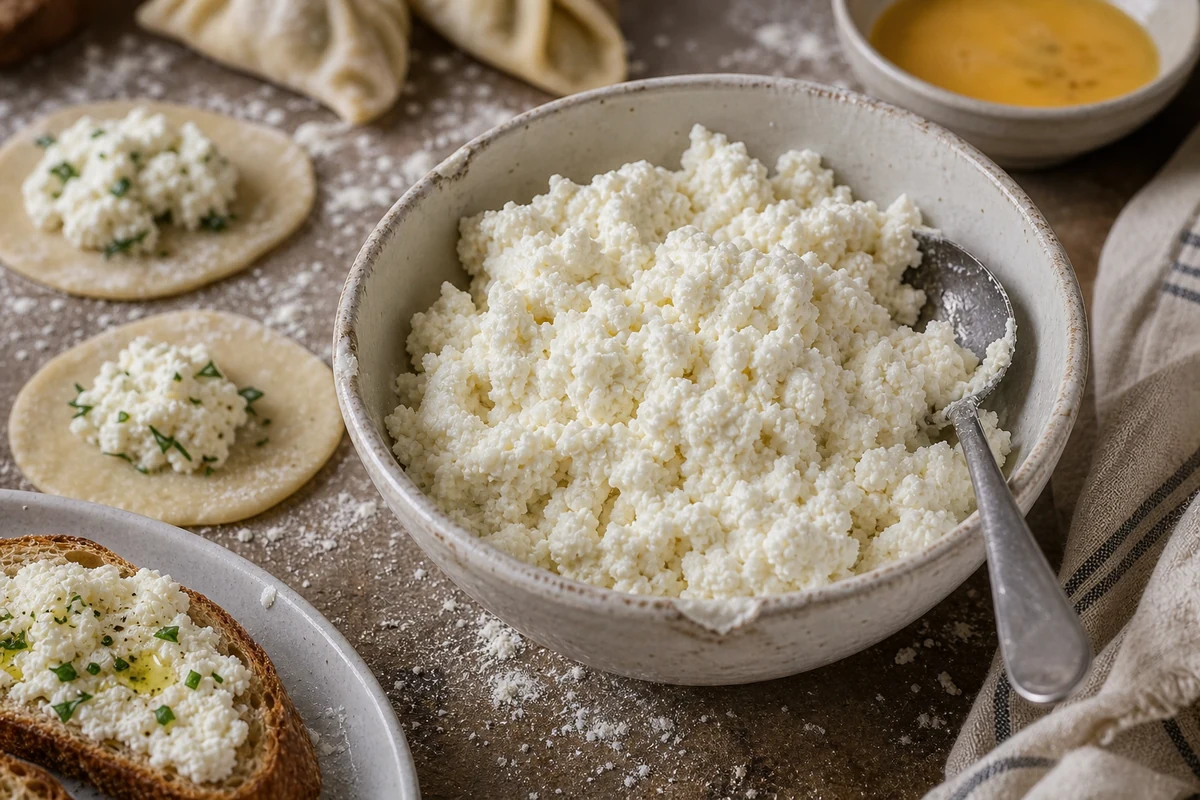
Unlike Italian ricotta, which is made from the whey left over from cheese production, Queso de Burgos sets whole milk with enzymes.
What Should a Fresh Cut Look Like?
A fresh cut can show small holes that come from an incomplete fusion of the curd, and Oviespaña's 2013 draft said those cavities must never come from gas formation.
The top once carried a circular pattern of small triangles, left by the holes in the molds that drain the whey, in Foods & Wines from Spain's account, while the registered description says the surfaces are smooth and may show cloth marks.
Cheese.com lists pasteurized or unpasteurized milk and describes the cheese as rubbery and creamy, with grooves down the sides. The registered description says pasteurized milk and a soft paste that is only slightly grainy and buttery, so treat it as the guide for anything labelled PGI.
How Long Does Burgos Cheese Keep?
Wikipedia's Spanish entry says the cheese once lasted about 10 days and that newer methods, including ultrafiltration before the curd is set, stretch this to about 30.
The PGI bans ultrafiltration, so the 30-day figure comes from a method that PGI cheese cannot use.
| Source | Figure it gives | Product described |
|---|---|---|
| Wikipedia (Spanish) | About 10 days traditionally, about 30 days with newer methods | Traditional cheese for 10 days; cheese made with methods including ultrafiltration, which the PGI bans, for 30 days |
| Forever Cheese | Recommended 2 months after production | A pasteurized cow-milk Burgos it imports to the U.S. as preorder only |
Forever Cheese says the cheese is normally not available in the U.S. because of its short shelf life, and its two-month figure is a recommendation for the pasteurized cow-milk Burgos it imports.
The storage limits in the card below are FDA's guidance for queso fresco-type cheeses, which does not name Burgos. The same guidance says not to keep leftover cheese once the package has been opened.
Check the label on your pack for freezing advice and for visual signs that the cheese has turned.
Is Burgos Cheese Safe During Pregnancy?
The PGI requires pasteurized milk, but FDA says cheeses made with pasteurized milk can be contaminated with Listeria again if the manufacturing environment is unsanitary. It describes queso fresco-type cheeses as high in moisture and low in acidity, a favorable environment for Listeria.
FDA recommends that people vulnerable to listeriosis avoid eating all queso fresco-type cheeses. For those who keep eating them, it advises cooking the cheese as part of a dish to at least 165°F (74°C) if they are able.
CDC lists any queso fresco-type cheese, made with pasteurized or unpasteurized milk, among the riskier choices during pregnancy. It lists pasteurized soft cheeses heated to an internal temperature of 165°F or until steaming hot as safer.
Neither CDC nor FDA names Burgos, and the cheese is moist, unaged and fresh, which are the traits the FDA describes for queso fresco-type cheeses.
NHS lists pasteurised cottage cheese and other pasteurised soft cheeses such as cream cheese, mozzarella, feta, paneer, and ricotta as safe, and says any cheese cooked until steaming hot is safe. It does not name Burgos either.
Foods & Wines from Spain says either raw or pasteurized milk can be used for the cheese and that pasteurized is more common. Only the PGI version is guaranteed pasteurized, and the NHS says foods made from unpasteurised milk must be thoroughly cooked, so read the label on a Burgos-style product.
What Are the Fat and Dry-Matter Limits for Burgos Cheese?
The limits below come from Oviespaña's 2013 draft of the specification, so treat them as provisional. The fat and protein limits are shares of the solids left after water is removed, not grams per 100 grams of cheese.
- Fat: at least 40 percent of dry matter.
- Protein: at least 28 percent of dry matter.
- Dry matter: more than 20 and less than 36 percent of the cheese.
Dry matter between 20 and 36 percent means the cheese is roughly 64 to 80 percent water, which fits Interempresas's description of low dry matter. Cheese.com lists a fat content of 46 to 60 percent.
If you compare the fat figure on your label with the 40 percent limit, check whether it is a share of dry matter or of the whole cheese. For calories or sodium, check the same label.
SOURCES & REFERENCES
Burgos cheese is a Spanish fresh cheese made by setting whole pasteurized cow and sheep milk with enzymes, then draining the curd without pressing or maturing it.
Yes. The European Union published its registration as a protected geographical indication on September 10, 2025.
The registered description calls it mild, lactic, and slightly sweet. Selecto and Supremo contain more sheep milk, and a 2013 draft specification said sheep notes in the aroma rise with the tier.
No. Burgos sets whole milk with enzymes, while Cheese.com describes ricotta as made from the whey left over from cheese production.
The PGI requires pasteurized milk, but CDC lists any queso fresco-type cheese among the riskier choices and FDA advises people vulnerable to listeriosis to avoid all of them. Neither names Burgos, so ask your clinician which guidance applies.