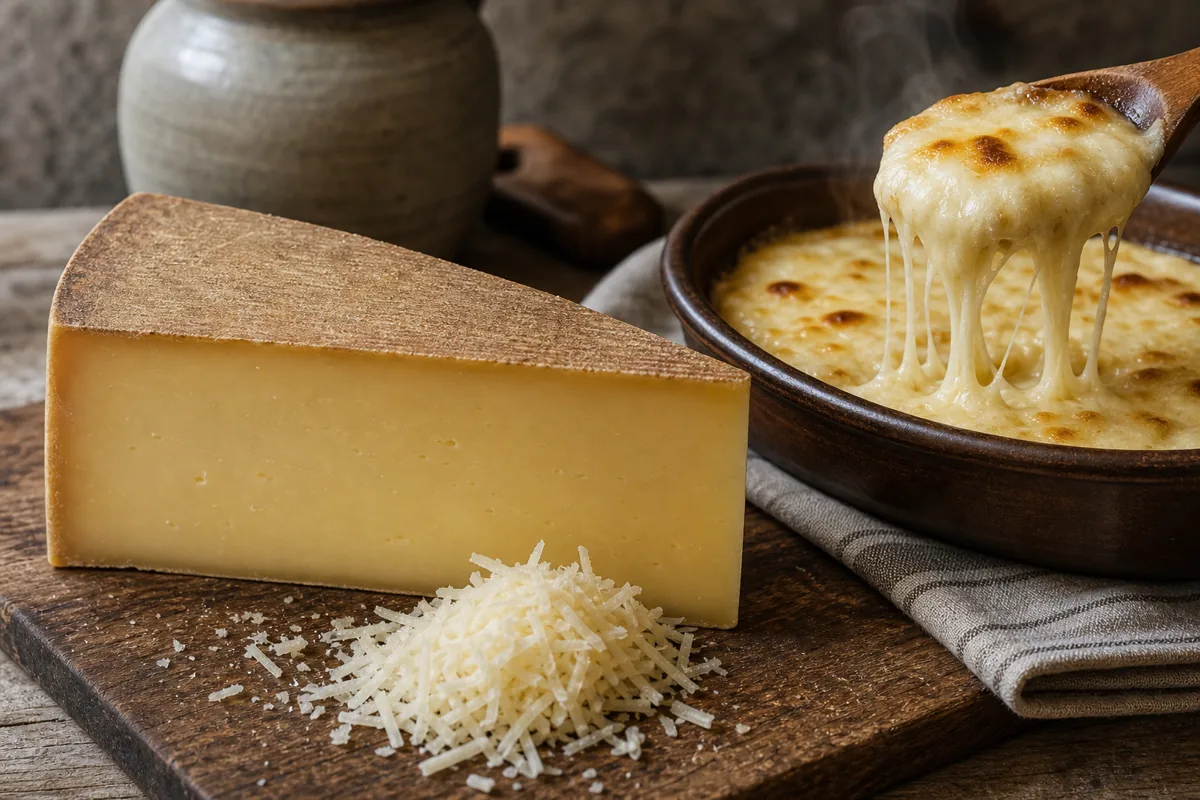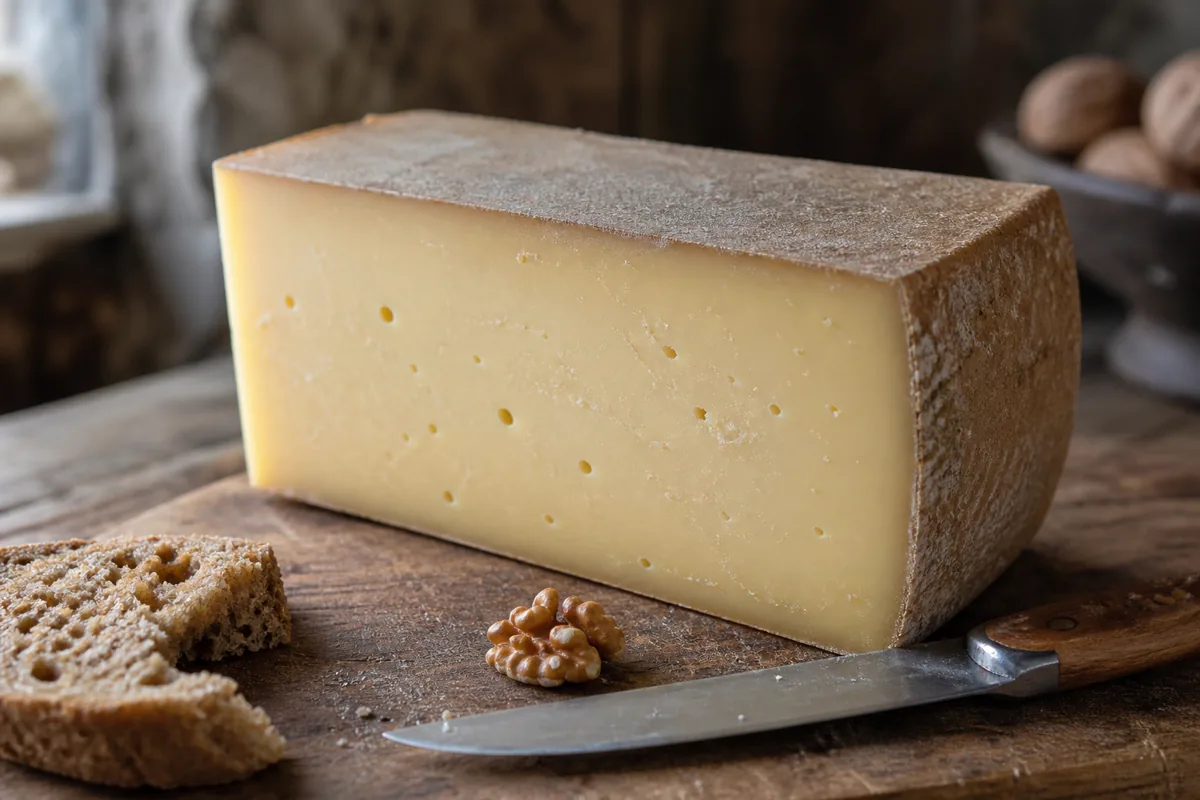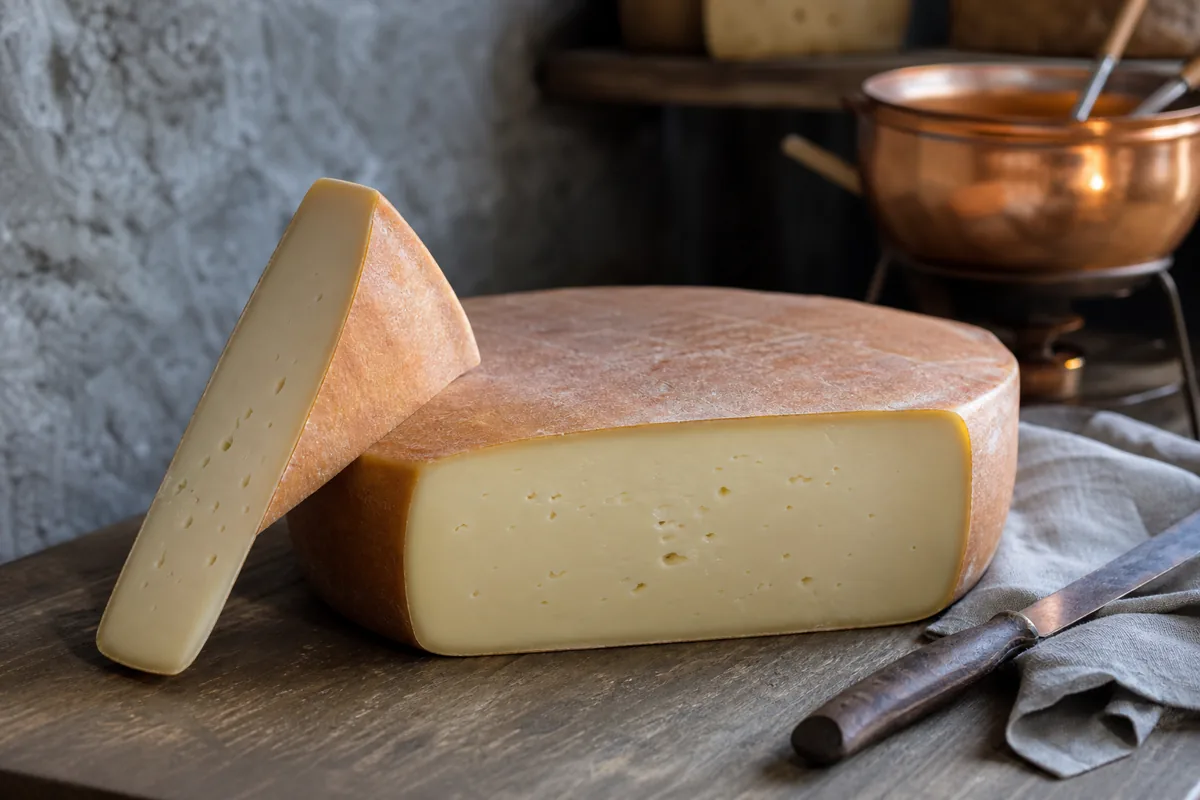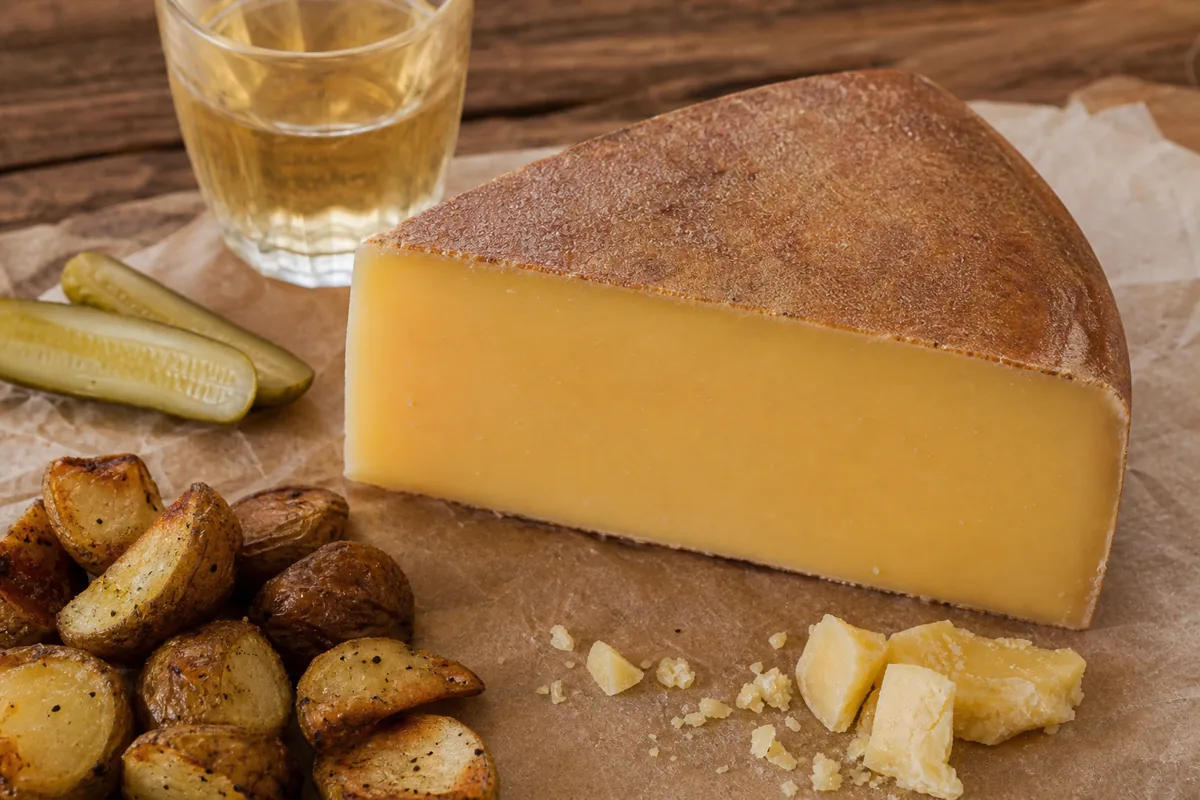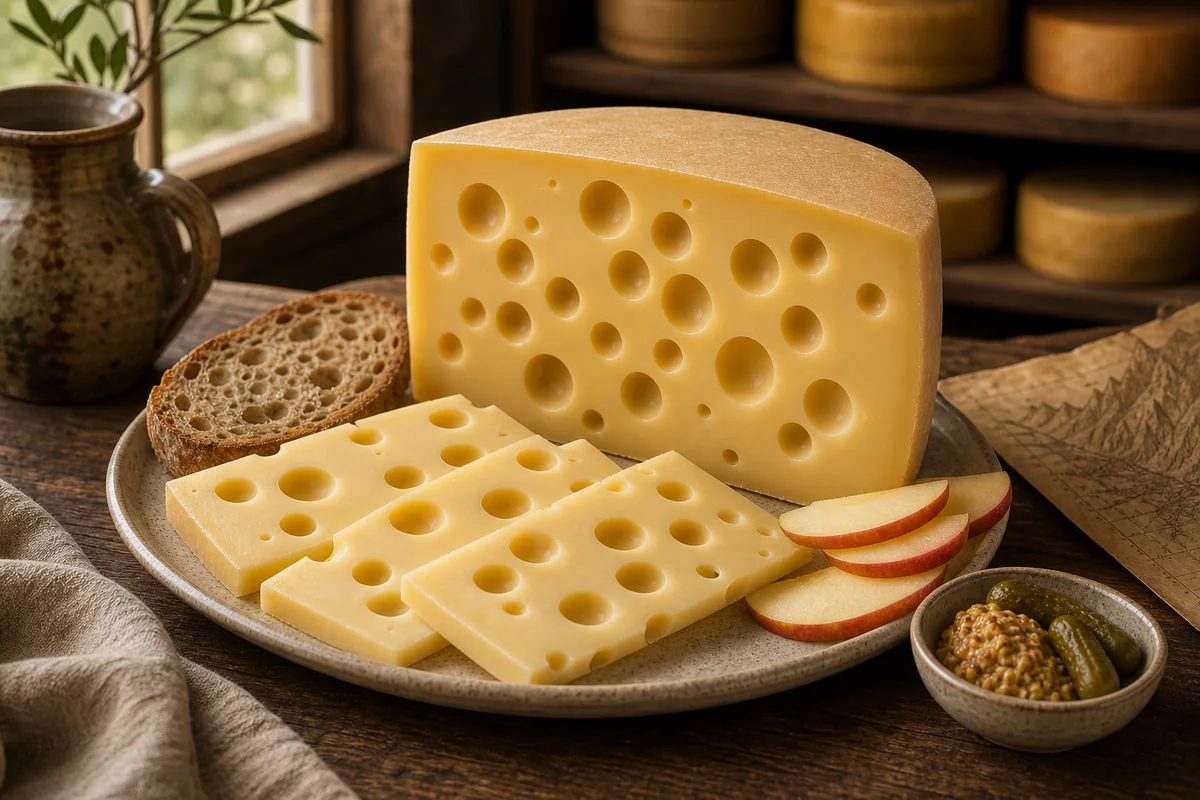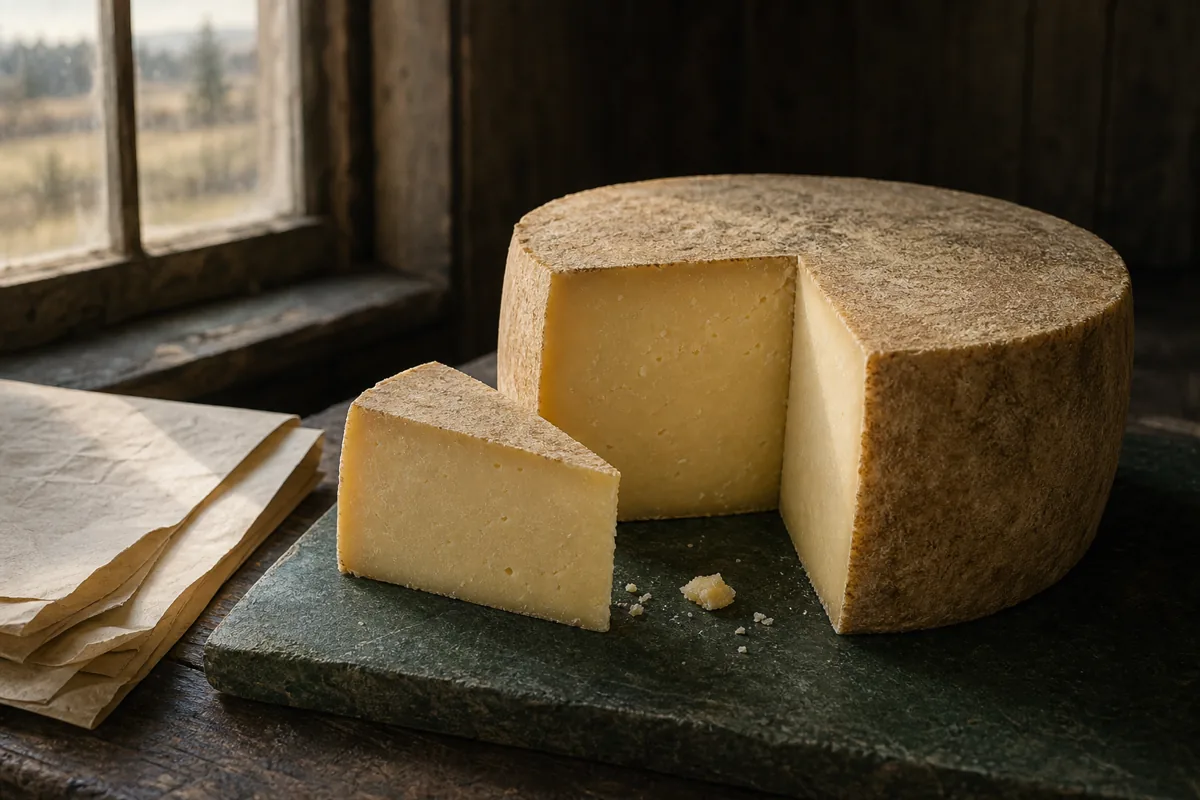
If you have found an old reference to Butternut cheese, you are looking at a discontinued raw-milk, Alpine-style wheel from Willow Hill Farm in Milton, Vermont. The Cheese by Hand farm directory says Willow Hill no longer makes or sells cheese, while the farm now presents itself as a blueberry operation.
Its documented age is uncertain: one record gives at least six months, while a 2015 co-op profile gives three months.
You cannot reliably shop for a fresh wheel today, but the surviving record can still tell you how it was made, what it tasted like and which current cheeses come closest.
In This Article
What Was Butternut Cheese?
Willow Smart and David Phinney made Butternut as a semi-hard, natural-rind cheese with a pale yellow colour and a creamy but firm texture. Those details come from the surviving Butternut reference entry, so they describe the cheese historically rather than a product you can inspect now.
A January 2015 co-op profile also identifies it as an Alpine-style raw cow's-milk cheese from the Milton farm. Together, the two records establish its basic identity even though they do not agree on every production detail.
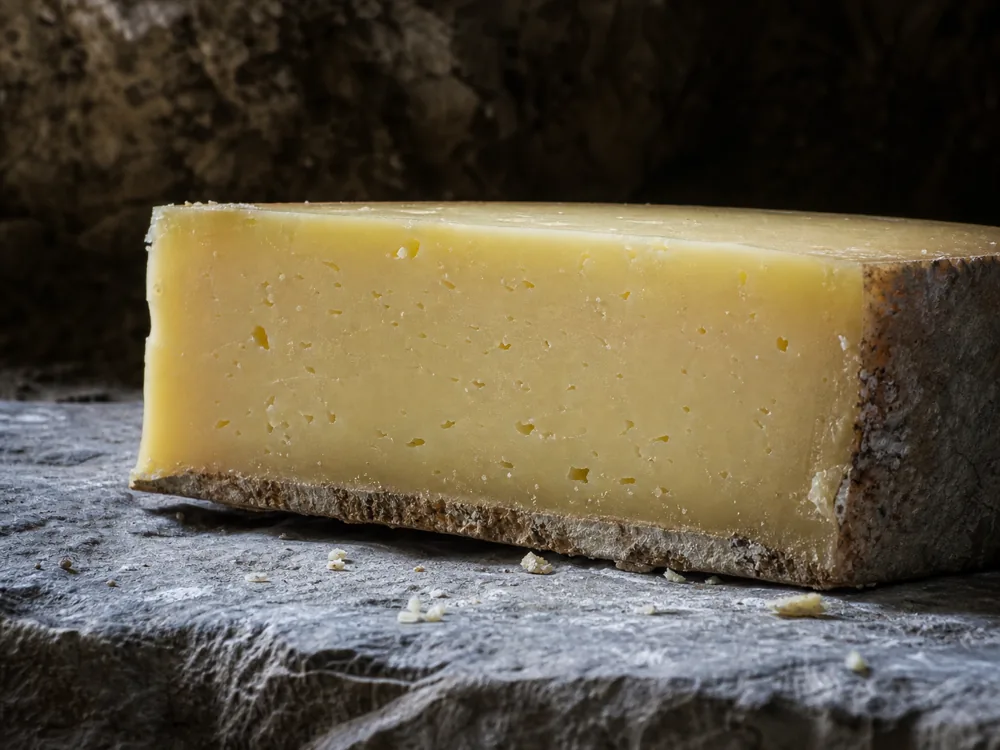
Raw cow's milk is the shared description, while only one record narrows it to organic Brown Swiss milk. You can safely carry forward the milk treatment, but the breed is not backed by a surviving product specification.
Willow Hill did keep Brown Swiss cows, as a profile of its La Fleurie cheese confirms. That product was pasteurised, however, which is why you should not transfer one Willow Hill label to another cheese.
The name is easy to misread as squash, but no surviving description mentions butternut squash or any added flavouring. The name fits the recorded buttery and nutty character instead.
How Old Was Butternut, and Where Do the Sources Disagree?
The two detailed records put Butternut at either three months or at least six months of age. Neither identifies a production year or batch, so combining them into one definitive maturation period would hide a real gap in the evidence.
| Point | Cheese.com | Neighboring Food Co-op Association (January 2015) |
|---|---|---|
| Age | Aged at least 6 months | Aged for 3 months on wooden planks |
| Flavour | Buttery, nutty | Distinct and buttery, with hints of hazelnut and grass |
| Aroma | Earthy, mushroom | Not described |
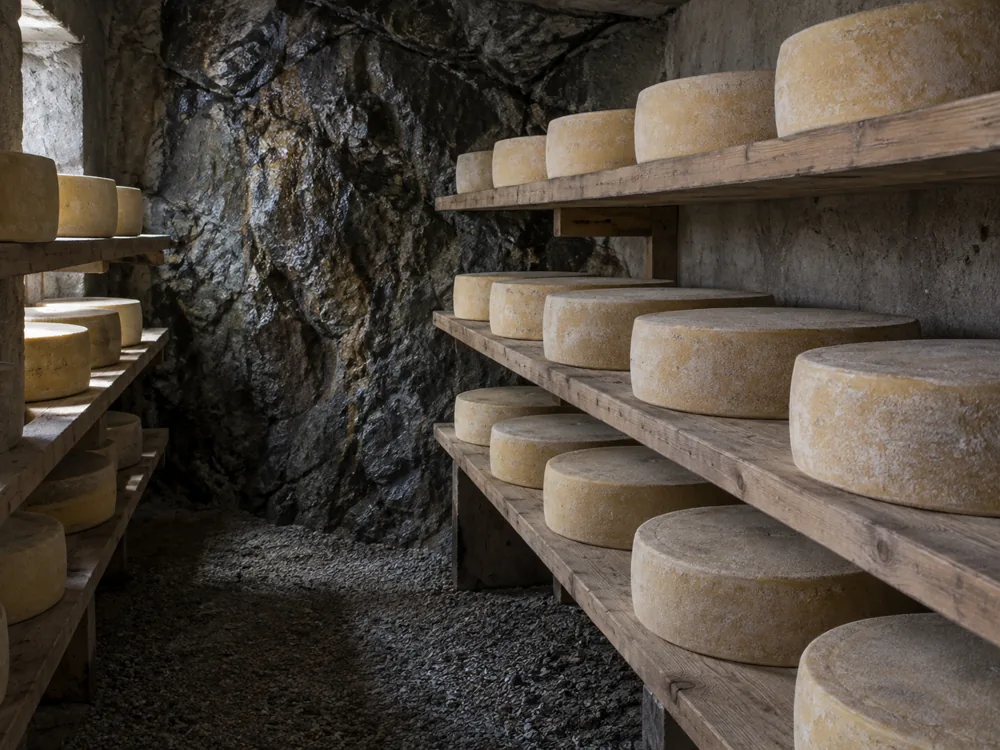
| Setting | Cave-aged | Matured in underground caves ventilated by the surrounding woodland |
Both accounts place the ageing underground, with handmade wheels resting on wooden planks. That shared production detail is firmer than either age number.
The cave sat eight feet underground, with concrete walls and natural Vermont bedrock at the back. Its seasonal conditions could change the cheese, which gives you another reason to treat a single flavour note as a period description rather than a fixed specification.
How Did Butternut Slice and Melt?
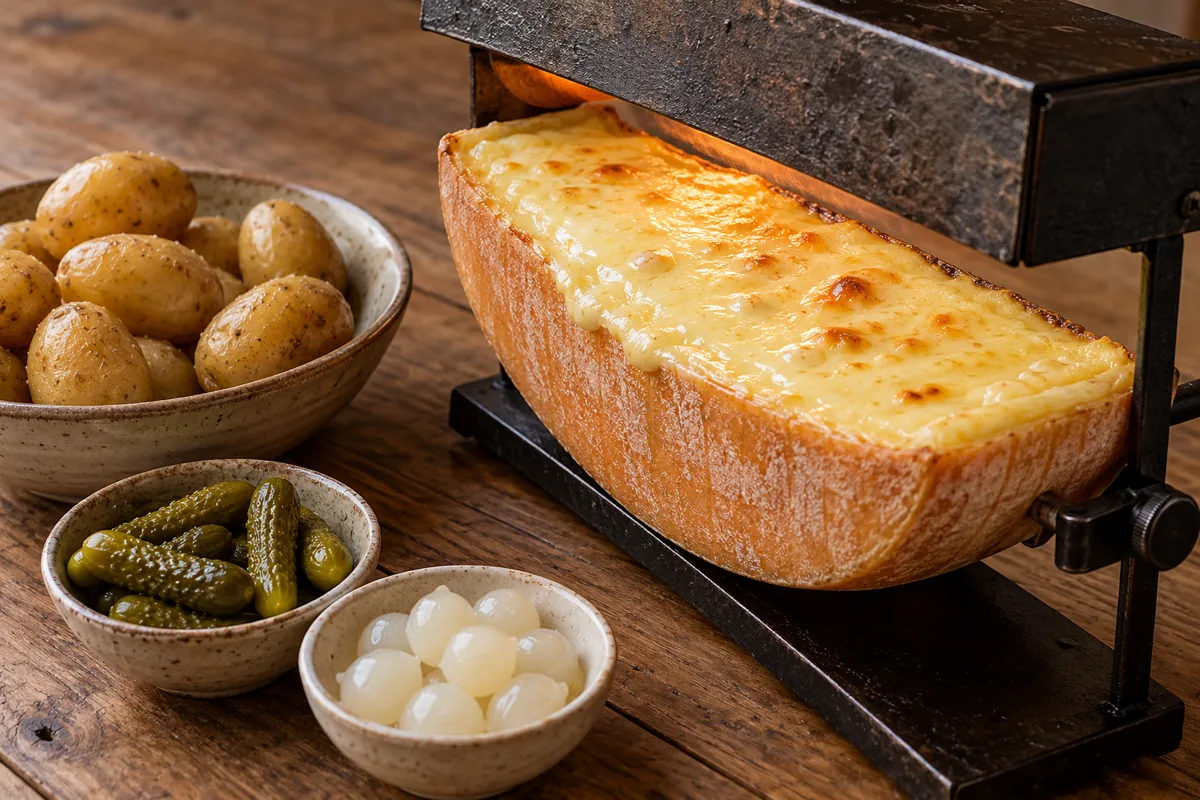
Butternut was described as firm enough to slice on a cheese board yet soft enough to melt. That combination suggests a useful table cheese.
For that reason, a precise recipe would be invented guidance rather than recovered history. If you want to cook with a similar cheese, choose one of the documented alternatives below and follow advice for that cheese.
Which Awards Did Butternut Win?
The clearest contemporary award record is the Vermont Cheese Council's Fall 2008 newsletter. It records a bronze medal for the then-new Butternut at the World Cheese Awards in Dublin and describes the cheese as buttery and nutty.
| 2008 World Cheese Awards, Dublin | Bronze for a new cheese (Vermont Cheese Council newsletter, Fall 2008) |
| 2010 World Cheese Awards, class 5503 | Bronze in the small-scale semi-hard class (Cheesemonger's Weblog) |
| 2011 World Cheese Awards | Gold (Cheese.com and a Seven Days guide to the Vermont cheese trail) |
A 2010 results list records another bronze in a small-scale semi-hard class. A later Vermont cheese trail guide and Cheese.com report a 2011 gold, although the official winners list was not available for confirmation.
The official 2011 winners list was not available, so the gold remains less firmly documented than the 2008 and 2010 bronzes. This does not disprove the result; it limits how confidently we can present it.
An award tells you how one entry performed at one event. It does not establish that the cheese is still available.
Why Did Butternut Disappear?
The evidence supports one clear conclusion: Butternut is discontinued. The farm directory says Willow Hill no longer makes or sells cheese, and Cheese.com marks the product as no longer produced.
Willow Hill Farm's current site says the business began with organic fruit and vegetables in 1991, produced award-winning cheese for two decades and now focuses on U-pick blueberries. The final cheesemaking date and the reason for stopping are unknown.
An older Vermont cheese trail guide still names Butternut among nine farm cheeses despite a later page update. That mismatch is why you should not treat a surviving listing as evidence of current stock.
A listing that still names Butternut is not evidence of stock. Willow Hill Farm's public focus is now blueberries, so a shop or guide that still mentions the cheese is repeating an older record.
Is Butternut Safe During Pregnancy?
Two historical descriptions call Butternut a raw-milk cheese, and there is no current package to check. The CDC's pregnancy guidance treats unpasteurised dairy as a higher-risk choice and lists pasteurised hard cheeses among safer choices.
The NHS guidance accepts hard cheeses made with pasteurised or unpasteurised milk and names pasteurised semi-hard cheeses such as Edam. It does not place an unpasteurised semi-hard cheese like historical Butternut into that safe example.
Historical Butternut was described as semi-hard and raw-milk, so it does not match the pasteurised semi-hard example.
Because the exact product is gone and the categories do not settle it, an old or unlabelled piece is a poor place to improvise during pregnancy. Our guide to cheese during pregnancy explains how milk treatment, cheese type and heating change the decision.
What Can You Buy Instead of Butternut?
No current cheese can reproduce a discontinued farm's milk and cave, but three cow's-milk cheeses share Butternut's firm, nutty Alpine direction. Use the table to match age and milk treatment to the quality you care about most.
| Cheese | Milk | Age | Flavour |
|---|---|---|---|
| Comté | Unpasteurized cow's milk | Minimum 4 months, up to 24 | Nutty, sweet, slightly fruity |
| Appenzeller | Cow's milk, raw or pasteurized | Classic 3-4 months, Surchoix 4-6, Extra 6 or more | Nutty or fruity, mild to tangy |
| Gruyère | Unpasteurized cow's milk | 3 to 10 months in one line, 5 to 12 in another | Nutty with a hint of fruit and some sweetness |
Two alternatives also cover Butternut's limited melting description: Gruyère is a dependable melting cheese, while Comté works in gratins, fondue and sandwiches. Those current cheeses give you usable cooking guidance that the Butternut record cannot.
Comté has a four-month minimum that falls between Butternut's two recorded age figures. It is the closest choice if you want raw cow's milk, a nutty Alpine profile and reliable melting behaviour in one cheese.
The Appenzeller Classic and Surchoix grades cover roughly three to six months, close to the disputed Butternut range. Check the label because Appenzeller can be made with raw or pasteurised milk.
Gruyère is the loosest age match but the easiest substitute to find. The age on the wedge matters more than a general range if you want a younger, softer melt or a firmer, more concentrated flavour.
What Is Still Unknown About Butternut?
The surviving record leaves several practical details open, and guessing would make this historical profile less useful.
- End of production: the final make date and the reason for stopping
- Age by year: whether the three-month or six-month figure applied to a given wheel
- Size: wheel weight and dimensions
- Nutrition: calories, fat, salt, and lactose content
- Rennet: the type is unknown; Cheese.com marks Butternut as not vegetarian
- Price: what a wheel or wedge cost at retail
Until Willow Hill or a named successor announces a return, discontinued remains the accurate status.
SOURCES & REFERENCES
No dependable record confirms current production. Butternut is marked as discontinued and Willow Hill no longer makes or sells cheese, although no final production date is available.
No surviving description mentions squash or added flavouring. The recorded flavour is buttery and nutty, with hazelnut and grass appearing in the 2015 profile.
The two detailed records give at least six months and three months on wooden planks. Neither ties its number to a production year, so one universal age would be misleading.
Yes, both surviving descriptions call it raw cow's milk, and one adds organic Brown Swiss milk. No current package exists to check, so pregnancy questions belong with a doctor or midwife.
No cheese matches it exactly. Comté, Appenzeller and Gruyère offer a nutty cow's-milk profile, and the label on each wedge lets you choose the age and milk treatment you want.