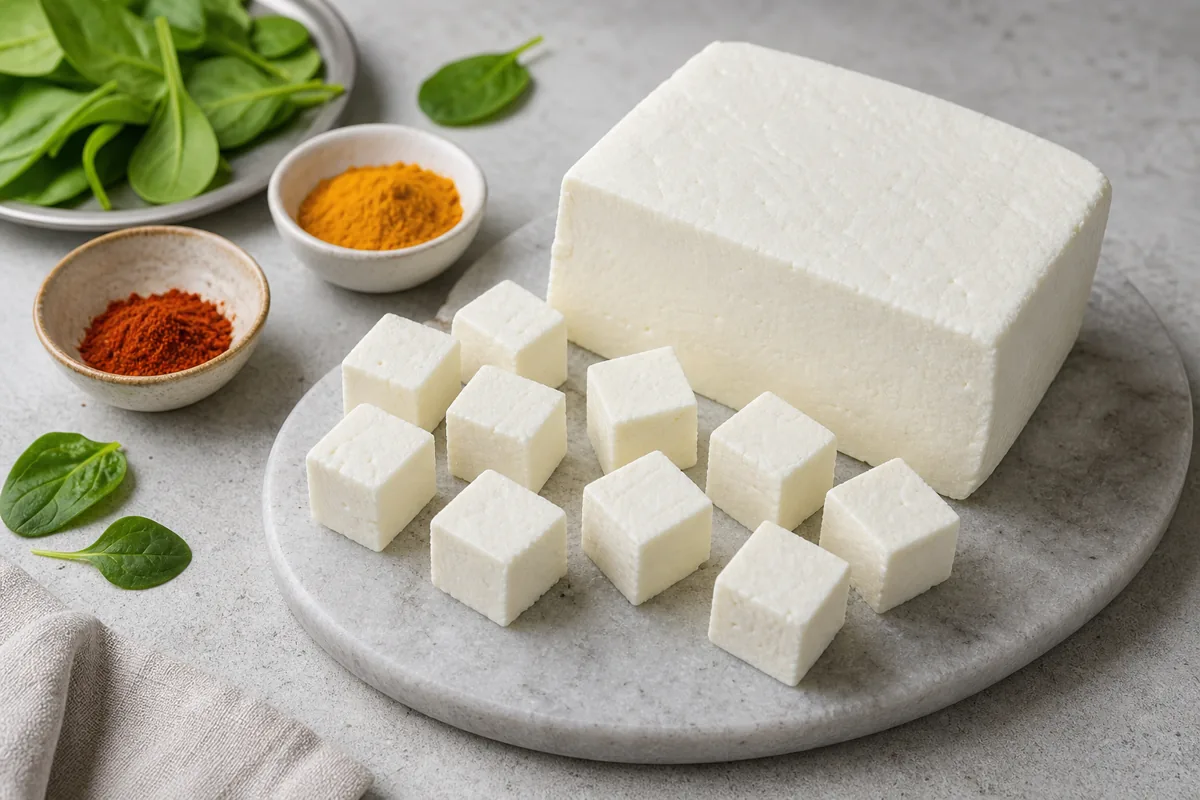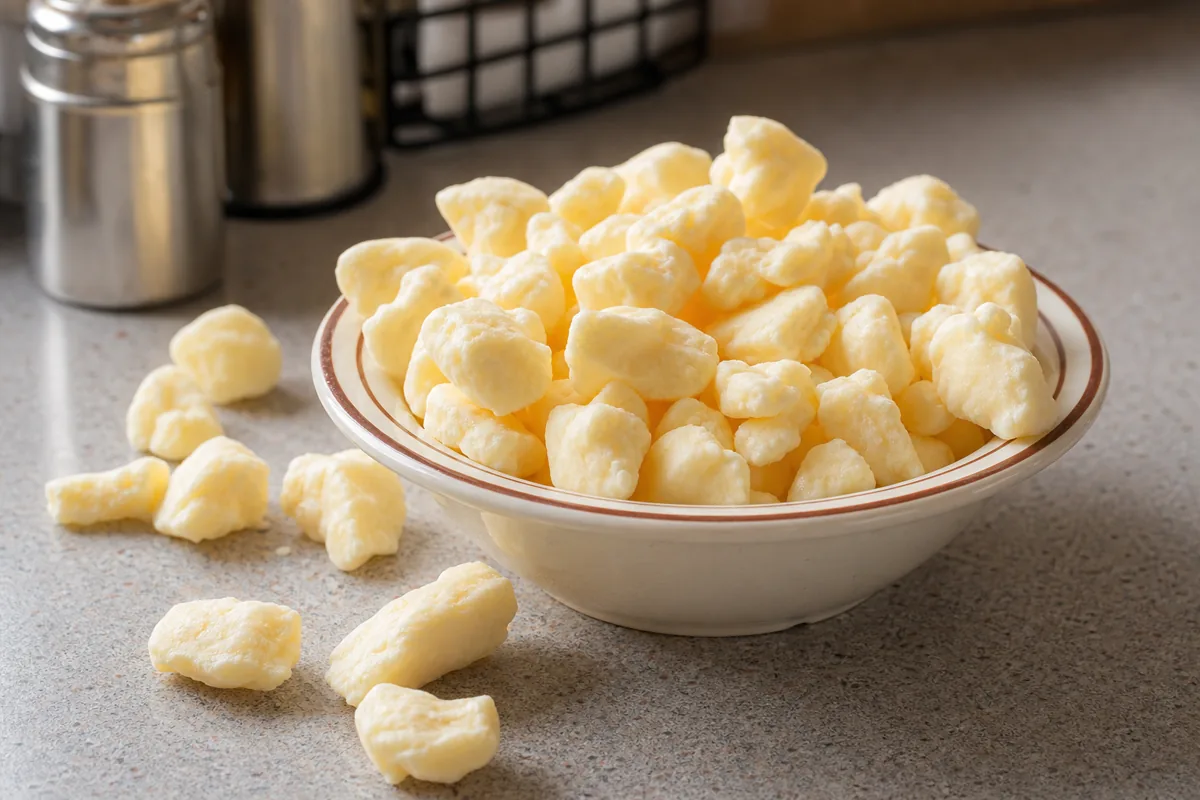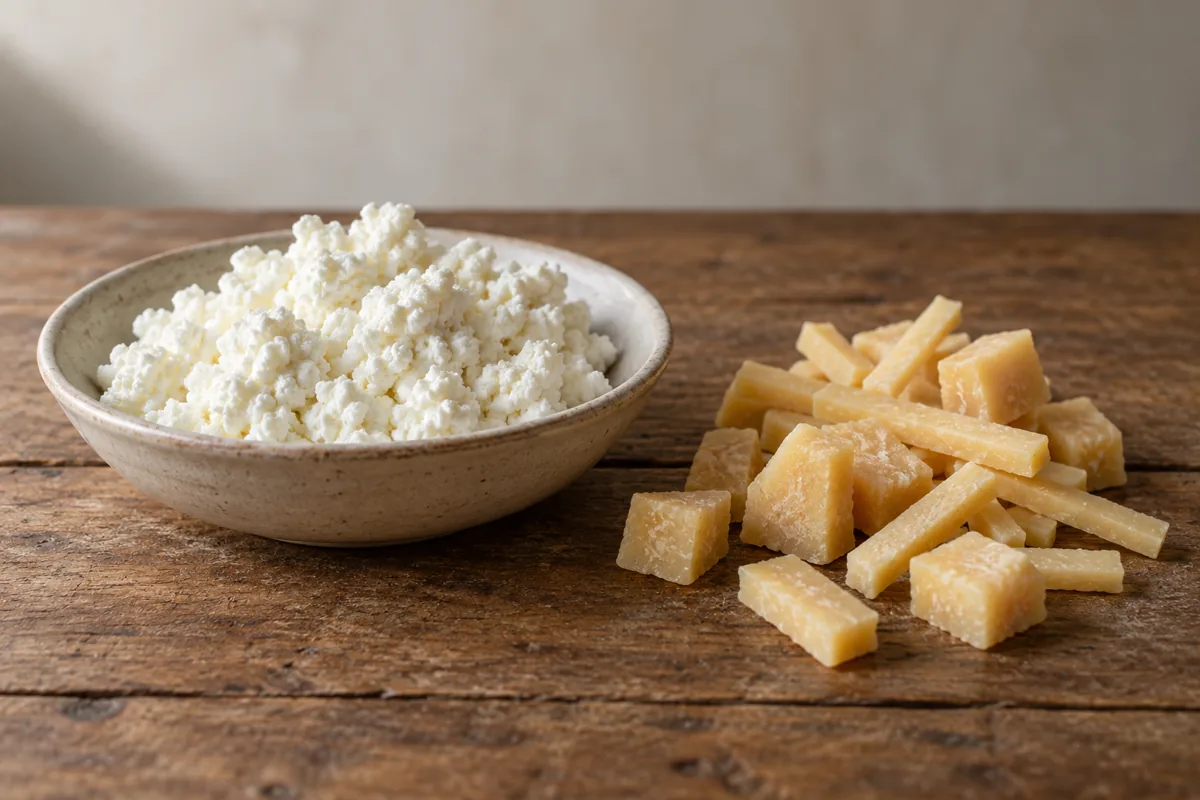
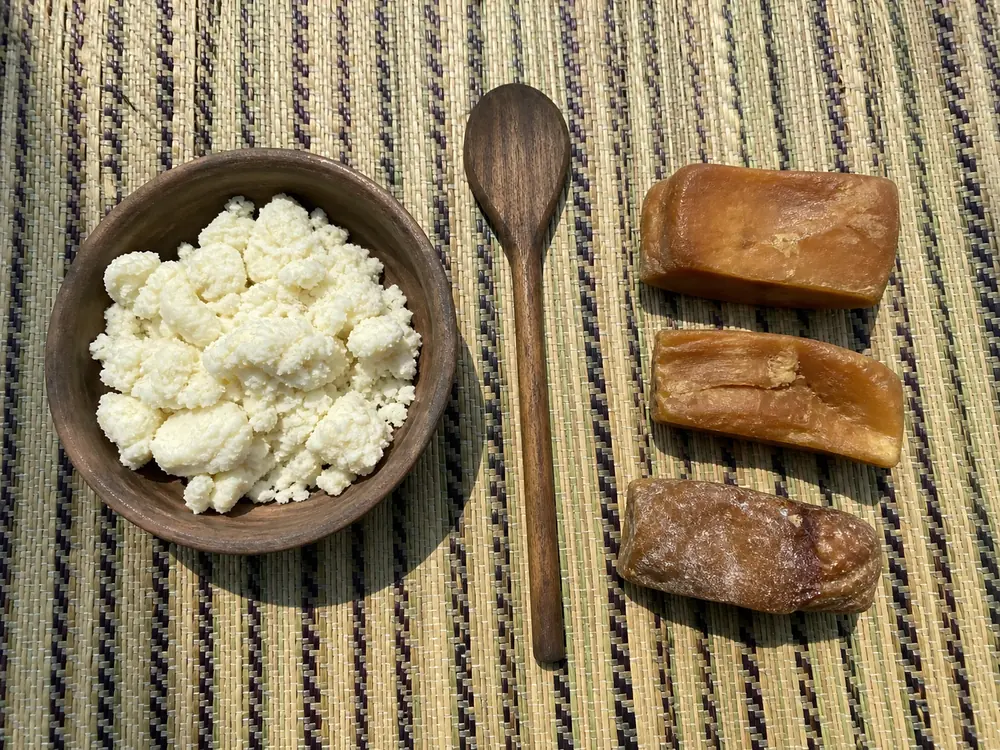
Chhurpi comes in two forms: a soft, white, moist curd and a pressed, dried cheese that Wikipedia calls one of the hardest in the world.
Soft chhurpi goes into cooked dishes eaten with rice. Hard chhurpi is held in the mouth until it moistens, then chewed slowly, much as you would chew gum.
The milk is not always yak milk. Panta and colleagues, writing in the Journal of Ethnic Foods, list yak, chauri, cow and buffalo milk for Nepali chhurpi.
In This Article
What Is Chhurpi?
Chhurpi, also called durkha or chogo, is a traditional cheese of Nepal, Bhutan, Tibet and parts of northeastern India, according to Wikipedia. Choudhary and colleagues, who studied it in Ladakh and Himachal Pradesh, spell the name Chhurpe.
Cheese.com lists churpi as an alternative spelling and sherkam among the other names for the cheese.
Panta and colleagues quote a definition of chhurpi as “a hardened cheese in the form of cubes and consumed by biting or chewing as betel nut”. That describes the hard form, and the same paper says a soft form, eaten with rice, is popular too.
Panda and colleagues found the same split when they documented homemade chhurpi in Ladakh: a soft variety and a hard, sun-dried one.
Where Does Chhurpi Come From, and Which Milk Goes In?
Chhurpi belongs to the Himalayan highlands rather than to one country. Panta and colleagues say ethnic groups in Darjeeling, Sikkim, Bhutan, Arunachal Pradesh and Ladakh eat it, and Cheese.com lists China, Nepal and Tibet.
For Nepali chhurpi, Panta and colleagues name the milk of naks (female yaks), cows, buffalo and chauris.
Chauri are crosses between yak and hill cattle, so the word is not another name for yak.
Altitude sorts the herds. Chauri graze alpine pastures at 3,000 to 4,500 metres for about two months, July and August, and spend the rest of the year at 2,500 to 3,000 metres, and below that range the same paper says chhurpi is made from mixed cow and buffalo milk.
In eastern Nepal the milk can drift a long way from yak. Panta and colleagues surveyed producers in Ilam and found them rearing Jersey and Holstein cattle and Murrah buffalo, with local breeds not popular for chhurpi there.
Milk from buffalo alone breaks and leaves an uneven surface once the curd sets, the same survey says, so producers blend it with cattle or yak milk to get a smooth, uniform surface that consumers mostly prefer.
Yak-milk chhurpi is the scarce kind. Panta and colleagues say importers mostly prefer it, yet they put Nepal's yaks, naks and chauris at 69,978, of which only 18,359 are milking.
| Source | Milk named | Link to soft or hard |
|---|---|---|
| Panta et al. (2023) | Female yak, chauri, cow, buffalo | Yak milk preferred for hard chhurpi; soft chhurpi made from cow milk |
| Cheese.com | Cow's or yak's milk | Soft chhurpi from cow's milk; hard chhurpi from yak's milk |
| Choudhary et al. (2024) | Jersey cow, yak, and two yak-cattle crosses | Sun-dried chhurpe analysed from all four milks |
Choudhary and colleagues explain the two crosses in that last row: Zomo is a yak and Ladakhi cow cross, and because the male offspring of that cross are infertile, Zomo is bred back to a male yak to give Germo. They say chhurpe is traditionally made from yak and crossbreed milk because those animals give more milk.
The tidy rule that cow milk gives soft chhurpi and yak milk gives hard chhurpi therefore does not hold everywhere. Choudhary and colleagues analysed sun-dried chhurpe made from Jersey cow milk as well as from yak and crossbred milk.
A label that says yak is the maker's claim about the herd.
How Are Soft and Hard Chhurpi Different?
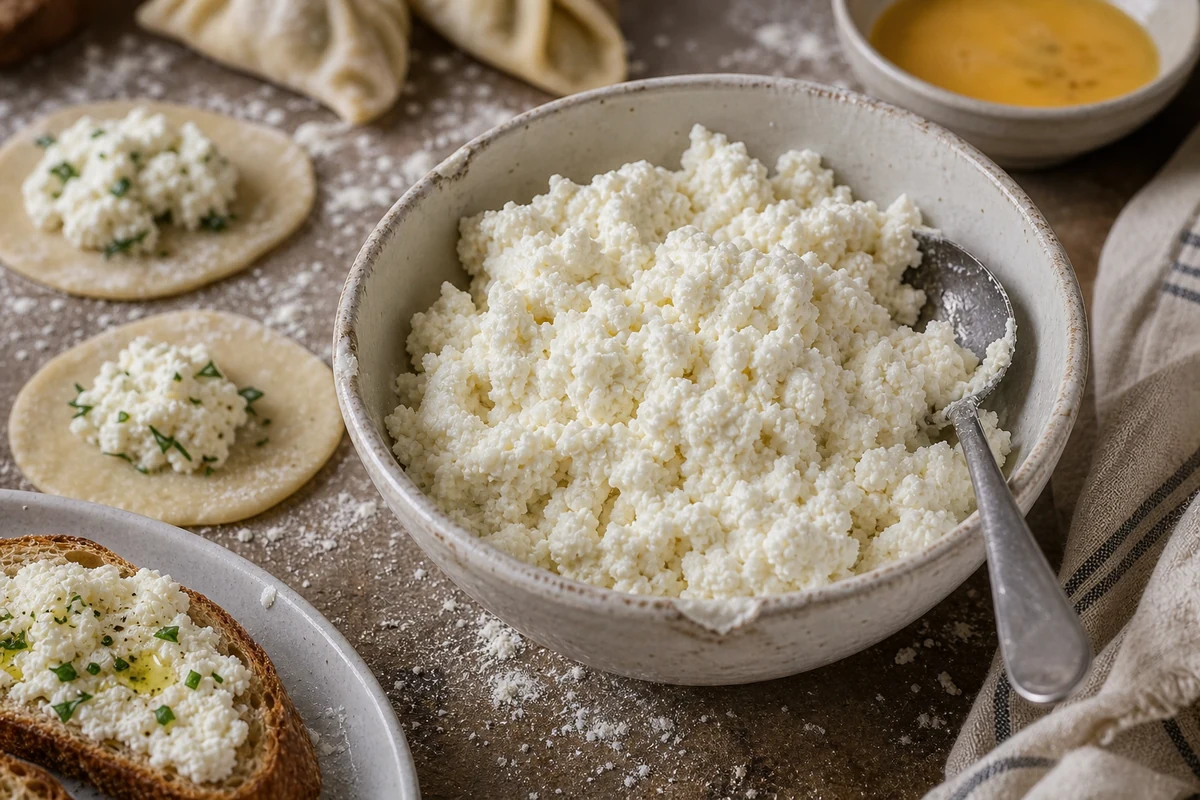
Wikipedia describes soft chhurpi as rather like ricotta, and Cheese.com likewise calls its curds similar to Italian ricotta.
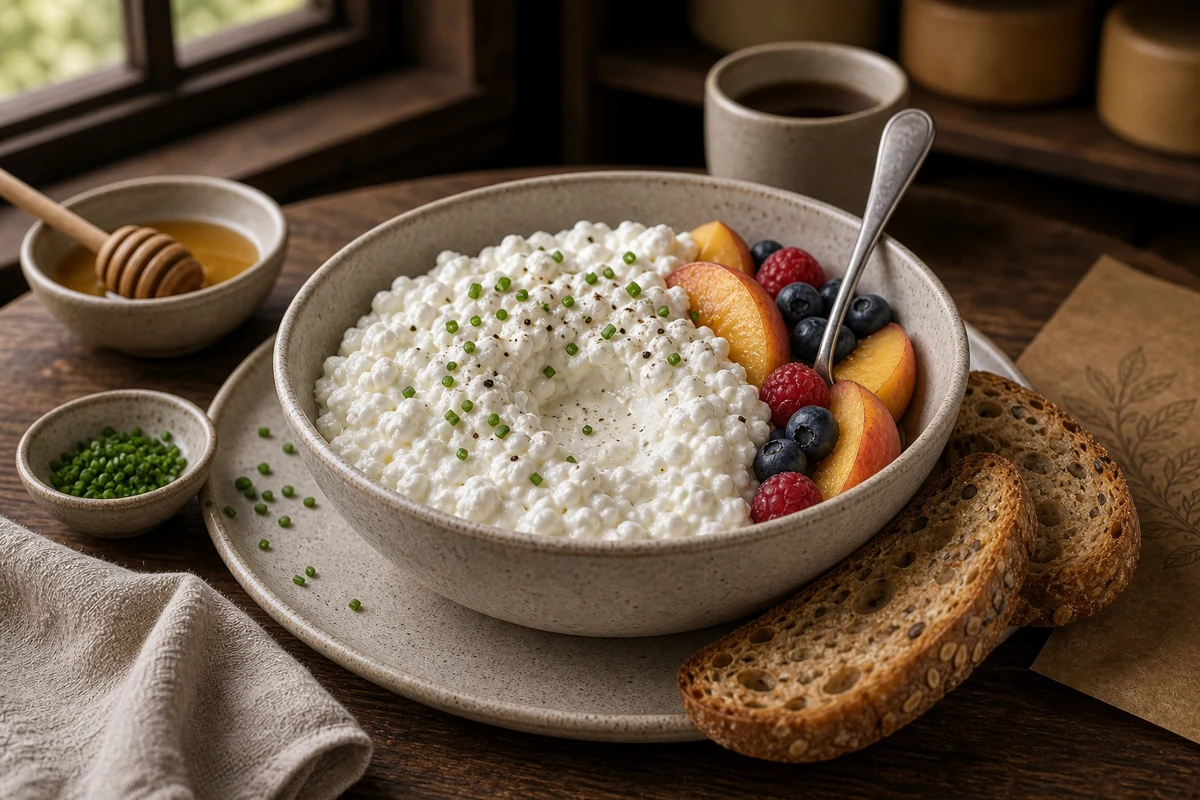
Cheese.com files chhurpi in the cottage cheese family and gives its colour as pale yellow, and Panta and colleagues also call it a pale-yellow cheese.
Wikipedia and Cheese.com both describe the fresh curd as white.
The forms also differ in timing. Choudhary and colleagues describe soft chhurpe as eaten right after it is made and hard chhurpe as sun-dried and stored for winter, so one word covers a fresh curd and a store of dried pieces.
| Feature | Soft chhurpi | Hard chhurpi |
|---|---|---|
| Texture | Soft, like ricotta (Wikipedia) | One of the hardest cheeses in the world (Wikipedia, Panta et al.) |
| Look | White curd (Wikipedia) | Small cuboid pieces (Wikipedia); cubes and sticks as dog chews (Panta et al.) |
| How it is eaten | Cooked in dishes, often with rice | Moistened in the mouth, then chewed |
| Lactic acid | 0.12 mg/g (Panda et al.) | 0.23 mg/g (Panda et al.) |
| Acetic acid | 0.06 mg/g (Panda et al.) | 0.16 mg/g (Panda et al.) |
| Riboflavin, thiamine, vitamin C | Higher (Panda et al.) | Lower (Panda et al.) |
How Is Chhurpi Made?
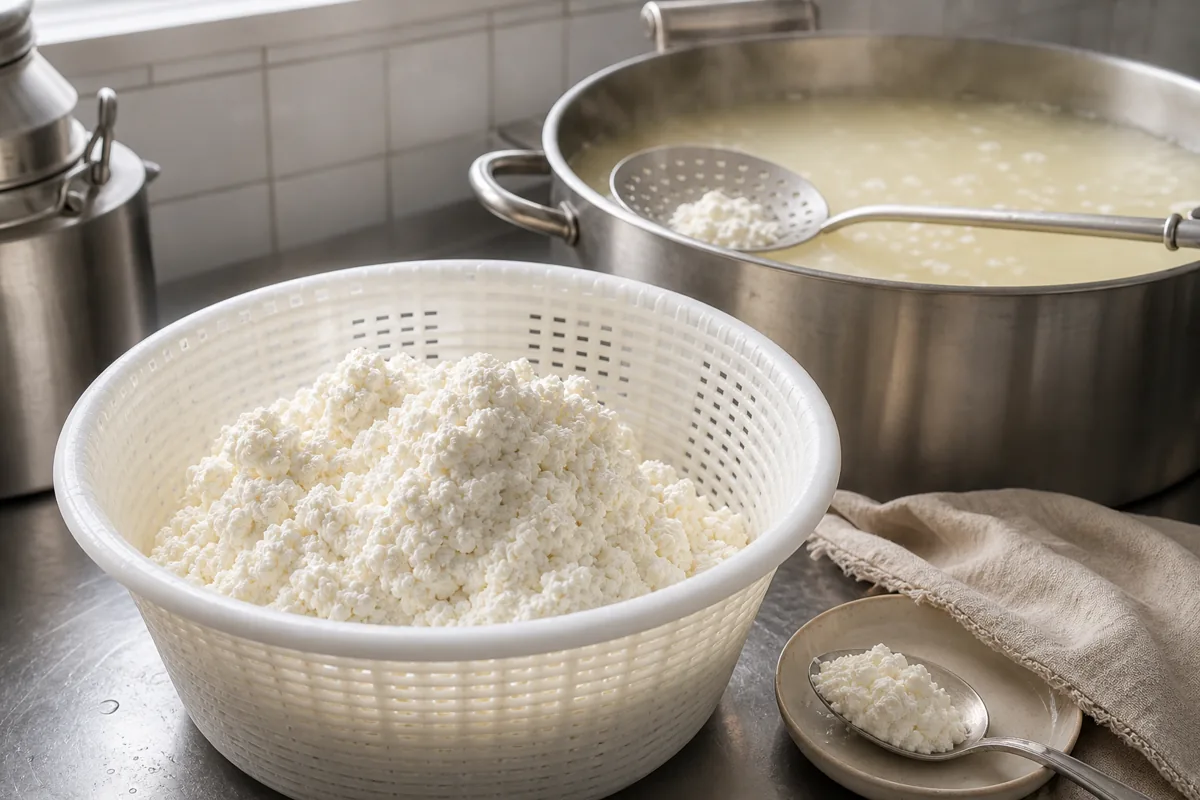
Wikipedia says chhurpi is prepared at home or in a local dairy from buttermilk. The buttermilk is boiled, the solid mass is separated from the liquid, and it is wrapped and hung in a thin cloth to drain.
Choudhary and colleagues recorded the method used in Ladakh and Lahaul and Spiti by talking to local people, and it runs in seven steps.
- Boil the milk.
- Make curd, called zho, by back-slopping.
- Separate the cream to leave buttermilk.
- Heat the buttermilk, called tara, at 45 to 50 °C until it coagulates.
- Mix the coagulated material thoroughly.
- Shape it into soft chhurpe.
- Sun-dry the soft chhurpe.
Choudhary and colleagues set this route apart from cheddar and mozzarella, which they say are mostly made with rennet, and describe chhurpe as a naturally fermented food.
Wikipedia gives a different route to the hard form. The soft chhurpi is wrapped in a jute bag and pressed hard to remove water, and after it dries it is cut into small cuboid pieces and hung over a fire to harden further.
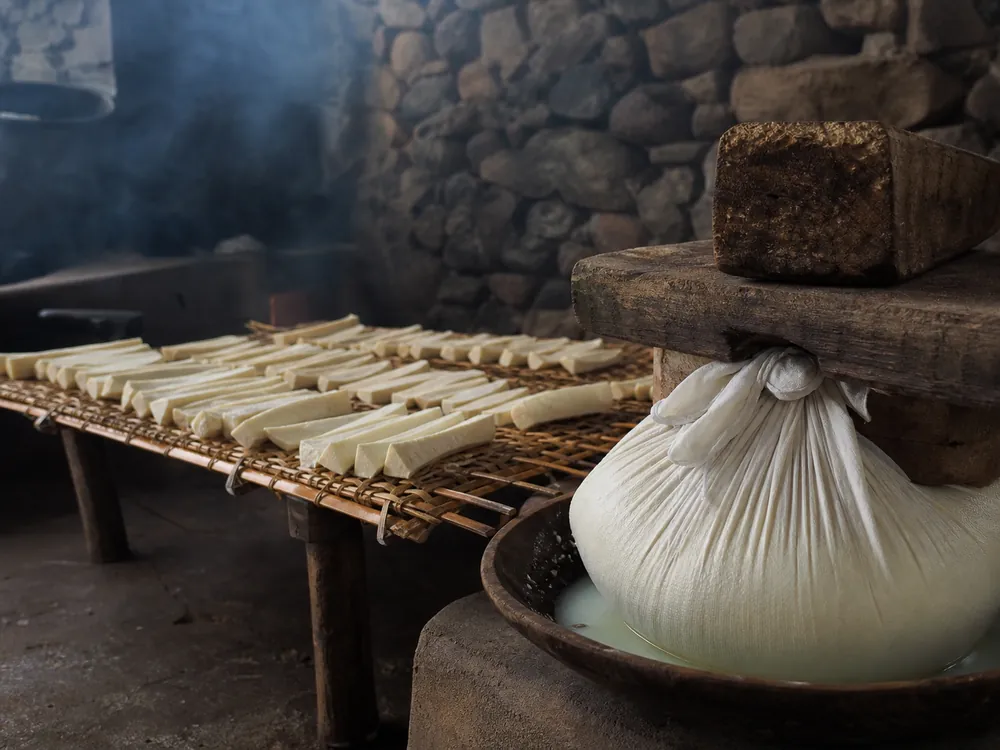
Drying also varies, because Cheese.com says the curds are cured at room temperature for 2 to 3 days and the hard form is then sliced and either sun-dried or oven-dried at low temperature.
Wikipedia flags its jute-bag pressing and fire-hardening step as lacking a citation, and Choudhary and colleagues describe only sun-drying, so the fire route has the thinnest support among the cited sources.
Panta and colleagues say the finished appearance, flavour and texture of chhurpi depend on time, temperature and acidity, and that producers in Ilam have had milk clot while boiling.
Choudhary and colleagues name the heating of the buttermilk as the likely reason their samples differed in sugar content, and cite earlier work in which improper heating of the milk changed how the casein coagulated and so the protein content.
Cheese.com also lists chhur singba, or chhur mingba, as a freshly made chhurpi to which extract of crab apple fruit, called thung, is added.
Panta and colleagues say chhurpi is made by coagulating whole or skimmed milk, part of the milk protein or buttermilk with calf rennet, microbial or vegetable rennet, vinegar, lemon or back-slopping, then partly draining the whey. The steps above are examples from named sources, not a single standard.
Is Nepal's Yak Cheese the Same as Chhurpi?
Nepal's Dairy Development Corporation sells a separate yak cheese with its own process. The FAO Mountain Partnership describes a semi-hard, naturally ripened cheese made from yak and chauri milk collected between May and October on pastures above 3,000 metres in Rasuwa, Dolakha, Solukhumbu and Ramechhap districts.
Gentle heat, a starter culture and rennet form the curd, which is cut, cooked, pressed and moulded.
The cheese is then brined, aged for 45 to 90 days at room temperature and vacuum-packed, whereas the dried forms described above are sun-dried or oven-dried.
Panta and colleagues date the first Nepali cheese industry to 1953, when the government began yak cheese production in Langtang and Rasuwa with FAO support, and describe chhurpi making as a tradition that goes back a thousand years in remote Himalayan regions.
That makes it a different product from chhurpi, not another name for it.
What Does Chhurpi Taste Like?
Panta and colleagues describe the flavour of chhurpi as fresh and tangy, and Cheese.com also lists it as tangy.
Wikipedia adds that the soft form is neutral in taste unless it is left to ferment a little, which is where the tang comes from.
The hard form carries more of the acids fermentation produces: Panda and colleagues measured more lactic and acetic acid in hard chhurpi than in soft, as the table above shows, though no source links those figures to how sharp a piece tastes.
Texture matters as much as taste with the hard form. Panta and colleagues point to its chewiness and gumminess.
Choudhary and colleagues cite earlier work on cow and buffalo milks in which higher-fat milk gave chhurpe with better yield, texture, chewiness and gumminess, while lower-fat milk gave more protein and better shelf stability.
The FAO Mountain Partnership uses nutty and slightly sweet, with a mild salty finish, for the separate aged yak cheese from Nepal.
How Do You Eat Hard Chhurpi?
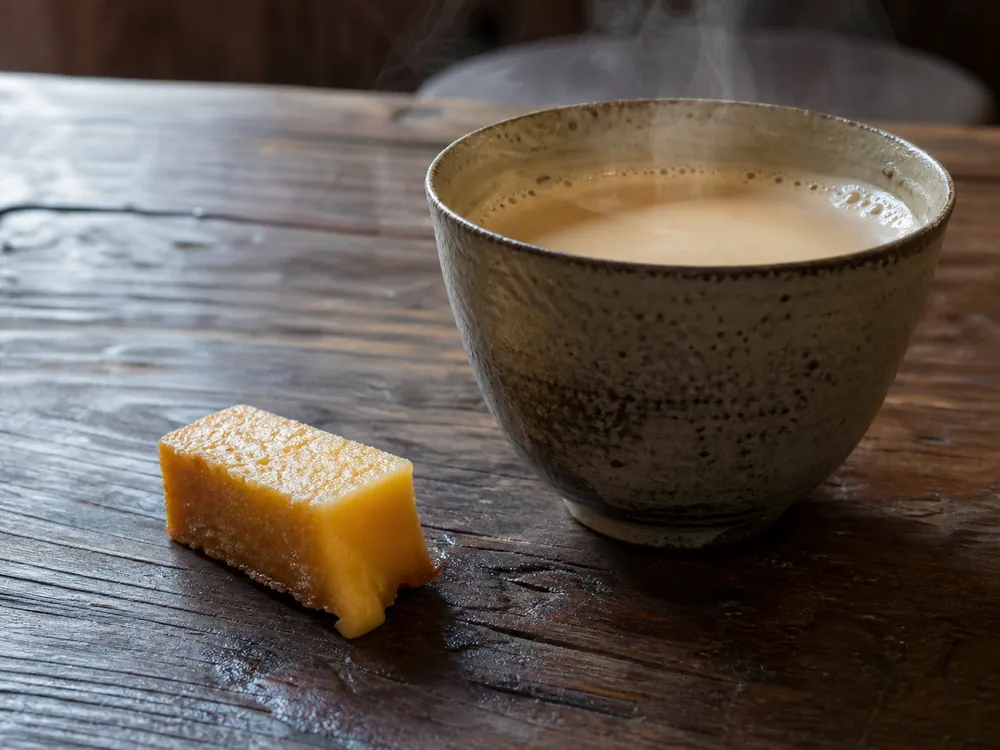
Wikipedia describes hard chhurpi as usually eaten by keeping it in the mouth to moisten it, letting parts of it become soft, and then chewing it like gum. One block can last anywhere from 30 minutes to five hours this way.
Choudhary and colleagues place that habit in the cold deserts of Ladakh, Kinnaur, Lahaul and Spiti, where little vegetation grows and meat and dairy products supply a large share of the diet.
They say hard chhurpe is traditionally eaten as a masticator for extra energy and jaw movement during winter, and that chhurpe is also cooked and eaten with meat, soups, vegetables and tea.
Panta and colleagues add that people in hill areas know it as an energy tablet.
How Do You Cook with Soft Chhurpi?
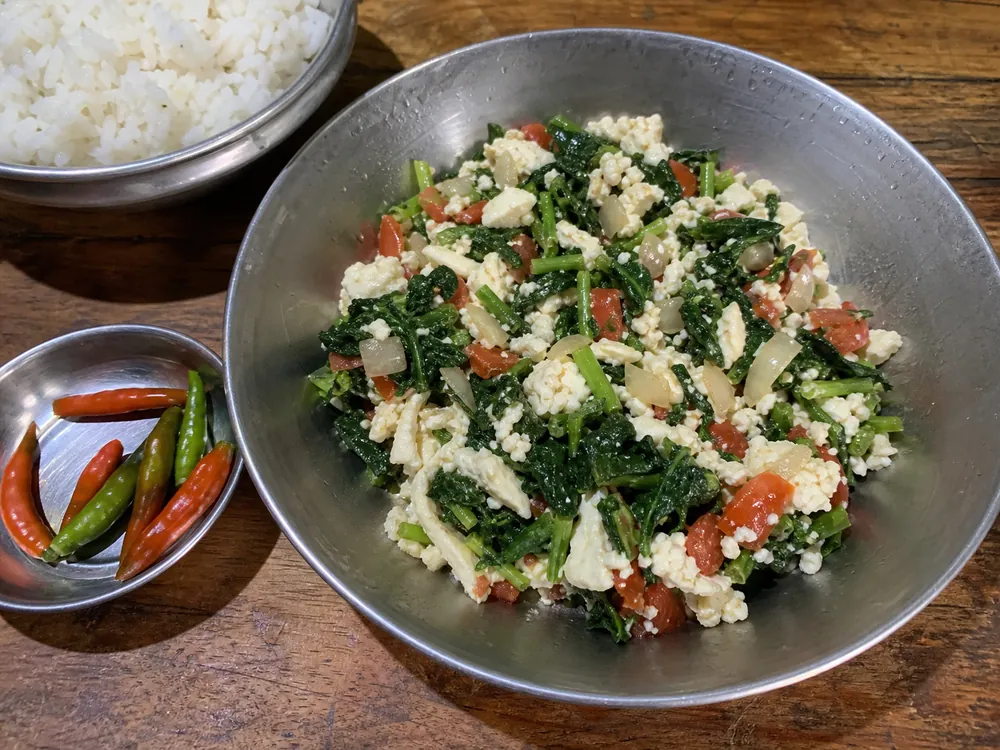
Wikipedia says that in the mountains chhurpi stands in for vegetables because it is an excellent source of protein. Panta and colleagues add that it is generally eaten with rice, where it replaces curries.
Panta and colleagues also describe a chhurpi achar, a chutney-like side dish of finely sliced onion, tomatoes and plenty of chillies.
They note that soft chhurpi is also eaten with an edible fern called sauneyningro.
In Ladakh, Choudhary and colleagues name chhurpe as the main ingredient of thukpa soups, of sweet dishes such as thuth and femer, and of tsunalik, a noodle-like preparation, without saying which form goes into each.
| Use |
|---|
| Cook soft chhurpi with green vegetables as a savoury dish (Wikipedia). |
| Use it as a filling for momo (Wikipedia). |
| Grind it with tomatoes and chillies into senpen chutney (Wikipedia). |
| Add it to soup (Wikipedia). |
| Make achar with onion, tomato and chillies and serve it with rice (Panta et al.). |
What Can Replace Chhurpi?
For the soft form the sources offer only the two comparisons made earlier, not tested swaps.
| Form | Closest comparison named by a source |
|---|---|
| Soft chhurpi | Ricotta (Wikipedia) |
| Soft chhurpi | Cottage cheese family (Cheese.com) |
| Hard chhurpi | No cheese named by any cited source |
Why Does Hard Chhurpi Keep for Years?
Dryness is what lets hard chhurpi last, and Choudhary and colleagues give the mechanism: drying lowers the product's water activity, which cuts the total bacterial count and the spoilage that follows.
They judged their sun-dried samples dry enough for the long-term storage that winter food supplies depend on, and the moisture figure appears in the protein section below.
Cheese.com gives age its own name: hard chhurpi that is 4 to 5 years old is called chhurpupu.
Mould is the failure Panta and colleagues name: Nepali chhurpi, they say, commonly develops it when transported for a long time.
The same authors say combining time, temperature and acidity, a method they call hurdle technology, can give a shelf-stable chhurpi.
How Do You Buy and Store Chhurpi?
Much of the hard chhurpi sold outside the Himalayas is a dog chew. Panta and colleagues say Nepal exports a defatted chhurpi worldwide as a dog chew in cubes and sticks, and Wikipedia puts Nepal's chhurpi dog-treat exports at 4 billion Nepali rupees in 2025, about $27 million.
Panta and colleagues say the dog-chew trade began after 2003, that Nepal has no tradition of feeding chhurpi to dogs, and that exporters also sell chhurpi powder and puffs.
The sources describe that trade but give no way to tell a food piece from a pet piece by looking, so the label is the thing to check.
Panta and colleagues call chhurpi hygroscopic, meaning it absorbs moisture easily. Producers in their survey said a kilogram worth up to NPR 1,100 falls to NPR 200 once it gets damp.
The same paper says the hard form can last up to 20 years or more if stored properly in yak skin. If chhurpi goes in a refrigerator instead, the CDC says to keep the refrigerator at 40°F (4°C) or below.
Buy by the label: Panta and colleagues say much of the hard chhurpi leaving Nepal is a defatted dog chew, and the piece itself does not show which it is. Keep hard pieces dry, because producers in their survey say damp chhurpi loses most of its price.
For soft chhurpi the milk treatment matters: on cheese in pregnancy, the CDC names soft cheese made from unpasteurized milk as riskier and says pregnant women are 10 times more likely to get a Listeria infection.
The CDC also lists any queso fresco-type cheese, such as queso fresco, queso blanco, requesón or similar fresh, soft cheeses, as riskier whether the milk is pasteurized or unpasteurized. Before eating soft chhurpi, ask the maker or your doctor whether it falls in that group.
The CDC lists hard cheese made with pasteurized milk as safer, together with cottage cheese, cream cheese, string cheese, feta and mozzarella made with pasteurized milk.
The NHS says pasteurised or unpasteurised hard cheeses such as parmesan, cheddar and gruyère are safe to eat in pregnancy.
For soft cheeses the NHS names pasteurised paneer as safe, along with pasteurised cottage cheese, mozzarella and feta.
Is Chhurpi High in Protein?
Studies of hard chhurpi report a lot of protein, but their moisture figures differ widely.
| Source | Moisture | Protein |
|---|---|---|
| Panda et al. (2016), as tabulated by Panta et al. | 10.23% | 63.33% of dry matter (the abstract gives 60 to 63%) |
| Panta et al. (2023), citing an earlier study | 2 to 4% | Not given |
| Choudhary et al. (2024), sun-dried chhurpe | Below 1.5% | 53.73 to 69.03 g per 100 g |
The three sources disagree on moisture, from below 1.5% to 10.23%, and Panta and colleagues give the Panda protein figure on a dry-matter basis, so the numbers are not directly comparable.
Choudhary and colleagues found the milk mattered. Per 100 g of sun-dried chhurpe they measured 69.03 g protein for Zomo (yak-cow cross) milk, 61.21 g for yak, 57.38 g for Jersey cow and 53.73 g for Germo (yak and Zomo cross).
They calculated that 100 g of chhurpe could meet the full recommended dietary allowance of protein for children and adults in India, using the ICMR-NIN 2020 values.
These numbers apply to the dried form only.
The same study measured lactose in the sun-dried samples at 0.63 g per 100 g for Jersey cow milk and 1.86 g for Germo milk, which is a measured amount and not a lactose-free claim.
What Else Do Studies Find in Hard Chhurpi?
Fat is where the studies split. Panda and colleagues, as tabulated by Panta and colleagues, give 7.20% of dry matter, Choudhary and colleagues measured 11.5% to 14.3% in sun-dried samples from four milks, and Panta and colleagues add that the chhurpi exported as a dog chew is defatted.
None of the papers explains the gap, so figures from home-made pieces cannot be assumed for a defatted export piece.
Carbohydrate is steadier: Panda and colleagues report 23 to 24%, and Choudhary and colleagues measured 18.92 to 26.91 g per 100 g, with total sugars from 11.99 to 24.20 g, highest in Jersey chhurpe.
High protein is not the same as balanced protein. Choudhary and colleagues found plenty of methionine and lysine, but tryptophan and valine were the limiting amino acids in every sample, scoring below 0.5 against the FAO requirements for children aged 3 to 10.
In a laboratory digestion test with pepsin and pancreatin, 75 to 85% of the protein was digested, and the four milks did not differ significantly.
Calcium varied most among the minerals: Germo chhurpe held 117.94 mg per 100 g, about a third of the other samples, while Zomo chhurpe held 384.73 mg. Choudhary and colleagues calculate that the samples would meet on average 20 to 75% of the calcium allowance for children aged 3 to 10, and up to 38% for adults.
SOURCES & REFERENCES
What Else Should You Know About Chhurpi?
Sources name yak, chauri, cow and buffalo milk, and a maker's choice depends on the herd and altitude. Methods start from milk or buttermilk that is coagulated and drained.
No. Wikipedia and Panta and colleagues both describe a soft form eaten with rice and a very hard form that is pressed and dried.
Wikipedia describes keeping a piece in the mouth to moisten it, letting parts soften, and then chewing it like gum. One block can last 30 minutes to five hours.
No. Panta and colleagues also list cow, buffalo and chauri milk, and Choudhary and colleagues analysed chhurpe made from Jersey cow milk.
Panta and colleagues say much of Nepal's hard chhurpi is exported as a dog chew, and no cited source shows how to tell the two apart by sight. Look for a label that sells the product as food for people.
Choudhary and colleagues measured 0.63 to 1.86 g of lactose per 100 g in sun-dried samples, so it is not lactose-free.
No. The FAO Mountain Partnership describes a semi-hard cheese made with a starter culture and rennet, then brined and aged 45 to 90 days, which is a different process from dried chhurpi.
Choudhary and colleagues say drying lowers water activity, which cuts bacterial counts and spoilage, and they judged their sun-dried samples dry enough for long-term storage.