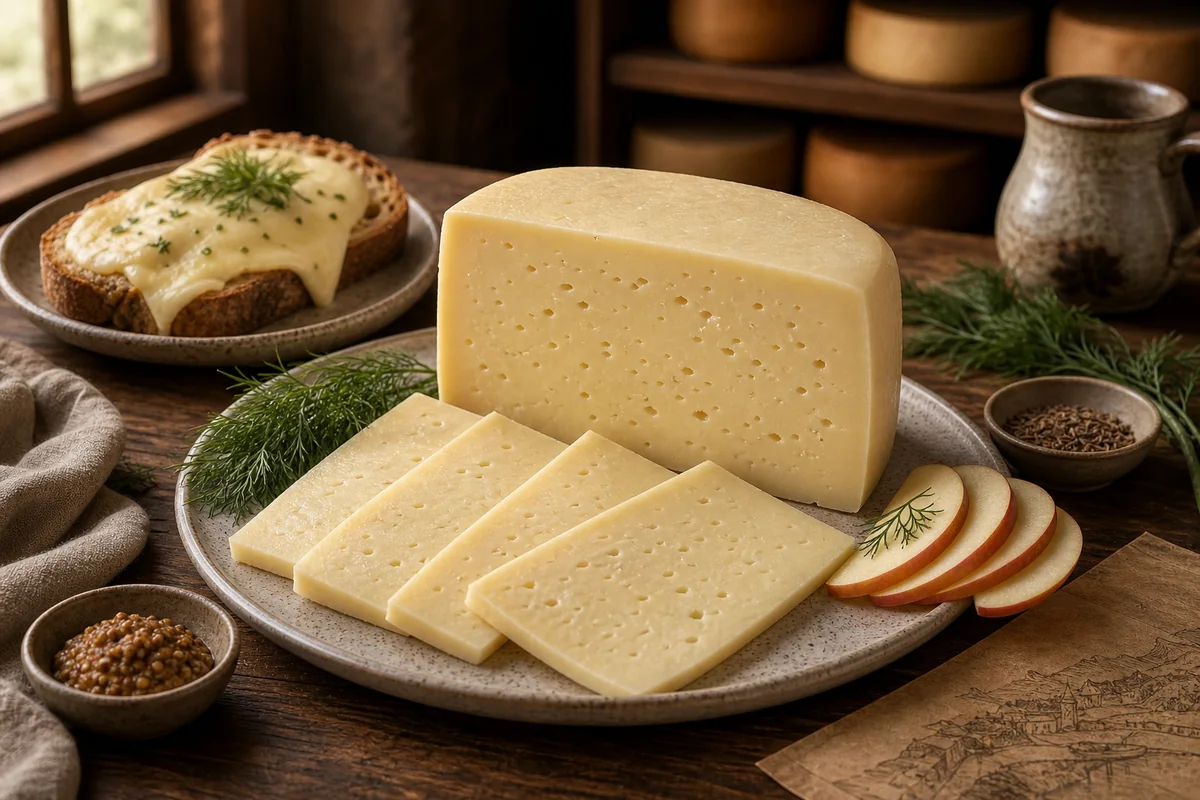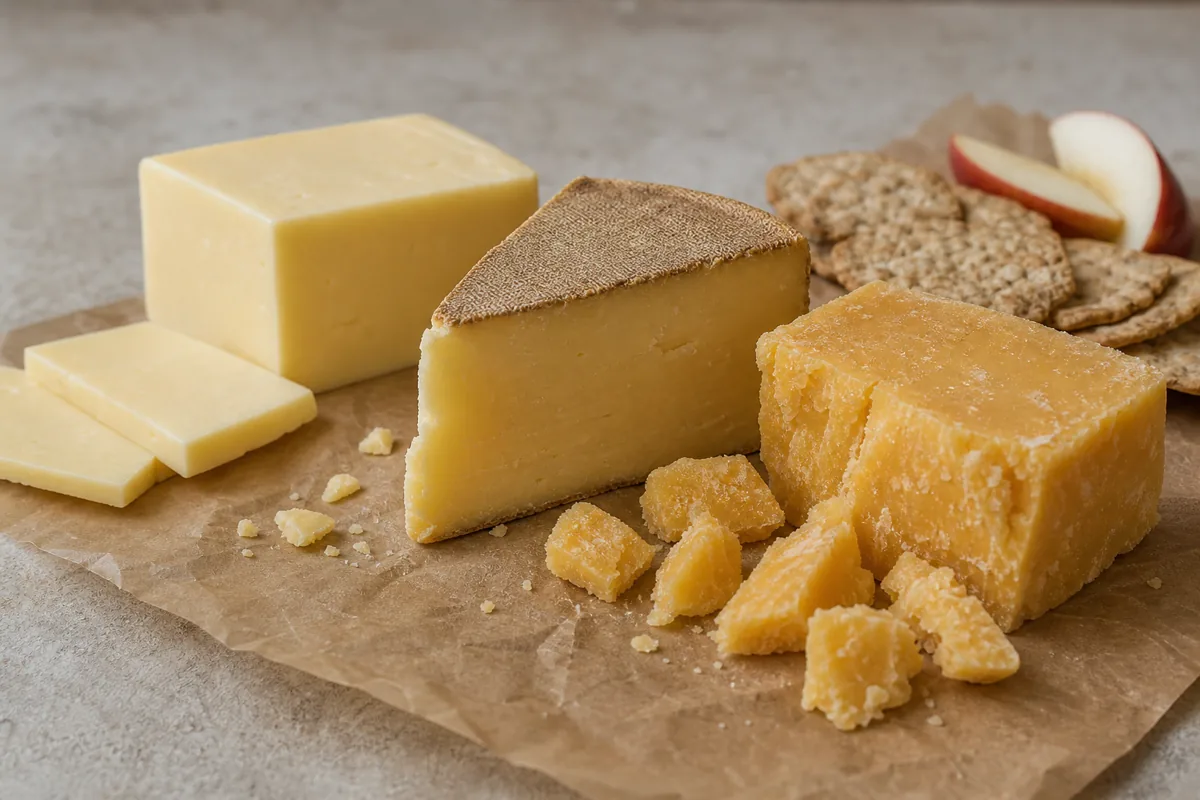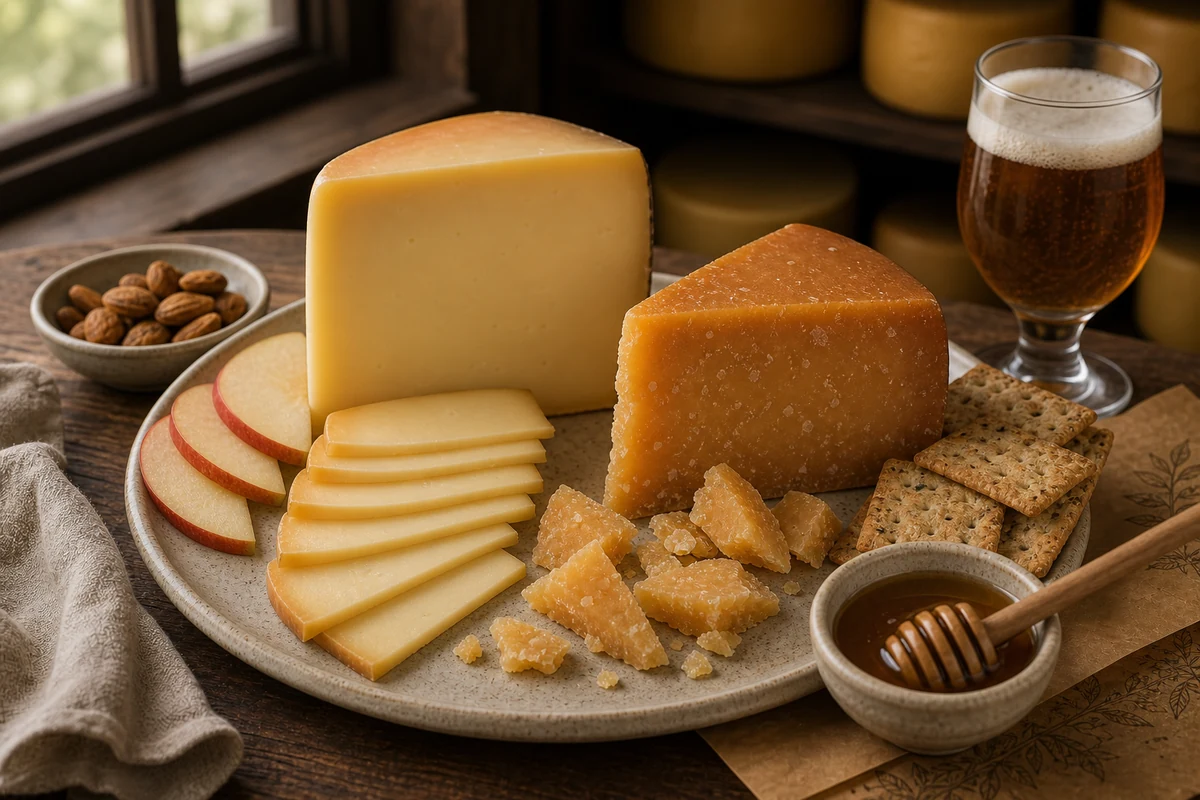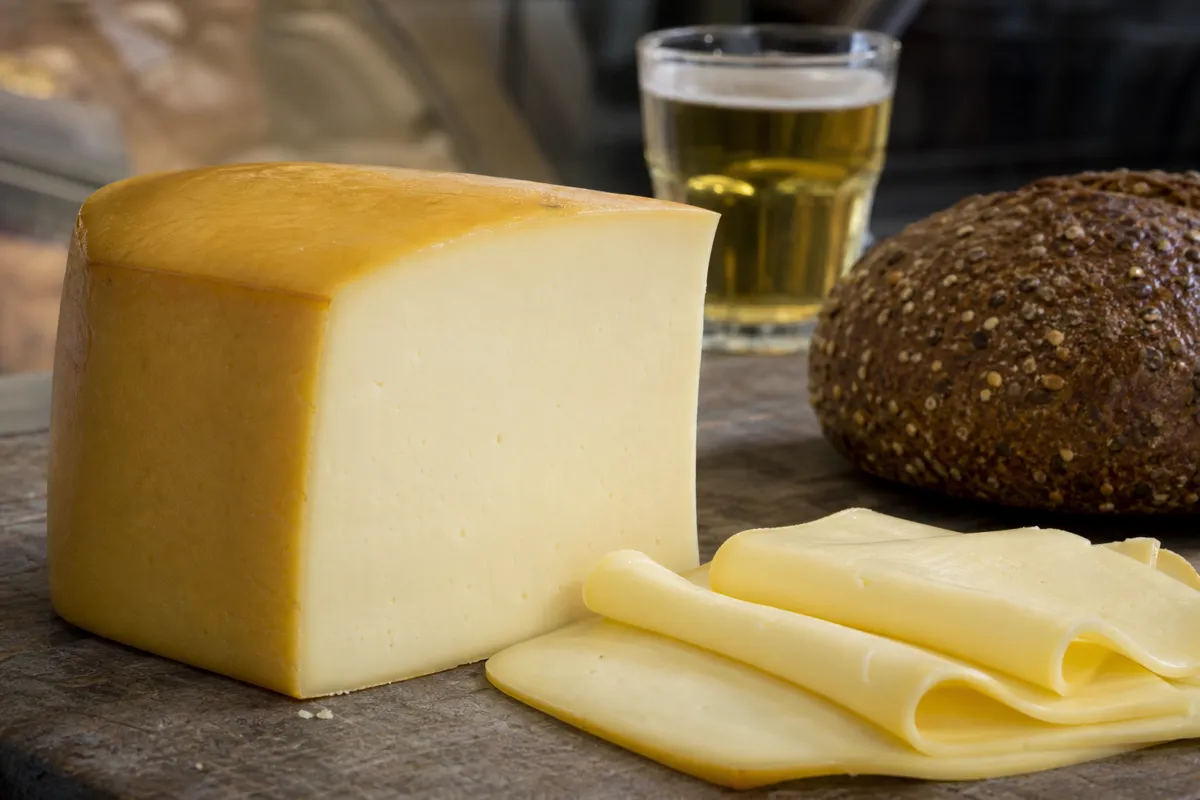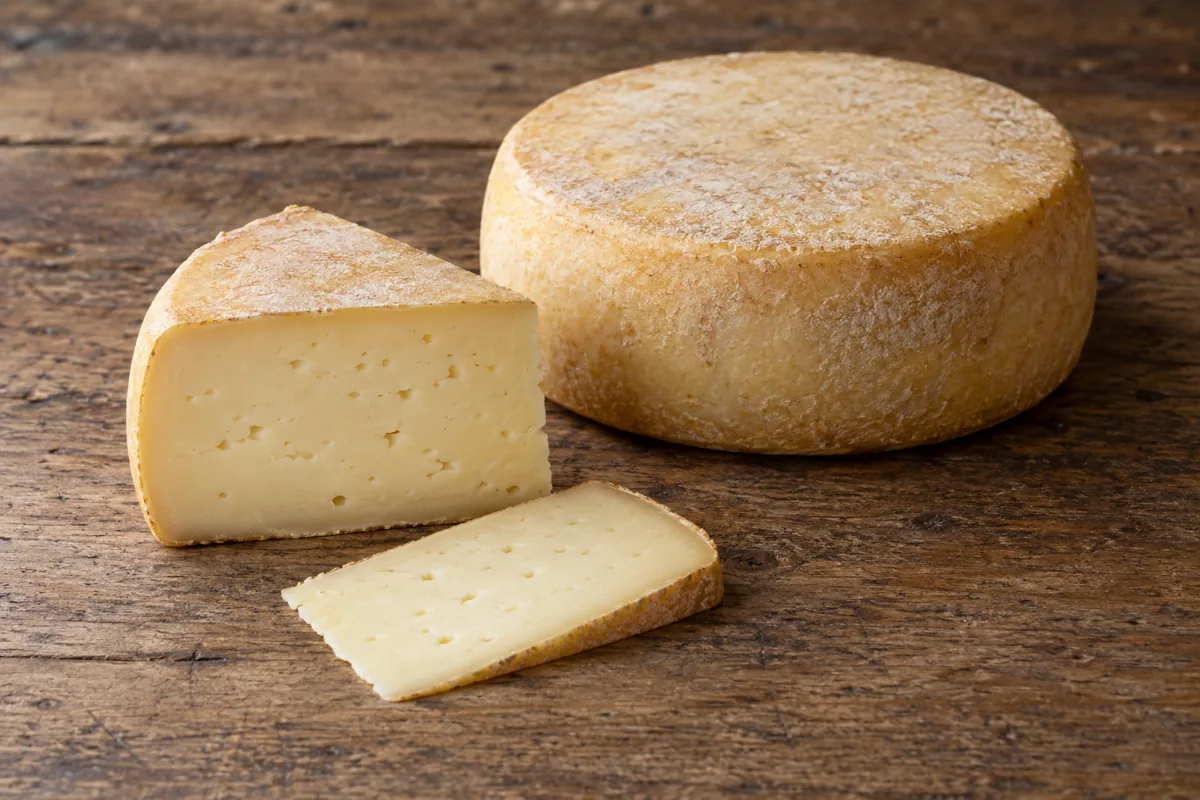
Colony cheese usually means queijo colonial, a cow's-milk cheese from southern Brazil that families and dairies make in many different ways. The state regulation calls it semi-hard, Kamimura et al. describe it as yellowish-white, mild and slightly salty, and Galbani notes a light acidity.
The name comes from the colônias, the rural settlements where mostly Italian and German immigrants adapted European cheesemaking.
The name alone tells you little about the wheel in front of you. Two research samples put average moisture nearly eight percentage points apart, and ripening runs from days to a year.
In This Article
What Is Colony Cheese?
Queijo colonial comes from Rio Grande do Sul, Santa Catarina and Paraná, and in Santa Catarina alone, where it is the main artisanal cheese, more than 15,200 family farmers make it. Slow Food Brasil estimates about 30,000 producing families and about 13,000 tonnes a year, and says no precise data exist.
A 2025 technical circular from the Rio Grande do Sul agriculture department surveyed 293 farms and found three core ingredients: whole milk, rennet and salt. The wheel was round in 60.8% of cases, and the average weight was 1.22 kg.
The state regulation defines artisanal colonial cheese as a matured cheese made by coagulating raw or pasteurized milk with rennet or other suitable enzymes, as Revista do Queijo reports. It is Instrução Normativa nº 2, published on 31 March 2023.
The regulation grew out of a study that began in 2016 with the state agriculture department, the Emater/RS-Ascar extension service and Ulbra university, and its physical-chemical and microbiological analyses covered more than 300 cheeses.
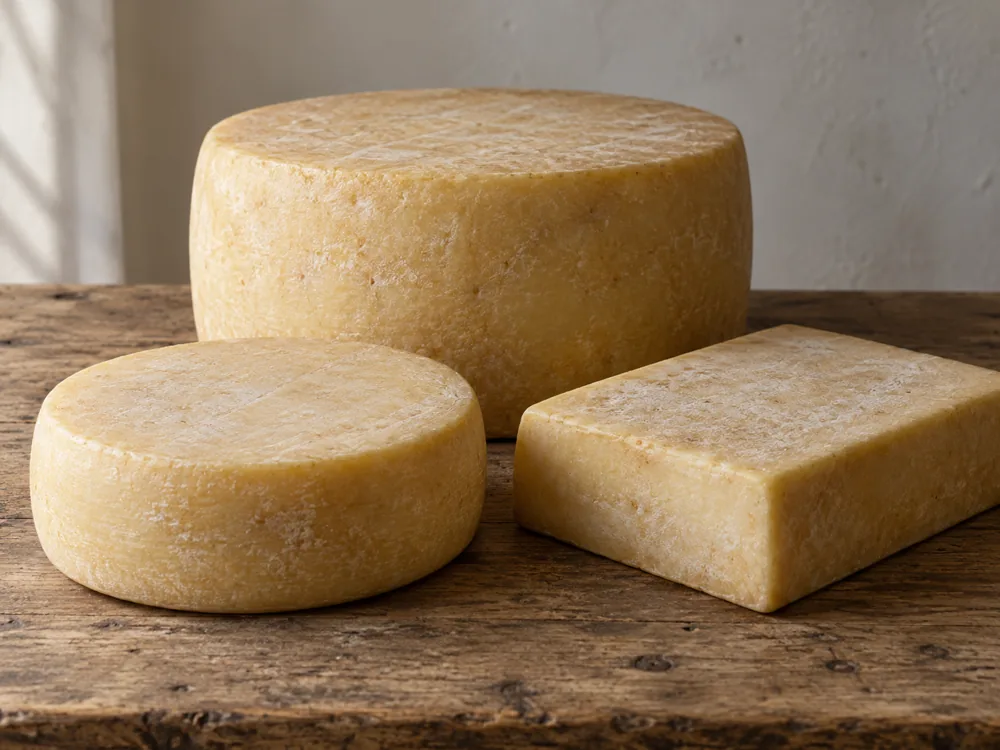
The wheel you find may be far from that average. In the circular's survey, 33.9% of cheeses were rectangular against the 60.8% that are round, and Kamimura et al. give a weight range of 0.7 to 5.0 kg.
Slow Food Brasil traces the size range to the farm press, which makes one cheese at a time in a mold whose diameter is set by the day's milk, so a wheel can weigh from one kilogram to several.
In a 2021 review, the only colony cheese among the three Brazilian artisanal cheeses granted an indication of provenance is Witmarsum Colony cheese, so queijo colonial in general is not on that list.
Why Does Colony Cheese Vary So Much?
The milk itself splits producers almost in half. Dairies buy milk and pasteurize it while families usually use raw milk from their own cows, the Rio Grande do Sul circular reports, and in its survey 47.3% of producers pasteurize.
Most makers in the survey follow a family recipe: 68% say it came from their family, and women run the cheesemaking on 87.9% of the surveyed farms.
The circular traces that family recipe to the cheese's start as a household product, made by women from raw milk for the family and bartered at local markets when there was a surplus.
The herds differ too, with Jersey cows on 41.6% of the surveyed farms, Holstein on 21.8% and Holstein-Jersey crosses on 20%.
Traditional herds were mixed rustic breeds fed on pasture plus corn, cassava and sweet-potato vines, which Slow Food Brasil says gave the cheese a distinct flavor, and balanced feed is now the usual supplement. In the circular's survey, 91.9% of producers keep their animals on pasture.
The milk also changes with season, breed and diet: in a study by Silveira Júnior et al. (2012), fat in dry matter ranged from 42.10% to 59.38% across the year.
Salt goes in at different points: into the milk on 25.4% of farms, into the curd on 56.2%, and onto the molded cheese on 14.4%.
Some farms partly skim the milk to use the cream, which the circular, citing Carvalho et al., gives as one reason fat levels differ. In that Santa Catarina study, 58.4% of informal colonial cheeses were semi-fat and 8% were extra-fat.
Colony cheese's moisture, fat and ripening time come out differently in three studies of three different samples.
| Source and sample | Moisture and fat | Ripening time |
|---|---|---|
| Rio Grande do Sul circular, 2025 (293 farms) | 46.5% moisture on average, which it calls high moisture, and 47.8% fat in dry matter in the main group of cheeses (99.3% of producers) | 9.4 days on average |
| Degenhardt et al., 2023 (129 cheeses, western Santa Catarina) | 15.4% high, 74.6% medium and 9.2% low moisture, with 62.5% full-fat and 37.5% semi-fat | 1 to 28 days in the samples collected |
| Kamimura et al., 2021 review, citing Margalho et al. (2021) | 38.9 g moisture and 28.4 g fat per 100 g on average | 7 days to 1 year, usually 30 to 75 days |
Degenhardt et al. sorted their cheeses by the Brazilian moisture bands, high at 46.0 to 54.9%, medium at 36.0 to 45.9% and low up to 35.9%, and 74.6% fell in the middle band.
That puts the circular's 46.5% average just above the high-moisture cutoff and the 38.9% average cited by Kamimura et al. inside the medium band. Neither average tells you where a given wheel falls, since Degenhardt et al. found wheels in each of the three bands.
In the circular's cluster analysis, 99.3% of producers made one profile of cheese, and the other 0.7%, two farms in the north-west of the state, made a rectangular cheese with no added salt and 32.2% fat in dry matter.
Revista do Queijo reports that the Rio Grande do Sul regulation classes the cheese as full-fat with medium or high moisture, a description that the 9.2% low-moisture and 37.5% semi-fat wheels in the Santa Catarina samples would not match.
Milk treatment, moisture band, fat class and ripening time all differ from wheel to wheel, and the name fixes none of them.
How Do Farms Make Queijo Colonial?
Farms milk twice a day and blend the refrigerated evening milk with the morning milk. Producers in the circular's survey then warm the milk to an average of 35.3°C before adding rennet, while Slow Food Brasil says the traditional start was cooler, with the milk warmed only to 30°C before the salt and rennet went in.
The milk sets about 40 minutes after the rennet goes in, and Degenhardt et al.'s pilot-plant batches also coagulated in about 40 minutes.
After that, producers cut the curd, drain the whey, mold the curd by hand, salt it, press it and ripen the cheese. Cutting tools differ: family dairies use a cheese harp (lira), while home makers use skimmers, knives or their hands.
Slow Food Brasil adds that the curd goes into cloth-lined round molds and is pressed overnight with manual presses.
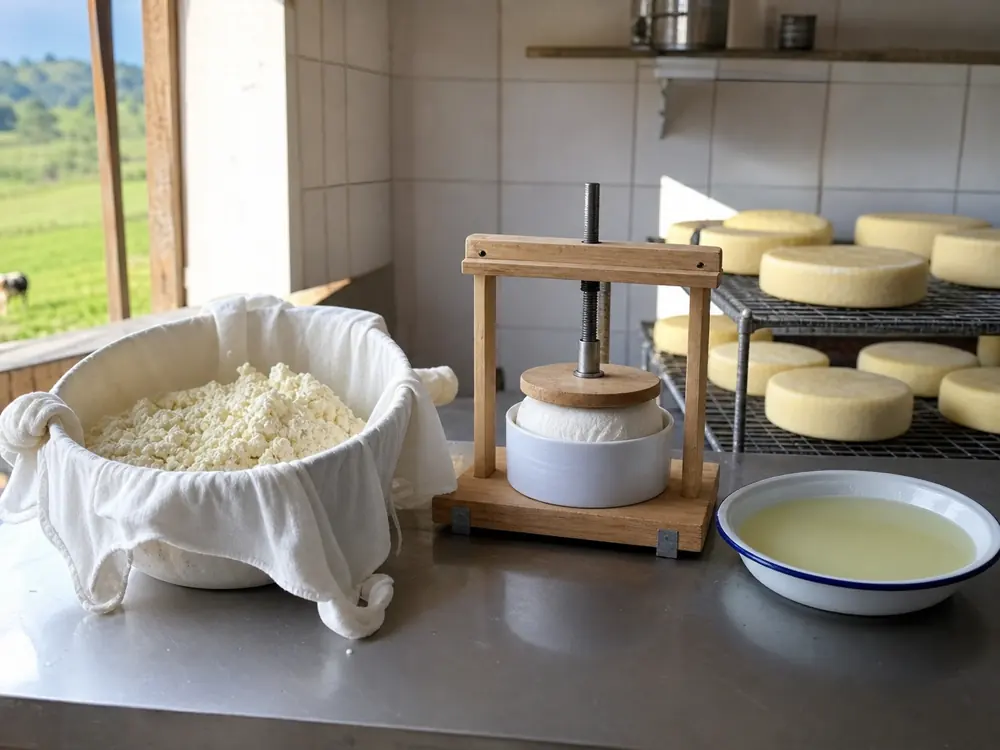
The curd is not heated in Kamimura et al.'s description, while 67.7% of producers in the circular's survey stir and heat it.
Degenhardt et al.'s pilot-plant batches followed a process they take from earlier work by Carvalho et al. The curd was cut to rice-grain size, warmed to 40°C, drained of about 30% of its whey while stirred up to 45°C, salted at 0.8% of its weight and pressed in molds for 24 hours.
Beyond milk, rennet and salt, farms add calcium chloride (18.3%), starter cultures (13.0%), yogurt (10.9%), spices (9.5%) or colorant (2.8%).
How Long Is Colonial Cheese Aged?
On the farm, colonial cheese is aged for days: the circular's farm survey found an average ripening time of 9.4 days, and Slow Food Brasil says a wheel is eaten or sold after five to 12 days.
Longer figures come from other studies. Kamimura et al. give 7 days to 1 year, with 30 to 75 days as usual, and the circular compares its own average with the 30 to 75 days that a 2012 study by Fava et al. found in colonial-type cheeses sold at an agricultural fair.
Slow Food Brasil describes what happens after those first days: the rind starts to harden, customers stop asking for the wheel unless they want cheese to grate, and the unsold wheels go on to a long ripening. That could explain why a farm survey averages days while a study of cheeses at a fair finds weeks.
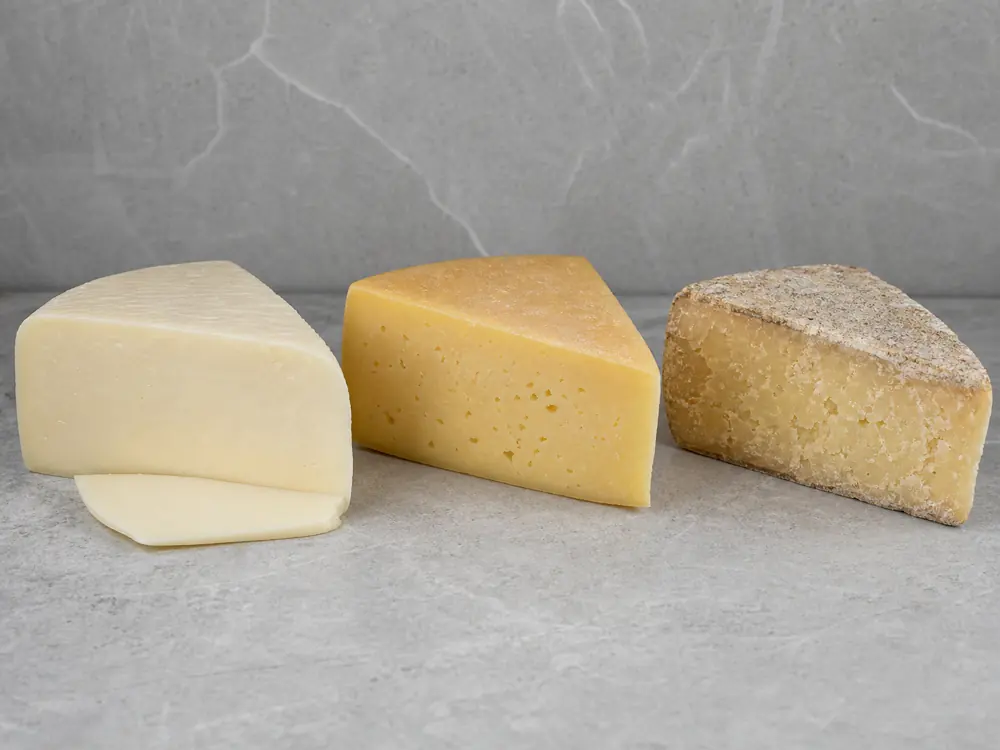
Ripening happens in climate-controlled chambers, in home refrigerators or on shelves at room temperature, the circular reports.
On five farms in Seara, Santa Catarina, Degenhardt et al. recorded average ripening temperatures from 4.0 to 22.8°C and average humidity from 61.8% to 82.0% over 28 days in autumn.
Why Do Some Wheels Have Wine or Lard Coatings?
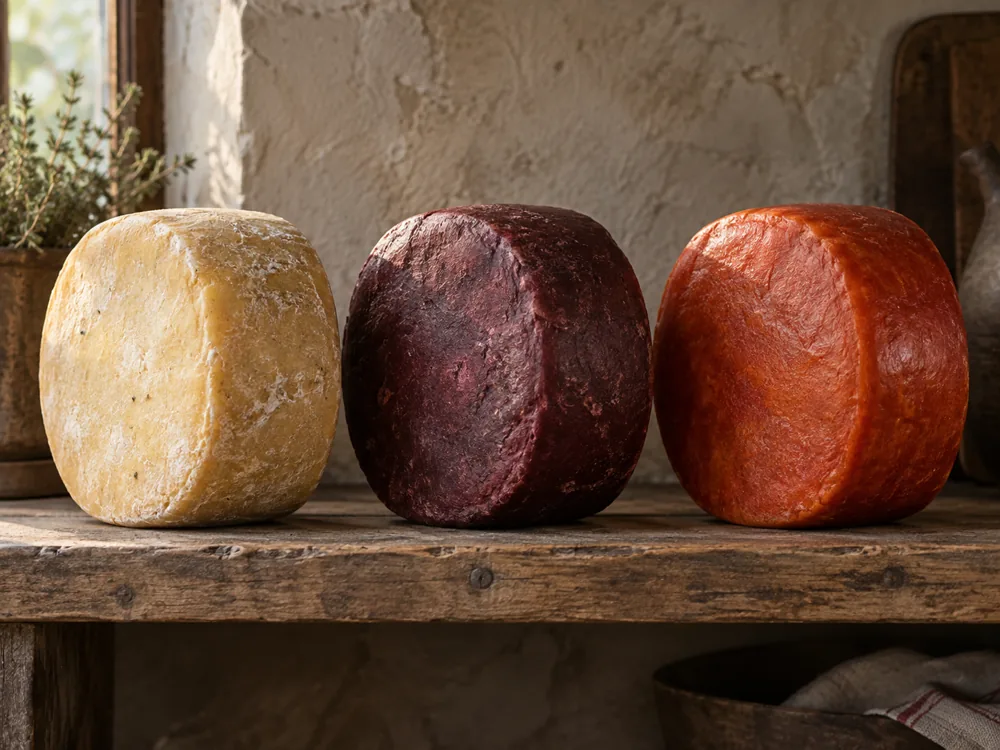
The two usual coatings keep mites from attacking a wheel during a long ripening, Slow Food Brasil says, and Kamimura et al. list the same covers: wine, pork fat, colorant and pepper.
In the wine method, a wheel whose rind has already hardened sits two or three days in a vessel of wine, usually from bordô grapes, and is turned daily so the wine soaks in and gives the cheese a darker color.
The wheel then hangs in a fruit-packing net to breathe until ripening ends, and older farmers told Slow Food Brasil that the habit began with dipping cheeses into the red-grape pomace left from winemaking.
When you see a dark wine-colored rind, then, it points to a wheel kept past the first days of ripening, the window in which wheels are usually sold, because the wine bath goes on a rind that has already hardened.
The other coating is lard mixed with colorau, a red coloring powder, and pepper, rubbed on by hand, which turns the rind reddish and, Slow Food Brasil adds, gives the wheel a striking look that draws buyers' attention.
What Does Colony Cheese Taste Like?
Kamimura et al. describe the taste as mild, slightly salty and medium spicy, with fermented-dairy and dry-fruit flavors.
The cheese is slightly acid or piquant in the state regulation's wording, and Galbani, a brand that sells a colonial cheese, describes a light acidity with a buttery note.
The older the wheel, the stronger its smell: the regulation calls the odor pleasant and says it grows stronger with maturation.
The color, texture and crust of a cut wheel are worded slightly differently by the regulation, Kamimura et al. and Galbani.
- Color: yellowish-white (Kamimura et al.), white or yellowish (state regulation).
- Texture: semi-hard, elastic and compact (state regulation), soft inside with or without eyes (Kamimura et al.), soft paste (Galbani).
- Crust: hard or semi-hard (Kamimura et al.).
Under the crust you may find a softer inside than the regulation's wording suggests. The regulation describes the whole cheese as semi-hard, while Kamimura et al. separate a hard or semi-hard crust from a soft inside.
How Does Southern Brazil Serve Colony Cheese?
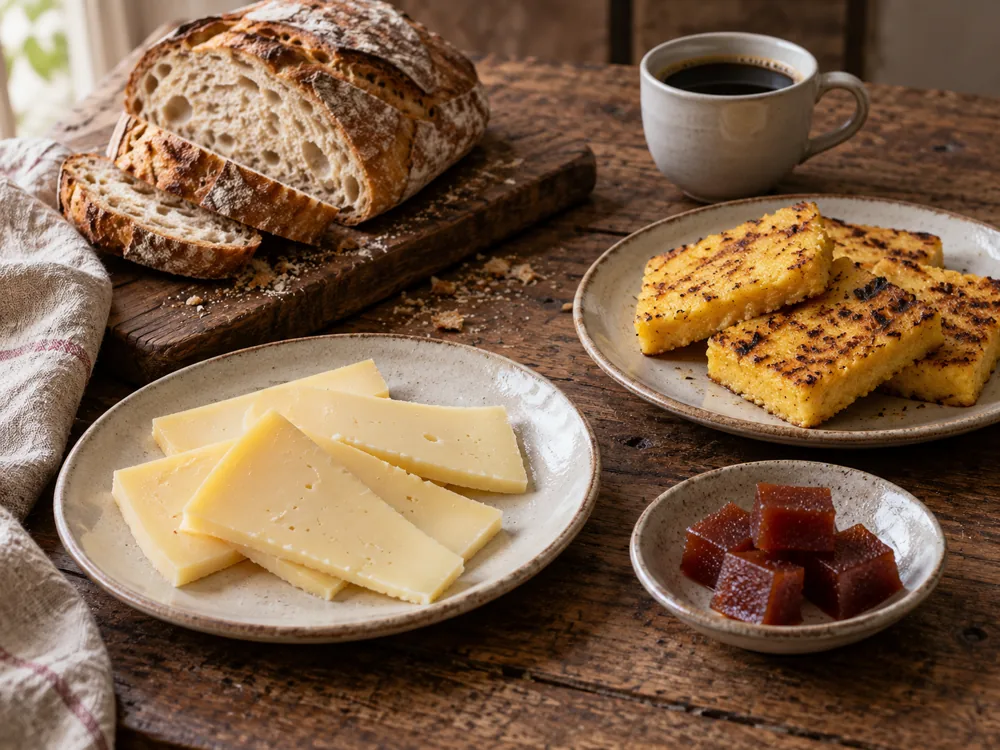
The age of your wheel sets how it is served. Younger colonial cheese, up to three months old, goes with bread, polenta and salame, according to Slow Food Brasil, while harder cheeses are grated over pasta, pizza, risotto, soups and lasagna.
For something sweet, Galbani's Brazilian site, a brand source, suggests guava paste or dulce de leche, the "Romeu e Julieta" pairing, and says the salty cheese cuts the sweetness.
It also suggests thick slices on lightly toasted hard-crust bread, and says the cheese's fat softens the bitterness of medium or dark roast coffee.
For a drink, Galbani says to choose by how mature your wheel is, naming medium-bodied reds low in tannin such as Merlot or Pinot Noir, a young Cabernet Sauvignon for a well-cured wheel, and Weiss beer for its palate-cleaning freshness.
It adds Pale Ale to balance the spiciness, and aged cachaça rested in Amburana or oak wood to match the cheese's buttery notes.
On a cheese board, Galbani adds walnuts, Brazil nuts and smoked almonds, green grapes, apple slices or fresh figs, and honey or a pepper or apricot jam for a sweet-and-sour contrast.
| Pairing | Type | Why It Works |
|---|---|---|
| Bread | Food | Slow Food Brasil pairs younger cheese with bread, and Galbani suggests toasted Italian or sourdough-style bread. |
| Polenta | Food | Slow Food Brasil lists polenta with younger cheese, and Galbani suggests finishing soft polenta with crumbled cheese. |
| Guava paste | Food | Galbani calls guava paste with colonial cheese a Romeu e Julieta pairing. |
| Strong coffee | Drink | Galbani suggests medium or dark roast coffee, saying the cheese's fat softens the bitterness. |
| Red wine | Wine | Galbani names medium-bodied reds low in tannin, such as Merlot or Pinot Noir. |
Does Colony Cheese Work in Hot Dishes?
Colony cheese melts easily when heated, and you can also fry it and serve it with bread, or use it in Italian dishes such as pasta or pizza.
Galbani adds that thick slices suit hot sandwiches, and that crumbled cheese gives soft polenta a rustic creaminess.
In a lasagna, Galbani says you can use slices in place of mozzarella or prato cheese, and it calls colonial cheese a better melter than ordinary mozzarella. It also says you can gratinate a dish in the oven or under a torch.
Should You Buy from Farms or Registered Dairies?
Most of the farms in the Rio Grande do Sul survey work outside the inspection system: 211 of 293 farms made colonial cheese for family use or informal sale, and only 82 ran a formal family dairy registered with the local inspection service.
Buying from an unregistered farm does not mean you are getting raw milk. Registered dairies are about 28% of the surveyed farms, yet 47.3% of producers pasteurize, so pasteurizing is not limited to the registered dairies.
Registration does not mark out a different cheese either: the circular found no significant difference between cheese from registered family dairies and cheese made at home on the traits it measured.
Direct sale to consumers is the main channel, with 32.3% sold at the farm, 24.5% in town and 12.4% at open markets. Retailers take 13.8% and intermediaries 4.5%.
By IBGE census figures, farms making colonial cheese in western Santa Catarina fell from 37,361 in 1985 to 3,389 in 2006, a 90.9% drop.
Slow Food Brasil blames sanitary rules unsuited to raw-milk production, along with young people leaving the farms, and says formalizing a small dairy required pasteurizing the milk, which brought the cheese closer to industrial ones.
Raw-milk colonial cheese was recognized as illegal until recently and sold clandestinely, according to Degenhardt et al.
Kamimura et al. say Brazil's Normative Instruction 30/2013 now lets traditionally made raw-milk artisanal cheeses ripen for less than 60 days. That applies when technical-scientific studies demonstrate that the shorter time keeps the cheese safe.
A study of raw-milk colonial cheese from small farms in central-southeast Rio Grande do Sul, by Benincá et al. in Embrapa's Cadernos de Ciência & Tecnologia (2022), found that 90% of samples exceeded the legal limit for thermotolerant coliforms. It named water quality and handler hygiene as the two main factors for safety.
Is Colony Cheese Safe During Pregnancy?
If you are pregnant, the answer depends on the milk treatment and on heat, because no pregnancy guidance names queijo colonial.
The NHS lists pasteurised semi-hard cheese such as Edam among cheeses that are safe to eat, along with any cheese cooked until steaming hot. It also lists pasteurised soft cheeses as safe to eat and says foods made from unpasteurised milk must be thoroughly cooked, and the CDC calls soft cheese made from unpasteurized (raw) milk, and dairy products made from raw milk, riskier choices.
The CDC lists pasteurized soft cheeses heated to an internal temperature of 165°F or until steaming hot as safer. Served cold, colony cheese is described as a pasteurized semi-hard cheese that is soft inside, a type the CDC list does not cover, so ask a midwife or doctor.
The CDC says pregnant women are 10 times more likely to get a Listeria infection, and the NHS says listeriosis can cause miscarriage or stillbirth.
How Should You Store Colony Cheese?
The CDC says to keep your refrigerator at 40°F (4°C) or below, and to refrigerate perishable food, dairy included, within 2 hours, or within 1 hour when it is above 90°F.
For an opened wheel, go by the maker's date, and ask the maker before you freeze one.
Degenhardt et al., drawing on earlier studies, report that room-temperature ripening speeds the change in the cheese's bacteria, while refrigeration delays it.
What Are the Fat, Salt and Protein Levels in Queijo Colonial?
The state circular classes its main group of cheeses, covering 99.3% of producers, as full-fat at 47.8% fat in dry matter. It measured 0.90 g of salt (as NaCl) and 0.61 g of lactic acid per 100 g.
Averages from Kamimura et al., citing Margalho et al. (2021), are 24.6 g protein, 28.4 g fat and 4.14 g carbohydrate per 100 g.
The two kinds of fat figure measure different things. Fat in dry matter leaves the water out of the count, so Kamimura et al.'s 28.4 g of fat beside 38.9 g of moisture works out to the 46.5% they report.
So a wetter wheel with the same fat in dry matter gives you fewer grams of fat per 100 g.
Moisture class changes the other numbers, with fat and salt both rising as moisture falls. Degenhardt et al. found that only the low-moisture class differed significantly in salt.
| Moisture class | Share of samples | Moisture | Fat | Salt | Average ripening |
|---|---|---|---|---|---|
| High | 15.4% | 49.5% | 22.3% | 0.8% | 8.8 days |
| Medium | 74.6% | 41.7% | 26.9% | 1.3% | 9.8 days |
| Low | 9.2% | 31.0% | 31.8% | 2.1% | 16.6 days |
The drier wheels also averaged the longest ripening at 16.6 days, yet the authors say ripening time did not directly set the class, since cheeses of different ages fell in different classes.
The circular's salt average is above the 0.25 to 0.64 g range an earlier study found. It is also above the 0.5 g reported in a 2019 study by Tavares et al.
Degenhardt et al.'s class averages of 0.8% to 2.1% sit higher still, so reported salt runs from 0.25 g to 2.1 g per 100 g depending on the study.
These datasets describe research samples, so for the wheel you buy, go by its label.
SOURCES & REFERENCES
What Else Do People Ask About Colony Cheese?
It is usually queijo colonial, a southern Brazilian cow's-milk cheese associated with Italian and German immigrant settlements. It is a family of cheeses with wide producer variation, not one factory formula.
Some is and some is not. The Rio Grande do Sul regulation allows raw or pasteurized milk, and a 2025 survey found 47.3% of producers pasteurize.
Kamimura et al. say it melts easily when heated, and Galbani calls it a better melter than ordinary mozzarella.
Kamimura et al. describe it as mild, slightly salty and medium spicy, and Galbani adds a light acidity. The state regulation says the odor grows stronger with maturation.
A Rio Grande do Sul survey found an average of 9.4 days, while Kamimura et al. report 7 days to 1 year with 30 to 75 days as usual. The age differs from wheel to wheel, so the same name covers young and long-ripened cheese.