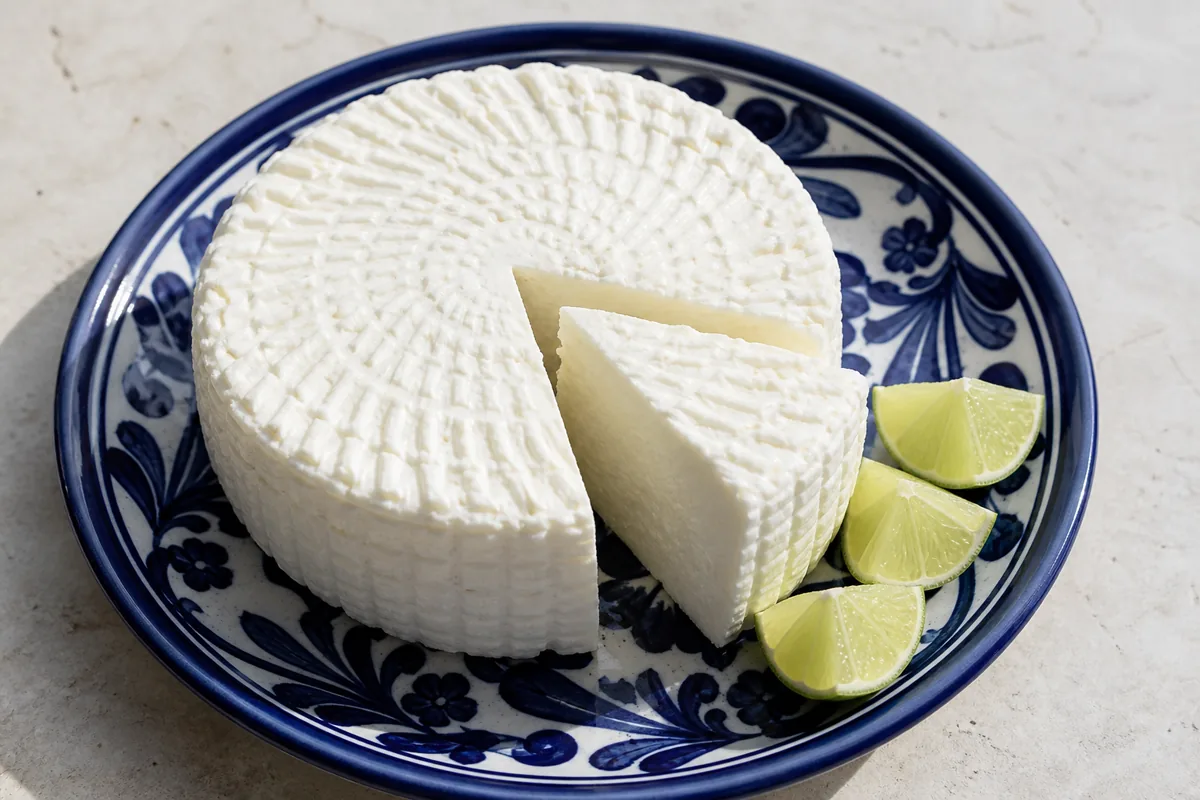
Queso panela is a fresh Mexican cow's milk cheese with a moist white paste, mild dairy flavor, and the basket pattern that gives it two other common names, queso canasto and queso canasta. The woven mold leaves a crosshatch grid across the outside, which is the quickest way to recognize it in a case.
Among Mexican fresh cheeses, it stands out because it slices and cubes cleanly, then softens under moderate heat without behaving like a stretchy melting cheese.
For most diners, Panela works cold in salads and tortas or browned in tacos and breakfast plates. Anyone pregnant, age 65 or older, or immunocompromised should avoid an unheated serving even when the package says pasteurized.
It differs from queso fresco because Panela is usually more cohesive and sliceable, while queso fresco commonly crumbles. It also differs from Oaxaca or asadero because Panela holds a piece instead of stretching into strands.
In This Article
What Is Queso Panela?
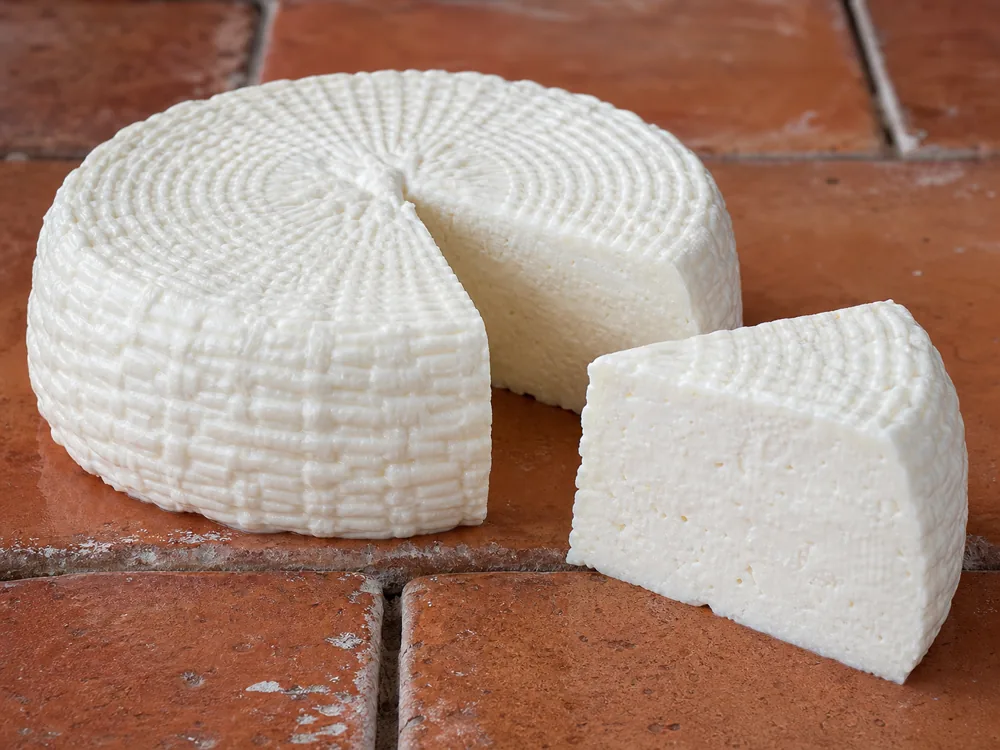
Queso panela is made by coagulating milk, draining the curd, salting it, and placing it in a basket or perforated mold. The mold allows whey to escape and leaves woven or ribbed impressions across the surface.
Mexican food regulations place Panela among fresh cheeses called frescales, alongside Canasto, Ranchero, Fresco, and several related styles. It is sold before a maturation period develops a rind or aged flavor.
Commercial Panela is commonly made from pasteurized cow's milk with rennet, salt, and cultures, though the current label determines the exact ingredients and whether the curd is lightly pressed or simply drained enough to form a moist, cohesive wheel.
Because the cheese remains high in moisture, the paste looks bright white and feels tender rather than rubbery. A clean cut should reveal fine compact curd with small openings rather than a chalky dry interior.
This structure places Panela between firm fresh cheese and a stretchy melting cheese.
The basket form helps shoppers identify Panela in crowded refrigerated cases, but it does not guarantee ingredients or quality. Read the product name and ingredient list as well as looking at the shape.
- Style: Fresh, mild, high-moisture cheese made for slicing, grilling, and light warming.
- Visual cue: Basket pattern or molded texture often visible on the surface.
- Texture: Tender and moist, but firmer than loose fresh curds or creamy spreads.
- Heat behavior: Softens and browns lightly without fully melting apart.
- Best role: A versatile fresh cheese for tacos, salads, breakfast plates, and warm dishes.
This is why queso panela solves a different problem from crumbly queso fresco. Queso fresco is often the better finishing cheese, while panela is more helpful when the cheese needs to hold together after it meets the pan or the grill.
Panela is neither the strongest nor the saltiest Mexican cheese, and its value comes from fresh mild flavor plus clean shape retention.
Wheels may be round, rectangular, or sold as smaller cut pieces, and the basket pattern can be pronounced or faint. Format changes surface area and handling but does not turn Panela into an aged cheese.
There is no developed rind to remove. The molded exterior is part of the same edible fresh curd as the center, provided the surface remains clean and within date.
Why Does Panela Hold Its Shape?
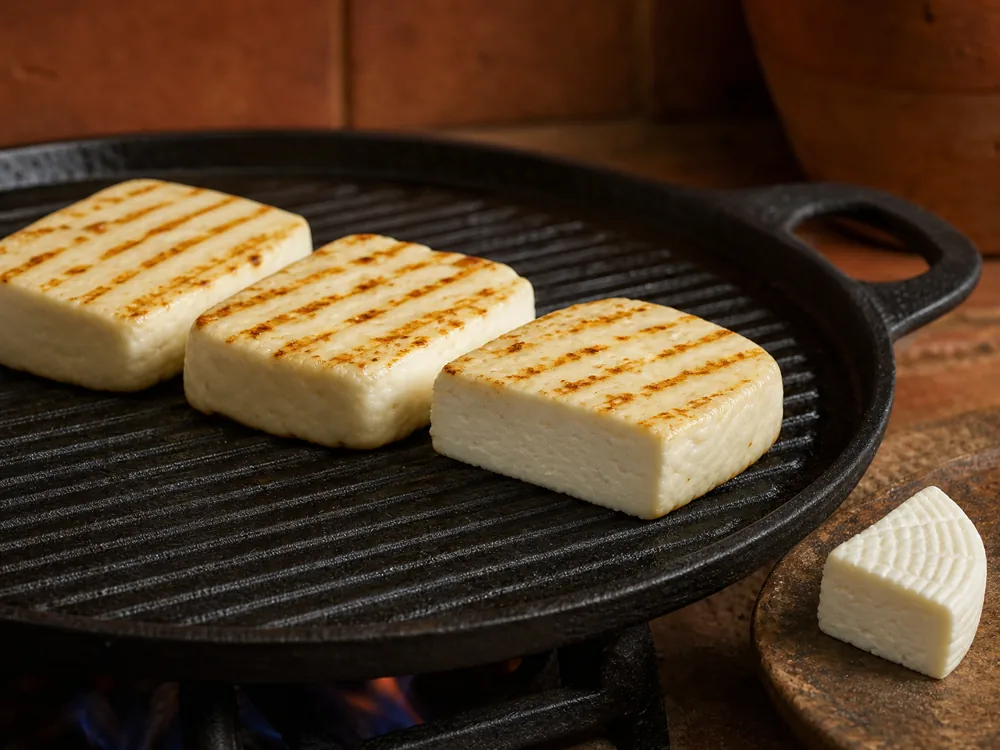
Its high-moisture curd contains a protein network that relaxes under heat without producing the long aligned strands found in Oaxaca-style cheese. Moisture can escape before the structure fully melts, especially when a slice meets a very hot pan.
This is why Panela can take grill marks and remain liftable with a spatula. The surface dehydrates and browns while the center becomes warmer and more tender.
Heat behavior varies by brand because moisture, protein, fat, and manufacturing differ. Profeco testing found wide composition ranges among products sold as Panela, so one package may soften faster or release more whey than another.
A wet slice may steam instead of browning, while a drier, thicker slice can color before it weakens.
- Cold bite: Mild, clean, and gently springy.
- Warm bite: Softer and creamier, but still structured.
- Salt level: Check the package before adding salt to a dish; brands differ.
- Melt limit: Better described as softening than as true melting.
If a recipe needs the cheese to stay visible after heating, panela is often a smarter first choice than queso fresco or mozzarella. Think softened slices, not molten pull.
Thin slices, prolonged heat, or a covered pan can make Panela slump and release liquid, so its shape retention is useful but not absolute.
Do a one-slice test whenever you change brands because the first minute in the pan reveals how much whey the cheese releases. Adjust thickness and heat from that result instead of assuming every Panela wheel cooks identically.
A slice that bends slightly while staying intact is behaving normally, while rapid bubbling, spreading, or a large puddle of liquid calls for gentler heat or a different use.
How Can You Use Queso Panela?
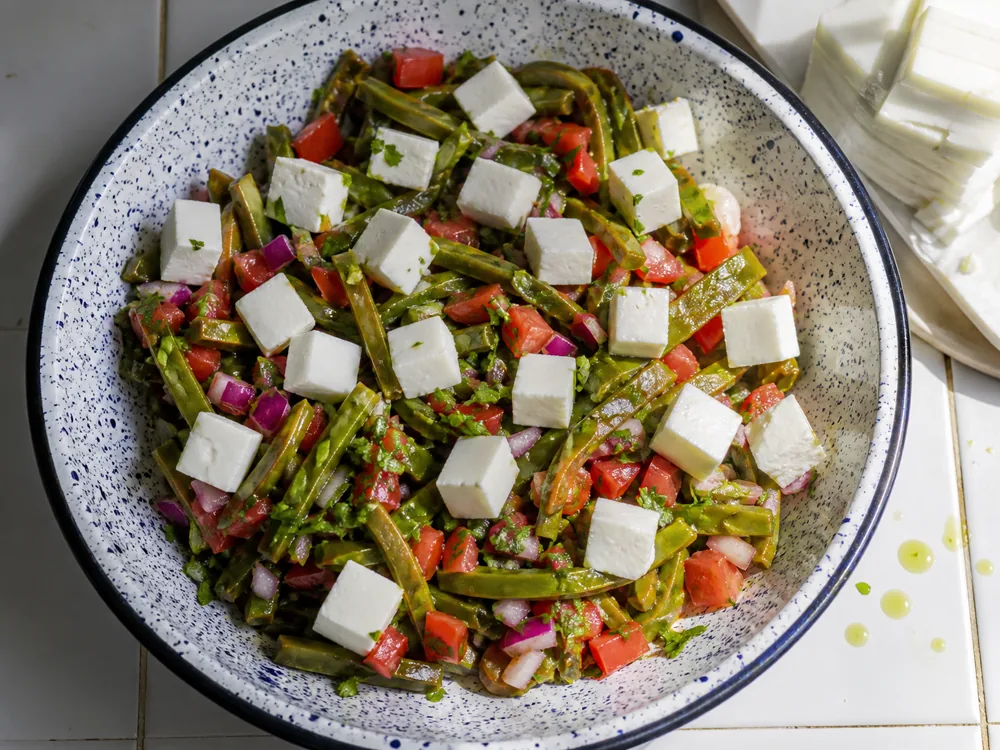
Panela is strongest where a fresh cheese needs to stay in defined pieces. It works well in salads, breakfast plates, tacos, and warm dishes where the cook wants a gentle cheese note that does not dominate the rest of the plate.
For cold dishes, cut Panela into roughly 2 cm cubes and fold them in near the end so the edges remain clean. Nopales salad, tomato and avocado salad, and grain bowls gain mild dairy flavor without the cheese dissolving into the dressing.
For tortas and sandwiches, use thin slices straight from the refrigerator, where the cheese supplies moisture and protein without overwhelming chiles, beans, or pickled vegetables.
- Salads: Panela adds fresh-cheese substance without the crumbly scatter of queso fresco.
- Tacos and tostadas: Slices or chunks can warm slightly without disappearing into the filling.
- Breakfast plates: Lightly griddled or warmed panela works nicely with eggs, beans, and tortillas.
- Simple grilling: The cheese can take a gentle pan or grill treatment, though it is softer and less dramatic than true frying cheeses.
For quick lunch builds, Panela can also work as a sandwich cheese when you want fresh dairy presence without a heavy melt. Keep the slice cold if clean layers matter.
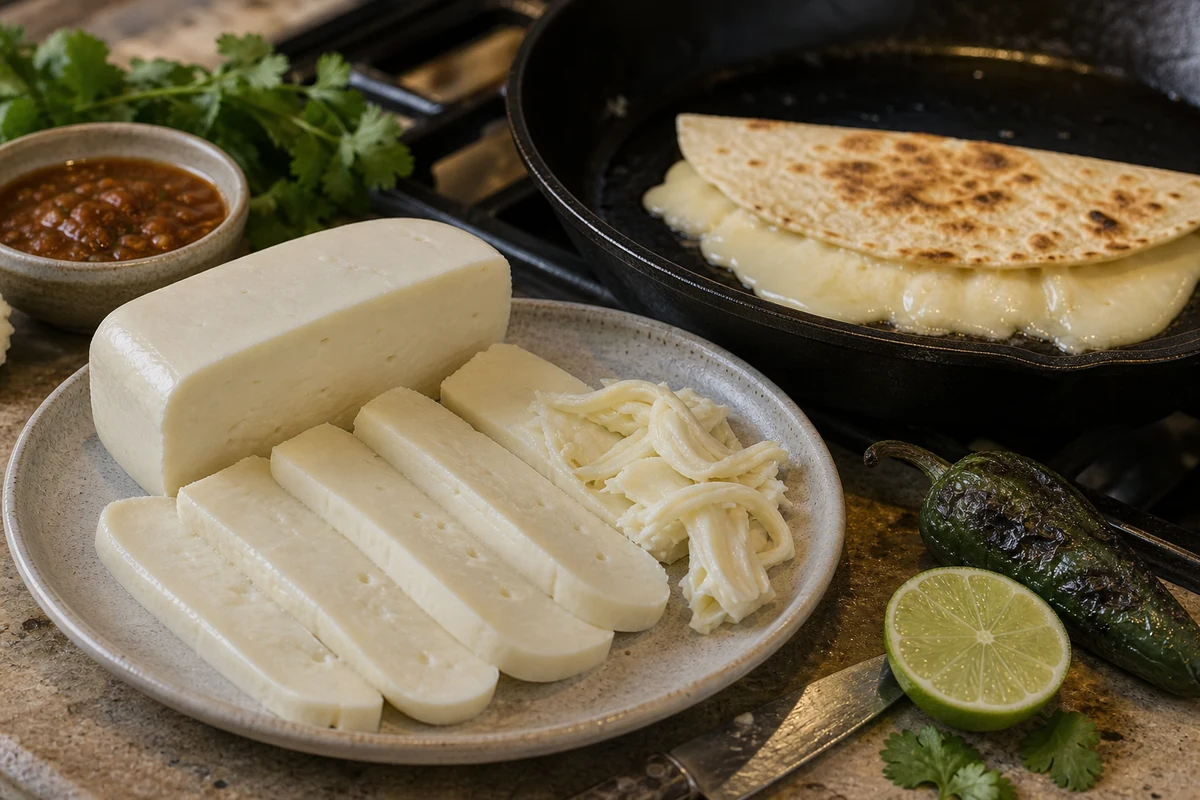
If the real goal is a stronger melt, elastic asadero or quesillo usually fits better.
If browning a slice without a breaded crust is the priority, queso de freir is firmer and more predictable. Panela gives a softer center instead.
If the goal is a salty crumble, dry, salty Cotija is cleaner.
Cold Panela also accepts marinades without losing its shape. Dress cubes briefly with lime, herbs, chile, or olive oil, but add salt only after tasting because packaged cheese already contains varying amounts.
Do not expect Panela to grate like Cotija or whip into a spread. Its moist cohesive texture is designed for pieces that you can pick up with a fork, tuck into a tortilla, or layer in a sandwich.
How Should You Cook Queso Panela?
Gentle heat is the key phrase. A hot pan can color the surface, but aggressive cooking can make the cheese weep moisture before the center turns pleasantly tender.
Pat slices dry, cut them 1 to 1.5 cm thick, and preheat a lightly oiled heavy pan. Give the first side enough uninterrupted contact to color before turning it with a thin spatula.
Cook in a single layer because crowding traps steam and makes the cheese release water, then lower the heat or use a thicker piece if the first test slice fails to lift cleanly before its center becomes fragile.
On a grill, use a clean grate and broad slices that cannot fall between the bars. A grill basket or comal is safer for small pieces.
Add acidic salsa, lime, or tomatoes after browning because early liquid slows surface color. Serve the cheese promptly while the center remains warm and tender.
- Grill use: The cheese can take surface heat well enough to color lightly while still holding a recognizable slab or slice.
- Taco use: Warm cubes or slices add gentle richness without the heavy pull that would dominate the filling.
- Salad use: You can sear or warm panela and still keep clean pieces that sit well against greens and beans.
- Buyer consequence: If you actually want stretch, choose a different cheese. Panela's value is its restraint under heat.
For oven dishes, add Panela late enough that it warms without drying around the edges. Broiling can color the top, but watch closely because the surface moves from pale to scorched faster than the moist center changes.
Cook only what the meal needs, especially when serving someone at higher risk from Listeria. FDA advises against keeping opened queso fresco-type cheese as leftovers for that group.
Panela vs Queso Fresco
Shopping for queso panela gets tricky because stores may place it beside queso fresco, frying cheese, or generic grilling cheese even though those products solve different cooking problems, so match the cut and cooking method instead of relying on shelf position.
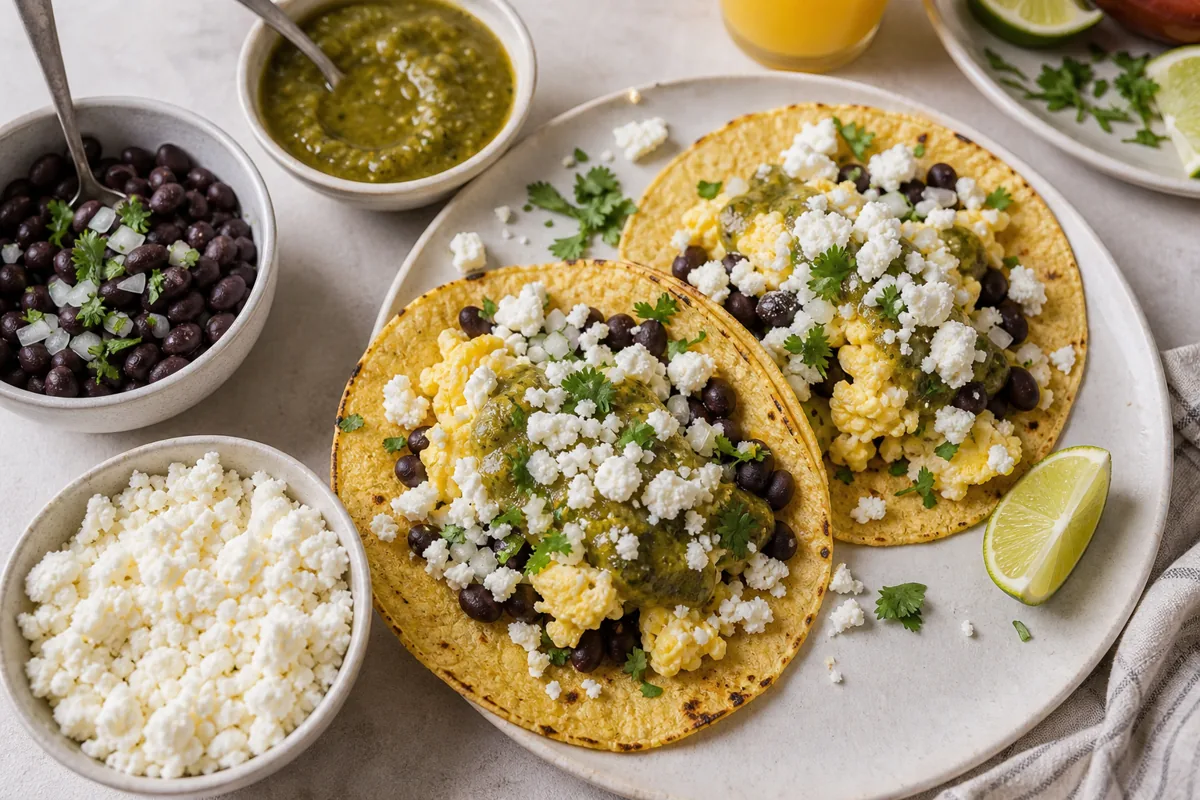
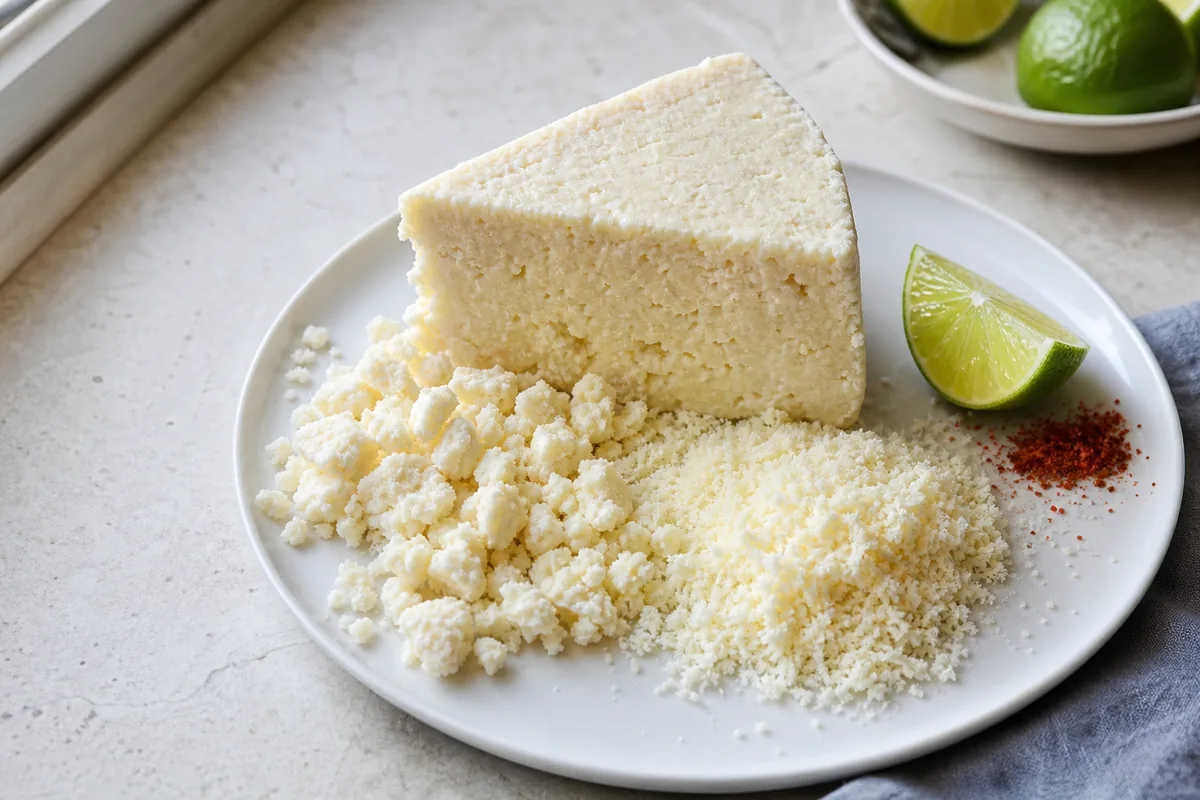
Panela is usually smoother and more cohesive than queso fresco, with enough structure for slices and cubes. Queso fresco tends to break into soft granules that work well over beans, enchiladas, salads, and soups.
Neither style has one fixed national recipe, so texture can overlap between producers.
Use queso fresco when the dish needs a fresh crumble, and choose Panela when clean slices or cubes matter.
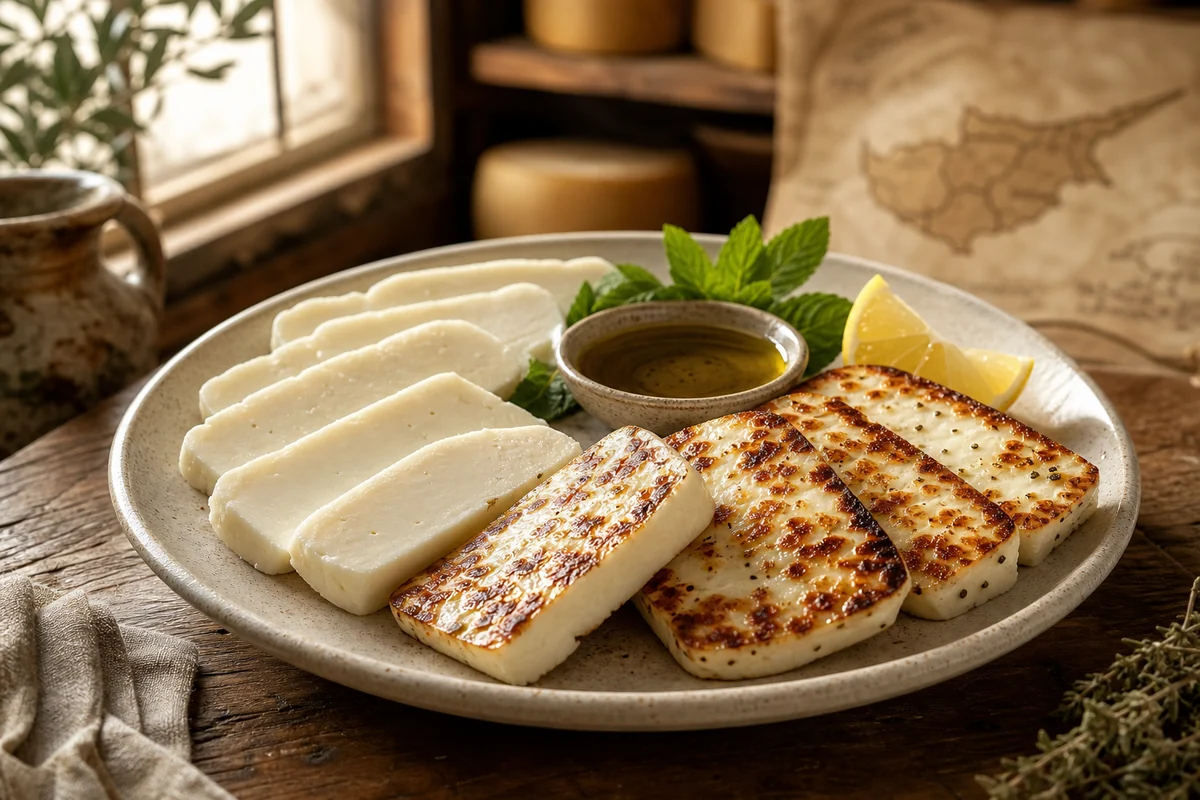
Queso de freir and halloumi are firmer and saltier choices for strong searing. Oaxaca and asadero move in the opposite direction because they stretch and melt.
Panela sits between those behaviors, offering a tender bite that can warm without immediately losing its cut form.
- Basket-marked rounds: These usually signal classic Panela more clearly than generic white-cheese labels do.
- Crumbly white cheese: This points you closer to queso fresco than to panela, even if the display groups them together.
- Firm frying cheese: This points you toward a sear-first use rather than a warm-soft holding shape.
- Label lesson: Read the product name and ingredients, then match the texture to the dish.
When the label is vague, buy the smallest package first and test one slice before committing the rest to a recipe.
Compared with queso fresco, Panela usually gives you a smoother cut and less scatter in the finished dish. Compared with queso de freir, it gives you a softer center and less aggressive browning.
How Do You Buy and Store Queso Panela?
Panela's basket shape gives you the first clue, but moisture tells you whether the cheese is still in good condition. The surface should look fresh, not dried into a rubbery shell.
Because panela is unaged and high in moisture, it behaves more like a planned fresh purchase than a long-storage cooking cheese. Buy it for the meals you already have in mind.
Read the front name carefully because Mexican labeling rules distinguish cheese from imitation products, and Profeco has documented Panela-style products made partly or entirely with vegetable fat that can differ in flavor, nutrition, and heat behavior.
The ingredient list should begin with milk for a conventional Panela, followed by permitted cheesemaking ingredients such as cultures, rennet, calcium chloride, and salt. Added starch, caseinates, vegetable fat, or flavorings should be disclosed rather than assumed.
Check the seal, printed date, and refrigerator temperature at the store. Avoid a swollen package, extensive pooled liquid, sour smell, slime, or discoloration.
A little whey inside the package can be normal for fresh cheese, but the wheel should not float in cloudy liquid or shed a sticky film.
Profeco has tested Panela and Panela-style products and found differences in labeling, moisture, protein, fat, and sanitary quality. The specific package matters more than an average for the style.
A moister wheel can release more liquid in the pan, while the declared fat and protein values help you compare products on the same serving basis.
Packages labeled reduced-fat or lactose-free make separate formulation promises, and imitation products must identify themselves rather than using the plain cheese name without qualification.
Keep the original sealed package at or below 40°F (4°C), and follow its printed date. If you open it, use a clean knife and follow the maker's directions.
FDA advises people at higher risk from Listeria not to keep opened queso fresco-type cheese as leftovers. Discard any package that is swollen or shows spoilage.
- Good surface: Clean, white, moist, and gently springy, with no sour puddling in the package.
- Weak surface: Dry edges, trapped liquid, or a sharp smell usually mean the cheese has lost its best texture.
- Cutting cue: Slices should hold together without crumbling like queso fresco or stretching like Oaxaca-style cheese.
- Use window: Plan on quick salads, tacos, breakfast plates, or gentle grilling after opening.
Do not freeze Panela when clean slicing matters because ice crystals can make the thawed paste wet and crumbly. Frozen leftovers are better reserved for cooked dishes.
When transporting Panela, use an insulated bag and return it to refrigeration promptly because later cooking does not undo poor temperature control during a long warm errand.
What Can Replace Queso Panela?
The best substitute depends on whether you need gentle heat resistance, fresh mild flavor, or simple sliceability. Very few cheeses match all three at once.
Queso fresco is the closest flavor substitute for cold Mexican dishes, but expect more crumbling and less shape retention. Use it as a topping rather than forcing it into a grilled-slice role.
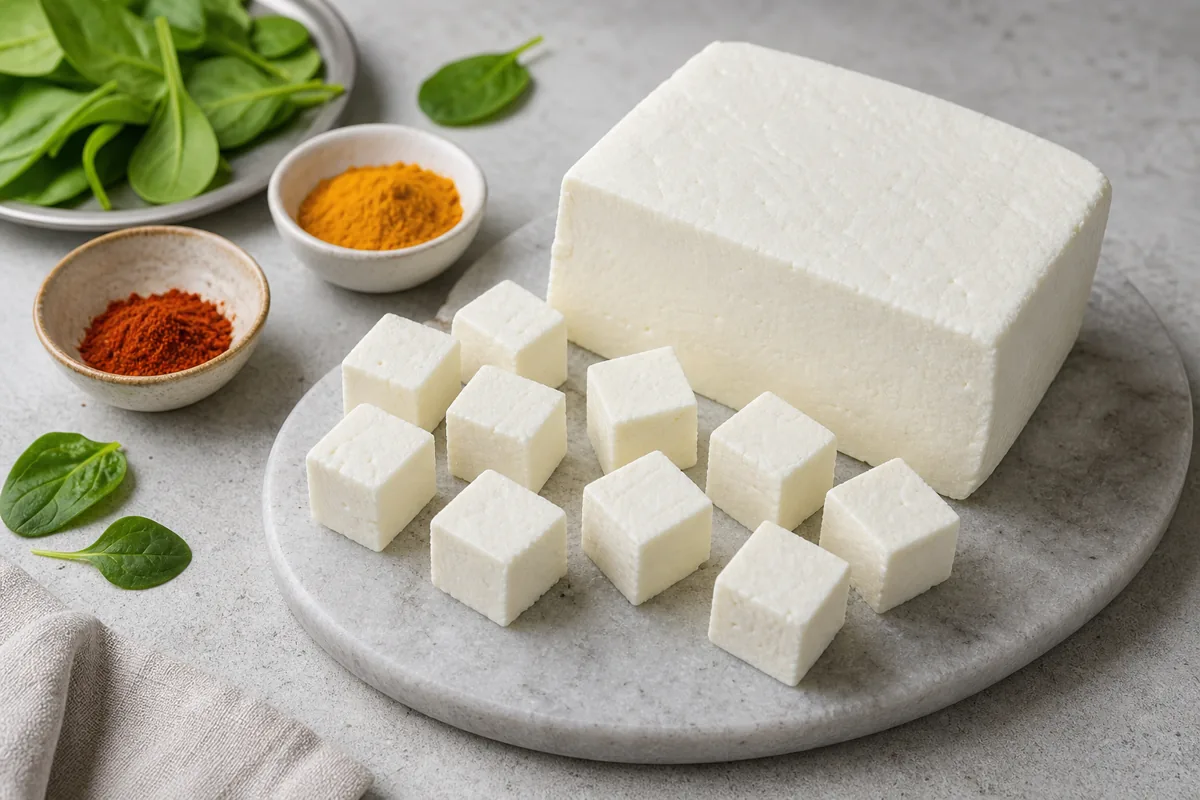
Paneer is the most practical substitute when a mild cube must survive heat, though its drier, less salty, and firmer bite suits cooked dishes better than cold salads.
Halloumi and queso de freir suit hard searing, but both are denser and usually saltier than Panela. Use thinner portions or reduce other salt in the dish.
Low-moisture mozzarella can replace mild dairy flavor in a sandwich or casserole, though it will melt and stretch rather than hold a clean Panela shape.
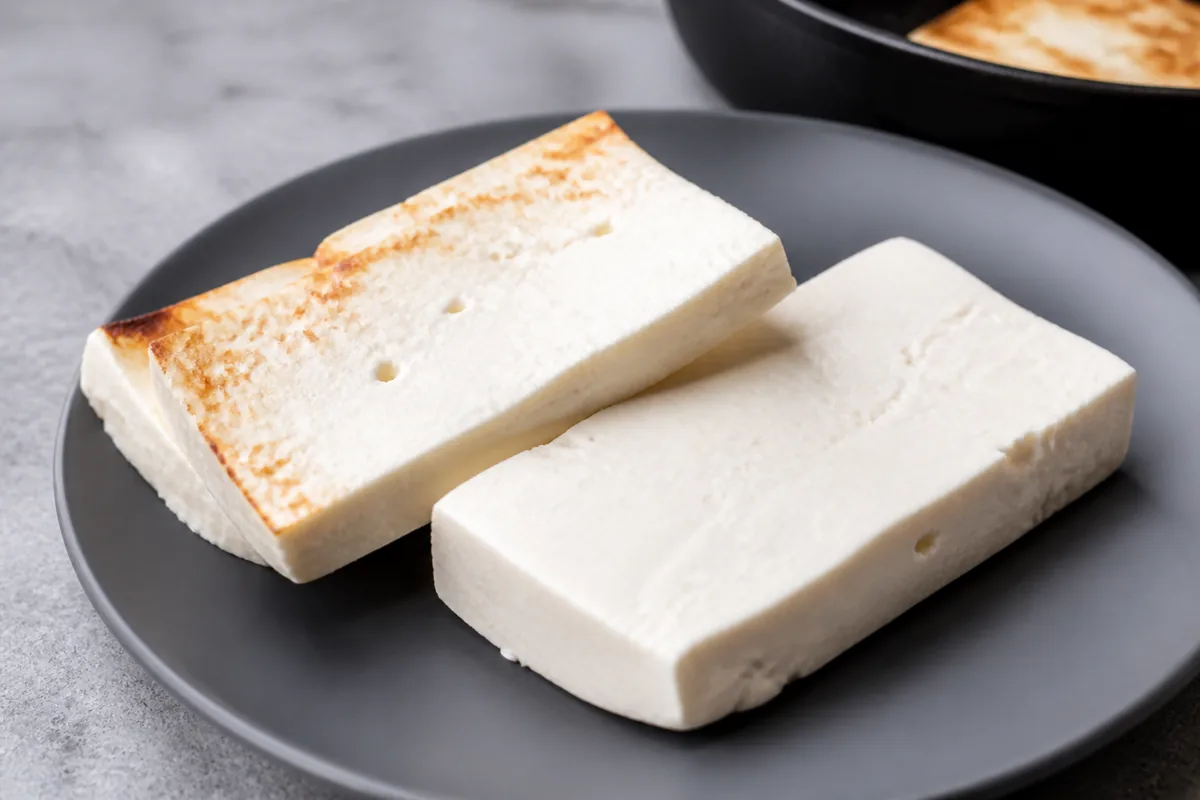
For a cold nopales salad, queso fresco changes the dish least in flavor, though it will distribute as crumbles rather than cubes. Firm tofu copies the geometry but not the dairy flavor and should be treated as a separate nondairy adaptation rather than a direct cheese equivalent.
For grilled tacos, paneer gives the cleanest intact cube, while halloumi supplies stronger browning and salt. For a torta, fresh mozzarella can provide a mild moist slice if extra melt is acceptable.
- Queso fresco: Best when the real need is fresh Mexican cheese flavor and the heat resistance matters less.
- Paneer: Best when you need firmer structure and lower salt, even though the texture is drier and less tender.
- Halloumi: Best when the dish truly needs harder searing or grilling strength rather than soft fresh-cheese behavior.
- Quesillo: Best only when the recipe wants fresh cheese softness and some melt, not the sliceable hold of panela.
- Ricotta salata slices: Best when the dish can move toward firmness and salt instead of soft warming.
Choose the substitute by the behavior the dish needs because no alternative copies freshness, tenderness, and gentle heat resistance at once.
Full-stretch cheese behavior matters when the dish needs pull instead of Panela's hold-its-shape softness.
Match the substitute to the cut as well as the recipe because a block suitable for cubes may not produce broad slices without breaking.
Is Queso Panela Pasteurized?
Commercial Queso Panela is commonly made with pasteurized cow's milk, but check the package rather than assuming every wheel is made the same way. Pasteurization is necessary for safer production, yet it does not make an unheated fresh cheese risk-free.
Pasteurization reduces pathogens in the milk but cannot protect cheese from contamination introduced during cutting, packaging, transport, or home handling.
Panela's nutrition varies with moisture and formulation. Profeco's product testing shows why values from one brand should not be copied onto another.
Those ranges explain why reduced-fat, lactose-free, imitation, and conventional Panela products are not nutritionally identical, so the package in your hand is more useful than one generic database entry.
Compare calories, protein, fat, saturated fat, sodium, and serving size on the package you are actually buying.
Panela contributes useful protein and calcium, but a thick grilled portion can exceed the small serving printed on the label. Oil, tortillas, beans, salsa, and other parts of the meal also change the final nutrition.
- Protein: Compare the declared amount for equal serving sizes when choosing between products.
- Salt: Check sodium on the label before adding extra salt to the dish.
- Fresh-cheese caution: Keep the sealed cheese cold, and do not assume pasteurization prevents contamination after cheesemaking.
- Best in short runs: The cheese is most enjoyable when used soon after opening, while the surface still feels fresh.
FDA includes Panela among soft queso fresco-type cheeses. In the United States, people who are pregnant, age 65 or older, or have weakened immune systems should avoid serving it unheated, even when the milk was pasteurized.
If they choose to eat it, FDA advises cooking queso fresco-type cheese as part of a dish to 165°F (74°C).
Anyone with a milk-protein allergy must avoid conventional Panela, while people managing lactose intolerance should check the specific label and their own tolerance.
A golden surface on a grilled slice does not show that its center reached 165°F. A food thermometer gives a more reliable check than color when serving someone at higher risk.
The same handling protects quality because Panela tastes best while the surface is moist, the slices look clean, and the mild dairy flavor has not turned sour.
Discard the cheese if you find mold not expected for the style, persistent sour odor, slime, a swollen package, or an unknown break in refrigeration. Searing the surface does not correct spoilage in a high-moisture fresh cheese.
SOURCES & REFERENCES
What Else Do People Ask About Queso Panela?
These are the quick shopper questions that usually come up when someone sees panela next to queso fresco.