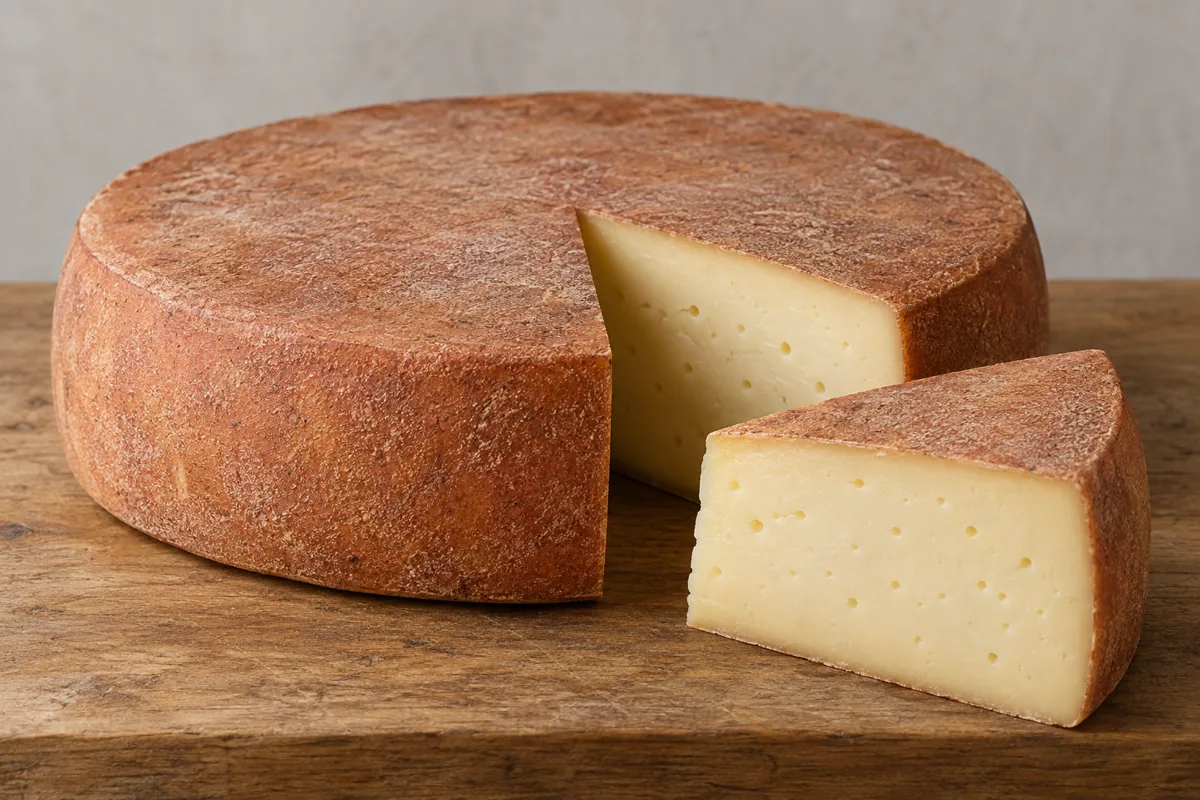
Aarewasser is a young raw-milk Swiss cheese made at Chäsi Eyweid in Zäziwil and washed with water from the Aare River while it ripens. The treatment gives the small wheel a gray-brown rind around a tender, buttery paste with meadow, nut, and mushroom notes.
It is an unusual cheese, so the useful questions go beyond its name. The age of the wheel, the rind advice on its label, and whether you plan to serve it cold or melt it all change what you should buy.
In This Article
What Is Aarewasser Cheese?
Aarewasser is a Swiss semi-hard cheese made from silage-free raw cow's milk. Jumi describes it as a young, creamy cheese with plenty of character, while current sellers list a supple or sliceable texture rather than the dry body of a long-aged Alpine wheel.
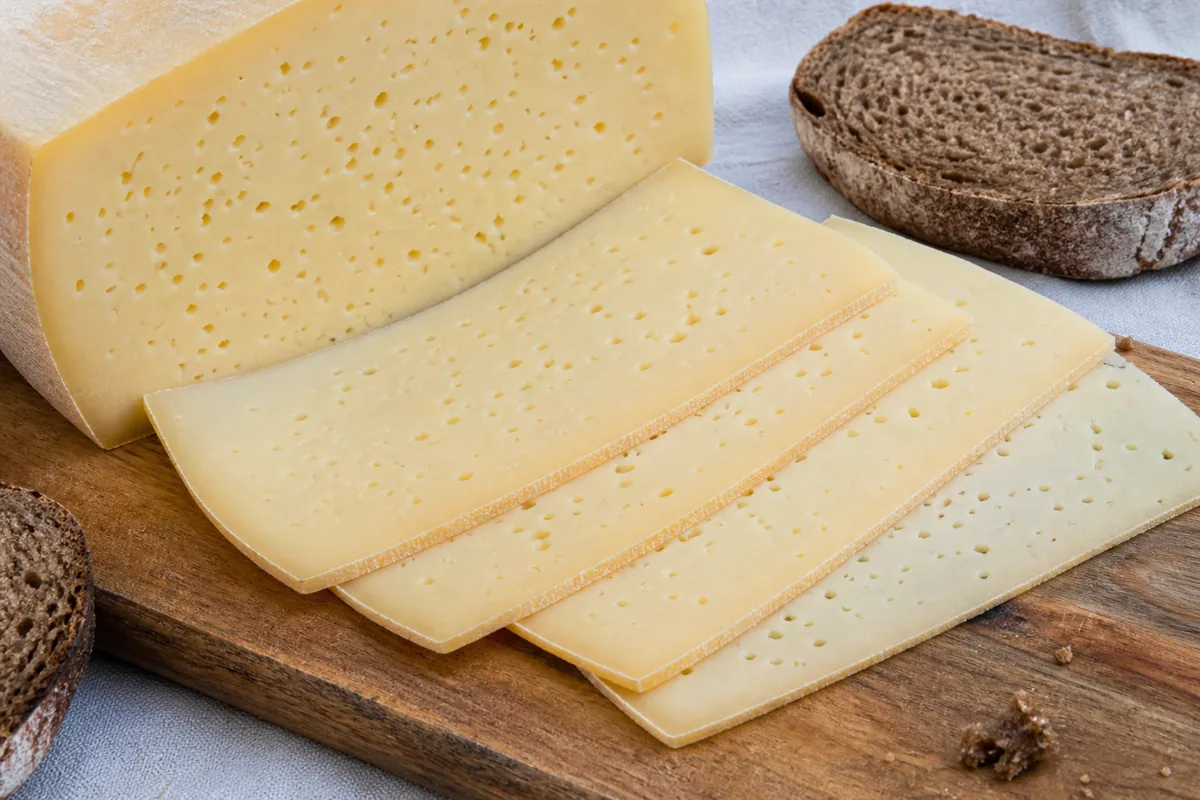
A finished wheel weighs about 6 kilograms and carries at least 55 percent fat in dry matter. The paste is ivory to light yellow with small round openings, not the large eyes many shoppers associate with Emmental.
Chäsi Eyweid makes the cheese in the municipality of Zäziwil in the canton of Bern, and Jumi markets it.
It has no broad AOP production zone, so the dairy, the milk from two valleys, and the Aare-water rind care define the product more precisely than a protected regional specification would.
Why Is It Named After the Aare River?
The name began with a practical identity problem at the dairy. Farmers supplied milk from both Emmental and Aaretal, so calling the cheese a product of only one valley left out part of its actual milk shed.
Jumi's account says cheesemaker Urs created Aarewasser after debate over which valley the dairy belonged to. The solution worked because the Emme flows into the Aare, and the Aare links several Swiss regions before reaching the Rhine.
The name therefore connects three real facts: two milk valleys, one dairy, and the river water used on the rind.
It does not prove that river minerals create a measurable flavor, so the more defensible claim is that Aare water shapes the cheese through repeated surface care.
The river water is therefore part of the affineur's routine and the product story, not a seasoning that can be tasted separately. Milk quality, cultures, moisture, salt, temperature, and repeated handling still do most of the technical work.
The local water connection is part of the cheese's identity, but the published records do not isolate river minerals as the cause of its butter, meadow, or mushroom notes.
How Does Aare Water Shape the Rind?
Production starts with raw milk from cows fed without silage. Käsewelten reports that the farms milk twice a day and deliver to the dairy once or twice daily, which keeps the milk supply closely tied to the surrounding farms.
The same source says the cows receive natural feed, much of it grown on their farms, with daily summer pasture and regular winter exercise. Those details explain the dairy's emphasis on regional milk without turning the feed into an unsupported flavor claim.
During ripening, workers rub the wheels by hand with fresh Aare water.
The schedule begins daily, then drops to about twice a week after the second month as the natural surface develops.
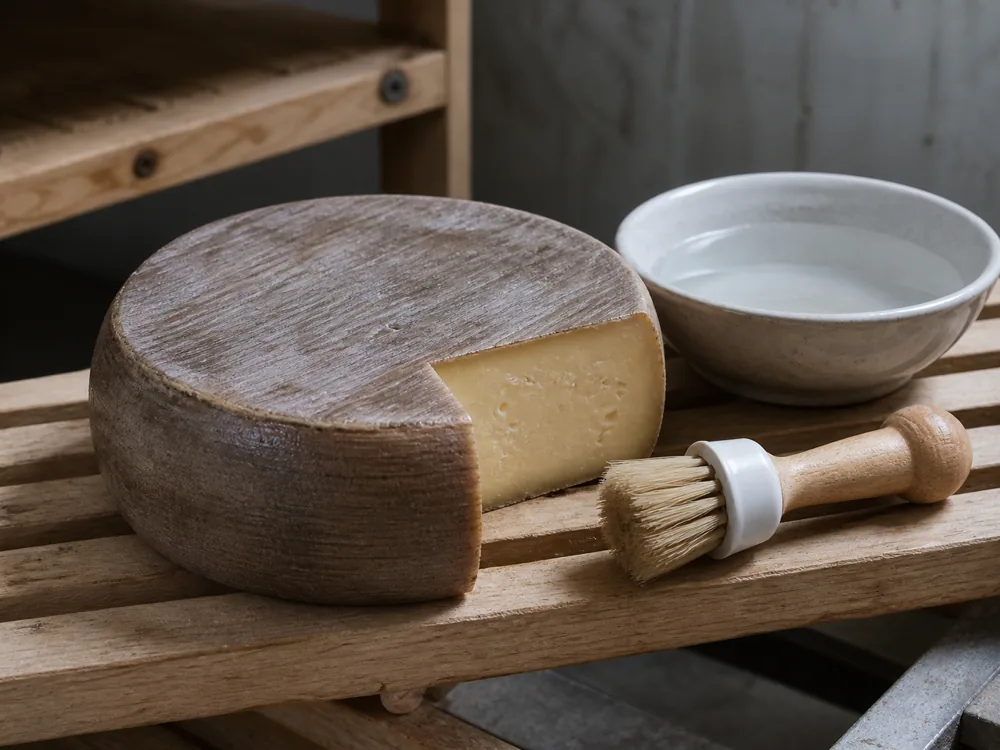
Weather and ripening time can move the rind from light brown toward stone gray. That gray surface belongs to the style, while the interior stays pale and finely open rather than developing a blue vein or a white bloomy coat.
Age statements need context.
Jumi material and current retail listings describe Aarewasser from two to three months, while Käsewelten gives a three-to-six-month range, so the label on the cut in front of you is more useful than one universal number.
The washing schedule and selling age should be read together. A wheel may receive intensive early care, less frequent later washing, and then leave the cellar at different points depending on the batch and buyer.
That variation explains why two legitimate cuts can differ in rind color and aroma. It does not justify slime, sour seepage, or a paste that has dried away from the rind.
What Does Aarewasser Taste Like?
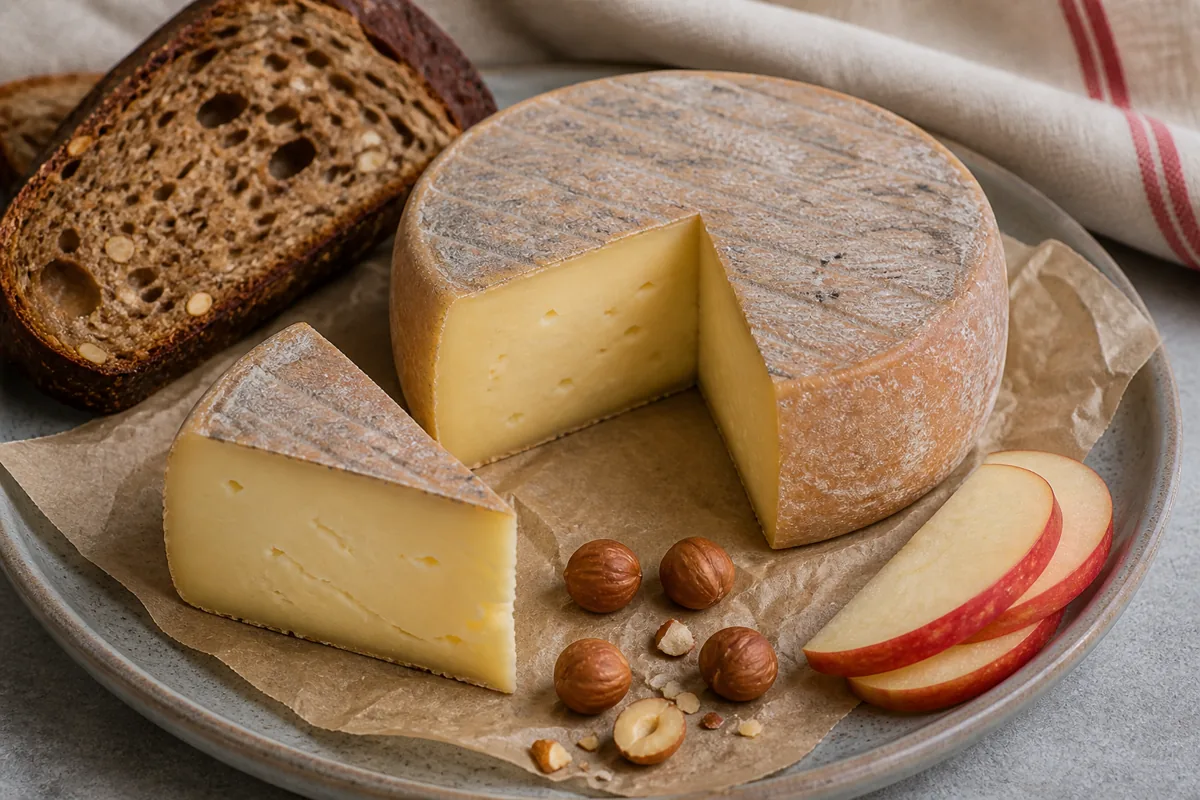
Aarewasser tastes buttery and lightly sweet first, followed by nuts, spring meadow, gentle mushroom, and a savory finish. The rind brings more aroma than the paste, but a sound wheel should not taste harsh or aggressively funky.
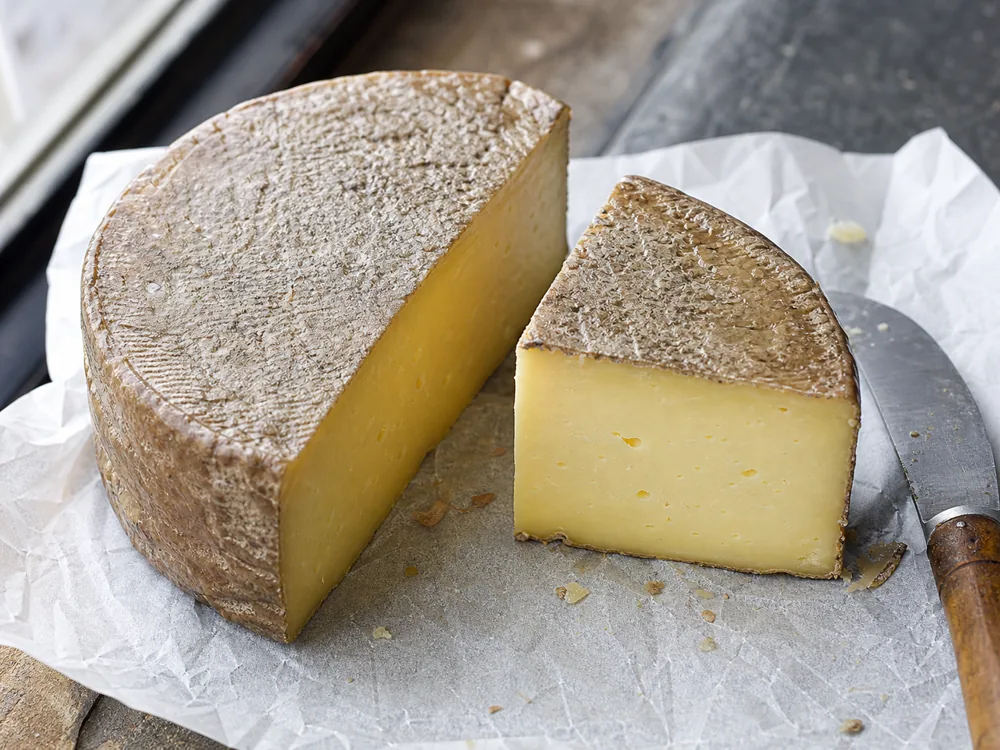
The texture is tender, close-grained, and almost creamy as it warms.
Small round holes add a little spring without making the paste rubbery, and Käsewelten compares their size more closely with Tilsiter than Emmental.
A younger cut keeps milk and butter in front, while a longer-ripened one gives the gray rind and mushroom notes more room. Let your portion lose its refrigerator chill before judging the flavor, but return the remaining wedge to cold storage promptly.
Damp earth and mild mushroom can be normal at the rind. A sharp ammonia smell, sour seepage, a slimy cut face, or bitterness that buries the paste points to poor condition rather than ordinary Aarewasser character.
Can You Eat the Aarewasser Rind?
The available sources disagree, so there is no responsible universal yes.
Käsewelten calls the natural rind edible, while the current Swiss Finest listing for Jumi Aarewasser marks its rind as not intended for eating.
Follow the label or the selling cheesemonger's advice for the exact wheel. A general description of the natural rind cannot override handling or product instructions attached to your cut.
If the label permits eating it, taste a thin strip together with plenty of paste. That shows whether the rind's earthy edge improves the bite without letting the strongest part dominate the buttery center.
Trim the rind when the label says not to eat it, when the counter cannot confirm its treatment, or when the surface smells sharply ammoniated. Removing a thin layer is better than discarding a large part of the paste.
How Should You Serve Aarewasser?
Serve Aarewasser in small wedges that keep a little rind attached to each piece when the rind is approved for eating. Dark bread, apple or pear, hazelnuts, walnuts, and cornichons supply crunch or acidity without hiding the butter and meadow notes.
Jumi presents the cheese as suitable from breakfast through dessert. Cheese.com makes that idea concrete with a savory croissant filled with honey-roast ham, where the sweet-salty meat and soft bread match the young, creamy paste.

| Pairing | Type | Why It Works |
|---|---|---|
| Dark bread | Food | A sturdy slice supports the soft paste and aromatic rind. |
| Apple or pear | Food | Fresh acidity lifts the butter and meadow notes. |
| Honey-roast ham | Food | Sweet-salty meat follows the producer-backed breakfast idea. |
| Creamy Chardonnay | Wine | Moderate fruit and low tannin fit the buttery paste. |
On a mixed board, give Aarewasser the aromatic but approachable position between a mild Swiss cheese and a much stronger washed rind. Very smoky meat, hot chutney, or a powerful blue can erase the grass, butter, and mushroom details that make it worth seeking out.
Does Aarewasser Melt Well?
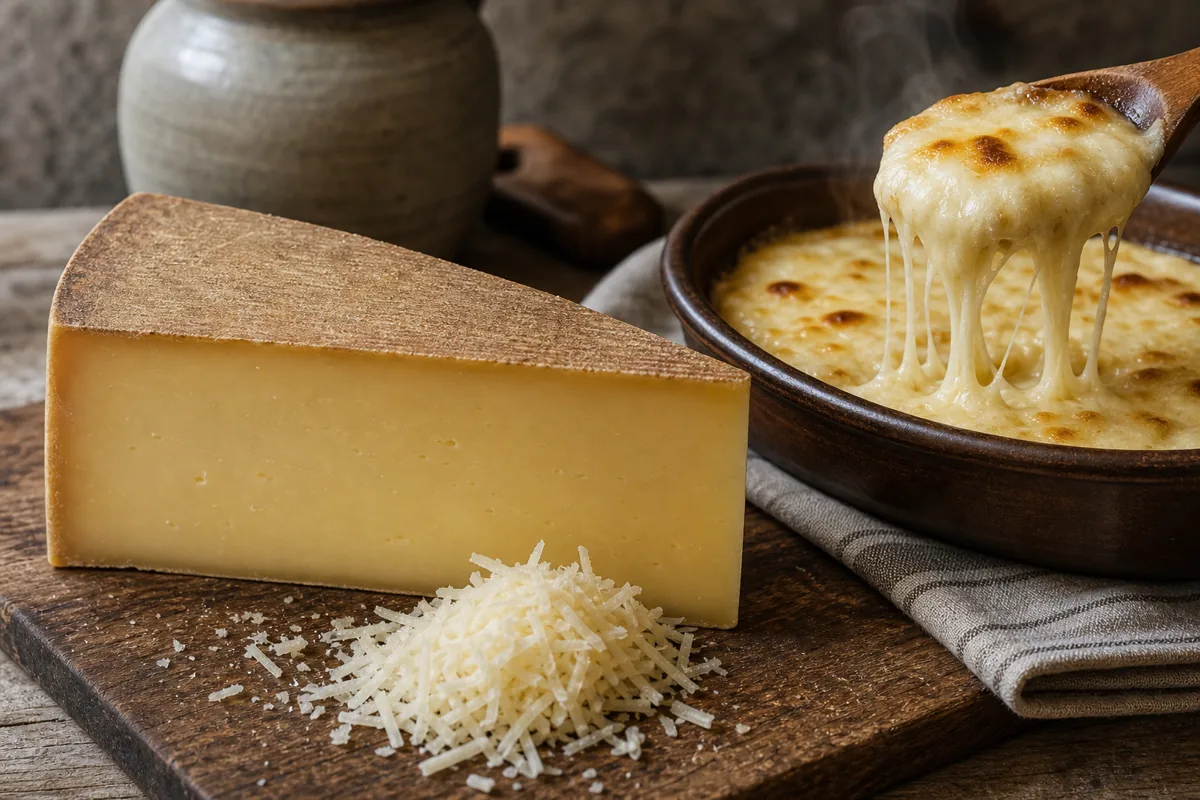
Yes, Aarewasser melts into a creamy, savory layer, but it is most useful as part of a blend or under moderate heat.
Hard browning can flatten the delicate rind character and leave you paying import-cheese prices for a generic toasted flavor.
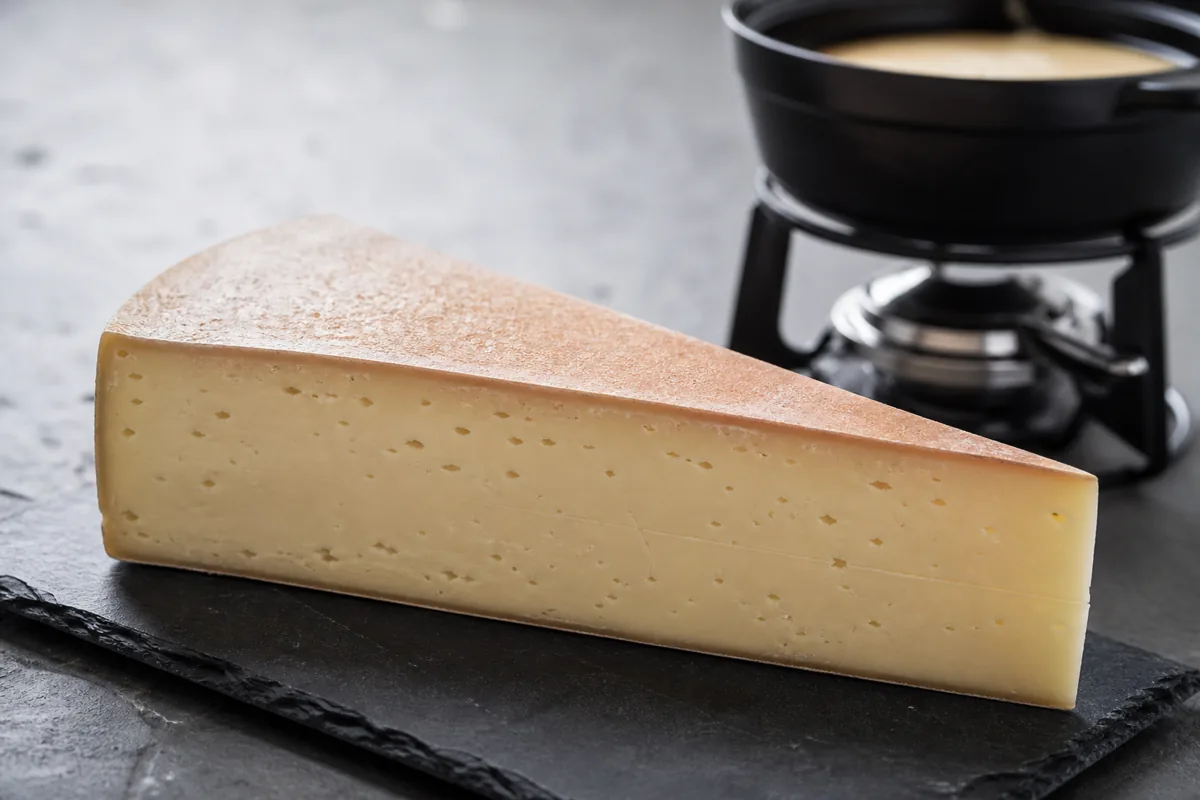
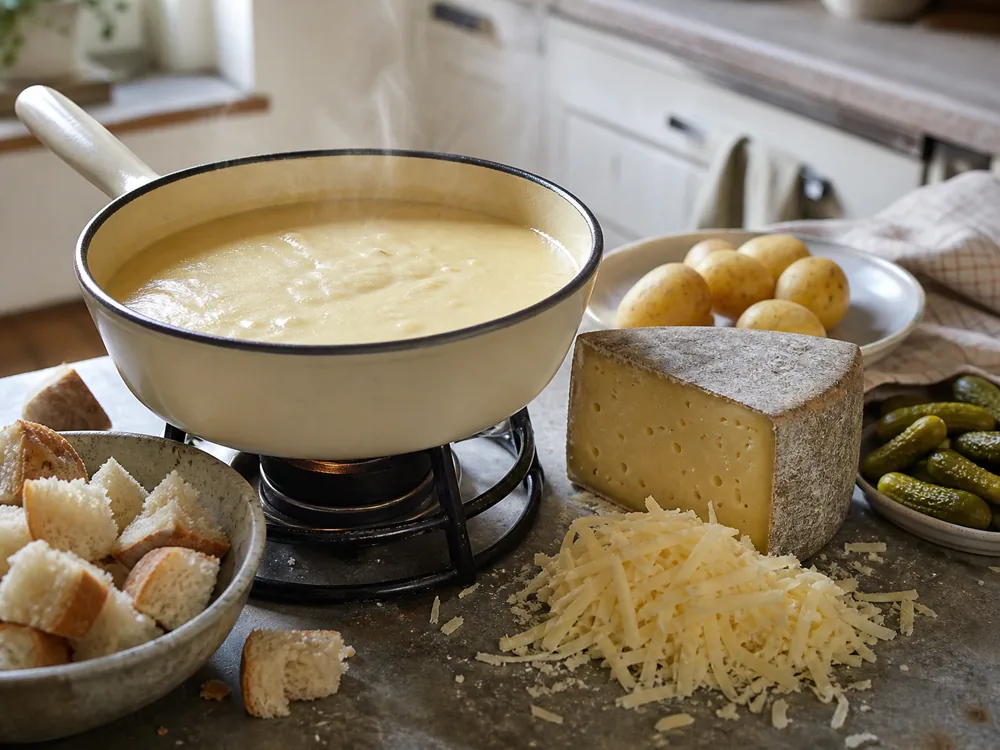
An Eater fondue recipe uses four ounces of Aarewasser beside Gruyère, Appenzeller, and Emmentaler. Cheesemonger Leah Park chose it for an ultra-creamy texture and funky edge, and described its contribution to the pot as milky and buttery.
| Use | Best Approach | What Aarewasser Adds |
|---|---|---|
| Fondue | Blend it with firmer Alpine cheeses | Creaminess, milkiness, and a mild washed-rind accent |
| Grilled sandwich | Use thin slices over medium-low heat | A soft melt without losing every trace of the rind |
| Toast or gratin | Add near the end and brown lightly | Buttery richness rather than a hard, crisp cheese crust |
| Raclette-style service | Choose Raclette when flow is the main goal | Aarewasser is less purpose-built for repeated scraping |
For a sandwich, pair it with ham, mustard, or pickles and stop heating once the paste relaxes. In a fondue blend, let the stronger Alpine cheeses provide structure while Aarewasser rounds the texture and brings a measured rind note.
Grate or slice it while cold, because the high-fat tender paste becomes harder to handle as it warms. Add it after the firmer cheeses have begun to melt, then keep the heat low enough to avoid separating the fat.
If you only have Aarewasser, a toast or closed sandwich is safer than a large fondue pot. The smaller use asks the cheese to soften and brown lightly without supplying all the structure of the sauce.
How Do You Buy and Store Aarewasser?
Aarewasser is a specialty-counter cheese rather than a dependable supermarket item.
Chäsi Eyweid says Jumi distributes its products to Swiss hotels and restaurants, delicatessens in Europe, America, and Japan, plus Jumi shops in London and Vienna.
Search by both Aarewasser and Jumi, then confirm that a listing names raw cow's milk and a young semi-hard or cream-cheese style. Current European sellers offer cut pieces from about 200 to 500 grams, but availability and export reach change.
A good cut face looks ivory to pale yellow, moist without being wet, and finely open. Avoid dried edges, deep cracks, loose liquid, or a rind aroma that overwhelms everything before you bring the cheese near your nose.
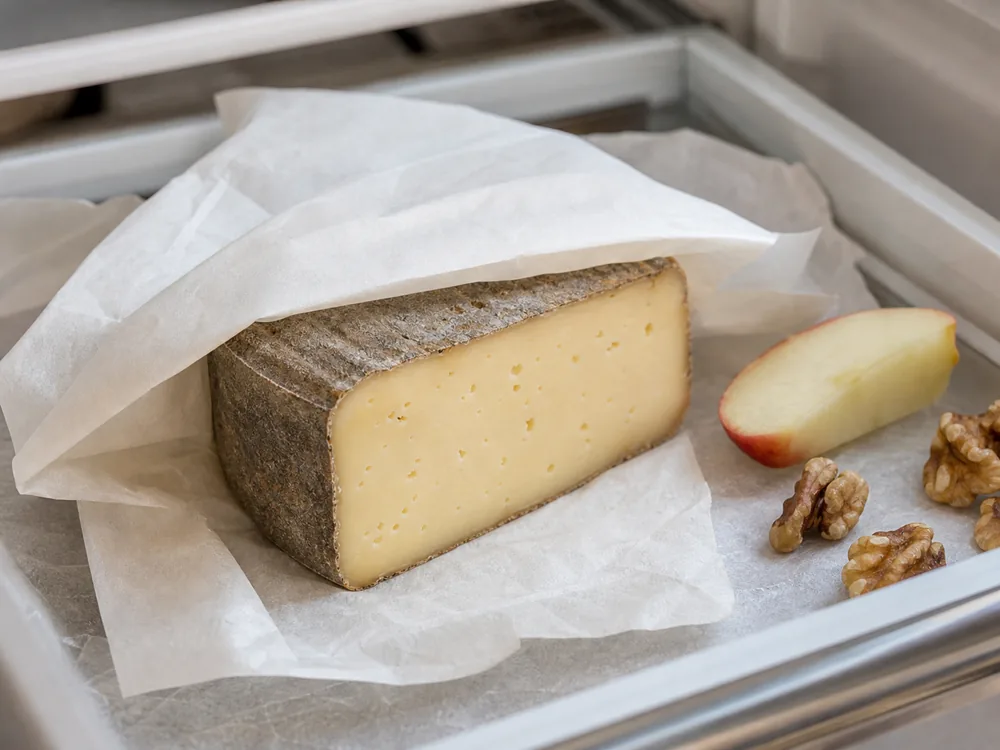
At home, wrap the wedge in cheese paper or parchment and place it in a lidded container that is not completely airtight. Keep it at 35 to 40°F or 2 to 4°C, away from foods whose odors could move into the rind.
Buy a portion you can finish while the cut face stays supple and the rind smells clean. Freezing extends storage, but it damages the tender texture and works against the main reason to choose this cheese.
Which Cheeses Substitute for Aarewasser?
No substitute reproduces the two-valley milk story or the Aare-water wash. Match the job in your meal instead, then accept that the rind, aroma, or melting behavior will move in a different direction.
| What You Need | Substitute | What Changes |
|---|---|---|
| Small holes and a sliceable Swiss paste | Tilsiter | The flavor can be sharper and less buttery. |
| Reliable flow under direct heat | Raclette | You gain a purpose-built melt and lose Aarewasser's delicate board role. |
| A rustic small-wheel table cheese | Tomme | The format fits, but the rind culture and milk source differ. |
| Creamy Swiss richness | Vacherin Fribourgeois | The paste is softer and the flavor leaves Aarewasser's meadow profile. |
| A stronger washed Swiss character | Appenzeller | The herbal brine and longer aging make the result more assertive. |
Use Tilsiter in a cold sandwich, Raclette for direct melting, and Tomme on a simple board. Vacherin Fribourgeois works when creamy Swiss character matters most, while Appenzeller makes sense when you want the rind and savory finish turned up.
Does Aarewasser Have Animal Rennet? Nutrition and Pregnancy
A current 200-gram Jumi retail label lists 397 calories, 31.7 grams of fat, 20 grams of saturated fat, 24.9 grams of protein, 0.1 gram of carbohydrate, and 1 gram of salt per 100 grams. Use the package in front of you when the producer or specification differs.
The 55 percent fat-in-dry-matter figure is not the same as 55 grams of fat in 100 grams of cheese. It excludes water from the calculation, while the retail nutrition panel measures the food as sold.
The current specification lists cow's milk, salt, and animal rennet. Aarewasser therefore contains milk, is not vegan, and does not suit vegetarians who exclude animal rennet.
Aarewasser is also made from unpasteurized milk. In the United States, CDC advises people at higher risk from Listeria, including pregnant people, adults 65 or older, and people with weakened immune systems, to avoid unheated raw-milk cheese or heat it to 165°F or until steaming hot.
Guidance can differ by country.