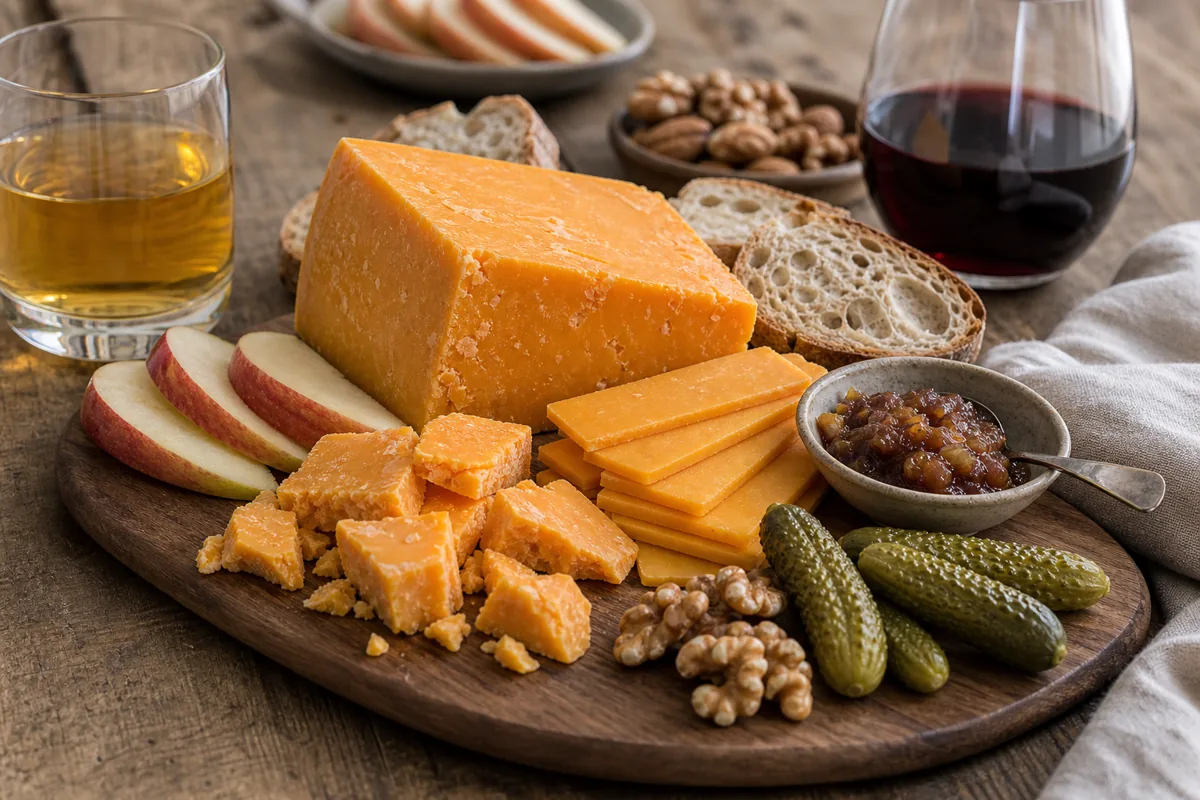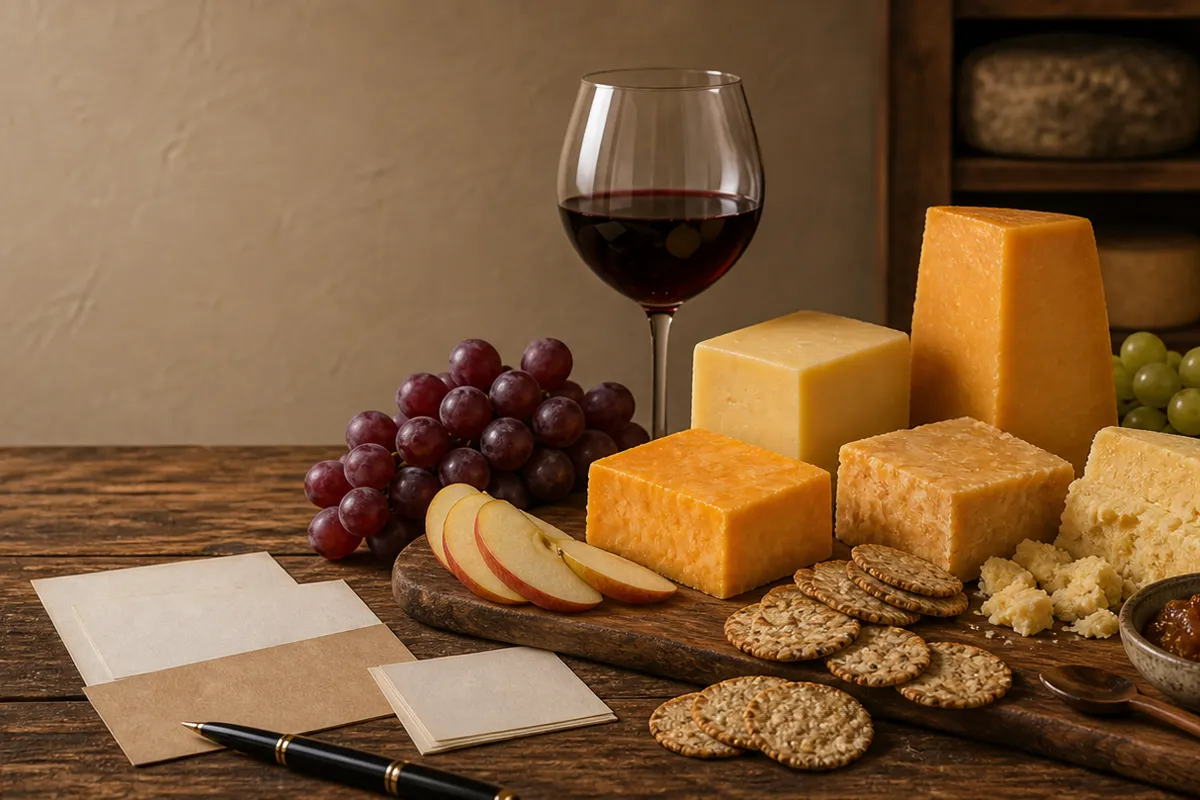
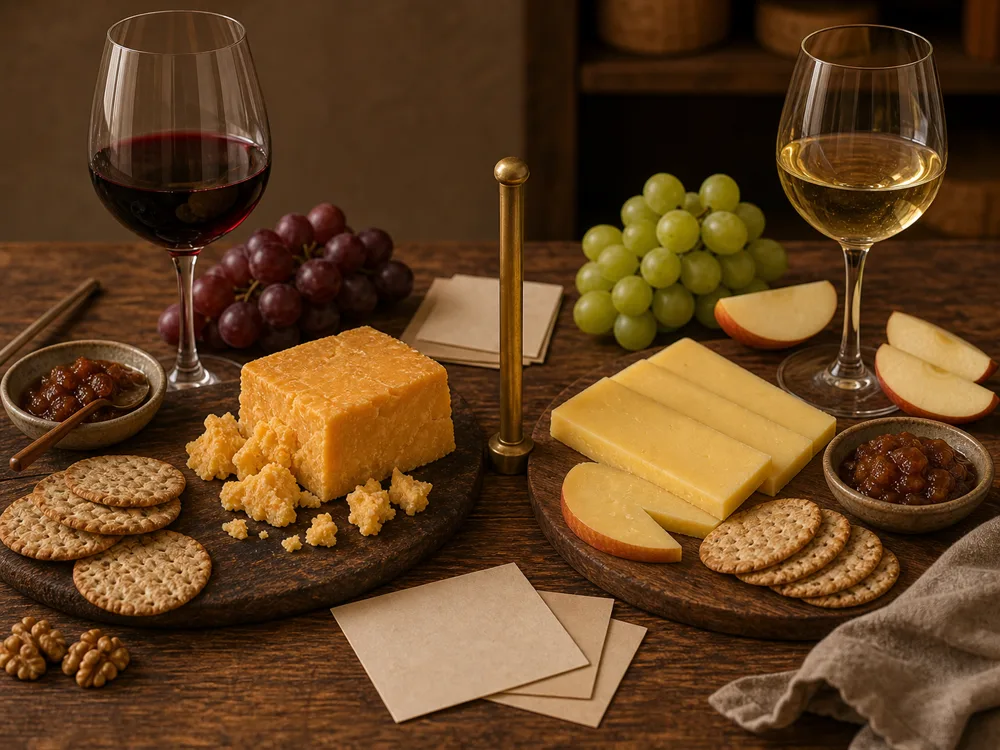
Cheddar is one of the few cheeses on a pairing list that works with both bold reds and fortified wines. Its firm texture and sharp tang stand up to tannin and sweetness in ways softer cheeses cannot.
A well-built spread of aged wheels deserves a thoughtful bottle beside it.
The key to a good cheddar wine pairing is matching intensity to age. Mild young cheddar pairs with crisp whites and light reds, while aged extra-sharp cheddar needs bigger reds or Port.
Age matters more than the grape name on the label. A wine that works beautifully with mild deli cheddar will taste thin next to a two-year clothbound wheel, so match the bottle to the cheese's maturity.
For the broader table beyond wine alone, board-side cheddar matches also cover apples, chutney, cider, and condiments that make the wedge read better with food.
In This Article
Choose Red, White, or Port by Cheddar Age
Cabernet Sauvignon is the safest overall wine for cheddar because it brings enough body and tannin to stand alongside sharp, dense cheese. The dark fruit and firm structure complement aged cheddar's caramel and crystalline bite.
For the sharpest aged wheels, fortified wines like Port and sherry bring sweetness and intensity that balance the salt and tang. For mild cheddar in salads or lighter dishes, crisp whites keep the pairing fresh.
That is why one cheddar wine answer is never enough. A young block can taste flat beside Cabernet, while an aged clothbound wedge can make a light white disappear.
The bottle should follow density, tang, and crumble.
Port belongs only near the top of the age ladder. It works when the cheese has salt, crystals, and enough savory depth to stop the wine from tasting like dessert.
With mild cheddar, Port feels heavy and sweet.
| Pairing | Type | Why It Works |
|---|---|---|
| Cabernet Sauvignon | Red wine | The top all-around match. Dark fruit, firm tannin, and full body stand alongside sharp aged cheddar without being overwhelmed. Works best with 12-month or older wheels. |
| Port (Tawny) | Fortified | Caramel, dried fruit, and nutty sweetness in tawny Port mirror the butterscotch notes in extra-sharp aged cheddar. The best match for a cheese board centerpiece. |
| Syrah / Shiraz | Red wine | Dark spice, black pepper, and plum fruit complement medium to sharp cheddar. Australian Shiraz with its ripe fruit works especially well with Vermont or English farmhouse styles. |
| Zinfandel | Red wine | Jammy fruit and moderate tannin make Zinfandel a good bridge between mild and sharp cheddar. Works with deli slices through medium-aged blocks. |
| Sauvignon Blanc | White wine | Crisp acidity and citrus make this the best white wine for mild cheddar in salads, sandwiches, and lighter dishes. Does not stand up to extra-sharp wheels. |
| Fino Sherry | Fortified | Dry, nutty, and saline, fino sherry pairs with medium cheddar on a tapas-style board. The salt and nut character echoes cheddar's savory side. |
- Best overall red: Cabernet Sauvignon handles sharp aged cheddar's intensity.
- Best for extra-sharp: tawny Port brings caramel sweetness that mirrors aged crystals.
- Best white: Sauvignon Blanc keeps mild cheddar fresh in salads and sandwiches.
- Best wildcard: fino sherry with medium cheddar on a tapas board.
Cabernet wins because it protects the pairing balance, not because it tastes identical to cheddar. If the cheese can handle tannin and dark fruit, the wine frames the sharpness instead of fighting it.
These pairings work best with traditional cheddar aged on cloth. Mass-produced block cheddar labeled mild or medium pairs fine, but the wine impact is less dramatic. The sharper the cheddar, the bolder the wine can be.
The boldness rule flips what works with softer cheeses. Brie needs gentle wines that do not overpower the paste, while cheddar invites tannin, body, and intensity.
Use Age Bands Before You Trust the Grape Name
Cheddar changes dramatically with age. Mild cheddar at two to three months is buttery and soft, while sharp cheddar at twelve months is firmer and tangy.
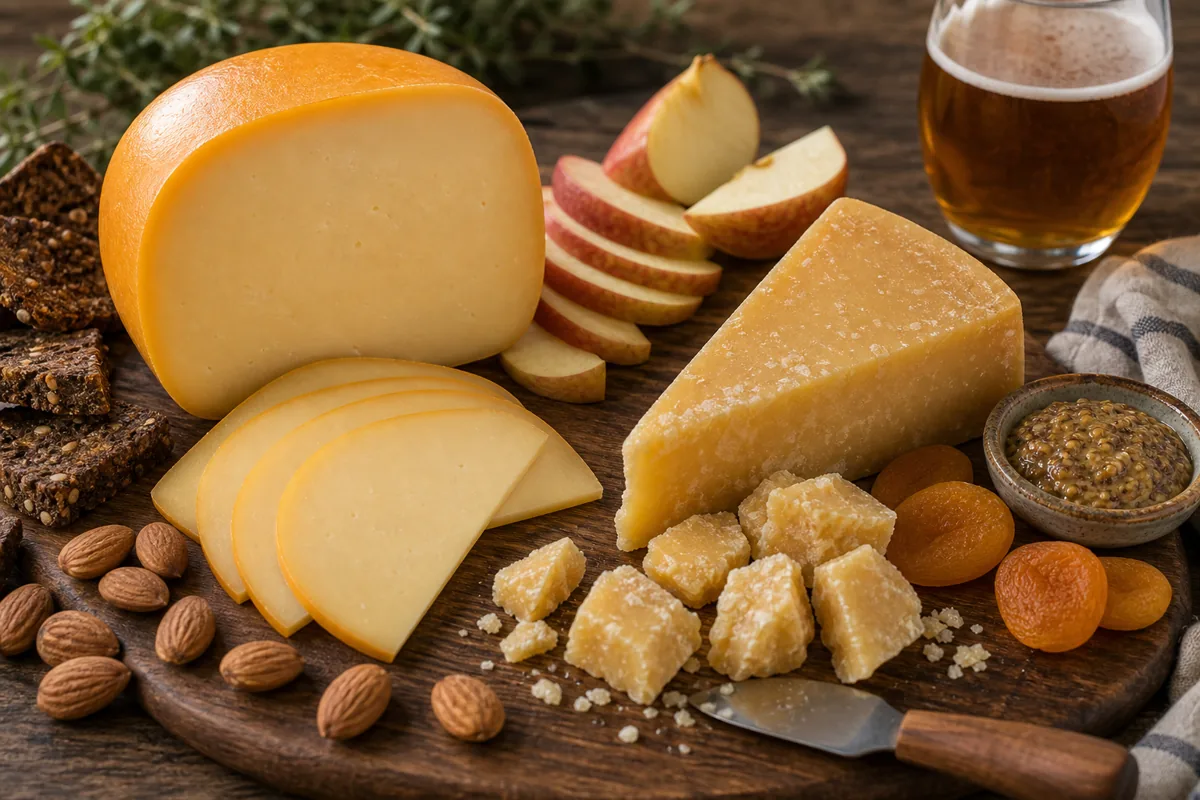
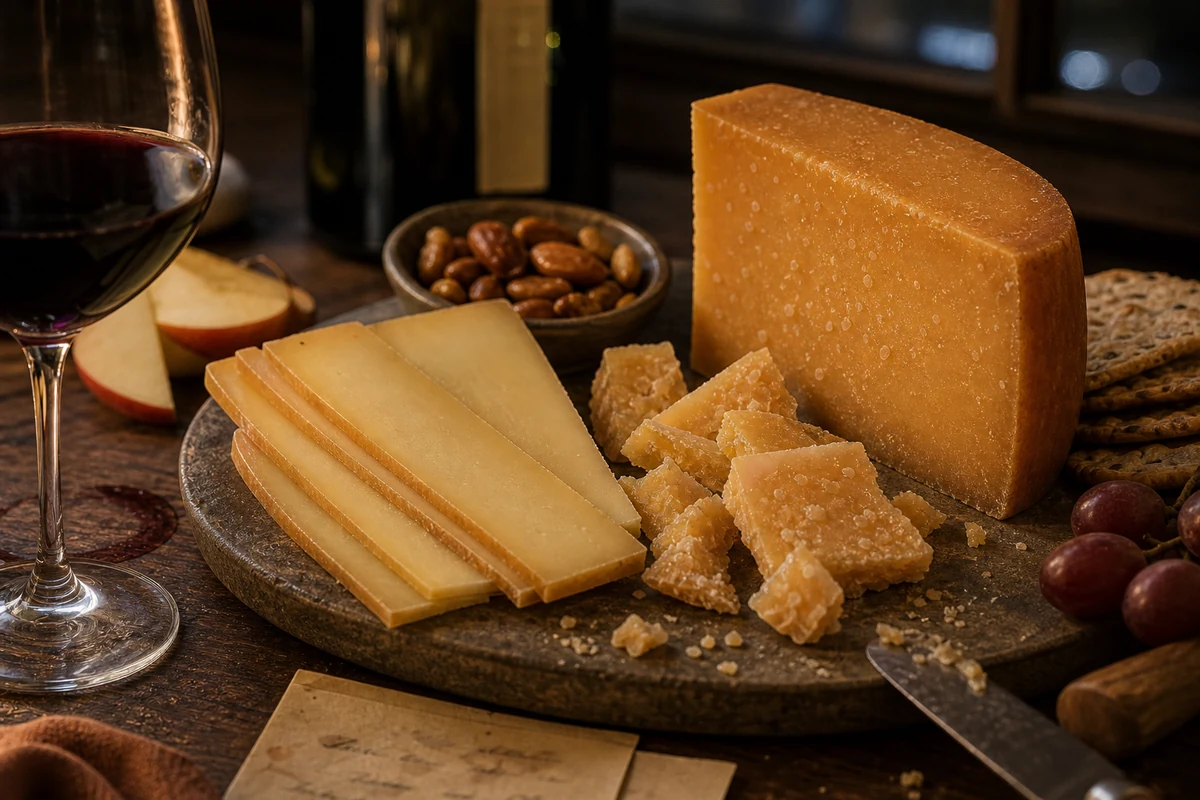
Extra-sharp at two years or more is crystalline, caramel-like, and intense. Gouda versus cheddar shows how two firm cheeses diverge with age.
Each stage needs a different wine. The pairing should match the cheese's intensity, not just its name.
How you store and serve the wedge also affects how it tastes at the table.
Young cheddar needs refreshment more than power. Sauvignon Blanc, unoaked Chardonnay, light Pinot Noir, and dry sparkling wine can keep the bite clean.
The wine should brighten the cheese, not prove it can handle tannin.
Mature cheddar needs structure. Cabernet, Bordeaux, Syrah, or a firm English sparkling wine has enough grip for the cheese's fat and tang.
At that stage, fruit alone is not enough because the wedge also brings broth, earth, and crystals.
- Mild cheddar (2-3 months): Sauvignon Blanc, dry rose, or light Zinfandel.
- Medium cheddar (6-9 months): Zinfandel, Syrah, or fino sherry.
- Sharp cheddar (12+ months): Cabernet Sauvignon, Malbec, or Australian Shiraz.
- Extra-sharp (2+ years): tawny Port, aged Bordeaux, or Amontillado sherry.
For English clothbound cheddar specifically, the pairing shifts toward more traditional wines. Somerset farmhouse cheddar with its earthy, tangy depth works better with Bordeaux or Burgundy than with jammy New World reds.
The clothbound aging process gives English cheddar a more complex, savory character that rewards wines with structure and acidity rather than pure fruit power. Proper wrapping also matters because dried-out cheddar tastes duller than well-kept wedges.
Use Fat, Tannin, and Age Instead of Grape Name
The chemistry behind cheddar and wine pairing comes down to fat, acid, and tannin interaction.
Cheddar has about 33% fat by weight. Tannin in red wine binds to that fat and clears the palate between bites, which is why tannic reds like Cabernet work better with sharp cheddar than lighter reds do.
The same fat-and-tannin logic applies to broader wine and cheese pairings.
Acid in wine creates a productive contrast with cheddar's tangy, slightly sour edge. The acid frames the sharpness instead of fighting it, the same way lemon brightens a rich dish.
Tannin works only when the cheese has enough fat and density. Sharp cheddar can absorb that grip because it is firm and concentrated.
Mild cheddar does not have the same depth, so tannin can make it taste waxy.
Acid is the safer tool across the range. Even when you pour red wine, a bottle with freshness usually works better than a soft, jammy one.
The cheese already brings fat, so the wine needs movement.
- Tannin scrubs fat: tannin molecules bind to cheddar's fat and clear the palate.
- Acid frames sharpness: wine acidity contrasts with cheddar's tang and amplifies both.
- Fruit bridges caramel: dark fruit in red wine echoes the caramel notes in aged cheddar.
- Sweetness balances salt: Port's residual sugar offsets the intense salt of extra-sharp wheels.
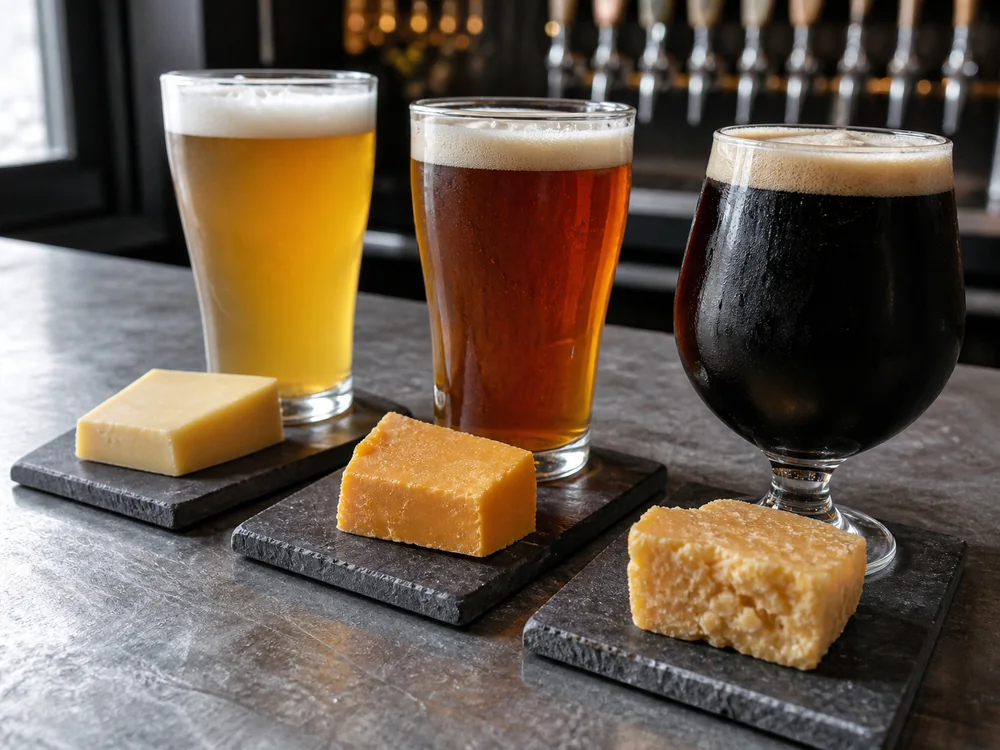
Sweetness in fortified wines creates a different kind of balance. Aged gouda and tawny Port share a similar logic, and cheddar with dark beer follows the same intensity-matching rule.
That sweet-salt balance is why Port and extra-sharp cheddar feel so natural together. The wine's dried-fruit sweetness mirrors the cheese's crystalline caramel while softening the salt bite.
Avoid Jammy Reds, Thin Whites, and Wrong-Stage Port
Not every wine works with cheddar. Some styles are too light, too sweet, or too delicate for the cheese's intensity.
- Light Pinot Grigio: disappears against anything sharper than mild cheddar.
- Off-dry Riesling: residual sugar clashes with cheddar's tang in most cases.
- Delicate Pinot Noir: gets overwhelmed by medium to sharp cheddar's density.
- Big oaky Chardonnay: butter and oak fight cheddar's savory edge instead of complementing it.
The common failure pattern is choosing a wine that is too light for the cheese. Cheddar is dense, fatty, and often sharp, so it needs a wine with enough structure to hold its own.
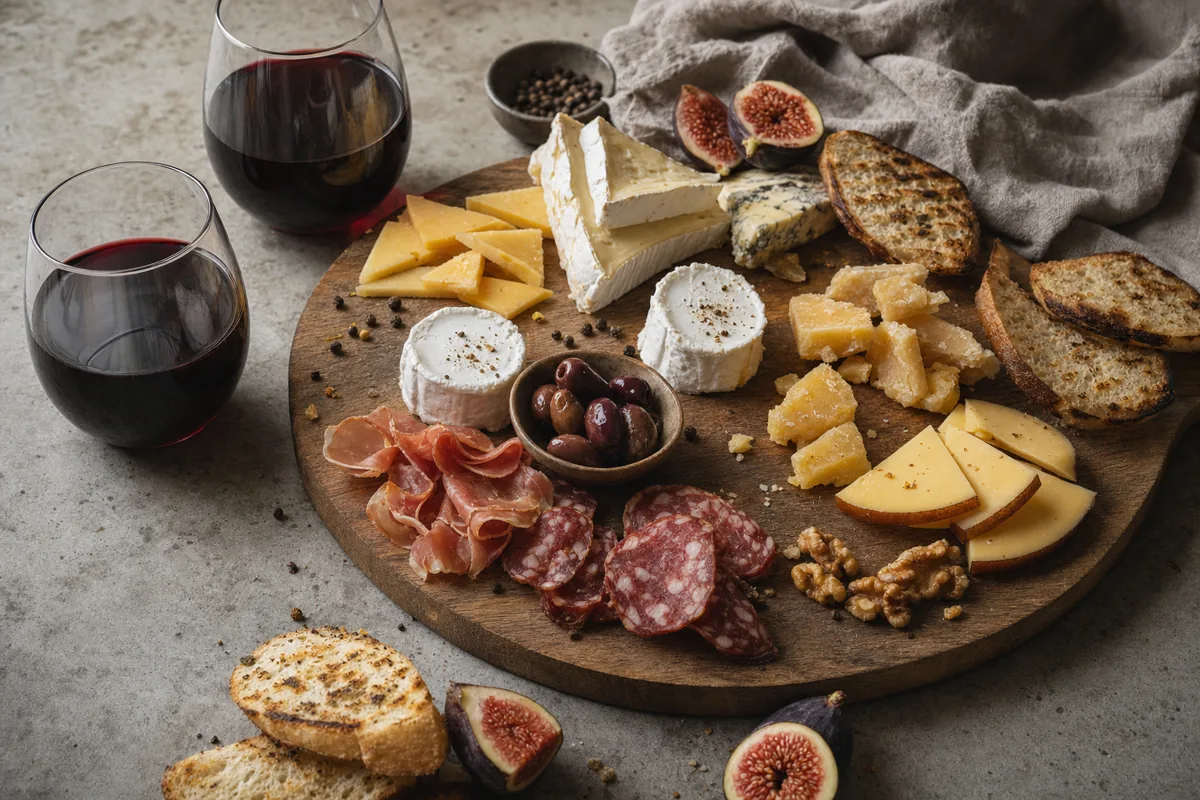
The same intensity logic applies to cured-meat and cheese spreads where salt and fat stack higher.
Jammy reds fail for a different reason. They bring fruit weight without enough freshness, so aged cheddar can taste dull and mild cheddar can taste sweet.
If the bottle feels soft before cheese, it will usually feel softer after cheese.
Wrong-stage Port is another common miss. Extra-sharp cheddar can handle it.
Mild cheddar cannot. If the wedge bends cleanly and tastes milky, choose a brighter wine instead.
If you are serving a cheese board with multiple cheddar ages, start with the mildest cheese and the lightest wine. Move to sharper cheddars and bolder wines as the tasting progresses.
Building intensity across the board follows the same logic as wine and cheese pairing principles. No pairing should feel flat after the one before it.
Separate Clothbound Earth From Clean Block Cheddar
English clothbound cheddar from Somerset, Dorset, and Devon has a different character from mass-produced blocks. It is earthier, tangier, and more complex, with a denser paste and longer finish.
Proper storage keeps that complexity intact from wheel to table.
That complexity rewards more traditional wines. A good Bordeaux, Burgundy, or English sparkling wine pairs better with farmhouse cheddar than a jammy Zinfandel does.
A curated board with multiple cheddar ages lets you taste how origin changes the pairing.
New World cheddar from Vermont, Wisconsin, or Australia tends to be cleaner and more direct. It works well with bold fruit-forward reds like Australian Shiraz or California Cabernet.
Clothbound cheddar often has cellar, broth, and mustard-like depth. That makes savory, structured wine more useful than obvious fruit.
A fresh-cut farmhouse wedge can make a simple Cabernet taste clumsy if the wine has no acid.
Clean block cheddar is easier. It usually wants a wine with clear fruit and enough acidity, not necessarily an expensive old bottle.
This is the better place for California Cabernet, Australian Shiraz, or crisp Sauvignon Blanc depending on age.
- English farmhouse: Bordeaux, Burgundy, English sparkling, or tawny Port.
- Vermont or Wisconsin: Cabernet Sauvignon, Zinfandel, or Malbec.
- Australian: Shiraz, Grenache blends, or dry rose.
The origin distinction matters most on a cheese board where you are serving a premium aged wheel. For everyday cooking and sandwiches, the wine choice matters less because the cheese is not the star.
If cheddar is melted into food, pair the dish first. Tomato soup, burgers, and mac and cheese all change the bottle faster than the cheese age does.
This wine page is for cheddar as the main tasting cheese. The broader pairing page handles cider, chutney, apples, and cooked-food context.
SOURCES & REFERENCES
Cheddar Wine Pairing FAQ
These are the questions that come up once the bottle is already open and the cheese is on the board.
Cabernet Sauvignon is the best wine for sharp cheddar. Its firm tannin, dark fruit, and full body stand up to the cheese's intensity without being overwhelmed. For extra-sharp aged cheddar, tawny Port is an even better match because its caramel sweetness mirrors the cheese's crystalline depth.
Yes, but choose a white with enough acidity. Sauvignon Blanc works well with mild cheddar in salads and sandwiches. Avoid delicate whites like Pinot Grigio, which disappear against anything sharper than mild. Fino sherry, while not a white wine, also works with medium cheddar on a tapas board.
Tawny Port is one of the best pairings for extra-sharp aged cheddar. The wine's caramel, dried fruit, and nutty sweetness mirror the cheese's crystalline butterscotch notes. The residual sugar also balances the intense salt of long-aged wheels. Ruby Port works too, but tawny is the closer match.
Mild cheddar pairs with lighter wines: Sauvignon Blanc, dry rose, light Zinfandel, or sparkling wine. The cheese's buttery, soft character does not need the tannin and body that sharp cheddar demands. Choose a wine that stays refreshing alongside the mild paste.
Malbec works well with medium to sharp cheddar. Its dark plum fruit and moderate tannin complement the cheese's tang and density. Argentine Malbec with its ripe, smooth character is an especially good match for Vermont or Wisconsin cheddar styles.
English clothbound cheddar is earthier and more complex, pairing better with traditional wines like Bordeaux and Burgundy. American cheddar is cleaner and more direct, working well with bold fruit-forward reds like Cabernet Sauvignon and Zinfandel. The origin matters most on a cheese board where you are serving a premium aged wheel.