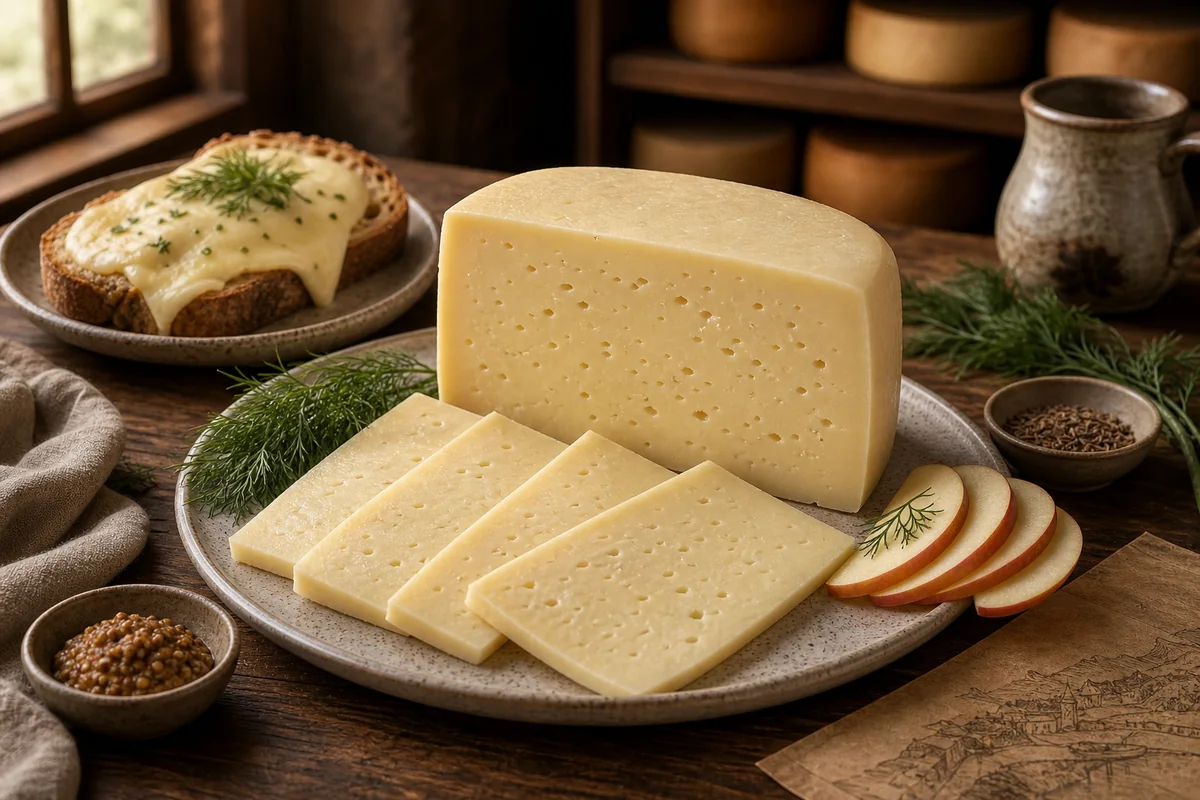
Cheese Profile

Havarti Cheese: Danish Origins, Creamy Texture, and Flavored Varieties

HAVARTI QUICK FACTS
OriginDenmark (1870s, created by Hanne Nielsen)
MilkPasteurized cow
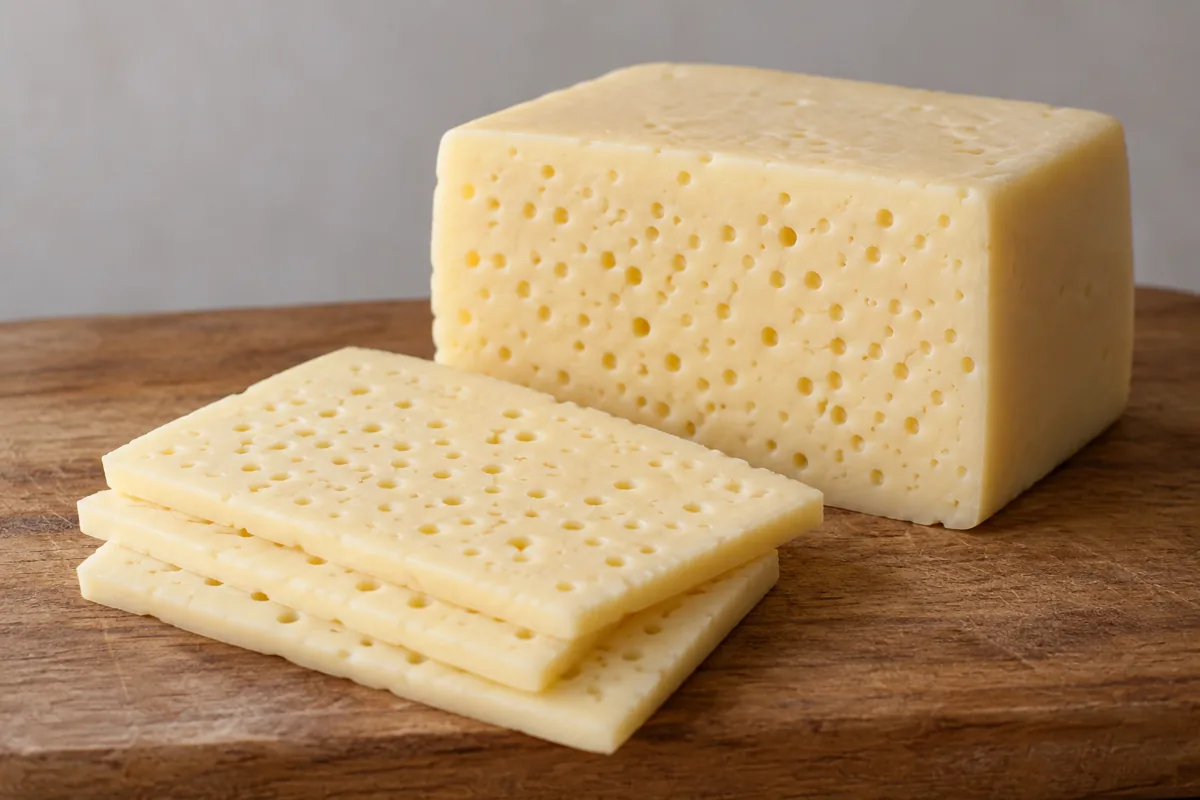
TextureSemi-soft, supple, buttery with small irregular eyes
RindWaxed or rindless (commercial); washed (traditional aged)
Aging3-6 months (standard); 12+ months (aged)
Fat Content45% FDM
PDO / DOPNone (generic name, no geographic protection)
Availabilitycommon
Pricebudget

Havarti is Denmark's most successful cheese export and one of the smoothest-melting semi-soft cheeses available in US grocery stores. The sandwich cheese guide ranks Havarti among the top picks for hot sandwiches where clean melt is the priority. It sits within the European washed-curd cheese tradition that produces supple, buttery cheeses with mild flavor and excellent melt. The Dutch waxed semi-hard wheel uses the same curd-washing principle, though Gouda develops much further with age than Havarti typically does.

Unlike most cheeses covered on this site, Havarti has a known inventor. Hanne Nielsen, a Danish farmwife, created the cheese in the 1870s after traveling across Europe to study cheesemaking. The cheese she developed combined Danish dairy traditions with techniques she learned in France and Germany.

This profile covers standard Havarti, aged Havarti, flavored varieties, and how to use each one in the kitchen.

What Havarti Is

Havarti is a semi-soft washed-curd cow's milk cheese created on the Havartigaard farm near Copenhagen, Denmark, in the 1870s. Hanne Nielsen developed the cheese after studying cheesemaking at dairy farms across France, Switzerland, and Germany during a period when Danish agriculture was rapidly modernizing.

The name "Havarti" comes from Havartigaard, Nielsen's farm. Unlike Gruyere or Manchego, Havarti has no geographic protection or DOP status. Any producer in any country can make and sell cheese under the Havarti name. This is why you find Havarti from Denmark, the US, Canada, and Australia on the same shelf.

The washed-curd method is what gives Havarti its distinctive character. After the curd forms, it is rinsed with warm fresh water. This washes away lactose and lactic acid, producing a sweeter, milder, more supple cheese than unwashed-curd varieties made from the same milk.

  • Washed-curd process — reduces acidity and lactose, producing the mild, sweet character
  • Small irregular eyes — scattered openings in the paste from bacterial gas production during aging
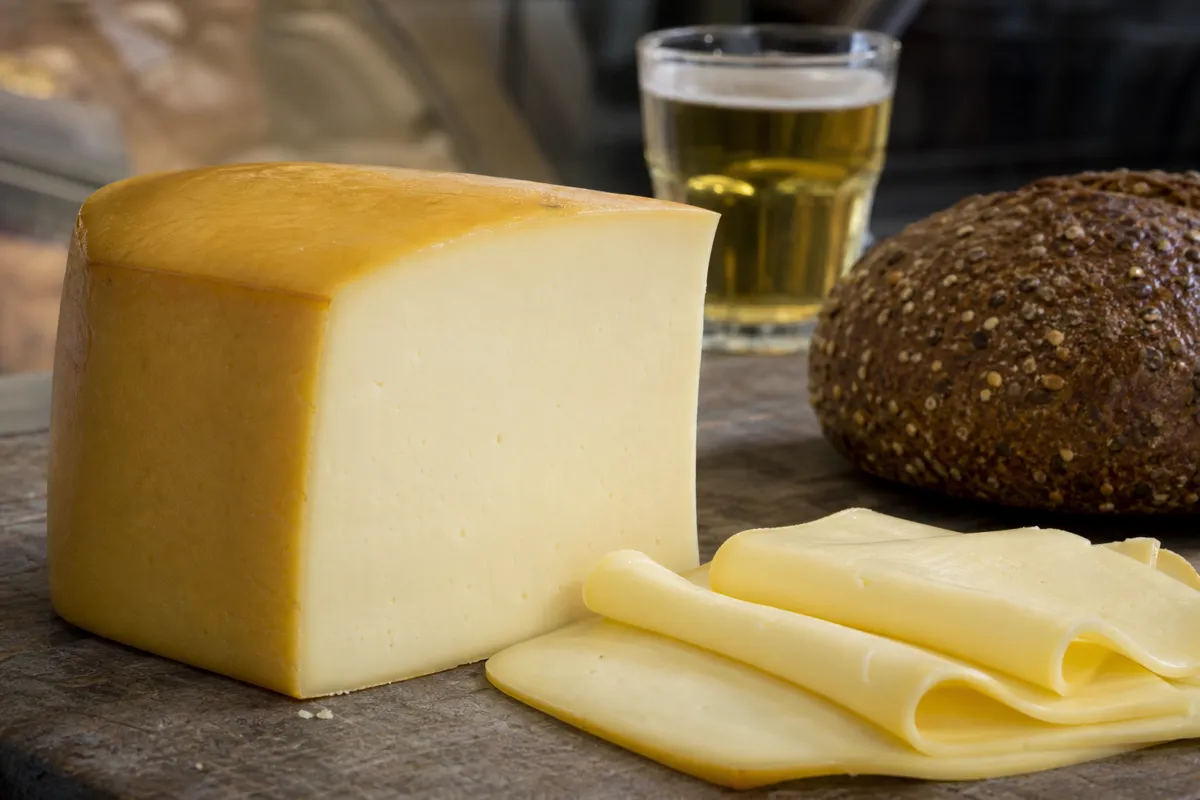
  • No rind on commercial versions — most retail Havarti is rindless, sealed in wax or plastic
  • Traditional aged Havarti — develops a washed rind, firmer texture, and sharper flavor at 12+ months

Danish Havarti from Arla and Castello tends to be slightly more buttery and complex than American-made versions. The milk quality and culture strains differ. For everyday cooking, domestic Havarti performs well. For cheese boards, Danish-origin Havarti has a noticeable edge in flavor depth.

Havarti has no aging minimum or production standard beyond what individual producers set. This means quality varies more across brands than it does for DOP-protected cheeses. Buy from a producer you trust or taste before committing to a large piece.

Havarti Flavor and Texture

Standard Havarti (3-6 months) has a buttery, mild, slightly sweet flavor with a clean finish and almost no sharpness. It is one of the most approachable cheeses for people who dislike strong cheese flavors.

The texture is supple and sliceable at refrigerator temperature, becoming soft and almost creamy at room temperature. Young Havarti bends without breaking when sliced thin, making it one of the best cheeses for cold sandwiches and wraps.

HAVARTI FLAVOR PROFILE (STANDARD, 3-4 MONTHS)
SALTYSWEETBITTERSOURUMAMICREAMY
Salty
20
Sweet
45
Bitter
8
Sour
10
Umami
28
Creamy
68

The radar above reflects standard Havarti at 3-4 months. Aged Havarti at 12+ months shows higher salty (38), higher umami (52), reduced sweet (30), and lower creamy (42) as the paste firms and flavor concentrates. The shift from young to aged Havarti is comparable to the difference between young and aged Gouda.

  • Standard (3-6 months) — buttery, mild, sweet, supple paste, gentle tang, clean finish
  • Aged (12+ months) — hazelnut notes, sharper bite, firmer paste, small crystalline deposits
  • Cream Havarti — enriched with extra cream for a softer, richer texture and even milder flavor

Cream Havarti (sometimes labeled "Creamy Havarti") adds extra cream to the milk before curdling. The result is a higher-fat, softer cheese that spreads more easily and melts faster. It is the mildest version of Havarti and the best choice for children and for people who find even standard Havarti too firm.

The small irregular eyes scattered through Havarti's paste are not air pockets. They form from bacterial gas production during the early aging phase, similar to the mechanism in Swiss cheese but at a much smaller scale. The eyes do not affect flavor or performance.

NOTE

Aged Havarti (12+ months) is a significantly different cheese from standard Havarti. The paste firms, the flavor develops hazelnut and caramel notes, and small crystals form throughout. It functions more like a young Gouda than a traditional Havarti. If you enjoy aged Gouda, try aged Havarti as a less expensive alternative with a similar flavor profile.

Flavored Havarti Varieties

Havarti is one of the few cheeses where flavored versions are widely produced and commercially successful. The mild, buttery base acts as a carrier for added ingredients without the flavor clashing that occurs when you add herbs to a strongly flavored cheese.

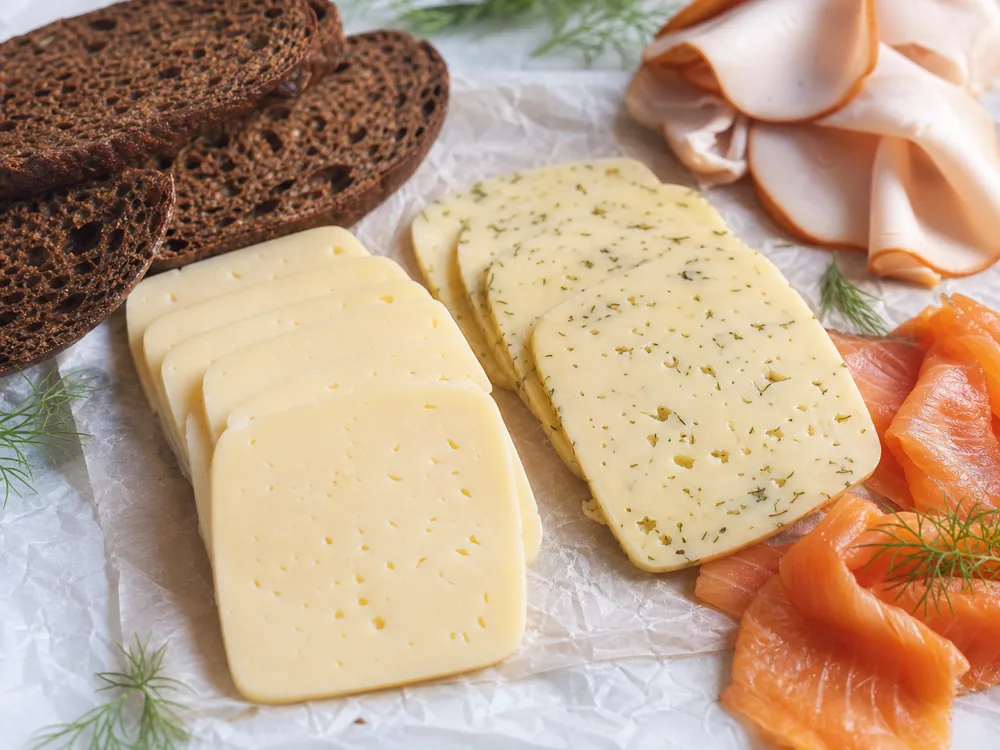
Dill Havarti is the most popular flavored variety and the one most likely to appear in a US grocery store. The dill is mixed into the curd before pressing, distributing green flecks throughout the paste.

  • Dill — the classic flavored Havarti, mild cheese with dill weed throughout, excellent for sandwiches
  • Caraway — traditional Scandinavian combination, slightly savory, pairs well with rye bread
  • Jalapeno — mild heat with the creamy Havarti base, popular for burgers and quesadillas
  • Horseradish — sharp bite in a smooth cheese, good for roast beef sandwiches
  • Garlic and herb — mild garlic with mixed herbs, versatile for cooking and boards

Flavored Havarti works best in cold applications and sandwiches. When melted, the added flavors can become muted or change character. Dill Havarti melted on a grilled sandwich retains most of its herb flavor, but jalapeno Havarti loses heat when cooked.

If you use flavored Havarti for cooking, add it at the end of the process rather than cooking it into the dish. The residual heat will melt the cheese without degrading the added flavors.

Best Uses for Havarti

Havarti's exceptional melt and mild flavor make it one of the most versatile everyday cooking cheeses. It melts at lower temperatures than harder cheeses and forms a smooth, cohesive pool without separating into oil and protein.

The mild flavor is Havarti's strategic advantage. It melts into dishes and adds creamy richness without asserting a strong cheese taste. For dishes where you want melt texture without cheese flavor dominance, Havarti outperforms most alternatives.

Grilled Cheese
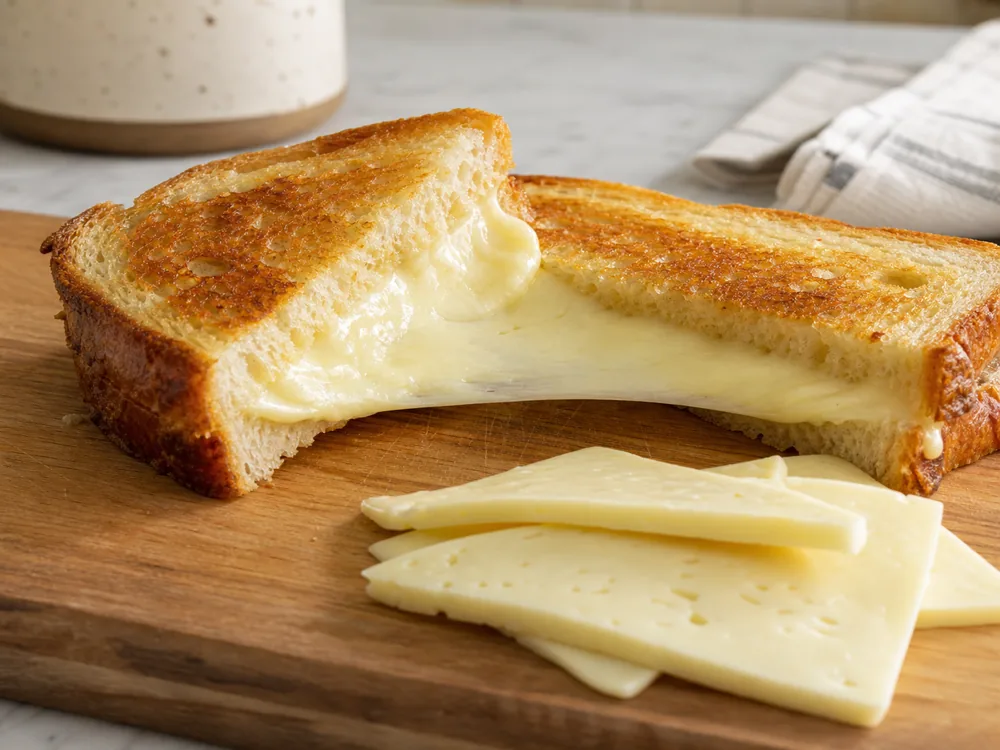
Havarti makes one of the best grilled cheese sandwiches. The low melt point means it reaches full fluidity before the bread burns. The mild flavor does not overpower the buttered, toasted bread. For more flavor, combine with sharp Cheddar at a 1:1 ratio.
Cold Sandwiches
Thinly sliced Havarti folds without cracking and melts slightly from body heat in a sandwich. Dill Havarti on turkey is a classic deli combination. The supple texture conforms to the bread better than harder cheeses.
Burgers
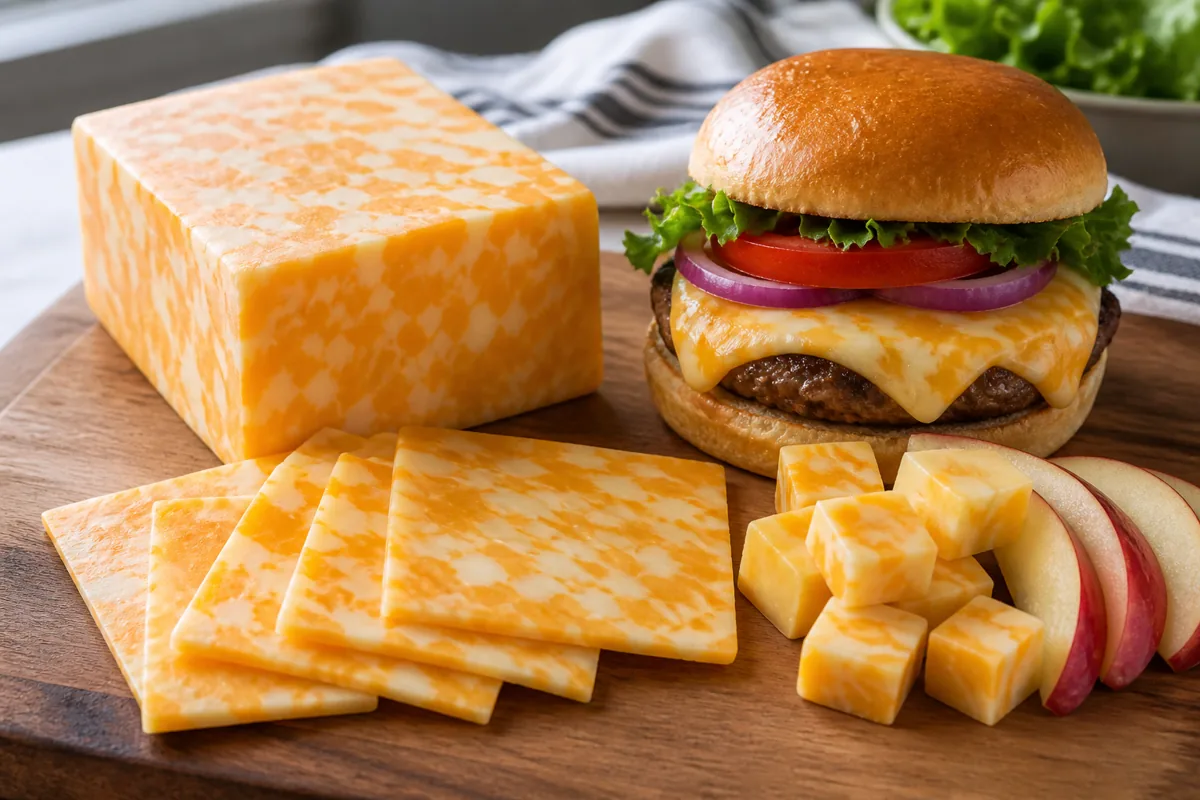
A slice of Havarti on a burger melts into a smooth layer in the last minute of cooking. It does not overpower the meat flavor the way blue cheese or sharp Cheddar can. Jalapeno Havarti adds mild heat.
Quesadillas
Shredded Havarti melts faster and more evenly than Cheddar or Monterey Jack in quesadillas. The stretch and pull is excellent. Combine with pepper jack for heat or use jalapeno Havarti.
Omelets and Egg Dishes
Havarti melts into eggs at very low heat without separating. Fold dill Havarti into an omelet with smoked salmon for a Scandinavian-style breakfast.
Cheese Boards
Standard Havarti is a board-friendly cheese for guests who prefer mild flavors. Slice thin and let it reach room temperature. Pair with grapes, apple slices, and water crackers. Aged Havarti works for more experienced palates.
  • Grilled cheese — melts fully before the bread burns, smooth and cohesive
  • Cold sandwiches — supple slices fold and conform, dill Havarti with turkey is a standard pairing
  • Burgers — melts into a smooth layer without overpowering the meat
  • Omelets — melts at low heat without separating, perfect for egg dishes

Havarti's main limitation is that it does not brown well under a broiler. The high moisture and fat content cause it to melt flat rather than puffing and browning. For gratins and dishes that need a browned cheese top, Swiss cave-aged wheel or Parmesan perform better.

HAVARTI SCORES (STANDARD)
Melt Quality 85/100
Flavor Intensity 38/100
Sharpness 15/100
Availability 90/100

The melt score of 85 reflects Havarti's outstanding performance in controlled melt tests. It ranks behind only Gruyere and Italian pizza cheese among widely available cheeses for melt smoothness. The low flavor score of 38 is not a flaw. It reflects Havarti's intentional mildness, which is precisely why recipes specify it.

For ranked melting cheeses, Havarti places in the top five for smoothness and consistency. It is the best choice when you need melt without strong flavor.

How to Store Havarti

Havarti is a semi-soft cheese with higher moisture than hard varieties. It requires careful wrapping and consistent refrigeration. An unwrapped piece of Havarti will dry, crack, and develop surface mold within days.

The lack of a natural rind on most commercial Havarti means the entire surface is exposed once the original packaging is opened. Rewrap tightly after every use.

STORAGE GUIDE
Block or wedge (wrapped)
14-21 days
Wrap in wax paper or parchment, then loosely in plastic wrap. The wax paper absorbs surface moisture while the plastic prevents drying. Replace the wrapping every 3-4 days.
Sliced Havarti
5-7 days
Keep in the original deli wrapping or transfer to a zip-top bag with air removed. Sliced Havarti dries faster than block because of the increased surface area.
Flavored Havarti
10-14 days
Flavored varieties (dill, caraway) tend to have slightly longer shelf life because the added ingredients can inhibit surface mold. Wrap the same way as plain Havarti.
Frozen Havarti
45-60 days
Freeze in portions for cooking. The texture becomes crumbly after thawing but melts normally. Frozen Havarti works well in grilled cheese and quesadillas. Do not freeze for board use.
  • Wax paper first, plastic second — the standard wrapping for semi-soft cheeses
  • Replace wrapping every 3-4 days — fresh paper prevents moisture buildup and sliminess
  • Cheese drawer at 35-40 F — consistent cold temperature prevents premature softening
  • Do not leave unwrapped — no natural rind means the entire surface dries and molds quickly

If white surface mold appears on Havarti, trim at least one inch around the spot. For a semi-soft cheese like Havarti, mold can penetrate further into the paste than it does in hard cheeses. If the mold is extensive or the cheese smells of ammonia, discard it.

✓ DO
Wrap in wax paper first, then loose plastic wrap. Replace every 3-4 days to prevent moisture buildup and sliminess.
Bring Havarti to room temperature 20 minutes before serving on a board. Cold Havarti tastes flat and waxy.
Buy block Havarti and slice at home for best quality. Pre-sliced deli Havarti dries faster.
✗ DON'T
Do not store Havarti in an airtight sealed container. Some airflow prevents the surface from becoming slimy.
Do not freeze Havarti you plan to eat cold. Freezing destroys the supple texture that makes Havarti appealing on boards and sandwiches.
Do not leave Havarti at room temperature for more than 2 hours. The high moisture makes it a spoilage risk in warm conditions.

For complete wrapping methods and mold assessment for every cheese type, see our cheese storage guide.

Havarti Pairings

Havarti's mild, buttery character pairs with light, fruity wines and fresh accompaniments. Avoid heavy, tannic reds that overwhelm the gentle flavor. Think light and refreshing rather than bold and structured.

The pairing strategy for Havarti is the opposite of bold cheeses like creamy veined Italian. Where blue cheese needs sweet partners to balance intensity, Havarti needs partners that add interest without competing.

Sauvignon Blanc
The best white wine match for Havarti. The crisp acidity and herbal notes (especially from New Zealand) cut through the butter fat and add flavor dimension that the mild cheese does not provide on its own.
Wine
Pinot Grigio
Light, neutral, and refreshing. Pinot Grigio does not compete with Havarti's mild flavor. A safe pairing for guests who prefer both mild cheese and easy-drinking wine.
Wine
Light Lager or Pilsner
A crisp Danish or German pilsner is the traditional beer pairing for Havarti. The carbonation and light bitterness cut the fat. Serve both cold.
Beer
Green Apples
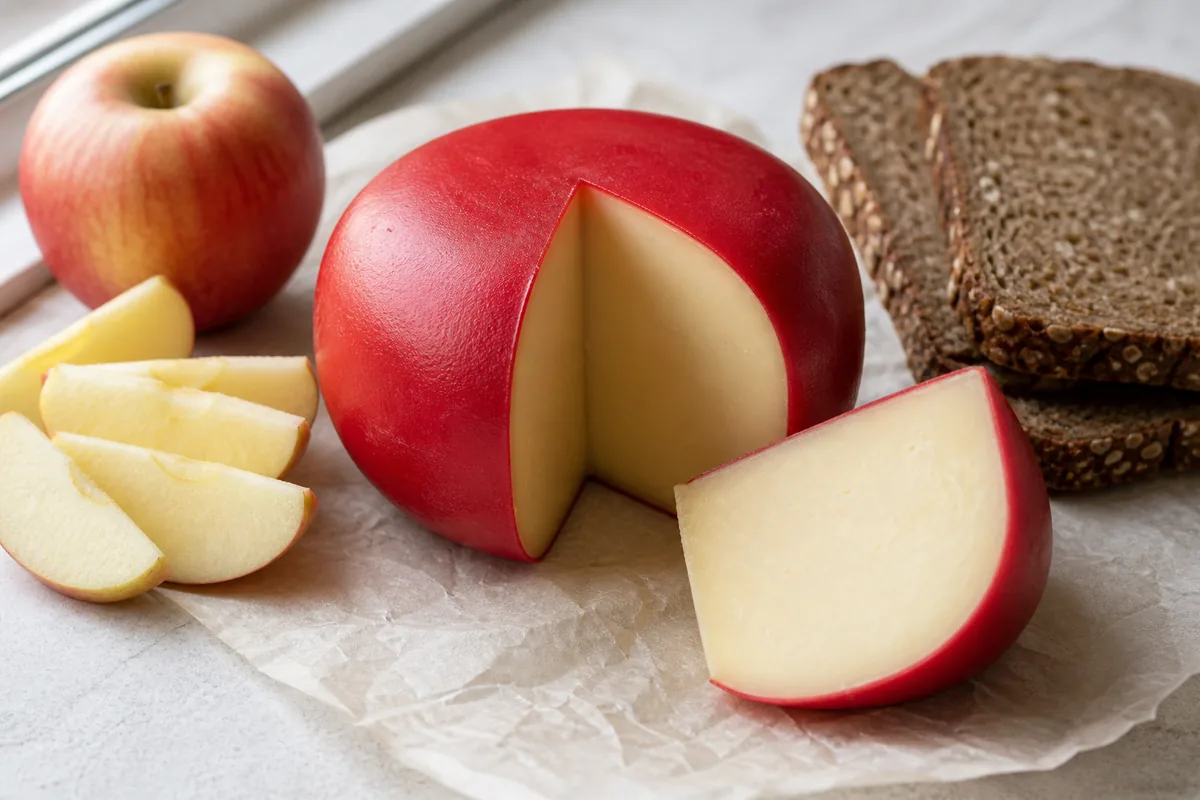
Tart Granny Smith apple slices with Havarti. The fruit acidity and crunch contrast the soft, buttery paste. One of the simplest and most effective Havarti pairings.
Food
Smoked Salmon
Dill Havarti with smoked salmon on rye crackers or dark bread. The Scandinavian combination is a natural match. The dill in the cheese and the smoke in the fish complement each other directly.
Food
Grapes and Dried Fruit
Fresh grapes and dried apricots alongside sliced Havarti on a board. The sweetness of the fruit adds the flavor contrast that Havarti's mild paste needs.
Food
  • Sauvignon Blanc — herbal acidity adds dimension to the mild cheese
  • Light lager or pilsner — the Scandinavian tradition, crisp and clean
  • Green apple slices — tart fruit against buttery paste, simple and effective
  • Smoked salmon with dill Havarti — the full Danish combination

Avoid pairing Havarti with strong condiments, aged balsamic, or pungent accompaniments. The mild flavor disappears next to strong partners. If you want a cheese that can stand up to bold flavors, choose aged firm cow's milk staple or firm La Mancha cheese instead.

Havarti Nutrition

Havarti is a moderate-calorie semi-soft cheese with a nutritional profile typical of full-fat cow's milk varieties. The higher moisture content compared to hard cheeses means slightly lower mineral concentration per ounce.

  • Moderate calories — 105 per ounce, in line with other semi-soft cheeses
  • Lower protein — 5.9g per ounce, less than hard cheeses because of higher moisture
  • Moderate sodium — 215mg per ounce, lower than most aged cheeses
  • Low lactose — the washed-curd process removes most lactose before aging

Havarti's washed-curd production gives it an advantage for lactose sensitivity. The washing step physically removes lactose from the curd before pressing. Combined with the bacterial fermentation during aging, this results in very low residual lactose in the finished cheese.

These figures come from the USDA FoodData Central database for Havarti cheese.

SAFE WHEN PASTEURIZED
Commercial Havarti is made from pasteurized cow's milk and is considered safe during pregnancy by all major food safety authorities. It does not carry the same risks as raw-milk or soft mold-ripened cheeses. Flavored varieties (dill, caraway, jalapeno) are equally safe. If purchasing aged Havarti from a specialty producer, confirm the milk is pasteurized.

Cream Havarti has slightly higher fat and calorie content per ounce because of the added cream. The difference is modest: roughly 10-15 additional calories per ounce compared to standard Havarti.

THE BOTTOM LINE
SOURCES & REFERENCES

1.
Danish Cheese: History and Production Methods
Danish Dairy Board (Mejeriforeningen), 2020 Dairy Board
Overview of Danish cheese production including the historical development of Havarti by Hanne Nielsen at Havartigaard in the 1870s, washed-curd methodology, and modern production standards.

2.
FoodData Central: Cheese, Havarti
U.S. Department of Agriculture, Agricultural Research Service, 2019 Gov
Nutritional data per 28g serving for Havarti cheese. Figures used in the Nutrition section above.

Havarti FAQ

These are the questions we hear most about Havarti, from melting behavior to the difference between standard and aged versions.

Yes. Havarti is one of the best melting cheeses available. Its high moisture, moderate fat, and supple protein structure allow it to melt at lower temperatures than hard cheeses and form a smooth, cohesive pool without separating. It is excellent for grilled cheese, quesadillas, omelets, and burgers. It does not brown well under a broiler, so use Gruyere or Parmesan for gratins that need a browned top.

Cream Havarti (Creamy Havarti) has extra cream added to the milk before curdling, producing a higher-fat, softer, and even milder cheese. Standard Havarti is supple and sliceable. Cream Havarti is softer and more spreadable. Both melt well. Cream Havarti is the better choice for people who find standard Havarti too firm or for spreading on crackers.

Aged Havarti (12+ months) develops hazelnut and caramel notes, a firmer texture, and small crystalline deposits in the paste. It tastes more like a young Gouda than a standard Havarti. The buttery mildness of young Havarti gives way to a sharper, more complex flavor. Aged Havarti is a board cheese, not a sandwich cheese.

Yes. Commercial Havarti is made from pasteurized cow's milk and is safe during pregnancy. It is not a mold-ripened or raw-milk cheese. All major food safety authorities (FDA, NHS, EFSA) consider pasteurized semi-soft cheeses like Havarti safe for pregnant women. Flavored varieties are equally safe.

Yes, for cooking. Freeze Havarti in portions wrapped in plastic wrap and foil. It keeps for 45-60 days frozen. The texture becomes crumbly after thawing, making it unsuitable for cold sandwiches or boards. Thawed Havarti melts normally and works well in grilled cheese, quesadillas, and egg dishes. For best results, grate or slice before freezing.

WRITTEN BY
Elise writes every cheese profile, pairing guide, and substitute recommendation on KnowTheCheese. She trained at Murray's Cheese in New York and has visited over 40 creameries across Europe and North America.