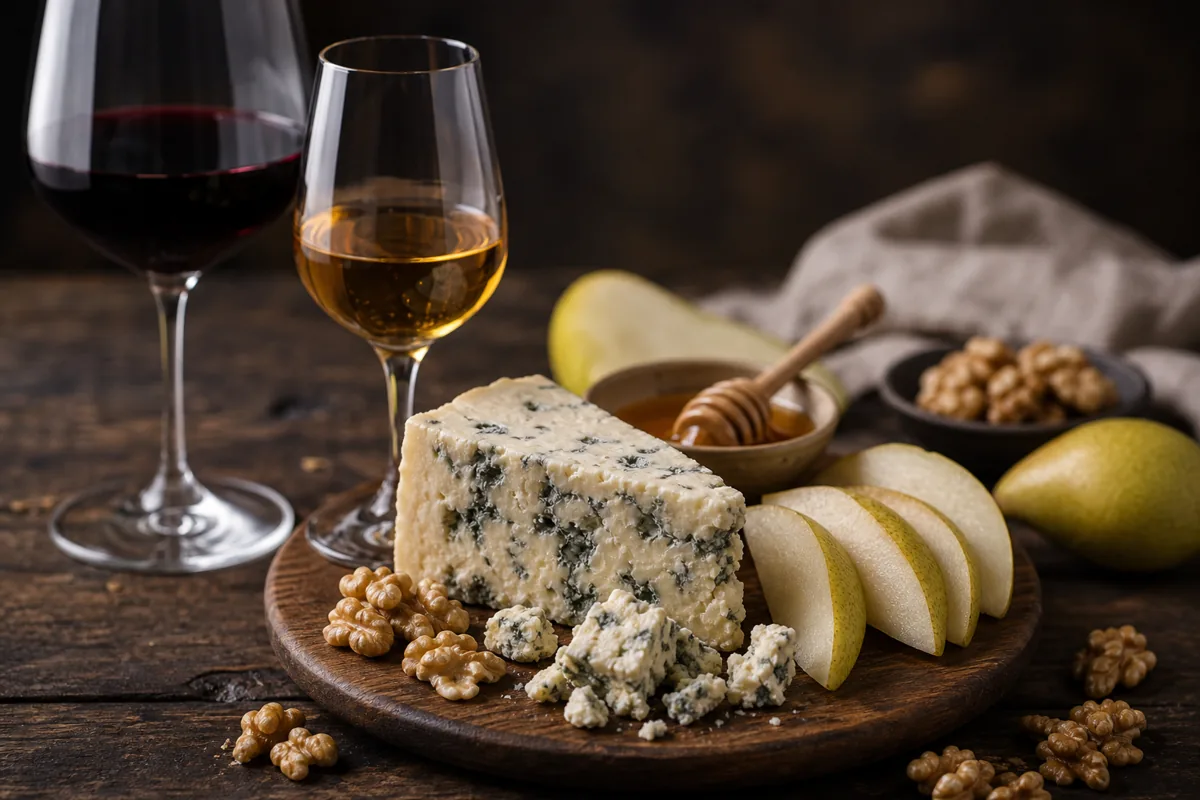
If you are serving a blue-veined wedge, start with sweetness, body, or both. The same contrast principle shapes how we match cheese and wine across the pairing approach.
That rule sounds simple, but it matters more here than it does with almost any other cheese family. Dry delicate wine gets crushed by salt, mold, and lingering bite.
The best bottle softens the attack without making the board sticky or cloying. That balance is why sweet wine with strong acid wins so often.
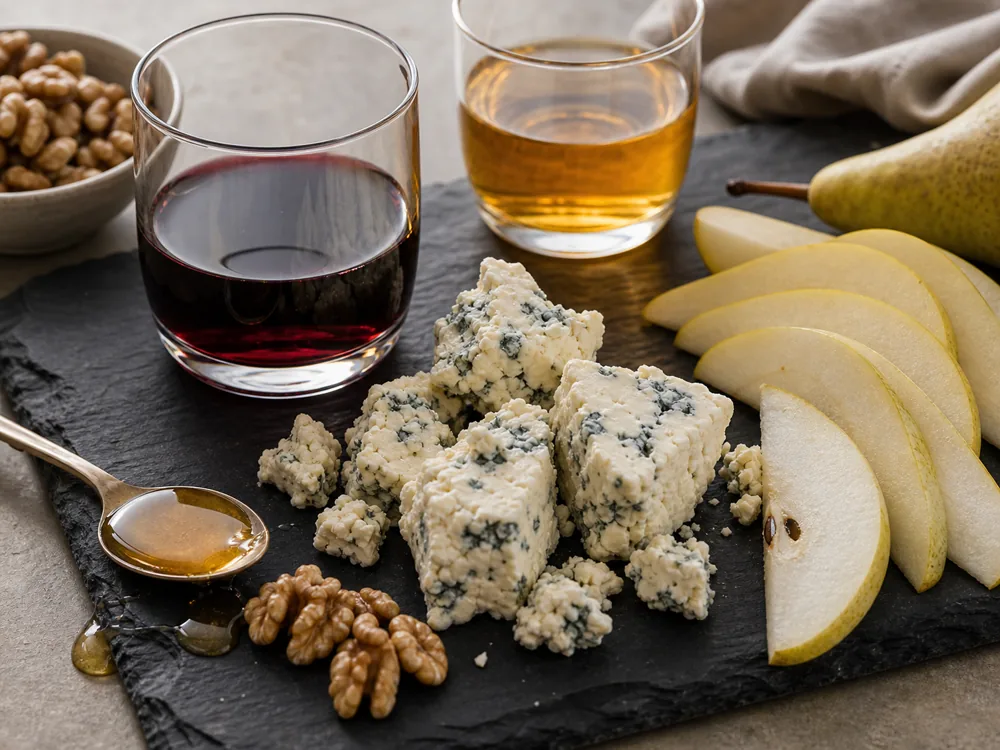
Blue cheese is not one flavor. Creamy Gorgonzola Dolce, crumbly Stilton, and sharp Roquefort all sit in the same family, but they do not need exactly the same level of sweetness.
| Blue cheese style | Best wine lane | Why it works |
|---|---|---|
| Creamy mild blue | Late-harvest Riesling | Sweetness softens tang while acidity keeps the paste lively. |
| Crumbly Stilton-style blue | Tawny or vintage Port | Dark fruit and body stand up to salt and dry crumble. |
| Sharp sheep's-milk blue | Sauternes or Tokaji | High sugar and acid calm pungency without flattening flavor. |
In This Article
Start With Sweetness, Then Check the Acid
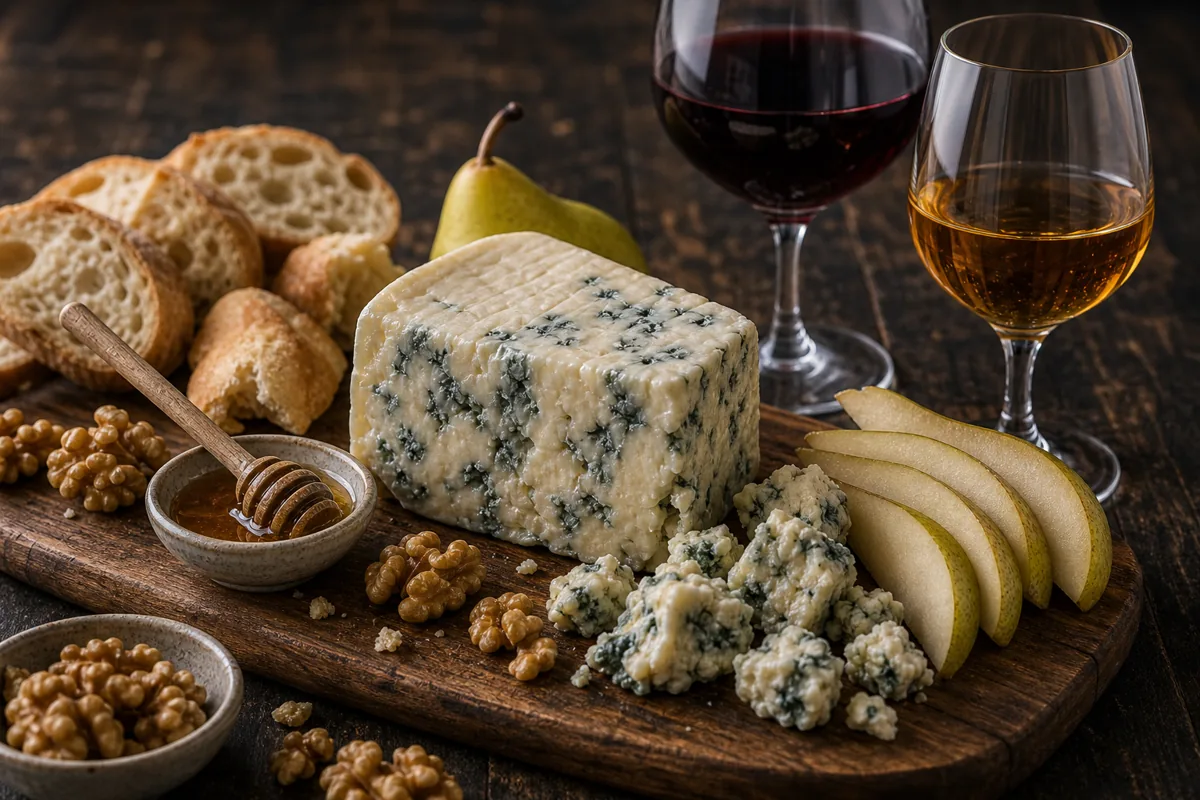
Sauternes is the best all-around answer because it brings sugar, acid, and enough depth for serious blue. Port is the classic board bottle when you want something darker and warmer.
The key is not only sweetness. The wine also needs enough structure to stay vivid after the first salty bite.
Acid is what keeps the pairing from turning heavy. Sauternes, Tokaji, and late-harvest Riesling work because sugar and acid arrive together.
A flat sweet wine may calm the salt at first, then leave the finish thick and dull.
Port works through a different cheese. It brings body, alcohol warmth, dried fruit, and nutty depth.
That is why it feels natural with Stilton and darker winter boards, but it can be too heavy for a creamy mild blue served early in the meal.
| Pairing | Type | Why It Works |
|---|---|---|
| Sauternes | Sweet white | The gold-standard pairing. Honeyed sweetness and sharp acidity calm strong blue cheese without making the match feel sticky. |
| Vintage Port | Fortified wine | Port works especially well with crumbly British-style blue because dark fruit and alcohol stand up to the salt. |
| Tokaji Aszu | Sweet white | Tokaji gives you apricot sweetness and vivid acid. It works well when you want a cleaner finish than Port gives. |
| Pedro Ximenez | Fortified wine | Use PX in very small pours with the saltiest, strongest blues. It is dramatic and dessert-like. |
| Recioto della Valpolicella | Sweet red | This works well with softer Italian blues because the dried-fruit sweetness feels rich without turning syrupy. |
| Late-harvest Riesling | Sweet white | A late-harvest style with strong acid can handle milder blue cheese and keeps the pairing bright. |
- Best overall: Sauternes gives the cleanest sweet-salt balance.
- Best classic board bottle: Port remains the old reliable choice.
- Best bright option: Tokaji or late-harvest Riesling keeps more lift in the finish.
- Best Italian choice: Recioto works especially well with softer Gorgonzola styles.
All six bottles answer the same problem. They keep blue cheese from tasting harsher than it should.
The broader wine-pairing logic still applies, but blue cheese pushes that contrast rule harder than any other family.
Read Salt, Cream, and Veining Before You Pick the Bottle
Blue cheese brings salt, pungency, and lingering mold aroma. Dry wine usually magnifies the bitter side of that combination instead of calming it.
Sweet wine does the opposite. Sugar rounds the attack, while acid keeps the pairing from feeling syrupy.
Salt level matters more than the color of the wine. A salty sheep's-milk blue can make a dry red taste bitter, while a softer cow's-milk blue can handle a lighter off-dry white.
Taste a crumb first if you can.
Cream changes the bottle too. A creamy blue coats the mouth, so bubbles, bright acid, and fresh fruit tones help.
A dry crumbly blue leaves more salt and mold on the finish, so Port, Sauternes, Tokaji, or Banyuls has more work to do.
- Salt boosts sweetness: the wine tastes fruitier after a bite of blue cheese.
- Sugar softens pungency: the mold bite feels less sharp when sweetness is present.
- Acid resets the palate: without it, the pairing turns heavy very fast.
- Body matters too: thin wines vanish under strong blue flavor even if they are sweet.
This is why the creamier Italian blue style can work with softer sweet wine. The sharper sheep's-milk benchmark usually needs something more forceful.
The rule is easy to remember at the shelf. The stronger the blue, the sweeter or more concentrated the bottle should be.
Separate Creamy Blue, Stilton, and Roquefort
Style matters more than country. A creamy mild blue and a dry salty blue do not want the same pour, even when both sit under the word blue.
Once you know the style, the wine lane gets much clearer.
Creamy blue is the forgiving lane. Gorgonzola Dolce, Cambozola, and similar wedges can use late-harvest Riesling, off-dry Chenin Blanc, or even a rich sparkling wine because the cheese is more lush than sharp.
Stilton needs more weight. Tawny Port works because the cheese is firm, mineral, and nutty enough to meet caramel and dried fruit.
A lighter sweet wine can taste pretty for one bite, then fade.
Roquefort is the high-salt lane. Sauternes and Tokaji are safer because they bring sweetness with serious acid.
If the wine is only sweet, Roquefort can make it feel sticky.
If the label does not tell you the exact style, use texture as the clue. A spreadable blue with pale paste usually needs less wine weight.
A dry blue with dense veining, brittle crumble, and a sharp smell usually needs more sugar, more acid, or fortified depth.
- Gorgonzola Dolce: late-harvest Riesling, Recioto, or softer sweet styles feel balanced.
- Stilton: Port remains the benchmark because the crumbly paste loves dark fruit and warmth.
- Roquefort: Sauternes or Tokaji brings the lift and sweetness strong sheep's-milk blue needs.
- Danish Blue: off-dry to sweet wine works well because the cheese is salty but often rounder than Roquefort.
If you want the sharper side of the Italian lane, the Gorgonzola-Roquefort intensity gap makes the bottle choice easier to judge before you buy.
When several blue cheeses share one board, pour the sweetest high-acid bottle you own. One good Sauternes usually works better than three mismatched dry wines.
That simplification helps guests too. They can notice the cheese differences without changing glasses every few bites.
Avoid Tannin, Thin Whites, and Flat Sweet Wine
Dry delicate wine fails most often. The salt and mold strip it down until the finish turns bitter or metallic.
Tannic reds can also get ugly fast because salt, mold, and tannin create a rough finish together.
Avoid bone-dry Sauvignon Blanc, lean Chablis, light Pinot Grigio, and hard tannic reds with most blue cheese. They make the pairing taste harsher, not more refined.
- Bone-dry whites: too little sweetness and too little body.
- Lean mineral Chardonnay: often turns bitter beside stronger blues.
- Light neutral wines: they simply disappear after the first bite.
- Hard tannic reds: tannin plus salt gives a rough metallic finish.
If you want a second cheese beside the blue, the Danish kitchen-friendly style is often easier for mixed groups than the strongest options.
When the board needs blue flavor without the sharpest salt, milder crumble options can cover the role before you change the wine.
That choice matters on a board because not every guest wants the cheese to hit at full force.
Also watch alcohol heat. A high-alcohol red with heavy tannin can make the cheese taste sharp and the wine taste hotter.
Fortified wine works because it has sweetness and body to balance that warmth.
Dry sparkling wine is not automatically safe either. Bubbles help with cream, but low sweetness can leave salt exposed.
Use dry sparkling only with mild creamy blue or when the board has pears, bread, and nuts to soften the bite.
Change the Bottle When the Board Gets Warmer or Darker
Blue cheese shines hardest in cool weather, but it can still work in spring and summer if the cheese stays cooler and the sides stay fresh. Pear, grapes, and plain bread help more than rich jams in warm weather.
As the season turns colder, darker fruit and sweeter wine start making more sense.
Warm-weather blue cheese needs restraint. Keep the cheese cooler, cut smaller pieces, and use pear, grapes, plain bread, or a lighter sweet white.
Heavy Port can feel tiring if the rest of the board is fresh.
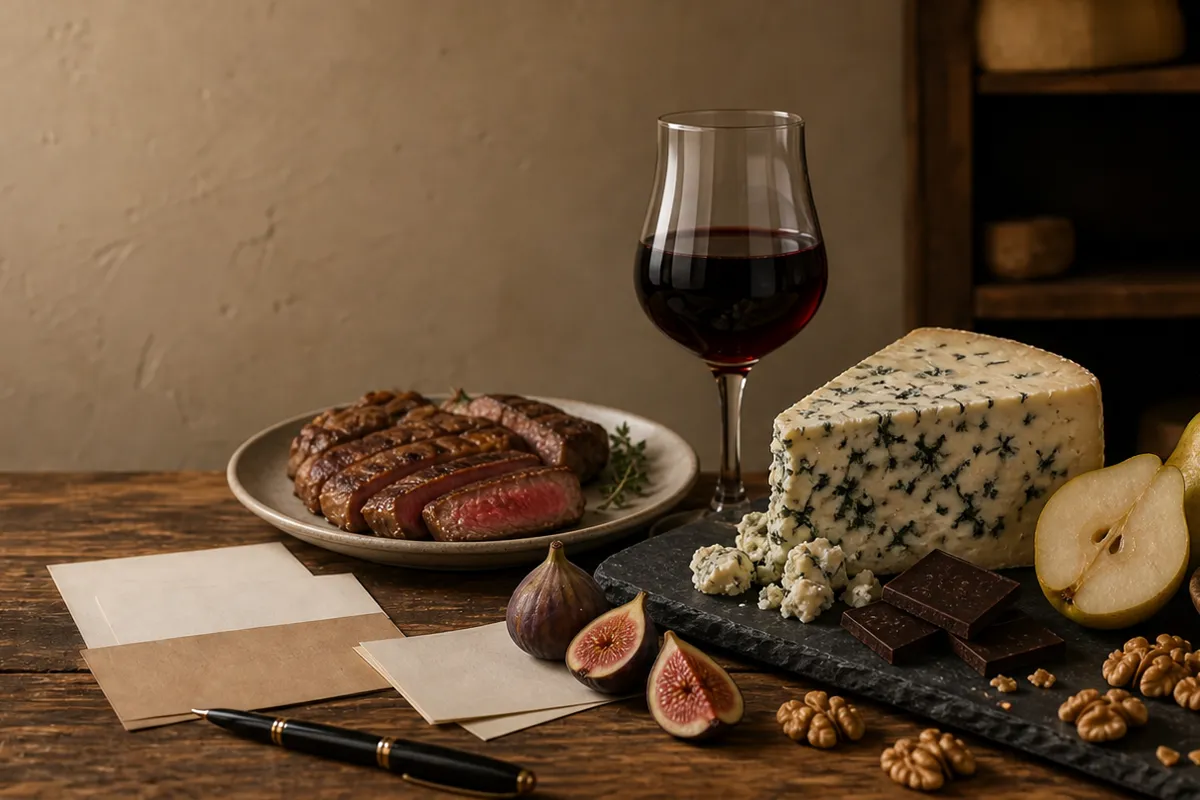
Cold-weather boards can go darker. Walnuts, figs, dark chocolate, roasted pears, and fruitcake all make Port, Banyuls, or Tokaji feel more natural.
The wine should follow the board's weight, not only the cheese name.
For bigger platters, board sequencing helps you place blue near the end so softer cheeses still have a chance to register.
Keep the wedge wrapped well between pours too. Blue-cheese cut-face care matters because exposed paste turns harsh quickly.
Serve Small Pieces and Keep the Strongest Blue Last
Serve blue cheese a little cooler than most other board cheeses. Ten to fifteen minutes out of the fridge is usually enough.
That cooler service keeps the aroma rounder and stops the cheese from feeling aggressive too early.
If your board includes a second blue, the English holiday classic gives a very different texture from softer wedges even when the wine stays the same.
That side-by-side is useful because it shows how much texture changes the pairing, not just strength.
Pour less wine than you would with a mild cheese. Sweet and fortified wines are intense, and blue cheese is intense too.
Small pours let guests taste balance instead of sugar and salt fatigue.
If the board has multiple cheeses, serve blue cheese near the end. A strong blue first can make Brie, fresh goat cheese, or mild cheddar taste flat.
The wine sequence should move the same way: lighter bottles first, sweeter or fortified bottles last.
Keep the pour and cheese close together. Blue cheese changes fast as it warms, and sweet wine feels heavier as the glass gets warmer.
Small pours, small cuts, and a quick refill make the pairing taste cleaner than one large glass beside a large wedge.
If the pairing still tastes rough, change the cheese portion before changing the bottle. A thinner piece of strong blue with more bread can make the same Sauternes or Port feel balanced.
Large chunks are the fastest way to make even a good wine seem too sweet or too hot.
SOURCES & REFERENCES
Blue Cheese Wine Pairing FAQ
These are the questions that come up most once people move beyond the simple idea that blue cheese needs sweet wine.
Sauternes is the best all-around wine for blue cheese. It gives you sweetness, acid, and enough body for strong blue without turning cloying.
Port works because dark fruit sweetness and body can stand up to salt and pungency. That is why it stays a classic with Stilton.
Yes, but it works best when the red is sweet or fortified. Dry tannic reds usually make the finish rough and bitter.
Avoid bone-dry delicate whites and hard tannic reds. They magnify the harsh side of blue cheese instead of balancing it.
No. Mild creamy blue can use lighter sweet wine, while stronger salty blue needs a more concentrated bottle.
Style matters as much as sweetness.