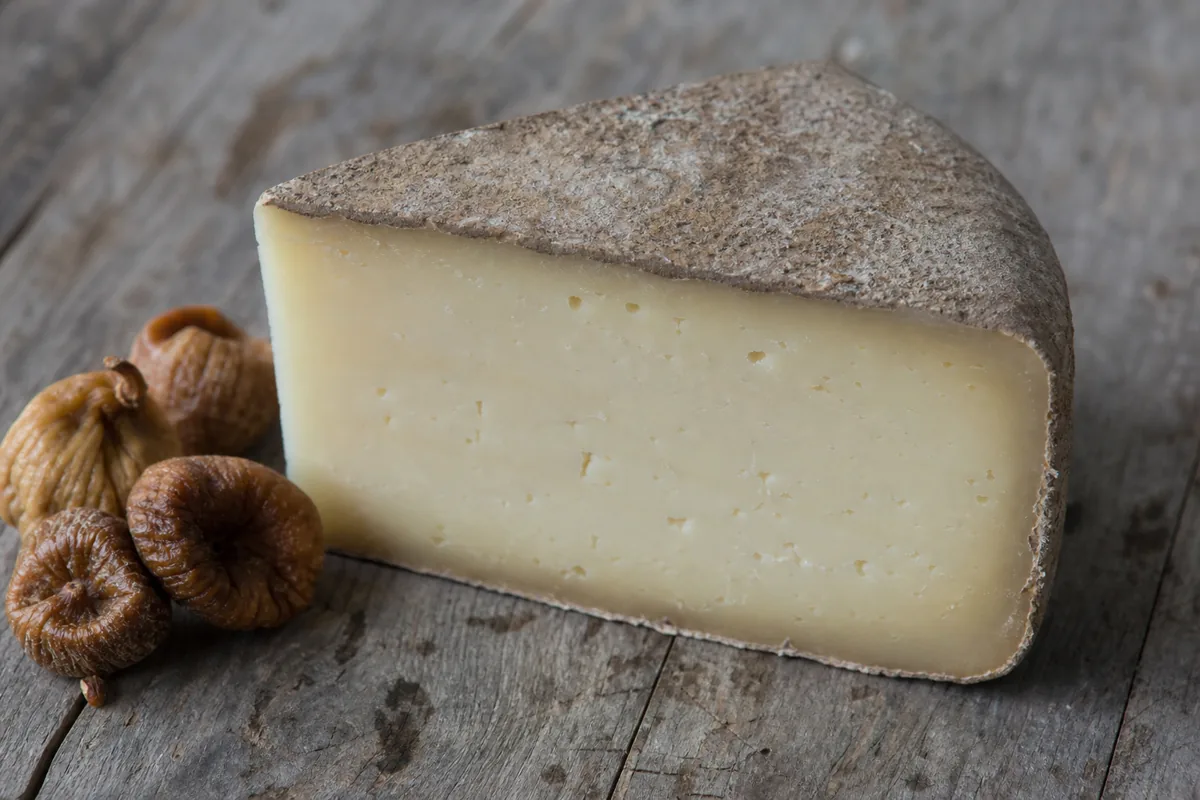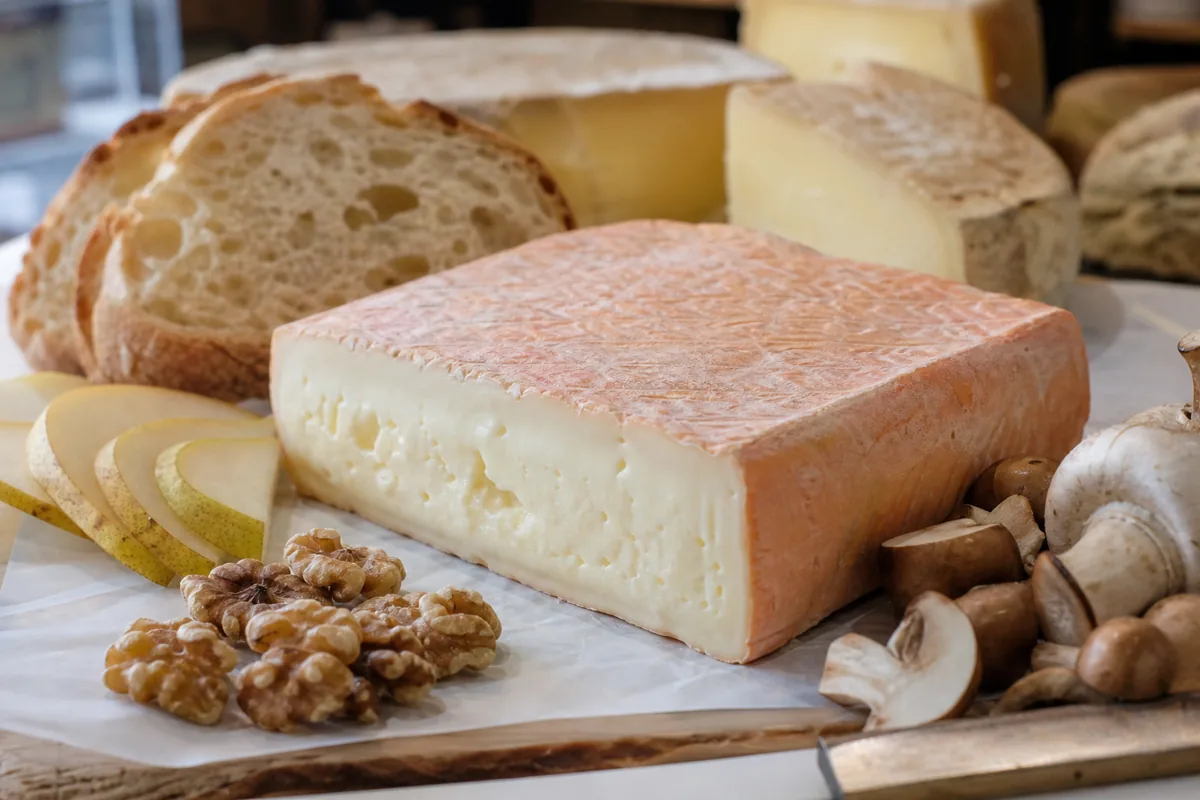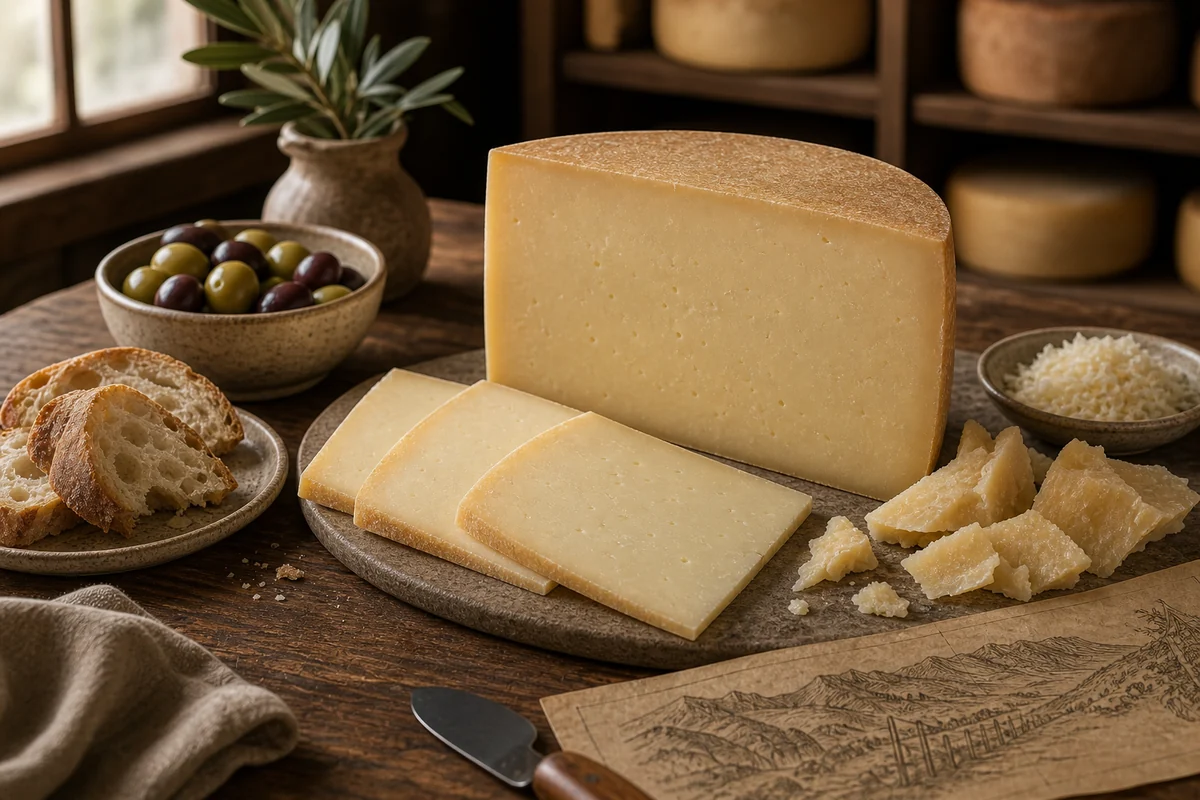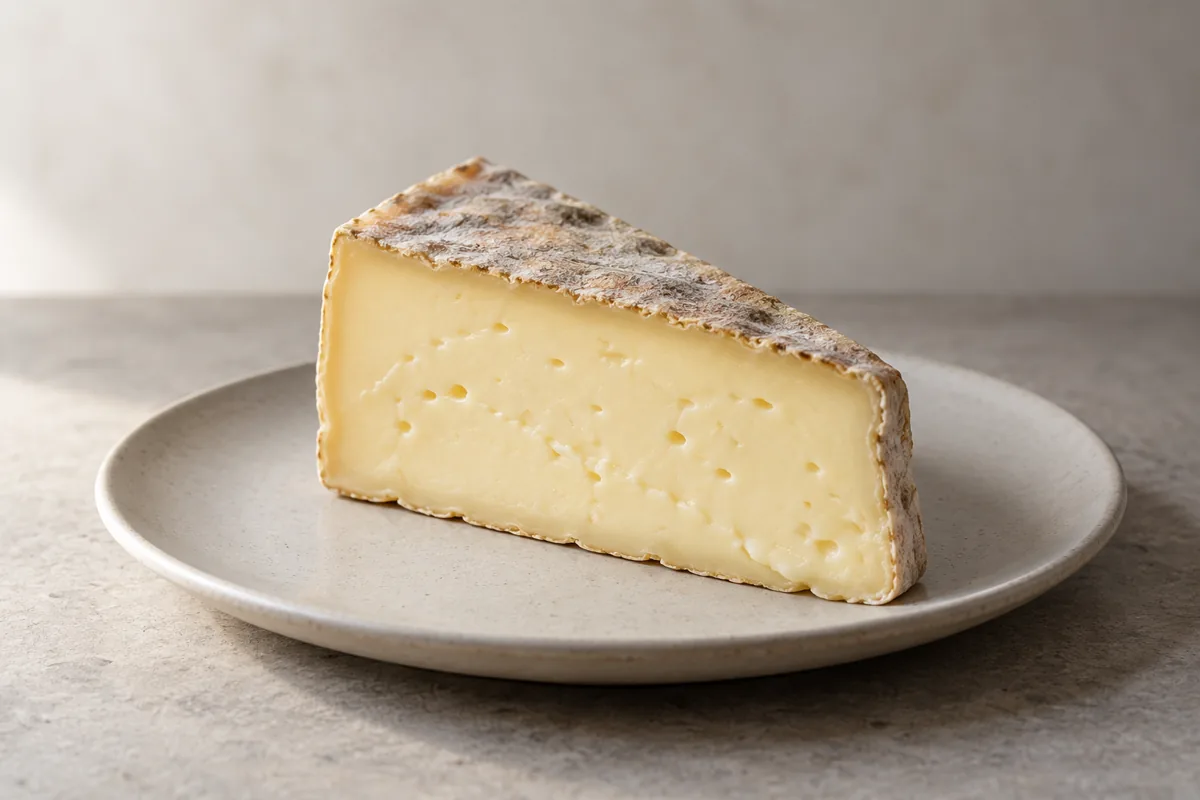
Alpe di Frabosa is an Italian cow's-milk cheese that Beppino Occelli's catalogue describes as made from raw full-cream cows' milk. After a couple of months of ageing, the catalogue says, the crust smells of mushroom and the cheese often finishes with a bitter almond aftertaste.
Raw milk also changes what the NHS and CDC say about eating it in pregnancy.
In This Article
Who Makes Alpe di Frabosa, and From What Milk?
Cheese.com lists Alpe di Frabosa as an Italian cheese made from cow's milk and calls it a speciality of the Italian Alps.
The only maker the sources name is Beppino Occelli, whose catalogue lists the cheese among its partly aged cheeses. The Italian edition of that catalogue says the same thing about the milk: whole and raw.
The Italian catalogue adds that, made from whole raw milk, the cheese keeps the aromas and perfumes of its territory.
Cheese.com describes the milk as fresh cow's milk with cream and never says raw or pasteurized. Occelli says raw, and as the maker's own description it settles the milk question here.
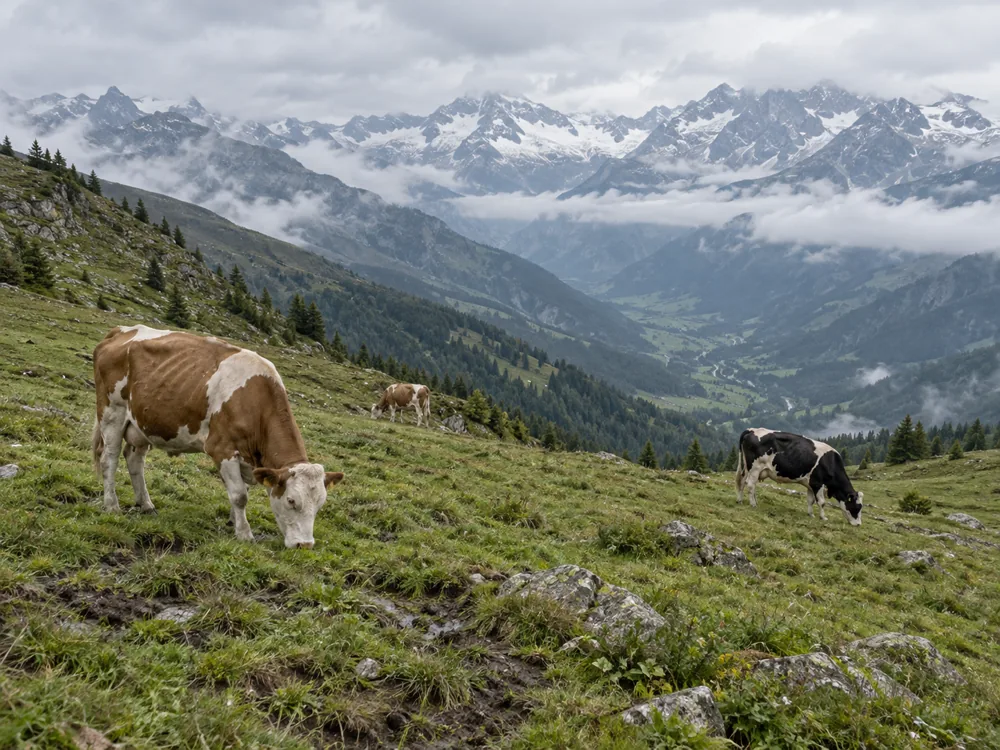
Occelli's catalogue traces its milk collection through the Langhe to the grazing trails of Frabosa Soprana and the Cuneo valleys.
Wikipedia places Frabosa Soprana in Cuneo province in Piedmont, and the catalogue says a small Occelli dairy on its mountainside, at 1000 metres, makes Raschera di Alpeggio and a rare Bra Duro di Alpeggio.
The Italian catalogue says Occelli keeps cows, goats and sheep that graze in summer and stay in the stable in winter, and that almost all its milk comes from animals living on its own land. A survey of the herbs and flowers in each meadow, sorted by month and season, decides which pastures it uses.
Its stated reason is that the final character of its butter and cheeses follows the goodness and freshness of the milk.
What Does Alpe di Frabosa Taste and Smell Like?
Occelli says the crust smells of mushroom and the inside smells of milk and hay. It adds that the cheese often has a bitter almond aftertaste.
Cheese.com agrees on the mushroom aroma, adds milky, and lists the flavor as bitter. It also says further refinement develops the flavor of the crust's porcini mushroom.
The two sources place the mushroom note at different points. Occelli reports it after a couple of months, while Cheese.com presents the crust's porcini flavor as the result of further refinement.
Bitterness is part of the profile in both sources, though Occelli says the bitter almond finish appears often rather than always.
How Long Is Alpe di Frabosa Aged?
Occelli says the cheese becomes tasty after a couple of months, and Cheese.com says the maturation period can be as long as 90 days.
Occelli's entry for Losa di Capra gives about two months, which shows how the catalogue reads a couple of months. Against that, Cheese.com's 90 days is up to a month longer.
Occelli says its partly aged cheeses reach ideal maturation after a couple of months and are usually made with raw milk. They age in the village of Valcasotto, where workers control, turn, and massage the cheeses every day until they are perfectly mature.
The catalogue's general account of those cellars adds that dark rooms, pure spring water and humidity that is always controlled work together with the cellar workers to bring the cheeses to full maturity.
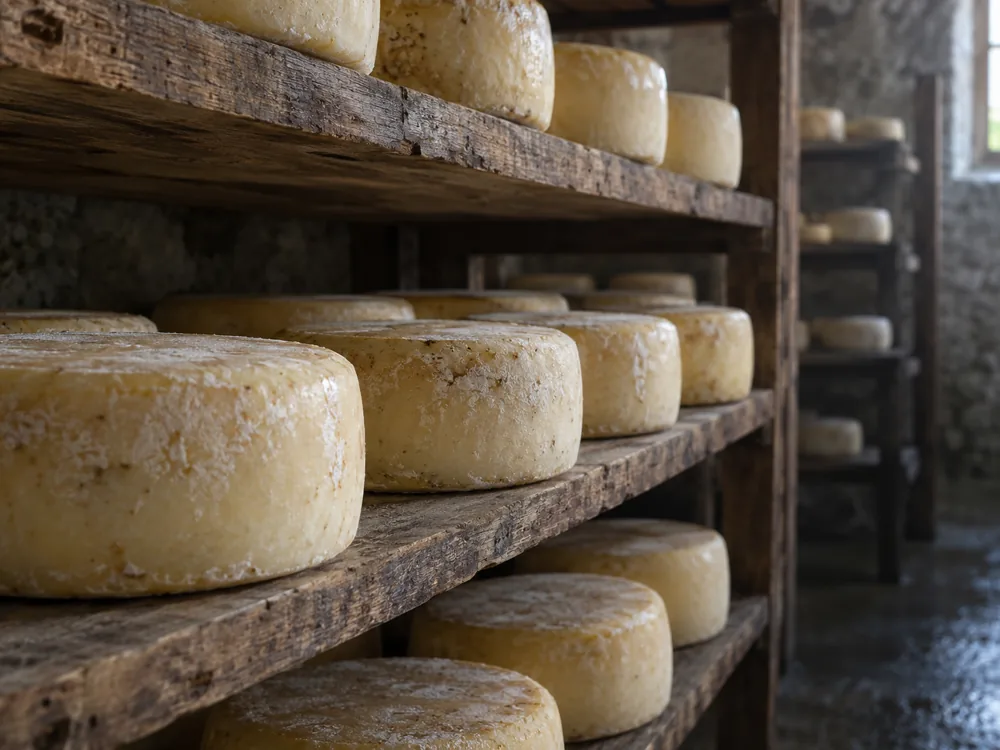
Occelli sorts its cheeses by time in those cellars. Testun, in the aged section, stays at least four months, while Alpe di Frabosa belongs to the partly aged group that is ready after a couple of months.
The catalogue also describes a later refinement stage, in which the best wheels move to smaller cellars for long months among twelve different woods that encourage white, pink, orange or greenish noble moulds.
How Does It Differ From Occelli's Other Partly Aged Cheeses?
Occelli's catalogue lists seven partly aged cheeses together, so the names are easy to mix up at a counter.
| Cheese | Milk | Catalogue description |
|---|---|---|
| Losa di Capra | Raw goat's and cow's milk | Ripens in about two months; the crust carries a knot left by the curd cloth; shape and color recall the stone that roofs mountain houses |
| Losa | Raw cow's milk | Low, square form with a knot left by the curd cloth; soft and malleable; milky, buttery aroma |
| Alpe di Frabosa | Raw full-cream cows' milk | Crust smells of mushroom, inside of milk and hay, often a bitter almond aftertaste |
| La Casottina | Cow's milk | Aged on fir boards, which give a slightly straw color; in autumn, when the milk is fattier, the crust cracks slightly and shows a creamy paste |
| Toma del Monte Regale | Raw cows' milk | Soft consistency with tiny holes; milky, buttery flavor that grows with ageing |
| Toma dei Pascoli | Cow's milk, worked raw | Pleasant, mild flavor; soft paste with holes that show the milk was used raw; floral and alpine-herb notes in taste and smell |
| Toma Nostrale | Raw cows' milk | Rustic, mountain-product character; delicate flavor that becomes more appetizing with time, with a herb and meadow-flower aroma |
Only the Alpe di Frabosa entry mentions mushroom or bitter almond. The other entries describe milky, buttery, floral, herb or meadow notes, a shape, or a surface.
The entries also describe different things. Losa is identified by its form and cloth knot, La Casottina by its fir boards and straw color, and the Toma entries by their holes and texture, whereas Alpe di Frabosa's entry gives only aroma and flavor.
The name on the label is the main thing a buyer can match to the catalogue, since Cheese.com's semi-soft is the only texture word.
La Casottina is the only one of the seven whose entry never mentions raw milk, even though the catalogue says its partly aged cheeses are generally made from raw milk.
Does the Frabosa Name Mean the Same Cheese?
Occelli's catalogue lists three blue cheeses, each made from a single milk, and two carry the Frabosa name while the third is named after Frabosa marble.
| Cheese | Milk | Catalogue description |
|---|---|---|
| Alpe di Frabosa | Raw full-cream cows' milk | Partly aged; crust smells of mushroom; no veining described |
| Verzin | Mountain cow's milk | Blue; white paste with greenish veins, creamy and spreadable |
| Verde di Frabosa | Goat's milk only | Blue; soft, pleasantly buttery paste with delicate green veins |
| Blu di Frabosa | Sheep's milk only | Blue; after a few weeks of ageing the paste is dry and granular, with delicate blue veins |
Verde di Frabosa is Occelli's version of the old alpine practice of natural blue-green moulds, made only from mountain goat's milk. Blu di Frabosa is an old-tradition blue whose moulds mountain herdsmen could also raise on stale rye bread.
Verzin takes its name from the famous marble of the Frabosa quarries, because its white paste is streaked with greenish veins.
Alpe di Frabosa sits in the partly aged section and the catalogue describes no veining in it, while the Frabosa-named blues use goat's or sheep's milk, so the shared place name says nothing reliable about milk or style.
What Does a DOP Label Fix That Alpe di Frabosa Lacks?
Occelli's catalogue lists Raschera DOP, Bra DOP, Toma Piemontese DOP and Castelmagno DOP in separate sections, where each cheese follows its consortium's specification and Occelli ages it beyond the minimum that specification sets.
Those minimums are concrete: two months for Raschera, at least six months for Bra Duro, and at least 60 days in the mountains for Castelmagno di Alpeggio.
Alpe di Frabosa carries no DOP label in the catalogue and no regulated age floor. Occelli's couple of months says when the cheese is ready, and Cheese.com says maturation can usually last as long as 90 days, so neither figure is a regulated minimum.
A separate "di alpeggio" section holds DOP cheeses from cows that graze above 900 metres in summer, and Castelmagno di Alpeggio is made at least 1000 metres up. Alpe di Frabosa is in neither DOP section and carries no link to milk from those high pastures.
What Do the Sources Say to Serve With Alpe di Frabosa?
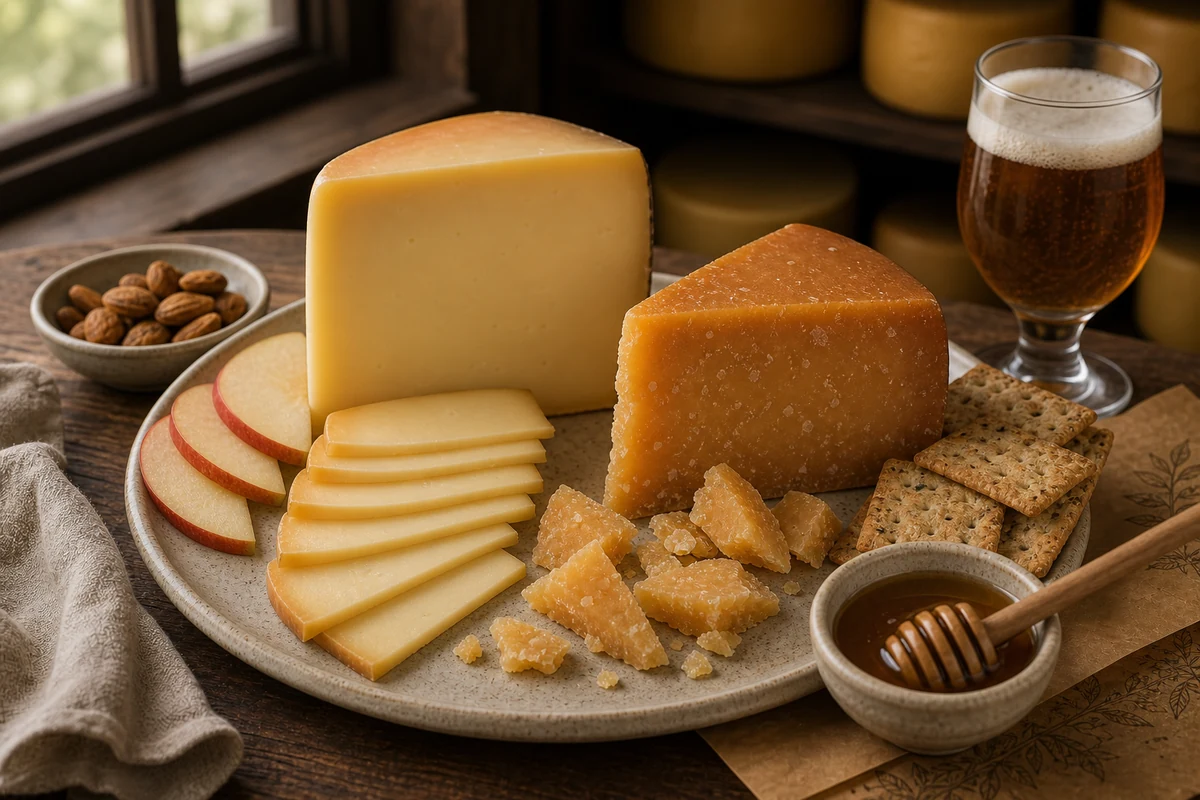
Cheese.com suggests a slice with crusty bread and a glass of wine, and calls it a meal for herdsmen, meaning mushroom pickers.
| Pairing | Type | Why It Works |
|---|---|---|
| Crusty bread | Food | Cheese.com's serving suggestion: a slice of the cheese with crusty bread. |
| A glass of wine | Wine | Cheese.com suggests a glass of wine as a pairing. |
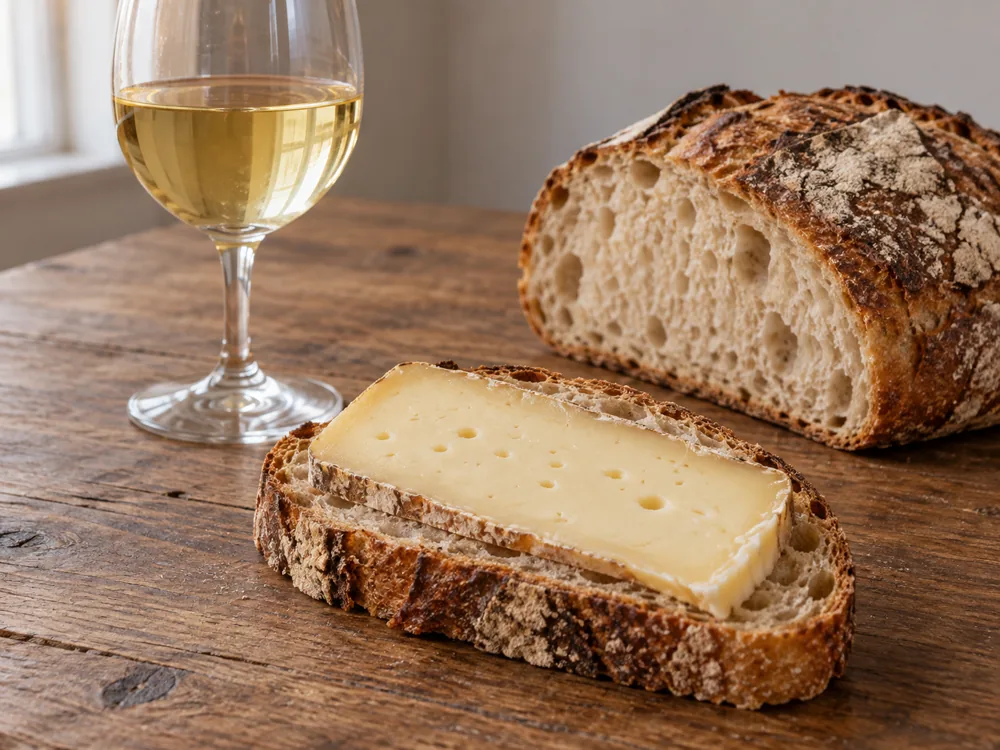
The CDC says perishable food such as dairy should go back into the refrigerator within 2 hours, or within 1 hour in temperatures above 90°F, and that a refrigerator should stay at 40°F or below. That limit covers a wedge left on the table with the bread and wine.
Is Alpe di Frabosa Safe to Eat in Pregnancy?
Occelli describes the cheese as raw-milk. The NHS says foods made from unpasteurised milk must be thoroughly cooked, and tells pregnant women to avoid unpasteurised milk, cream, yoghurt, butter and ice cream.
The NHS also says any cheese cooked until steaming hot is safe, soft or blue included.
The CDC lists soft cheese made from unpasteurized milk as riskier, and says pregnant women are 10 times more likely to get a Listeria infection. Its safer list names hard cheeses such as Cheddar, Parmesan, and Asiago made with pasteurized milk.
That list also includes cottage cheese, cream cheese, string cheese, feta and mozzarella, all when made with pasteurized milk.
Cheese.com calls Alpe di Frabosa semi-soft, and the cheese is described as raw-milk, so neither agency's safer list covers it as sold.
Where Can You Buy Alpe di Frabosa?
Occelli is the only maker the sources name. Cheese.com marks the cheese as not vegetarian and not vegan.
Check the seller's label for fat content, wheel size, and storage advice.
If another maker sells a cheese under this name, that label is the only evidence of its milk treatment and age.
SOURCES & REFERENCES
It is an Italian cow's-milk cheese that Beppino Occelli's catalogue describes as made from raw full-cream milk. Cheese.com calls it semi-soft and a speciality of the Italian Alps.
Occelli says the crust smells of mushroom, the inside of milk and hay, and the aftertaste is often bitter almond. Cheese.com lists the flavor as bitter.
Occelli says it is tasty after a couple of months, and Cheese.com says maturation can last as long as 90 days.
Occelli's catalogue says it is made from raw full-cream cows' milk. Cheese.com says fresh cow's milk with cream.
Occelli describes it as raw-milk, and the CDC lists soft cheese from unpasteurized milk as riskier. The NHS accepts cheese cooked until steaming hot, so ask your midwife or doctor about eating it cold.
Occelli's catalogue puts it in the partly aged section, apart from its DOP sections, and gives it no DOP label.
No. Occelli makes those two as blue cheeses from goat's milk only and sheep's milk only, while Alpe di Frabosa is a raw cow's-milk cheese with a mushroom crust.
Cheese.com suggests crusty bread and a glass of wine.