Of all the European cheese regions, France teaches the main rule at a serious counter: origin matters most when it changes what the cheese does for you.
The first answer is simple. Buy French cheese by family first, then by protected name.
That keeps you from paying for prestige when what you really need is creaminess, acidity, savory depth, or one bold rind.
The names most shoppers actually meet are Normandy bloomy wheels, Loire goat shapes, Auvergne mountain cheeses and northern washed rinds, and protected labels keep the most copied of those styles honest.
- Best first split: bloomy, goat, mountain, blue, and washed-rind families.
- Best label clue: AOP matters when a famous style is copied heavily.
- Best board rule: build contrast before you chase rare names.
In This Article
Why Should You Start with Family, Not Prestige?
French cheese looks intimidating because the names arrive before the logic. The shelf becomes clearer when you treat each cheese as a family role instead of a trophy.
Bloomy wheels bring a soft rind and creamy paste. Loire goat cheeses bring bright acidity and ash or shape cues.
Mountain and interior cheeses bring firmer texture, nuttiness, and board depth. Washed-rind cheeses bring the savory edge that makes a board feel grown-up instead of only rich.
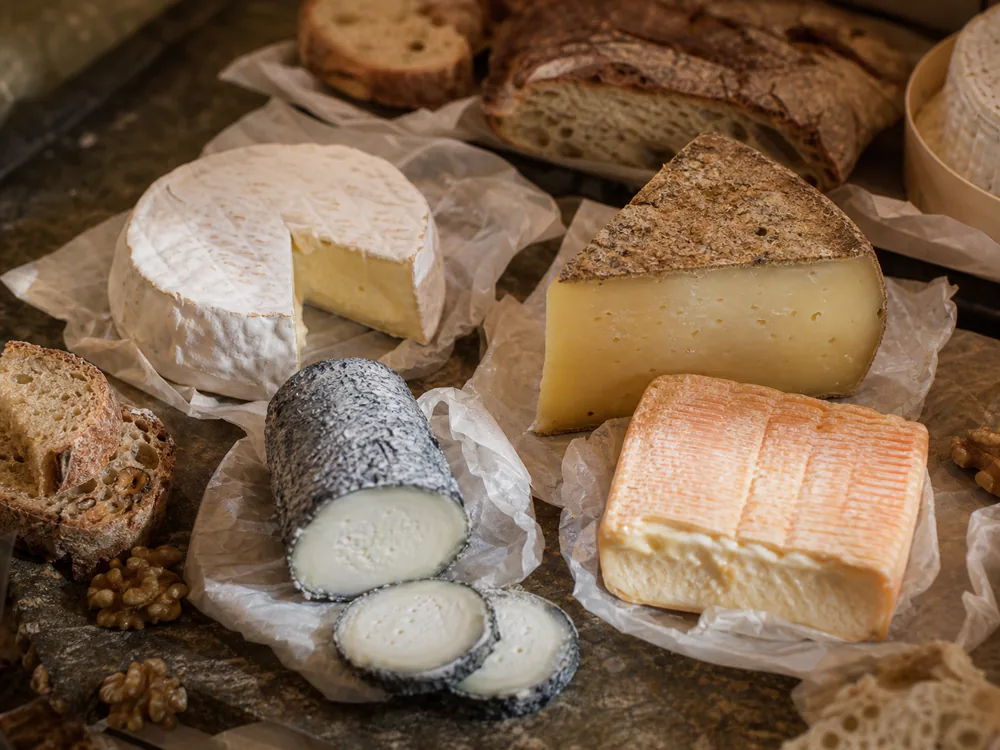
That family view also protects your budget. A famous name is worth paying for when the protected method matters to the flavor, but a simpler French-style buy can work when the cheese only needs to fill a mild creamy slot.
What Does AOP Actually Tell You About French Cheese?
AOP can protect the production zone, milk, shape, aging, and make method of a cheese. For French cheese, that legal detail matters because many famous styles have generic copies sitting beside the real thing.
Roquefort received France's first cheese AOC in 1925. That history is useful, but the daily shopping consequence is more important: a protected cheese should taste like a place and a method, not just a borrowed name.
Use AOP hardest when the style is often imitated. A soft wheel, a washed rind, and a mountain cheese can all look familiar from a distance, yet lose the local milk, aging discipline, and rind care that made the original interesting.
AOP is most helpful when the cheese name is famous enough to be copied. If the shelf gives you both a protected original and a generic style, the protected label tells you more than packaging romance does.
The trap is treating AOP as a reason to buy every protected cheese at once. A better move is to pick one protected anchor, then build the rest of the board around texture and strength.
- Use AOP hard: when the cheese is famous, copied often, or sold beside a generic lookalike.
- Use family first: when the exact protected cheese is not available but the board still needs the same role.
- Skip the prestige trap: when three expensive names would all give the same creamy texture.
How Do Normandy Bloomy Wheels and Northern Washed Rinds Differ?
Normandy owns the soft French headline in many shoppers' minds. Camembert, the classic Normandy bloomy round, gives you mushroomy rind aroma, a softening paste, and a short ripeness window.
The northern washed rinds do the opposite work. Pont-l'Eveque, the square Norman washed-rind cheese, tastes more savory and rind-led, while monastery-style cheeses such as Breton Timadeuc sit closer to the Port-Salut comfort zone.
Then there is Mimolette, the bright orange Lille classic, which breaks the lazy idea that northern French cheese is only soft and pungent. It is firm, dry, and snackable, especially when aged.
- Camembert lane: buy close to serving day because the paste changes quickly.
- Pont-l'Eveque lane: buy when you want a savory rind without jumping to the strongest washed cheeses.
- Mimolette lane: buy when the board needs a dry nutty bite instead of another soft wedge.
The practical point is storage and timing. Soft bloomy cheese needs ripeness control, washed rind needs odor control, and aged cheese needs protection from drying out.
Keep the wooden box a bloomy round arrives in. The lid and base hold the wheel in shape once the paste starts to give, and a wheel that has spread flat in a plastic tub never cuts into clean wedges again.
Press the top through the paper before you pay. A centre that still feels firm buys you another two or three days at home, while one that dips under a finger wants serving that evening.
Washed rind is the piece to double wrap. Paper against the cheese and a closed box around that keeps the aroma out of the butter and the cut fruit sharing the same shelf.
A dry aged wedge fails the other way round. Wrap the cut face tight and leave the rind bare, because that piece loses moisture much faster than it picks up any smell.
What Do Loire Goat Cheese Shapes Tell You?
The Loire Valley is the easiest French region to read with your eyes. The shape often tells you how the cheese will portion, ripen, and behave on a board.
Pouligny-Saint-Pierre, the tall pyramid from Berry, gives the board height and a more focused goat-cheese presentation. Selles-sur-Cher, the ash-coated Cher Valley disk, cuts more easily for a mixed board and gives a gentler spread across several bites.
Both sit in the same broad chevre tradition, but they do not answer the same hosting problem. One says centerpiece.
The other says easy table cheese.
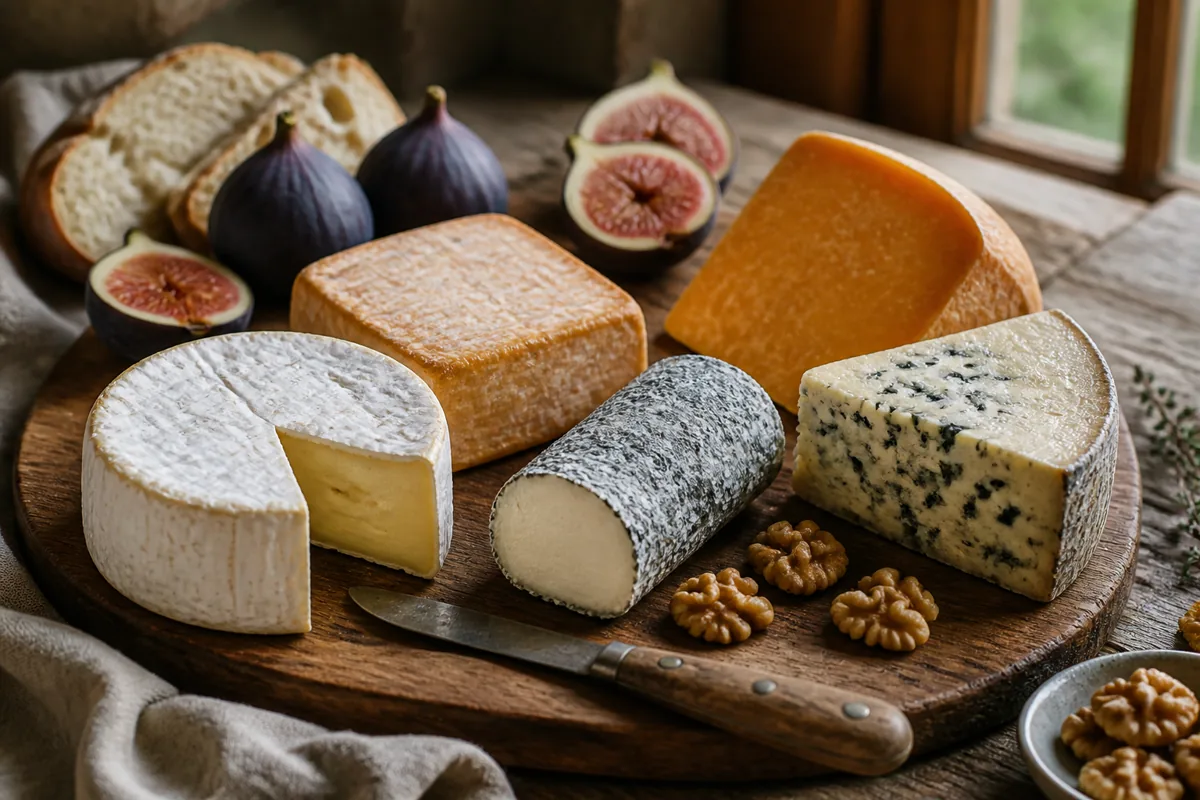
For a first French board, do not buy three soft cheeses just because they are famous. Choose one bloomy wheel, one Loire goat cheese, one mountain or blue cheese, and one washed-rind option only if the group wants a stronger finish.
This is why Loire goat cheese earns a full lane in the French map. It gives bright acidity and visible structure, so the board does not become one long run of cream.
Cut a pyramid down through the point, not across it. Slicing across hands the last person a wide slab of base and no tip, and the tip is the part that has dried furthest and carries the most flavor.
Leave the ash coat where it is and cut straight through it. Every slice then carries the same thin dark line, and the last bite tastes like the first instead of turning plain.
Goat cheese picks up fridge smells faster than a hard wedge does. Wrap a Loire cheese on its own and keep it off the same shelf as anything washed-rind.
Which Auvergne and Interior Cheeses Give a Board Its Backbone?
Central France is where the board gets firmer, earthier, and less polite. Cantal, the old Auvergne pressed wheel, can move from milky and supple to drier and sharper as it ages.
Blue cheese changes the same region in a different way. Bleu d'Auvergne, the creamy Auvergne blue, gives cow's-milk softness where Roquefort gives sheep's-milk force, while Fourme d'Ambert, the tall milder Auvergne cylinder, offers an even gentler blue entry point.
For a rind-led table cheese, the supple cave-ripened Saint-Nectaire gives a softer mountain answer. The broader French tomme family explains why rustic mountain cheeses can taste earthy without being interchangeable.
| Pairing | Type | Why It Works |
|---|---|---|
| Cantal | Drink | Cider or a light red works because age makes the cheese drier and nuttier. |
| Bleu d'Auvergne | Food | Walnuts and sturdy bread fit the creamy blue texture better than delicate crackers. |
| Loire goat cheese | Drink | Sauvignon Blanc keeps the ash-coated tang bright instead of flattening it. |
| Mimolette | Food | Beer and crusty bread suit its dry snackable texture better than jam-heavy service. |
This interior lane is the one to buy when a board feels too soft. It adds chew, salt, rind, and blue depth without turning the whole plate into washed-rind intensity.
Which French Cheeses Have Their Own Profile Here?
The list below links French cheeses that have their own profile here. Type a name, or pick a milk or style, to narrow it to the family the board still needs.
51 cheese profiles
- Abbaye de Tamié
- Abbaye du Mont des Cats
- Abondance
- Ami du Chambertin
- Anneau du Vic-Bilh
- Aromes au Gene de Marc
- Babybel Cheese
- Baguette laonnaise
- Banon
- Beaufort
- Beaumont
- Bleu d'Auvergne
- Boursin
- Brie
- Bûchette à la Sarriette
- Cabécou
- Cabécou Feuille d'Armagnac
- Cachaille
- Camembert
- Cantal
- Caprice des Dieux
- Chaource
- Chaumes
- Chavroux
- Comté
- Crottin de Chavignol
- Dauphin
- Epoisses
- Etorki
- Fourme d'Ambert
- Fromage Blanc
- Goat Cheese
- Gourmandise
- Kiri
- La Vache Qui Rit
- Laguiole
- Maroilles
- Mimolette
- Neufchâtel
- Ossau-Iraty
- Petit Suisse
- Port Salut
- Pouligny-Saint-Pierre
- Reblochon
- Roquefort
- Saint-Nectaire
- Sainte-Maure de Touraine
- Selles-sur-Cher
- Tomme de Savoie
- Trappiste de Bricquebec
- Valencay
How Do You Build a French Cheese Board?
A good French board should pass a quick test before you pay. Can you point to one creamy cheese, one bright cheese, one deeper aged or blue cheese, and one bolder rind if the group wants it?
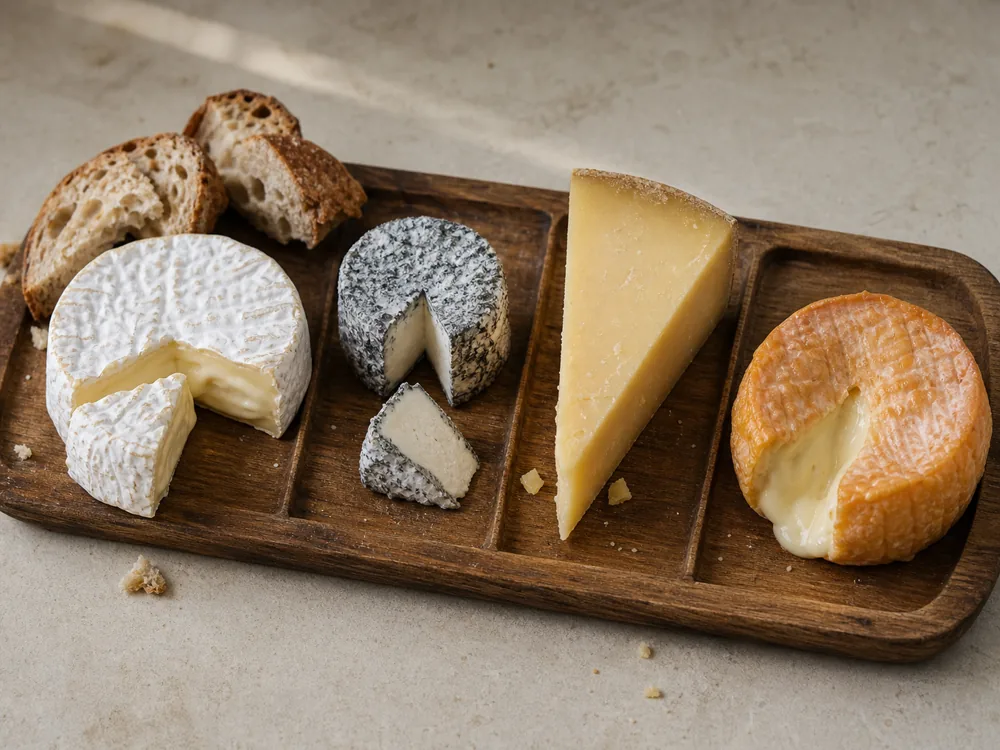
That test beats buying by fame. Three soft French cheeses can look impressive and still eat like one repeated texture.
If you bring home several cuts, mixed-texture wrapping matters quickly. A soft wheel and a dry mountain wedge lose quality in different ways.
The final rule is blunt: French cheese is easier when contrast leads and prestige follows. Build the jobs first, then choose the names.
Lay the four out in the order you want them eaten, with a gap between each. People work along a board left to right when the layout tells them to, and a bright goat cheese eaten after a washed rind tastes of nothing.
Give each cheese its own knife. One blade carried from a blue into a bloomy wheel puts blue through the soft paste within two cuts, and the creamy slot stops doing its job.
SOURCES & REFERENCES
What Else Do People Ask About French Cheese?
These are the questions readers usually ask once they stop trying to memorize every French name on the shelf.
France currently has 46 AOP cheeses. The exact count matters less than the buying idea behind it: origin, milk, and method are protected together.
The most useful first split is bloomy-rind, washed-rind, mountain pressed, blue, and Loire goat cheeses. Those families tell you more at the counter than prestige alone.
Start with one soft bloomy wheel, one Loire goat cheese, and one firmer mountain or blue cheese. Add a washed-rind cheese only if you want a stronger savory finish.
No. France also makes dry aged cheeses such as Mimolette, firm mountain wheels such as Cantal, and moderate table cheeses that are more rustic than aggressive.
AOP matters most when the style is widely copied. It helps you separate a true regional cheese from a generic version that borrows the name but not the method.