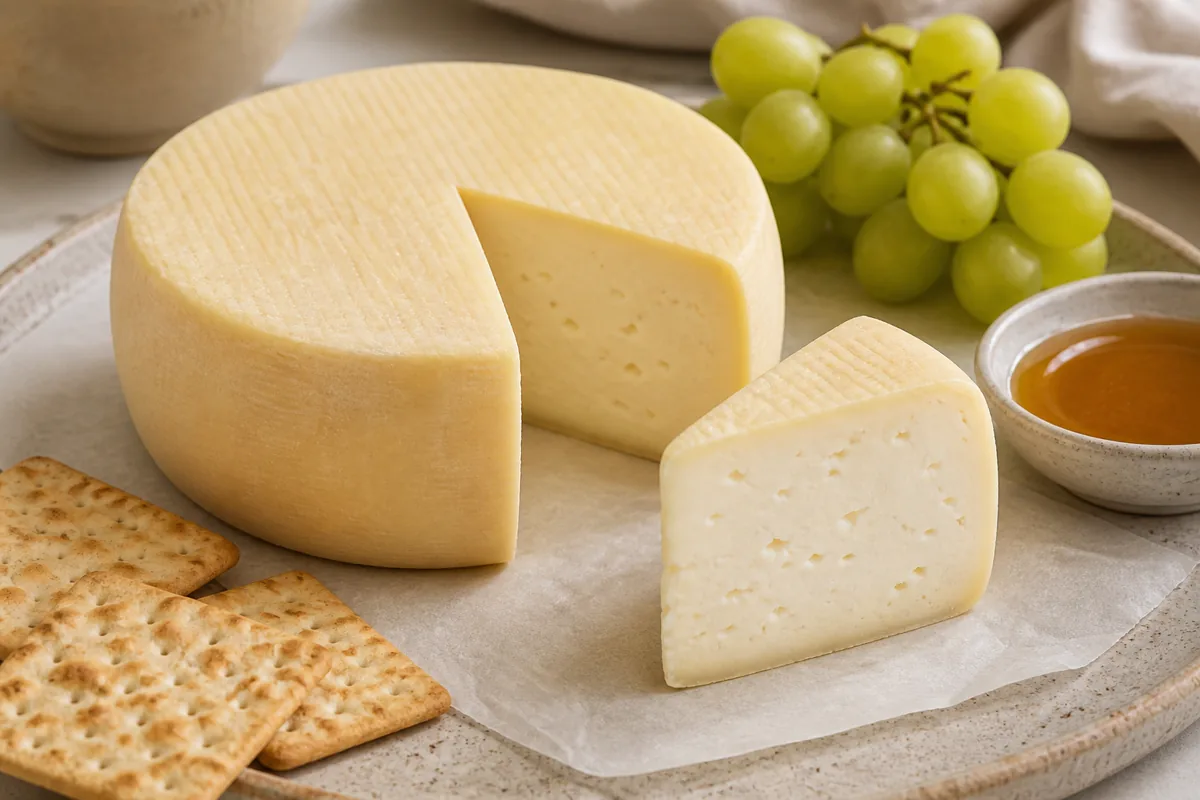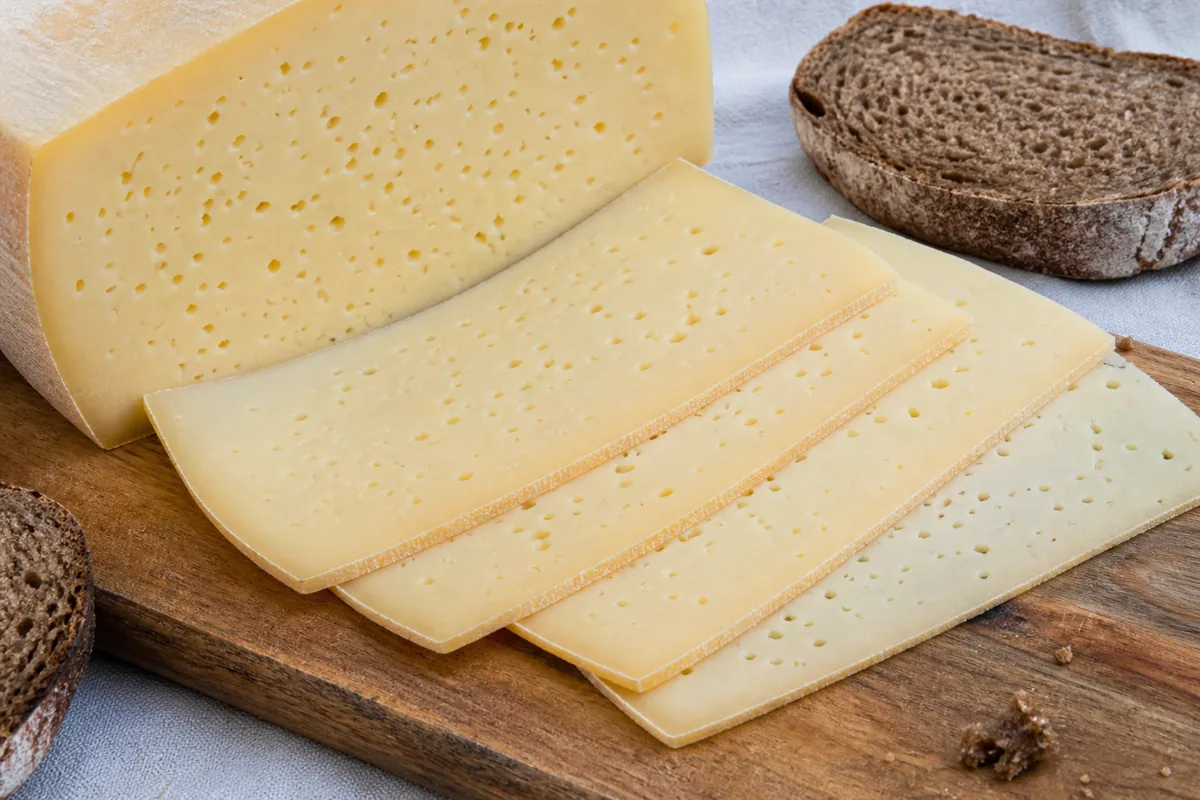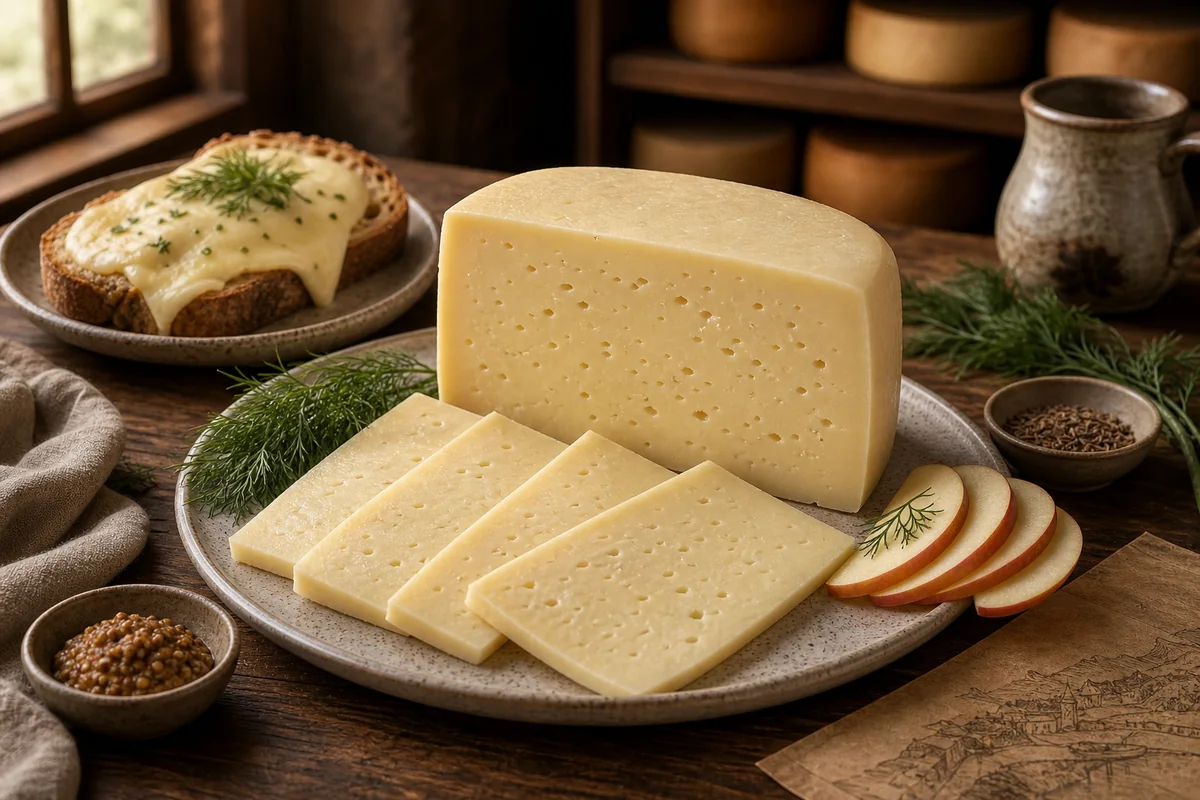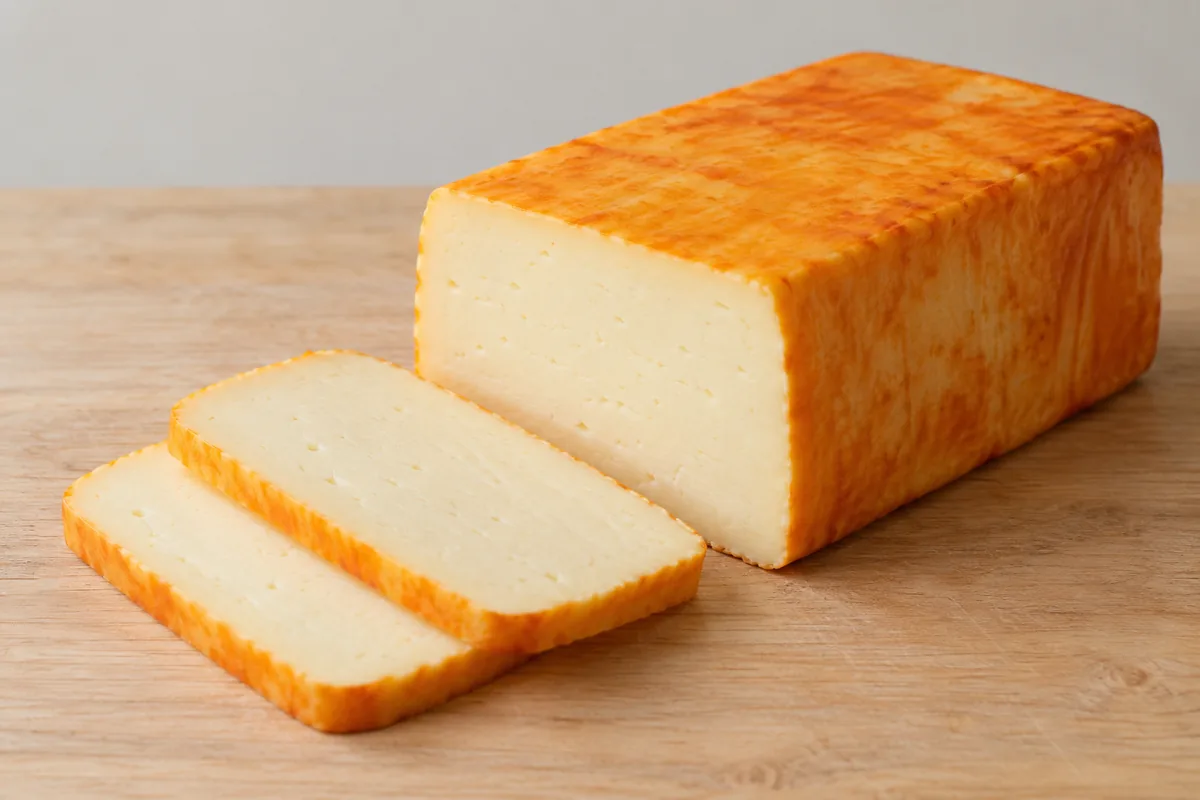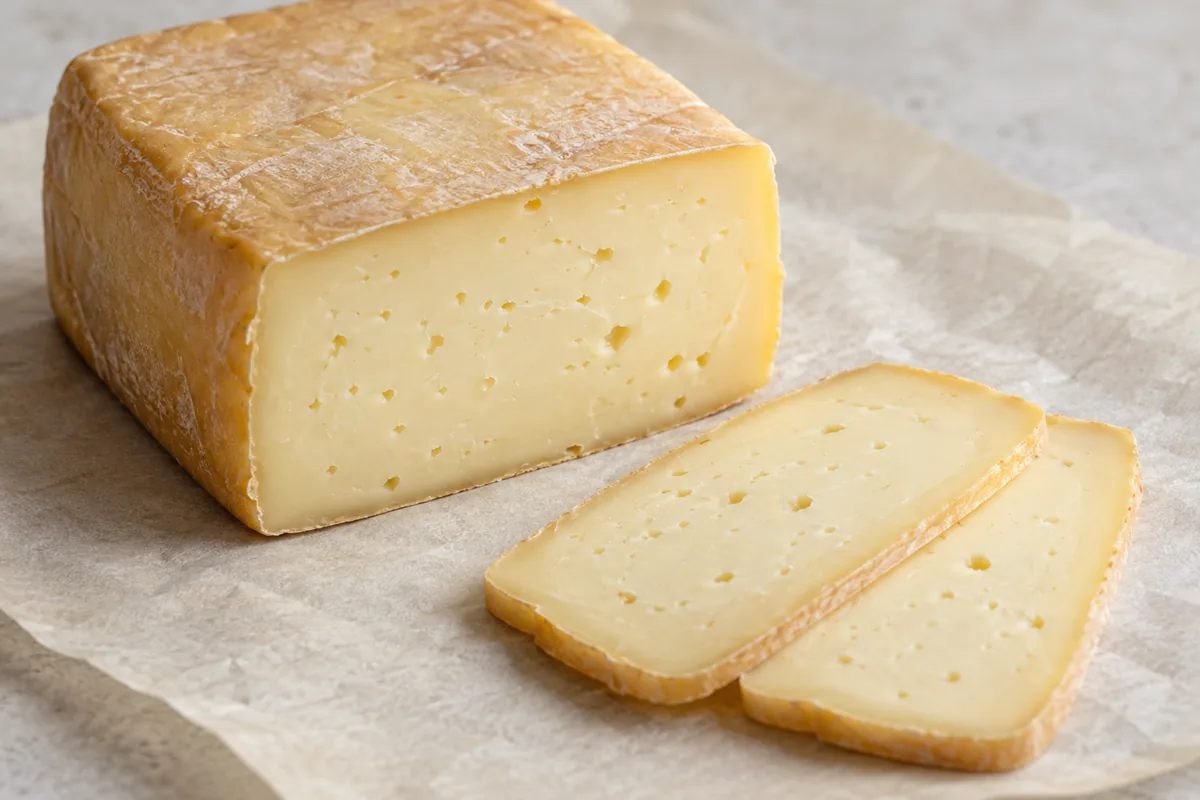
Bianco is a mild semi-hard cow's milk cheese from Bergader Privatkäserei in Upper Bavaria, and it is sold mainly at the cheese counter.
Bergader describes it as an especially tender-melting slicing cheese with a creamy-mild taste. Its own recipes use it on toast sandwiches, on baked bread, and in potato croquettes.
In This Article
Bergader Bianco Is a Bavarian Deli-Counter Cheese
Bergader is based in Waging am See in Upper Bavaria, and the company says its milk farms lie in the Bavarian Alps and Alpine foothills, about 20 km from its dairies on average. Cheese.com describes Bianco as made from mountain farmers' milk.
Bergader lists BIANCO as a line with several varieties, including a garlic version, so check that the counter label names Bergader before you assume it matches this article.
| Detail | Bergader | Cheese.com and Foppa |
|---|---|---|
| Milk | Farms in the Bavarian Alps and foothills; all its cheeses except the blue Edelpilz use pasteurised milk | Cheese.com: cow's milk, Bavarian Alps |
| Texture | Especially tender-melting semi-firm slicing cheese | Cheese.com: semi-hard, "creamy, open and soft," natural rind, pale yellow |
| Flavor | Creamy-mild | Cheese.com: "buttery, garlicky, mild" |
| Format | Sold at the cheese counter | Foppa datasheet: slicing cheese in stick form, 55% fat in dry matter |
| Rennet | Microbial rennet substitute | Cheese.com: not vegetarian |
Cheese.com lists garlic among the flavors, but Bergader's page for the plain product never mentions it. Foppa sells a separate Bianco Knoblauch described as mild with garlic taste, so the garlic note most likely belongs to that variant.
The rennet entries also disagree, and Bergader's microbial rennet substitute is the producer's own statement about the current product. If vegetarian rennet matters to you, read the label on the piece you buy.
Bianco's Cream Flavor Comes With a Soft, Open Paste
Bergader calls Bianco creamy-mild and butter-tender, and Cheese.com lists the flavor as buttery and mild.
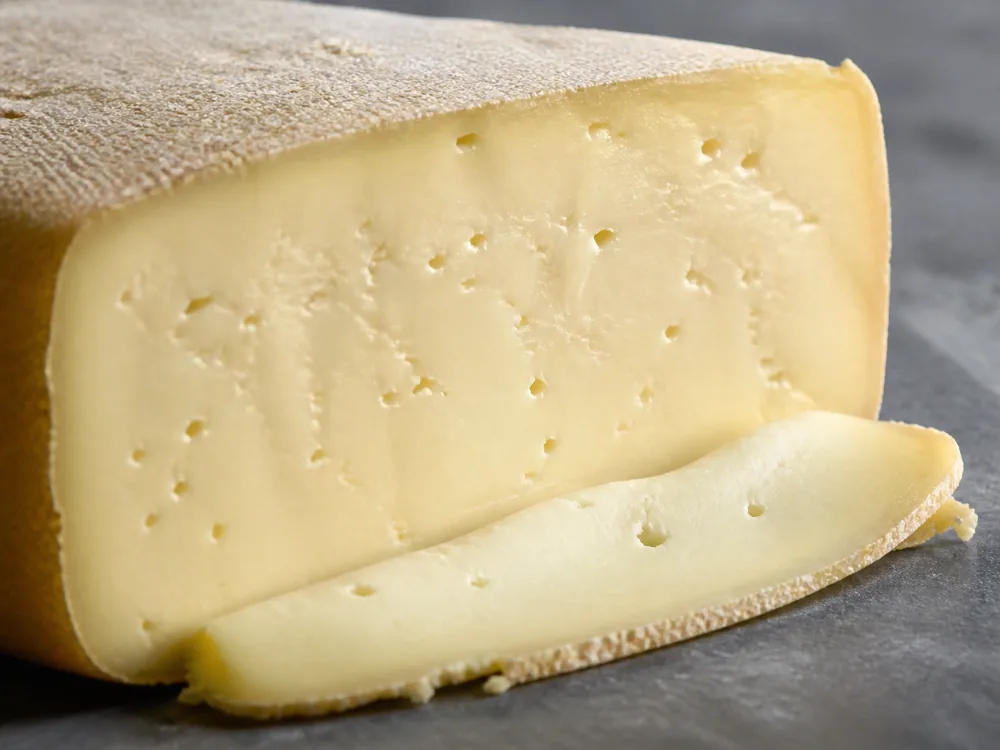
Cheese.com describes the paste as pale yellow, creamy, open, and soft, under a natural rind.
Bergader publishes no ripening time for Bianco.
For eating, Bergader's storage guide says to bring the portion you need to about 18 to 20 °C, which takes 30 to 45 minutes, and its cheese-board guide allows up to an hour.
Bianco Melts for Raclette, Sauces, and Baked Bread
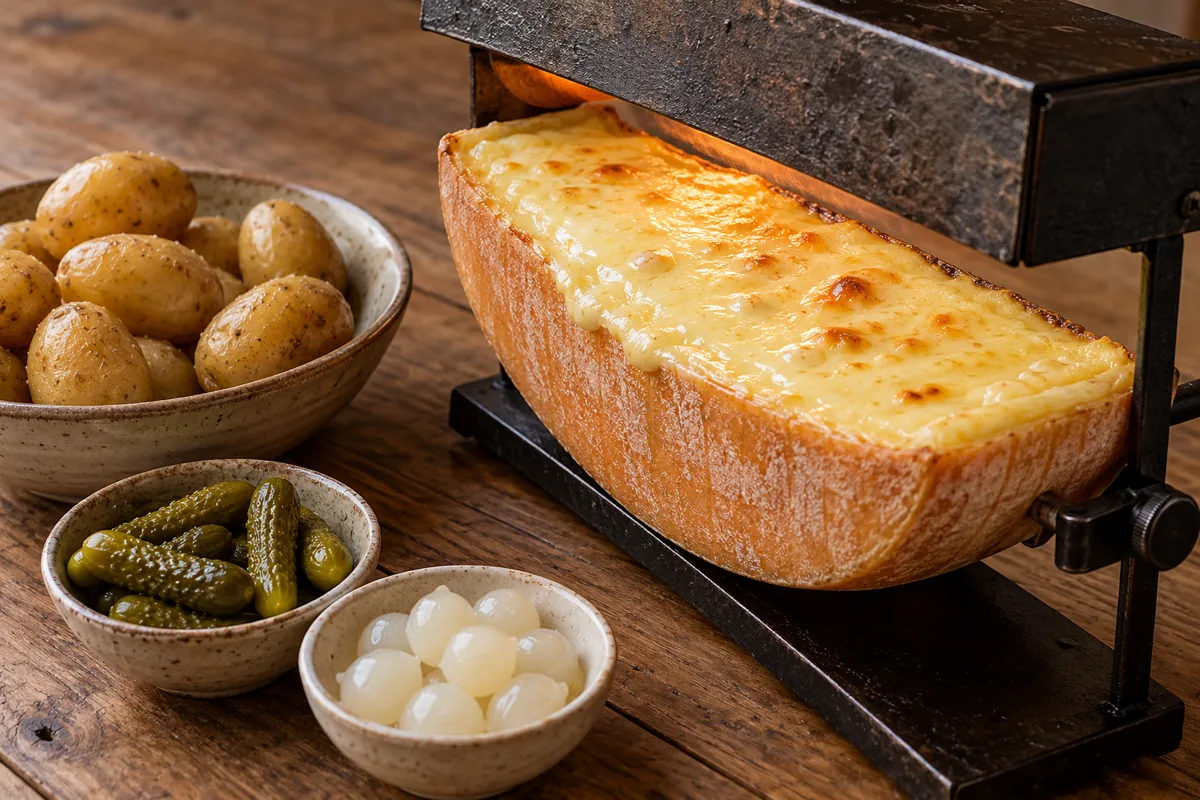
Bergader sells Bianco as an especially tender-melting slicing cheese and names raclette, salads, and delicate sauces among its uses. Cheese.com adds toasting and baking au gratin.
Bergader's general guide to melting says soft and semi-hard slicing cheeses flow evenly and form their typical strings. Fat starts to expand at 40 °C, and because the proteins stay linked, cheese never becomes fully liquid.
| Use | How It Works |
|---|---|
| Baked bread | 125 g grated over 8 slices of farmhouse bread, baked at 180 °C hot air for 6 to 8 minutes. |
| Potato croquettes | 150 g diced into 1 kg boiled potatoes and 400 g zucchini with breadcrumbs, then shaped and fried. |
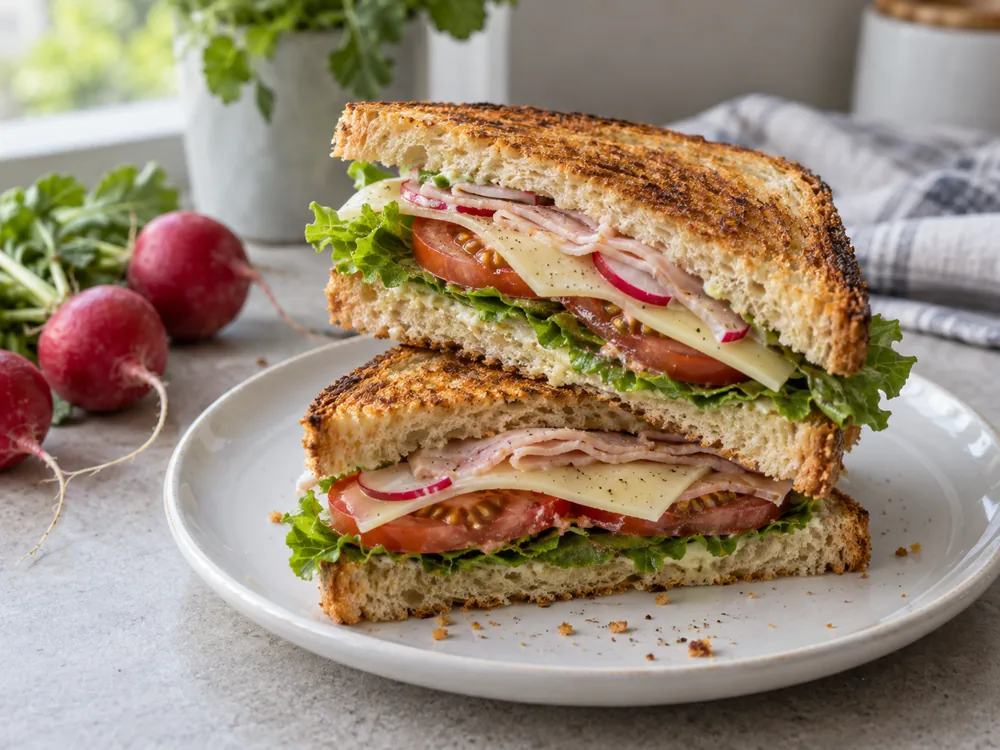
| Toast sandwich | 160 g of slices for four sandwiches; Bergader also grills it between untoasted bread in a sandwich maker. |
| Bread at breakfast and snack time | Bergader calls it a popular breakfast cheese for children and a cheese for the snack-time sandwich. |
Bergader publishes no melting temperature or slice thickness for Bianco. The quantities above come from its three Bianco recipes, and the raclette use has no published grill time.

Bergader's Recipes Pair Bianco With Radishes, Bacon, and Sour Cream
Bergader's three published Bianco recipes all use plain foods: toast, farmhouse bread, and boiled potatoes. It publishes no wine, beer, or fruit pairing for Bianco, so this list sticks to what those recipes use.
| Pairing | Why It Works |
|---|---|
| Radishes | Thinly sliced in the cheese sandwich, with lettuce, tomato, and fried zucchini. |
| Smoked turkey ham | Eight thin slices, about 120 g, layered with the cheese on toast. |
| Bacon and sour cream | 80 g diced bacon over 120 g sour cream, with spring onions and caraway, under the baked cheese. |
| Quark and sour cream dip | 150 g each, with garlic, chives, parsley, and lemon juice, served with the croquettes. |
Bergader's cheese-board guide lists three basic rules, and two of them are to match the intensity of cheese and accompaniment or to build a contrast, such as blue cheese with sweet jam. For a mild cheese, the recipes lean on contrast, with crisp radish, smoked ham, and bacon around a creamy-mild slice.
Bianco Has 33.2 g Fat and 19.9 g Protein per 100 g
Bergader publishes the nutrition for BIANCO, and Foppa's wholesale datasheet lists the fat at 55% in dry matter.
The same 100 g also holds 19.9 g of saturated fat and 0.1 g of carbohydrate, all of it sugar.
Bergader labels BIANCO lactose-free and gluten-free, and Cheese.com says the same of all Bergader cheeses except Edelpilz and Bonifaz. Lactose-free does not mean dairy-free, because Bianco is still made from cow's milk.
Bianco in Pregnancy Depends on How the Slice Is Served
Bergader says all its cheese specialties except the blue Edelpilz are made with pasteurised milk, and that raw-milk cheese must carry the label "aus Rohmilch."
The CDC says pregnant women are 10 times more likely to get a Listeria infection. The NHS lists pasteurised semi-hard cheeses such as Edam among the cheeses it considers safe in pregnancy.
Keep Bianco's Tender Cut Face From Drying
Bergader's storage guide says to keep cheese cool, dark, and airy at 4 to 8 °C. Its guide to semi-hard slicing cheese, which names Bianco, says to store them in cheese paper in the fridge's vegetable compartment.
Bergader also advises protecting cut faces from drying out. It adds that cheese bought at the counter comes in breathable film that is usually fine for the fridge.
Bergader gives no shelf-life figure for Bianco, so follow the date on the label or the counter receipt.
Havarti and Butterkäse Come Closest to Bianco on Paper
This list sets Cheese.com's descriptions of other cheeses against Bergader's description of a mild, creamy, tender-melting slicing cheese.
| Mild German table cheese | Butterkäse: pasteurized cow's milk, pale yellow, buttery and mild, sliced, spread, or melted |
| Creamy melt for sandwiches | Havarti: pasteurized cow's milk, creamy and buttery with a hint of tang, melts well |
| Young semi-hard slicing cheese | Edam: pasteurized cow's milk, mild and creamy when young, slices and melts in sandwiches |
| Raclette dinners | Raclette: nutty and slightly fruity, made from unpasteurized cow's milk, melts for scraping |
Butterkäse is the closest match on paper. Cheese.com lists it as German and Austrian, semi-soft, buttery, and mild, with a natural rind.
Cheese.com lists the Danish semi-soft Havarti as smooth and creamy, with tiny holes. It says the cheese turns oozy and creamy when heated.
Cheese.com describes young Edam as a mild, creamy semi-hard cheese with milkfat near 28%. Bergader gives 33.2 g of fat per 100 g for Bianco.
Cheese.com lists traditional Raclette as nutty, slightly fruity, and made from unpasteurized milk. It melts for raclette dinners, but it changes both the flavor and the pregnancy answer.
SOURCES & REFERENCES
Bianco Cheese FAQ
Bianco is a mild semi-hard cow's milk cheese made by Bergader in Upper Bavaria. Bergader describes it as creamy-mild and especially tender-melting.
Bergader sells it as an especially tender-melting slicing cheese and uses it in raclette, baked bread, croquettes, and toast sandwiches. It publishes no temperature or slice thickness, so follow a recipe's figures.
Bergader labels the product lactose-free and gluten-free. It still contains cow's milk, so lactose-free does not mean dairy-free.
Bergader says its cheeses other than Edelpilz use pasteurised milk, and the NHS lists pasteurised semi-hard cheese as safe. The CDC lists unheated deli-sliced cheese among riskier choices, so heat a counter cut until steaming hot if that applies to you.
Cheese.com's descriptions of Butterkäse and Havarti come closest to a mild, creamy, melting cheese. Use sandwich cheese such as young Edam when you want a firmer slice.