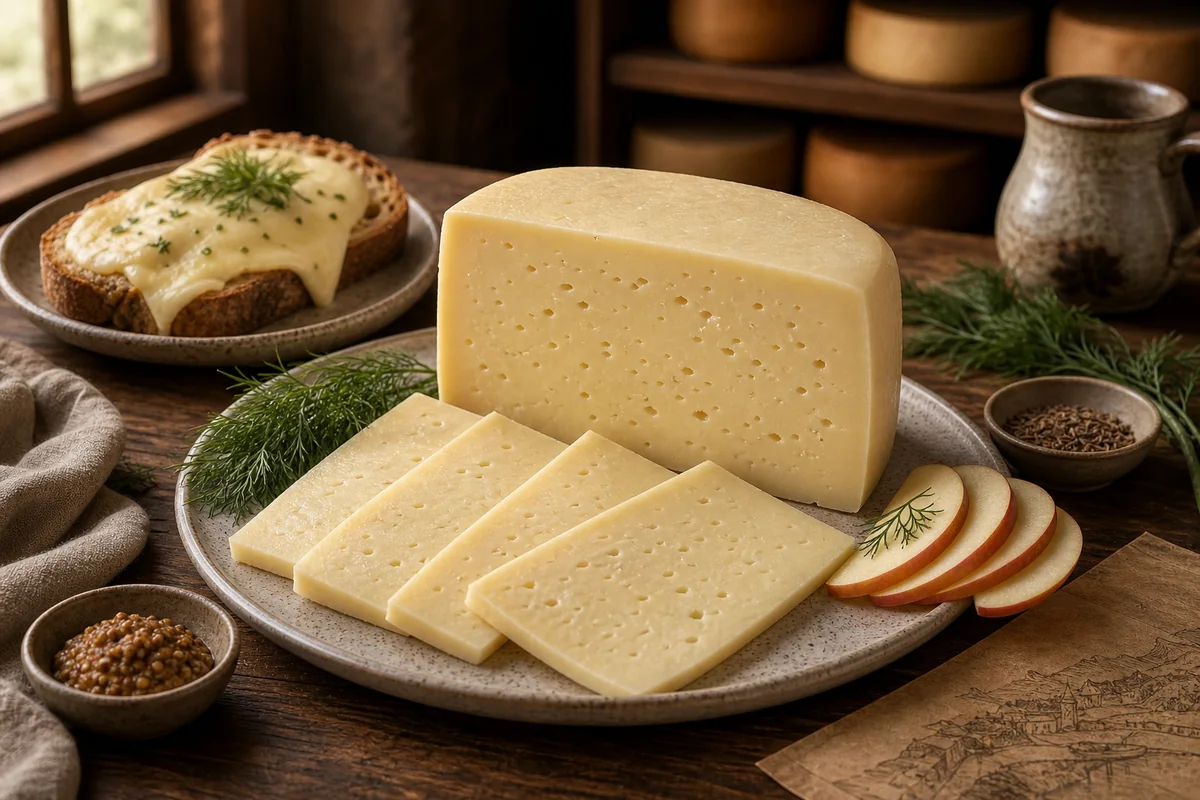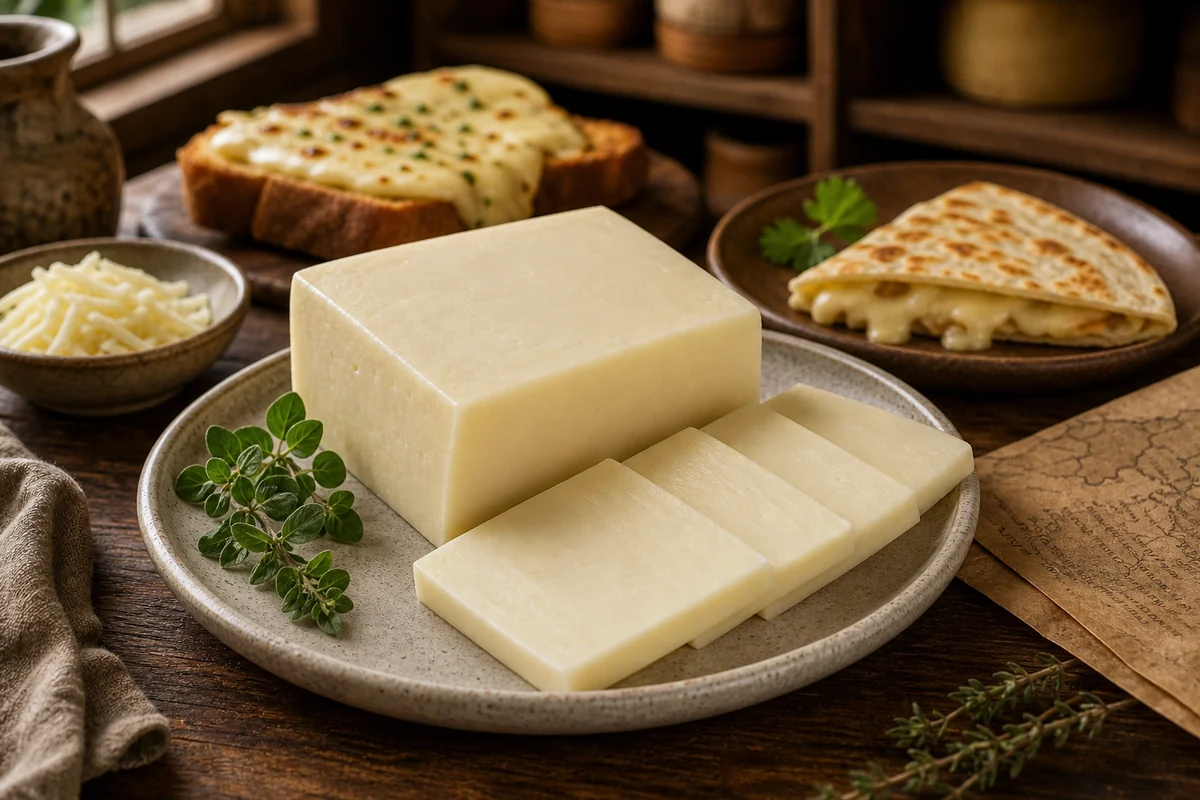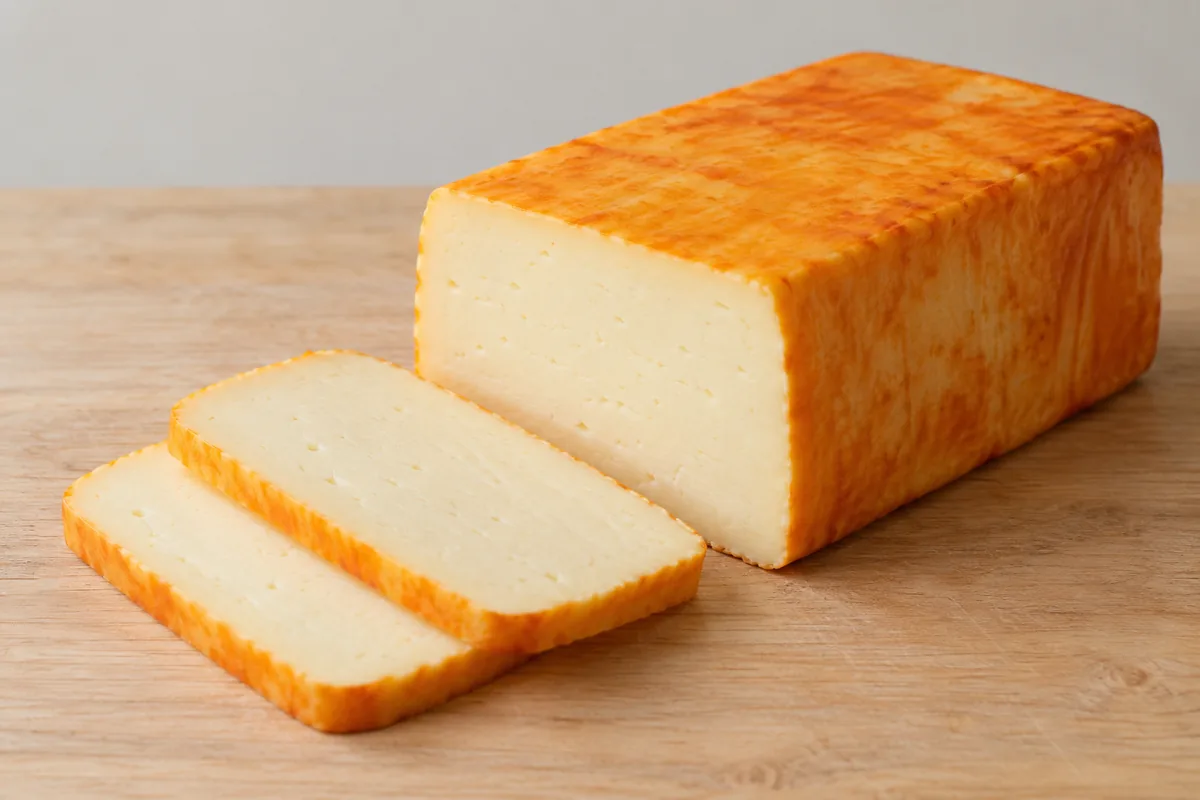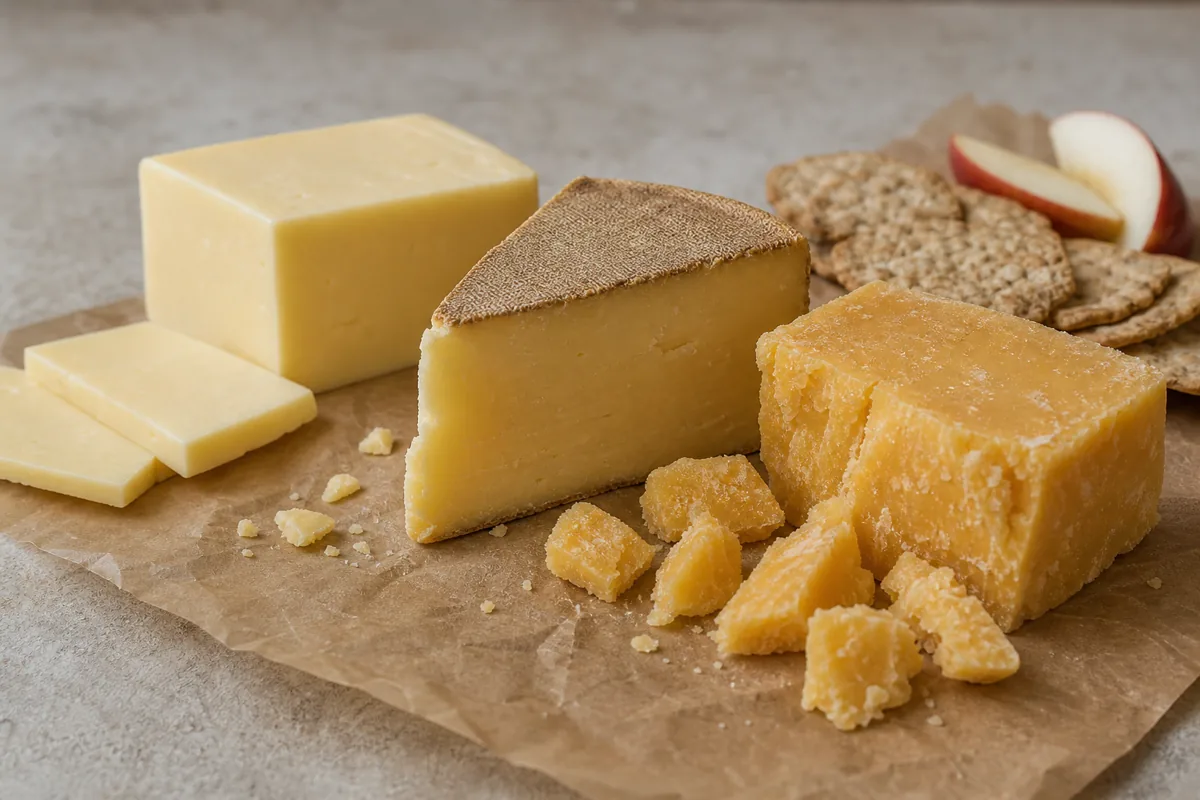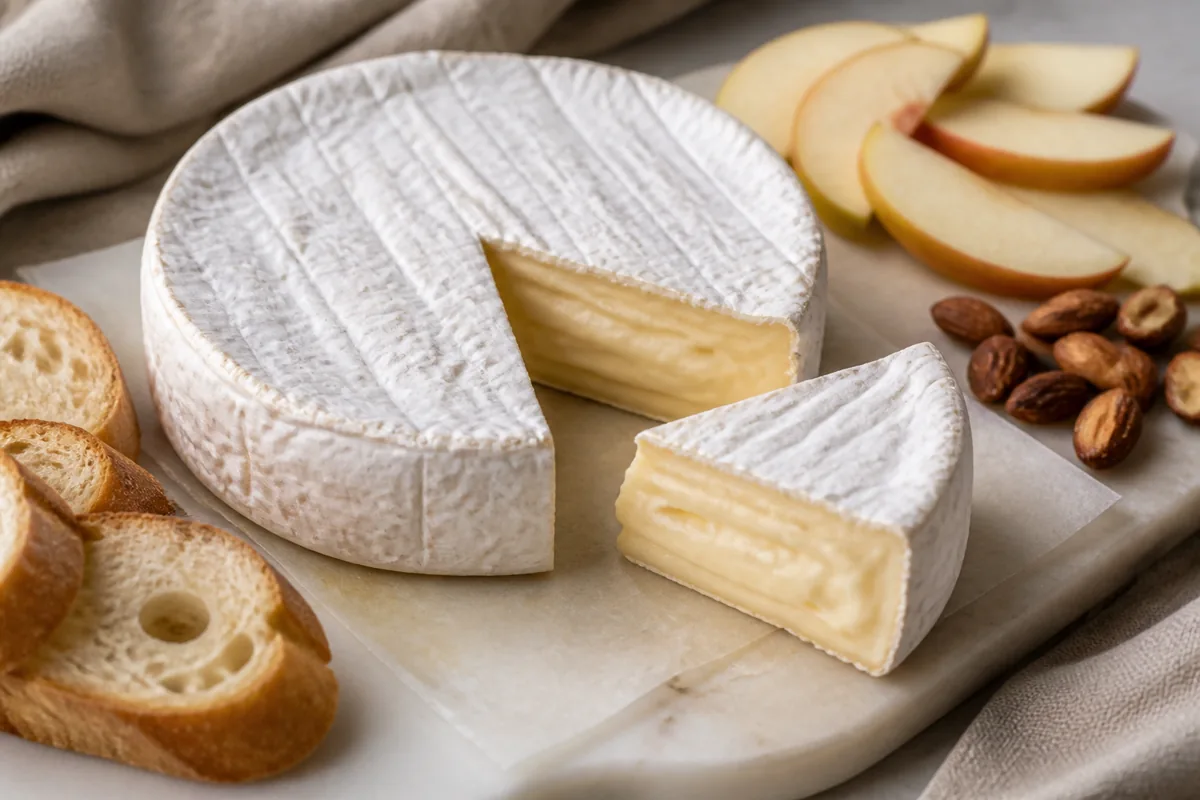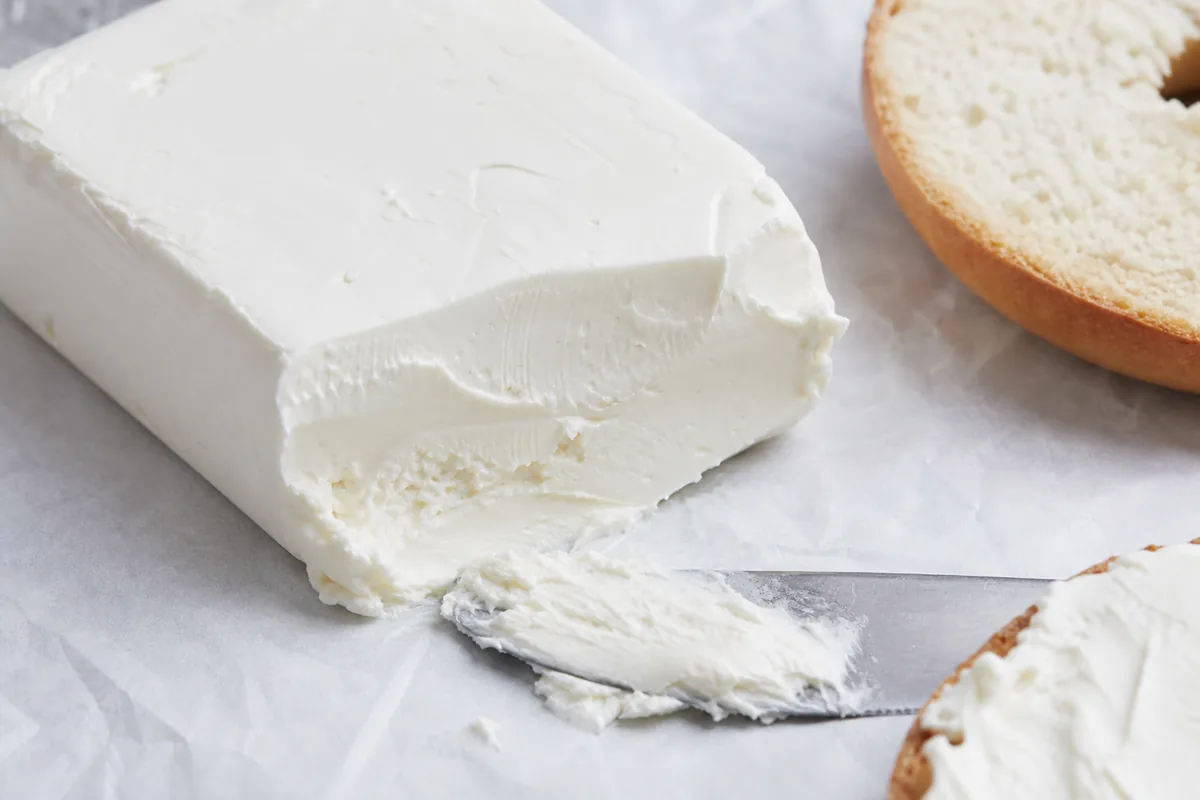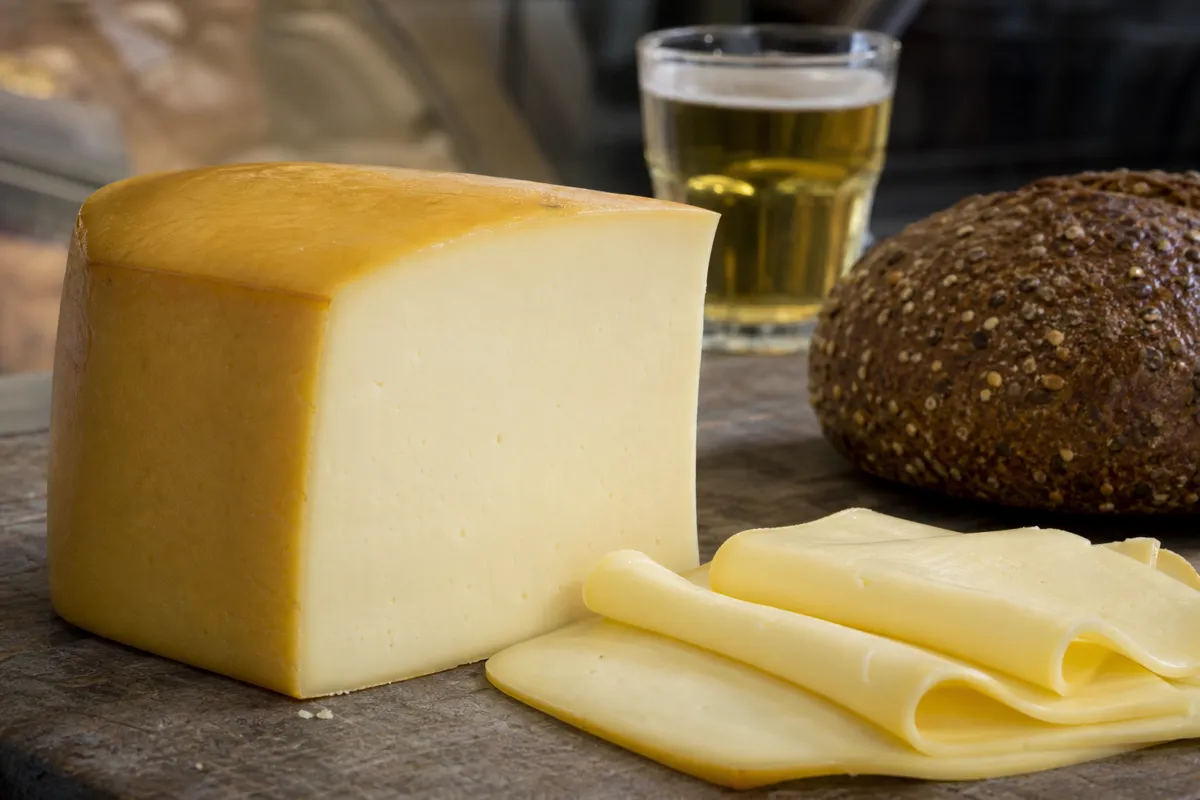
Butterkase is a mild, semi-soft cow's milk cheese from Germany and Austria that Wisconsin makers also produce, and it is sold to be sliced, spread or melted. Its German name means “butter cheese,” but butter is not an ingredient.
Cheese.com lists the flavour as buttery and mild and the texture as creamy, smooth and spreadable. The mildness is partly a matter of age: Butterkase is a young cheese, ripened three to four weeks according to German Wikipedia and one month according to Cheese.com.
In This Article
What Is Butterkäse?
Butterkäse joins the German words for butter and cheese, and Duden defines it as “butterähnlich weicher, milder Vollfett- oder Rahmkäse,” a mild, butter-soft cheese of the full-fat or Rahmkäse kind.
It is a style made in several countries. Cheese.com gives the origin as Austria and Germany, and German Wikipedia traces the style back to Italian Bel Paese.
German Wikipedia says Butterkäse was allegedly first made in Germany in 1928 at the state dairy in Weihenstephan. English Wikipedia also dates its first appearance to 1928 and adds that Wisconsin produces it too.
The name can suggest a spread, but the Widmer's, Chalet and Roth ingredient lists show milk, cultures, salt and enzymes, with no butter.
How spreadable your piece is depends on who made it. Cheese.com calls the texture spreadable, and English Wikipedia says it is sometimes nearly spreadable, depending on the firmness the cheesemaker wants.
How Does German Butterkäse Differ from Wisconsin Butterkäse?
The sources agree on cow's milk and pasteurization, and they differ on rennet, colour and age.
| Source | Milk | Ingredients and rennet | Age and colour |
|---|---|---|---|
| Cheese.com | Pasteurized cow's milk | Listed as not vegetarian | One month; pale yellow; natural rind |
| German Wikipedia | Cow's milk; mesophilic and thermophilic cultures | Not listed | 3 to 4 weeks at 3 to 7°C; yellow |
| English Wikipedia | Cow's milk, pasteurized | Not listed | 3 to 4 weeks; white to light yellow-orange |
| Widmer's (Wisconsin Cheese Mart listing) | Pasteurized milk | Cheese cultures, salt, enzymes, annatto color | One month; white to light yellow-orange |
| Chalet Cheese Co-op (Wisconsin Cheese Mart listing) | Pasteurized whole milk | Salt, cultures, enzymes, annatto; vegetarian rennet | Age not given |
| Roth | Cultured pasteurized milk | Salt, enzymes, annatto; labeled vegetarian | Age not given |
Vegetarian status depends on the maker, so if you avoid animal rennet, read the label of the one you buy. Only Cheese.com marks the cheese as not vegetarian, while Chalet says it uses vegetarian rennet and Roth labels its cheese vegetarian.
The Widmer's, Chalet and Roth ingredient lists all include annatto for colour, which fits English Wikipedia's range from white to light yellow-orange. English Wikipedia also says it is commonly found in a loaf shape convenient for slicing.
Does It Taste Like Butter?
Cheese.com lists the flavour as buttery and mild, and Chalet calls it mild and delicate with a buttery finish.
German Wikipedia adds a light acidity (“mild und feinsäuerlich”). English Wikipedia describes a mildly salty or acidic flavour reminiscent of Muenster or Gouda.
How Is Butterkäse Made, and How Long Does It Age?
German Wikipedia gives a ripening time of three to four weeks at 3 to 7°C, and Cheese.com and the Widmer's listing round this to one month. The Wisconsin Cheese Mart listing for Widmer's ties the mild flavour partly to that brief aging time.
German Wikipedia also gives the most detailed production profile:
- Cultures: mesophilic and thermophilic starters.
- Setting: a large amount of rennet at 40 to 42°C, so the milk coagulates quickly and lactic fermentation is intense.
- Water: 61 to 69% of the fat-free cheese mass under the German cheese regulation.
- Fat: 45 to 53% in dry matter, depending on the fat class.
- Holes: none or very few.
With none or very few holes, the slices you cut from a loaf come out solid, which fits English Wikipedia's note that the loaf shape suits slicing.
Why Does Butterkäse Melt So Smoothly?
Chalet credits its melt-in-your-mouth quality to high butterfat. Every source that mentions cooking says it melts: Cheese.com lists slicing, spreading and melting, and English Wikipedia says it is often sliced onto rolls and sandwiches or melted for cooking.
How to Use Butterkäse
Makers and retailers agree on the everyday jobs: sandwiches and rolls, grilled cheese and plain snacking. Roth and English Wikipedia describe a sliceable sandwich cheese that goes on rolls and into wraps.
| Use | How It Works |
|---|---|
| Grilled cheese | Named by Chalet and Roth. |
| Sandwiches and rolls | Named by English Wikipedia and Roth; the loaf shape suits slicing. |
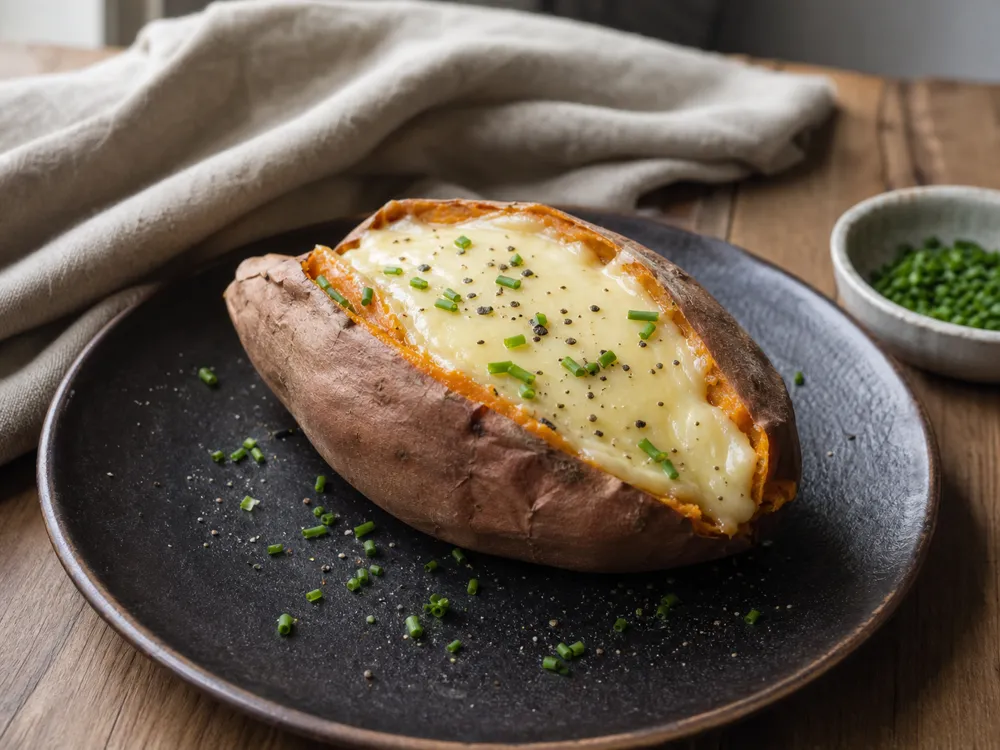
| Roasted sweet potatoes | Chalet suggests melting it on top. |
| Breads and popovers | Roth lists baking with it. |
| Snacking | Chalet and Roth both list eating it plain. |
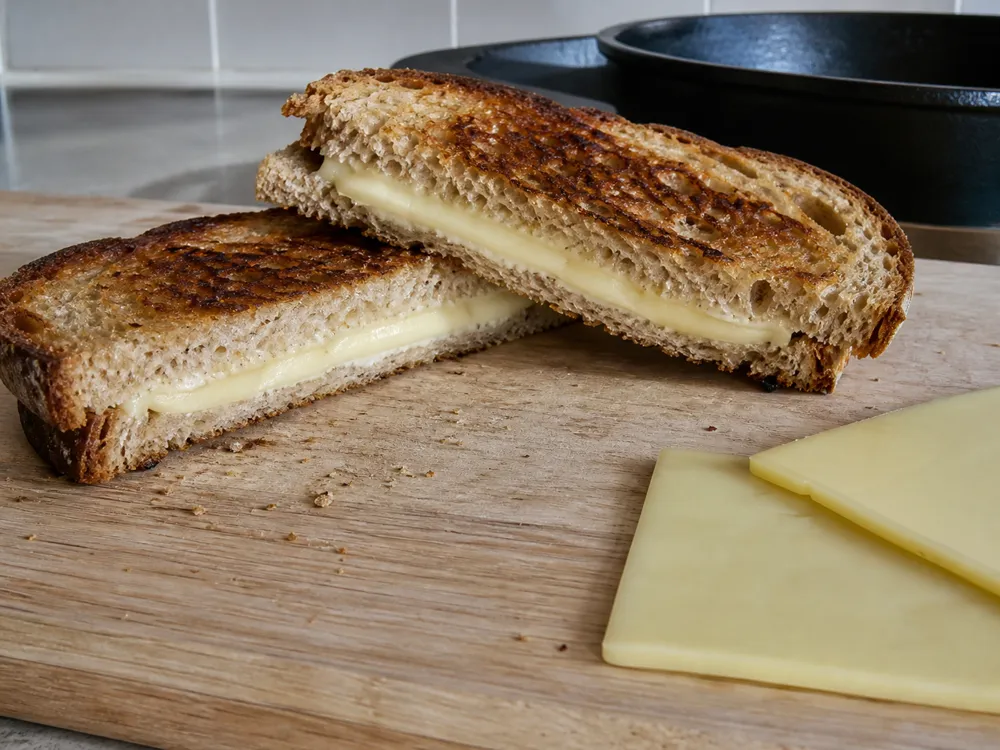
Beyond the sandwich, the least obvious suggestion comes from Chalet: its product page names roasted sweet potatoes next to grilled cheese and snacking.
What to Serve with Butterkäse
For your glass, beer is the pairing most sources share, because Cheese.com and the Wisconsin Cheese Mart listing for Widmer's both say it pairs well with beer, and Roth names pilsner.
| Pairing | Type | Why It Works |
|---|---|---|
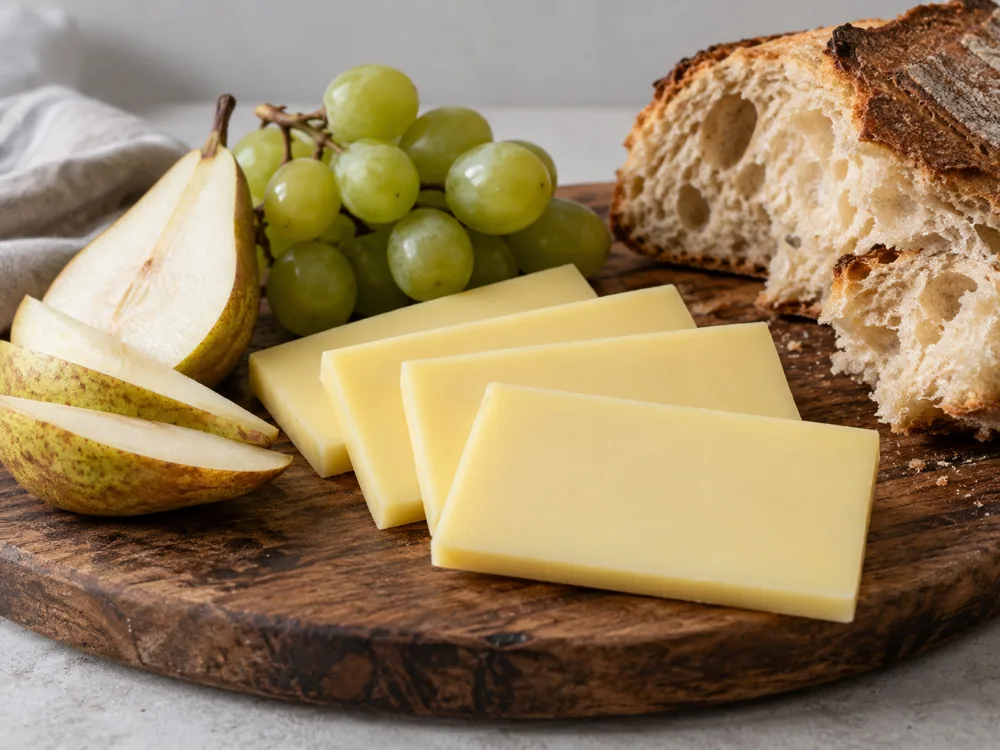
| Pears and grapes | Food | Chalet's suggestion for a simple board. |
| Crusty sourdough | Food | Chalet pairs it with crusty sourdough bread. |
| Mustards and pickled vegetables | Food | Roth lists both, along with fresh or dried fruit. |
| Pilsner | Drink | Roth's beer pick; Cheese.com and Widmer's say beer in general. |
| Fruity red wine | Wine | Roth lists it. |
| Cider | Drink | Roth lists it. |
Which Cheeses Can Replace Butterkäse?
As a replacement, Havarti is the closest match on paper. The Codex Alimentarius standard for Havarti (STAN 267) classifies it as a ripened firm or semi-hard cow's milk cheese with 45 to 55% fat in dry matter and characteristic gas holes throughout the paste, where Butterkäse is aged three to four weeks and has few or no holes.
For a sandwich, American Muenster is the other option. The US federal standard 21 CFR 133.160 defines it as a pasteurized milk cheese with a maximum 46% moisture and minimum 50% milkfat in dry matter, a semi-soft profile similar to Butterkäse.
| Cheese | Origin and milk | Texture and flavour | Melting and use |
|---|---|---|---|
| Butterkase | Austria and Germany; pasteurized cow's milk | Creamy, smooth, spreadable; buttery, mild | Sliced, spread or melted |
| Havarti | Denmark (origin); cow's milk | Firm or semi-hard; 45 to 55% fat in dry matter; gas holes throughout the paste | Firm or semi-hard category (Codex STAN 267) |
| Muenster | United States; pasteurized milk | Semi-soft; max 46% moisture, min 50% milkfat in dry matter | Semi-soft category (21 CFR 133.160) |
| Fontina | Valle d'Aosta, Italy; raw whole cow's milk | Intense flavour with light hay and barn notes; min 90 days aging | Valdostana fondue (Guffanti Formaggi) |
| Monterey Jack | United States; pasteurized cow's milk | Semi-soft to semihard; max 44% moisture, min 50% milkfat in dry matter | Semi-soft to semihard (21 CFR 133.153) |
For fondue, importer Guffanti Formaggi documents Fontina Val d'Aosta DOP as the base of the Valdostana version. It is a raw whole cow's milk cheese from Valle d'Aosta with an intense flavour and light hay and barn notes, aged a minimum of 90 days.
Monterey Jack is slightly firmer than Butterkäse on the composition specs. The US federal standard 21 CFR 133.153 defines it as a pasteurized cow's milk cheese with a maximum 44% moisture and minimum 50% milkfat in dry matter.
How Much Fat Does Butterkäse Have, and Is It Safe in Pregnancy?
Cheese.com and the Wisconsin Cheese Mart listing for Widmer's give 50% fat, while German Wikipedia says German Butterkäse runs from 45 to 53% fat in dry matter depending on the fat class.
Fat in dry matter is counted after the water is removed, so the fat share of the cheese as you buy it is lower. Roth's label shows that by-weight number, with 9 g of fat in a 28 g (1 oz) serving, about 32% of the weight.
The same label lists 6 g saturated fat, 100 calories, 6 g protein and 220 mg sodium, plus 1 g of carbohydrate per ounce, and it does not break out lactose.
If you are managing lactose intolerance, the panel of the exact product you buy is the place to check. Butterkäse is made from cow's milk, and Chalet's listing carries a milk allergen label.
Pregnant women are 10 times more likely to get a Listeria infection, according to the CDC, and the agency lists soft cheese made from unpasteurized milk among the riskier choices.
SOURCES & REFERENCES
Butterkase is a mild, semi-soft cow's milk cheese from Germany and Austria that Wisconsin makers also produce. Cheese.com describes it as creamy, smooth and spreadable.
No. The name means butter cheese, and the Widmer's, Chalet and Roth ingredient lists show milk, cultures, salt, enzymes and annatto, with no butter.
Cheese.com lists the flavour as buttery and mild. English Wikipedia describes it as mildly salty or acidic.
Cheese.com lists it as a cheese to slice, spread or melt, and English Wikipedia says it is often melted for cooking.
It depends on the maker. Chalet says it uses vegetarian rennet and Roth labels its cheese vegetarian, while Cheese.com lists the cheese as not vegetarian.
Havarti, Muenster and Monterey Jack are all cow's milk cheeses with compositions similar to Butterkäse. Fontina Val d'Aosta DOP is the melting base for Valdostana fondue and has a more intense flavour.