Guide

How to Store Cheese: Methods, Tips, and Common Mistakes

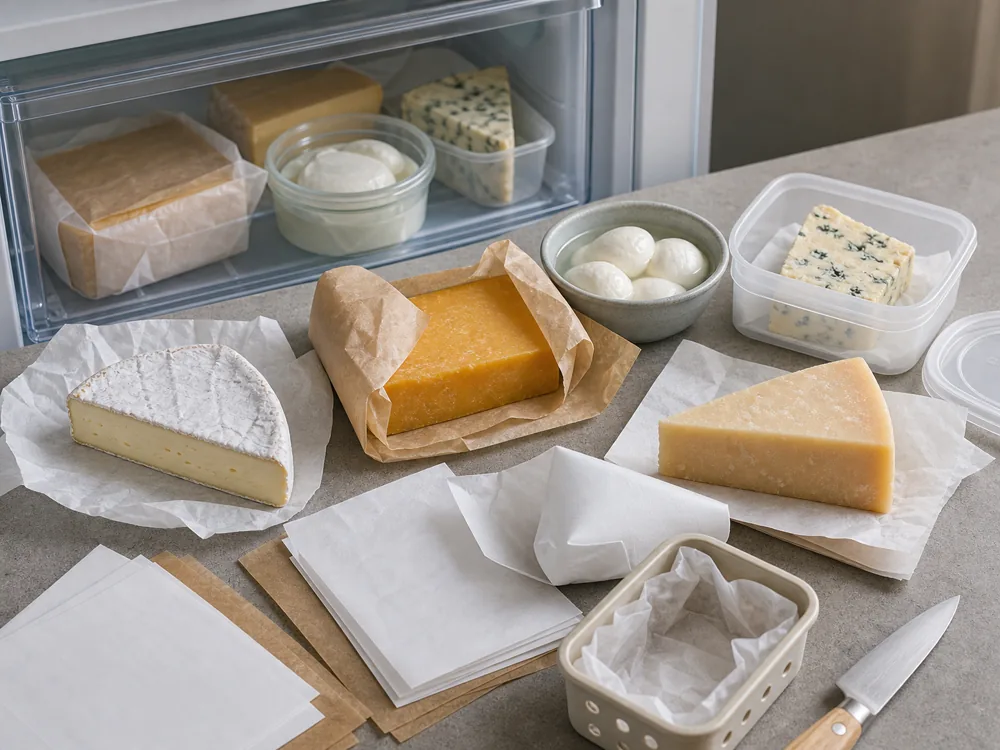
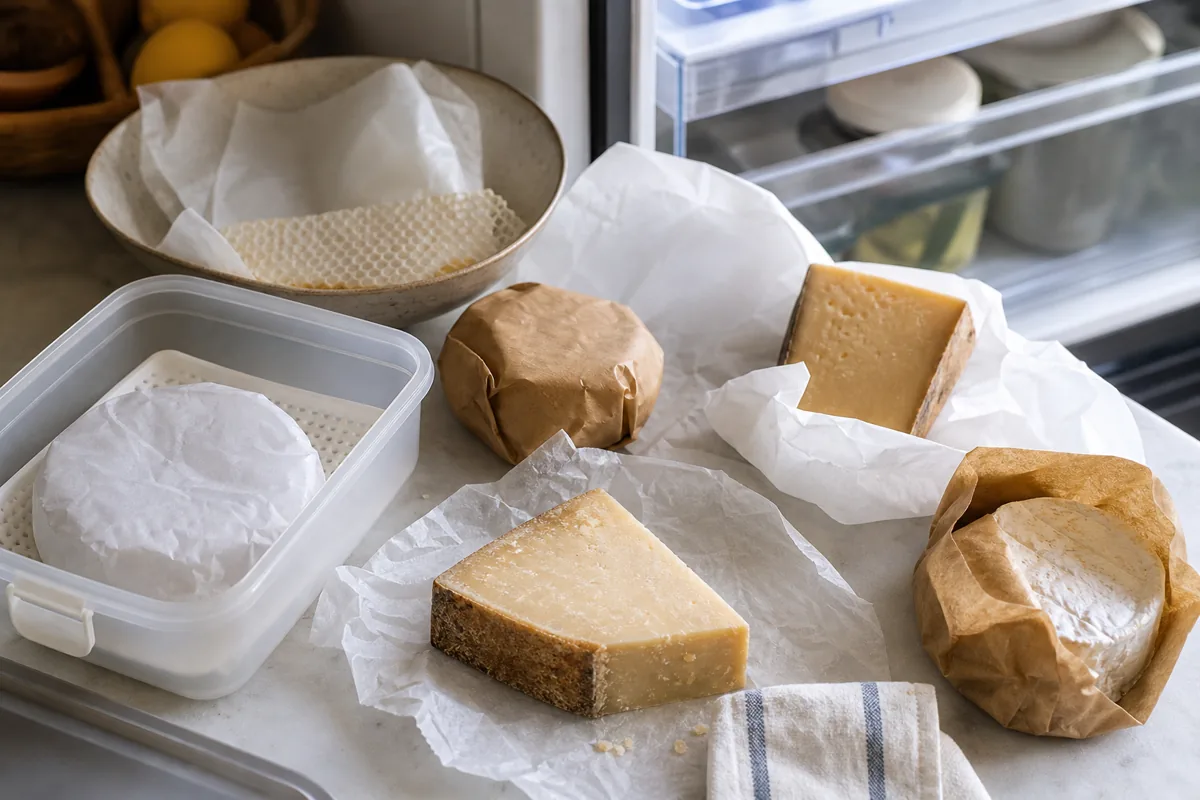
Cheeses wrapped in parchment for refrigerator storage - How to store cheese | KnowTheCheese

Fresh mozzarella goes rubbery in two days if you store it wrong. Good cheese storage starts with matching the wrap to the cheese type.

Most home cooks treat all cheese the same. That single mistake is why most cheese dries out before it gets used.

This guide separates food-safety rules from quality habits so you know which storage steps are non-negotiable and which ones protect flavor, texture, and rind condition.

  • Wrap by cheese family, not by habit.
  • Protect the cut face first, then manage moisture and odor.
  • Keep fresh cheeses in liquid instead of forcing them into paper or plastic.

What You Need to Store Cheese Properly

You do not need specialty gear. Most of what you need is already in your kitchen.

The key distinction: wax paper breathes, plastic wrap does not. Cheese is a living food product with active cultures. It needs a small amount of air circulation to stay in good condition.

Plastic wrap alone traps moisture and creates the humid, anaerobic environment that accelerates mold and off-flavor development. That's the reason cheese wrapped only in plastic tastes flat and slightly sour within days.

Cheese paper, sold at specialty shops and online, is the professional option. It has a wax-coated inner layer and a porous outer layer. Wax paper from your kitchen drawer works almost as well for home use.

TIP

Label every wrapped piece with the cheese name and the date you opened or wrapped it. It takes five seconds and saves you from the sniff-and-guess routine every time you open the fridge.

Step-by-Step Cheese Storage Method

Follow these steps in order. The sequence matters because each step builds on the last.

Cheese storage setup with wrapped wedges, cheese paper, containers, mozzarella in brine, and a refrigerator drawer
Good cheese storage starts before the fridge door closes: protect the cut face, label the piece, and keep fresh cheese in its own liquid.

The steps are mostly about quality, but the temperature step is a safety boundary. A cheese drawer is useful only when the fridge itself stays at or below 40 F. If your drawer runs warmer than that, move the cheese to a colder shelf and use a loose box to control odors.

Use a small refrigerator thermometer if cheese often sweats, freezes near the back wall, or spoils faster than expected. The dial setting on the appliance is not proof of the actual shelf temperature.

Fresh cheeses like brined mozzarella and ricotta need a different approach entirely. They live in brine or whey and must stay submerged. Do not wrap them.

Keep fresh cheeses in their original container with the liquid. Top up with salted water, using 1 teaspoon salt per cup of water, if the level drops.

Spreadable fresh cheeses need the opposite setup. Keep opened cream cheese tubs sealed, cold, and handled with a clean knife because they have no rind or brine to protect the surface.

Storage Times by Cheese Type

Different cheese categories have very different fridge lives. Use these as guidelines, not hard deadlines.

The cut face is always the most vulnerable point. A whole uncut wheel lasts far longer than a wedge that's been exposed to air.

Cheese family First wrap Outer layer Best fridge setup
Fresh in brine Keep submerged Original tub or sealed container Cold shelf, liquid intact
Bloomy rind Loose wax paper Container with slight airflow Warmest drawer, not the back wall
Semi-hard and hard Snug wax paper Loose bag or light plastic outer layer Cheese drawer or lower crisper
Blue cheese Foil Dedicated container Separate from mild cheeses
  • Fresh (mozzarella, ricotta, chevre, cottage cheese): 3-7 days after opening. Keep submerged in brine or in sealed container.
  • Soft-ripened bloomy rind (bloomy-rind Brie, Camembert): 1-2 weeks from purchase. Rind continues ripening in the fridge.
  • Semi-soft (Havarti, young Gouda, Fontina): 3-4 weeks after cutting. Re-wrap tightly after each use.
  • Semi-hard (Cheddar, Gruyere, Manchego): 3-4 weeks after opening. Trim mold from hard or semi-hard cheese only when the rest smells clean and the mold is limited to the surface.
  • Hard and aged (Parmesan, aged AOP Gruyere, Pecorino): 1-2 months after opening for best quality. The low moisture content and salt give these cheeses more storage margin than fresh cheese.
  • Blue (Gorgonzola, Stilton, Roquefort): 3-4 weeks. Wrap loosely in foil, not plastic.

These times assume proper wrapping and consistent refrigeration at 40 F or below. A cheese left unwrapped for even one day can lose a week of usable life from drying alone.

Treat the table as a quality and planning guide, not a permission slip to ignore spoilage. If cheese smells rotten, turns slimy, or develops unexpected mold on a soft or fresh style, discard it instead of trying to trim around the problem.

How to Store Each Cheese Type

The wrapping method from the steps above works for most hard and semi-hard cheeses. But several categories need specific handling.

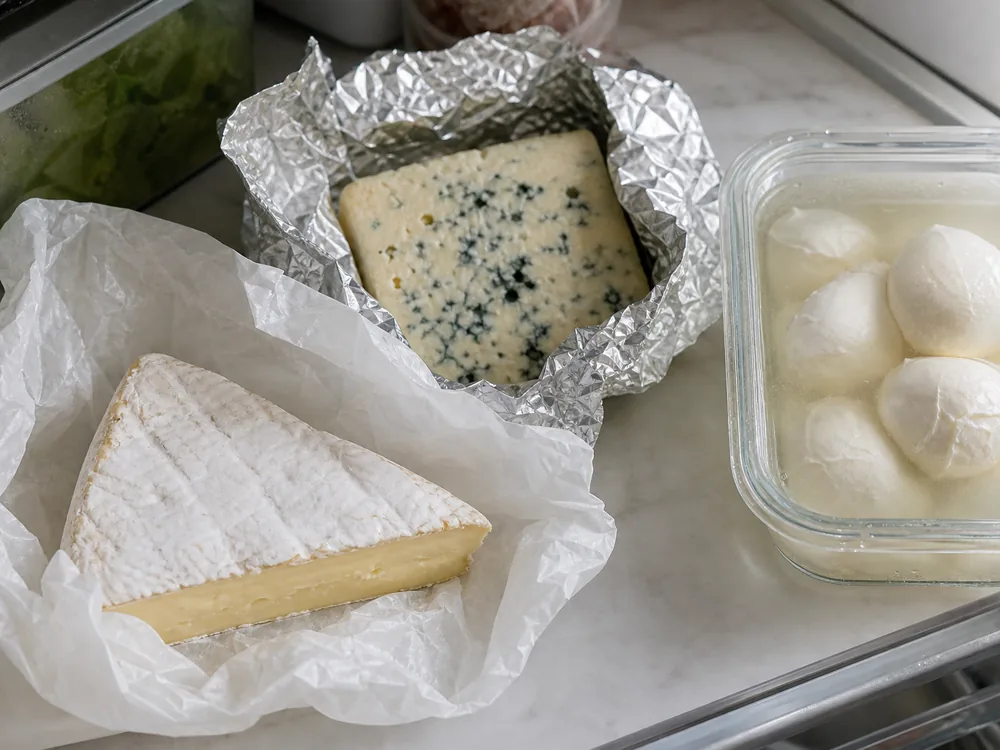
Bloomy-rind cheese in paper, blue cheese in foil, and mozzarella in brine showing different storage setups - Cheese storage guide | KnowTheCheese
Different cheeses stay fresh with different setups, from breathable wrap to foil to full brine storage.

Soft-Ripened and Bloomy Rind Cheeses

Camembert's bloomy rind, Brie, and similar cheeses have living rinds that keep developing in the fridge. Seal them in plastic and the rind suffocates.

The ammonia smell should stay faint. Airtight plastic can turn that aroma into something overwhelming.

Wrap them in wax paper loosely, then place inside a container with the lid slightly ajar. The rind should never be sealed tight. Check them every few days. A faint ammonia note can be normal near the rind, but a harsh ammonia smell, slime, or bitterness means the cheese has moved past its best window.

Blue Cheeses

Blue cheese smells strong and transfers flavor aggressively to nearby foods. Wrap it in aluminum foil rather than wax paper. Foil contains the odor better while still allowing some gas exchange through the edges.

Keep blue cheese in a dedicated container away from delicate items like butter and mild fresh cheeses. A small paper towel placed loosely on top absorbs excess moisture that would otherwise pool on the surface and speed up mold growth.

Hard and Parmesan-Style Cheeses

Parmesan and aged Parmigiano Reggiano wedges have very low moisture content. The main threat is drying, not mold. Wrap cut edges tightly in wax paper and then in plastic to limit air contact with the paste.

If a small mold spot appears on a hard cheese, cut at least 1 inch around and below the spot, then rewrap the clean piece in fresh paper. Do not use that rule for fresh, shredded, crumbled, or soft cheeses. Unexpected mold in those styles is a discard signal because moisture lets spoilage move through the cheese faster.

For specific cheese types, the storage rules above apply universally. Clothbound Cheddar tolerates firm-cheese mold trimming better than young, wet cheese.

Fresh ricotta needs fast use after opening because its moisture leaves little margin for storage mistakes.

Cheese Storage Tips from the Counter

These are the practical shortcuts that make a real difference. None of them require extra equipment.

TIP

Buy a block of low-moisture mozzarella or Cheddar instead of pre-shredded. Block cheese lasts 4-6 weeks opened. Pre-shredded bags last 5-7 days and lose melt quality as the starch coating breaks down. The block costs the same per pound and performs better.

Grated Parmesan from a green can is shelf-stable and not real cheese. Fresh-grated Parmigiano-Reggiano, kept in an airtight container in the fridge, lasts 2-3 weeks and tastes categorically better on pasta.

If you buy a large wedge that you cannot finish in one sitting, portion it immediately into 2-3 pieces and wrap each separately. Opening one portion leaves the others untouched and extends total fridge life.

Room temperature matters for serving, not storage. Always pull cheese out 30-45 minutes before serving. Cold cheese tastes flat.

The proteins and fats need to soften slightly to release their full aroma. This applies to every type, including hard aged cheeses.

Cheddar at refrigerator temperature tastes sharp and one-dimensional. The same piece at room temperature opens up caramel notes and nuttiness that are simply not perceptible when cold.

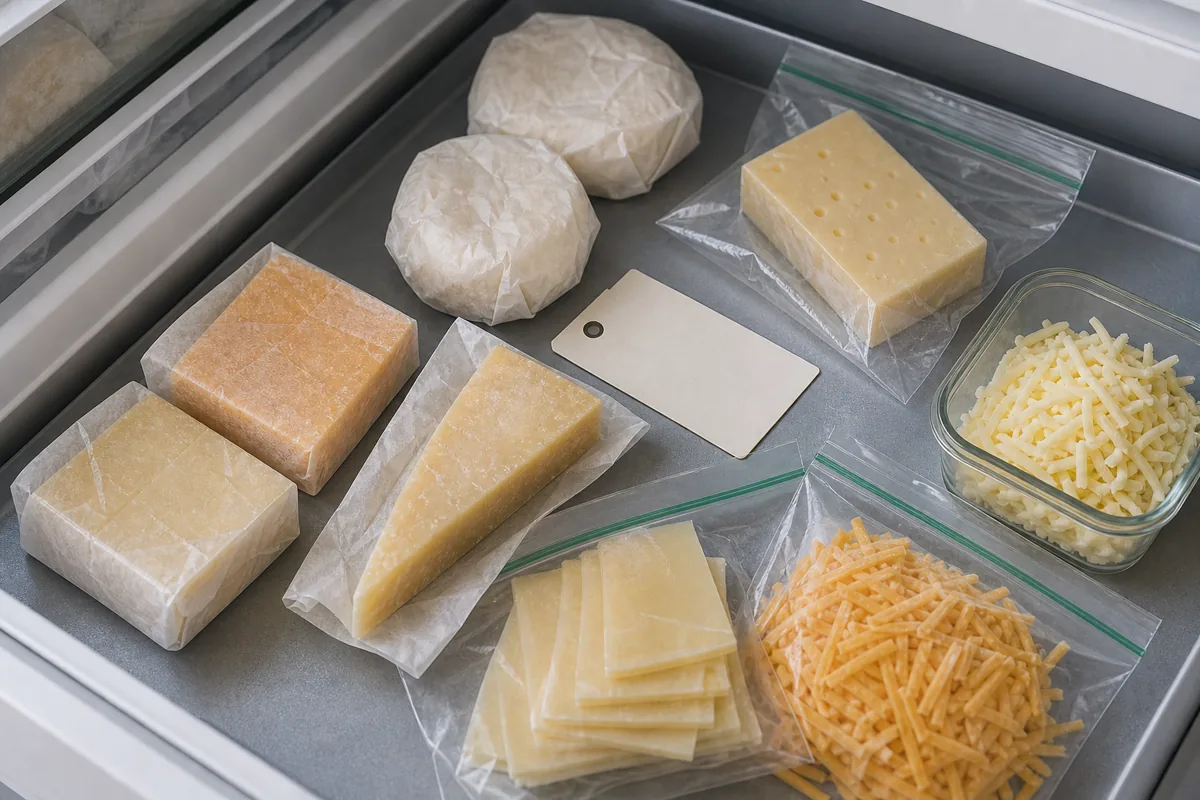
If you know a wedge will outlast this week's meals, freeze only the right cheese types instead of letting a good block dry out in the fridge.

  • Label every opened cheese with the date you cut or unwrapped it.
  • Keep blue cheeses in a separate container so the mold aroma does not spread.
  • Move cheese to room temperature only for serving, then return leftovers promptly.

Blue cheese storage needs extra separation because the mold aroma can move into mild cheeses nearby.

How we source cheese storage advice

We separate food-safety rules from flavor and texture advice. The safety floor comes from government food-storage guidance: keep refrigerated foods at 40 F or below, keep cold foods cold, and discard high-moisture cheese when spoilage signs appear.

The wrapping advice is quality guidance layered on top of that safety floor. Paper, foil, brine, and loose containers help cheese keep texture and aroma, but they do not make warm storage safe.

  • Use FDA or FoodSafety.gov guidance for temperature and discard decisions.
  • Use cheese science and producer guidance for moisture, rind, and wrapping behavior.
  • Use the stricter rule when quality advice and food-safety advice point in different directions.
SOURCES & REFERENCES

1.
Are You Storing Food Safely?
U.S. Food and Drug Administration, Center for Food Safety and Applied Nutrition, 2023 Gov
FDA refrigerator temperature guidance used for the 40 F or below safety boundary.

2.
Cold Food Storage Chart
FoodSafety.gov, 2024 Gov
Government cold-storage baseline used to separate safety guidance from quality guidance.

3.
Microbiological quality and shelf-life of commercial soft cheeses
Fox, P.F., Guinee, T.P., Cogan, T.M., McSweeney, P.L.H., 2000 Journal
Cheese science reference for moisture content and microbial activity differences between soft and hard cheese categories.

Cheese Storage FAQ

These are the storage questions we hear most often from readers.

You can freeze hard and semi-hard cheeses like Cheddar, Gruyere, and Parmesan, but save them for cooked dishes after thawing. Freezing can make the texture crumbly and grainy.

Fresh cheeses like mozzarella, ricotta, Brie, and Camembert usually lose too much texture after freezing, so use them fresh when possible.

White spots on hard cheese are usually one of two things: calcium lactate crystals or surface mold. Calcium lactate crystals are white, powdery, and appear on the surface of aged cheeses like Cheddar. They are normal in many aged cheeses.

Surface mold looks fuzzy and is often blue-green or white. On hard cheese, cut at least 1 inch around and below a small mold spot if the rest of the cheese still smells clean. Discard soft, fresh, shredded, or crumbled cheese with unexpected mold.

Wrap cut Brie loosely in wax paper, never tight plastic wrap. Place the wrapped piece in a container with the lid slightly ajar and keep it in a stable fridge zone at 40 F or below.

Eat it within 5-7 days of cutting. Discard it if the paste turns slimy, bitter, or sharply ammonia-like.

Do not use overnight counter time as a normal storage method. The FDA food-safety baseline for perishables is 2 hours at room temperature.

Hard aged cheeses have lower moisture and more salt, but fresh cheeses left out overnight should be discarded. When in doubt, use the safer rule: if it smells off, turns slimy, or was warm for too long, do not eat it.

Most cheese should not be stored fully airtight for long quality storage. A fully sealed container traps moisture, which can speed up off-flavors and surface mold.

Blue cheese is the main exception because odor control matters. Keep it in foil inside a container with a slightly loose lid. For most other wedges, wax paper with a loose plastic outer layer works better than a fully sealed box.

WRITTEN BY