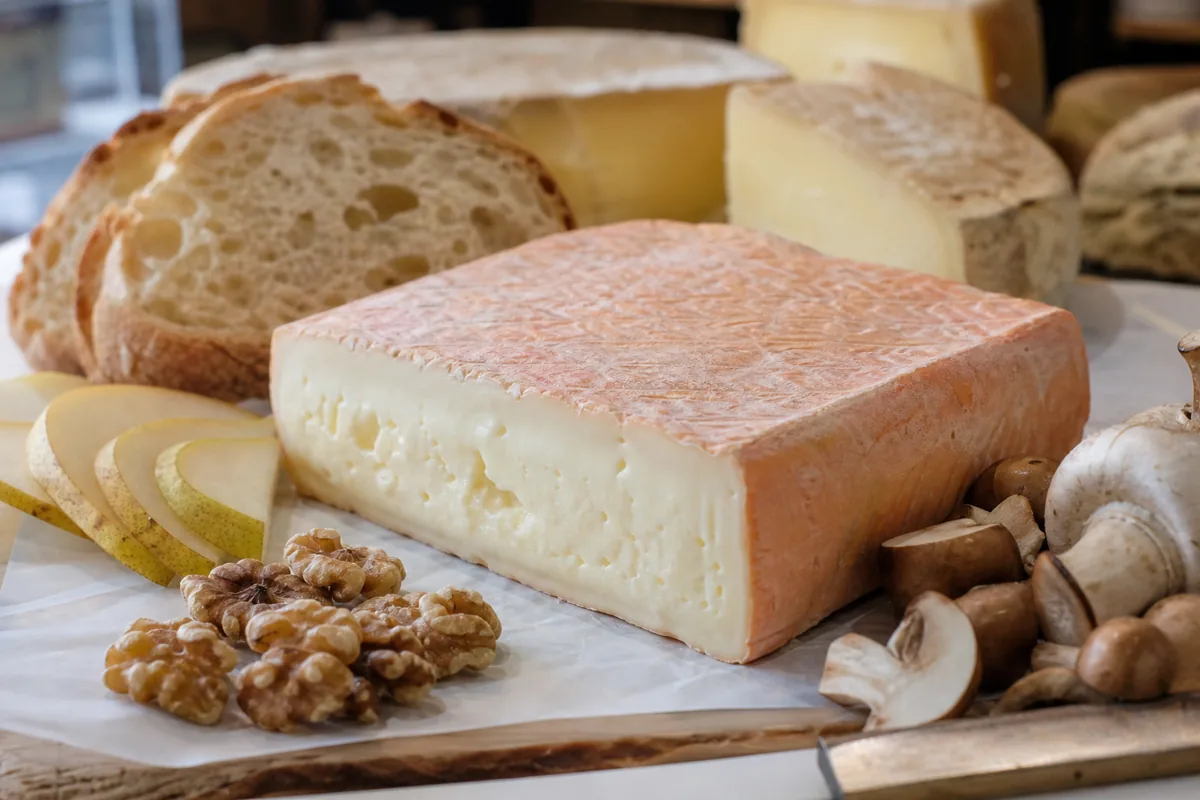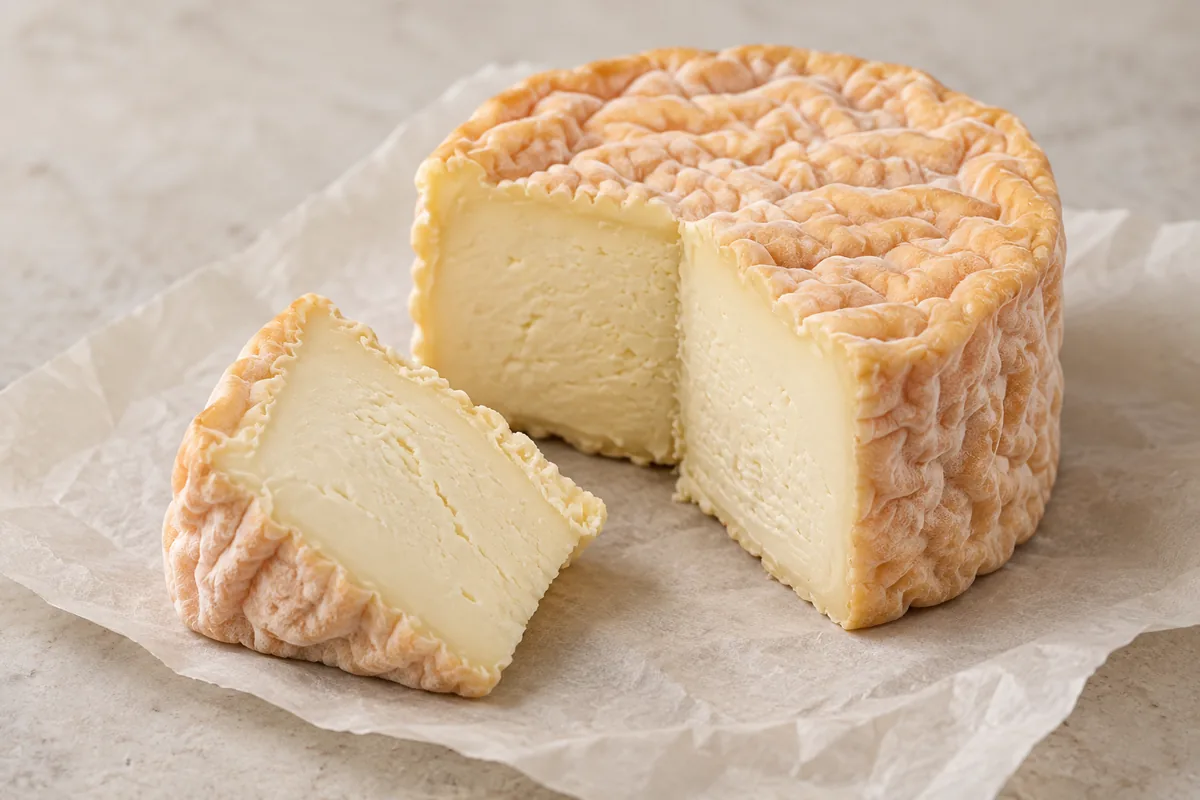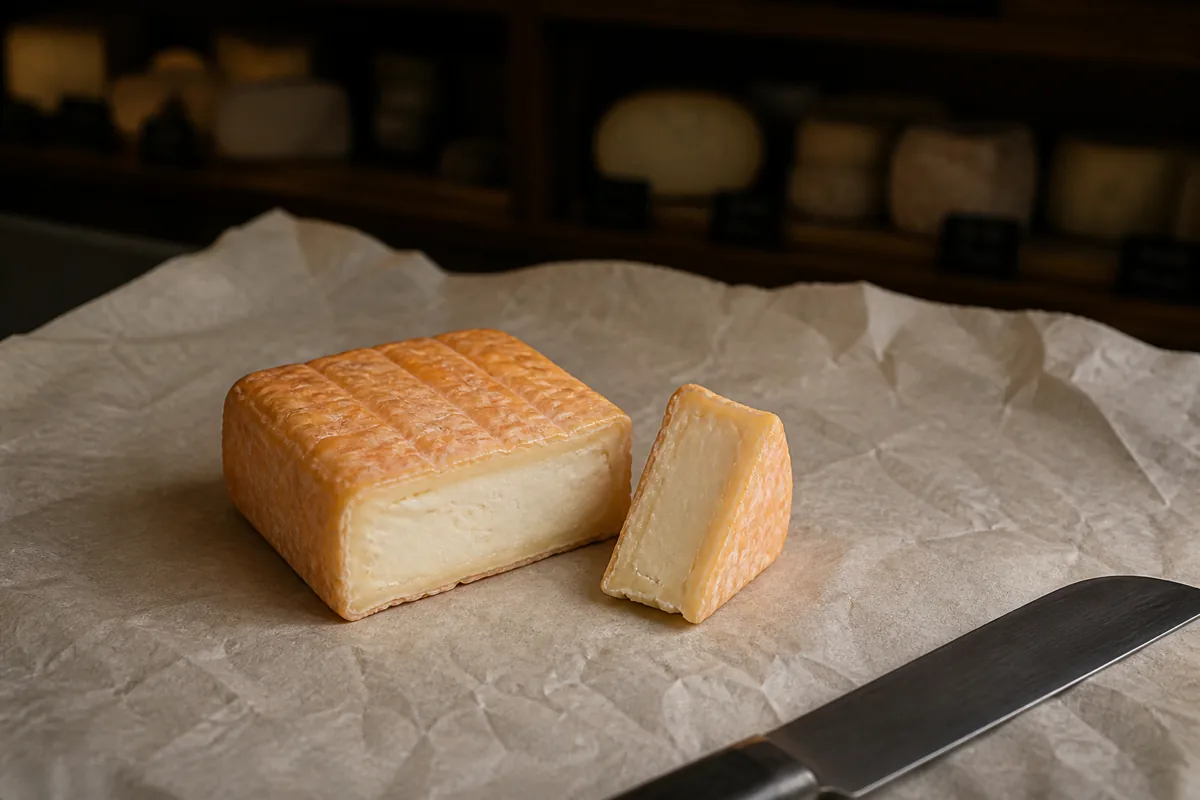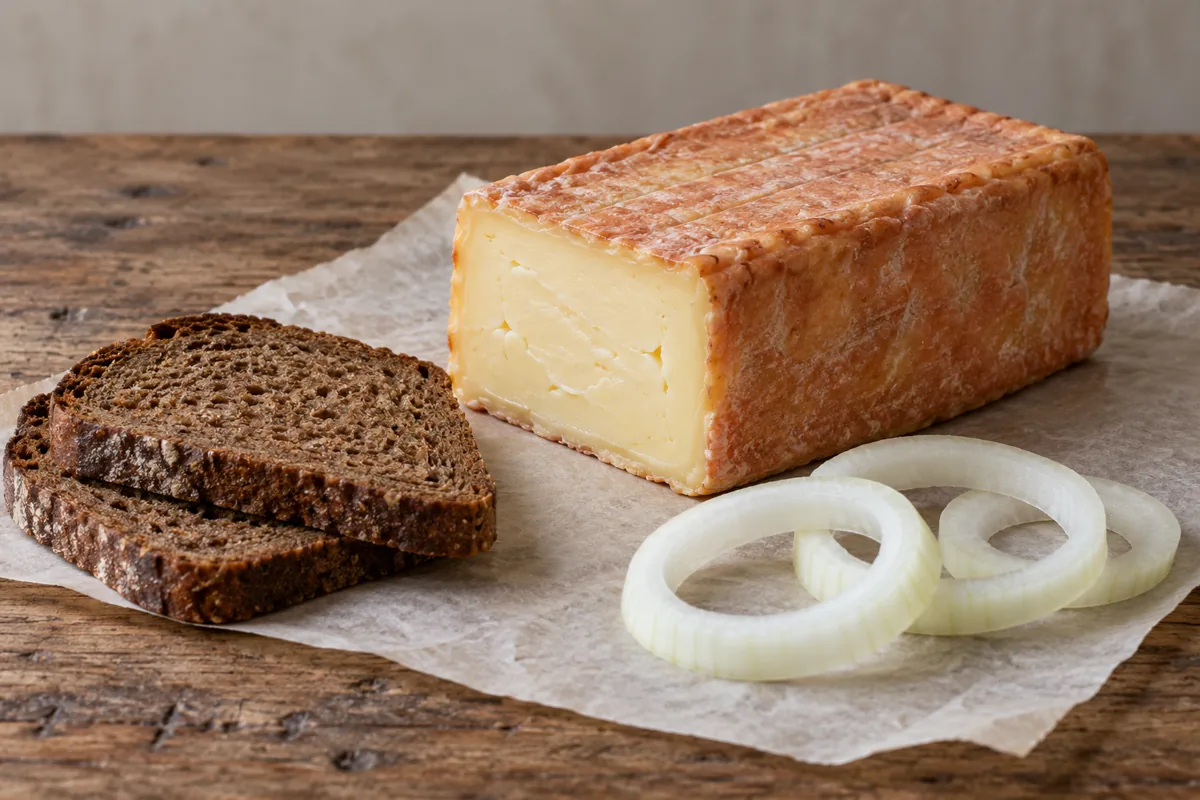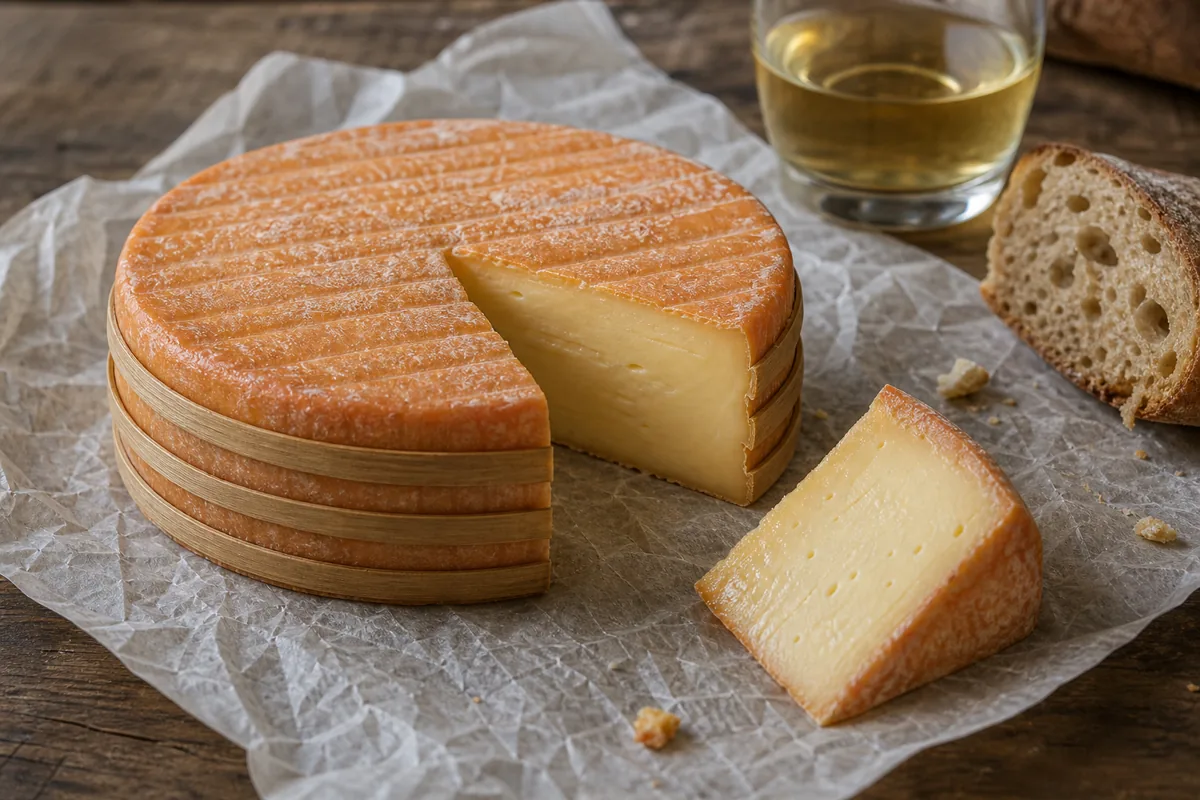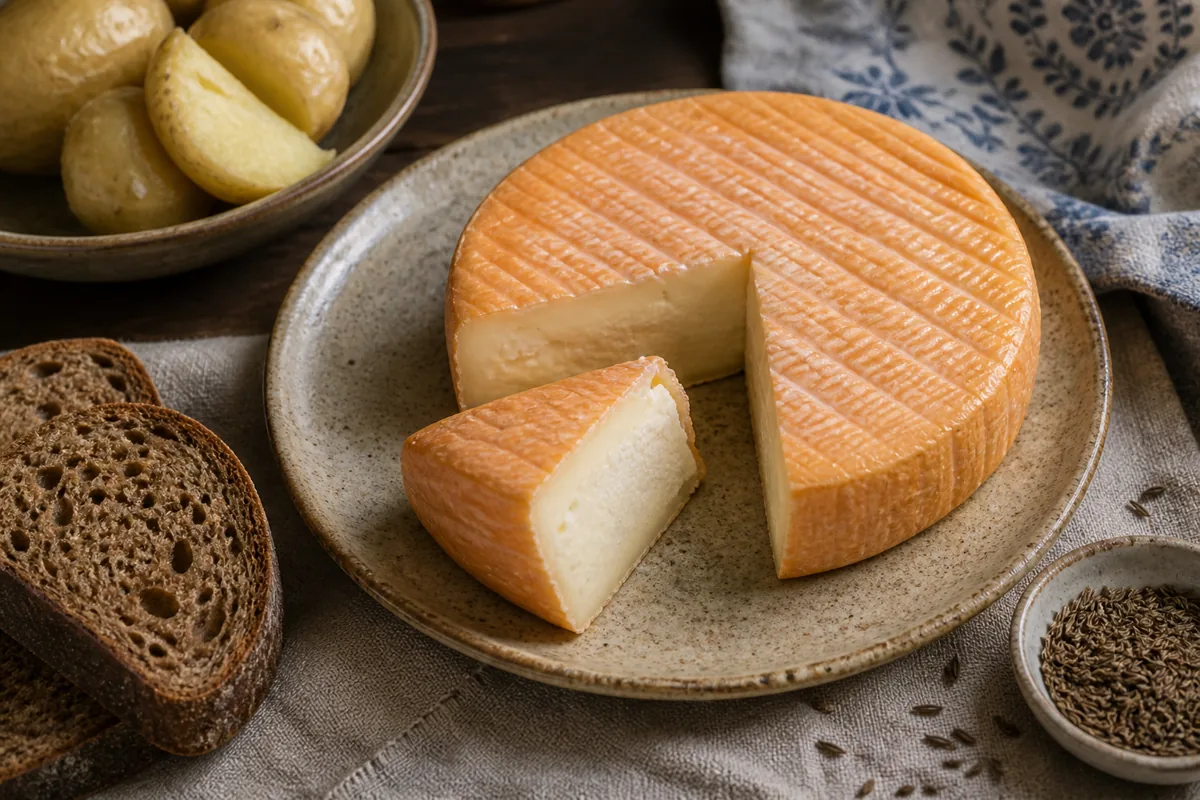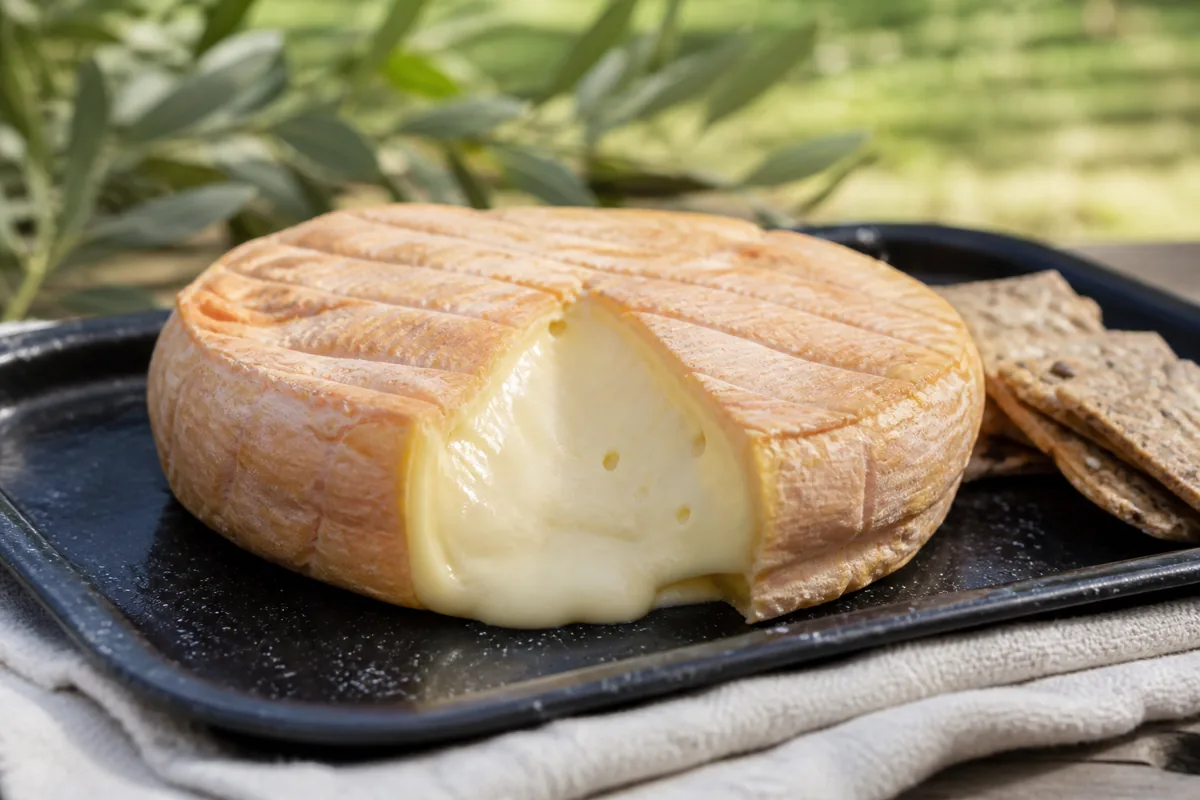
King River Gold is a soft, washed-rind cheese made from pasteurized cow's milk by Milawa Cheese Company in north-east Victoria. Milawa washes each wheel by hand every week while it matures, and the rind turns golden to orange-pink.
The maker's own product page calls the flavor "rich, almost smoky" and the cheese "bold and savoury yet buttery". Other sources describe the smell very differently, which is the first thing worth settling before buying one.
In This Article
What Is King River Gold Cheese?
Calendar Cheese says David and Anne Brown founded Milawa Cheese Company in the historic Milawa Butter Factory in 1988, and it describes the Milawa region of north-eastern Victoria as renowned for its wine, produce and snowfields. The Cheese Atlas puts the dairy in Victoria's King Valley.
Milawa's product page calls King River Gold one of the first cheeses it made and now its most popular and most awarded, while The Cheese Atlas names Milawa Blue as the company's first product.
The milk comes from the Mountain Milk Co-op in the Alpine Valleys, and the ingredient list is cow's milk, non-animal rennet, cultures and salt.
At the Australian Grand Dairy Awards in October 2024, Dairy Australia's results name it Champion Washed/Mixed Rind Cheese. Milawa's product page also lists a 2023 gold from the Dairy Industry Association of Australia (Vic) and 2023 silvers from the Royal Queensland Show and the Perth Royal Food Awards.
The Cheese Atlas adds a gold medal at the 2020 delicious. Australia and Harvey Norman Produce Awards, so the awards these sources record run from 2020 to 2024.
How Strong Does King River Gold Smell and Taste?
The sources agree on a savory, smoky, nutty paste and disagree on the smell. Milawa says the aroma is "stinky (we like to say distinctive)", while Cheese.com calls it subtle and "entirely unlike strong, washed rind cheeses".
| Source | Aroma | Flavor and paste |
|---|---|---|
| Milawa Cheese Company | "Stinky (we like to say distinctive)" | "Rich, almost smoky"; bold, savoury and buttery; soft interior |
| The Cheese Atlas | "Moderate to robust yeasty" | "Rich smokey and nutty"; soft ivory pâte |
| Calendar Cheese | "Slightly yeasty character" | "Lingering savouriness with nutty notes"; creamy texture |
| Cheese.com | Subtle | "Fruity, mild, smokey"; creamy and smooth |
None of the four gives a measurement, and only The Cheese Atlas compares it with another cheese, saying it bears some resemblance to Reblochon. The same page calls King River Gold a great introduction to the washed-rind style.
Calendar Cheese and The Cheese Atlas both describe a yeasty aroma and differ only in strength, slightly against moderate to robust, which places them between Cheese.com's subtle and Milawa's stinky. Buy a small first piece to find out which description fits yours.
How Is King River Gold Made?
Milawa heats the milk to 72°C for 15 seconds, then adds cultures and rennet to set it into what its process page calls a solid milk jelly.
A tennis racquet-like tool cuts the set milk into cubes, and Milawa sizes them by style: harder, drier cheeses get smaller curds, whose extra surface area lets more whey out, while soft white-mould and washed-rind cheeses get cubes slightly larger than dice size.
Whey is the liquid that exudes from the firmer curd pieces, so the larger cubes of King River Gold hold more moisture, which Milawa says lets the cheese break down and become soft and creamy.
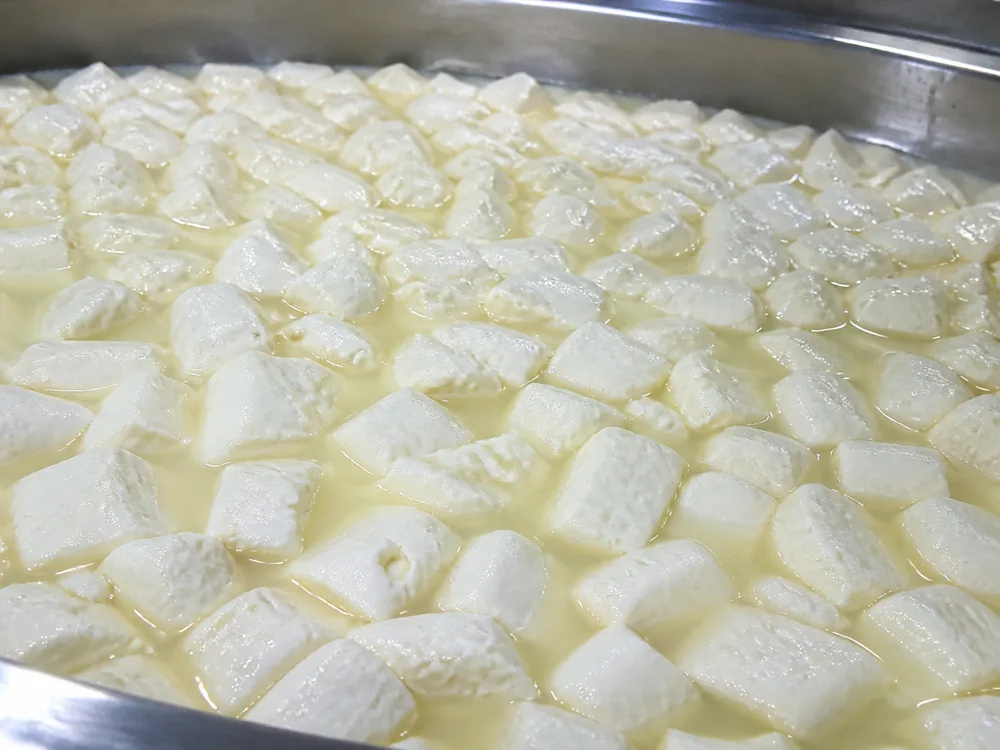
The curds are rotated gently with a hand paddle so they firm up instead of clumping on the vat floor, then ladled into hoops that let them knit into the shape of the cheese.
Once the cheeses have been turned by hand a few times and hold their shape, they are brined, which Milawa says helps preserve them and adds flavor, and then they move to the maturing rooms.
Calendar Cheese adds that the maturing room is the former butter-making room, and that its microflora and that of the local vineyards contribute a slightly yeasty character.
How Does Weekly Washing Build the Rind?
A good coverage of white mould appears on the rind within a week to 10 days of the wheel entering the maturing room, according to Milawa's process page.
At that point Milawa wraps its white-mould cheeses and lets them keep maturing, but it scrubs the washed rinds under running water in the kitchen sink to remove the mould.
From then on each wheel is washed by hand every week for roughly six to eight weeks, with a scrubbing brush.
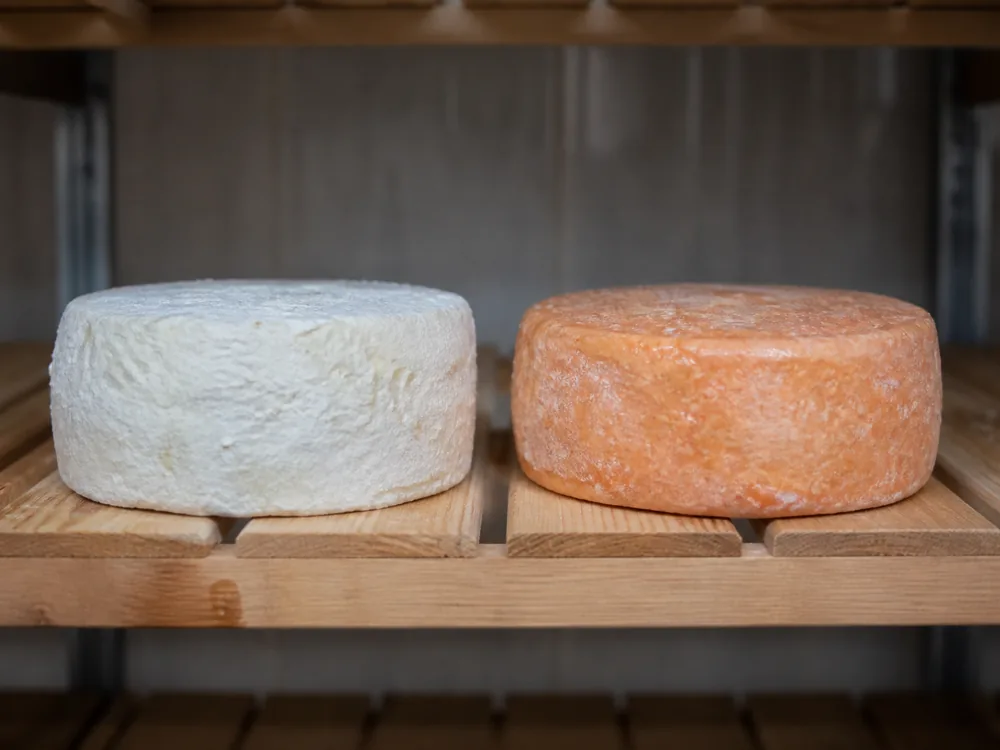
The scrub leaves a moist, salty surface where B. linens can grow, and Milawa credits that bacterium with the rind's orangey-pink hue and the distinctive smell of washed-rind cheeses.
The weekly wash keeps the white mould from returning and gives the bacteria the right conditions to flourish, and Milawa remarks that the washed rinds it washes the most are the ones that smell the worst.
Descriptions of the finished rind vary: Milawa says golden and orangey-pink, Cheese.com says "slightly rough pinkish-orange", and The Cheese Atlas says "sticky brown". The sources also differ on the wash itself, with Milawa describing running water, Calendar Cheese a brine solution and The Cheese Atlas a proprietary solution.
Texture is the other split: Milawa's process page says a slightly gritty rind and Cheese.com says slightly rough, while The Cheese Atlas says sticky, and none of them says whether that comes from the wash, the age or the individual wheel.
Milawa says only that the wheels are then wrapped after washing ends. The six to eight weeks describes the washing, not a guaranteed age on the day you buy it.
What Does Milawa Say About Salt and White Mould on the Rind?
Milawa's product page says salt sometimes forms on the rind and gives it "extra grit".
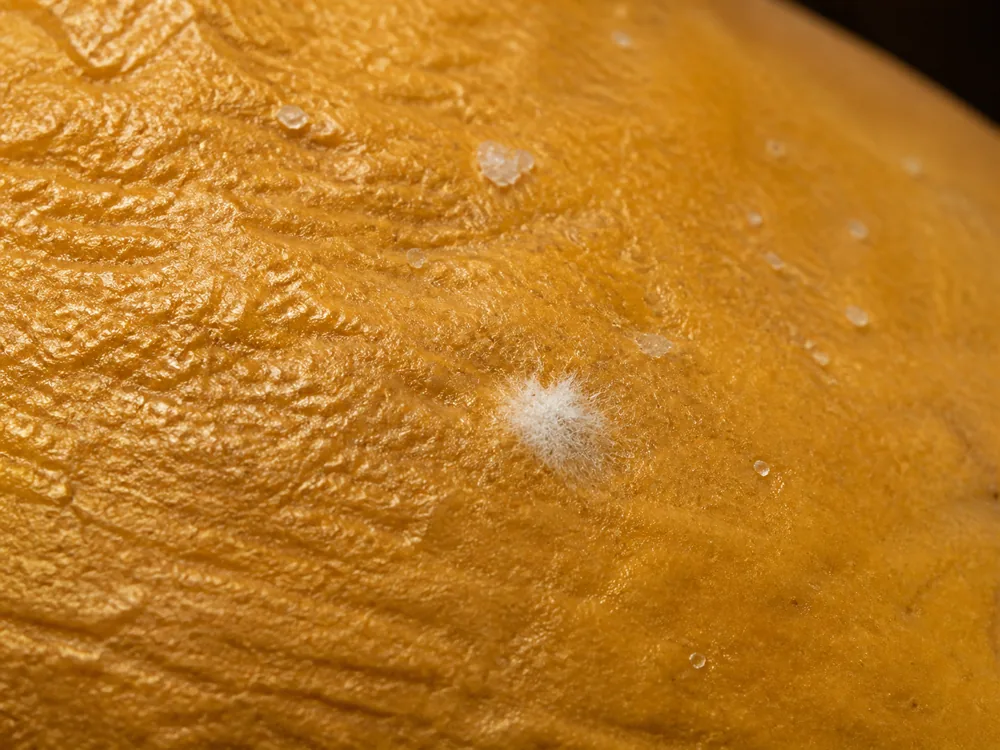
White mould can also show up again after the cheese reaches a home. Milawa's process page says that is the wheel not having been washed since it left the dairy, and describes a cold-water rinse and a wipe with a new, unused cloth.
That advice covers salt and white mould only. For any other change on the rind, such as a different colour or a wet surface, ask the maker or do not eat the cheese.
What Goes Well with King River Gold?
Milawa's product page says it is "perfectly paired with a sweet wine", and Cheese.com also lists sweet wines.
The Cheese Atlas suggests a local stout, a single malt whisky or a glass of Prosecco instead.
Cheese.com says King River Gold works as a table cheese or melted over vegetables, and the one list of foods that names specific items comes with Milawa's baked tartiflette.
| Pairing | Type | Why It Works |
|---|---|---|
| Crisp green salad | Food | Served with the baked tartiflette in Milawa's recipe. |
| Pickles | Food | Served with the baked tartiflette in Milawa's recipe. |
| Charcuterie | Food | Served with the baked tartiflette in Milawa's recipe. |
| Well-chilled white wine | Wine | Served with the baked tartiflette in Milawa's recipe. |
Can You Bake King River Gold?
Milawa publishes a tartiflette, a rustic French cheesy potato bake in its words, with King River Gold as the topping and a credit to Mould Cheese Collective. The recipe cuts 500 g of the cheese in half horizontally into two discs and sets them side by side, rind facing up, on the last layer of potatoes.
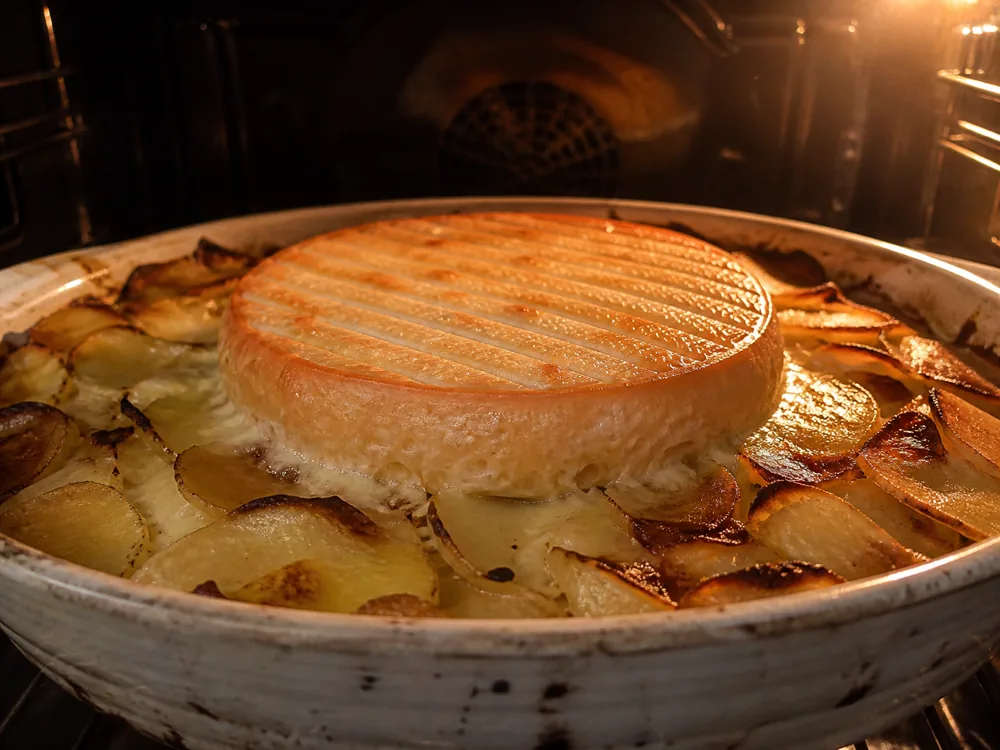
The recipe asks for waxy potatoes such as red Desirée, Nicola or Royal Blues, left unpeeled, boiled for about 15 minutes until tender but still holding their shape, then cooled and sliced 1 cm thick.
The bacon and onion cook in butter for about 5 minutes, the pan is deglazed with dry white wine and the crème fraîche or sour cream is stirred in off the heat.
Half the potatoes go into a garlic-rubbed dish with half the bacon mixture, the same again follows, and the cheese goes on last.
The dish bakes at 190°C for 35 to 40 minutes, until bubbling hot and lightly browned, and serves six to eight, which works out to roughly 60 to 85 g of cheese a portion.
Milawa's tip is to keep the cheese refrigerated during preparation and take it out only when it is time to top the dish, which makes it easier to cut.
The 500 g is more than twice the 150 to 200 g piece on Milawa's product page, so the retail piece covers a smaller dish than the one Milawa published.
How Does Milawa's Tartiflette Differ From the Reblochon Producers' Recipe?
The Cheese Atlas says King River Gold bears some resemblance to Reblochon, and the producers' association for Reblochon de Savoie publishes its own tartiflette recipe, built on one whole Reblochon for four people.
| Element | Milawa (King River Gold) | Reblochon de Savoie producers |
|---|---|---|
| Cheese | 500 g, halved horizontally into two discs | 1 Reblochon, halved through its thickness |
| Serves | 6 to 8 | 4 |
| Potatoes | 1.5 kg waxy, unpeeled, boiled then sliced 1 cm | 1 kg firm-fleshed, peeled, cooked in the pan for 20 minutes |
| Bacon and onion | 200 g streaky bacon, 1 medium onion (about 150 g) | 200 g smoked lardons, 2 large onions (about 200 g) |
| Wine and cream | 150 ml dry white wine, 200 ml crème fraîche or sour cream | 10 cl (100 ml) white wine, no cream |
| Seasoning | Salt and pepper, garlic-rubbed dish | Pepper, optional nutmeg, no salt |
| Oven | 190°C for 35 to 40 minutes | 200°C for 15 to 20 minutes |
Both recipes halve the cheese through its thickness and finish with the rind facing up, but the Reblochon recipe dices one half into the potatoes and tops the dish with the other half in two or four pieces, while Milawa puts both discs on top.
The oven times come with different methods: Milawa boils and cools its potatoes before layering them with a cream mixture, while the Reblochon recipe cooks the potatoes with the bacon and onion in the pan and needs only 15 to 20 minutes at 200°C for the cheese to brown.
Neither page says the two cheeses can stand in for each other, so the resemblance The Cheese Atlas mentions is the only link between them in these sources.
Can You Eat King River Gold When Pregnant?
Milawa says the milk is pasteurized, but neither NHS nor CDC says how to classify a pasteurized washed-rind cheese.
NHS lists pasteurised soft cheeses such as cottage cheese, mozzarella, feta, ricotta, halloumi and goats' cheese that does not have a white coating (rind) on the outside among the safe choices.
It says pasteurised or unpasteurised mould-ripened soft cheeses with a white coating, such as brie and camembert, must be thoroughly cooked, and washed-rind cheeses are not in those categories.
CDC puts soft cheese made from unpasteurized milk, including brie, camembert and blue-veined cheese, in its riskier column. Its safer column includes pasteurized soft cheese heated to an internal temperature of 165°F or until steaming hot.
Neither agency gives a verdict for a washed-rind cheese eaten unheated, so the answer depends on how a midwife or doctor classifies it. For the tartiflette, NHS also lists any cheese cooked until steaming hot, including soft cheese, as safe, but Milawa's recipe says only that it bakes until bubbling hot, with no internal temperature for the cheese.
Is King River Gold Vegetarian, and What Is in It?
Milawa's product page lists non-animal rennet alongside cow's milk, cultures and salt, and Calendar Cheese also lists non-animal rennet.
Cheese.com says the cheese uses animal rennet, but Milawa is the maker and its current ingredient list says otherwise.
Cheese.com's information box also gives the milk as pasteurized or unpasteurized and the type as semi-soft, while Milawa's process page describes a pasteurisation step at 72°C and its product page a soft interior, so the maker's wording is the more specific.
The product page also states that it contains materials derived from cow's milk, so it does not suit anyone avoiding milk.
Where Can You Buy King River Gold?
Milawa says you can buy its cheeses in-store or from a local stockist, and a stockist finder on its website helps you locate one.
The sources name three different formats, so the shop's own size is the one that sets the price:
- Milawa product page: a 150 to 200 g piece at A$16.00, which is about A$80 to A$107 a kilogram depending on the piece's weight.
- Calendar Cheese: a 150 g round and a 700 g log.
- Cheese.com: mini wheels and 600 or 800 g logs.
Check the date on your pack for how long the piece keeps.
Only the 150 to 200 g piece has a price in these sources, and it is less than half the 500 g that Milawa's tartiflette uses.