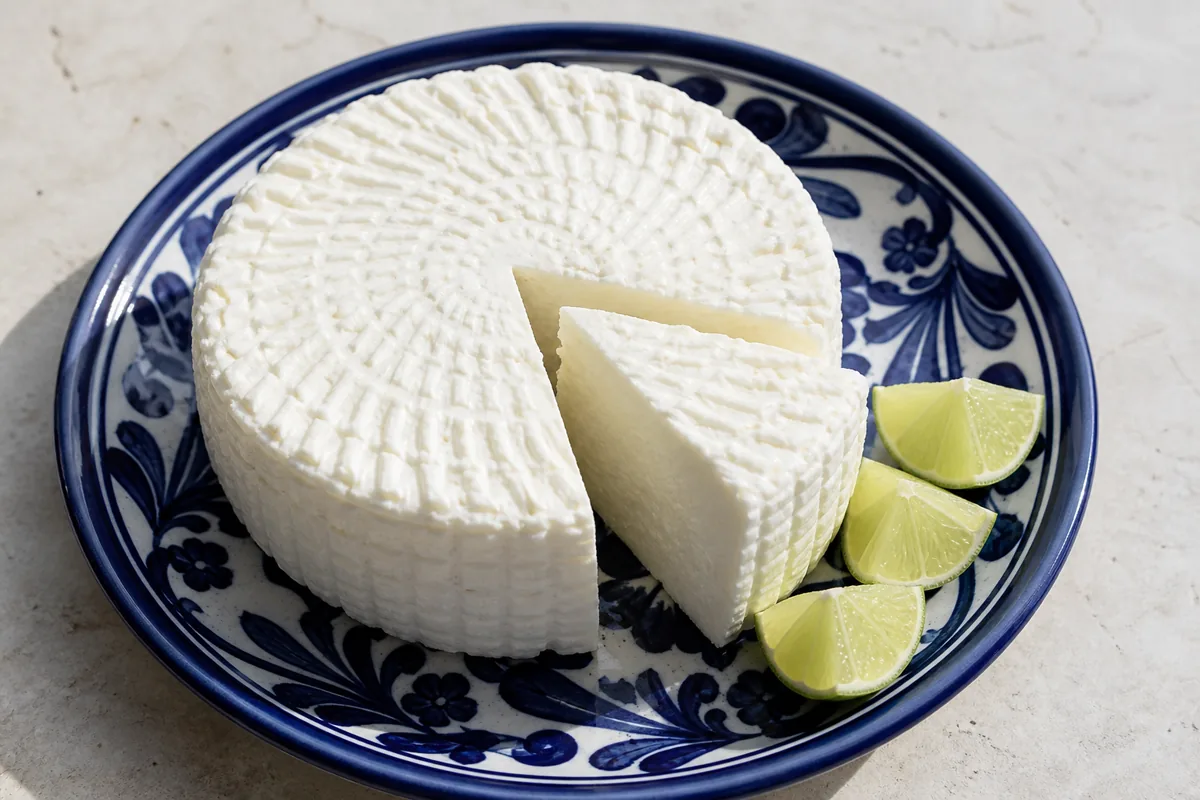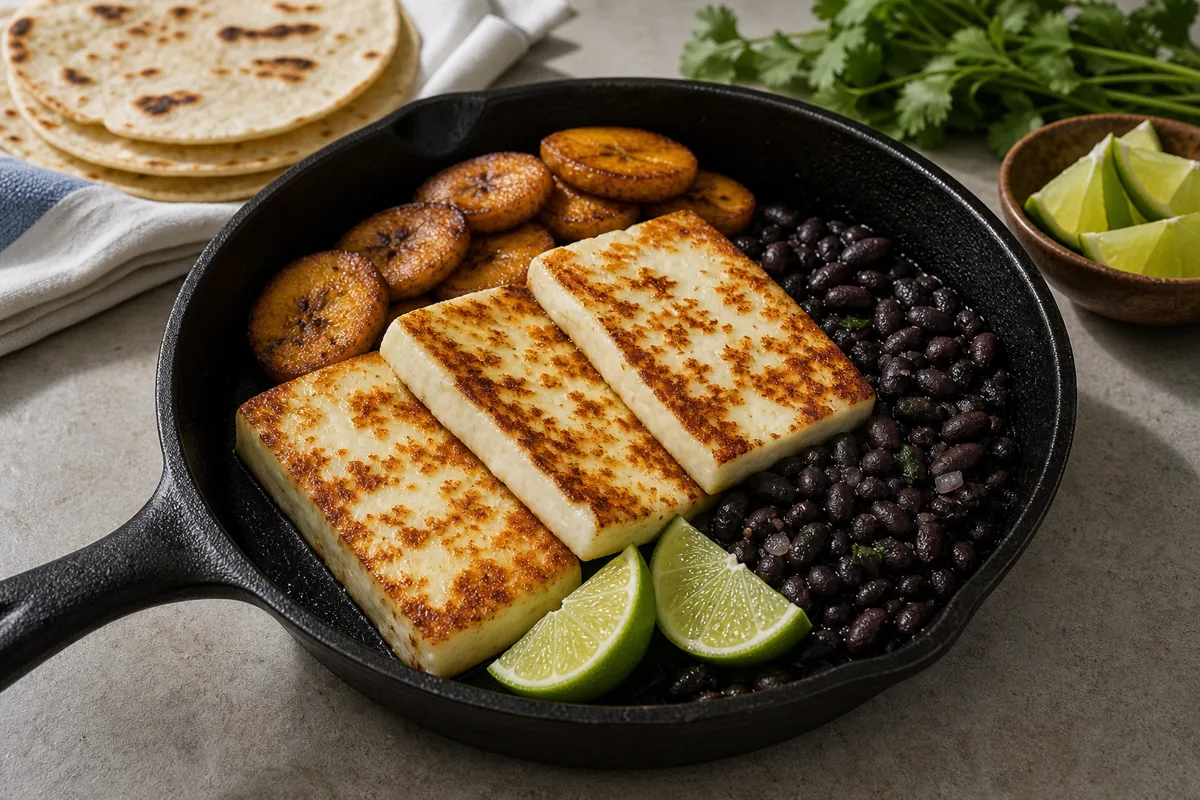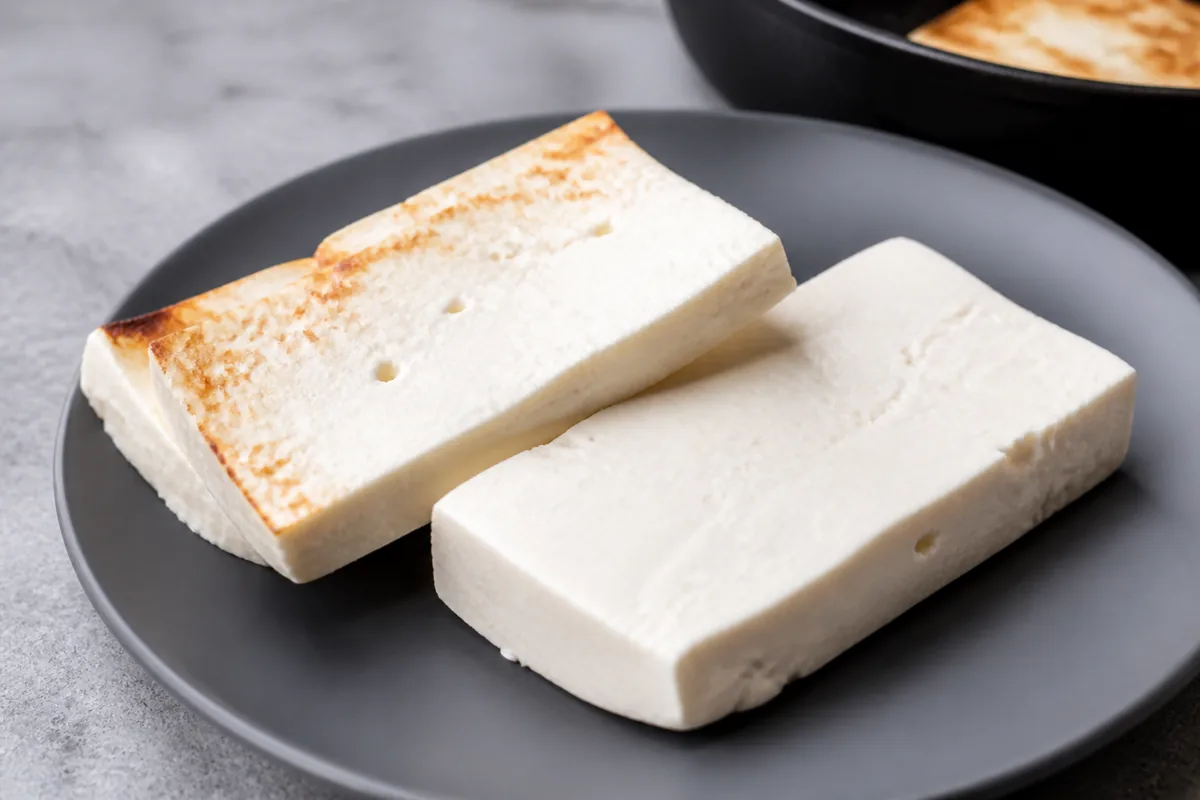
Queso de Freir is the fresh white cheese to buy when the cooking job is browning, not melting. Among structure-holding cooking cheeses, it belongs with cheeses that keep shape under heat.
The key limitation is right in the name. Queso de Freir is built for frying and searing, not for stretching across pizza or melting into sauce.
Queso de Freir should form a golden crust before it loses its shape.
That crust is the whole promise. The best pieces taste simple at first, then become interesting through heat, browning, and the plate around them.
In This Article
Which Frying Decisions Should You Make First?
Most mistakes happen before the cheese hits the pan because thickness, moisture, and heat level decide whether you get crisp edges or a rubbery block.
Prepare the plate and cut the whole batch before heating the skillet. Once the pan is ready, you should be able to dry, sear, turn, and serve the cheese without pausing while the first pieces overcook.
| Choice | Best Move | Why It Matters |
|---|---|---|
| Slice thickness | About ¼ to ½ inch | Thin slices brown fast without staying cold inside. |
| Pan heat | Medium to medium-high | Enough heat makes crust before the center sweats. |
| Breading | Skip it | Good frying cheese browns on its own. |
| Serving time | Serve hot | The crust softens as the cheese cools. |
Use the table as a sequence rather than four separate tips because a dry slice still fails in a cool pan, and a perfect crust still softens when service is delayed.
This cheese is less forgiving than it looks. Dry the surface, use a hot pan, and serve it as soon as the crust forms.
What Makes Queso de Freir a Caribbean Frying Cheese?
Queso de Freir is a firm fresh cheese used for pan-frying, deep-frying, and griddling. Tropical Cheese describes it as a fresh white cheese that fries to a crispy golden brown without breading.
The uncooked block may look similar to other white cheeses, so the package name and intended cooking use matter more than color alone. A clean white appearance does not prove that a slice will hold under heat.
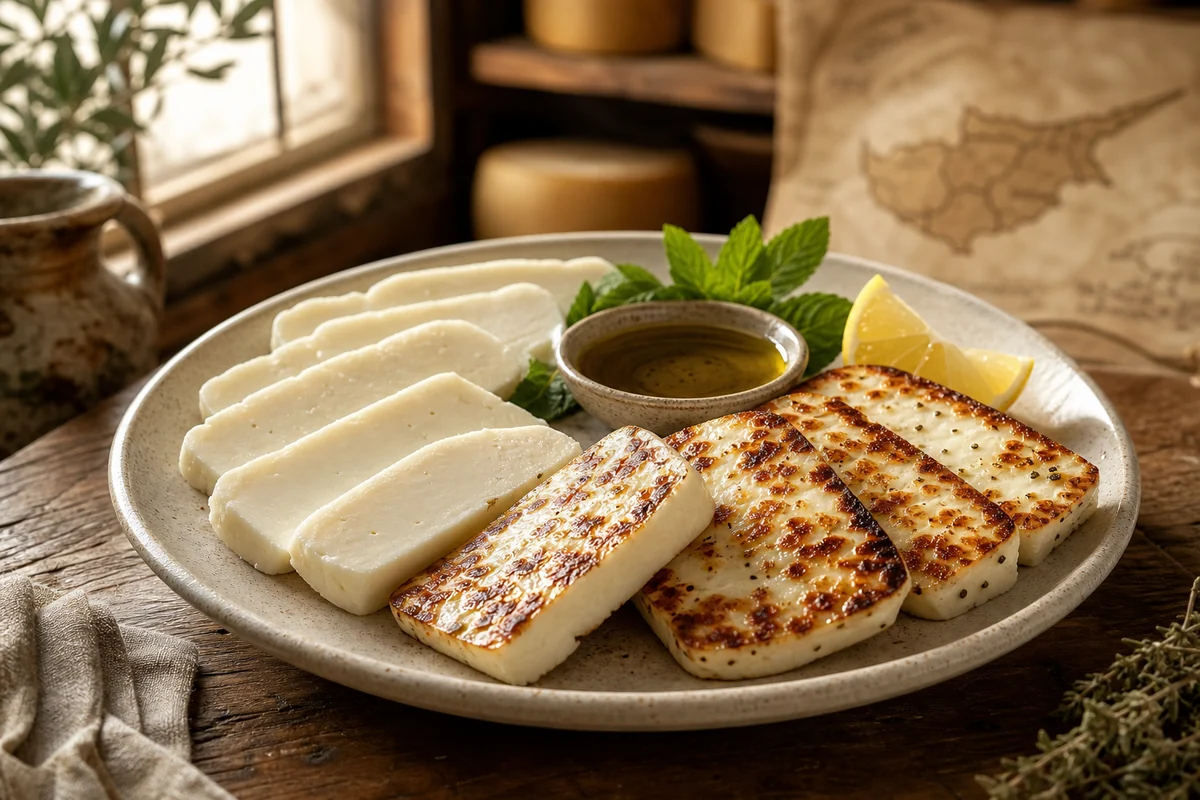
That makes it a different decision from squeaky halloumi grilling, since halloumi is brinier and springier while Queso de Freir often tastes milder and works in Latin breakfast plates.
Look for a dense block rather than a loose curd. The cheese needs enough protein structure to hold a slice together while the surface browns.
Pan searing gives you two broad browned faces, while shallow frying colors more edges and demands closer attention because the cheese reaches serving texture faster.
Most retail versions taste mild because the cooking method supplies the drama. That restraint helps the cheese work beside plantains, eggs, beans, and sharp sauces.
Expect a compact fresh-cheese bite before cooking and a softer center after searing, with the browned face providing most of the aroma and savory depth.
- Texture: Firm enough to slice, with a soft interior after frying.
- Flavor: Mild, milky, and lightly salty rather than sharp.
- Pan behavior: Browning matters more than stretch.
- Best plate: Eggs, plantains, beans, salami, or a brunch board.
If you want a raw table slice with less pan focus, mild queso panela usually fits better because Queso de Freir earns its place through heat.
Why It Browns Instead of Melting Away
The cheese keeps shape because it has enough structure and a fresh, low-stretch body. Heat drives surface browning while the interior softens.
The useful contrast is structural: the outer face loses moisture and colors while the interior warms without forming the long elastic strands expected from mozzarella.
That behavior is why cooks often use it beside plantains, eggs, and savory breakfast meats. It gives crisp, salty contrast without turning into a puddle.
The surface must dry before browning can start, so blot every side of a damp block and let the slices sit briefly before cooking.
Low heat works against this cheese. The interior warms before the crust forms, so the slice can toughen and leak instead of browning cleanly.
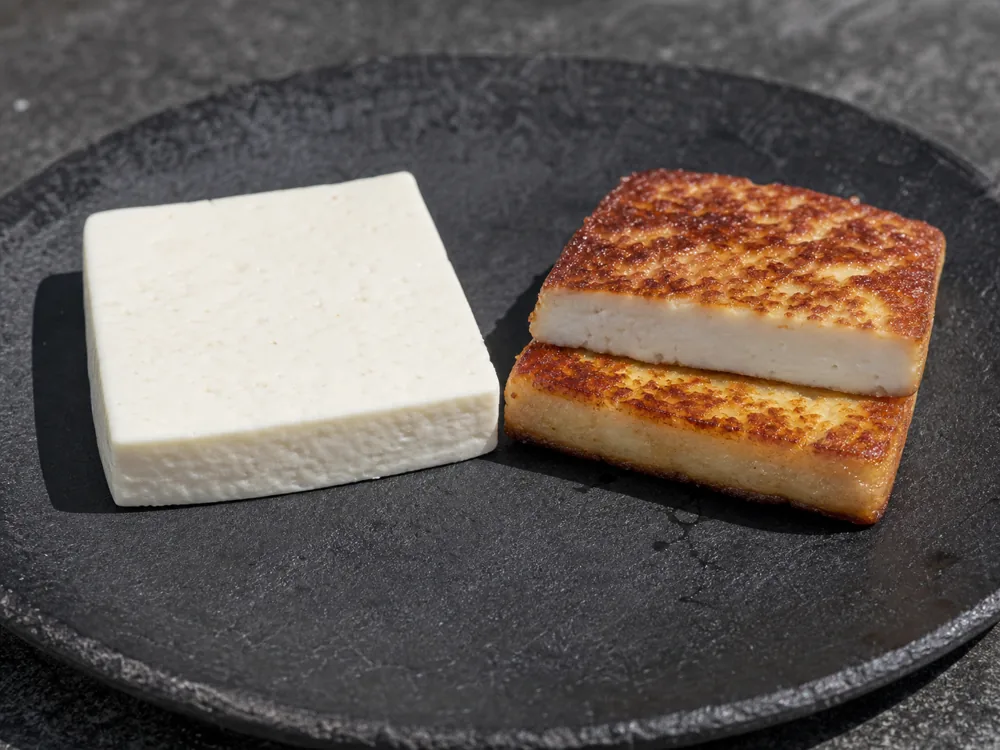
Use the cut-open slice as the doneness cue. The crust should be visibly brown, but the center should remain pale and compact rather than leaking into the pan or drying into the same color as the edge.
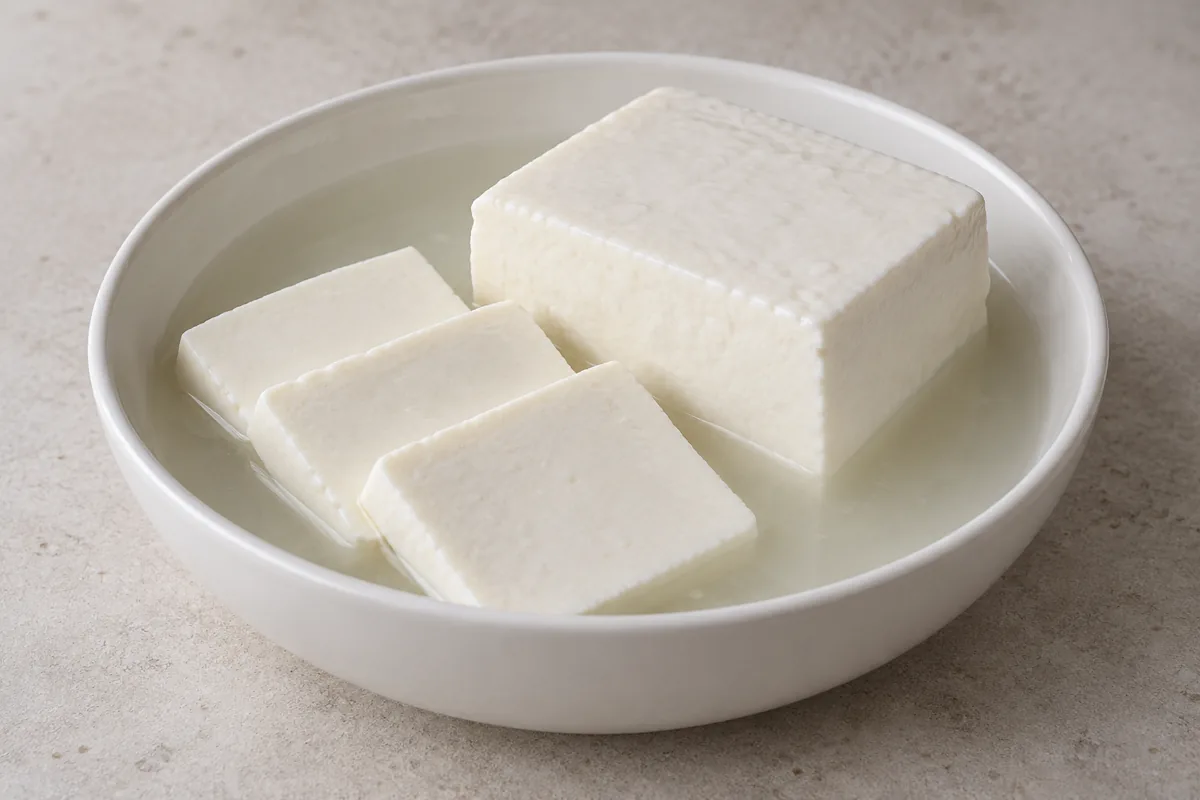
Compared with simple queso blanco, Queso de Freir is the more purpose-built frying choice. Queso blanco can be broad and mild, while this cheese is sold for pan performance.
Compared with crumbly queso fresco, it is much more sliceable because queso fresco usually finishes a dish while Queso de Freir becomes the hot component.
Why Does Pan Technique Matter More Than the Recipe?
Queso de Freir succeeds when the outside browns before the inside releases too much moisture. A thin film of oil and a preheated pan usually work better than slow cooking.
Use a skillet with a broad flat cooking area so every slice receives the same heat, and avoid warped pans that leave oil pooled under one edge while another stays dry.
Cut the block evenly so every slice touches the pan at the same time. Uneven pieces leave one edge pale while another edge toughens.
A wide knife and one steady downward cut produce flatter faces than sawing through the block, which helps each slice make even contact with the skillet.
Use medium to medium-high heat and give the pan time to recover between batches because a crowded skillet drops temperature and turns browning into steaming.
Start with slices about finger-thick. Very thin slices harden quickly, while very thick slabs need too long to heat through.
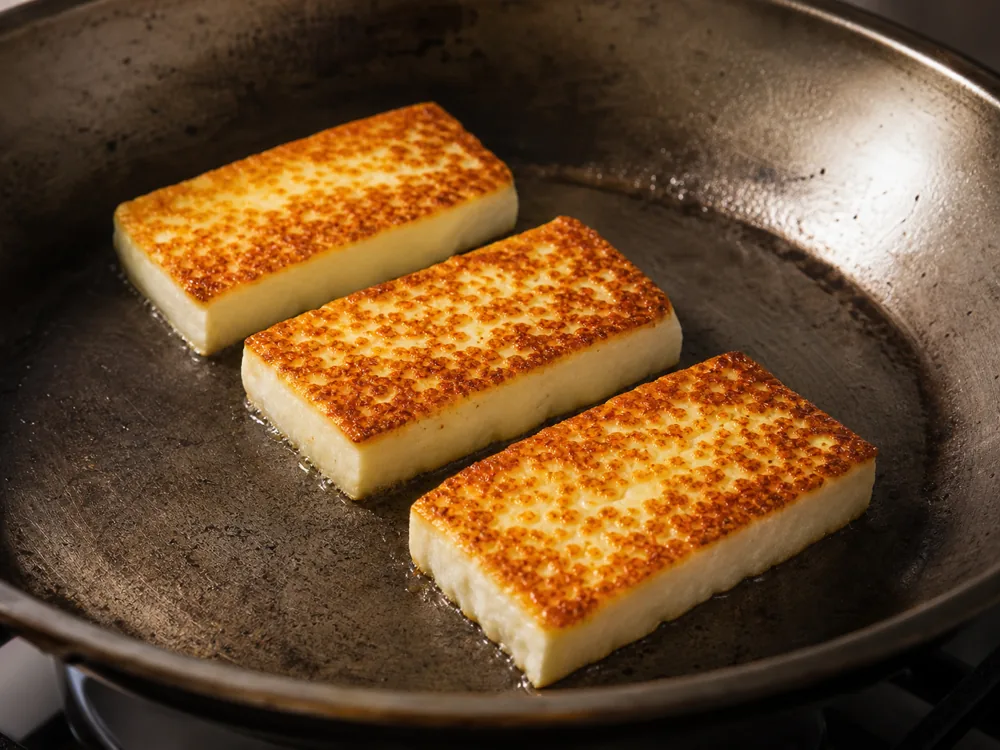
Wait for the first face to release with light spatula pressure before turning. If it clings, forcing the flip can leave the crust on the pan and expose a damp interior that sticks again.
- Dry surface: Blot the cheese before cooking so water does not block browning.
- Moderate thickness: Thick slabs need more time and can turn leathery outside before warming through.
- Single layer: Crowding traps steam and softens the crust.
- Fast service: The crisp edge fades as the cheese cools, so plate it last.
- Clean flip: Wait for the first side to release before turning, then brown the second side quickly.
If the first batch sticks, the pan was probably too cool, too dry, or too crowded. Adjust the heat before adding more cheese.
Do not cover the pan because trapped steam softens the crust and pushes the cheese toward a rubbery texture.
Use a spatula with a thin edge, not tongs that squeeze the slice. Pressure can break the browned face before it sets.
If you need to hold a batch, rest the slices on a rack instead of paper towels. Paper traps steam under the crust.
Keep held pieces uncovered and in a single layer because stacking creates a pocket of steam between the browned faces.
Where Should You Use Queso de Freir?
The classic job is a hot plate with cheese browned outside, soft inside, and served with something fresh or starchy for contrast.
Build the plate before you cook the cheese. Once the slices brown, they should move straight from pan to plate.
Place wet components such as beans, salsa, or dressed tomatoes beside the cheese rather than underneath it. Diners can combine each bite without letting the entire crust soak while the plate waits.
| Use | How It Works |
|---|---|
| Dominican-style breakfast | Serve fried slices with eggs, salami, and mashed green plantains. |
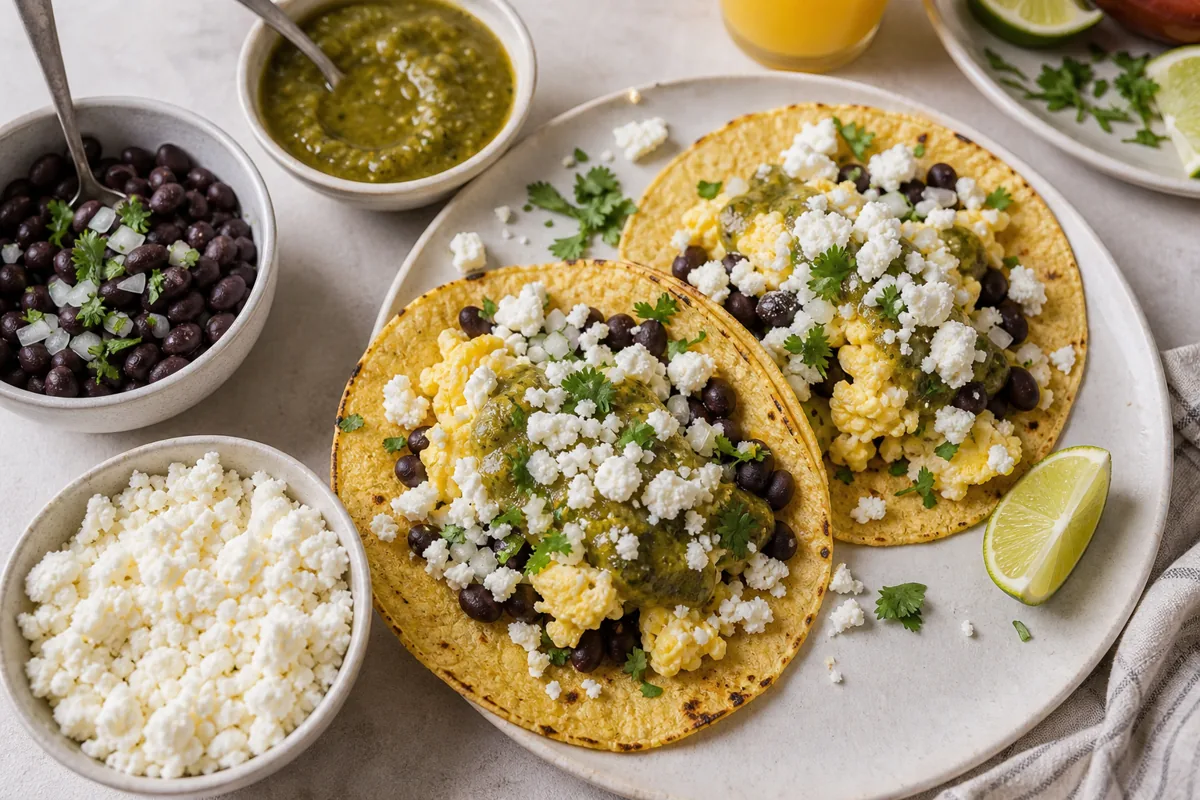
| Brunch plate | Add crisp cheese to beans, avocado, and warm tortillas. |
| Snack board | Serve hot cubes with lime, herbs, or a simple dipping sauce. |
| Sandwich filling | Use warm slices where you want a crisp cheese layer instead of melt. |
For several diners, cook in small rounds and send each round to the table rather than holding one large batch, keeping the first plate crisp while the pan recovers before the next slices arrive.
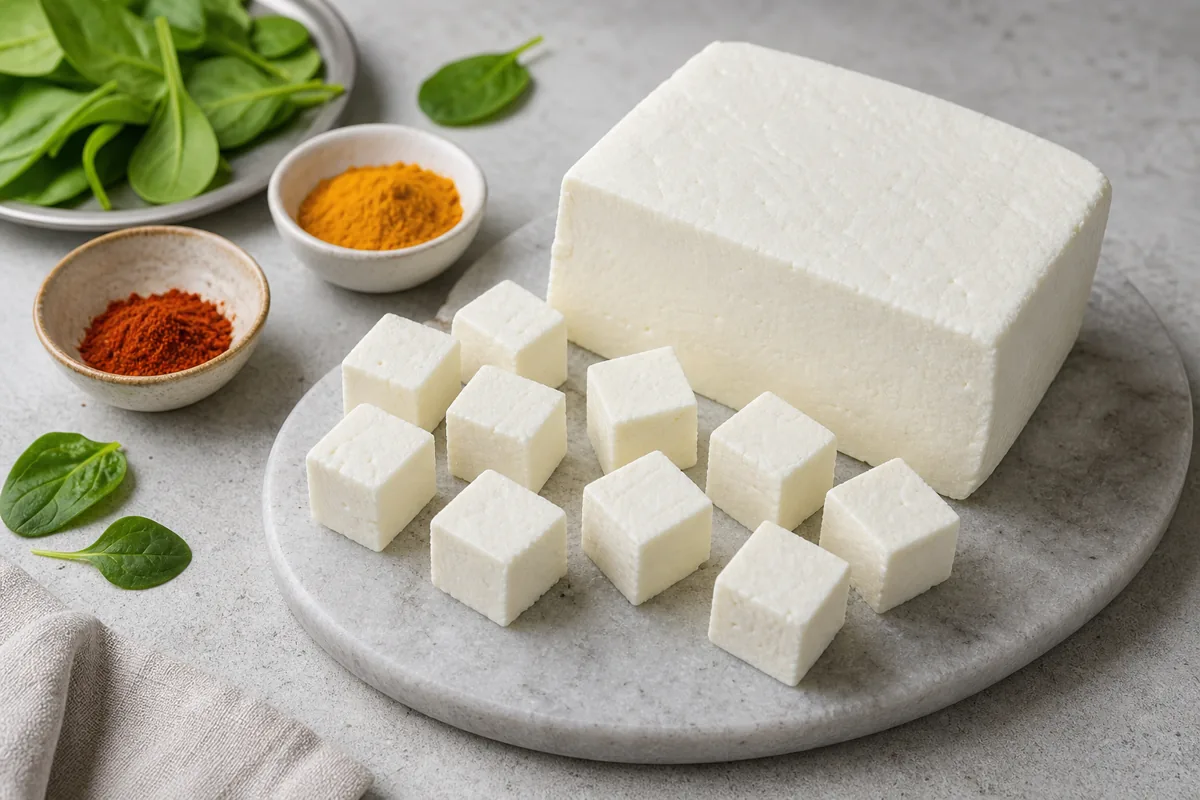
When you need a firmer non-melting vegetarian protein, pan-seared paneer cubes are the closest cooking idea. Paneer tastes less salty and does not bring the same Caribbean breakfast cue.
When you need a brined white table cheese, brined teleme blocks pull the dish toward a different salt-and-brine lane.
For sandwiches, cook the cheese first and add it near the end so the bread can stay crisp while the cheese still carries heat.
For snack boards, use smaller cubes and a sharp dip. Lime, tomato salsa, cilantro sauce, or pickled onions keep the fried pieces lively.
For breakfast service, keep the cheese separate from wet beans or saucy eggs until the last moment. Contact with liquid softens the crust fast.
Choose shape by the plate: broad slices suit breakfast, batons fit a snack plate, and compact cubes give sandwiches or skewers more browned surface per bite.
How Should You Pair Queso de Freir?
Pair Queso de Freir with foods that cut salt and fat because plantains, tomatoes, citrus, and fresh herbs make the cheese taste brighter.
Think in three parts: hot cheese, soft starch, and fresh acid. That structure keeps the plate from feeling heavy.
Apply lime or tomato to the accompanying food rather than pouring it over every slice. Direct liquid brightens the first bite but softens the crust before the remaining pieces are eaten.
| Pairing | Type | Why It Works |
|---|---|---|
| Mangu | Food | Mashed green plantains give the classic Dominican breakfast contrast. |
| Eggs | Food | Fried or scrambled eggs turn the cheese into a full breakfast plate. |
| Tomato and lime | Food | Acid keeps the fried crust from tasting heavy. |
| Light lager | Drink | A crisp beer works better than heavy red wine with salty fried cheese. |
If you like a saltier brined bite, Greek feta crumbles can finish a salad beside fried slices. Feta will not replace the pan behavior.
For a Middle Eastern grilled-cheese cousin, milder ackawi slices can brown and soften after soaking, but they carry a different brine character.
Serve the cheese on a warm plate if the rest of the meal is ready because a cold plate steals the crust quickly and makes the center firm up.
Avoid sugary sauces unless the plate also has acid. Sweetness alone can make the mild cheese taste flat.
How to Buy, Fry, and Store It
Buy a sealed block with a clean white color and no sour swelling in the package. Check whether the label says frying cheese, not just white cheese.
A good package should feel firm rather than spongey, while excess free liquid signals a wetter block that needs extra drying time before the pan.
If you buy presliced cheese, check slice thickness before you commit. Thin deli-style slices can brown too fast and lose the soft center.
Compare the slice faces through clear packaging when possible, looking for even thickness, intact corners, and no ragged cracks that will create hot spots in the pan.
Freezing is a poor choice when you need smooth intact slabs because ice damage can make the thawed block crumble or release more water against the pan.
Fresh-cheese storage rules matter here because the block has no protective rind. Keep the package cold and follow its own after-opening directions rather than relying on a fixed number of days for every brand.
For soft fresh queso fresco-type cheeses, the FDA advises preparing the cheese from an unopened package and not keeping opened leftovers, especially for people at higher risk of listeriosis. A frying cheese's ability to brown does not tell you whether an opened block is safe to keep.
If you need a salty finishing cheese instead of a frying block, crumbly cotija finish solves that different job because Queso de Freir should be cooked.
If the package permits storing an opened block, wrap it and refrigerate it at or below 40°F (4°C). Dry the surface again before cooking because moisture can return while it is refrigerated.
If the package permits leftovers, keep the unused block whole rather than preslicing it. More cut surfaces dry out and pick up refrigerator odors.
Cook only what you plan to eat hot. Reheated pieces can taste fine, but the second crust rarely matches the first pan.
What Can Go Wrong
The most common failure is treating Queso de Freir like a melting cheese when its value comes from the crust rather than stretch.
The second failure is under-seasoning the rest of the plate. Fried cheese tastes best with acid, starch, and something juicy around it.
Failure can also come from overcooking. Once both sides brown, extra time makes the slice tougher rather than more flavorful.
- Rubbery slices: The heat was too low or the slice was too thick.
- Leaking moisture: The surface was wet or the pan was crowded.
- Flat flavor: Add lime, tomato, herbs, or a sharp sauce rather than more salt.
- Soft crust: Serve immediately and avoid covering the hot cheese.
- Burned patches: The pan was too hot, the oil film was uneven, or the slice was too thin.
Read the failed crust before adjusting the recipe. Pale wet patches point to moisture or crowding, a uniformly hard slice points to low heat or excess time, and isolated black spots point to uneven oil or thickness.
Fix the next batch instead of trying to rescue the current one because fried slices lose their best texture quickly after the crust softens.
If every batch fails, switch one variable at a time. Change slice thickness, heat, or drying, but do not change all three together.
Which Cheeses Can Substitute for Queso de Freir?
The best substitute is another cheese that browns without collapsing. Flavor can change as long as the pan behavior stays close.
Choose a substitute by cooking method first because a cheese that tastes right but melts away will fail the main job.
Then check the milk and salt profile on the label. Halloumi brings more brine and squeak, paneer brings a mild dense curd, and another Caribbean frying cheese usually stays closest to the intended plate.
- Halloumi: Best for grilling and high-heat structure, but saltier and squeakier.
- Paneer: Best for cubes in skillets, curries, and vegetarian plates.
- Queso panela: Best for mild slices when frying is only a light sear.
- Queso blanco: Best when you need a simple fresh white cheese and less crust.
When a store carries several unlabeled white blocks, choose the package explicitly sold as frying cheese before relying on a visual match. The intended heat performance matters more than matching color or country alone.
For a dedicated swap guide, halloumi substitute choices help when the recipe needs heat resistance first.
Nutrition labels vary by brand, especially sodium, so taste before adding salty sides and let acid and freshness do more of the balancing work.
The listed serving also matters because several small fried pieces are easy to eat as one snack. Count the amount cut from the block before cooking, when the portions are still easy to compare.
SOURCES & REFERENCES
What Else Do People Ask About Queso de Freir?
These answers focus on the pan behavior that makes or breaks this cheese.