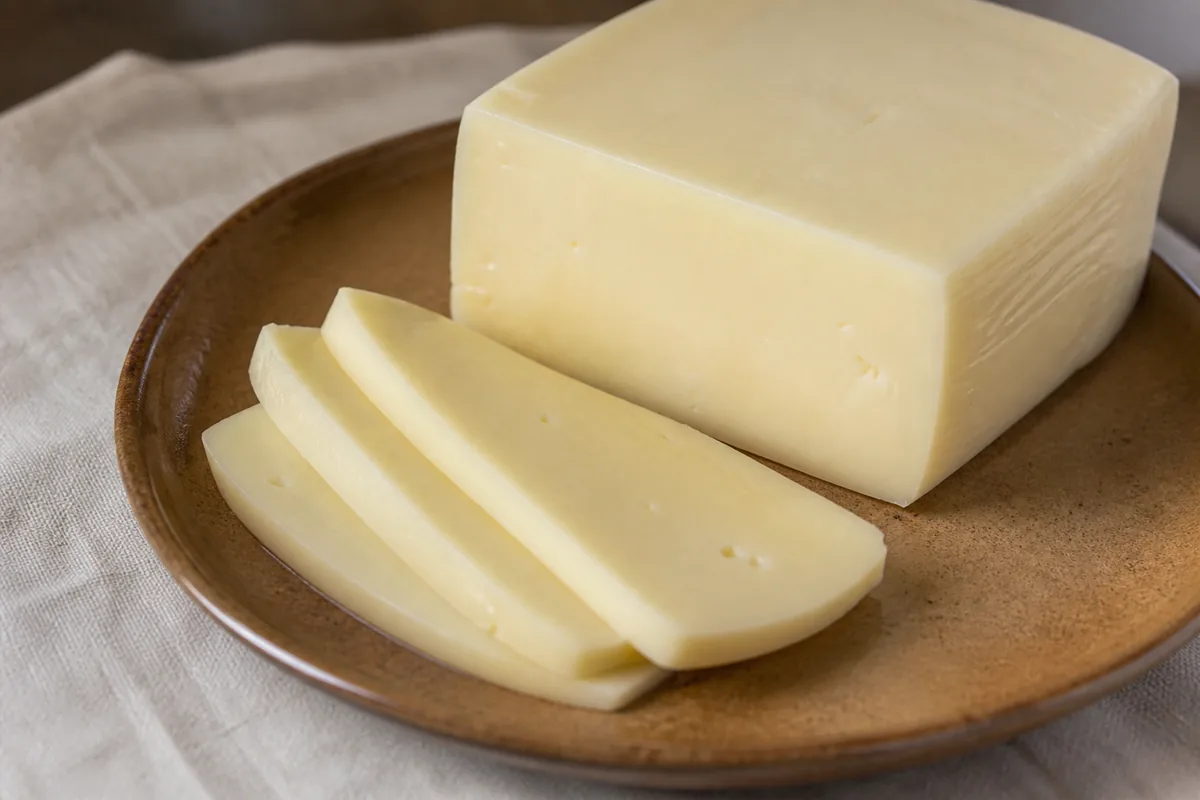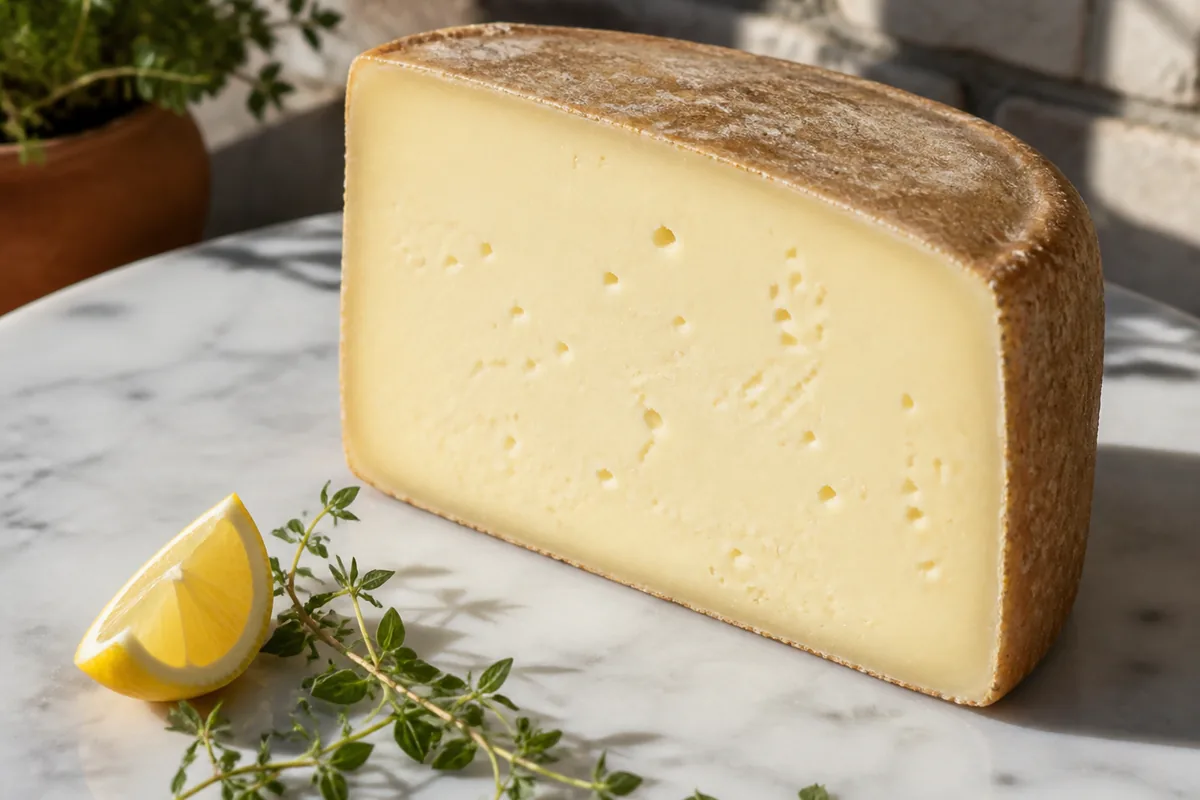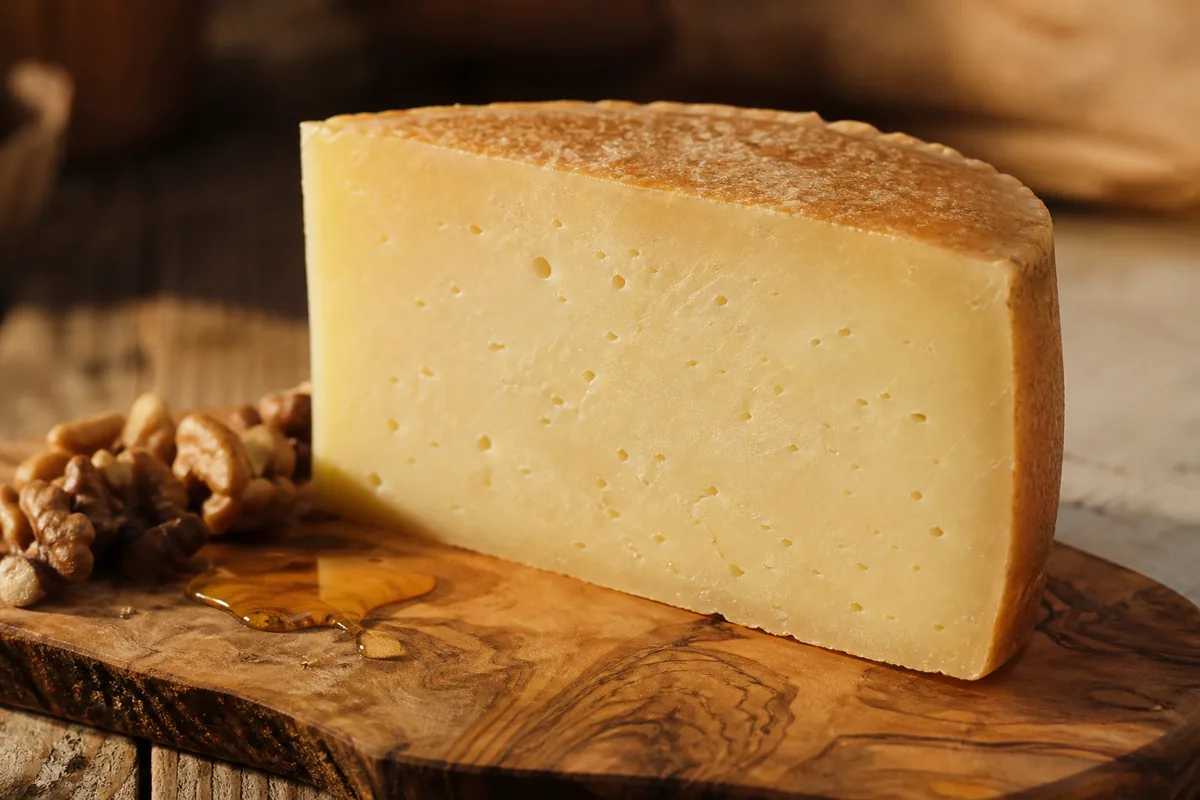
Graviera is a hard Greek cheese made in wheels, and a 2019 study in Molecules ranks it second only to Greek feta in the volume Greek dairies produce.
The name covers several regional cheeses rather than one recipe. Three of them are protected in the EU: Graviera Kritis from Crete, Graviera Naxou from Naxos and Graviera Agrafon from the Agrafa mountains.
Which one you buy decides the milk inside, because the Cretan and Agrafa cheeses are made mainly from sheep's milk and the Naxos cheese mainly from cow's milk.
In This Article
What Is Graviera Cheese?
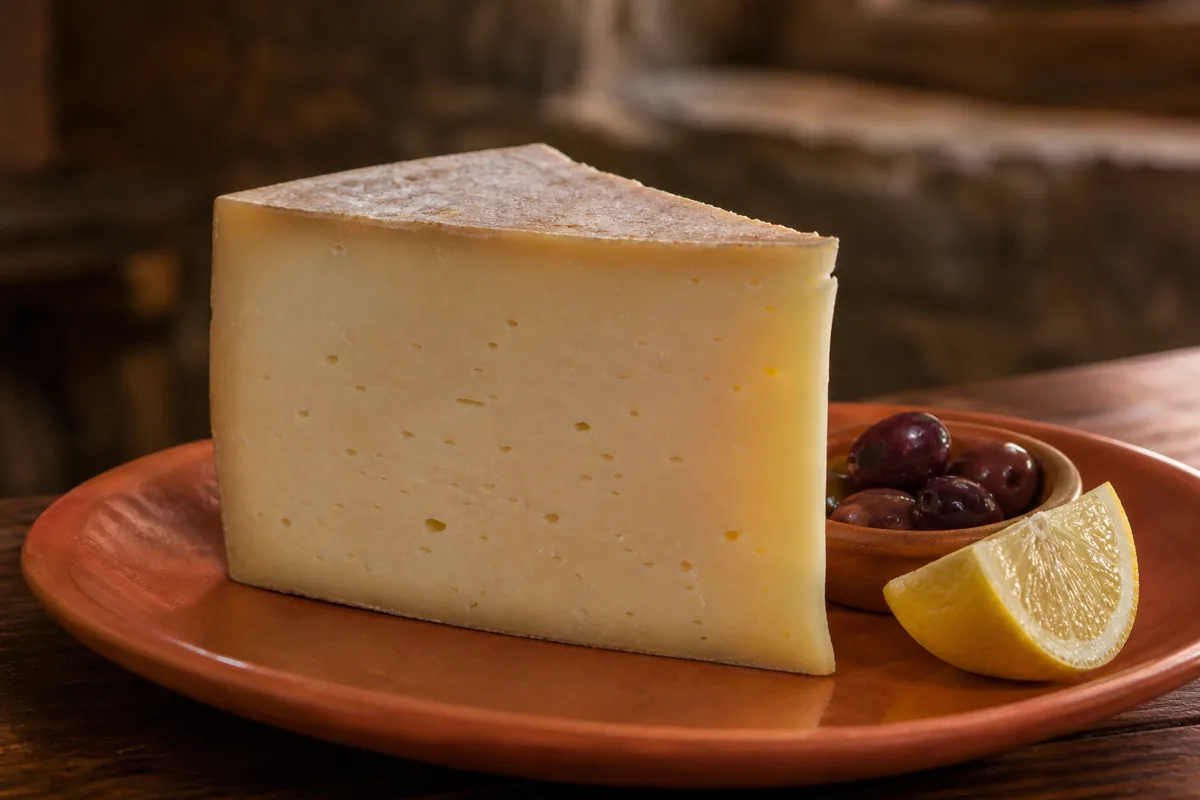
Cheese.com lists Graviera as a hard Greek cheese with a dense, firm texture and a nutty, sweet flavour, made in Crete, Naxos and Lesbos.
The name points to Switzerland. English Wikipedia says it comes from gruyère, the Swiss cheese it resembles.
Cheese.com gives a different origin and says the cheese is named after the island of Crete, but Greek Gastronomy Guide agrees with Wikipedia that graviera is a Greek transliteration of gruyère. The Swiss reading also fits a cheese made on Naxos and Lesbos as well as Crete, so the name alone does not tell a buyer which island a wheel came from.
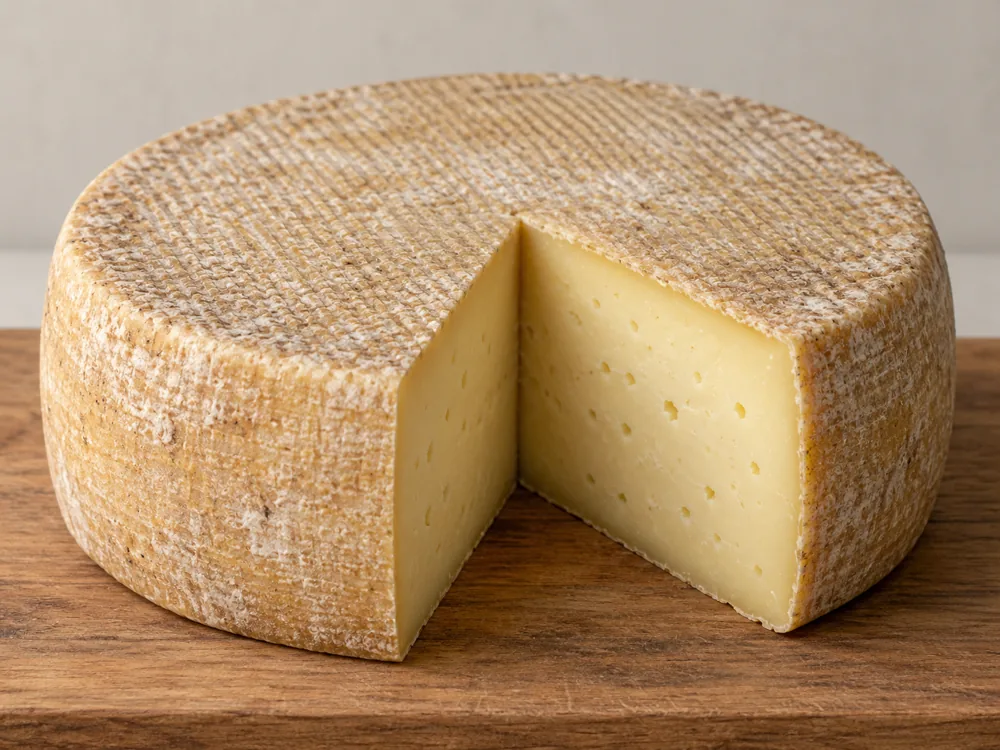
The wheel itself carries a clue. English Wikipedia describes a rind marked with a crisscross pattern left by the cloth the cheese drains in.
That study comes from the Agricultural University of Athens. Its authors say most Graviera is made from a mix of sheep's and goat's milk, though versions from one milk or from all three exist.
Their sample shows how mixed the family is. Of the 105 samples they analysed from nine regions, 78 were sheep-and-goat cheeses, 10 were sheep, 8 were goat, 8 were cow and 1 used all three milks.
Which Milk Goes into Graviera Kritis, Naxou and Agrafon?
The three protected cheeses come from separate Greek cheese regions, and they split mainly by milk.
Graviera Naxou is the cow's milk cheese. Greek Gastronomy Guide says it is made in the Cyclades, mainly on Naxos with some on Tinos and Paros, from cow's milk alone or from 80% cow's milk and 20% sheep's and goat's milk.
Euronews explains where the Naxos mix comes from. Giannis Politis, a professor at the Agricultural University of Athens who has worked with the EAS Naxos cooperative for eight years, says cows graze the island's lowlands while sheep and goats graze mountain grass full of aromatic plants.
He says that gives Naxos milk a particular taste and texture, and Euronews adds that the cooperative uses only milk from animals raised on the island.
Graviera Kritis goes the other way. English Wikipedia says the Cretan cheese is made from sheep's milk, and Greek Gastronomy Guide calls it a mostly sheep's milk cheese.
Graviera Agrafon sets a goat's milk ceiling. Cheese Atlas says it is made in the Agrafa mountains of western Thessaly and Evritania from sheep's milk, or sheep's milk with up to 30% goat's milk.
| Cheese | Where it is made | Milk | Source |
|---|---|---|---|
| Graviera Naxou | Cyclades, mainly Naxos, also Tinos and Paros | Cow's milk only, or 80% cow with 20% sheep and goat | Greek Gastronomy Guide; Euronews |
| Graviera Kritis | Crete | Sheep's milk, mostly | English Wikipedia; Greek Gastronomy Guide |
| Graviera Agrafon | Agrafa mountains, western Thessaly and Evritania | Sheep's milk, with goat's milk up to 30% | Cheese Atlas |
Outside the protected names the mix is less fixed. The Molecules authors say their sheep-and-goat group is loosely defined because even one producer changes the share of goat's milk with availability, and their chemical test placed two of ten sheep-milk cheeses in that group.
The three names do not cover every Graviera. The same authors say most Gravieras are sold under a geographic name but only three are registered as PDOs, and English Wikipedia lists Lesbos and Amfilochia as main varieties beside Crete and Naxos.
The authors credit the local climate, the endemic plants, the predominant microflora and the way the milk is processed for Graviera's quality characteristics, which is why a regional name carries meaning.
The authors say most of Greece's roughly 700 cheese dairies are small or medium and collect milk within about 30 km, though a few collect it over much longer distances.
A dairy's address also does not prove where its milk came from. The authors traced two misclassified cheeses to dairies in Arta and Larisa that bought milk from other areas to meet their needs, so those cheeses carried the chemical signature of Central Greece.
Their 61-element test assigned most cheeses to the right region, but a stricter leave-one-out check dropped the success rate to 32.7%, so the authors call for a much larger sample before the method is relied on.
Graviera itself is a young cheese. Greek Gastronomy Guide says it was first made in the Peloponnese in the 20th century and soon became known in Crete, where makers succeeded with sheep's milk, while the Cyclades remain the only place in Greece that makes it from cow's milk alone.
A protected name comes with a written ceiling on the minor milks. A plain sheep-and-goat Graviera has none, so the milk list on the pack is the only check.
How Long Is Graviera Aged?
The sources give ageing figures from about 3 months to a year, and they rarely agree on the same version.
| Source | Version | Ageing |
|---|---|---|
| English Wikipedia | Graviera in general | 5 to 12 months |
| English Wikipedia | Crete | At least 5 months |
| Greek Gastronomy Guide | Crete | 3 to 6 months |
| Cheese Atlas | Graviera Agrafon | 3 to 6 months at 95% humidity |
The two Cretan rows conflict. English Wikipedia sets five months as the minimum, while Greek Gastronomy Guide gives 3 to 6 months, so a three-month Cretan wheel fits one source and falls short of the other.
For the Naxos cheese, Wikipedia's general range of 5 to 12 months is the only ageing figure. Cheese Atlas describes Agrafon at six months, the top of its 3 to 6 month window, so the Agrafon tasting notes below describe the oldest wheels of that range.
Age changes the texture most. Cheese.com says Graviera turns harder and crumblier as it ages and that its taste grows stronger.
Cheese Atlas sets out the Agrafa make step by step.
- Setting: the milk coagulates at 34 to 36°C for up to 30 minutes.
- Cooking the curd: the cut curd is warmed to 48 to 52°C while it is stirred.
- Pressing: the curd is pressed for one day.
- Brining: the wheel sits in brine for up to four days before ripening.
Warming the curd and then pressing it are the two steps behind the label Cheese Atlas gives Agrafon: a pressed cooked cheese.
On Naxos, Greek Gastronomy Guide says a thin rind forms from bacteria whose growth helps the cheese mature.
What Does Graviera Taste Like?
Cheese.com gives the family a nutty, sweet flavour, and the sources for each version add their own notes.
- Crete: English Wikipedia calls it slightly sweet with a burnt caramel flavour.
- Crete, aftertaste: Greek Gastronomy Guide describes a rich, sweet, buttery and slightly salted aftertaste.
- Naxos: Greek Gastronomy Guide gives a full, rich flavour, a strong buttery and milky aroma and light notes of almond and nuts.
- Agrafa at six months: Cheese Atlas describes a straw-coloured paste full of small eyes, a rich grassy aroma and a flavour a touch spicy and goaty.
Only the Agrafa cheese, which allows the most goat's milk, is described as goaty. Only the cow's milk Naxos cheese is described as milky.
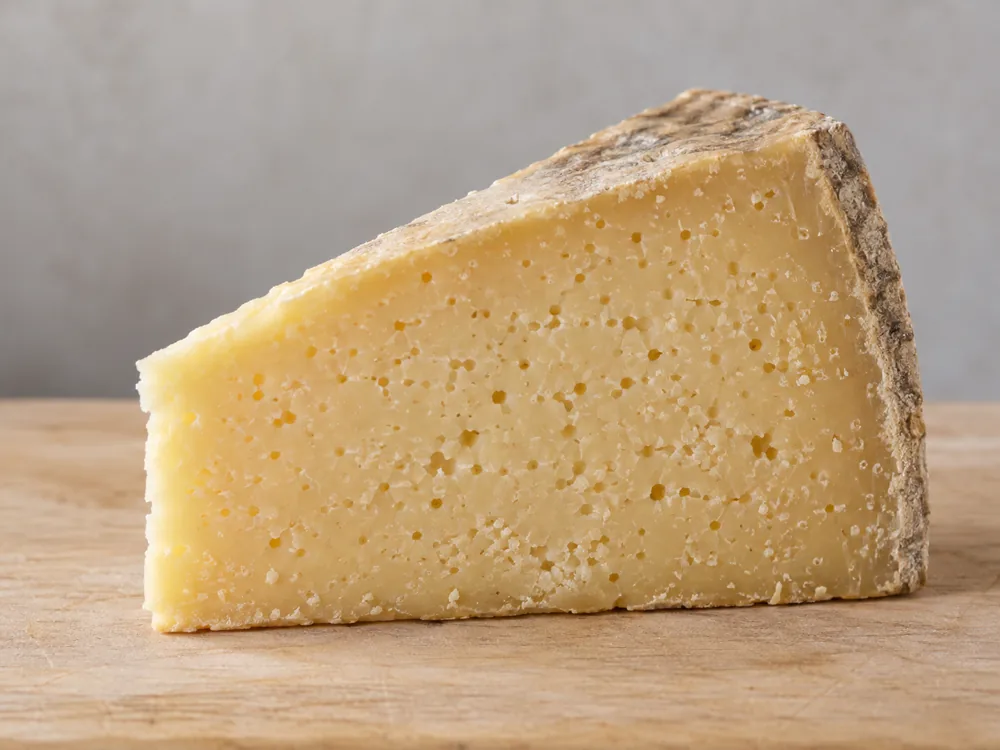
Texture separates the versions as well as flavour. Greek Gastronomy Guide calls the Naxos paste compact and soft for a hard cheese, and Euronews describes a compact, elastic mass with small scattered holes.
Politis, who works with the cooperative, says the cheese's particular quality is a very sweet taste combined with very high elasticity, a pairing he says is hard to find in cheesemaking.
How Do Greeks Cook With Graviera?
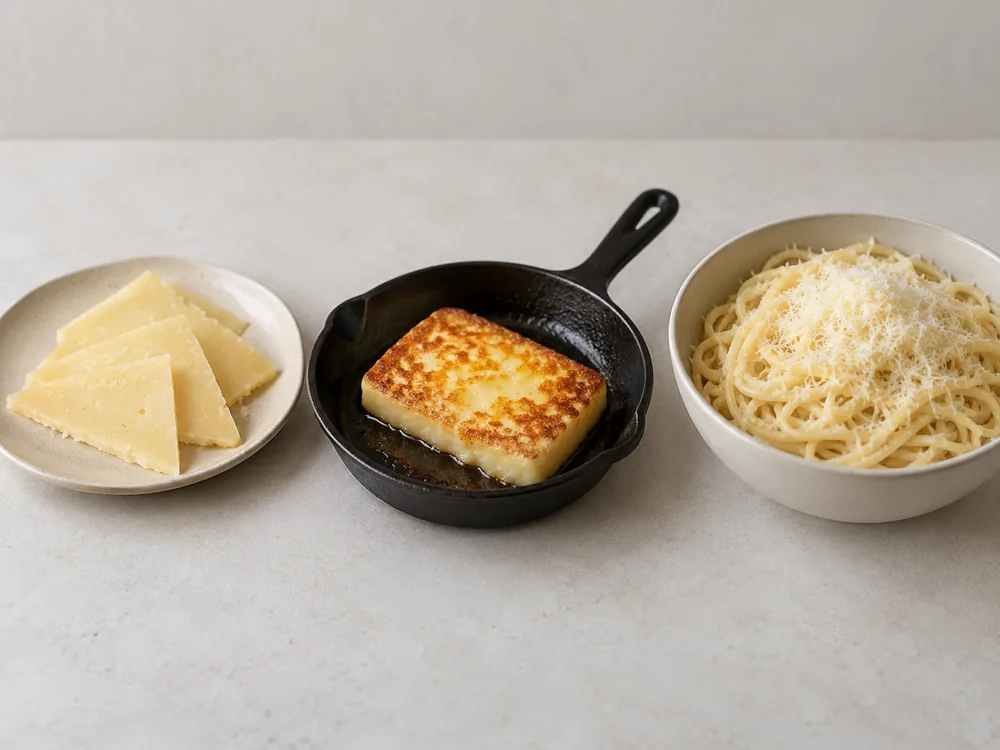
English Wikipedia lists five uses: sliced and eaten, fried as saganaki, grated over pasta dishes, baked in a casserole, or cut into cubes or shavings for salads.
Greek Gastronomy Guide calls Graviera Kritis Crete's flagship cheese and says Cretans eat cheese on its own through the day, as an accompaniment, appetiser, main meze or dessert.
Saganaki takes its name from the pan. Wikipedia's saganaki entry says the saganáki is a small two-handled frying pan, and the cheese is melted in it until it bubbles, then served with lemon juice and pepper.
In North America the dish comes with a show. The same entry says the fried cheese is flambéed at the table, often with a shout of "opa!", and the flames are put out with a squeeze of lemon.
The entry says the flaming version apparently began in 1968 at the Parthenon restaurant in Chicago's Greektown, on a customer's suggestion.
| Use | How It Works |
|---|---|
| Sliced | English Wikipedia lists Graviera sliced and eaten as it is; Cheese Atlas calls Graviera Agrafon a sliced table cheese. |
| Saganaki | Wikipedia names Graviera first among the cheeses fried in the saganaki pan. |
| Grated over pasta | Both English Wikipedia and Cheese.com name pasta as a grating use. |
| Baked dishes | English Wikipedia lists Graviera baked in a casserole. |
| Salads | English Wikipedia cuts it into cubes or shavings for salads, and Cheese.com adds it to salads. |
What Goes With Graviera?
Cheese.com keeps it broad and pairs Graviera with fruits, nuts and wines.
Two other sources get more specific, and each ties a partner to one version of the cheese.
| Pairing | Type | Why It Works |
|---|---|---|
| Honey | Food | Greek Gastronomy Guide says Cretan Graviera is topped with honey for breakfast or supper. |
| Fruits | Food | Cheese.com lists fruits among Graviera's partners. |
| Nuts | Food | Cheese.com lists nuts among Graviera's partners. |
| Robust, tannic red wine | Wine | Cheese Atlas suggests it for Graviera Agrafon, which it rates as a sliced table cheese. |
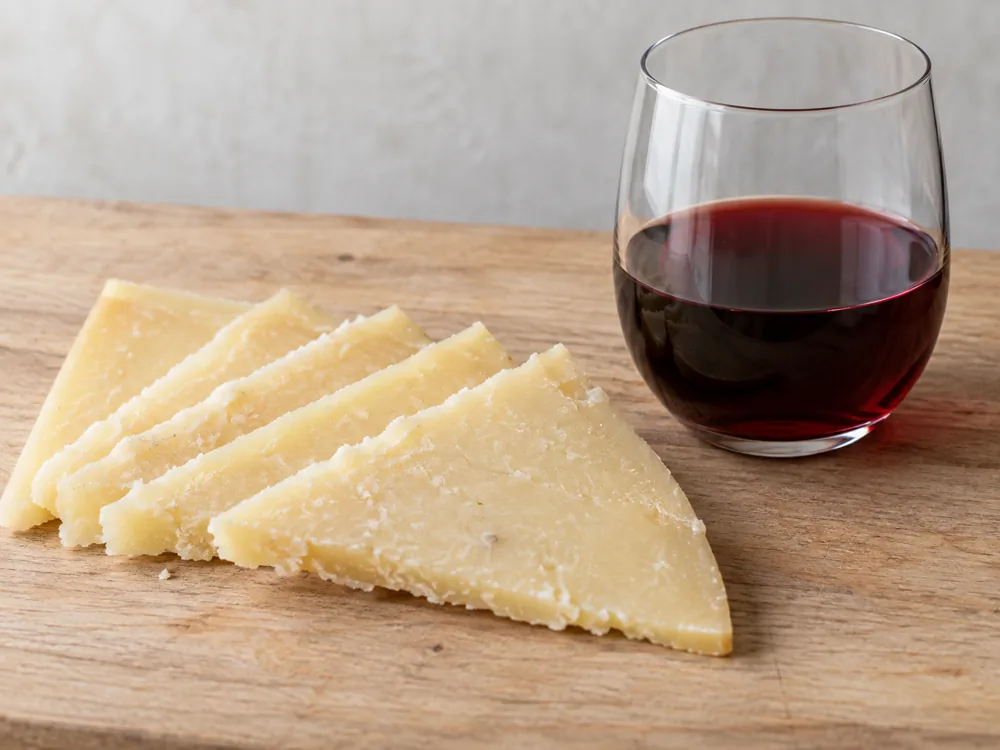
The wine advice is version-specific. Cheese Atlas gives the red wine match only for the Agrafa cheese.
What Can You Use Instead of Graviera?
English Wikipedia says gruyère can stand in, but calls Graviera the homier cheese.
For the frying pan, Wikipedia's saganaki entry names a different list: kefalograviera, halloumi, Greek kasseri, kefalotyri and sheep's milk feta. Gruyère is not on it, so the two lists answer different jobs, gruyère for the table and these cheeses for the pan.
The same entry names regional choices: formaela cheese in Arachova, halloumi in Cyprus and vlahotiri in Metsovo.
The name of the Greek cheese kefalograviera sounds closest, but English Wikipedia's Graviera entry carries a note not to confuse the two, and the saganaki entry lists them as separate frying cheeses.
Why Is Graviera Naxou Hard to Find Outside Greece?
Graviera Naxou has an export reputation. Euronews says it has held PDO status since 1996, ships to 20 countries and topped the TasteAtlas ranking of the world's best cheeses in 2025.
Supply is the limit. Konstantina Vadoula, a food chemist at the EAS Naxos cooperative, told Euronews in September 2026 that the dairy makes about 1,200 to 1,250 tonnes of Graviera a year, and that 100 tonnes are meant for export.
That is roughly 8% of the output. Euronews says most Graviera is sold in Greece and that sales could be double or even triple, but falling milk production limits the quantity available.
Politis says island milk production has built-in difficulties because feed does not reach Naxos easily and costs more, and he argues the cheese's future depends on keeping livestock farming on the island.
The cooperative is not the only maker. Euronews calls its dairy the largest on the island, and Greek Gastronomy Guide also names Koufopoulos' Tyrokomiki Naxou, Pittaras Dairy Farm and Barbounis Dairy Farm as significant producers, so the cooperative's tonnage is not the whole island's output.
Agrafon is the reverse case. Cheese Atlas says its flavour made it more popular overseas than in Greece and that most of the production is exported to France, Switzerland and Germany.
Where Can You Buy Graviera and What Should the Label Say?
English Wikipedia says Graviera is widely sold outside Greece, in large grocery stores, Greek or ethnic markets, specialty cheese shops and online.
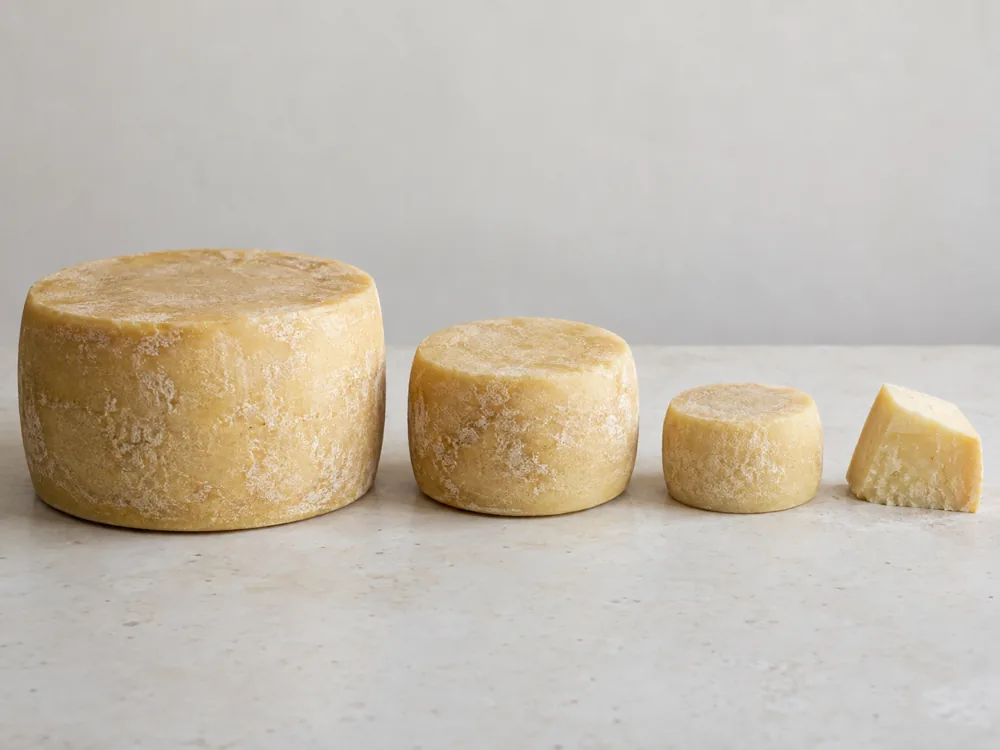
The Naxos cooperative sells 9 kg, 3 kg and 1 kg wheels and 250 g portions, Vadoula told Euronews. Greek Gastronomy Guide puts a typical Naxos head at about 10 kg, a kilo above the cooperative's largest wheel.
Is Graviera a Good Source of Calcium?
The Molecules authors measured 61 elements in their 105 cheeses and found calcium and phosphorus in a ratio of 1.4 to 1, which they call one of the most convenient ways to take in both minerals.
They worked from an average Greek intake of 94.7 g of cheese a day and a Canadian reference of 57 g, and found that Graviera supplied 54% to 111% of the calcium recommendations they compared and 56% to 94% of the phosphorus.
The authors name calcium, phosphorus, zinc, chromium, iron and molybdenum as the elements Graviera supplies best, and say magnesium, copper, manganese and selenium count for less.
These figures are averages across cheeses made from different milks in nine regions, so a single wheel can differ.
Is Graviera Safe During Pregnancy?
The sources split on the milk. English Wikipedia's infobox lists Graviera as pasteurized, while Cheese.com says it is made from unpasteurized cow's or sheep's milk.
For the Naxos cheese, Vadoula told Euronews that EAS Naxos heat-treats its milk before making Graviera, but she did not say whether that treatment is pasteurisation.
The NHS counts pasteurised or unpasteurised hard cheeses, such as cheddar, gruyère and parmesan, as safe in pregnancy. Neither the NHS nor the CDC names Graviera, and both Cheese.com and Wikipedia call it hard, so the lists do not settle it.
The CDC is stricter about milk. Its safer list covers hard cheese when made with pasteurized milk, naming Swiss and Gruyere among the examples, so if you have a raw-milk wheel, it sits outside that list.
SOURCES & REFERENCES
What Else Do People Ask About Graviera?
No. The name comes from gruyère, but Graviera is a Greek cheese made in regional versions, most of them from sheep's and goat's milk.
No. English Wikipedia's Graviera entry carries a note not to confuse the two, and its saganaki entry lists graviera and kefalograviera as separate cheeses.
Graviera Naxou, the cow's milk cheese from Naxos, topped the TasteAtlas ranking in 2025, according to Euronews.