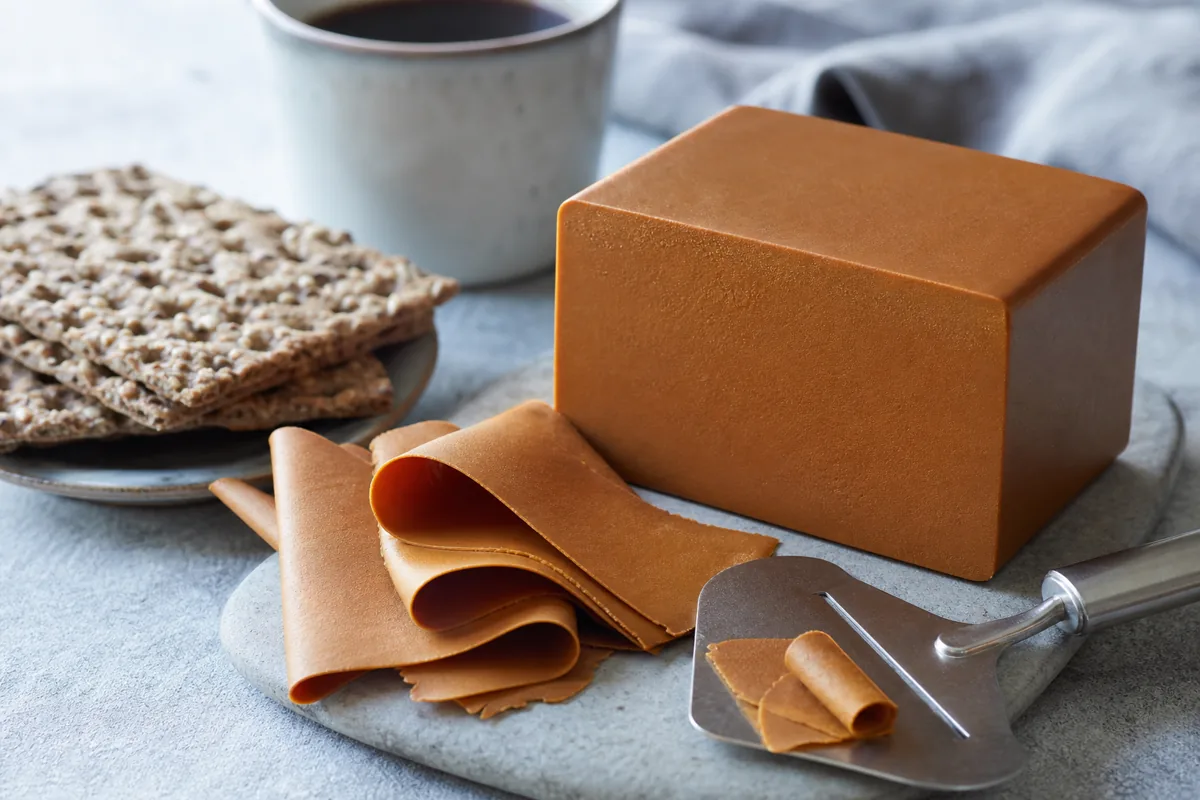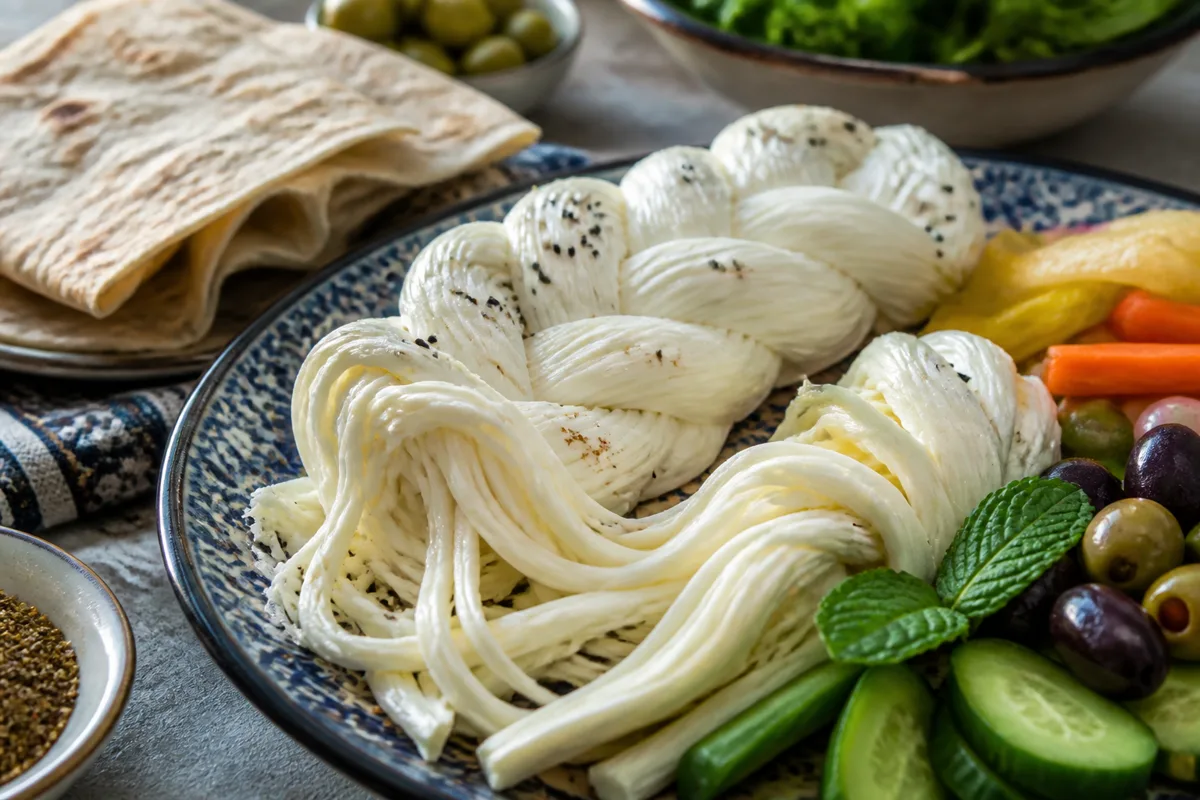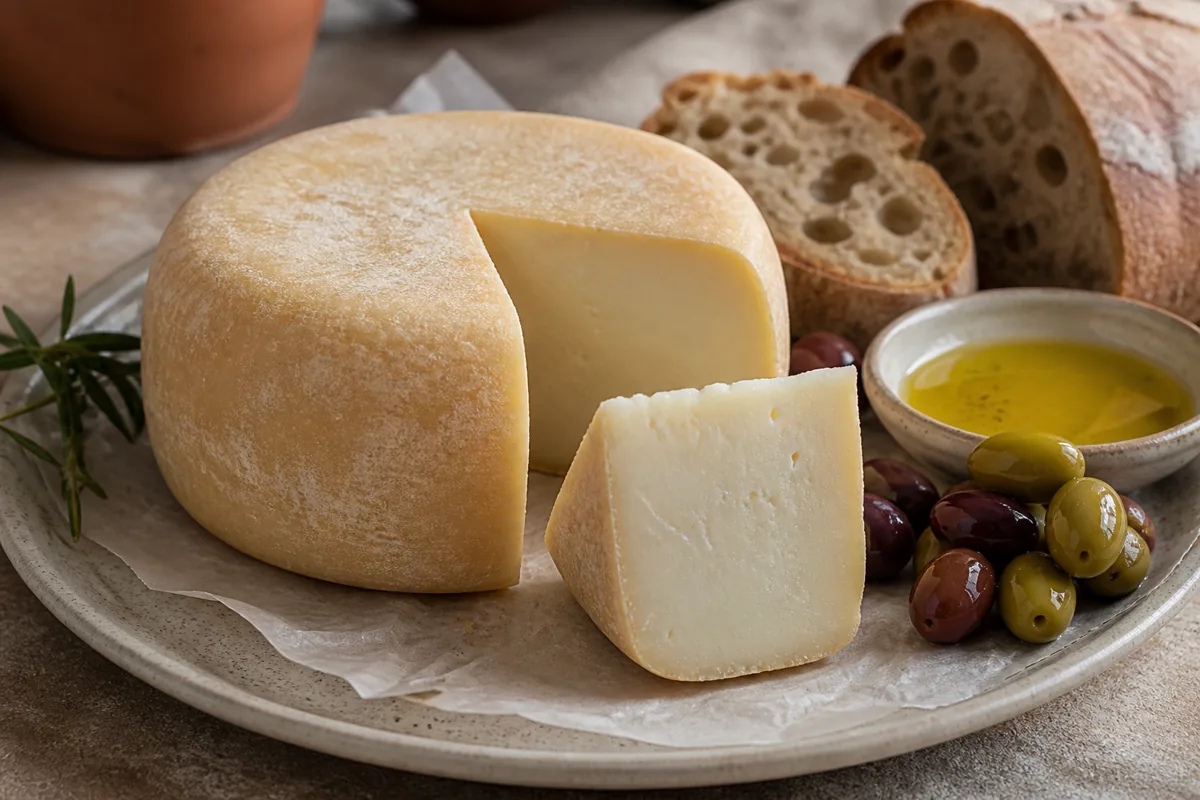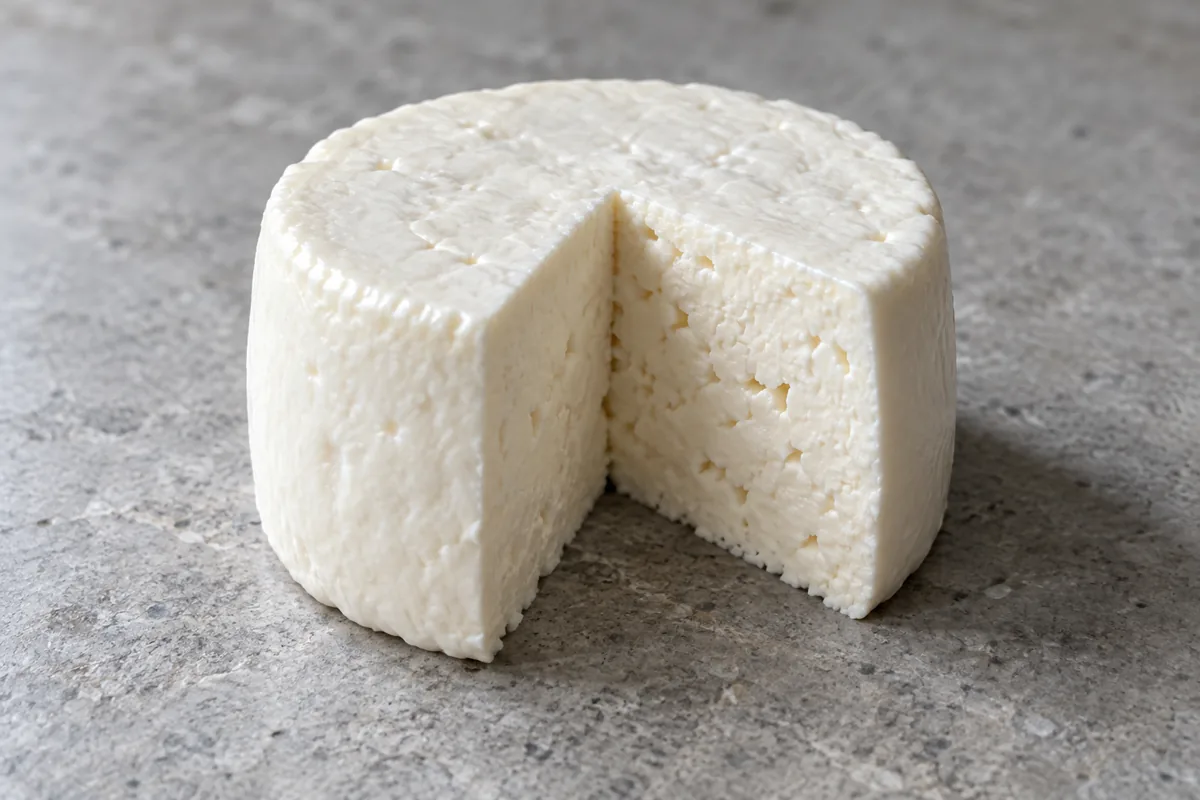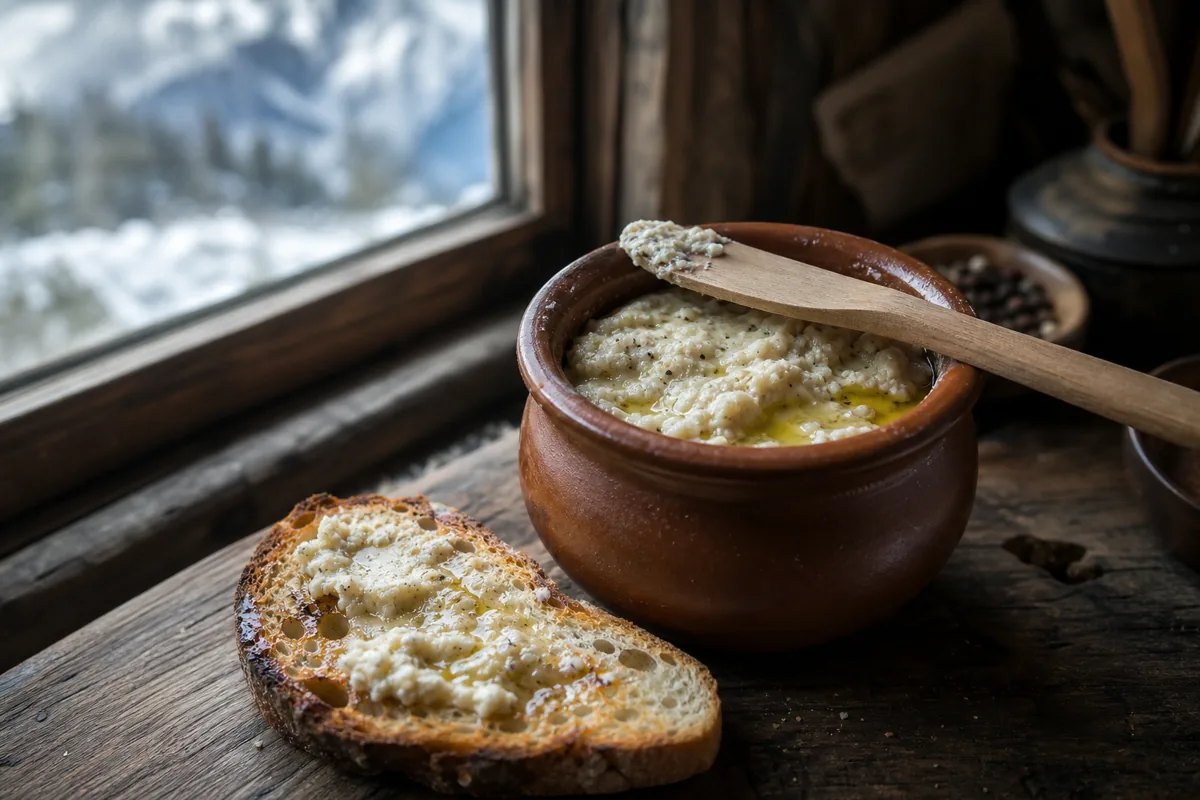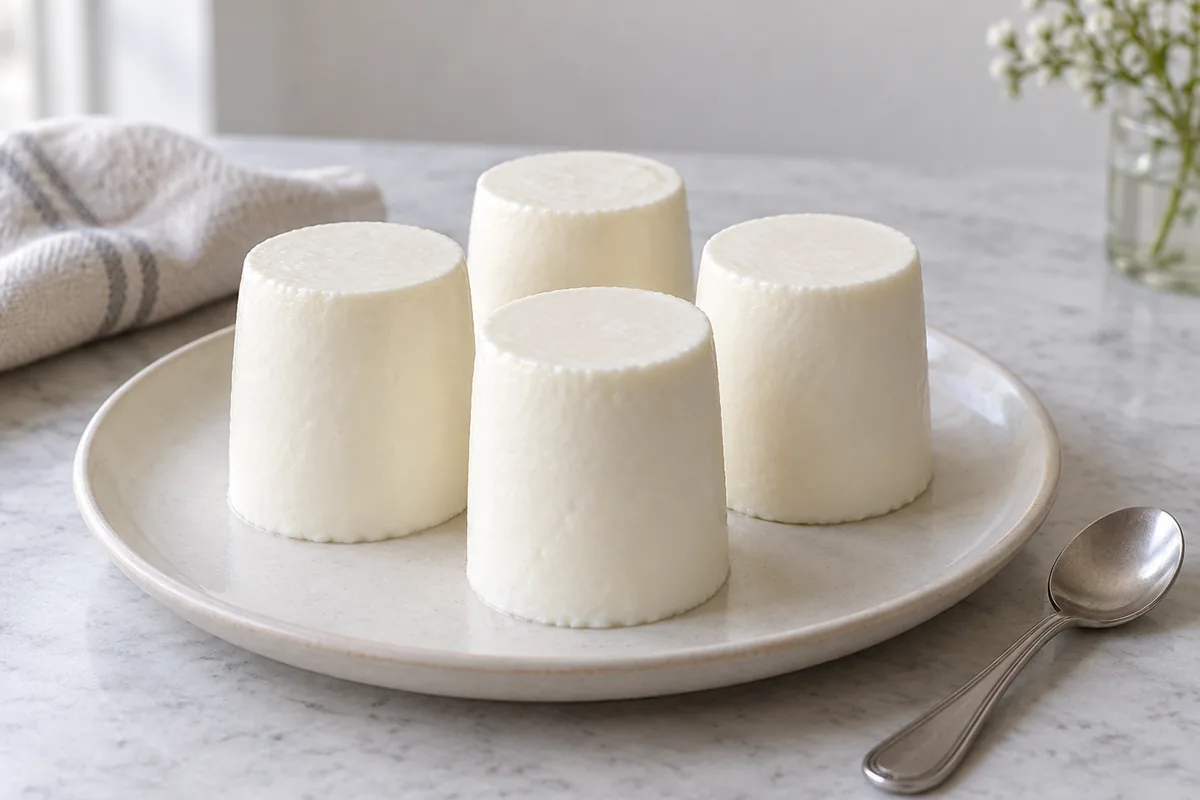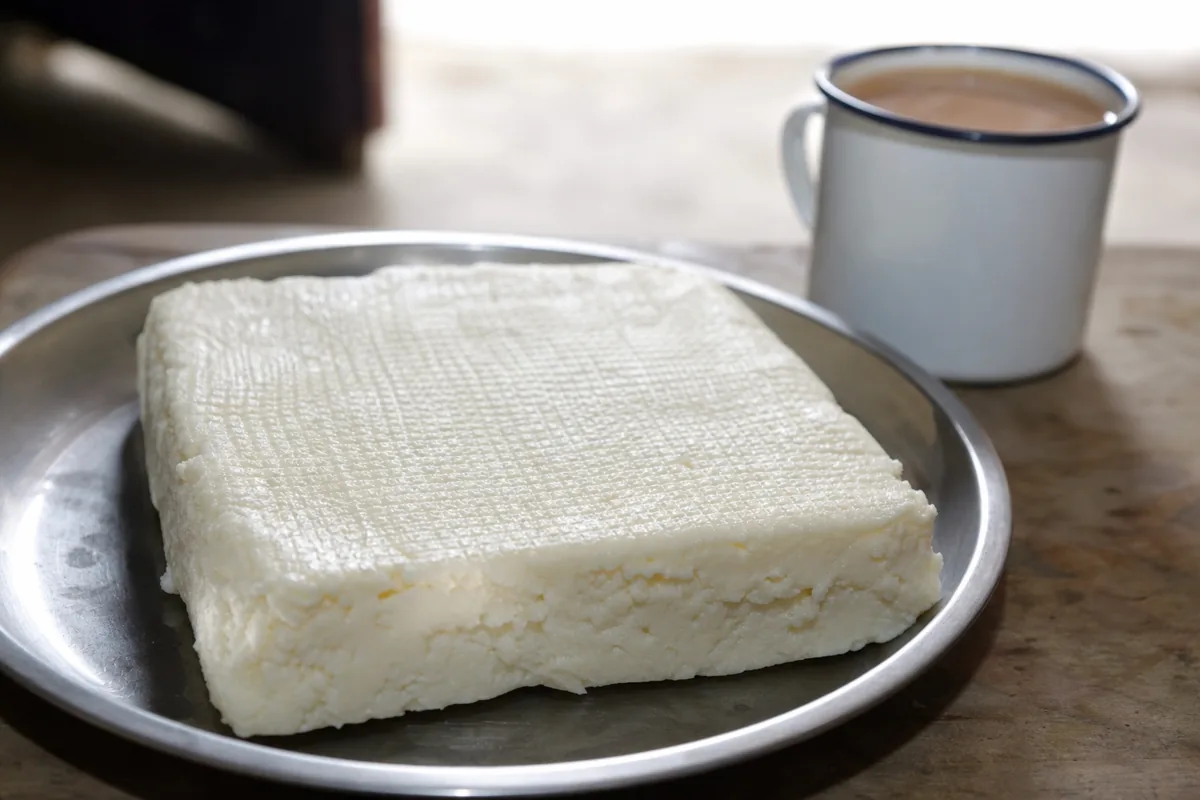
Byaslag is a Mongolian pressed cheese. Milk is boiled, curdled with a little kefir, drained in cloth, and pressed between wooden boards under a weight, according to the Mongolian Recipes site.
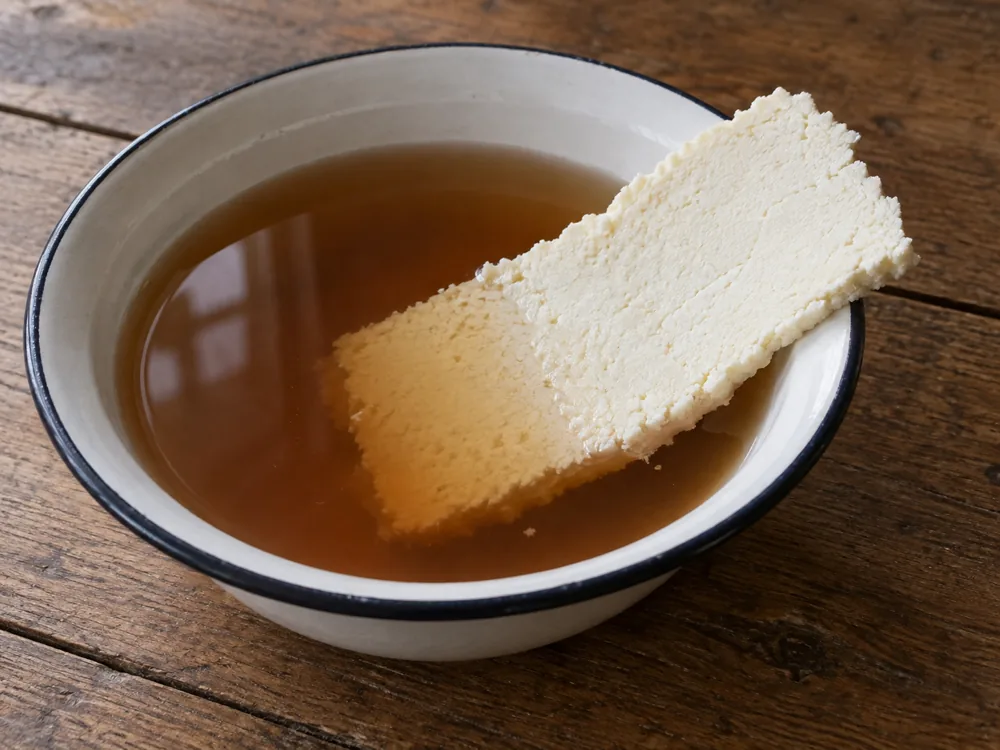
People eat it fresh as a snack, or cut it into slices and dry it until it is hard enough that it is often soaked in tea.
The sources disagree on the milk, the heat, and even the rind, so this page puts them side by side instead of presenting one recipe as the standard.
In This Article
What Is Byaslag?
Discover Mongolia lists byaslag as a "fresh cheese" among the white foods, the Mongolian dairy products it says stand for purity, generosity, good fortune, and kindness.
Mongolian Recipes says nomadic households cannot ripen cheese by European methods, so slices are dried for better preservation instead. It calls the flavor somewhat bland next to aged cheeses.
Cheese.com is more generous, listing the flavor as creamy, mild, and salty and the texture as firm.
Why Is There No Single Recipe?
The milk is the first place the sources part ways. Mongolian Recipes names cattle, yak, goat, and sheep milk and says yak and cattle are the most common.
Cheese.com lists yak's milk alone, Correct Mongolia says cows, sheep, or yaks, and Mongolianz says only sheep or cow milk.
The heat differs too. Mongolian Recipes says to boil the milk, Correct Mongolia says to heat it to 86 F (30 C) before adding kefir, and Mongolianz says byaslag can be made from boiled or fresh milk.
| Point | Mongolian Recipes | Cheese.com | Correct Mongolia |
|---|---|---|---|
| Milk | Yak and cattle most common; goat and sheep also | Yak | Cows, sheep, or yaks |
| Heat | Boil the milk | Not stated | Heated to 86 F (30 C) |
| Curdling | A small amount of kefir instead of rennet | Not stated | Kefir, stirred for 30 minutes |
| Pressing | Between wooden boards with a weight | Not stated | With a weight for two hours |
| Color | Not stated | Pale yellow | White |
| Flavor | Somewhat bland | Creamy, mild, salty | Mild, slightly sour |
| Rind | Not stated | Natural | Not stated |
Only Cheese.com lists a rind, and it calls it natural. The two recipe pages do not mention one.
A heating temperature or a pressing time is one source's method, not a rule for byaslag. The pages above do not agree on them, and none of them states a standard.
How Is Byaslag Made?
Mongolian Recipes gives the shortest version of the method, and Correct Mongolia adds the timings shown in the table above.
- Heat the milk (the sources differ on how much).
- Add kefir in a small amount, in place of rennet.
- Lift out the solid curd with a large cloth.
- Drain most of the remaining liquid.
- Press the curd between wooden boards with a weight.
- Cut into slices to eat fresh or to dry.
Kefir does the job that rennet does in a European cheese: it curdles the milk.
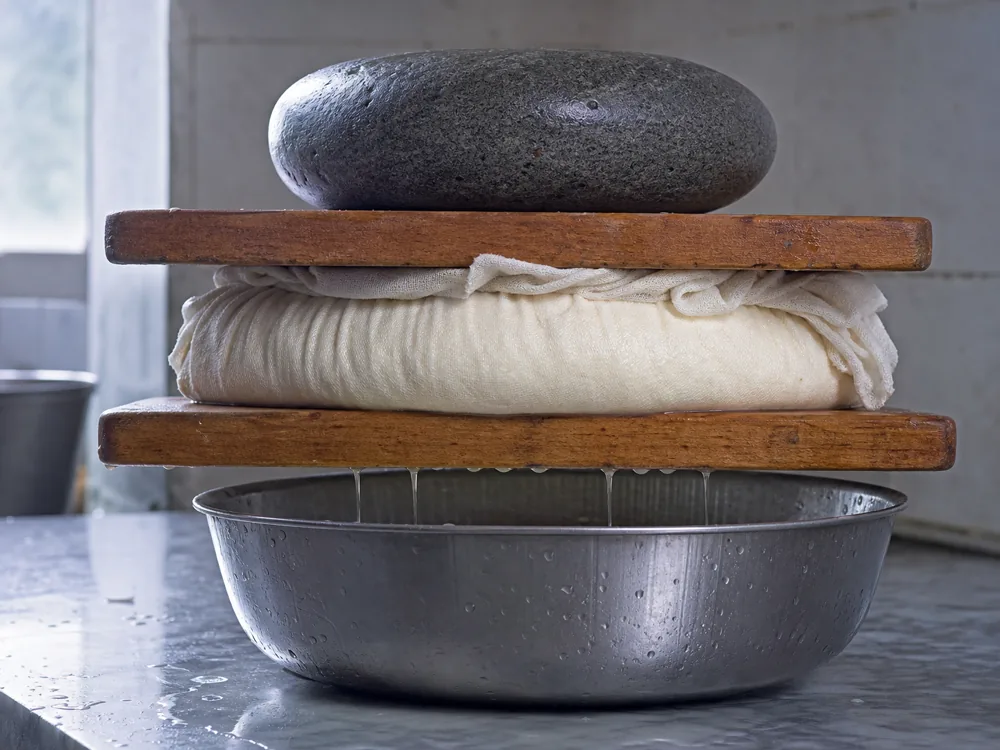
Mongolian Recipes puts a finished cheese at about 25 cm across and 5 cm high, round or roughly square. That makes a slab about five times wider than it is thick.
Neither recipe page gives the weight of the press, so how hard a household presses is not recorded in these sources.
Why Are Some Pieces Dried?
Mongolian Recipes says to cut byaslag into slices and dry them for better preservation, and Mongolianz says the slices are dried thin for storage.
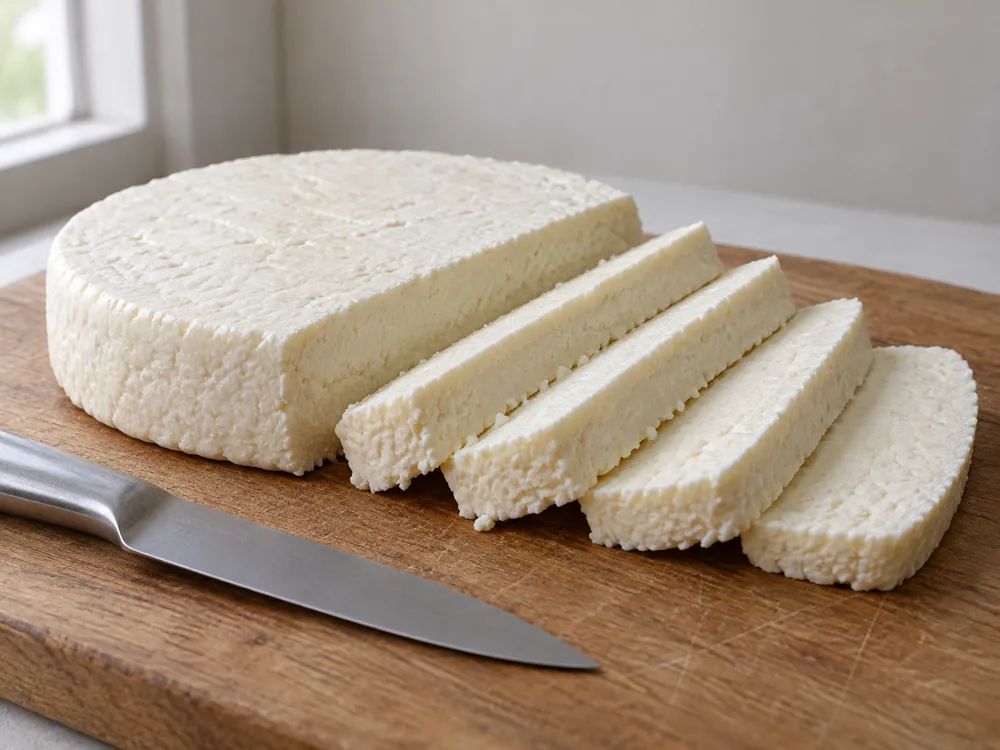
Correct Mongolia describes fresh byaslag as soft and crumbly and dried byaslag as harder and more chewy. Mongolian Recipes calls the dried cheese "rather hard".
None of the pages gives a drying time, a slice thickness, or a shelf life, so how long dried byaslag keeps is unknown from these sources.
Is Byaslag the Same as Aaruul?
No. Discover Mongolia lists byaslag as fresh cheese and describes aaruul as "dried curd cheese preserved for long-term storage".
The Slow Food Foundation and Mongolianz both say aaruul is made by mixing curds with sugar and wild berries and cutting them into shapes and patterns.
| Point | Byaslag | Aaruul |
|---|---|---|
| Discover Mongolia's label | Fresh cheese | Dried curd cheese for long-term storage |
| Additions | None named in the recipe pages | Sugar and wild berries can be mixed in |
| Shape | Round or roughly square, then slices | Cut into shapes and patterns, some pressed through a sieve or molded in the palm |
| Eating | Fresh as a snack, or dried and soaked in tea | Quite hard, so people suck on it rather than bite |
| Keeping | See the label | Months without refrigeration (Discover Mongolia); almost indefinitely (Slow Food) |
Small shaped pieces with sugar or berries in them fit the aaruul descriptions, while a pressed slab or its slices fit byaslag.
How Is Byaslag Eaten?
Fresh slices are a snack, while the hard dried form goes into liquid. Mongolian Recipes says dried cheese often gets soaked in tea and pieces may be added to soup.
| Use | How It Works |
|---|---|
| Fresh slices | Eaten as a snack, per Mongolian Recipes and Correct Mongolia. |
| Tea or milk | Dried slices are soaked in tea (Mongolian Recipes) or in tea or milk (Mongolianz). |
| Soup | Pieces go into soup (Mongolian Recipes), where Mongolianz says they flavor it. |
| Fried balls and salads | Correct Mongolia lists fried cheese balls or dumplings, salads, and soups among its uses. |
Cheese.com adds that byaslag is served during travel and celebrations and to visitors. Correct Mongolia says herder families commonly serve it at breakfast in rural areas.
Is Byaslag Safe in Pregnancy?
Byaslag in pregnancy comes down to the milk, and none of the byaslag sources says whether it is pasteurized.
Mongolian Recipes says to boil the milk and Correct Mongolia says to heat it to 86 F, and neither describes a pasteurization step.
The CDC lists soft cheese made from unpasteurized milk and any queso fresco-type cheese among the riskier choices. It adds that pregnant women are 10 times more likely to get a Listeria infection.
Its safer list includes cottage cheese, cream cheese, string cheese, feta, and mozzarella when they are made with pasteurized milk.
The NHS lists pasteurised soft cheeses without a white coating, such as pasteurised feta, halloumi, and ricotta, as safe, and says any cheese cooked until steaming hot is safe too.
How Should You Buy Byaslag?
Correct Mongolia says byaslag is sold at most Mongolian grocery stores and online. Because the sources disagree on milk and heat, the label or the seller is the only place those answers exist.
The package label is the only place to find nutrition and lactose figures for byaslag.
Follow the maker's directions for storage and shelf life.
SOURCES & REFERENCES
No. Yak and cattle milk are the most common in Mongolian Recipes, and goat and sheep milk also appear, while Mongolianz names only sheep or cow milk.
No. Mongolian Recipes says nomadic households cannot ripen cheese by European methods, and slices are dried for preservation instead.
The sources differ. Cheese.com says creamy, mild, and salty, Correct Mongolia says mild and slightly sour, and Mongolian Recipes says somewhat bland.
No. Discover Mongolia lists byaslag as fresh cheese and aaruul as dried curd cheese for long-term storage, and aaruul can have sugar and wild berries mixed in.
None of the sources gives a storage instruction or shelf life, so follow the maker's directions.
It depends on whether the milk was pasteurized, and no byaslag source says. The CDC and NHS both treat pasteurized milk as the safer choice.