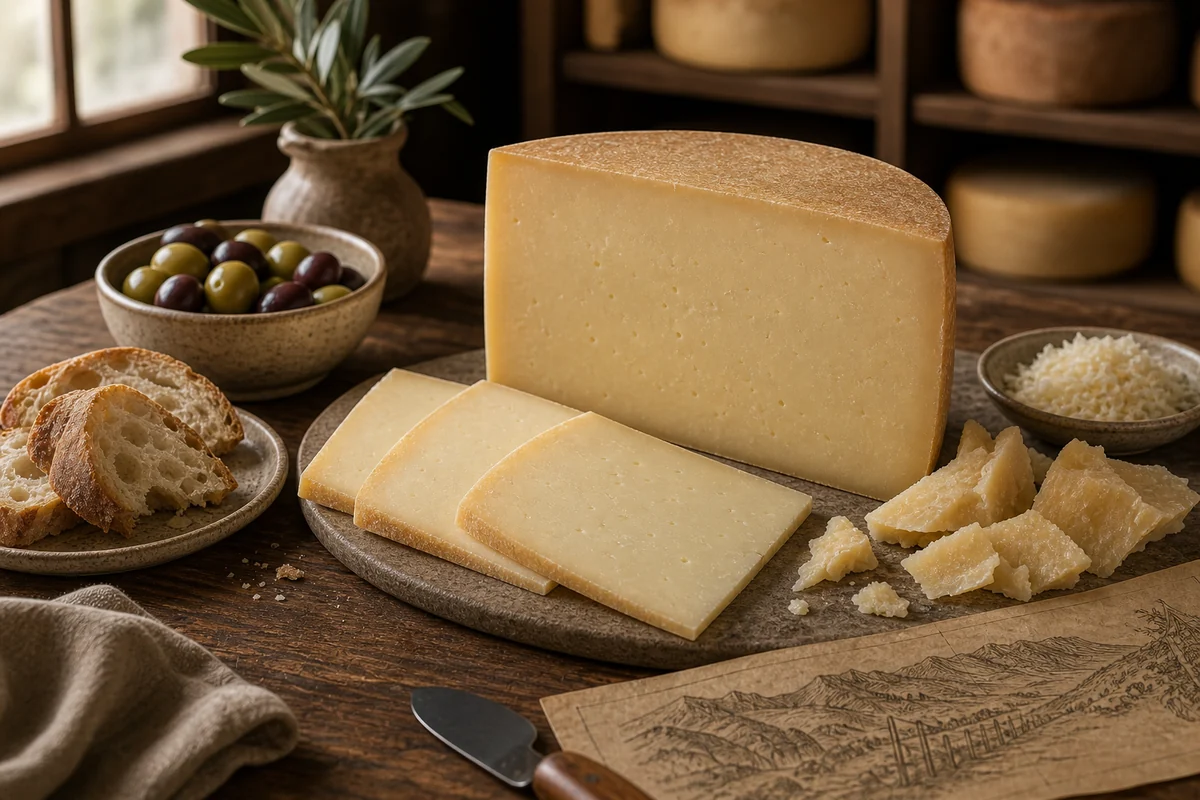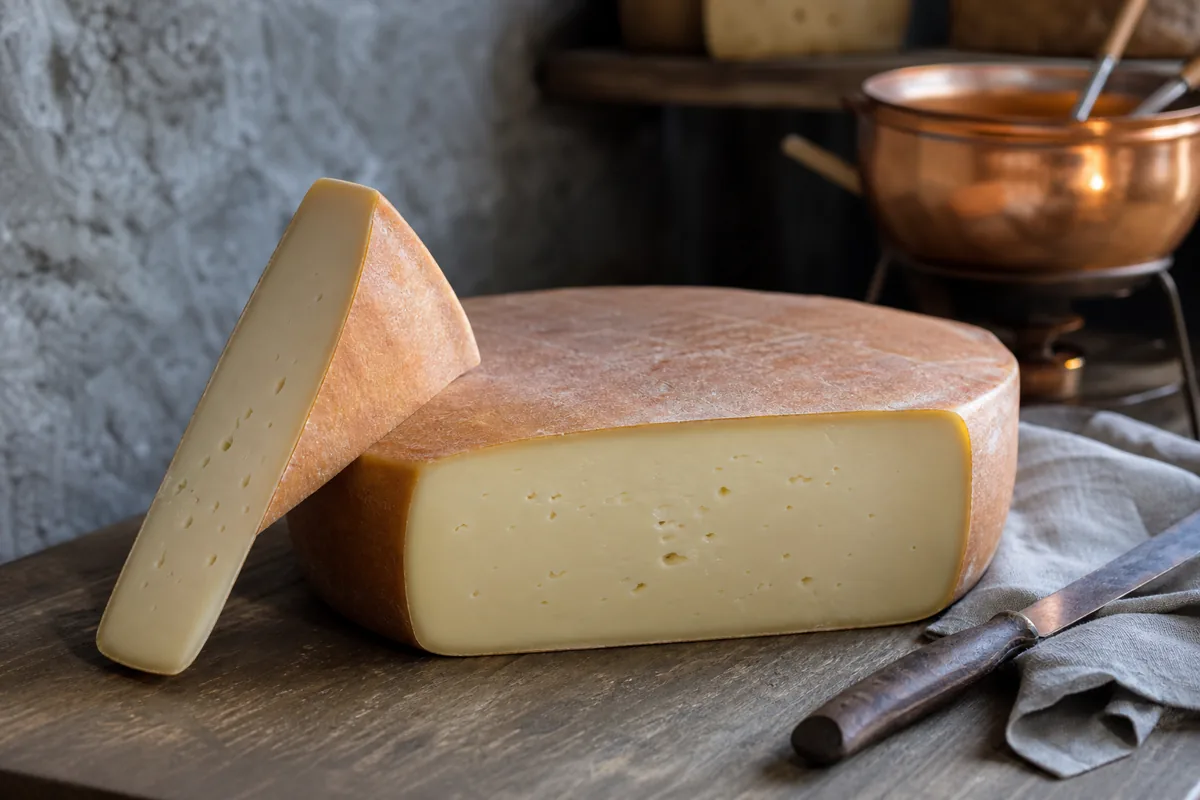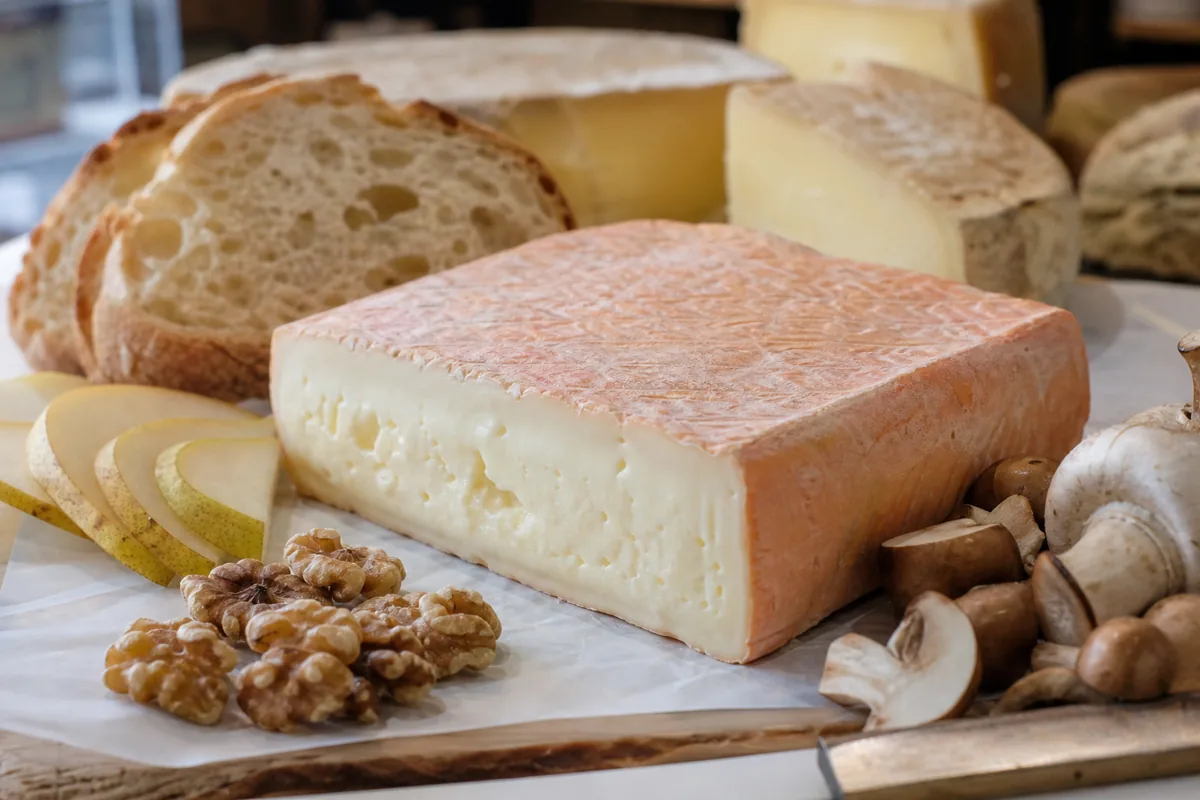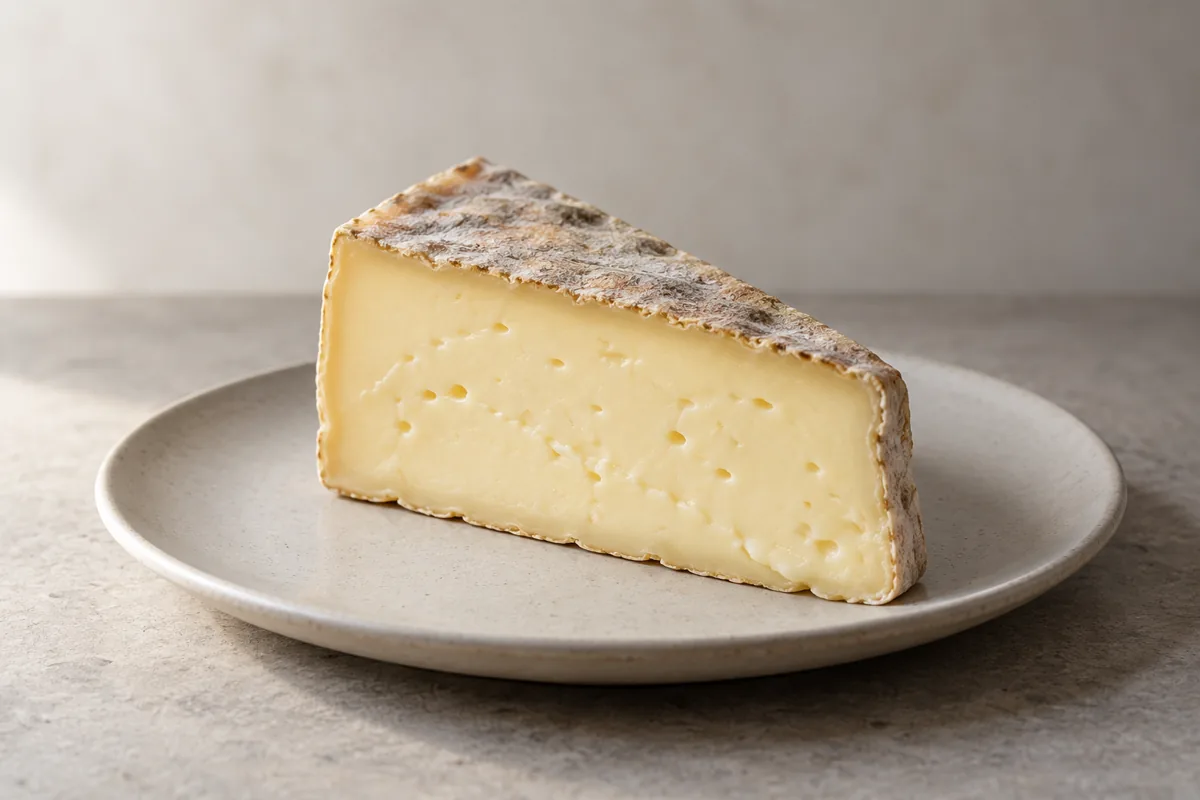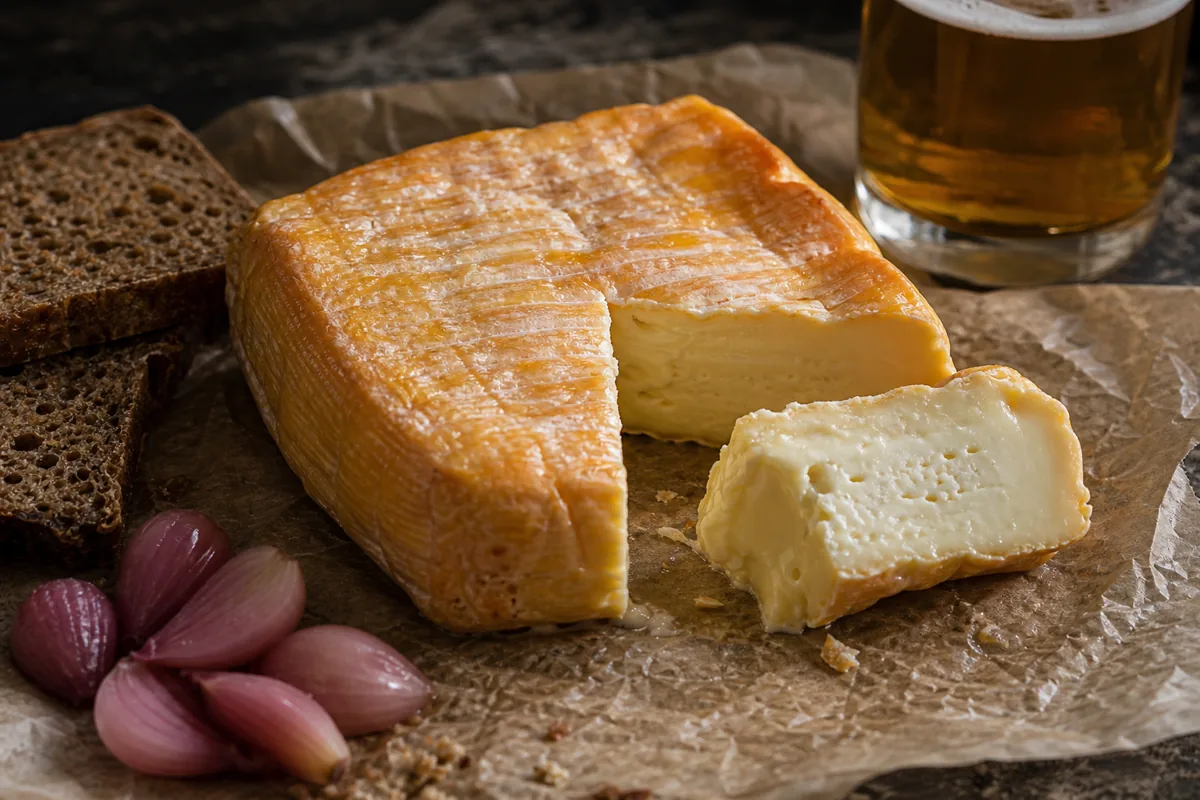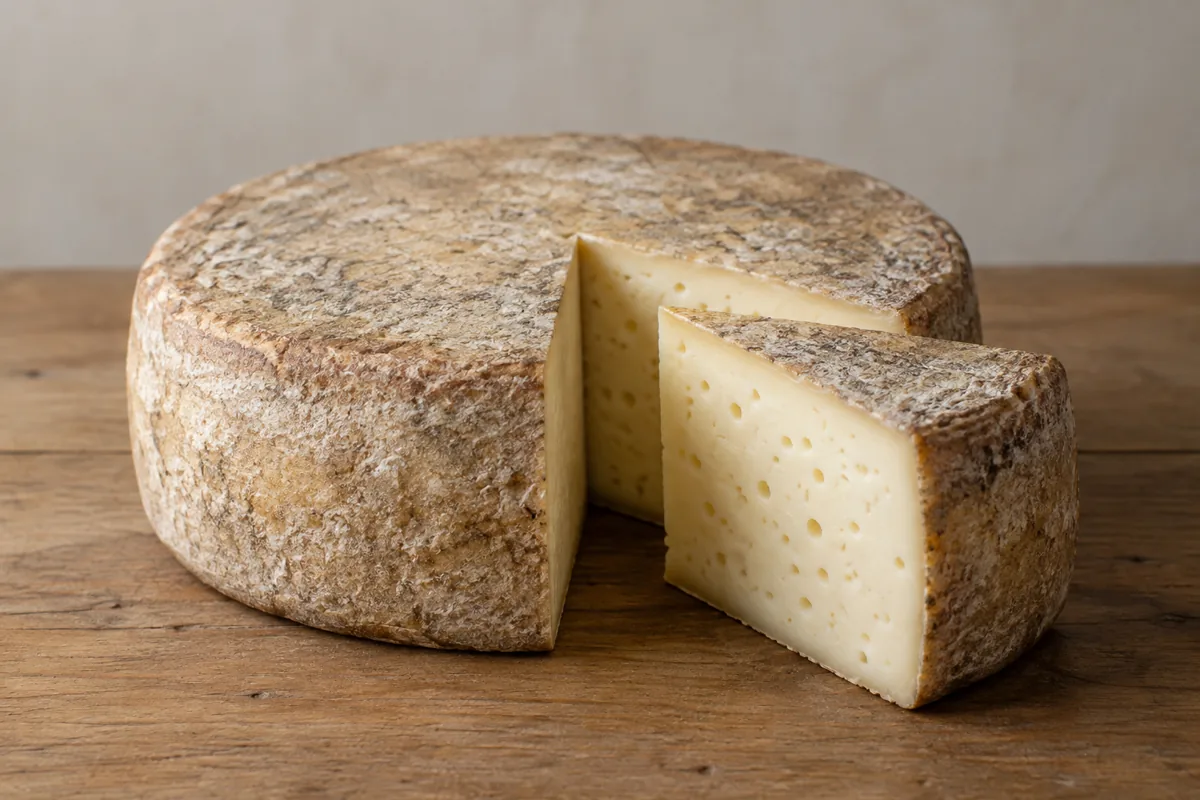
Crucolo is a semi-hard cheese made from cow's milk in Trentino, Italy, matured in Valsugana by the Purin family's Rifugio Crucolo business.
The producer sells three wedge cheeses, called Dolce, Saporito and a red-wine version known as Al Vino, along with an apple cheese and a spread. Pick Dolce for a mild wedge and Saporito for a more savory one.
In This Article
What Is Crucolo Cheese?
Janet Fletcher writes that the Purin family, makers of Crucolo, have welcomed travelers in the Italian Alps since 1782. The family rebuilt its mountain rest stop, the rifugio, after World War I destroyed it, and today the Rifugio Crucolo is a restaurant and shop where the family sells its own salumi and cheese.
The producer's cheese category page calls Crucolo a 100% Italian semi-hard cheese made from cow's milk. The two sources that size the whole wheel describe one standard size: the Italian retailer Valsana gives 13 kg in its trade listing, and Fletcher describes the regular wheel as 30 pounds, which is about 13.6 kg.
Fletcher tasted one of those 30-pound wheels and found a buttery aroma and flavor with a moist, open, tender texture.
The sources describe the look differently. The producer's Dolce, Saporito and wine pages give a white, buttery paste with uniform eyes and an evenly distributed rind, while Valsana describes a straw-coloured, soft and elastic paste under a soft yellow rind.
Crucolina and Crucoloso carry the same name but are separate products. The shop's category page describes Crucolina as a soft cheese with pieces of organic Trentino apple, and Crucoloso as a creamy spreadable version for snacks and first courses.
How Is Crucolo Washed and Aged?
The producer's shop pages say the milk is 100% Italian, from cows raised in the Brenta meadows, and that it is processed in maturing rooms in Valsugana. The Dolce, Saporito and wine pages add that the ageing happens under optimal temperature and humidity.
During that ageing, the category page says, the wheels are turned and washed twice a week. What they are washed with depends on the version: the Dolce page says they are moistened and washed with water, the Saporito page says they are washed with water, and the wine page says the cheeses are washed and rubbed with red wine.
The Dolce, Saporito and wine pages list pasteurised milk, salt and rennet, while Valsana lists milk, lactic ferments, salt and rennet for Saporito. If you buy vegetarian cheese, ask the producer whether that rennet is animal or microbial.
How long your wedge has aged is where the sources disagree most, and the disagreement starts on the producer's own pages.
| Source | Product | Age stated |
|---|---|---|
| Producer, Dolce page | Dolce | Over 30 days |
| Producer, Saporito page | Saporito | Over 60 days |
| Producer, wine page | Al Vino | Over 60 days, washed and rubbed with red wine |
| Producer, cheese category page | All Crucolo cheeses | Over 60 days |
| Valsana | Saporito | At least 60 days |
| Devis Anderle, quoted by Fletcher | 400-pound wheels | Four to five months |
The Dolce page says over 30 days, while the category page says over 60 days for every Crucolo cheese. For the wedge you are holding, the variety page is the better guide, and on those pages Dolce is the youngest.
Saporito and the wine version each carry over 60 days on their own pages, and Valsana's at-least-60-days for Saporito matches the producer's figure.
How Do Dolce, Saporito and Al Vino Differ?
For a first taste of Crucolo, the producer's category page points you to Dolce, which it describes as soft in texture and more delicate in flavour. The Dolce page puts the taste close to butter and cream, delicate and sweet.
The Saporito page calls its taste sweet, slightly acidic and perfectly salted, with a slight bitter-spicy note. Valsana's tasting notes for the same cheese say sweet, long and buttery, with a long aftertaste that is piccante, the Italian word for spicy, with hints of bitterness.
Peter Lovis, who owns Concord Cheese Shop in Massachusetts and stocks the 30-pound wheels, told Fletcher the cheese is "not really strong, not really smelly" and has a bite in the finish. The producer, Valsana and Lovis therefore agree on the outline of a sweet, buttery start and a sharper finish.
Across the versions, flavour follows age: Dolce, the youngest wedge, is the delicate one, Saporito carries the spicy finish, and Devis Anderle of the Purin family told Fletcher that the longest-aged wheels are a little spicier than the regular ones.
The wine version is described another way. It ages as long as Saporito, but its page describes it by its red-wine rind, a strong flavour and aromas of grape must rather than by spice.
On texture, the producer's pages give you little to choose by: they use the same paste wording for all three, and the only difference they name is the soft consistency of Dolce.
Dolce and Saporito in the producer's own words:
| Attribute | Crucolo Dolce | Crucolo Saporito |
|---|---|---|
| Taste | Delicate and sweet, reminiscent of butter and cream | Sweet, slightly acidic, well salted, slight bitter-spicy note |
| Use the producer names | Risotto | Polenta with mushrooms |
Why Does Concord Hold a Parade for a 400-Pound Crucolo?
Fletcher describes the giant Crucolo as a 400-pound wheel four feet tall, about thirteen times the weight of the regular 30-pound wheel, and Anderle says it ages four to five months.
Devis Anderle of the Purin family told Fletcher that his grandfather got the idea for the oversized Crucolo in 1994. Fletcher adds that the family had already earned a Guinness World Record for the longest salame, at 45 metres, and that its largest wheel to date weighed 600 kilos (1,300 pounds) and still earned nothing from Guinness.
In the United States, Fletcher reports, an American importer began bringing in the usual 30-pound wheels about a decade before her 2018 post. Concord Cheese Shop reordered so often that a Purin family member offered a bigger wheel, and Lovis asked for the largest the family had.
By Fletcher's account, Lovis buys two of the 400-pound wheels in early December and sells out by New Year's, while the 30-pound wheels stay on the counter all year. The arrival has grown into an annual parade with a horse-drawn carriage, proclamations and a brass band, which drew 1,700 people in the year before her post.
Can You Eat the Crucolo Rind?
No. The producer's Dolce, Saporito and wine pages each say the rind is not edible, and Valsana, the one retailer that gives an instruction, puts it plainly on its Saporito listing: "Please remove crust before consumption."
The red wine rubbed into the wine version's rind does not change that advice, because its page carries the same statement.
Which Crucolo Works for Risotto, and Which for Fondue?
For risotto, the producer's pick is Dolce: it says the delicate cream and milk flavour makes the rice creamy and brings out the flavours of the other ingredients.
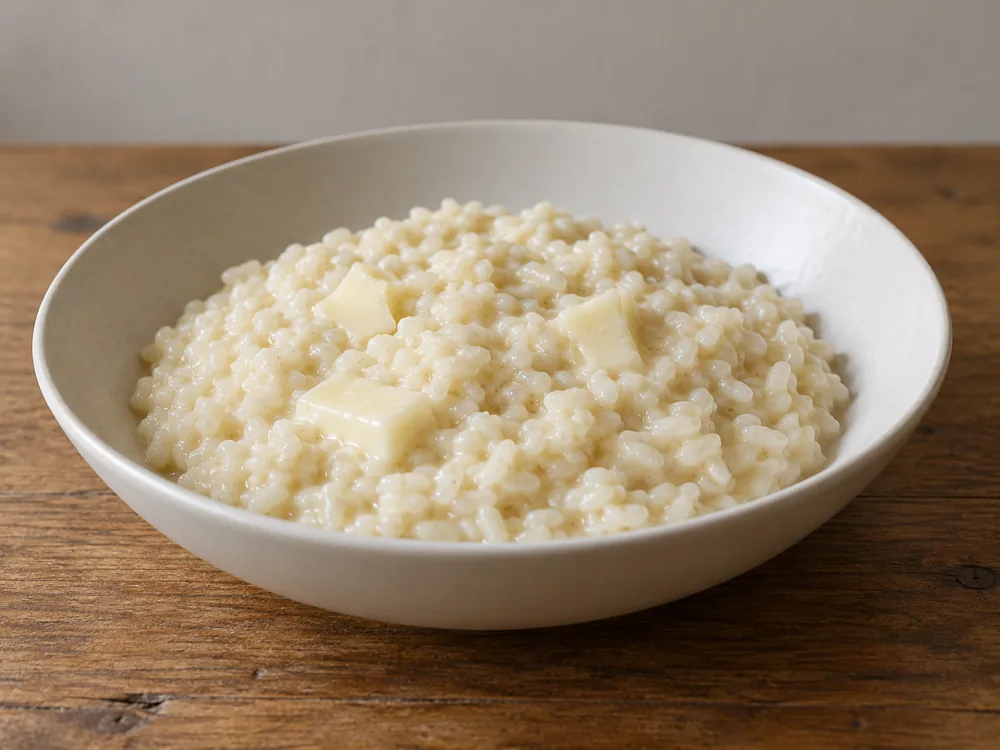
Crucolo melts well by Lovis's account: he told Fletcher that it is a wonderful melting cheese and that the fondue at the Rifugio is unbelievable.
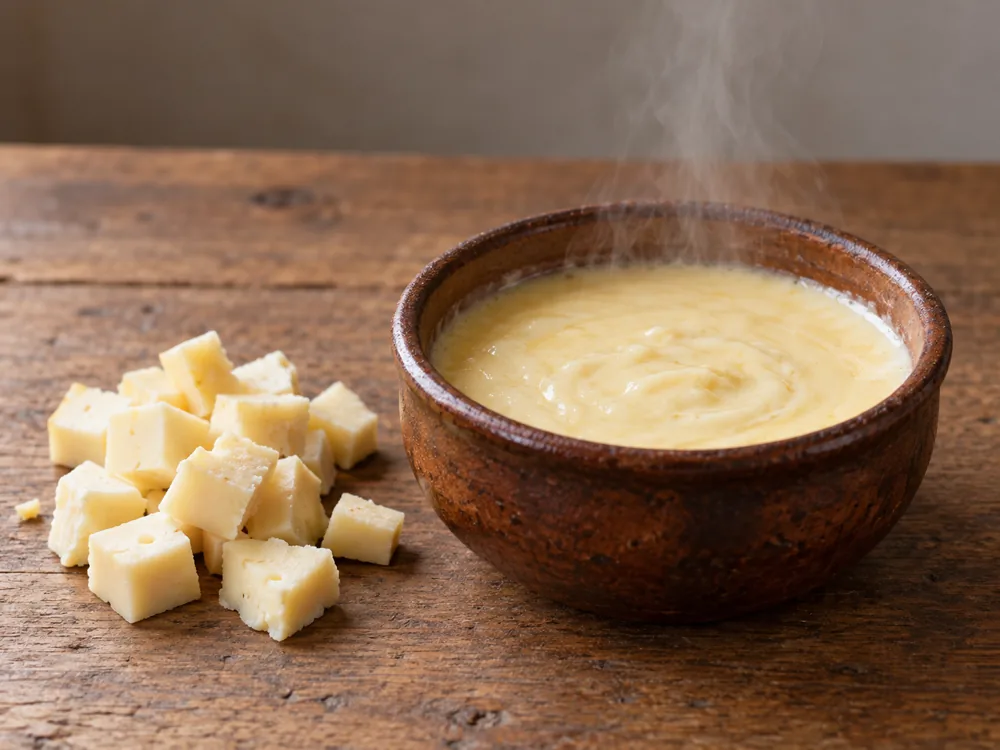
For fondue, you switch wedges: the refuge publishes its fondue recipe for four people with 400 g of Crucolo al Vino, the wine version.
You dice the cheese, microwave it for 3 minutes, stir slowly, then return it to the microwave for another 3 minutes at 180°C, as the recipe states. Its ingredient list names only the cheese, and the fondue is served hot in small earthenware bowls.
By simple arithmetic, 400 g for four people is 100 g a person. The 400 g is more than one 300 g slice, so you need two slices of the wine version, which cost €16.00 at the shop's listed price.
What Should You Serve with Crucolo?
The producer suggests different partners on different product pages, and each row below names the page it comes from.
| Pairing | Type | Why It Works |
|---|---|---|
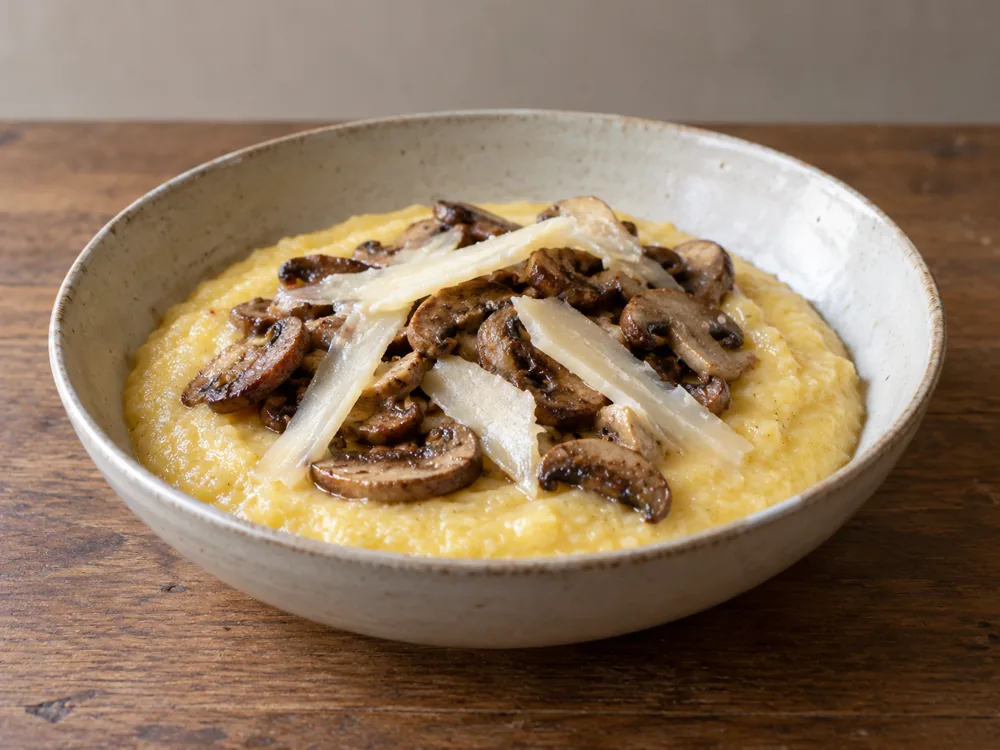
| Polenta with mushrooms | Food | Named on the producer's Saporito page for rich, complex dishes. |
| Traminer | Wine | Named on the producer's Saporito page as a good glass to pour with it. |
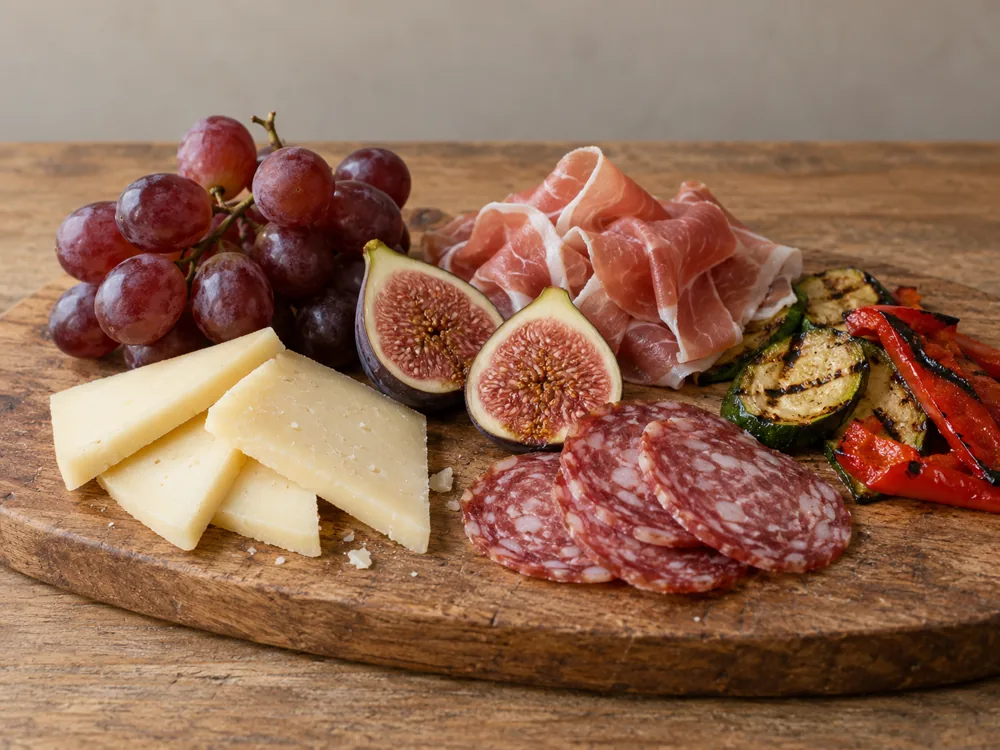
| Grapes and figs | Food | Fresh fruit suggested on the producer's wine-version page. |
| Prosciutto or salami | Food | Cold cuts suggested on the producer's wine-version page. |
| Grilled vegetables | Food | Suggested on the producer's wine-version page. |
The Saporito page is the only one that gives a reason for its pairings, polenta with mushrooms and a glass of Traminer: the cheese's slightly spicy notes.
For an aperitif, the wine-version page has a ready-made list: it calls the cheese perfect for aperitifs, and its fruit, cold cuts and grilled vegetables make a cheese board in all but name.
Is Crucolo Similar to Asiago or Havarti?
If you cannot get Crucolo, Asiago is the one cheese two sources name. Anderle told Fletcher the Crucolo recipe is similar to Asiago but the family's maturing methods give Crucolo its signature taste, and Valsana's listing calls Saporito similar to a pressed Asiago, aged in the cellar of the Rifugio.
The pressed Asiago Valsana compares it with is the younger cheese. Valsana sells it as Asiago Pressato DOP, and one of those listings states at least 20 days of ageing, against at least 60 days for its Saporito.
For texture, the comparison comes from Lovis, whose remark points to the texture of Havarti, with a bite in the finish.
Treat Asiago and Havarti as the closest named comparisons rather than exact swaps: the sources describe them as resemblances.
Is Crucolo Lactose-Free, and What Does It Contain?
According to the producer, yes. The Dolce, Saporito and wine pages each state that the cheese is naturally lactose-free, below 0.01 percent, because of the natural production process, and each says it contains galactose.
If you avoid milk or eggs rather than lactose, the cheese still contains milk, and Valsana's Saporito listing says it may contain traces of eggs.
| Nutrient | Amount |
|---|---|
| Energy | 1506 kJ / 363 kcal |
| Fat | 30 g, of which saturates 20 g |
| Carbohydrate | 0.9 g, of which sugars 0 g |
| Protein | 22.4 g |
| Salt | 1.9 g |
These figures cover Saporito only, so for Dolce or the wine version, read the pack you buy.
Is Crucolo Safe During Pregnancy?
The NHS and CDC rules for cheese during pregnancy turn on the milk treatment and the cheese type. The producer lists pasteurised milk on its Dolce, Saporito and wine pages.
The NHS lists pasteurised semi-hard cheeses such as edam, and pasteurised or unpasteurised hard cheeses such as cheddar, gruyère and parmesan, among the cheeses that are safe to eat. The CDC says hard cheese made with pasteurized milk, such as Asiago, is safer, and that pregnant women are 10 times more likely to get a Listeria infection.
Neither agency names Crucolo.
How Should You Store Crucolo at Home?
Keep your wedge in the refrigerator, wrapped in food-grade paper or in an airtight container, which is the same instruction on the producer's Dolce, Saporito and wine pages. The Dolce and Saporito pages add that you should take the cheese out a few minutes before serving so its aroma and flavour show.
The CDC says to keep a refrigerator at 40°F (4°C) or below, and Valsana gives below +4°C for packaged Saporito. For freezing, or for how long an opened wedge keeps, check the label or ask the seller.
Where Can You Buy Crucolo, and What Do Slices Cost?
From the producer's online shop, Dolce, Saporito and the wine version come as vacuum-packed slices of 300 g, and the prices you see include 4% Italian VAT.
| Product | Format | Price |
|---|---|---|
| Crucolo Saporito | 300 g vacuum-packed slice | €7.50 (€25.00/kg) |
| Crucolo Dolce | 300 g vacuum-packed slice | €7.50 (€25.00/kg) |
| Crucolo with wine | 300 g vacuum-packed slice | €8.00 (€26.67/kg) |
| Crucolina | About 1.3 kg, or a 320 g quarter | €29.00 (€18.13/kg), or €9.00 for the quarter |
| Crucoloso | 125 g | €4.00 |
Per kilo, the wine version costs about 7 percent more than Dolce or Saporito, and Crucoloso at €4.00 for 125 g works out to €32 per kilo. For Crucolina, buying the whole cheese at €18.13 per kilo undercuts the quarters at €22.50 per kilo by roughly a fifth.
The shop's Dolce, Saporito and wine pages say it ships to Austria, Belgium, France, Germany and the Netherlands as well as within Italy, with delivery in Italy in 36 to 72 hours and free shipping on orders over €90.
The United States is not on that list. In the US, the route Fletcher describes runs through an importer supplying shops such as Concord Cheese Shop, which carries the 30-pound wheels all year.
Valsana's trade listing sells the 13 kg wheel unpacked or in shrink-wrapped quarters with a minimum order of a quarter, and its instructions say to sell it fractionated. A wedge you buy at a shop counter is therefore cut from a larger piece.
Match the full product name first, then compare per-kilo prices: €25.00 for Dolce and Saporito, €26.67 for the wine version and €18.13 for a whole Crucolina.
The full name matters most with Crucolina and Crucoloso, which carry the Crucolo name but are a soft apple cheese and a spread.
SOURCES & REFERENCES
What Are Common Questions About Crucolo Cheese?
No. The shop sells Crucolina as its own soft apple cheese, either as a whole cheese of about 1.3 kg for €29.00 or as a 320 g quarter for €9.00.
Crucoloso is the creamy spreadable version, listed at 125 g for €4.00, which works out to €32 per kilo against €25.00 for a Dolce or Saporito slice.
The shop's category page says all its cheeses are naturally gluten-free, and the producer's Dolce, Saporito and wine pages each repeat the claim.