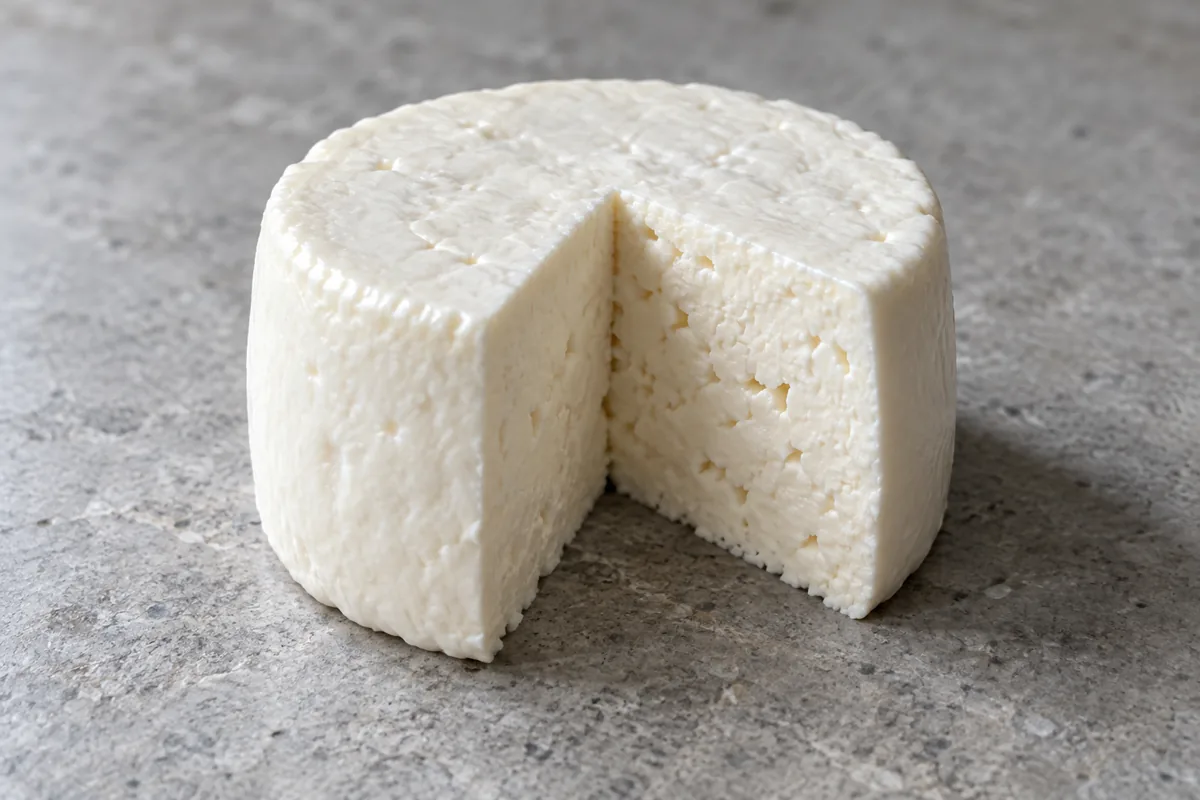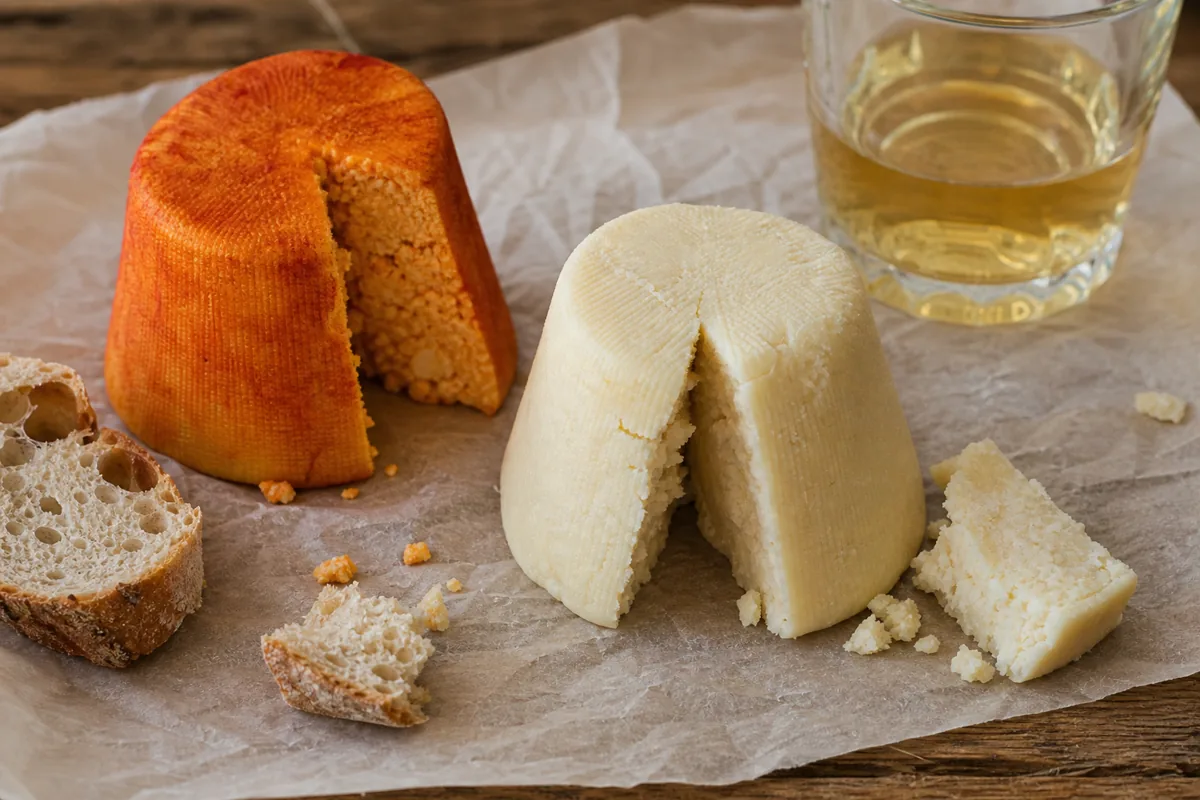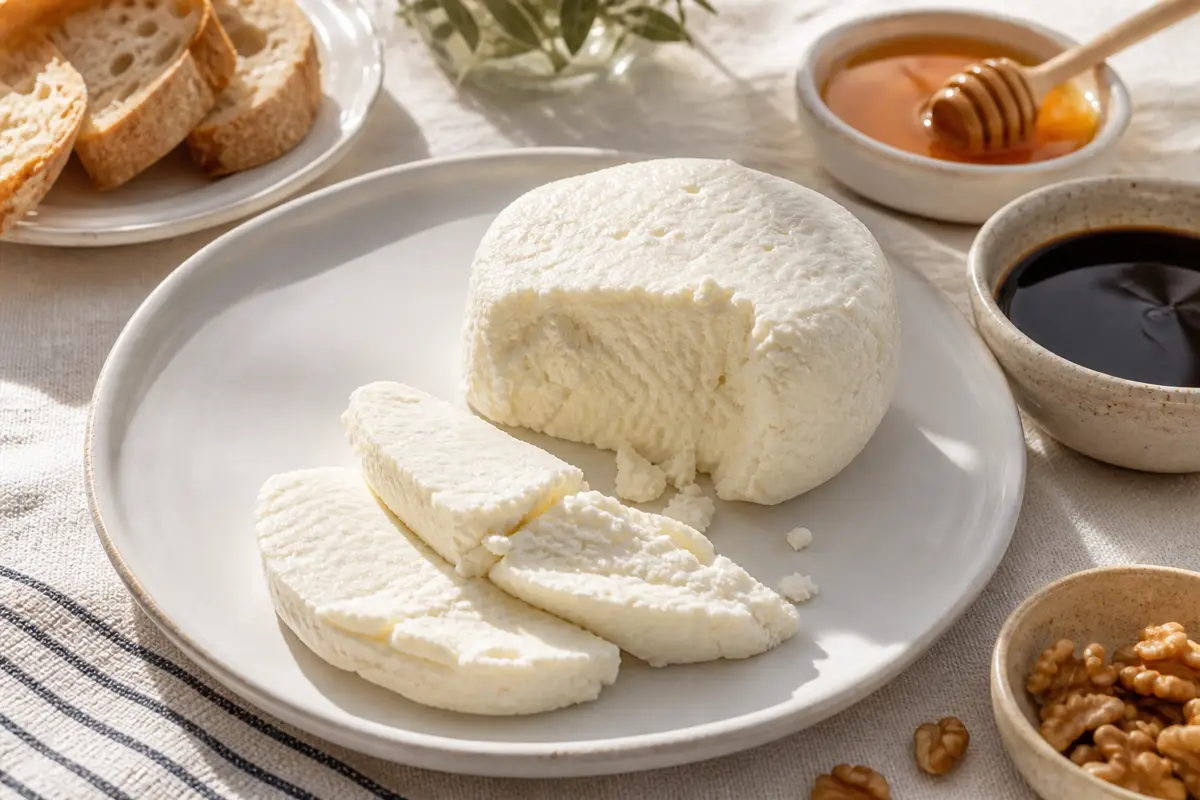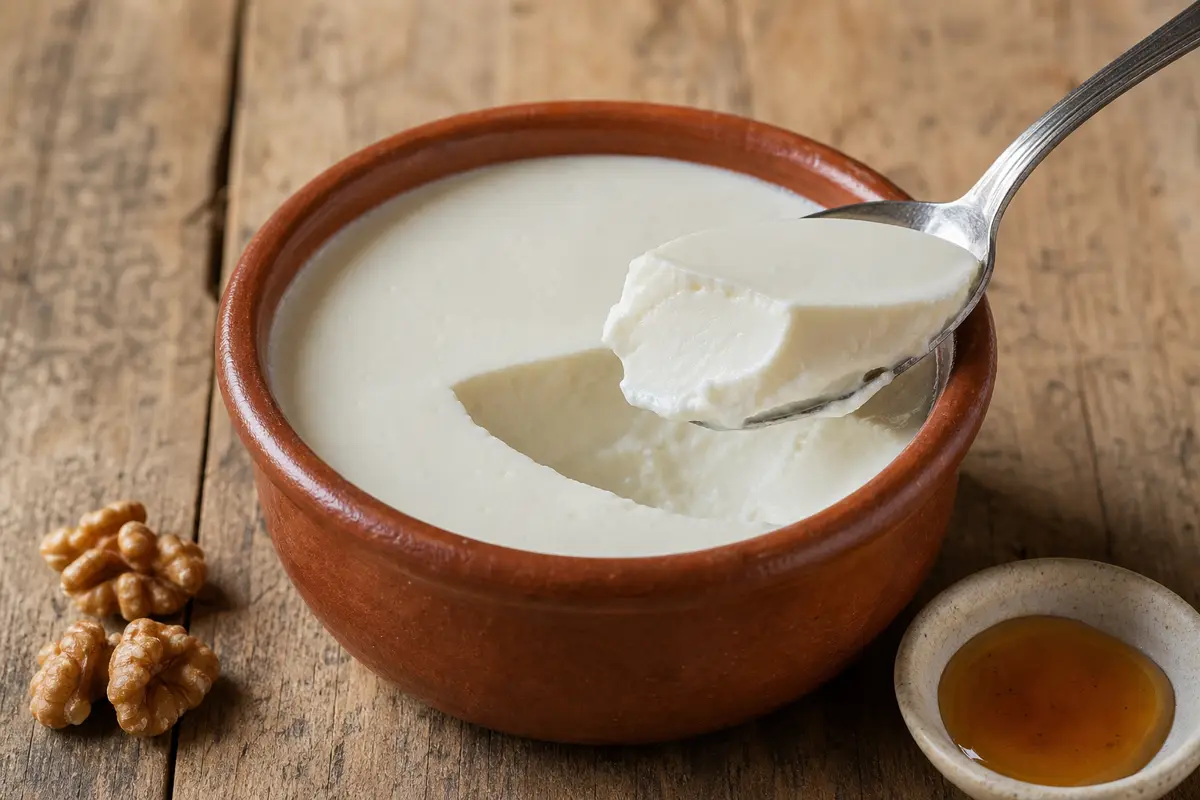
Cuajada is a Spanish milk curd that sets in its own cup and is eaten with a spoon. Spain's quality standard defines it as heat-treated milk coagulated with rennet or another permitted enzyme, without added lactic ferments and without whey removal.
Wikipedia and Fascinating Spain describe it mostly as a dessert with honey, walnuts, or sugar.
In This Article
What Is Cuajada Cheese?
Rennet forms the curd, which puts cuajada near fresh cheese, but the standard leaves out the step that defines most cheese. Nothing is drained, so the whey stays in the cup with the curd.
Wikipedia says cuajada was traditionally made from sheep's milk and is now more often made industrially from cow's milk. It lists Asturias, Cantabria, the Basque Country, Navarre, Aragon, Castile and León, and La Rioja as northern Spanish regions where it is popular, and Spanish Wikipedia calls it a dessert that originated in Navarre.
Wikipedia says cuajada means curdled in Spanish and gives mami as the Basque word. Fascinating Spain writes mamia, and chef Javi Rivero, writing in Naiz, lists mamia, mamina, gatzatua, gaztanbera and putxa as names of the same preparation in different places.
The standard calls cuajada a semisolid product, so you eat it with a spoon rather than slicing it.
Spanish Wikipedia describes the texture as creamy and gelatinous. Rivero calls the plain curd a white, creamy, brittle canvas, and he describes it breaking slowly under a lifted spoon as honey runs into it.
Is Cuajada the Same as Yogurt?
| Attribute | Cuajada | Yogurt |
|---|---|---|
| Setting agent | Rennet or another permitted coagulating enzyme | Bacterial fermentation of milk |
| Starter culture | No added lactic ferments | Mainly Lactobacillus delbrueckii subsp. bulgaricus and Streptococcus thermophilus |
| Whey | Not removed | Removed only in strained styles such as Greek yogurt |
| Flavor source | Milk, plus a toasted note in hot-stone versions | Lactic acid gives a tart flavor |
The difference starts with what sets the milk. Rennet gels the milk protein in cuajada, while yogurt bacteria ferment milk sugar into lactic acid, which gives yogurt its characteristic smooth texture and tart flavor.
Spain's standard bars added lactic ferments from cuajada. A cup built on a yogurt culture therefore falls outside that definition.
The clock separates the two as well. Wikipedia says yogurt cultures are held at 30 to 45 °C for 4 to 12 hours, and that the warmer end works faster but risks a lumpy texture or whey separation.
Cuajada has no culture to grow, so its temperature is chosen for the rennet, which Fascinating Spain says has its own optimum. That site's sheep's milk recipe heats the milk to about 45 °C, pours it onto the rennet, and leaves it undisturbed for at least 10 minutes.
Strained Greek yogurt sits even further away. Wikipedia says straining removes the whey.
Which Milk Is Used for Cuajada?
The standard allows whole, semi-skimmed, or skimmed milk from sheep, goats, cows, or mixtures of them, concentrated or not.
Tradition points to sheep. Fascinating Spain says real cuajada uses fresh sheep's milk because it has more fat than other milks, a higher dry extract, and a consistent result.
The standard adds a naming rule for cuajada made in Spain: when the milk is not cow's milk, the product name must give the animal species in descending order of proportion. A Spanish cup with no species in its name is presumably made with cow's milk.
Read in that order, a cup named for sheep and cow holds more sheep's milk than cow's milk.
Sources disagree on heat. The standard requires milk given adequate heat treatment, while Wikipedia says cuajada is made with raw warmed milk.
The standard governs cuajada made in Spain, so a commercial Spanish cup starts from heat-treated milk. A home recipe that follows the raw-milk description does not.
What Does a Cuajada Label Tell You?
The standard recognizes five types, and the name on the cup shows which one you are buying.
- Cuajada: the plain product defined above.
- Cuajada azucarada: sugar or edible sugars added.
- Cuajada edulcorada: authorized sweeteners added.
- Cuajada con frutas, zumos y otros productos: fruit, juice, or other foods added, with at least 70 percent cuajada in the finished product.
- Cuajada aromatizada: authorized flavoring added, named "cuajada con sabor a" and the flavor, with at least 80 percent cuajada.
A sweet or fruit cup is therefore still cuajada by name. If you want to taste the milk and rennet on their own, pick the plain type.
Because the floors are 70 and 80 percent cuajada, a fruit cup can be up to 30 percent other ingredients and a flavored cup up to 20 percent. The decree's preamble says the five-type list is new, since the 1983 standard it replaced made no provision for non-dairy ingredients.
Plain cuajada must contain at least 3.5 percent milk fat in its milk portion. Semi-skimmed cuajada runs above 1 and up to 2 percent, and skimmed cuajada holds at most 0.5 percent.
Semi-skimmed and skimmed cups must say so in the name, as semidesnatada or desnatada.
The finished product must also carry at least 11.5 percent non-fat milk solids. Cuajada labels must state fat per 100 g unless the nutrition panel already does.
The standard lists milk powder, cream, and gelatin at up to 7 g per kg as optional ingredients, and says the powder adjusts the total dry extract while the cream helps meet the fat floor.
Check the ingredient list for gelatin if you want a cup set by rennet alone.
The decree covers cuajada made in Spain. It does not apply to cuajada lawfully made or sold under other specifications in another EU member state, in an EFTA country of the European Economic Area, or in Turkey.
Which Rennet Sets Cuajada?
The standard allows rennet or other authorized milk coagulants that meet Spain's 1988 order on the identity and purity of rennet. Wikipedia describes the coagulant as rennet or plant extracts.
Rivero names two kinds in use today. One is synthetic rennet sold in pharmacies and herbalists, and the other is natural rennet, the traditional kind, made as a small ball from parts of the stomach of milk-fed lambs.
He says natural rennet gives a far stronger flavor than the synthetic kind and is not for every taste. In his view the taste of the rennet, the burnt milk and the sheep's milk are all part of the recipe's identity, which has been softened to current palates until it barely resembles its origin.
Why Were Hot Stones Used for Cuajada?
Fascinating Spain says shepherds heated the milk in a kaiku, a birch wood vessel, by pouring in hot stones that gave the cuajada a toasted flavor. When the milk boiled they removed the stones and let it cool before adding animal rennet.
Chef Javi Rivero writes in Naiz that the milk was burned with an incandescent stone before it was curdled. He describes the kaiku as a giant cup carved from a single piece of wood, usually birch, with a characteristic handle in the middle.
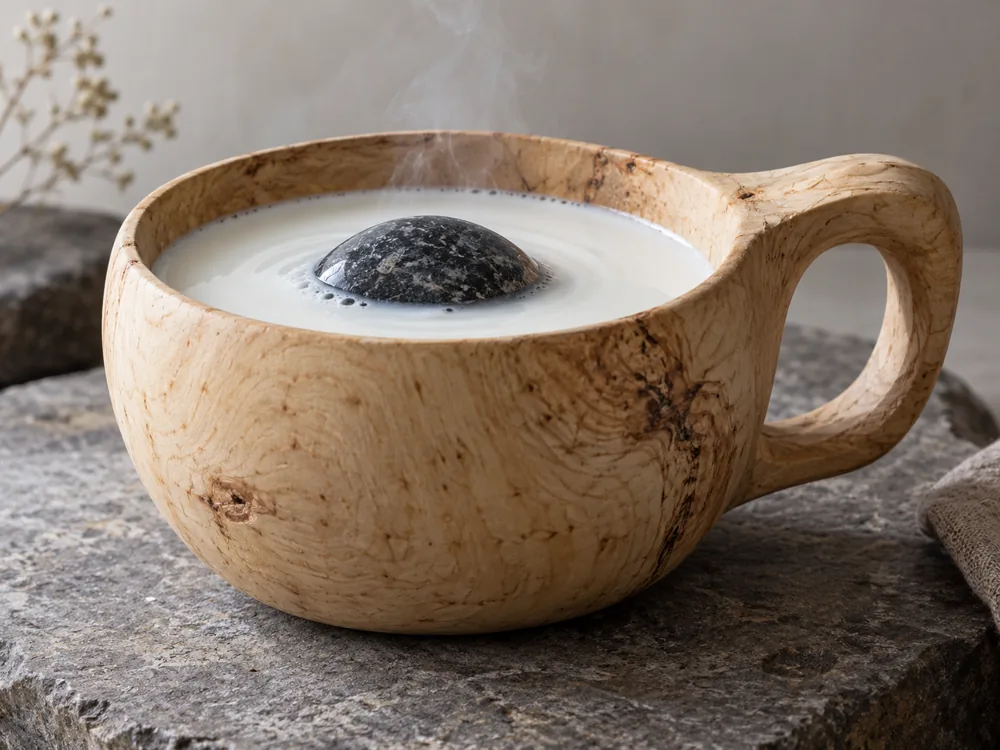
In his account the stones, called esne harria or milk stone, and iron rods were the way to cook milk in a wooden vessel, which is the origin of the caramelized or burned taste of old cuajadas.
Wikipedia gives a different tool. It says cuajada was traditionally made in a wooden vessel called a kaiku and heated with a red-hot poker, which left a faintly burned taste.
Fascinating Spain says the recipe later spread to towns and cities, where it was made in the clay jars still used today. Spanish Wikipedia describes the kaiku itself as a small jug or cup of ceramic or clay.
Every account that mentions a toasted or burned note ties it to the hot iron or stone. The home recipes below mention no such note.
How Is Cuajada Served?
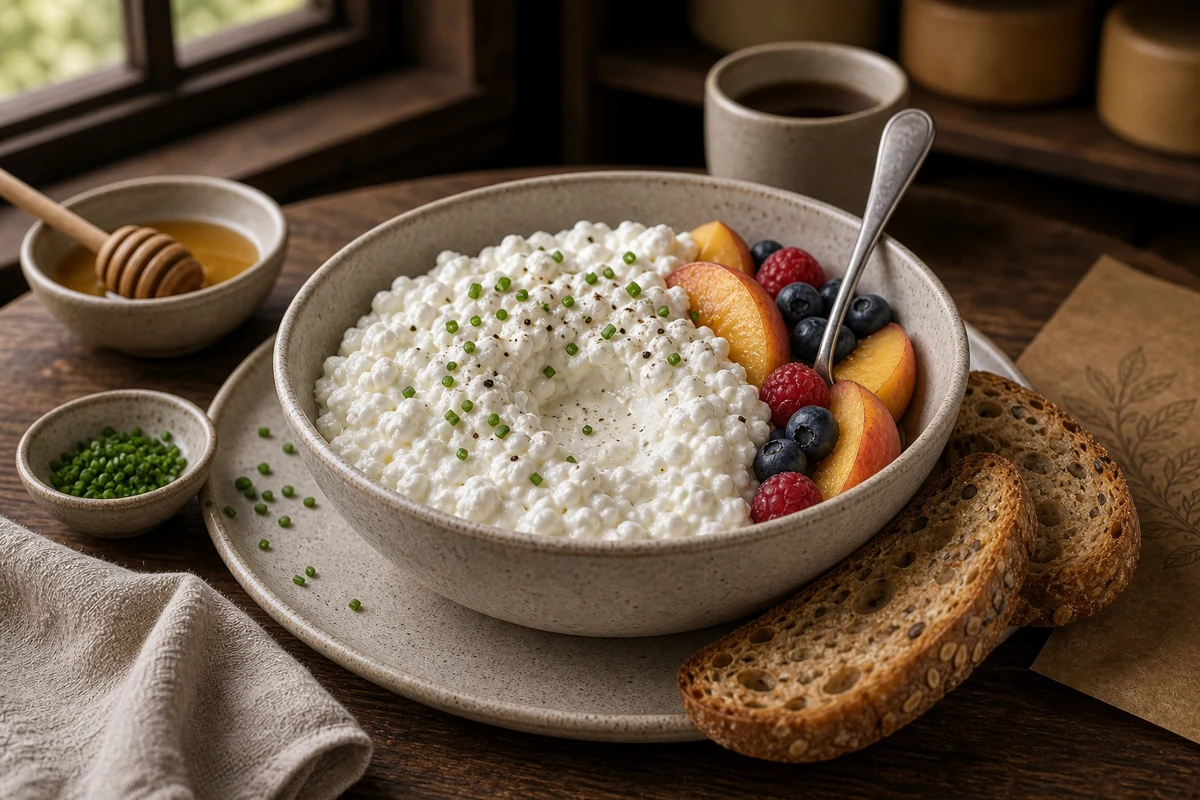
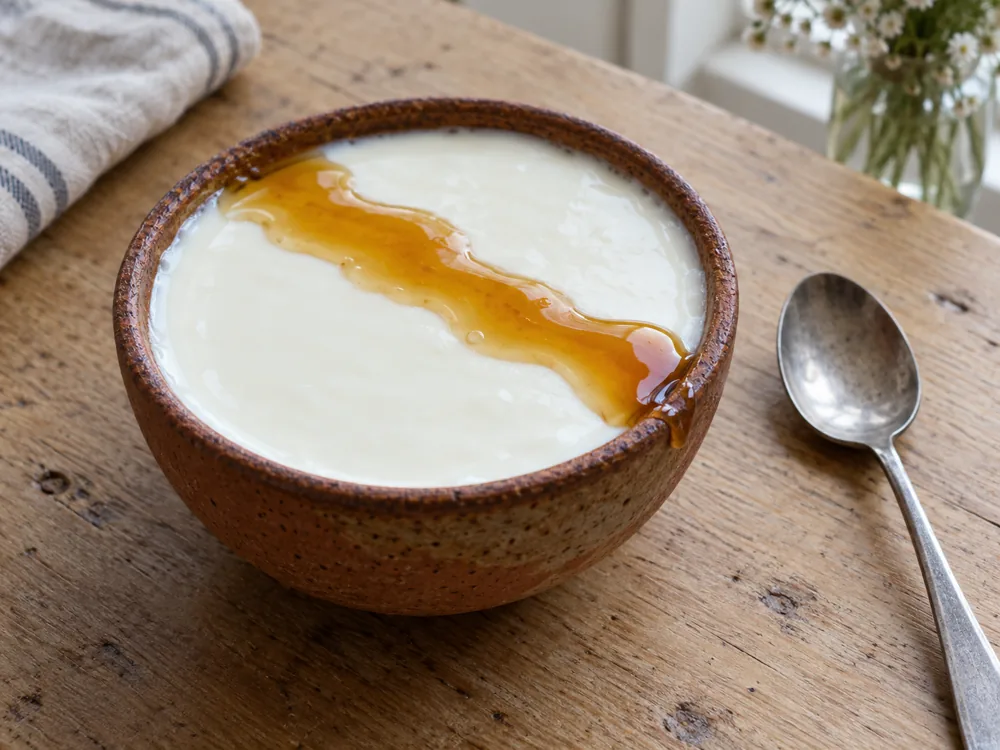
Wikipedia says cuajada is typically a dessert with honey and walnuts or sugar, and that it is also eaten for breakfast with fruit or honey. Spanish Wikipedia adds raisins and pieces of fruit, with sugar dusted on top or honey.
When you add toppings, Fascinating Spain says to put them on top and never stir them in, so each texture stays separate.
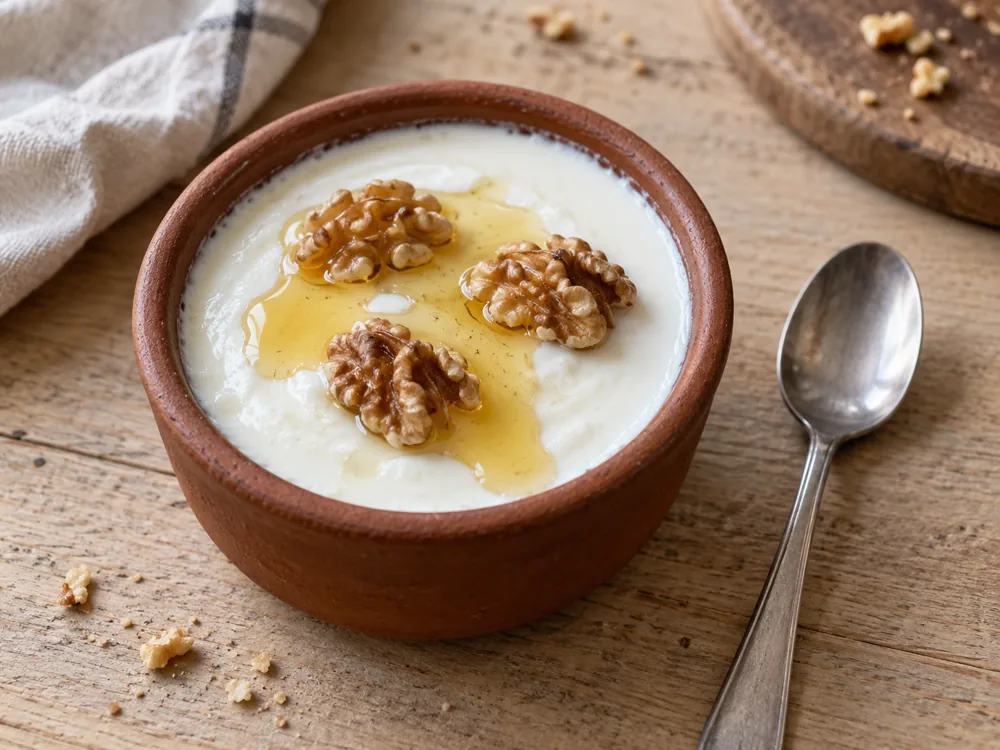
Rivero's own topping adds the crunch the creamy curd lacks: shelled walnuts boiled for 10 minutes until tender, dried well, coated in icing sugar with a little cinnamon and a pinch of salt, then fried in sunflower oil. The frying leaves a very thin caramel outside and keeps the nut tender inside.
He also describes a salted version, made by salting the milk instead of sweetening it, though he prefers honey.
| Pairing | Why It Works |
|---|---|
| Honey | Named by Wikipedia, Fascinating Spain, and Rivero. |
| Walnuts | Wikipedia pairs them with honey; Rivero candies them. |
| Sugar | Dusted on top, per Wikipedia and Spanish Wikipedia. |
| Fruit | Wikipedia names fruit for breakfast; Spanish Wikipedia names fruit pieces and raisins. |
| Jam | Listed by Fascinating Spain. |
| Salt | Rivero's salted alternative to sweetening. |
How Do You Make Cuajada at Home?
Fascinating Spain gives two versions built on rennet in warm milk: one for sheep's milk, and one for cow's milk with milk powder added. They differ in temperature, in where the rennet goes, and in what goes into the milk, and neither describes how to rescue a set that fails.
| Point | Sheep's milk version | Cow's milk version |
|---|---|---|
| Milk | 1 litre of fresh sheep's milk | 1 litre of fresh whole milk with 70 g of skimmed milk powder dissolved in little by little |
| Heat | Low heat, stirred constantly, to about 45 °C | Medium-low heat to 40 °C, then off the heat |
| Rennet | 3 to 4 drops in each small clay jar (10 to 20 for large jars), added before the milk | 1 teaspoon stirred into the pan, then poured into the serving containers |
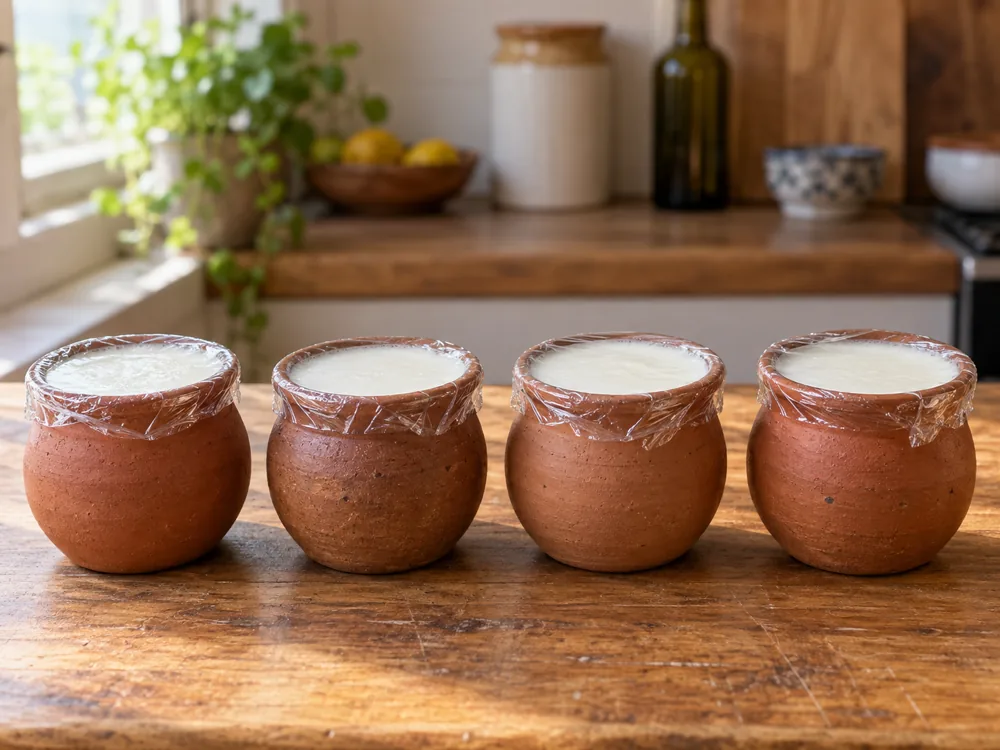
| Setting | At least 10 minutes undisturbed, then covered with cling film and chilled for a couple of hours | Covered with cling film and left undisturbed until the milk curdles well, then chilled |
| Finish | Honey, nuts, sugar, or jam on top | Honey, nuts, jam, or any topping |
In the sheep's milk version the rennet goes in first: the drops sit in the clay jar, and the warm milk is poured over them in one continuous pour that is never topped up, according to Fascinating Spain.
The cow's milk version leans on the powder. Fascinating Spain credits sheep's milk with a higher dry extract than other milks, so the 70 g of skimmed milk powder per litre reads as the same adjustment the standard describes.
Fascinating Spain notes that each rennet has an optimum temperature, so the bottle's instructions outrank a drop count copied from another recipe.
Does Cuajada Mean the Same Thing Outside Spain?
Wikipedia lists Colombia, Venezuela, El Salvador, Honduras, Nicaragua, and northern Costa Rica among the Latin American places where cuajada is popular. The name travels, but the product does not always stay a spoonable curd.
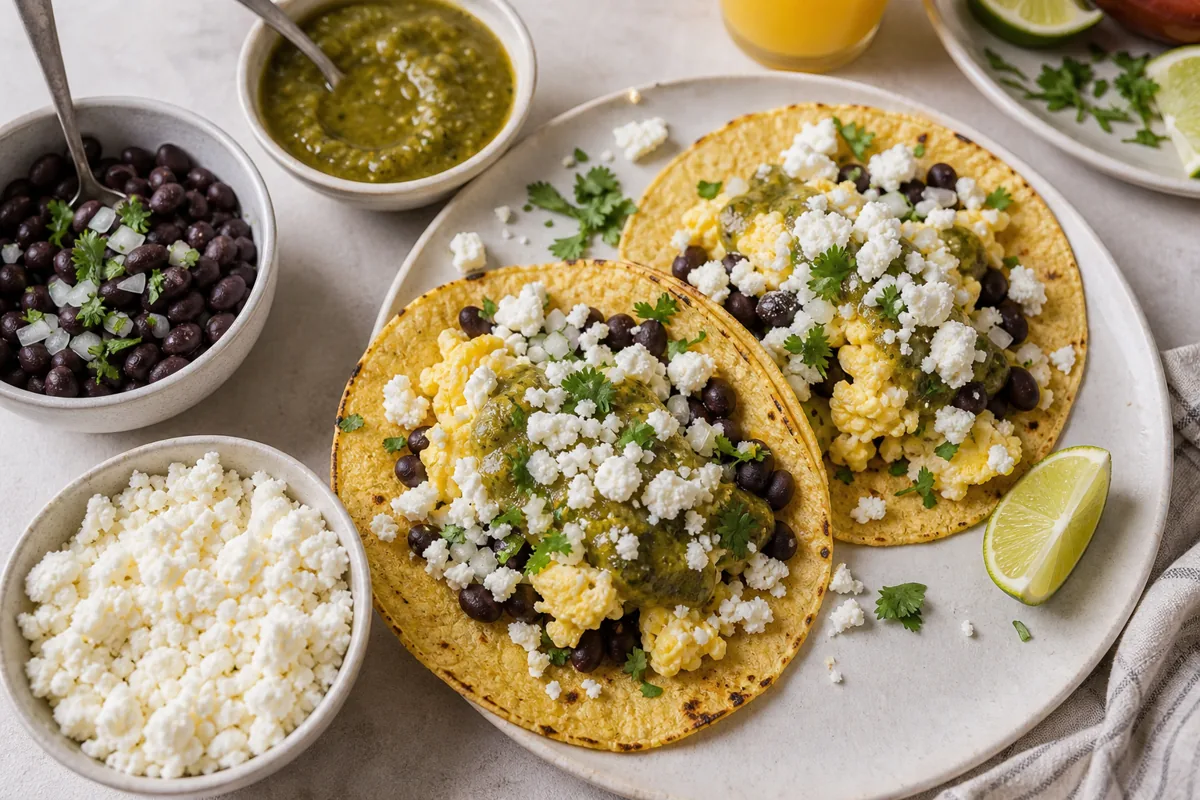
Wikipedia's white cheese page lists cuajada among the Spanish names for queso blanco varieties, alongside Oaxaca cheese and panela cheese.
In Mexico the same page says goat's milk cuajada goes into desserts such as gorditas de cuajada and panes de dulce in Guerrero, Zacatecas, and San Luis Potosí. In Jalisco, it says, the cheese known as panela goes into pan de cuajada and tamales de cuajada.
In Nicaragua the page lists cuajada fresca and cuajada ahumada, a smoked version with or without chili. One smoking method shapes the cheese into small balls and sets them on a wooden grill called a tapezco over a smoky wood fire.
Wikipedia's cuajada page adds that Nicaraguans salt it and eat it with güirilas.
In Colombia, Wikipedia says cuajada is typically served with melado, a thick syrup made of panela, and Spanish Wikipedia calls the pairing the emblem dessert of the Cundiboyacense highlands, made with soft fresh cow's milk curd.
Outside Spain the word can therefore name a white cheese, a category Wikipedia describes as drained curd, rather than the undrained curd that Spain's standard defines.
What Can Replace Cuajada?
Plain yogurt gives a spoonable dessert too, but it is a cultured, tart one.
Strained yogurt comes closer in thickness, since Wikipedia says straining removes the whey and leaves a much thicker consistency, but it stays a fermented product.
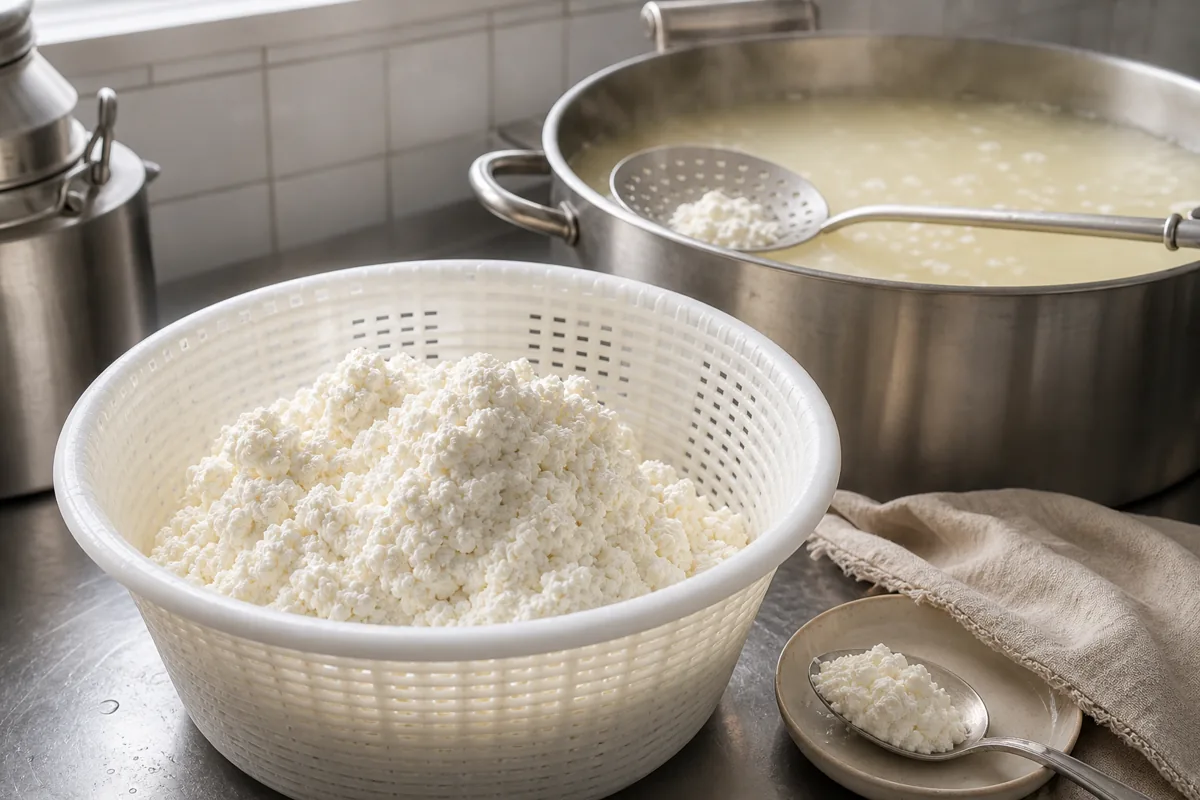
Wikipedia says queso blanco is usually made by heating whole milk to near boiling, adding an acid such as vinegar, and draining the curds in cheesecloth for three to five hours, with no rennet or bacterial culture.
It adds that queso blanco and queso fresco are eaten alone, crumbled over soups or salads, or put on top of dishes such as enchiladas.
Each stand-in gives up at least one of cuajada's defining traits: yogurt is cultured rather than rennet-set, and queso blanco is drained.
| Tart, cultured spoonful | Plain yogurt |
| Thicker, tart spoonful | Strained yogurt |
| Drained, crumbly fresh cheese | Queso fresco |
What Nutrition Does Cuajada Provide?
No single figure covers every cup, so this is one record from the Spanish food composition database as reproduced by diet.es.
| Nutrient | Per 100 g |
|---|---|
| Energy | 87 kcal (363 kJ) |
| Water | 84.2 g |
| Fat | 4.7 g, of which saturated 2.9 g |
| Carbohydrate | 6.6 g |
| Protein | 4.5 g |
| Calcium | 178 mg |
| Potassium | 218 mg |
| Phosphorus | 129 mg |
| Sodium | 64 mg |
| Cholesterol | 6.6 mg |
diet.es splits the 87 kcal into 48 percent from fat, 31 percent from carbohydrate, and 21 percent from protein.
The record carries descriptors that show what it measures: cow's milk, fully heat-treated, prepared by the food industry, with cream, milk, and agar added, packed in plastic and kept refrigerated. That makes it a commercial cow's milk cup, so a sheep's milk cup can differ, since Fascinating Spain says sheep's milk has more fat and a higher dry extract than other milks.
If you limit lactose, read the maker's own panel for the figure.
Is Cuajada Safe During Pregnancy?
NHS lists unpasteurised milk, cream, yoghurt, butter, and ice cream among the foods to avoid, and CDC puts raw milk and dairy made from raw milk among the riskier choices.
CDC adds that pregnant women are 10 times more likely to get a Listeria infection, so pasteurization is the first condition to check on a cup or a home recipe.
Spain's standard requires adequate heat treatment without naming pasteurization, and a home recipe can use raw milk.
Spanish Wikipedia notes that a soft cheese is called cuajada in some countries and points readers to queso fresco. CDC lists any queso fresco-type cheese as riskier whether it is made with pasteurized or raw milk, so a fresh cheese sold as cuajada is not cleared by pasteurization alone.
How Long Does Cuajada Keep?
The Spanish standard sets no shelf-life date, so follow the date the maker prints on a commercial cup.
Wikipedia says commercial single servings are sold refrigerated, in earthenware pots or in plastic containers like those used for yogurt, and the diet.es record lists refrigerated storage among its descriptors.
Fascinating Spain's home recipe covers the jars with cling film and chills them for a couple of hours before serving.
Use the printed date on a commercial cup, and eat a homemade batch soon after it chills rather than assuming days of life.
SOURCES & REFERENCES
Cuajada is a Spanish semisolid milk curd. Spain's standard defines it as heat-treated milk coagulated with rennet or another permitted enzyme, without added lactic ferments and without whey removal.
No. Rennet sets cuajada, while yogurt sets through bacterial fermentation that makes lactic acid, and Spain's standard bars added lactic ferments from cuajada.
Tradition uses sheep's milk, and Wikipedia says industrial versions are now more often cow's milk. The Spanish standard allows sheep, goat, cow, or mixed milk and requires non-cow species to be named on Spanish-made cups.
The Spanish standard allows rennet or other authorized milk coagulants. Chef Javi Rivero says natural rennet from the stomach of milk-fed lambs is the traditional kind and gives a much stronger flavor than the synthetic rennet sold in pharmacies.
Fascinating Spain and Naiz describe shepherds heating sheep's milk with hot stones in a wooden vessel, which gave a toasted or burned flavor. Wikipedia names a red-hot poker instead.
Chilled in its cup with honey, walnuts, or sugar on top. Fascinating Spain says to add toppings on top and never stir them in.
Not always. Wikipedia's white cheese page lists cuajada among the Spanish names for queso blanco varieties, including a fresh and a smoked cuajada in Nicaragua, while Spain's standard defines an undrained curd.
Both the NHS and CDC treat unpasteurized milk and dairy made from it as riskier, and the CDC also lists any queso fresco-type cheese as riskier even when pasteurized. Choose a cup or recipe that states pasteurized milk and ask your clinician.
Follow the date on a commercial cup and eat a homemade batch soon after it chills.