Dubliner is a pasteurized cow's milk cheese made by Carbery in County Cork and sold worldwide under Kerrygold's name. Kerrygold's FAQ gives its ageing as typically 9-12 months, while Cheese.com and Perishable News say about 12 months and Wikipedia says 12 months to two years.
The question most shoppers bring is whether Dubliner counts as a cheddar.
In This Article
Is Dubliner a Cheddar?
Kerrygold's US product page never uses the word. It describes "a bit of a hard texture similar to a Cheddar" and leaves the label to the shopper.
| Source | How it places Dubliner |
|---|---|
| Kerrygold USA | "A bit of a hard texture similar to a Cheddar," with no cheddar label |
| Cheese.com | Type hard, family Cheddar |
| Wikipedia | Hard and granular; made as a cheese other than Cheddar |
| Perishable News | Calls it "similar to a white cheddar, but softer" |
| Yummy Bazaar | Made on Cheddar equipment, yet Lucey's first tasters agreed it was not Cheddar |
Read together, the sources place Dubliner inside the cheddar family while Kerrygold itself avoids the label. Wikipedia gives John Lucey's design goal: a cheese other than Cheddar that could be made "using (mostly) existing Cheddar equipment, for sale in Europe."
Shared equipment would explain why a cheese designed as an alternative still gets filed with the cheddars. Yummy Bazaar names the difference a buyer would notice: Dubliner's sharpness is somewhat milder than that of the classic Irish Cheddar it is often compared with.
What Does Dubliner Taste and Feel Like?
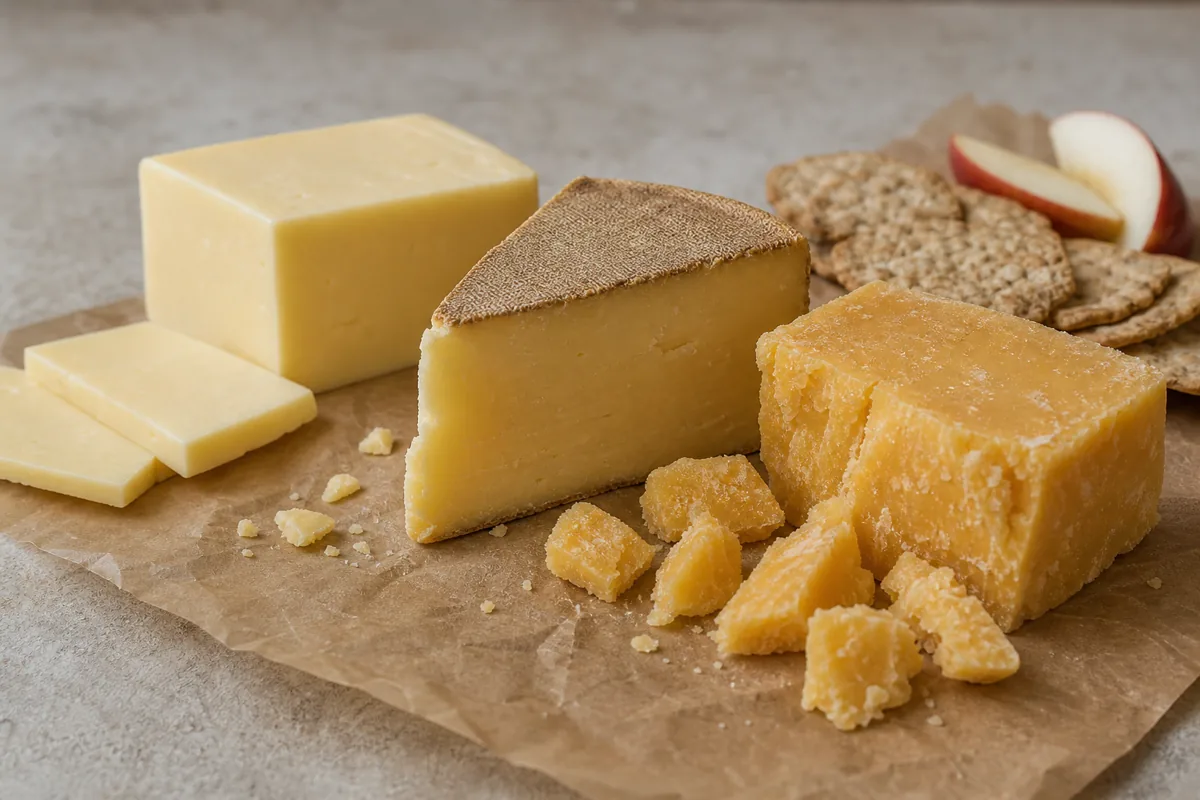
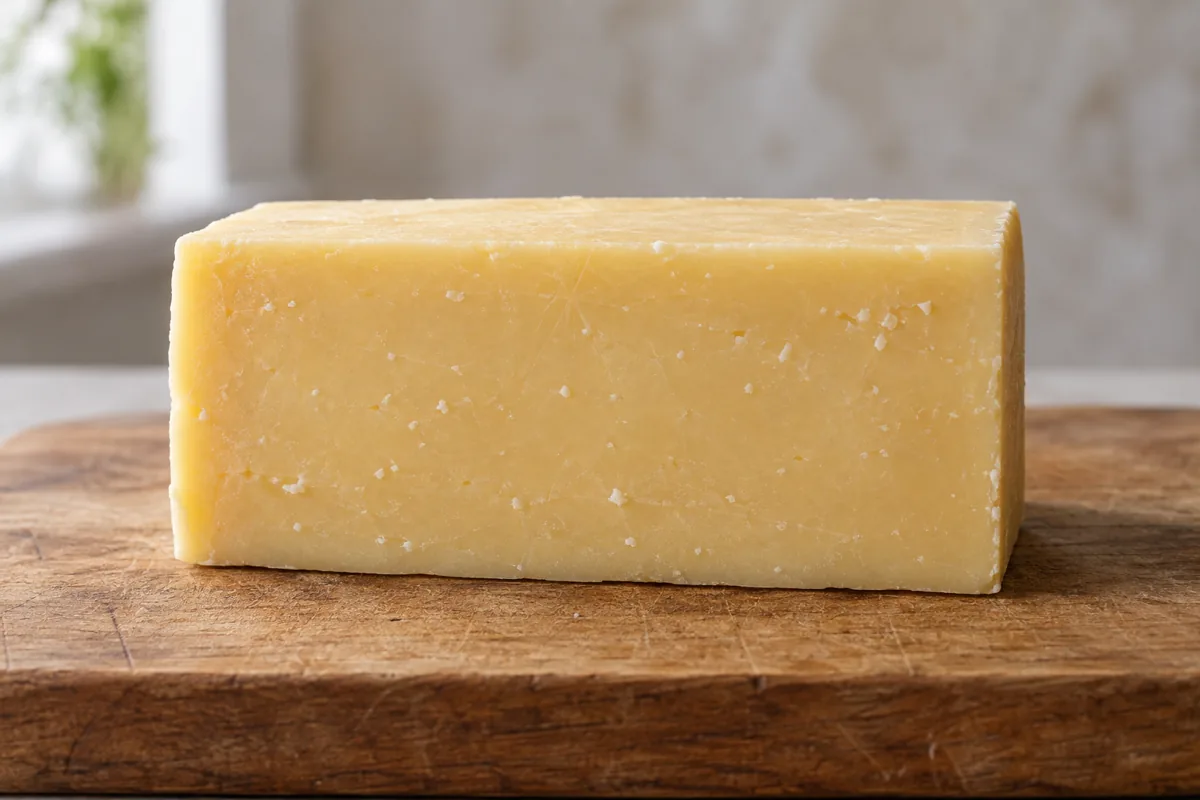
Kerrygold's US page calls Dubliner "Sweet and nutty with a piquant bite of aged Parmesan" and gives its color as "A pale yellow."
Cheese.com lists elements of cheddar, Swiss, and Parmesan, and Wikipedia gives the aim as the sharpness of mature cheddar with the buttery sweetness of Parmigiano.
Yummy Bazaar describes the bite in order: sharp notes come first, then nuttiness, and a sweet aftertaste is what lingers. It calls the aroma sweet and very buttery with a funky nuttiness, like Parmesan but considerably mellower.
Sources differ on texture. Cheese.com says "firm and smooth," Wikipedia says hard and granular, and Perishable News says "firm-crumbly."
Yummy Bazaar says a Dubliner packaged after at least 12 months of ageing has fully hardened into a firm, crumbly cheese, and that it has a thin natural rind.
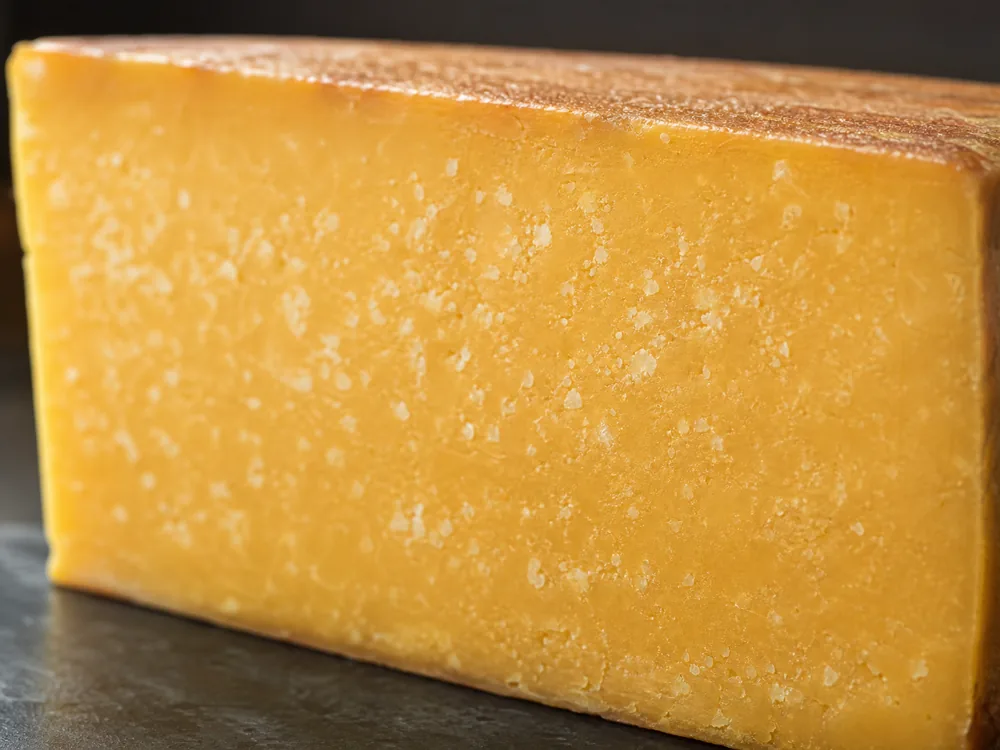
Wikipedia says Dubliner "may contain natural calcium lactate cheese crystals, which appear as small white pieces." Yummy Bazaar says that, as with Cheddar and Parmesan, the texture becomes granular once they form, "with a bit of crunch."
Both sources say "may," so neither promises specks in every block, and Kerrygold's own pages do not mention them. That would also explain why Cheese.com's "smooth" and Wikipedia's "granular" can both describe Dubliner: a block with crystals reads as granular, and one without as smooth.
Where Did Dubliner Come From?
Wikipedia credits John Lucey with creating the cheese in 1990 under the name Araglen, as a cheese other than Cheddar for sale in Europe.
Yummy Bazaar's guide adds that Lucey was a food science PhD student at University College Cork, that the recipe came about by accident, and that he named it after a Cork village because he liked how it sounded.
It quotes Lucey as saying he was "interested in mineral content and texture, not the flavor." When he invited Irish cheese plants to a tasting, the pitch was that any company already making Irish Cheddar could make his cheese without new equipment, according to Yummy Bazaar.
- 1991: Carbery Milk Products agreed to commercialize Araglen (Wikipedia).
- 1994: Manufacturing began (Wikipedia).
- 1996: Dubliner was introduced (Perishable News), and Ornua has marketed it internationally under the Kerrygold label since then (Wikipedia).
- 1999: The cheese reached the United States (Wikipedia).
- 2011: More than 40,000 tonnes had been produced for sale in multiple markets (Wikipedia).
Wikipedia and Cheese.com say the cheese is named after the city of Dublin, and Kerrygold's US page says the city inspired it. The cheese itself is made in County Cork, not Dublin.
Yummy Bazaar tells it differently: it says Carbery renamed the cheese when large-scale production began, and that Carbery's PR department "theorized" that a name borrowed from the folk band The Dubliners would sound familiar and appeal to a broader market.
Carbery makes the cheese and Ornua sells it: Yummy Bazaar calls Ornua an Irish agricultural co-operative that markets dairy products for its members, Carbery among them, and Kerrygold's US page names Kerrygold as Ornua's registered trademark.
Perishable News, writing under the board's earlier name, the Irish Dairy Board, says it is a collective of small dairies that joined together in 1961.
How Is Dubliner Made?
Yummy Bazaar says the original recipe has stayed secret since Lucey sold it, so the public sources describe the inputs and the ageing rather than the make step by step.
Kerrygold's US page credits the flavor to "a well-balanced mix of cheese cultures and naturally occurring amino acids" in a natural cheese made from the milk of grass-fed cows. Yummy Bazaar's account of the original recipe adds that the milk is full-fat and pasteurized.
Kerrygold's FAQ says the dairy suppliers behind its US products follow Ireland's Grass Fed Dairy Standard, which means herds eating on average 95% grass or grass forage. It adds that the beta-carotene in grass-fed milk gives Kerrygold cheeses a golden color, although the Dubliner page itself gives the paler "pale yellow."
Kerrygold's FAQ says its cheeses are made from both A1 and A2 milk, and that most Irish dairy cows are Holstein Friesians on herds that averaged 97 cows in 2023. It adds that artificial growth hormones such as rBST are prohibited in Ireland under European legislation.
Yummy Bazaar calls ageing the most important stage and says the maturation conditions shape the flavor profile.
How Does Dubliner's Age Compare With Kerrygold's Other Cheeses?
Kerrygold's FAQ lists a typical maturation period for each of its cheeses, and Dubliner's range sits beside Aged Cheddar's 12 months and well below Reserve Cheddar's 24.
| Kerrygold cheese | Typical age |
|---|---|
| Blarney Castle | 90 days |
| Swiss | 6 months |
| Dubliner | 9-12 months |
| Aged Cheddar | 12 months |
| Skellig | 18 months |
| Reserve Cheddar | 24 months |
Because Aged Cheddar is listed at the same typical 12 months, age alone does not separate it from Dubliner at the counter.
Yummy Bazaar puts the classic Dubliner at a minimum of 12 months and says it can be left to age up to 18, a wider span than Kerrygold's own figure.
Perishable News credits Dubliner's sharp character and slightly crystalline texture to 12 months of ageing, so by that account a block near the 9-month end of Kerrygold's range would be less sharp and less crystalline, though no source measures the gap.
How Do You Cook With Dubliner and What Goes With It?
The simplest serving on Kerrygold's US page is a sandwich: the cheese "simply melted between a few slices of crusty brown bread."
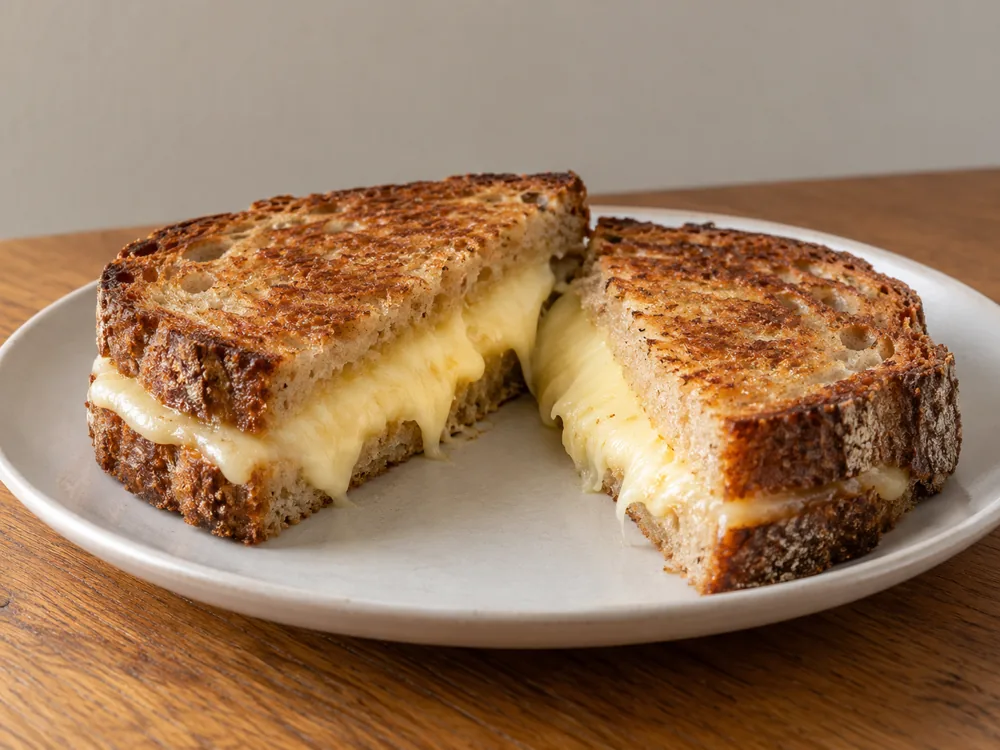
Yummy Bazaar says the cheese's butteriness lends itself well to melting, and Cheese.com calls its firm, smooth texture ideal for slicing or grating.
Kerrygold's US page also lists recipes with the cheese, among them Dubliner cheese crisp salad cups, creamy mashed potatoes with Dubliner and a cacio e pepe compound butter.
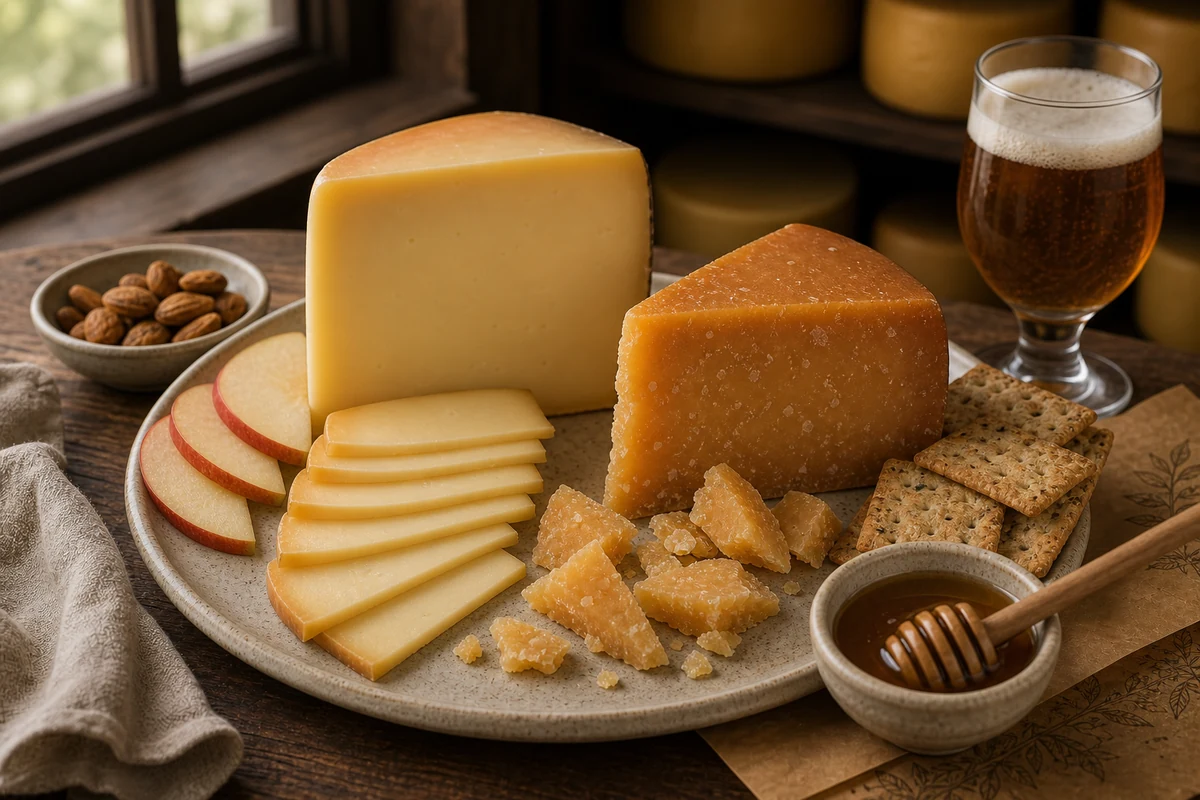
For a board, the sources converge on crackers, fruit, and a red or fruity wine, and Kerrygold says the cheese's diversity of flavors, from nutty to sharp to sweet, is what lets it sit alongside a full-bodied wine like Cabernet.
| Pairing | Type | Why It Works |
|---|---|---|
| Crackers | Food | Kerrygold's US page says the cheese is made for crackers; Cheese.com lists them too. |
| Full-bodied red wine | Wine | Kerrygold's US page pairs it with a full-bodied red. |
| Fruit and fruity wines | Wine | Cheese.com names fruit and fruity wines, especially Irish ones. |
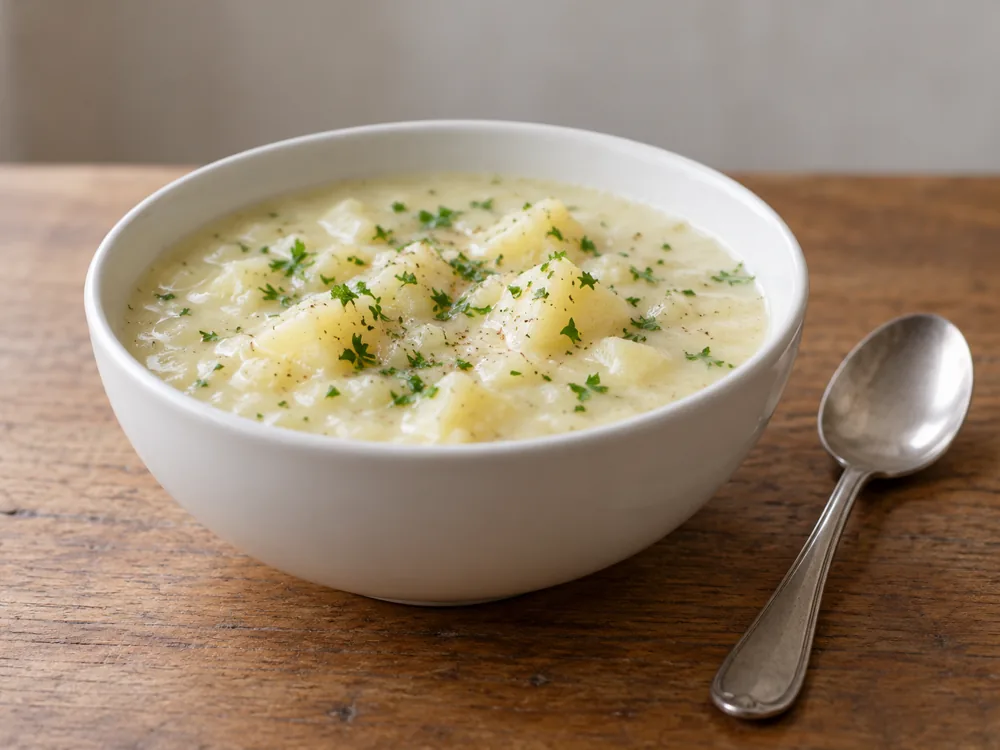
Beer has two sourced roles. Kerrygold suggests "a freshly pulled pint" alongside, and the James Beard Foundation's Irish potato soup with cheese and red ale uses 7 ounces of grated Kerrygold Dubliner.
That recipe stirs a milk-and-roux cheese sauce into potatoes simmered with Irish red ale and stock, and the Foundation says a more readily available beer or ale can replace the Irish red ale.
The cheese melts into the hot milk sauce rather than going straight into the pot. The 7 ounces meet 4 cups of milk thickened with 3 tablespoons of flour, a little under 2 ounces per cup, and the combined soup then cooks over very low heat for 10 minutes.
The recipe's optional garnishes are 4 ounces of crumbled blue cheese, preferably Cashel, along with parsley and crisp bacon.
Which Dubliner Should You Buy?
Kerrygold's FAQ says all its cheeses use microbial rennet and are suitable for vegetarians. The US label for standard Dubliner lists only "Enzymes," and Yummy Bazaar infers microbial enzymes from the vegetarian claim.
Kerrygold's FAQ also says its cheeses are not kosher.
Yummy Bazaar says Dubliner carries no protected status, so a maker other than Kerrygold can change the recipe, from the milk to using animal rennet. Cheese.com says the cheese is produced in various regions of Ireland, while the Kerrygold-label cheese is made by Carbery in County Cork.
Because the sources describe the Kerrygold product, the Kerrygold name on the pack is what ties a block to the details on this page.
Kerrygold's FAQ ageing list names standard Dubliner and Reduced Fat Dubliner, while Yummy Bazaar calls the reduced-fat version Light Dubliner and adds a Vintage and a red version.
| Version | Typical age | What differs |
|---|---|---|
| Standard Dubliner | 9-12 months (Kerrygold) | The cheese described on this page |
| Reduced Fat Dubliner | 12 months (Kerrygold) | About 30% less fat than the classic (Yummy Bazaar) |
| Vintage | About 18 months (Yummy Bazaar) | More mature and sharper, with pronounced nuttiness and umami notes |
| Red Dubliner | Not stated | Colored with annatto, which Yummy Bazaar says changes only the color |
Kerrygold's FAQ ageing list has no Vintage Dubliner, so a Vintage's age rests on Yummy Bazaar's figure of about 18 months rather than on a Kerrygold statement.
Yummy Bazaar says Kerrygold uses no dyes such as annatto, so a deep orange block sold as Dubliner would come from another maker.
Standard Dubliner is the Kerrygold block of typically 9-12 months made with pasteurized milk. Reduced Fat, Vintage and red versions change the fat, the age or the color, and only Kerrygold-labelled blocks match the descriptions on this page.
Kerrygold's US product page also lists Dubliner cheese slices and Dubliner cheese snacks among its other products.
Perishable News describes Dubliner with Irish Stout as mature Dubliner finely ground, mixed with the beer, pressed into round wheels, and coated in green wax. It says the texture becomes softer and more crumbly.
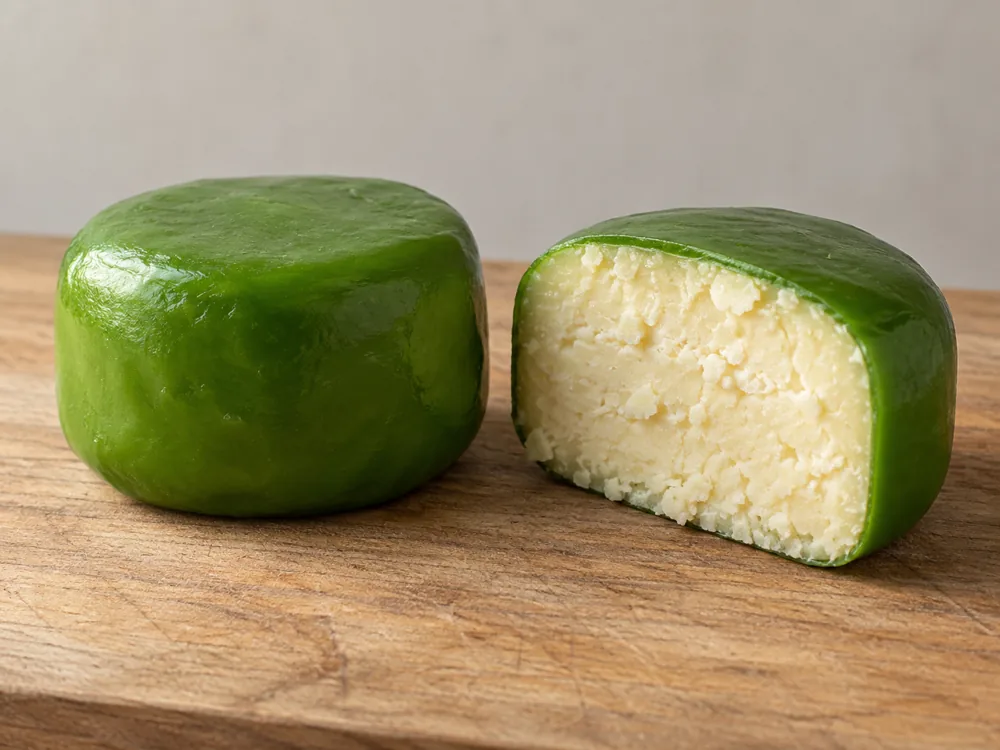
Kerrygold's FAQ names Dubliner with Irish Stout as the exception among its cheeses: it is made with real Irish stout, which contains gluten.
Dubliner Nutrition per Ounce
Kerrygold's US page lists these figures per 1 oz serving, which it gives as ¼ cup or 28 grams.
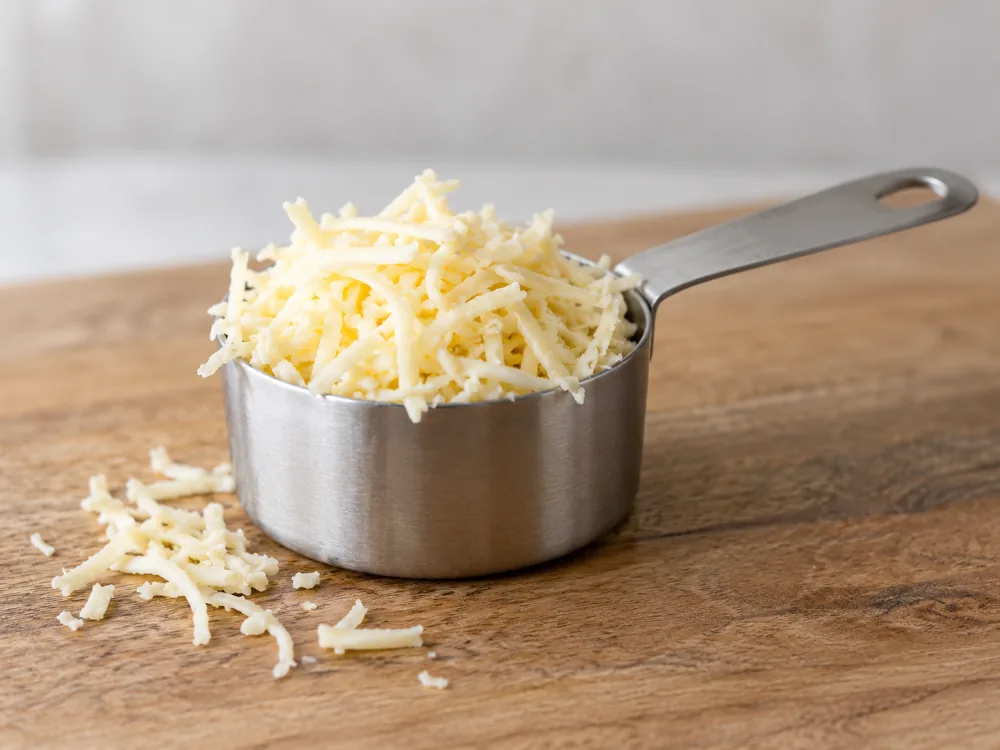
At 30% of the daily value for saturated fat per ounce, two ounces on a board reach 60%, and 420 mg of sodium.
The James Beard soup yields 8 servings from 7 ounces of cheese, which is just under 1 ounce per bowl and about 96 calories and 184 mg of sodium from the cheese alone by these label figures.
Is Dubliner Safe During Pregnancy?
Both the NHS and the CDC sort cheese in pregnancy mostly by hardness and pasteurization. The NHS lists "pasteurised or unpasteurised hard cheeses, such as cheddar, gruyère and parmesan" as safe, and the CDC names hard cheese made from pasteurized milk as a safer choice.
Kerrygold's US label lists "Pasteurized Milk," and Cheese.com and Wikipedia both class Dubliner as hard. Neither agency names Dubliner, and the CDC adds that pregnant women are 10 times more likely to get a Listeria infection.
How Long Does a Cut Block Keep?
Kerrygold publishes one storage rule for all its cheeses, and it is short: refrigerate, keep it airtight once opened, and eat it within 2-3 days.
That FAQ does not separate Dubliner from Kerrygold's softer cheeses, so it gives no longer figure for a firm block.
What Can You Use Instead of Dubliner?
The James Beard Foundation's own substitute for the Dubliner in its potato soup is a mix of Gruyère and medium-sharp white cheddar.
That mix covers the Swiss and cheddar notes Cheese.com lists for Dubliner and leaves out the aged Parmesan bite Kerrygold names.
If a dish only needs a firm, sharp melting cheese, a mature cheddar is the nearest single stand-in by classification, because Cheese.com files Dubliner in the Cheddar family. Since Yummy Bazaar puts Dubliner's sharpness below classic Irish Cheddar's, a mature cheddar is the likelier of the two to taste sharper, and none of the pages cited here says how closely any substitute matches Dubliner's sweetness.