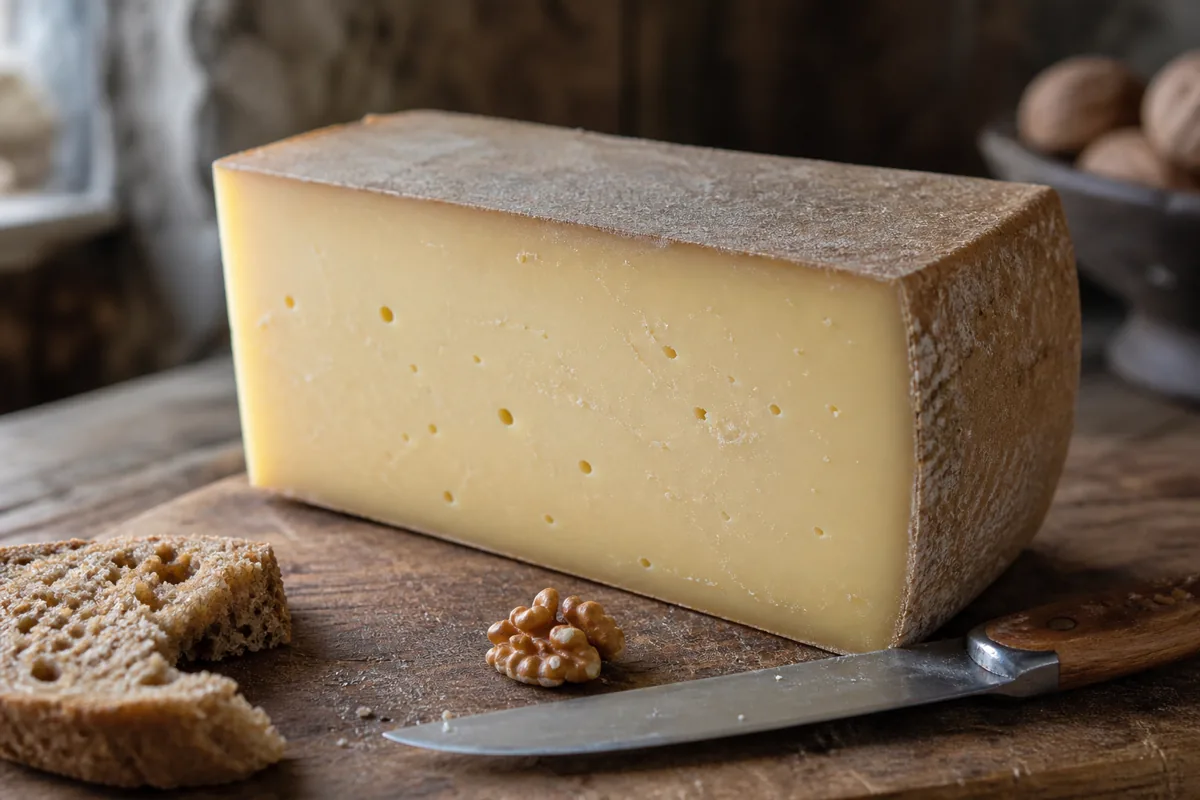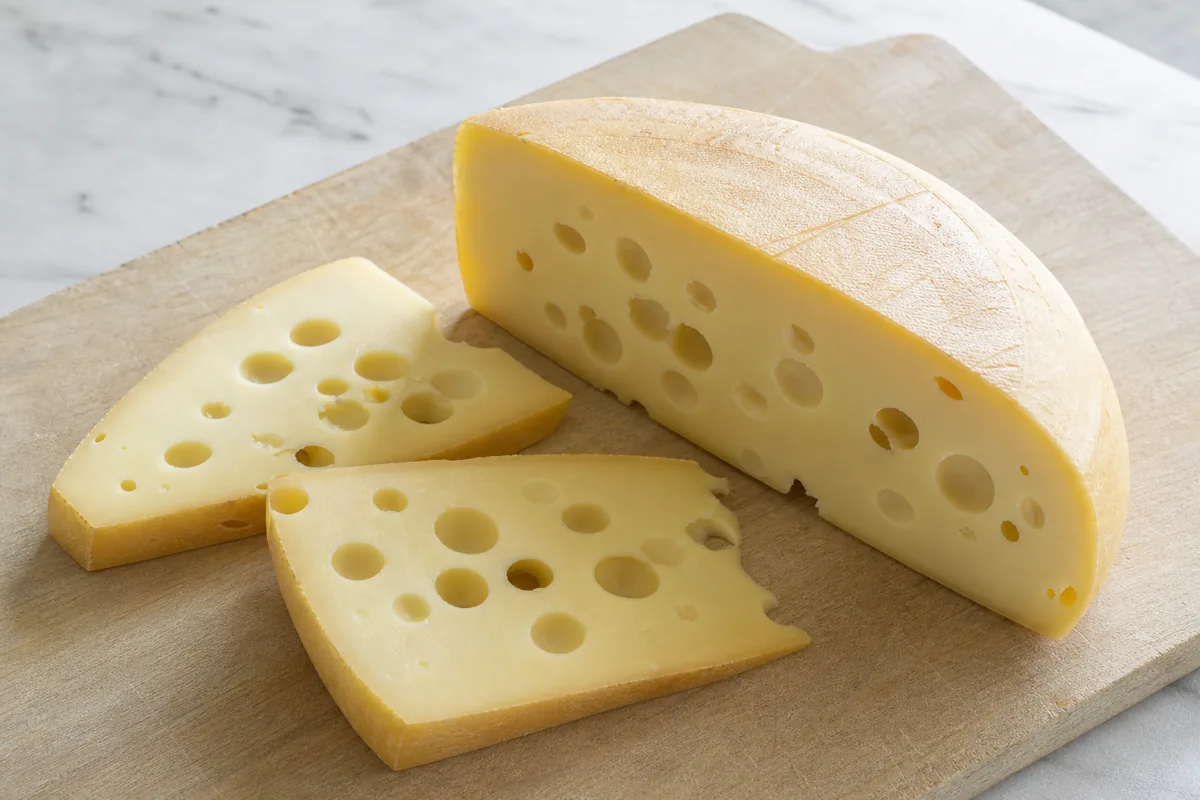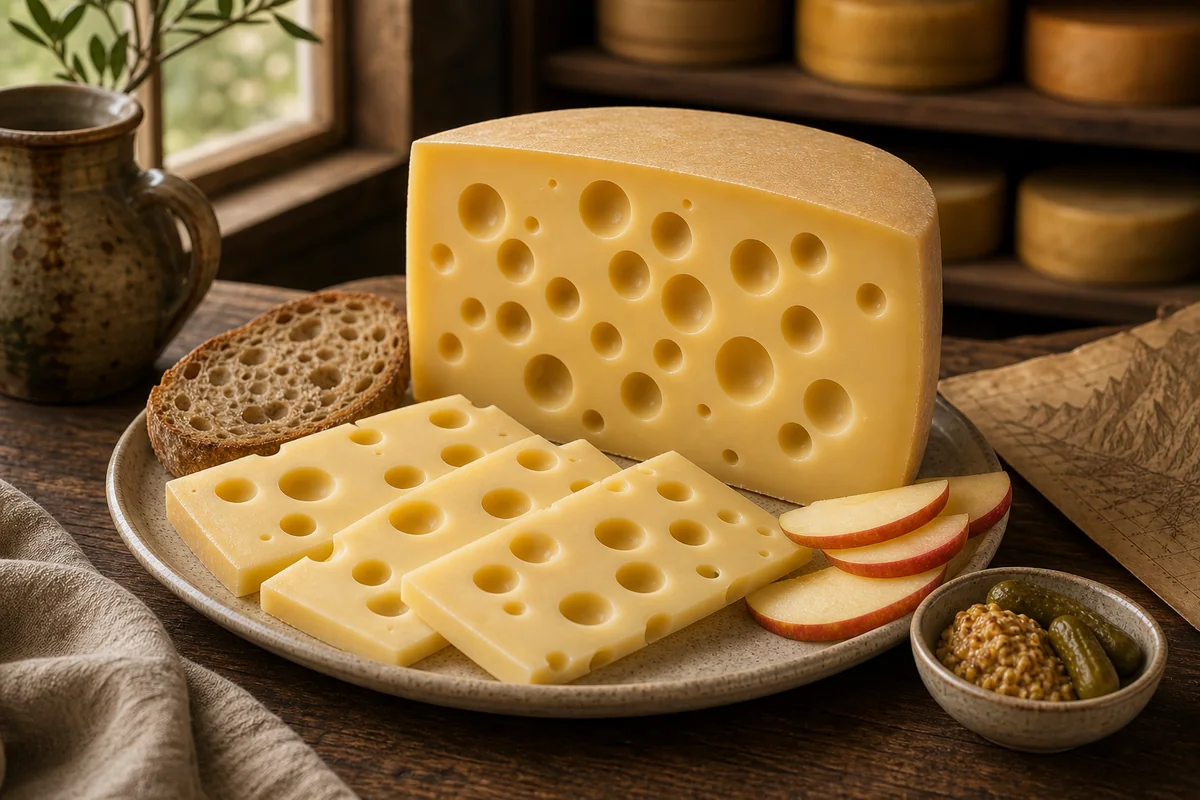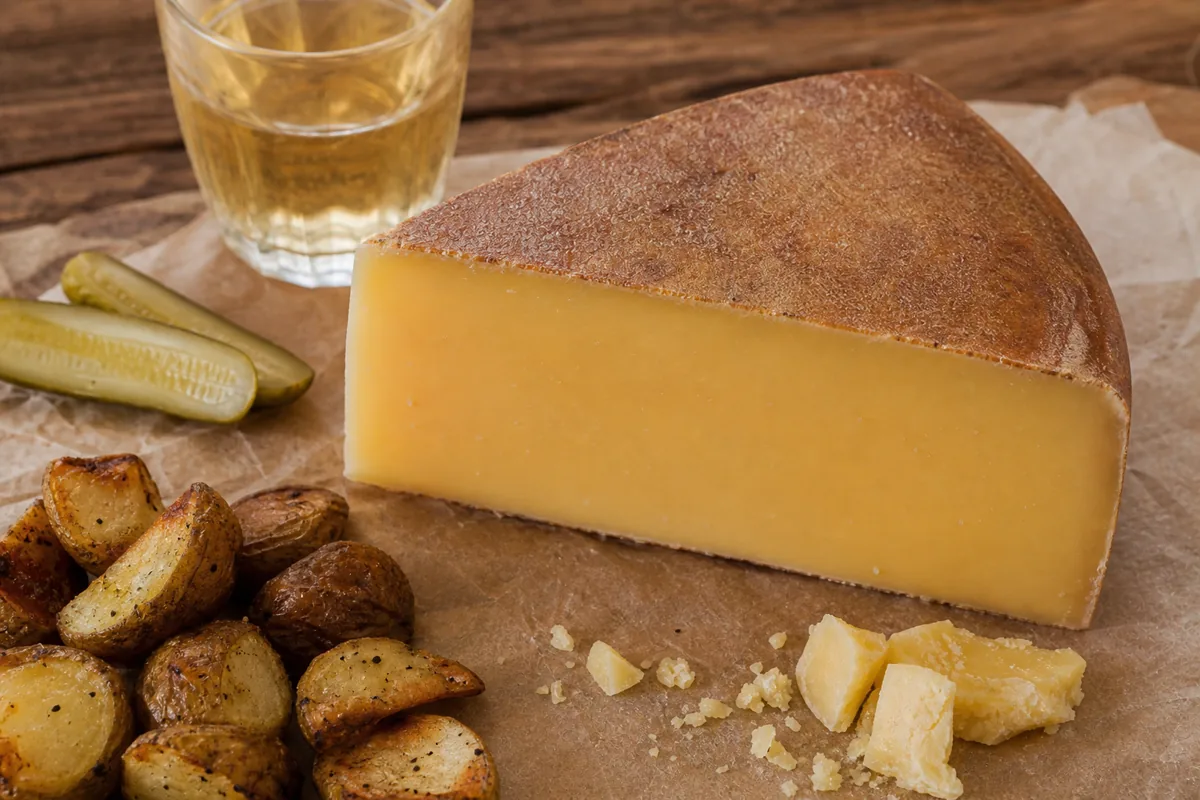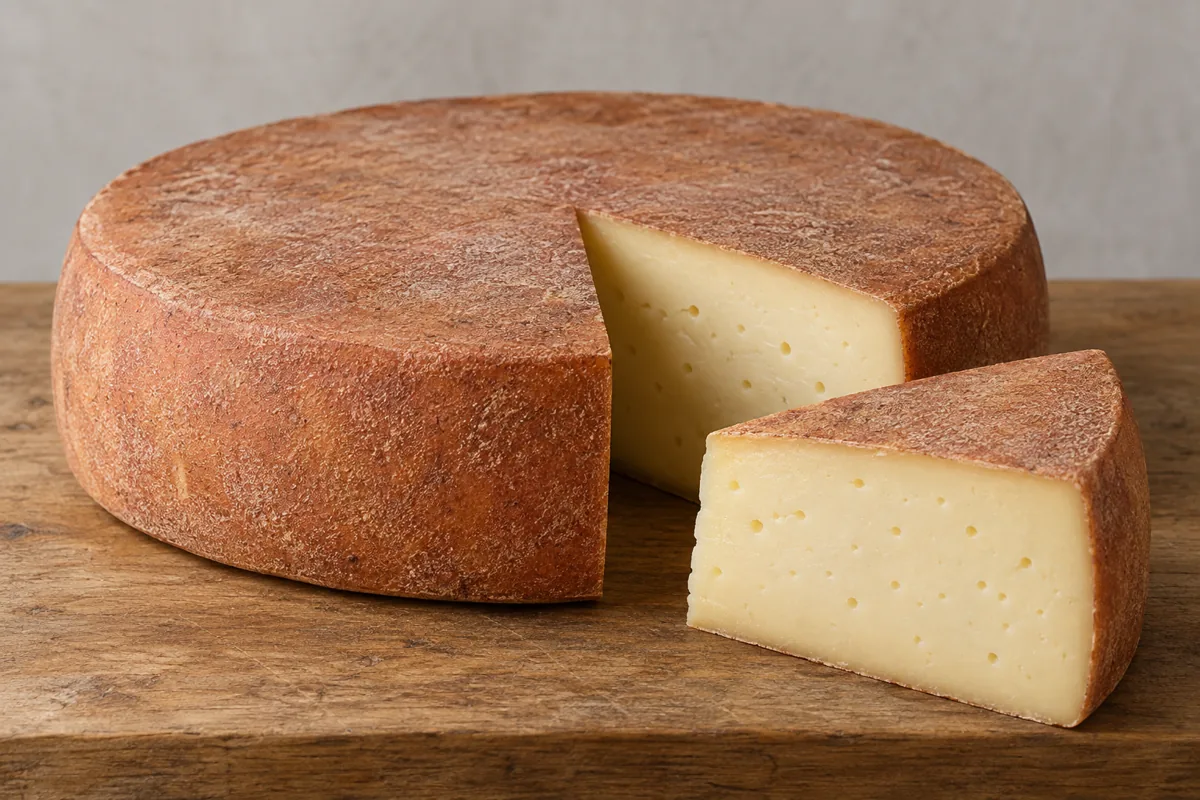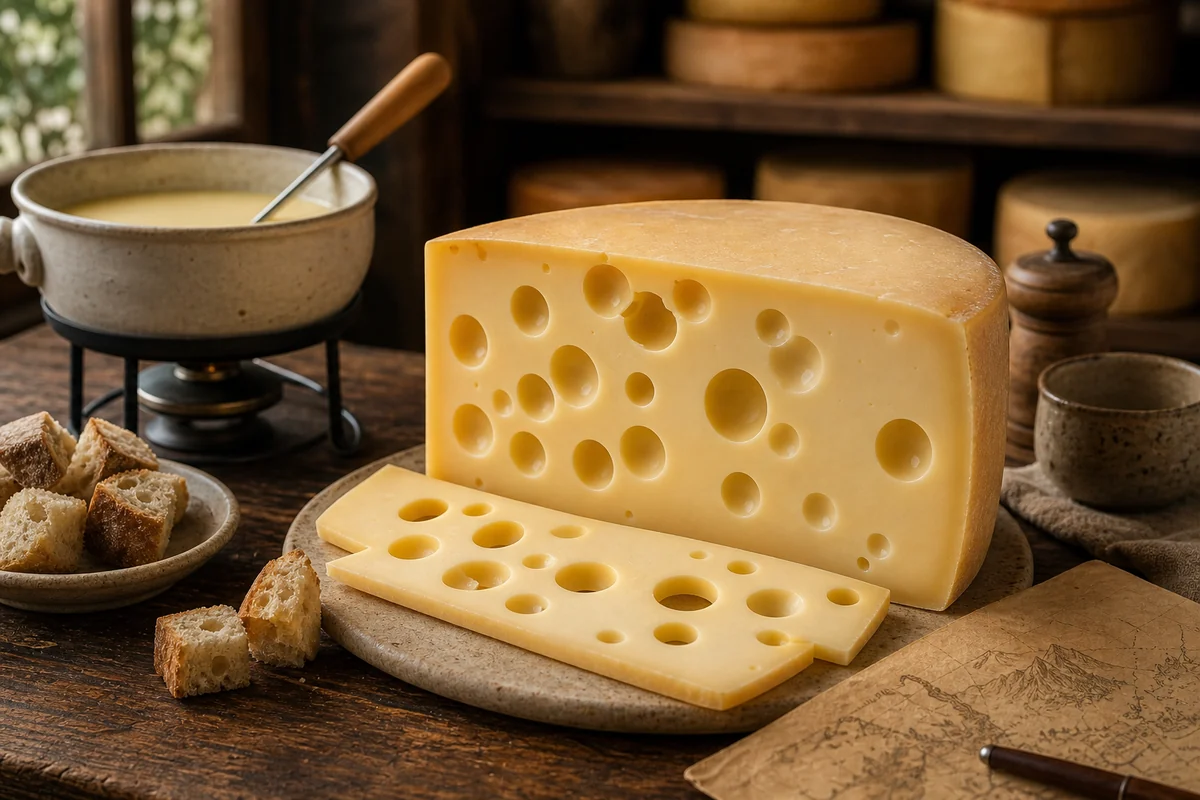
Emmental is a firm cow's-milk cheese known for its rounded holes and mild, nutty flavour. It works in sandwiches, cheese toast and fondue, but the name on a packet can describe several products with different origins, milk treatments and ages.
Swiss Emmentaler AOP identifies a particular protected cheese; a familiar pattern of holes does not.
In This Article
Which Emmental Are You Buying?
Swiss Emmentaler AOP uses raw milk from a defined Swiss production area and matures for at least four months. The milk must reach the dairy within 24 hours of milking and travel no more than 20 km from farm to dairy.
Those conditions belong to the protected product, rather than every cheese sold as Emmental or Swiss cheese.
| Label | What it identifies | Buying consequence |
|---|---|---|
| Emmentaler AOP | Swiss protected cheese; raw milk; four-month minimum | Choose the stated maturity within this range. |
| Allgäuer Emmentaler g.U. | German protected cheese; raw milk; three-month minimum | A separate protected origin, not a Swiss AOP wheel. |
| Emmental, Emmentaler or Swiss cheese without that designation | A name that needs its maker and ingredient label | Check origin, milk treatment and age separately. |
For example, Hof-Milch's sliced hay-milk Emmentaler uses pasteurized milk and matures for at least two months. That is one named product, not proof that every Emmental outside Switzerland is pasteurized.
For a cold plate where the cheese is the main attraction, the maker and maturity help you choose the flavour you want. For everyday sandwiches, a milder sliced product can be a sensible choice without needing the same protected specification.
Why Does Emmental Have Holes?
The holes, called eyes, form when bacteria produce carbon dioxide during fermentation. In Swiss Emmentaler production, a warm cellar around 19–24 C encourages that process while the cheese holds the gas inside.
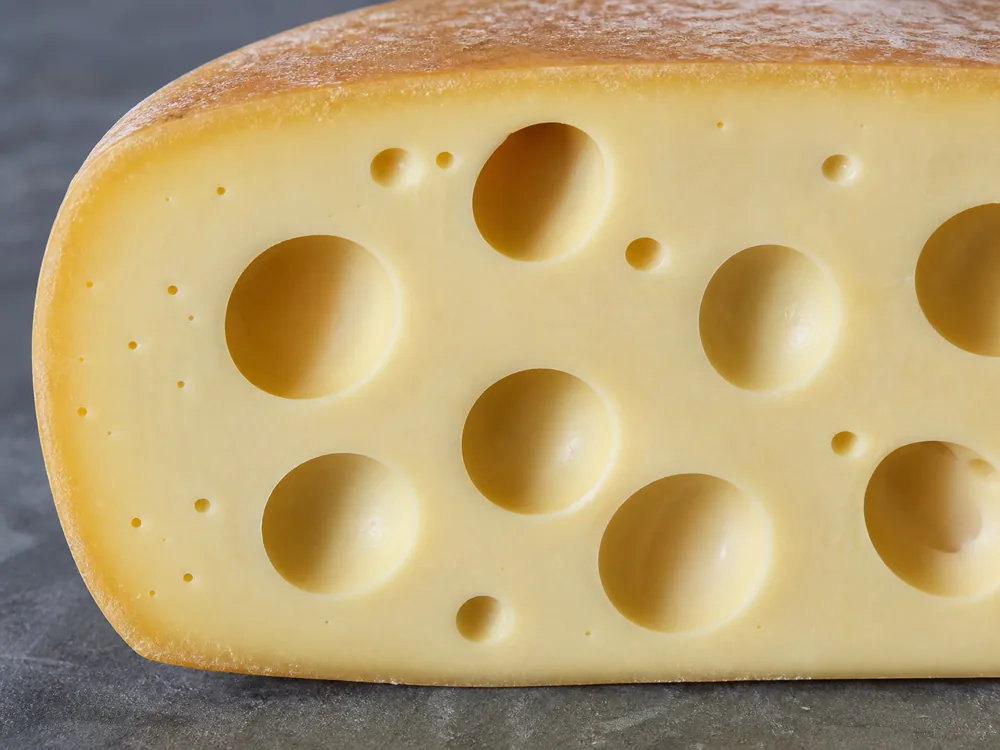
Gas needs places to collect before it can expand into visible eyes. Agroscope and EMPA research showed that microscopic hay particles can supply such starting points; the bacteria still produce the gas.
This explains why cleaner milk filtration can affect eye formation without changing the basic source of the gas.
Eye size is not a reliable clock for a retail wedge. It cannot tell you that one piece is four months old and another is twelve, and it does not establish milk treatment or protected origin.
What Does Age Change in Emmental?
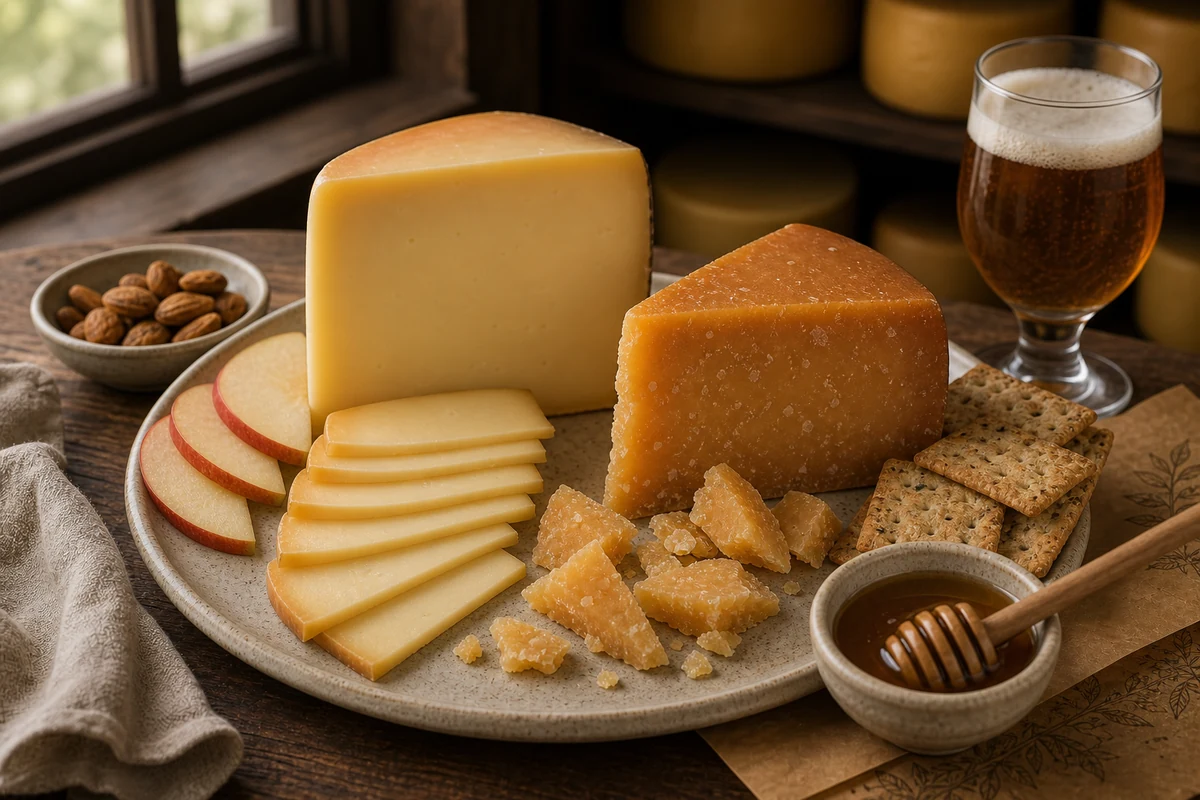
The Swiss association describes a progression from mild cheese at four months through mature cheese at eight months to an extra-mature version at twelve months. These are useful product descriptions, while four months is the minimum, not the age of every AOP wedge.
The Mild/Classic product has a gentle sweetness; the association's descriptors include milky caramel and dried grass. Older versions offer a fuller flavour, so a stronger sandwich or cheese plate need not depend on adding more cheese.
A cheesemonger's sample is more useful than choosing the darkest piece or the one with the smallest holes. If you prefer a mild filling, a longer-aged wedge is not automatically an upgrade.
How Do You Cook with Emmental?
Emmental can melt across toast or become part of a fondue, but these are different cooking jobs. A topping needs to soften and brown; a sauce needs the cheese to stay dispersed in liquid.
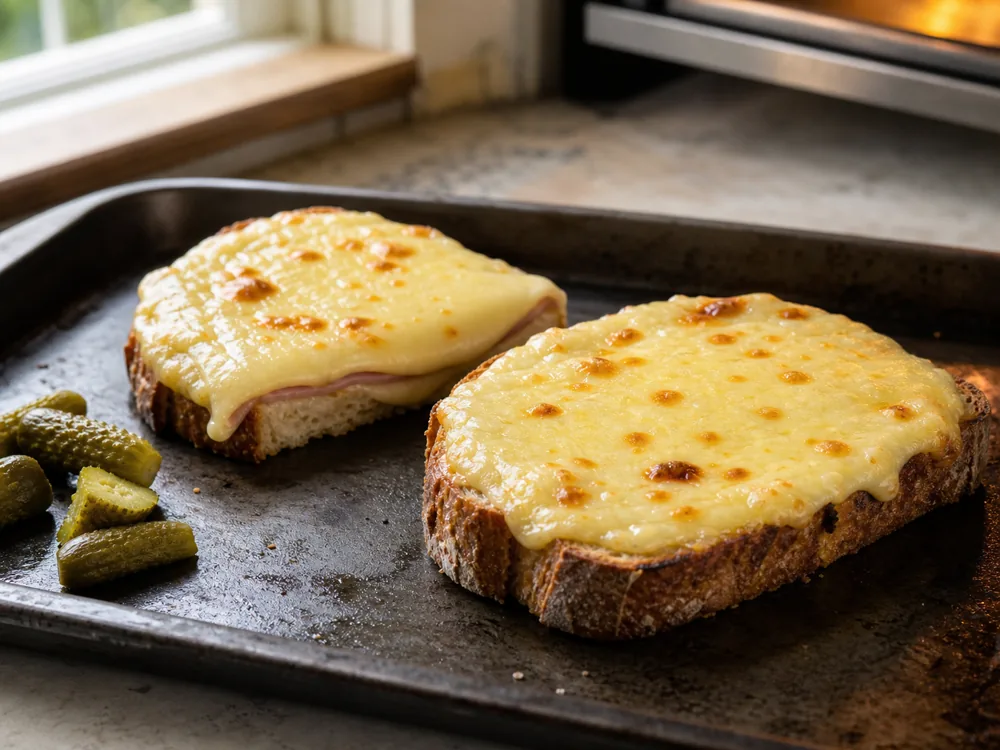
For toast, spread thin slices or grated cheese evenly across the bread so the middle warms with the edges. Thick chunks can leave an uneven topping while exposed areas brown.
In a saucepan, gentle heat gives grated cheese time to melt without driving off liquid unnecessarily. A recipe's liquid and starch matter as much as the age written on the cheese wrapper.
Switzerland Cheese Marketing's classic fondue recipe combines Emmentaler and Gruyère with wine and cornflour, then keeps the finished pot over a very low flame. It is one established blend, not a rule that all Swiss fondue must contain both cheeses.
Use a recipe written for the blend you want, particularly when changing the liquid or replacing one cheese. There is no evidence-based six-to-eight-month window that guarantees Emmental will melt without separating.
What Can Replace Emmental?
For a mild sandwich filling, another Emmental-style sliced cheese is the closest starting point. Compare the actual packet's flavour description and thickness, since an older AOP wedge may taste much stronger than the original filling.
Gruyère is useful when you want a firmer, savoury cheese for a gratin or toasted sandwich. It changes the flavour, and a fondue or delicate sauce deserves a recipe designed for that cheese rather than a promise of an identical result.
Allgäuer Emmentaler offers the same broad holed-cheese tradition with its own protected identity. Choose it by maturity and taste rather than treating country of origin as a ranking.
What Should You Know About Emmental's Milk and Nutrition?
Emmentaler AOP is a raw-milk cheese, but its rennet can be animal or microbial, depending on the dairy. AOP status alone therefore does not establish vegetarian suitability.
The following figures come from Käserei Neuenschwander's own Emmentaler Switzerland AOP specification. They describe that dairy's product, not every cheese sold under the broader Emmental name.
| Nutrient | Per 100 g | Per 30 g |
|---|---|---|
| Energy | 397 kcal | 119 kcal |
| Fat | 32 g | 9.6 g |
| Saturated fat | 19.1 g | 5.7 g |
| Protein | 27.5 g | 8.3 g |
| Salt | 1.0 g | 0.30 g |
The portion column multiplies the 100 g values by 0.3 and rounds them; salt here is not sodium. A fat-in-dry-matter percentage uses a different basis from grams of fat in a whole portion.
The Swiss association describes Emmentaler AOP as naturally lactose-free, but that does not make it milk-free or establish the lactose content of every generic Emmental. Use the supplied pack for dietary tracking, and keep milk-allergy decisions separate from lactose intolerance.
Is Emmental Safe During Pregnancy?
UK NHS guidance allows hard cheeses made with pasteurized or unpasteurized milk; Swiss Emmentaler AOP is a raw-milk hard cheese. In the US, CDC lists pasteurized hard cheese as a safer choice and raw-milk cheese as a riskier option.
CDC also advises heating deli-sliced cheese to 165 F / 74 C or until steaming hot. A pasteurized label does not remove that separate deli-slicing condition.
Follow the guidance for your country and the milk treatment of the actual product. Maturing cheese for more than 60 days does not override CDC's advice or prove that a wedge cannot carry Listeria.
How Should You Store a Cut Emmental Wedge?
Cover the cut face and keep the wedge refrigerated at 4 C / 40 F or below, following its package date and after-opening instructions. The conditions used to mature a whole wheel are not directions for storing a cut piece at home.
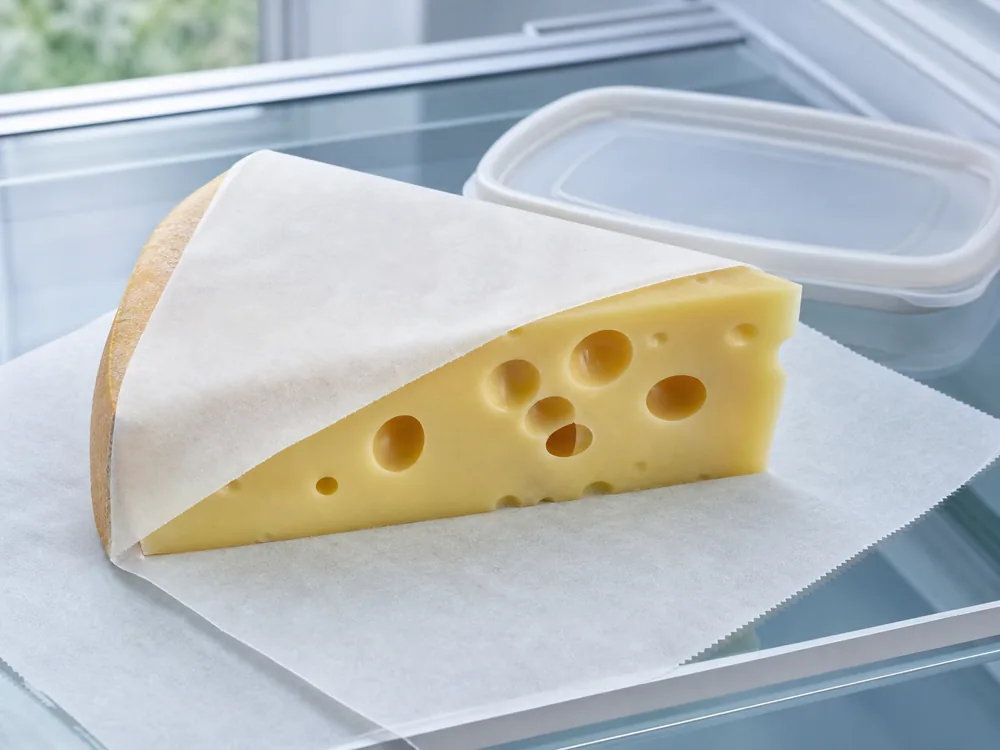
Paper inside a covered container can protect the exposed cheese; replace wet or dirty wrapping. A large wedge is easier to manage when you remove only the portion needed for the meal and keep the remainder cold.
Freezing can change the texture, so a thawed portion is better reserved for cooking when neat slices matter less. It does not make spoiled cheese safe or extend a missed use-by date.
For perishable food outside refrigeration, the FDA's household limit is two hours, or one hour above 32 C / 90 F. A normal smell cannot establish safety after poor storage, and a new patch of mould inside the eyes is not part of the original hole-forming process.