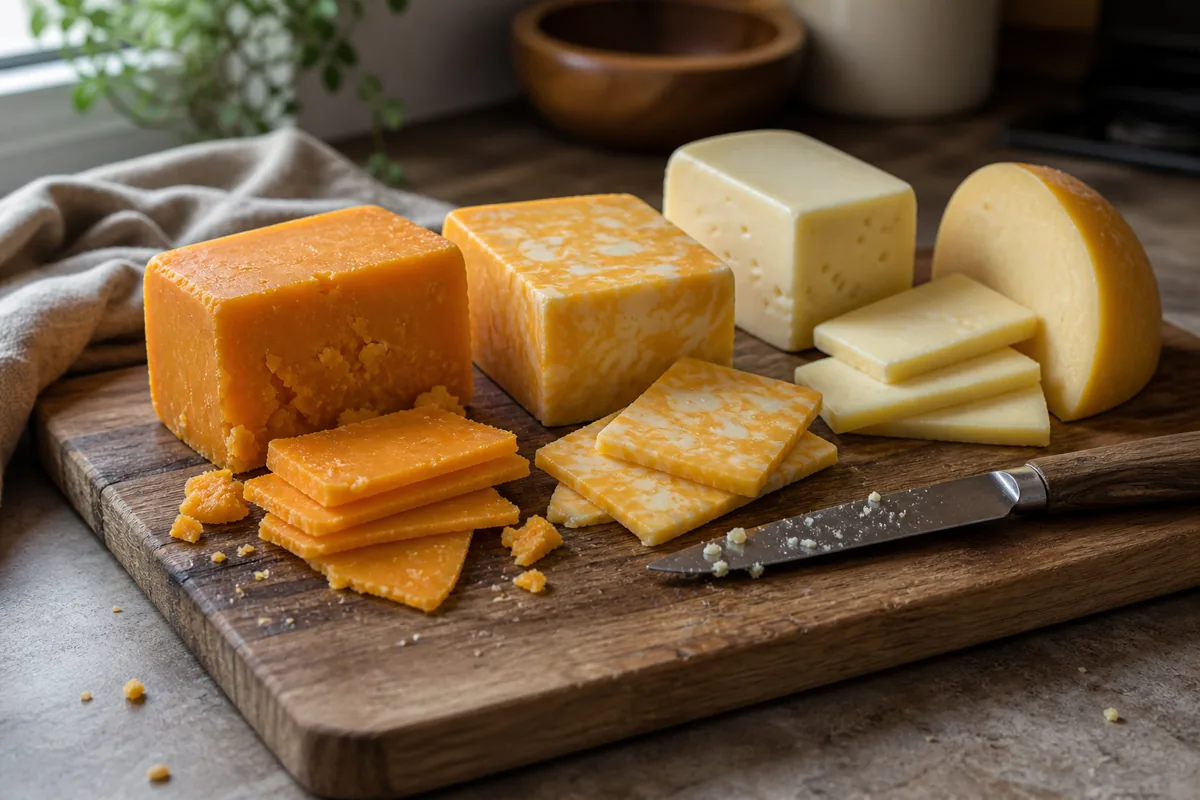
Cheddar is not one swap decision. A mild orange slice in a grilled cheese, a sharp block on a board, and a grated cheese in mac and cheese all ask for different backups.
Age is the part you are really replacing. A three-month block and a two-year Cheddar behave nothing alike in a hot sauce, so match the age before you match the name.
The fastest answer is Colby for mild Cheddar jobs. After that, the right choice depends on whether the dish needs melt, sharpness, orange color, or a clean slice.
In This Article
Which Cheddar Job Are You Replacing?
Cheddar substitutes fail when we treat sharpness and melt as the same problem. Young Cheddar is moist, sliceable, and easy to melt.
Aged Cheddar is drier, tangier, more crumbly, and harder to turn into a smooth sauce.
That means the best swap changes with the dish. Colby covers the mild everyday lane, while Monterey Jack covers the smooth-melt lane.
Aged Gouda handles sharp snacking, and Red Leicester handles the orange pressed-cheese lane.
The clue is often the word before Cheddar. Mild Cheddar, sharp Cheddar, white Cheddar, orange Cheddar, grated Cheddar, and sliced Cheddar point to different jobs, even when the recipe shortens them all to one cheese name.
If the original recipe says sharp Cheddar, do not stop at Colby. If the recipe says mild Cheddar, do not jump straight to aged Gouda unless you want a sweeter, stronger result.
8 Cheddar Substitutes: Best Alternatives by Job
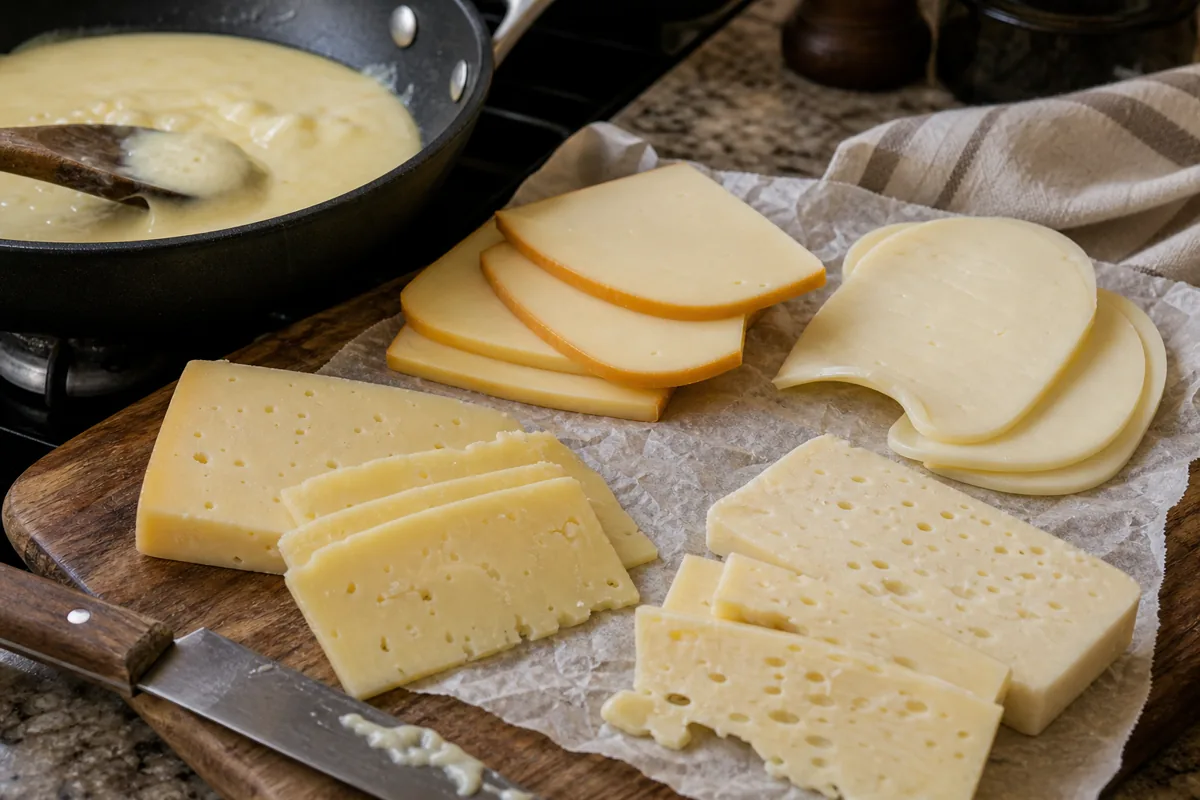
1. Use Colby for Mild Melt and Slices
Colby is the nearest everyday substitute because it stays in the same American pressed-cheese family. It is mild, orange, sliceable, and easy to melt without changing the whole dish.
The important difference is the curd handling. Colby's washed-curd texture makes it a little sweeter and more open than Cheddar, so it does not replace extra-sharp Cheddar's dry bite.
It does replace mild Cheddar cleanly in burgers, basic sandwiches, casseroles, and snack plates.
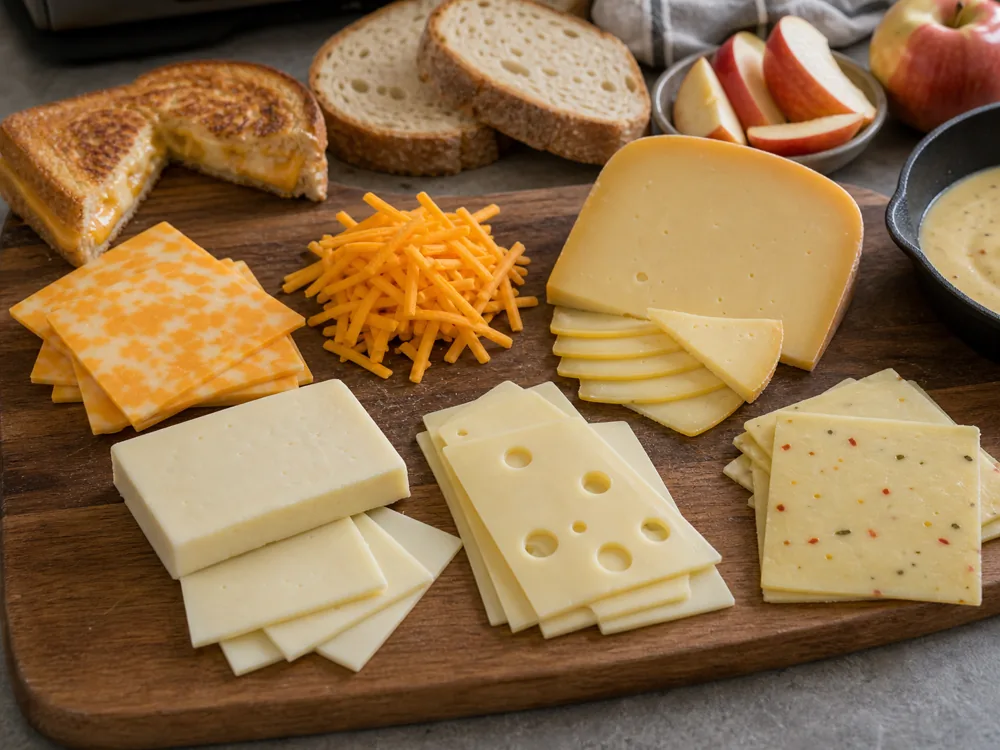
Use Colby one-to-one by weight or volume for mild Cheddar. If a recipe depends on sharpness, blend Colby with a smaller amount of Gruyere or aged Gouda rather than asking Colby to carry the whole flavor.
Colby is the safest grocery-store answer for mild Cheddar, not the closest answer for extra-sharp Cheddar. The more the recipe leans on tang and crumble, the less Colby can do alone.
Colby-Jack is close enough for many family-style dishes too, but it changes the visual cue. The marbled block can look casual in slices and casseroles, while a plain Colby block reads more like a direct Cheddar stand-in.
A grilled cheese sandwich gives you less time than a sauce. The cheese has to soften before the bread burns, so moisture and slice thickness matter more than prestige.
Colby, Havarti, and Monterey Jack are the easy wins. Colby gives the most familiar Cheddar-adjacent bite, so it is the one to use for the closest mild Cheddar sandwich feel.
Do not cut thick slabs for a quick sandwich. Thin slices melt before the bread scorches, and a lid over the pan helps the center catch up without forcing the heat higher.
The full grilled cheese melt ranking can help when the sandwich is the whole project. For a simple Cheddar swap, start with Colby and adjust only if you need more creaminess or more color.
2. Havarti Gives a Softer, Butterier Melt
Buttery Havarti melts fast and feels rich, but it drops Cheddar's tang. Use it in a grilled cheese when you want a softer, butterier melt.
3. Red Leicester Is the Orange Color Match
Red Leicester is the cleanest color substitute because it is a firm orange English cheese with a nutty pressed-cheese bite. Red Leicester's orange paste looks closer to orange Cheddar than pale Monterey Jack or Gruyere.
Use Red Leicester when orange color and a firmer slice matter.
4. Monterey Jack Suits Spicy, Smoky, or Salty Sandwiches
Monterey Jack melts cleanly but tastes neutral. Use it when a grilled cheese has spicy, smoky, or salty fillings.
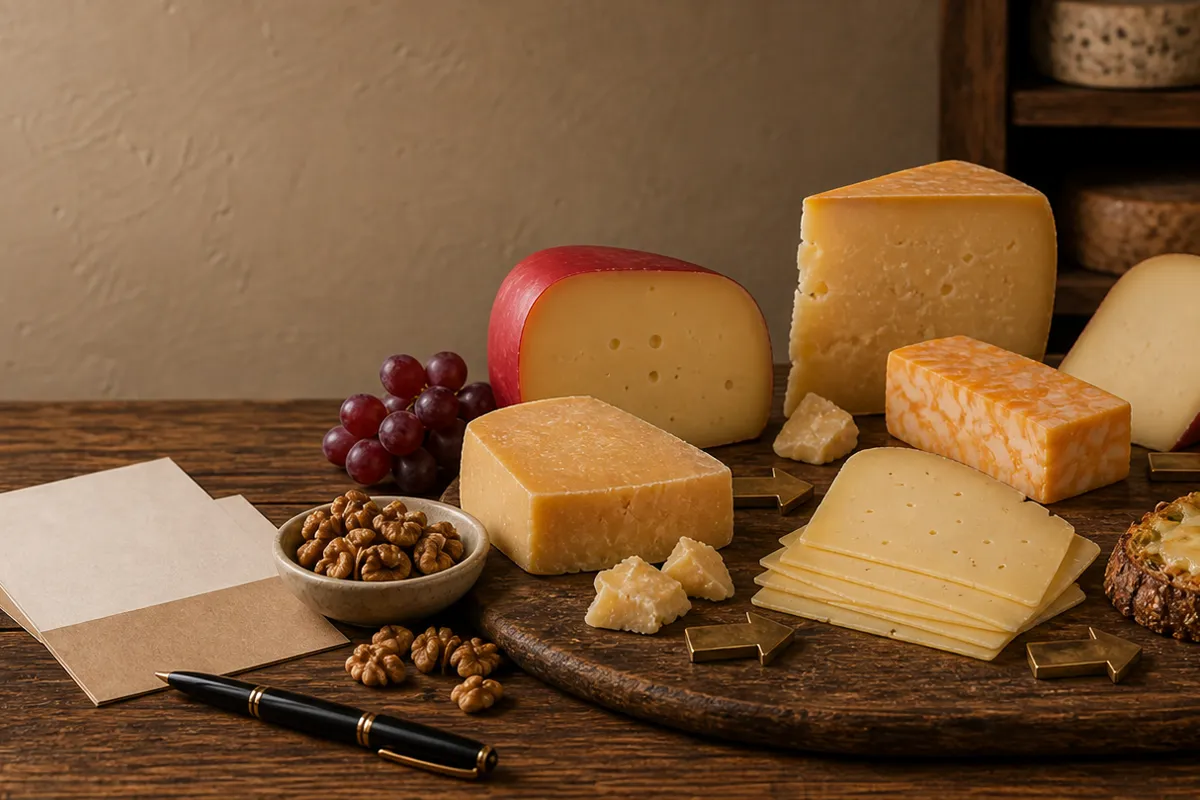
5. Aged Gouda Covers Sharp Cheddar on a Board
Sharp Cheddar has a concentrated tang and a firmer bite that mild melting cheeses cannot copy. Adding salt to Colby or Monterey Jack does not create the same aged flavor.
Aged Gouda's crystals make it the best snack-board substitute for sharp or extra-sharp Cheddar. It is sweeter and more caramel-like, but it has the same satisfying crunch and concentrated finish that sharp-Cheddar fans usually want.
Beer and crackers expose the difference quickly. Aged Gouda leans sweet and caramel-like, while sharp Cheddar leans tangier and more savory.
The same malt and bitterness logic still helps: those flavors can support intensity, but they cannot make a mild substitute taste aged.
Sharp substitutes need more patience in a sandwich. Aged Gouda can taste excellent, but it melts slower than Colby or Havarti.
Use it grated or in thin shards, not as a thick board-style slice.
6. Gruyere Brings Nutty Melt to Baked Dishes
Gruyere solves a different sharp-Cheddar problem. Gruyere's nutty melt is useful in gratins, onion soup, quiche, and baked pasta when the dish wants depth more than Cheddar tang.
The aged Gouda flavor tradeoff explains the broader split. In a substitute decision, use aged Gouda when the eating moment is a board or snack, and use Gruyere when the cooking method needs melt plus depth.
7. American Cheese Melts Well but Drops Cheddar Flavor
Processed American cheese is tempting because it melts beautifully. That does not make it a good Cheddar substitute in recipes where real Cheddar flavor is the point.
American cheese's smooth melt belongs on burgers, quick sandwiches, and diner-style sauces. It fails when the dish needs sharp Cheddar flavor, a firm board texture, or grated cheese that browns like a real block.
Do not use processed cheese as the default Cheddar substitute for mac and cheese, gratins, or boards. It solves melt but removes too much Cheddar flavor and texture.
8. Dairy-Free Cheddar-Style Slices and Shreds Need the Recipe's Help
Dairy-free Cheddar-style slices and shreds can help with sandwiches and light baking, but they need the recipe to meet them halfway. Many plant-based shreds melt best with extra moisture, a lid, or a sauce base, and they do not copy aged Cheddar's crystals or crumbly bite.
For dairy-free use, choose by format. Slices work better for sandwiches, shreds work better for casseroles, and a blended sauce works better than expecting plant-based shreds to behave like grated Cheddar on their own.
Do not use dairy-free shreds as a sharp-Cheddar board substitute. The format can help a cooked dish, but the cold texture and aftertaste are more exposed when the cheese is eaten plain.
How Should You Replace Cheddar in a Sauce?
Mac and cheese, queso-style dips, and creamy casseroles punish dry substitutes quickly. A cheese can taste great on a board and still turn grainy when it hits a hot sauce.
Monterey Jack is useful because it melts smoothly and brings enough moisture to support a sauce. Monterey Jack's mild melt will not taste as tangy as Cheddar, so it works best when the sauce has mustard, hot sauce, roasted peppers, or another flavor anchor.
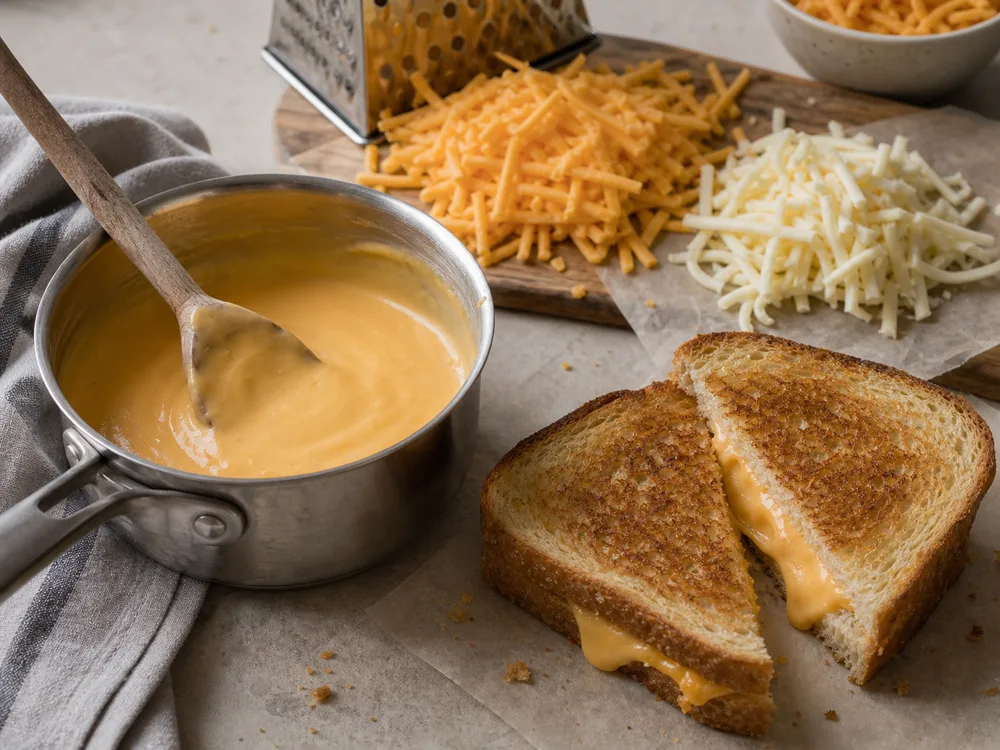
For a sharper sauce without splitting, start with Colby or Monterey Jack, then add a smaller amount of grated Gruyere or aged Gouda. The mild cheese builds the texture.
The stronger cheese adds the bite.
Aged Gouda needs special handling in sauce. Grate it finely, add it off direct heat, and give the sauce a smoother base first.
Large chunks can sit in the pan long enough to overheat the sauce before they disappear.
| Cheddar job | Best substitute | Adjustment |
|---|---|---|
| Mac and cheese sauce | Colby plus Monterey Jack | Keep heat low and add sharper cheese last. |
| Queso-style dip | Monterey Jack | Add seasoning because the cheese is mild. |
| Baked casserole top | Colby or Red Leicester | Grate fresh so it browns evenly. |
| Sharp cheese sauce | Colby plus Gruyere | Use less Gruyere so nuttiness does not take over. |
The deeper mac and cheese cheese list owns full recipe ranking. Here, the substitute rule is narrower: build the sauce with a melting cheese first, then add sharpness carefully.
If the sauce already has mustard powder, hot sauce, paprika, or roasted peppers, Monterey Jack can disappear in a good way. It supplies texture while the seasoning supplies the Cheddar-like punch the cheese itself does not bring.
When Does Color or Topping Change the Substitute?
Some recipes ask for Cheddar because people expect orange color. Nachos, baked potatoes, cheese toast, broccoli casseroles, and party dips can look wrong even when the flavor is acceptable.
Edam works when the recipe only needs a mild slice or cube, but it is less rich. Havarti works when creaminess matters more than color.
Smoked Gouda works only when smoke fits the dish. Otherwise it can hijack a simple Cheddar recipe.
Color matters most when the cheese sits on top: baked potatoes, chili, broccoli casseroles, nachos, and cheese toast. Inside a sauce, color can be adjusted with a little paprika or mustard.
On top, the cheese itself has to look the part.
- Orange topping: Red Leicester or Colby.
- Pale creamy melt: Monterey Jack or Havarti.
- Nutty baked depth: Gruyere.
- Sharp snack bite: aged Gouda.
- Simple cold slices: Colby, Edam, or young Gouda.
If color is the only reason you wanted Cheddar, keep the substitute mild. A strong aged cheese can make a casual topping taste more serious than the recipe intended.
Should You Adjust the Substitute Before Cooking?
The final adjustment happens before the cheese enters the pan, oven, or sauce. Once a substitute separates, scorches, or dries out, you can rarely make it taste like Cheddar again.
Grate drier cheeses finely, keep sauce heat low, and add aged substitutes after the base has already smoothed out. For baked toppings, shred fresh rather than using dry pre-shredded cheese, because coatings can slow melting.
- Too mild: add a smaller amount of Gruyere, aged Gouda, mustard, or paprika.
- Too dry: grate finer and add it to a moist base instead of using chunks.
- Too greasy: lower the heat and add the cheese gradually.
- Too pale: use Colby or Red Leicester instead of Monterey Jack.
- Too sharp: blend with Colby, Monterey Jack, or Havarti.
Storage also changes performance. A dried cut face melts unevenly, so proper cheese wrapping matters when the same block has to cover sandwiches today and sauce later.
Pre-shredded cheese is the other hidden variable. It is convenient for toppings, but it can make a sauce less smooth.
When the substitute is already a compromise, fresh grating gives you one more point of control.
Choose the substitute by the Cheddar job: mild melt, smooth sauce, sharp bite, orange color, or quick sandwich softening. One replacement will not cover all five equally well.
That rule keeps the swap useful. Cheddar is broad.
The substitute has to be specific.
SOURCES & REFERENCES
What Else Do Cooks Ask About Cheddar Substitutes?
These are the practical questions readers ask when a recipe calls for Cheddar and another block has to take over.
Colby is the best overall substitute for mild Cheddar. It has a similar sliceable texture, orange color, and easy melt.
Use Colby, Monterey Jack, or a blend of Colby and Gruyere. Start with the smoother melting cheese, then add the stronger cheese for flavor.
Aged Gouda is the best board and snacking substitute for sharp Cheddar. Gruyere is better when the dish needs a nutty cooked melt.
Yes, when smooth melt matters more than tang. Monterey Jack works well in sauces, quesadillas, casseroles, and spicy sandwiches.
Only for burgers, quick sandwiches, and very smooth sauces. It does not replace Cheddar's sharp flavor, board texture, or grated topping behavior.