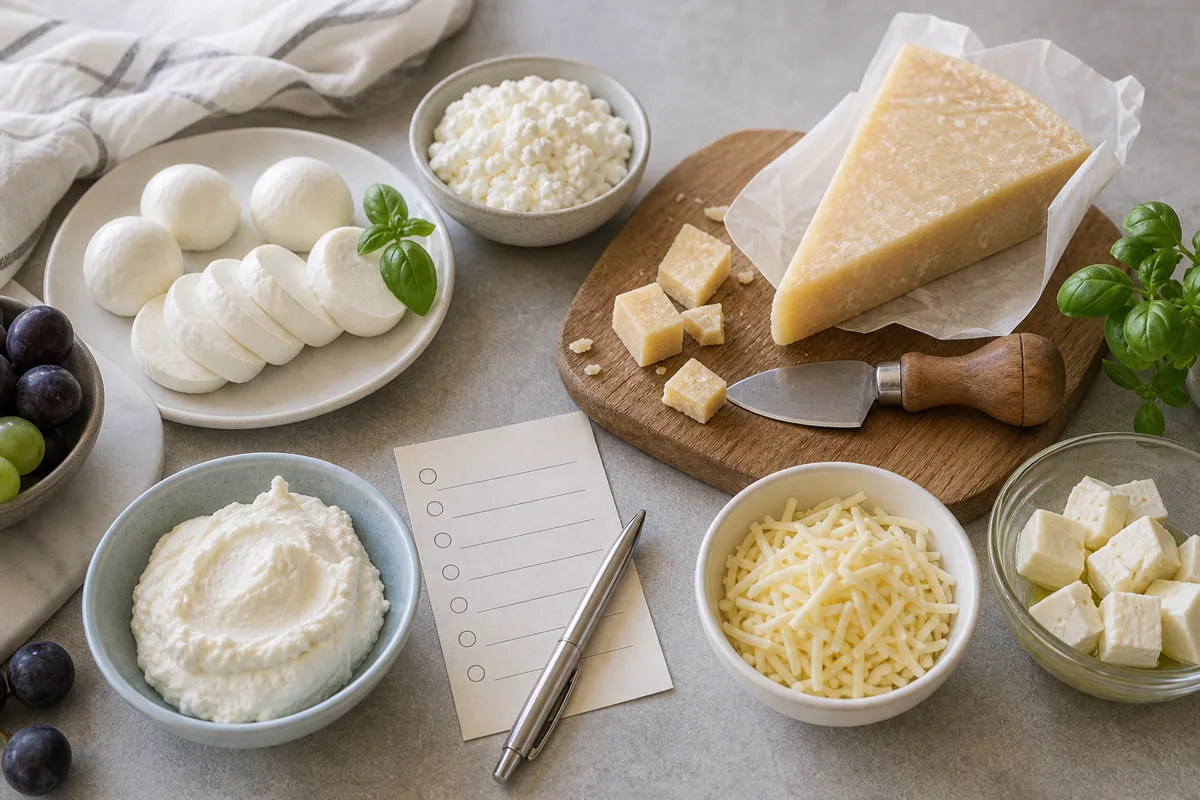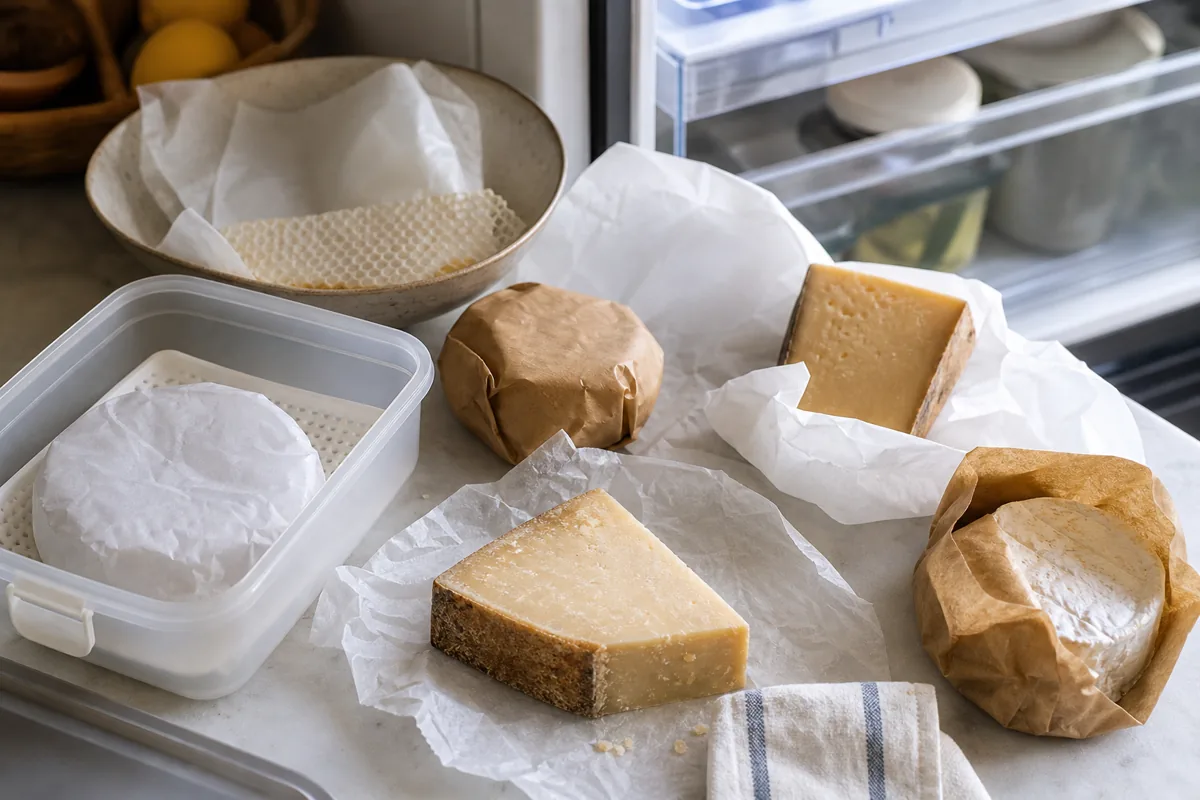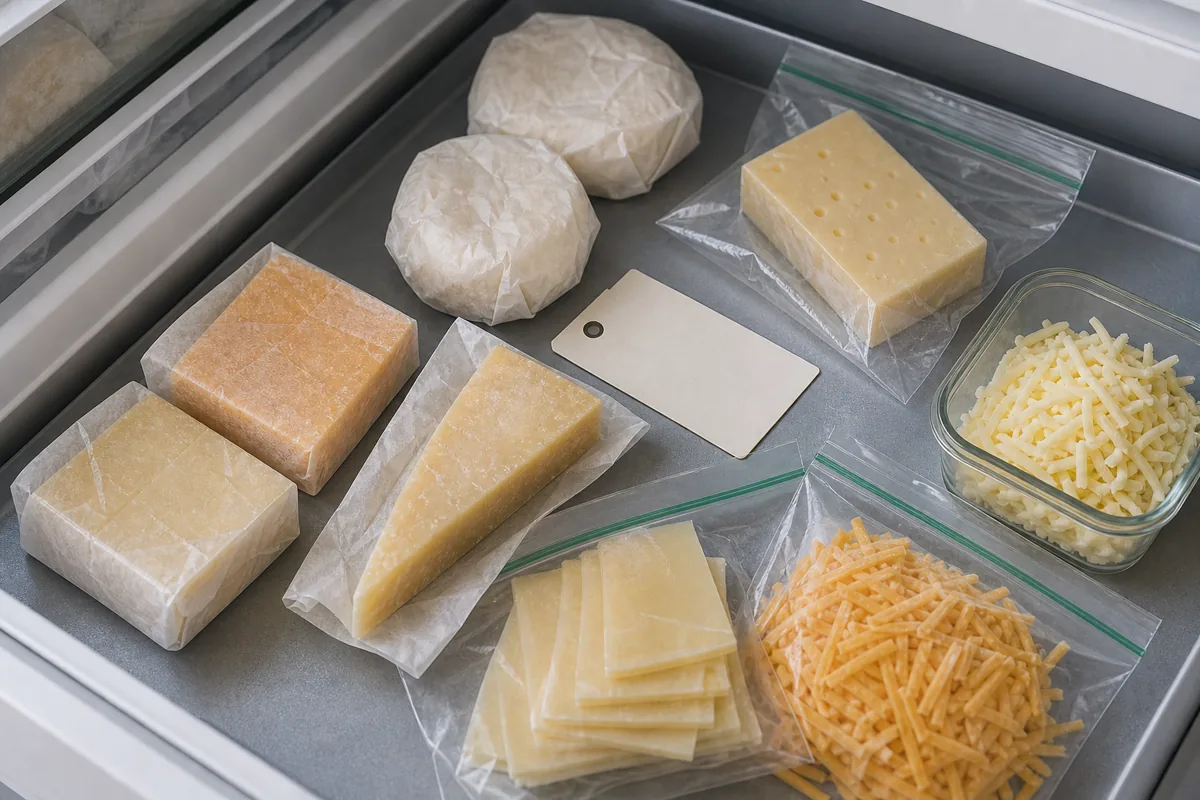
A small Brie wheel, a goat cheese log and a firm block need different cuts. Start on a stable cutting board with room to work, keeping your fingers away from the blade's path.
In This Article
Which Cut Fits Each Cheese Shape?
These are practical starting points rather than presentation rules. Make a few portions first so you can judge whether they hold together and suit the way you will serve them.
- Small rounds and wheels: halve through the centre, then divide into pie-shaped wedges. Each portion includes both the outside and the middle.
- A wedge of soft-ripened cheese: divide along its length so the pieces share the point and the outer edge, rather than taking only the tip.
- Soft logs: cut across into rounds with a narrow blade or cheese wire. A goat cheese log is a useful example, though a very soft one may be easier to spread.
- Firm blocks: make slices for sandwiches or manageable pieces for a board. Cubes, batons and triangles are options, not different levels of correctness.
- Hard aged pieces: use small shards or shavings if the cheese breaks instead of slicing cleanly. There is no need to force a brittle piece into a flexible slice.

Keep the size of a bite in mind when portioning several cheeses. Smaller starter pieces let a guest try a cheese without committing to a large wedge, and more can be cut as needed.
Why share the rind and centre?
Different parts of a soft-ripened wheel can have different textures. The U.S. Dairy Export Council explains that these cheeses ripen from the outside inward, with the area near the rind softening before a firmer centre.
So the reason to share a Brie wedge lengthwise is to distribute those parts, not because its pointed centre is always the ripest or best bite. A radial piece from a wheel includes both regions.

Remove wax, cloth and other packaging before eating. Whether to eat an actual cheese rind is a separate question from how to divide the portion, so follow the product's instructions.
Which Tool Suits Each Cheese Texture?
Castello recommends a thin straight blade or a knife with holes for soft cheeses that cling to steel. Its alternative is a sharp cook's knife dipped in hot water and wiped before use.
Clean off accumulating paste between cuts rather than repeatedly dragging it through the next piece. If a soft cheese is collapsing, try cutting it while chilled instead of warming the whole cheese to make cutting easier.
A cheese plane can make even slices of a suitable semi-hard block. A sturdy cheese knife or spade suits firmer pieces, while a cheese wire offers another option for a log that a blade compresses.
If the tool slips or requires excessive force, stop and change the approach. A smaller piece, a suitable tool or shavings instead of slices may be more practical than forcing the original cut.
Cutting temperature and serving preference are different decisions. You can portion a soft cheese while it holds its shape, then manage serving time within the safe handling limits below.
What Form Does Your Recipe Need?
Grating, slicing, tearing and crumbling are useful for different dishes. Check the recipe before preparing a whole block, particularly when the cheese must melt into a liquid.
For example, the official Le Gruyère AOP fondue recipe specifies grated cheese or thin slices. That is a concrete reason not to treat centimetre cubes as the universal preparation for fondue.

When a block smears against a grater, chilling it can make it easier to handle. There is no fixed freezer time that suits every product or piece, and freezing can change texture.
Evenly sized pieces are useful when a recipe relies on even heating, but the cheese itself still affects the result. See cheese choices for melting and stretching when deciding what to buy.
How Long Can Cut Cheese Stay at Room Temperature?
Prepare only the amount you expect to serve and refrigerate the rest promptly. For a gathering, the board preparation and serving advice covers quantities and replenishing platters.
FDA's household guidance limits perishable food at room temperature to two hours, or one hour above 90°F (32°C). Count preparation and tempering as part of that time, and discard perishables that exceed the applicable limit unless they have been held safely hot or cold.
Wrap safely handled leftovers and follow the product's storage instructions. A clean-looking cut face does not tell you whether the cheese has been kept safely.