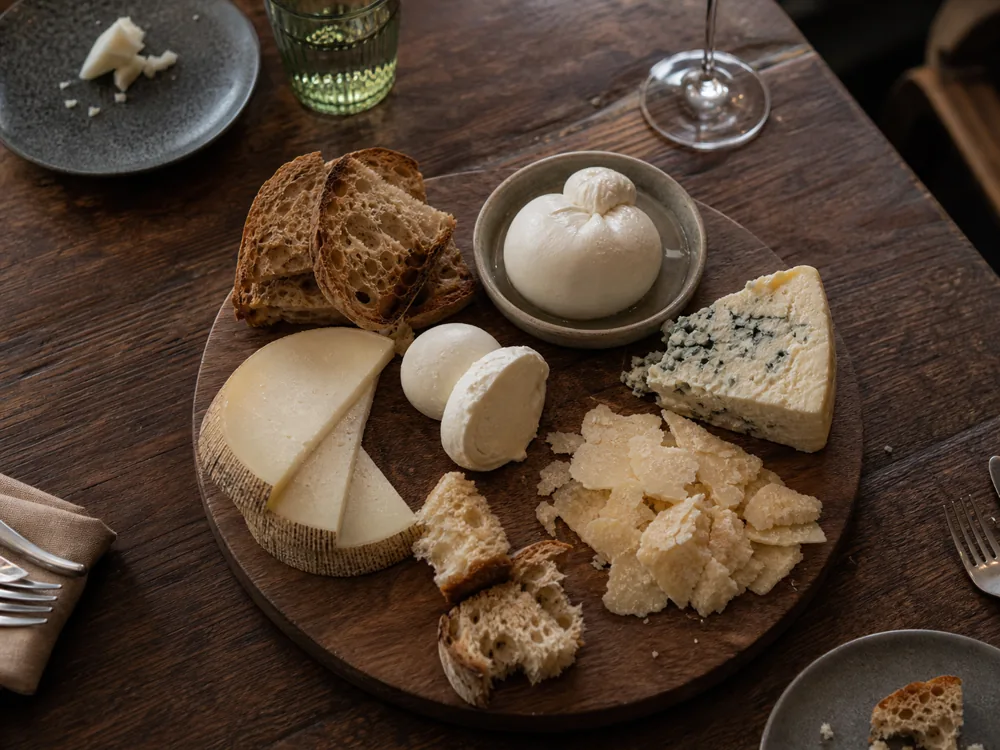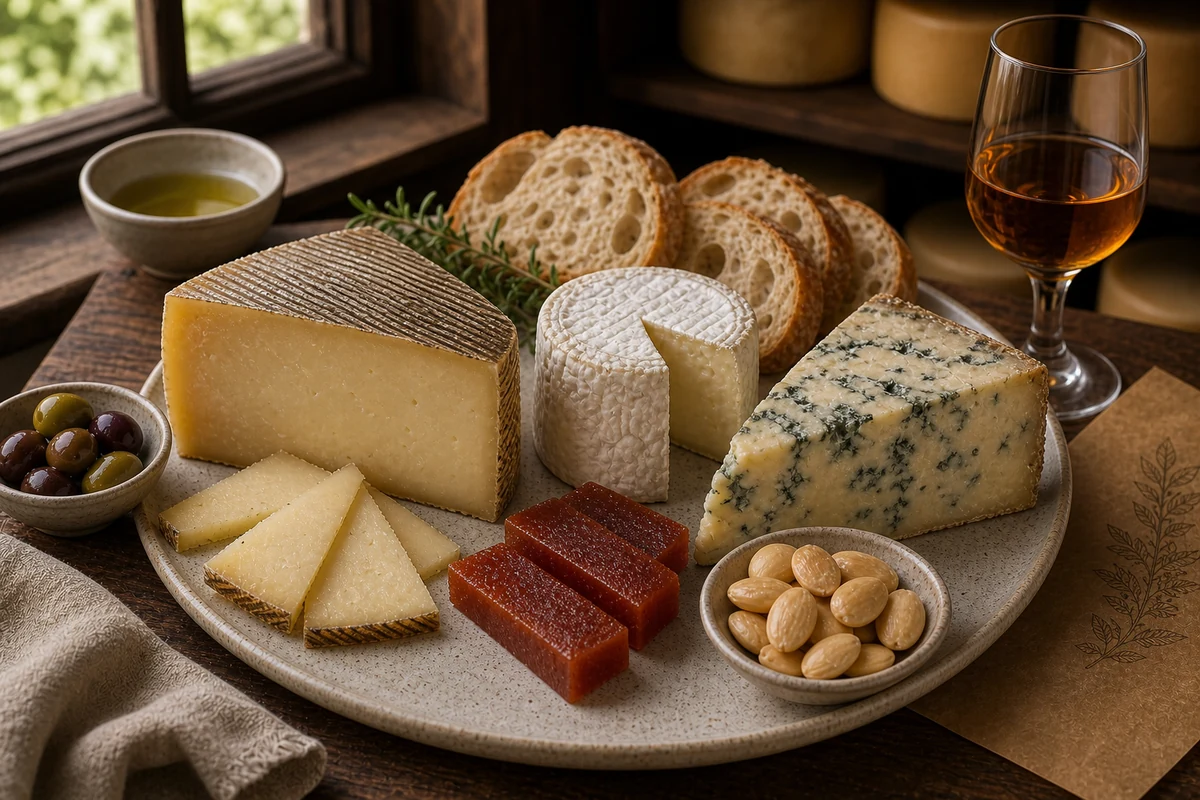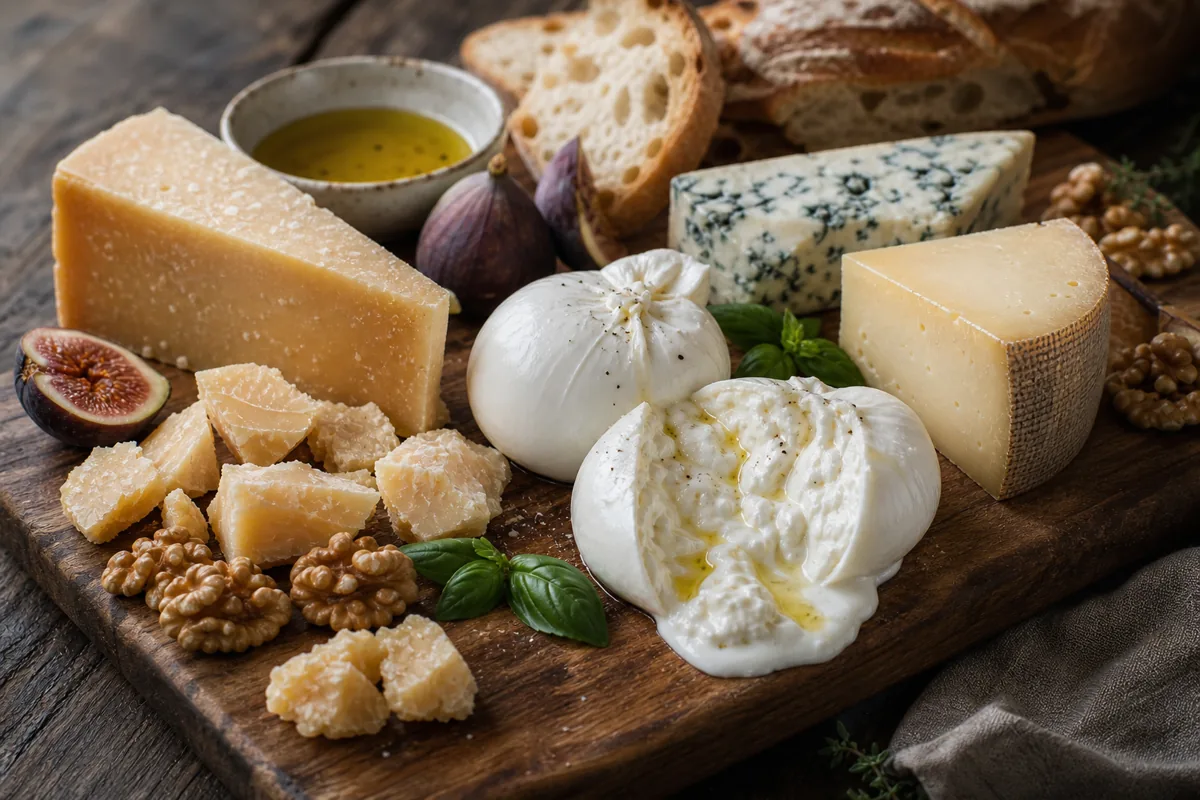
Italy holds more DOP-protected cheeses than any other EU country, with 55 certified varieties covering every milk type and every style. Its cheese-making spans from the daily fresh production of regional dairy traditions in Sicily to the 36-month aging caves of Emilia-Romagna where Parmigiano-Reggiano becomes crystalline and intensely savory.
The diversity comes from geography. Italy runs 1,200 kilometers from the Alpine border with Switzerland and France down to the Mediterranean tip of Calabria. Each climate zone, each breed of animal, each local bacterial culture produces something distinct. A buffalo mozzarella from Campania and a Pecorino Romano from Sardinia share nothing except their Italian origin.
This guide covers Italy's four major cheese-producing territories, the key DOP cheeses from each, how climate and landscape shape flavor, and practical advice for buying Italian imports.
Italy's DOP system mirrors France's AOC: a production specification defines the zone, animal breed, milk type, curd treatment, aging minimum, and sometimes the specific cultures used. The Consorzio del Formaggio Parmigiano-Reggiano, for example, certifies every wheel with a fire-branded casein plate and employs inspectors who travel to every cave to score wheel quality before release.
In This Article
Emilia-Romagna: The Heart of Italian Hard Cheese
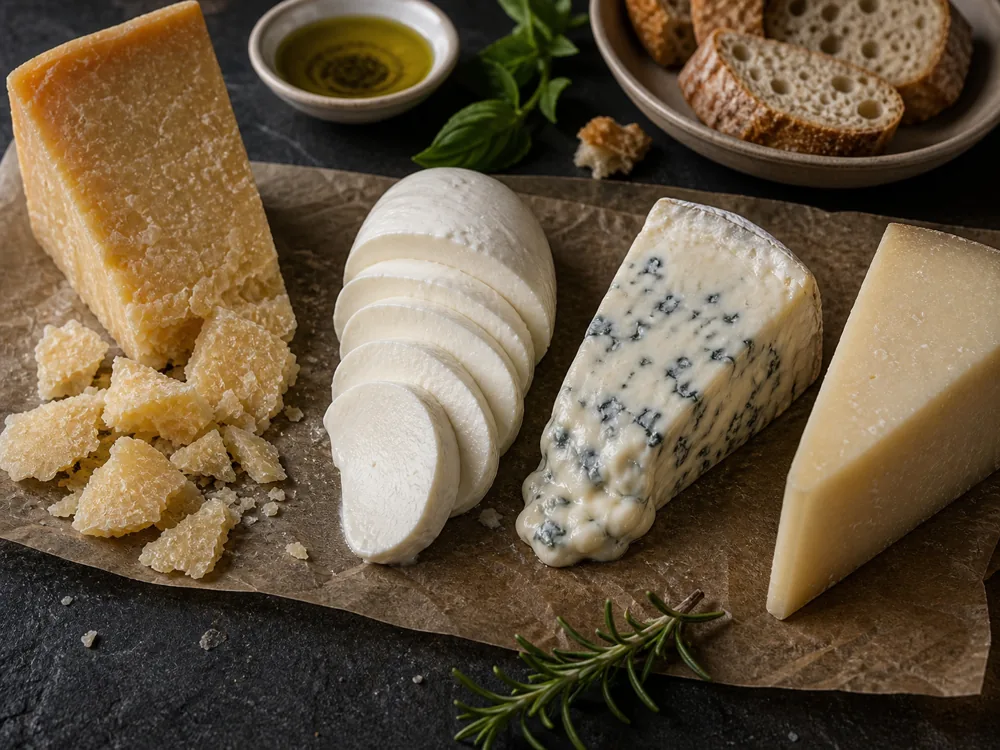
Emilia-Romagna is Italy's most productive cheese region and the origin of two DOP wheels that define the category worldwide. Our Parmesan vs Pecorino comparison explains how these two Italian grating cheeses differ. Parmigiano-Reggiano and Grana Padano together represent the largest volume of any protected hard cheese on earth. Emilia-Romagna's Po Valley provides the lush, fertile flat farmland that supports the dairy herds feeding these productions.
Parmigiano-Reggiano DOP requires raw milk from cows grazing or fed within a defined zone covering the provinces of Parma, Reggio Emilia, Modena, and parts of Mantua and Bologna. The milk must arrive at the dairy twice daily, with the evening milking partially skimmed by natural cream separation overnight before morning production. Each 40 kg wheel requires 550 liters of milk.
- Parmigiano-Reggiano DOP: 40 kg wheels, raw cow's milk, minimum 12 months, white crystalline paste, tyrosine crystals at 24+ months
- Grana Padano DOP: similar to Parmigiano but covers a wider zone including Lombardy, Veneto, and Trentino; partially skimmed milk permitted; milder at equivalent age
- Provolone Valpadana DOP: stretched-curd pasta filata from the Po Valley, two types: Dolce (mild, 2-3 months) and Piccante (sharp, 6+ months)
- Squacquerone di Romagna DOP: fresh, very soft spreadable cow's milk cheese from Romagna, eaten within days of production
The key difference between Parmigiano-Reggiano and Grana Padano is not just geography. Parmigiano prohibits silage feeding entirely and requires raw milk. Grana Padano permits lysozyme addition (an enzyme from egg white) to control butyric acid bacteria, and allows partially skimmed milk. At equivalent aging, Parmigiano tends to develop more complex, crystalline character. Grana Padano is milder and more consistent across producers.
Parmigiano-Reggiano aging grades appear on the outer rind as fire-stamped text: "Parmigiano-Reggiano" repeated around the circumference indicates it passed quality inspection. A wheel without this complete mark has been downgraded and its rind shaved and sold as "Grana." Always check the rind when buying a wedge cut to order.
Lombardy and the Po Valley: Washed-Rind and Creamy Soft Cheeses
Lombardy is Italy's most economically productive region and its most diverse cheese-producing zone. The Alpine foothills in the north feed Taleggio and Stracchino production. The flat Po Valley supports the rich, high-fat milk herds that supply Gorgonzola and Mascarpone. The region holds 10 DOP cheeses, more than any other single Italian region.
Gorgonzola DOP is Italy's most important blue cheese. The full Gorgonzola profile covers the difference between Dolce and Piccante styles. Two distinct versions exist under the same DOP: Gorgonzola Dolce (young, creamy, spreadable, aged 2-3 months) and Gorgonzola Piccante (aged 6-12 months, crumbly, sharp, intense). Both use Penicillium glaucum mold, and both require needling to introduce oxygen channels for mold development, the same technique used in French Roquefort.
- Gorgonzola DOP: Italy's flagship blue; Dolce is creamy and mild, Piccante is firm and sharp
- Taleggio DOP: square washed-rind from Val Taleggio, pink-orange rind, creamy paste, mild and tangy
- Bitto DOP: Alpine wheel from Valtellina, aged 70 days minimum to 10+ years for rare Storico Ribelle
- Quartirolo Lombardo DOP: soft fresh cheese made in autumn from cows returning from alpine pastures, mild and slightly acidic
- Mascarpone** - fresh double-cream product, 75% fat, used in tiramisu and pasta sauces; not DOP but regionally defined
Taleggio is one of the oldest named cheeses in Italy, documented in records from the 10th century. The DOP covers production across Lombardy, Piedmont, and Veneto. Its washed-rind treatment uses brine and sometimes natural cave-growing flora to develop the characteristic pink exterior. The rind is edible, though many people eat only the paste. A properly aged washed-rind Italian square smells more assertively than it tastes. Taleggio’s aromatic style shares territory with French washed-rind cheeses from Normandy.
Mascarpone sold outside Italy varies enormously in quality. Fresh Italian Mascarpone has a clean dairy sweetness and a texture that falls between thick cream and soft butter. Industrial versions often use stabilizers that create a gummy, less clean flavor. For tiramisu and desserts, look for Mascarpone from Italian producers with a short ingredient list: cream and citric or tartaric acid only.
Campania and the South: Buffalo Milk and Stretched-Curd Tradition
Southern Italy, particularly the Campania region around Naples, is the birthplace of pasta filata cheese-making. The stretched-curd technique involves heating the curd to 65-70°C and pulling it until it becomes elastic and smooth, a process that aligns the protein structure and creates the characteristic fibrous, stringy texture of mozzarella, provolone, and scamorza.
Mozzarella di Bufala Campana DOP is the most celebrated cheese in this tradition. Water buffalo were introduced to the Campania wetlands by the Lombards in the early medieval period. Buffalo milk contains more fat, more protein, and more solids than cow's milk, producing a richer, slightly tangier, more complex mozzarella than cow's milk versions.
- Mozzarella di Bufala Campana DOP: raw or pasteurized buffalo milk, hand-stretched, eaten within 3-5 days at optimal freshness
- Fior di Latte** - cow's milk mozzarella, not buffalo, lower fat, milder; the standard pizza mozzarella in Italy
- Burrata** - fresh cow's milk exterior shell filled with stracciatella (shredded mozzarella and cream); Puglia origin
- Caciocavallo Silano DOP: gourd-shaped aged pasta filata, tied and hung to age, sharp and slightly spicy at 12+ months
- Provolone del Monaco DOP: large pear-shaped pasta filata from the Sorrento peninsula, aged 6+ months, sharp and complex
Fresh buffalo mozzarella exported from Italy arrives in a brine or whey solution. When unavailable, our mozzarella substitute guide ranks the closest alternatives. The best quality shows up within 24-48 hours of production at Italian specialty retailers. By 5-6 days, the fresh characteristics fade and the cheese becomes rubbery and loses its delicate milky flavor. If you are buying imported buffalo mozzarella in a sealed container, check the production date, not just the best-by date.
Sardinia and Central Italy: Sheep's Milk and Pecorino Heritage
Sardinia is the historical center of Italian sheep's milk cheese. The island has more sheep per capita than any other region in Italy, and its pastoral sheep-grazing tradition dates back to Nuragic civilization. Sardinian Pecorino Romano DOP, despite its Roman name, is produced almost entirely in Sardinia because the island's climate and pasture quality suits Sarda sheep better than the Roman countryside ever did.
Pecorino Romano DOP production shifted to Sardinia in the late 19th century when Rome's dairy farms could no longer meet demand. Today, over 90% of all Pecorino Romano comes from Sardinian dairies using milk from Sarda breed sheep. The DOP permits production in Sardinia, Lazio, and the province of Grosseto (Tuscany). The cheese is always sharp, salty, and hard, made for grating over pasta rather than eating in wedges.
- Pecorino Romano DOP: intensely salty, sharp, hard grating sheep's milk cheese; essential in cacio e pepe and gricia
- Pecorino Sardo DOP: Sardinian sheep's milk, two stages: Dolce (20-60 days, semi-soft, mild) and Maturo (2+ months, firm, sharp)
- Fiore Sardo DOP: traditional Sardinian shepherd's cheese made over fire-smoked curd, intense smoky and lanolin notes
- Pecorino Toscano DOP: Tuscan sheep's milk, milder and creamier than Romano, two types: Fresco and Stagionato
- Pecorino di Pienza** - local Tuscan variety aged in walnut leaves or travertine cellars, not DOP but highly regarded regionally
Pecorino Romano's saltiness comes from the brining process during production. The wheels are rubbed with salt repeatedly over several months, which draws moisture and develops the sharp, crystalline paste. If you find Pecorino Romano too salty to eat in wedges, try it grated over pasta in smaller quantities. In Italian cooking, the sharp grating sheep's milk wheel balances the pepper in cacio e pepe and the guanciale fat in pasta alla gricia.
Buying Italian Cheese Imports: Practical Guide
Italian DOP cheeses are among the most counterfeited food products in the world. The cheese comparison guides help identify what distinguishes certified originals from imitators. "Parmesan" made in Wisconsin, "Romano" from Argentina, and "Gorgonzola" from Denmark all exist legally in some markets because only the EU and a small number of trade-agreement countries protect Italian cheese names. In the US, "Parmesan" is a generic term.
The only way to guarantee authentic Italian DOP cheese is to check the DOP logo and the specific certifying consortium mark on the rind or packaging. Every authentic Parmigiano-Reggiano wheel has a casein plate with a serial number. Every authentic Mozzarella di Bufala Campana carries the Consorzio della Mozzarella di Bufala Campana logo on its wrapper.
The widest selection of authentic Italian DOP cheeses in the US and UK reaches consumers through Italian specialty grocery stores, dedicated cheese shops, and online retailers that source directly from Italian consortia. Large supermarket selections vary significantly - some stock authentic imported product, others stock domestic imitations at lower prices. Price is a useful indicator: authentic 24-month Parmigiano-Reggiano imported from Italy will not retail below $15-18 per pound in the US market. Our Parmesan substitute guide ranks the best alternatives when DOP wheels are out of budget.
Italian Cheese FAQ
These are the questions we hear most about Italian cheese regions, DOP certification, and how to buy authentic imports.
DOP (Denominazione di Origine Protetta) is the EU-wide protected designation that Italian cheese now uses. DOC (Denominazione di Origine Controllata) was Italy's earlier national system, equivalent to France's AOC. Most Italian DOP cheeses were originally DOC before EU harmonization in the 1990s converted them to the EU standard. You may still see DOC on older packaging, but DOP is the current legal designation. Both indicate origin protection; DOP is the enforceable EU-level certification.
No. They are related but distinct DOP cheeses. Grana Padano comes from a wider zone across northern Italy and permits partially skimmed milk and lysozyme addition. Parmigiano-Reggiano comes from a tighter zone in Emilia-Romagna, requires full-fat raw milk, and prohibits all additives including lysozyme. At equivalent aging, Parmigiano-Reggiano tends to develop more crystalline texture and complex flavor. Grana Padano is typically milder and more consistent. Both are high-quality cheeses - they are simply different products with different specifications.
It depends on the use. For eating in wedges, 18-24 months (Stravecchio) offers the best balance of flavor complexity and texture. The crystalline tyrosine deposits are present but the paste is not yet too dry. For grating over pasta, 24-36 months (Extra Vecchio) gives more concentrated umami and the crisp texture that dissolves quickly into hot dishes. For fresh salads and shaving, 12-18 months (Vecchio) has a creamier texture that holds its shape when sliced thin. Many Italian specialty shops sell all three grades simultaneously.
Three factors drive the price premium. First, water buffalo produce less milk than dairy cows - a buffalo yields roughly 5-8 liters per day versus 25-30 liters for a high-producing Holstein. Second, buffalo milk's higher fat content means more milk is required per kilogram of finished cheese. Third, authentic Mozzarella di Bufala Campana DOP production is labor-intensive and restricted to a specific zone in southern Italy. The DOP specification and the shorter shelf life (3-5 days at peak) also limit supply to retailers who can sell fresh product quickly.
You can, but expect a different result. Pecorino Romano is sharper and saltier than Parmigiano-Reggiano because sheep's milk contains more short-chain fatty acids, and the production uses more salt. In traditional Roman pasta dishes like cacio e pepe and amatriciana, Pecorino Romano is the correct choice. In Northern Italian pasta and risotto, Parmigiano-Reggiano is traditional. If substituting one for the other, reduce any added salt in the recipe when using Pecorino Romano, and use slightly less Pecorino than Parmigiano to avoid over-salting.