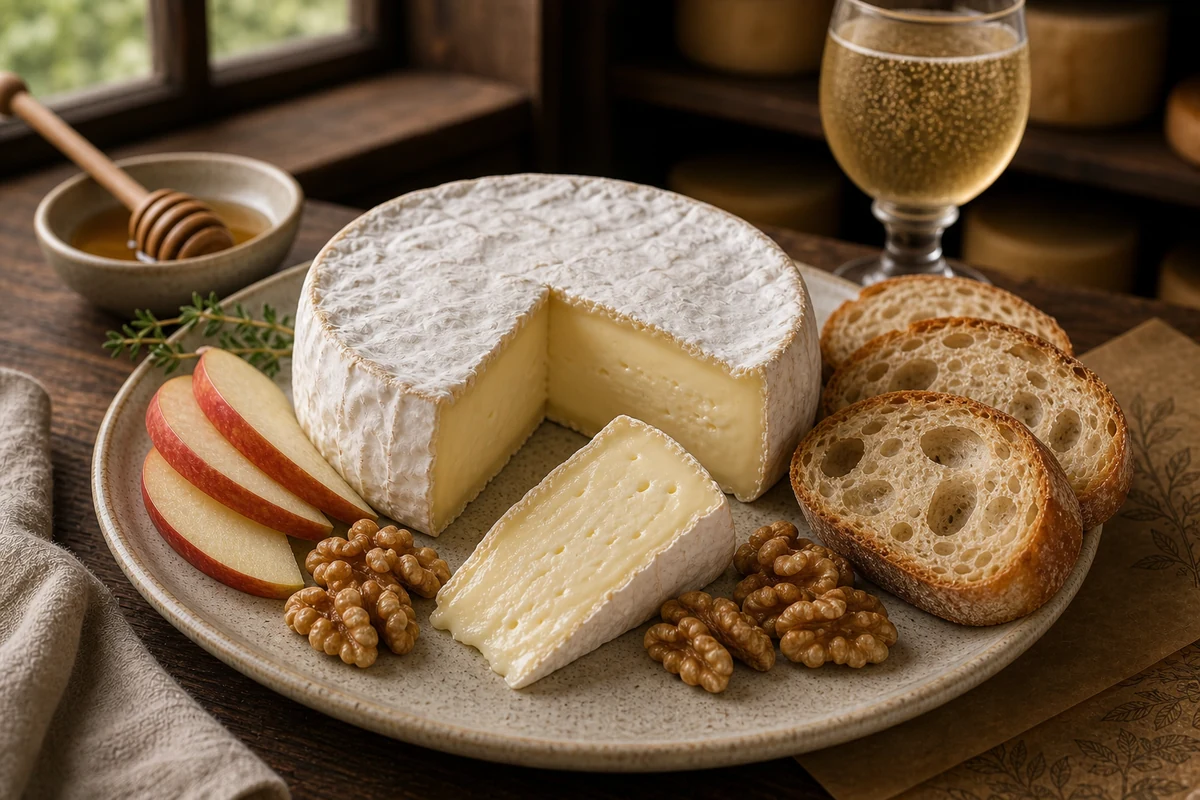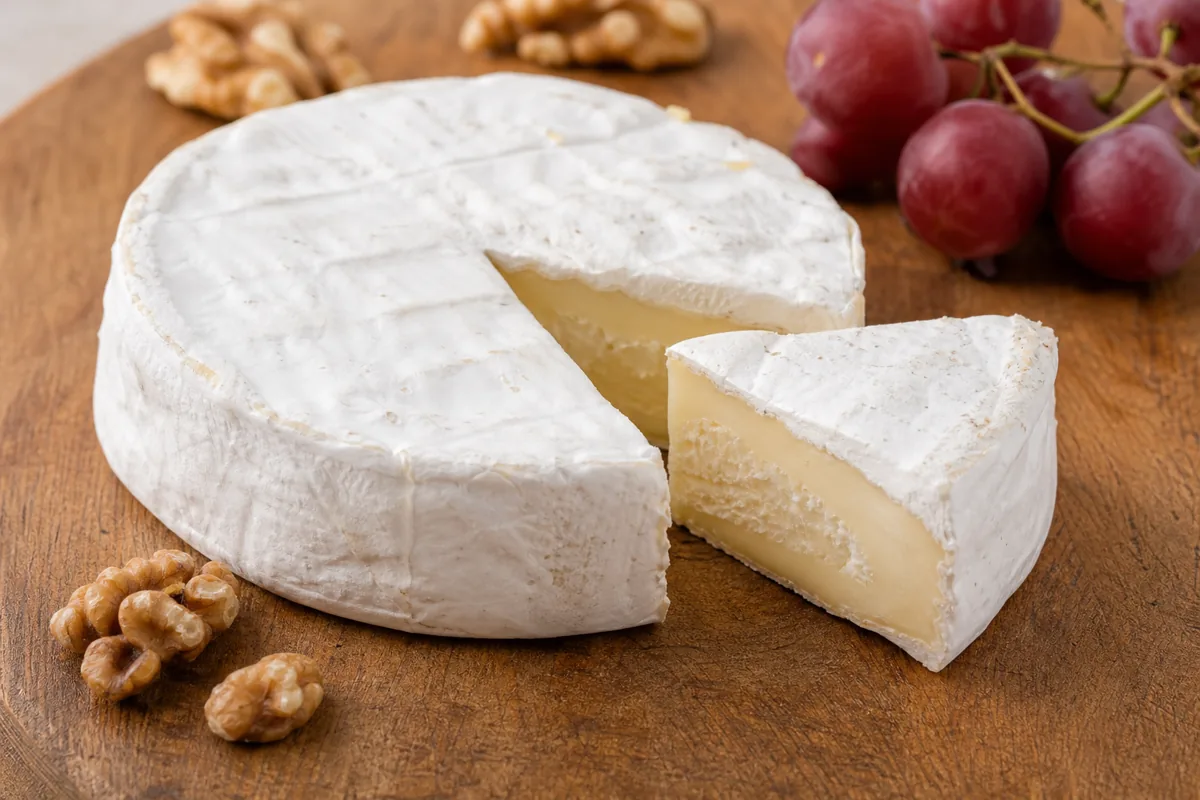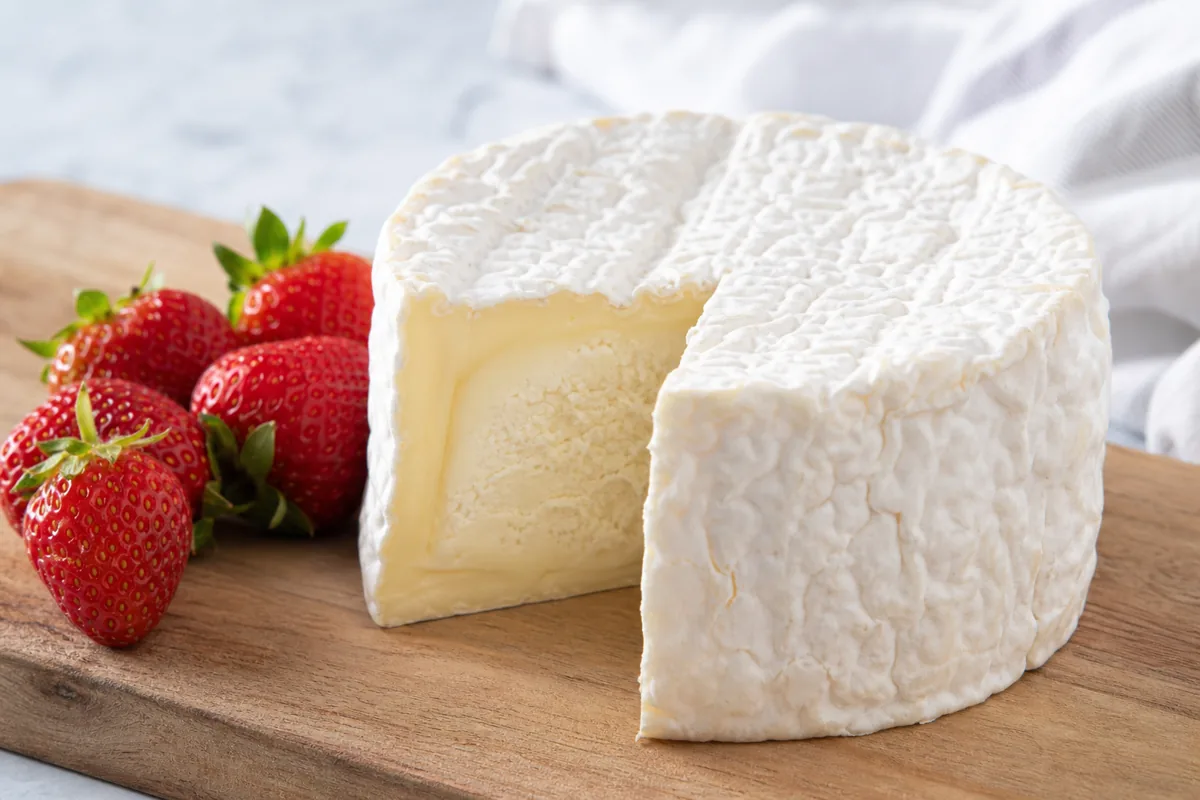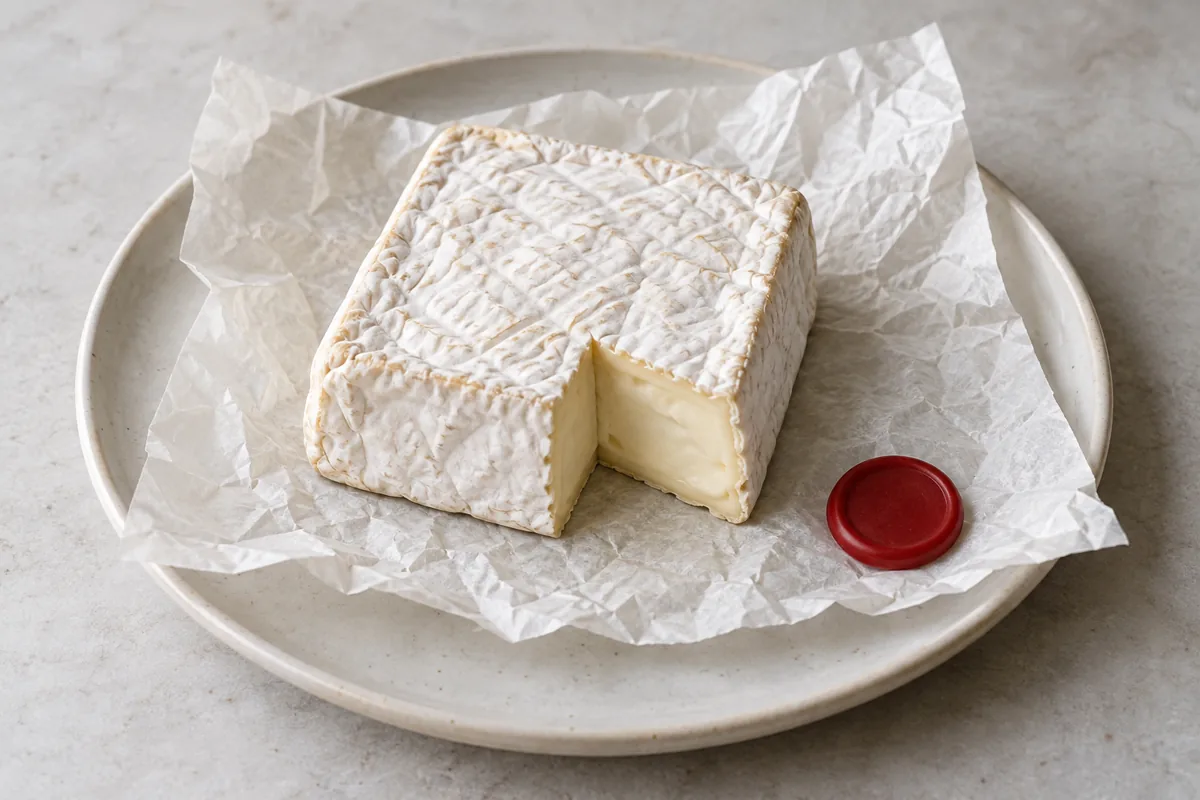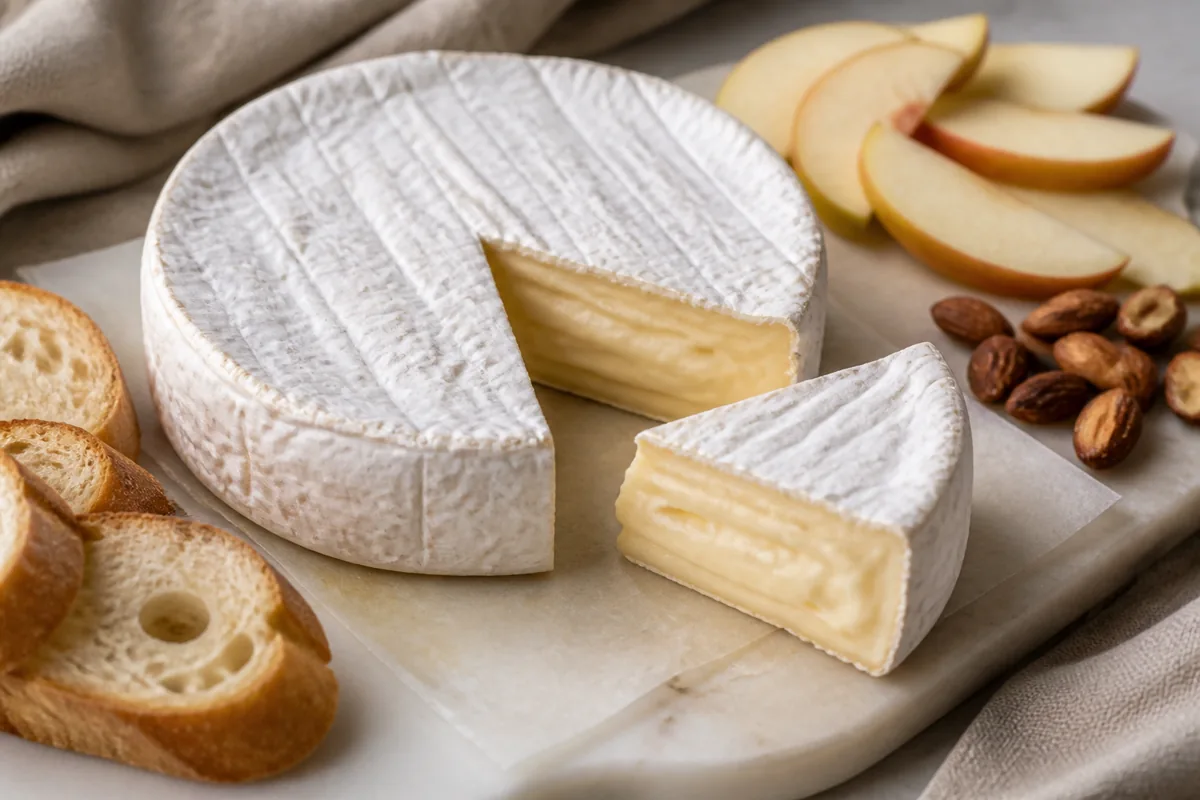
Brie is one of the most recognizable cheeses in the world. It belongs to the soft French bloomy-rind family and remains the reference point for the entire category.
The white rind is not decoration. It is a living layer of mold that ripens the paste from the outside in, producing the buttery, mushroomy character that makes Brie so distinctive.
- Choose ripe Brie when you want creamy spread and a fuller mushroom note.
- Choose younger Brie when you need neater slices and a milder board cheese.
- Choose another soft cheese when you want more tang, more ash, or a much stronger rind.
In This Article
What Is Brie Cheese?
At its core, Brie is a soft-ripened, bloomy-rind cow's milk cheese. It originates in the Seine-et-Marne department of the Ile-de-France region, roughly 55 kilometers east of Paris.
Two versions hold protected status under French law. Brie de Meaux and Brie de Melun have both held appellation status since 1980.
The AOC rules fix the production zone, the permitted milk type, and the cheesemaking method.
Brie de Meaux is a large wheel, roughly three kilograms and 36 to 37 centimeters across. The curd is ladled by hand using a traditional perforated ladle called a pelle a brie.
No pressing is permitted.
Most Brie sold in the United States is not AOC Brie. The FDA prohibits the import of raw-milk soft cheeses aged fewer than 60 days.
Brie de Meaux can be sold after four weeks of ripening under its AOP specification, which is shorter than the U.S. raw-milk aging requirement. Pasteurized Brie is a separate product, even when a French producer makes it.
The 60-day requirement concerns raw-milk soft-ripened cheese under the U.S. standard. It does not turn a pasteurized cheese into Brie de Meaux or establish what a particular shop currently imports.
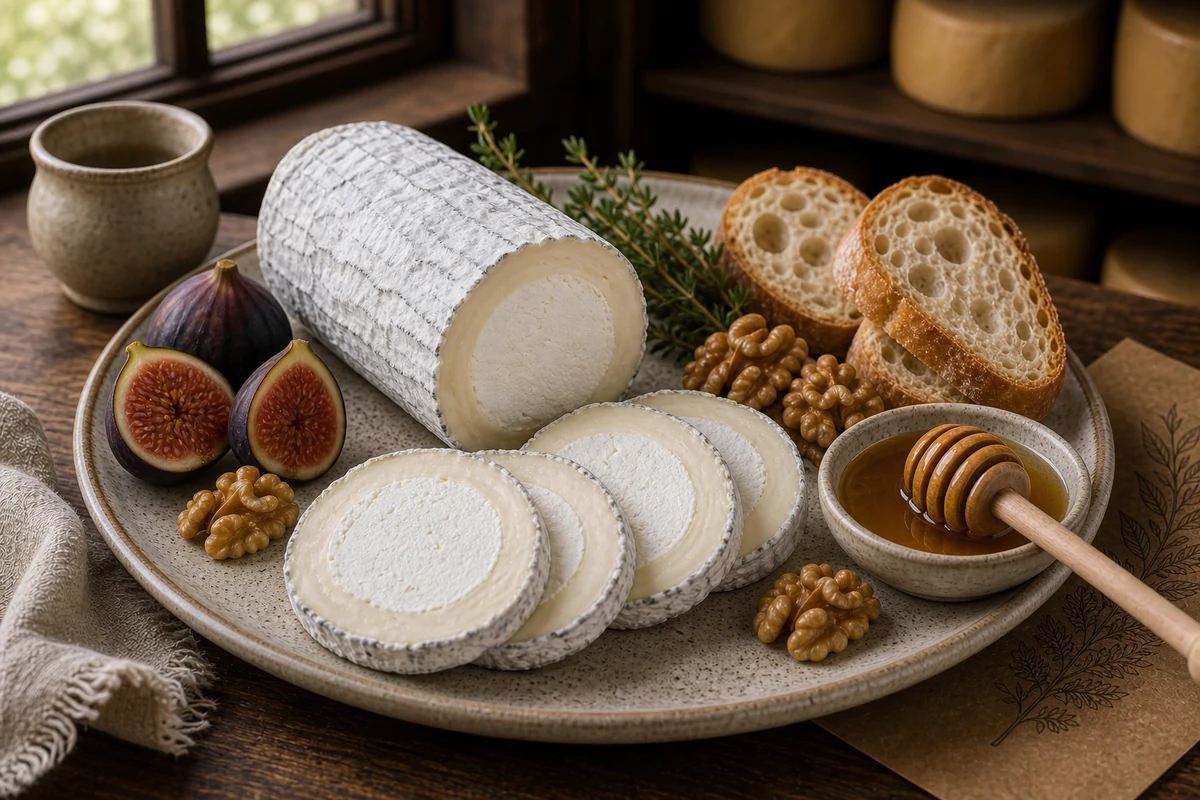
If you want the same creamy spread with a tangier, brighter profile, fresh goat cheese logs move the board in a very different direction from Brie.
What Is the Difference Between Brie de Meaux, Brie de Melun, and Supermarket Brie?
The word Brie can mean three different things at the counter. Protected Brie de Meaux and Brie de Melun are traditional raw-milk cheeses from defined French zones.
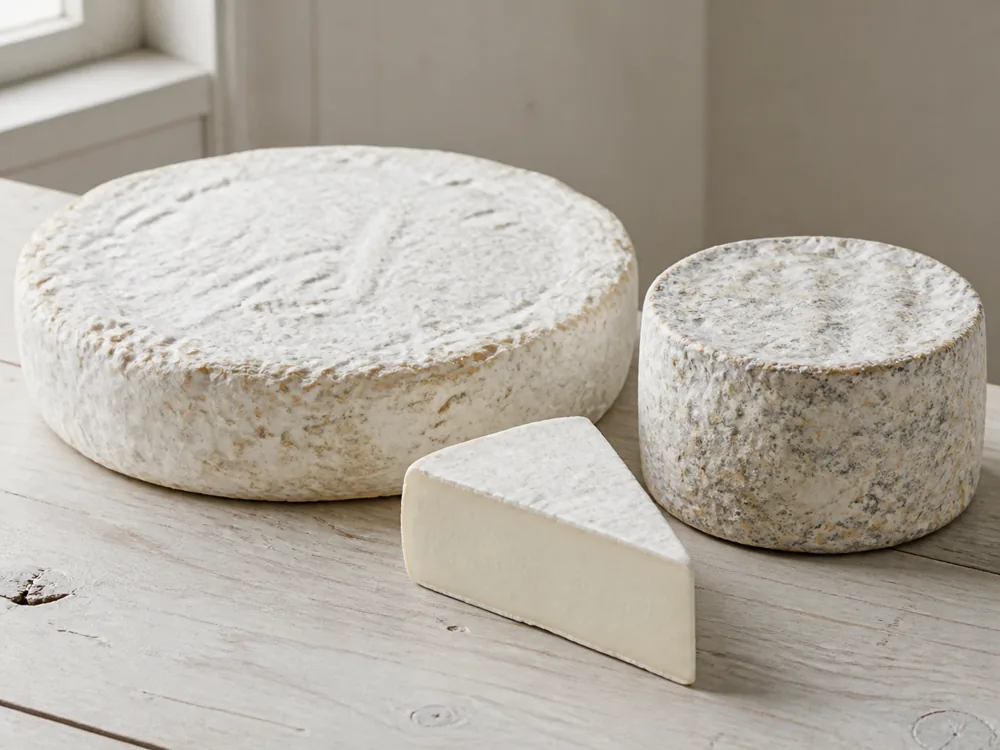
Most supermarket Brie is a pasteurized soft-ripened cheese made in the same broad style but outside those protected rules.
Brie de Meaux is the larger, milder reference point. It is made as a broad, flat wheel, ripens for at least four weeks, and should taste buttery, mushroomy, and softly earthy when it reaches peak.
Brie de Melun is usually smaller, saltier, and more assertive because its curd develops more acidity before draining.
Pasteurized grocery Brie is built for wider distribution. It is often more stable, less aromatic, and less risky to ship, but it can taste flatter if it is eaten cold or underripe.
The best pasteurized versions still show a white bloomy rind, a supple paste near the rind, and a clean mushroom aroma.
| Label | What it usually means | Best use |
|---|---|---|
| Brie de Meaux AOP | Protected raw cow's milk Brie from a defined French production area | Tasting plate where origin and rind aroma matter |
| Brie de Melun AOP | Protected Brie with stronger acidity, salt, and traditional character | Board for people who want a more assertive soft-rind cheese |
| Pasteurized Brie | Brie-style soft-ripened cheese made for wider retail distribution | U.S. cheese boards, baked Brie, sandwiches, and party platters |
- Choose Brie de Meaux when you want the classic large-wheel French style and can buy it in a market where raw-milk import rules allow it.
- Choose Brie de Melun when you want a stronger, saltier, more traditional Brie with more rind character.
- Choose pasteurized Brie for most U.S. cheese boards, baked Brie, and everyday entertaining.
The label matters because the same cheese name can signal different flavor, legal status, and food-safety handling. Read the milk statement rather than assuming pasteurization from the shop or country of sale.
Do not judge those versions by the same standard. Protected Brie should be bought for aroma, regional identity, and a soft paste that changes as it ripens.
Everyday pasteurized Brie should be judged by freshness, clean rind, good handling, and whether it can serve the job you need that week.
That distinction prevents the common mistake of paying protected-cheese prices when the meal only needs a reliable baking wheel.
What Does Brie Taste Like?
A ripe wheel has a buttery, mushroomy character with a soft, almost liquid center and a lightly tangy finish. The paste should feel like cool cream cheese at the center and collapse gently when you press the rind.
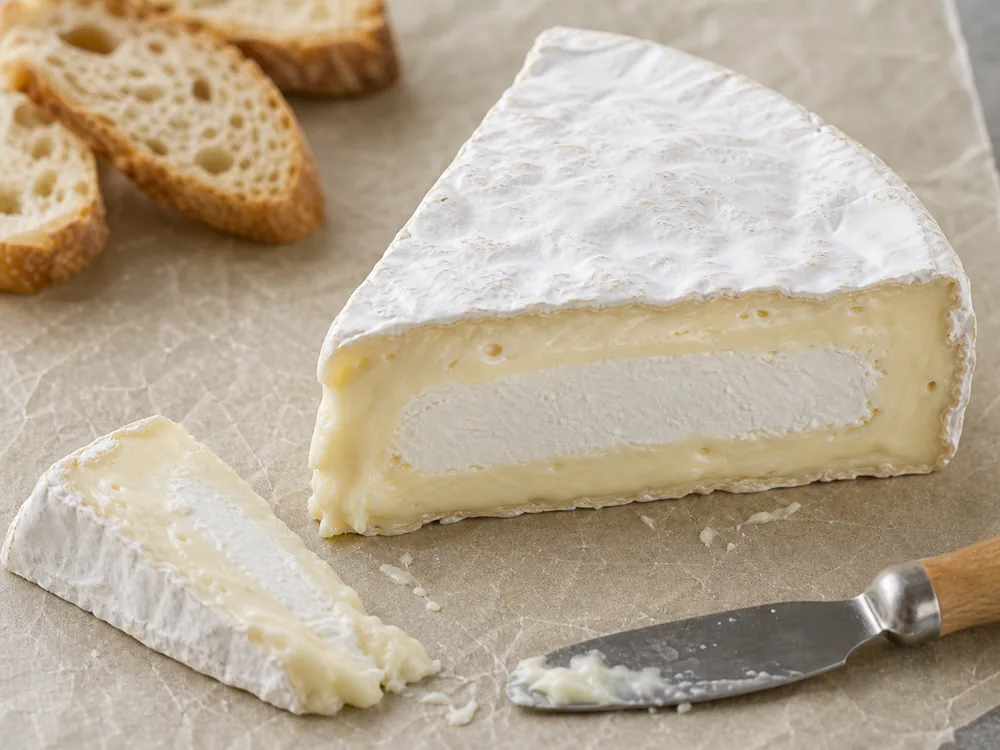
Underripe Brie shows a white chalky core running through the center of the wheel. That chalky section is firmer, slightly crumbly, and considerably less flavorful.
A chalky center can be a normal stage of ripening. It does not, by itself, establish whether a cheese has been stored safely.
INAO describes ripe Brie de Meaux with cream, butter and hazelnut aromas, sometimes with woodland notes. Brand, age and serving temperature all affect how strongly those qualities come through.
Cream-enriched cheeses such as Brillat-Savarin are alternatives for a richer board. Brillat-Savarin has its own protected identity and is not a variety of Brie.
A richer triple-cream cheese changes the balance of a dish, so it is a choice for extra richness rather than an exact flavor match.
- Ripe paste: soft, creamy, collapses at room temperature, mild mushroom and butter notes
- Underripe paste: chalky white center, firmer, milder flavor, a ripeness cue, not a reason for extended warm storage
- Overripe paste: very runny, ammonia smell, dark rind, too pungent for most palates
- Rind: edible, earthy, slightly bitter, adds textural contrast to the soft paste
The rind is fully edible and we encourage eating it. The earthy, slightly bitter bite of the rind balances the creaminess of the paste.
Leaving the rind on gives a stronger contrast between the mushroomy outside and mild paste. Trimming it is a preference, not a safety treatment.
The best ripeness point depends on use. For a board, choose a wheel that gives slightly under gentle pressure and shows a narrow creamy band under the rind.
For slicing into sandwiches, buy a younger wheel with a firmer center. For baking, a wheel that is almost ripe is easier to handle than one already running at the cut face.
How Is Brie Made?
Brie de Meaux uses raw cow's milk and hand-ladled curd. Other Brie products can use different milk treatment and production methods, so the protected name carries more information than the word Brie alone.
Milk is gently warmed and inoculated with lactic starter cultures, then renneted to form a soft curd. The curd is not cut aggressively.
Instead, it is scooped carefully with the pelle a brie into molds, preserving the delicate gel structure that will become the characteristic Brie texture.
After draining overnight, the wheels are salted and sprayed with Penicillium candidum spores. This mold culture colonizes the rind surface within days.
The white bloom appears within a week and continues developing through the aging period.
A firm center can soften during a short serving period, but do not leave Brie warm to age it. Keep preparation and serving time within the storage limits below.
Penicillium candidum does more than form the white crust. It produces enzymes that break down the proteins and fats in the paste over the aging period.
This is the ripening process that converts a firm, bland curd into a liquid-centered, aromatic wheel.
Ripening takes place under controlled conditions. A home refrigerator slows changes after purchase; a kitchen counter is not an aging room.
A firmer retail wheel can be convenient for cutting and baking, while a softer wedge suits spreading. Judge the cheese you have rather than assuming that every pasteurized product has the same texture.
How Should You Serve Brie?
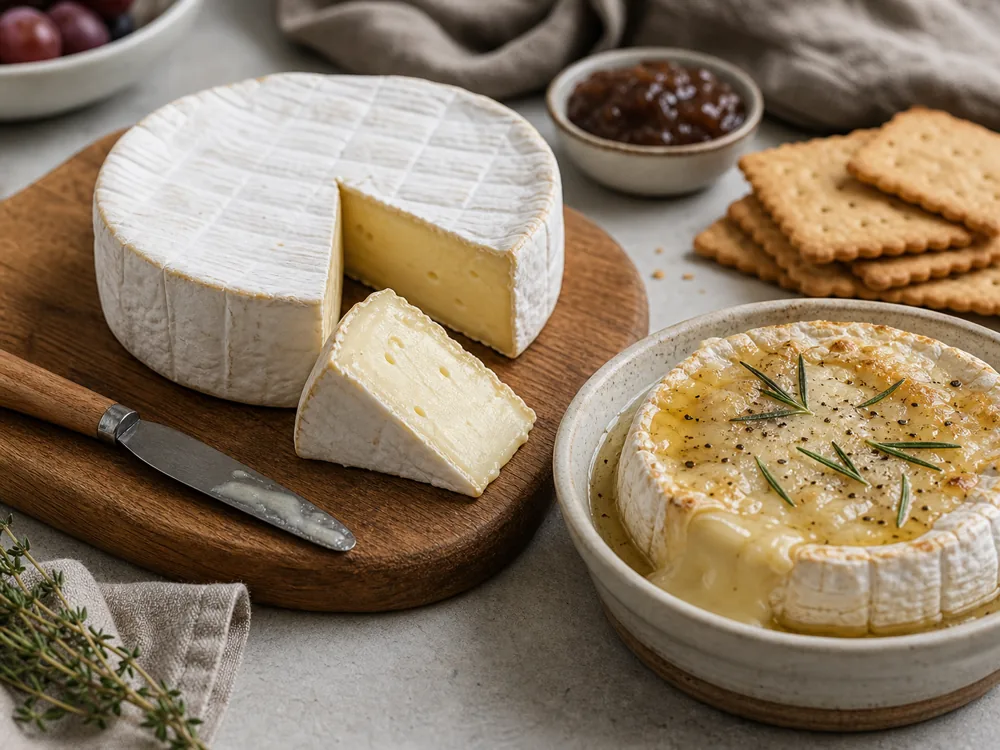
The soft texture and mild flavor make Brie one of the most versatile soft cheeses for both cold and warm applications. The key rule is matching the temperature to the use.
For spreading, you can let a small serving soften briefly before eating. Include preparation, tempering and serving in the FDA limit of two hours out of refrigeration, or one hour above 90 F (32 C).
| Use | How It Works |
|---|---|
| Cheese Board | The classic role. Serve at room temperature with fruit, honey, and crusty bread. The centerpiece cheese for most boards. |
| Baked Brie | Use a recipe for your wheel size. A pastry-wrapped wheel needs its own baking instructions, and pregnancy requires thorough heating at the center. |
| Sandwiches | Room-temperature Brie spreads directly onto bread. Pairs with prosciutto, arugula, and a smear of Dijon mustard. |
| Salads | Warm Brie croutons (breaded and pan-fried wedges) over bitter greens with walnut vinaigrette. A classic French bistro preparation. |
| Omelets and Eggs | Brie melts gently into scrambled eggs. Stir in small pieces near the end of cooking and allow them to soften. |
| Sauces | Melted Brie makes a quick cream sauce for pasta. Combine with white wine and shallots over low heat. Works best with young Brie. |
For a smooth melted sauce, warm Brie gently and stir it into the other ingredients. Avoid using a texture target as a food-safety temperature, especially when serving someone who is pregnant.
Chilled Brie is easier to cut into neat pieces. For baking, follow a recipe matched to the wheel size and whether you are using pastry.
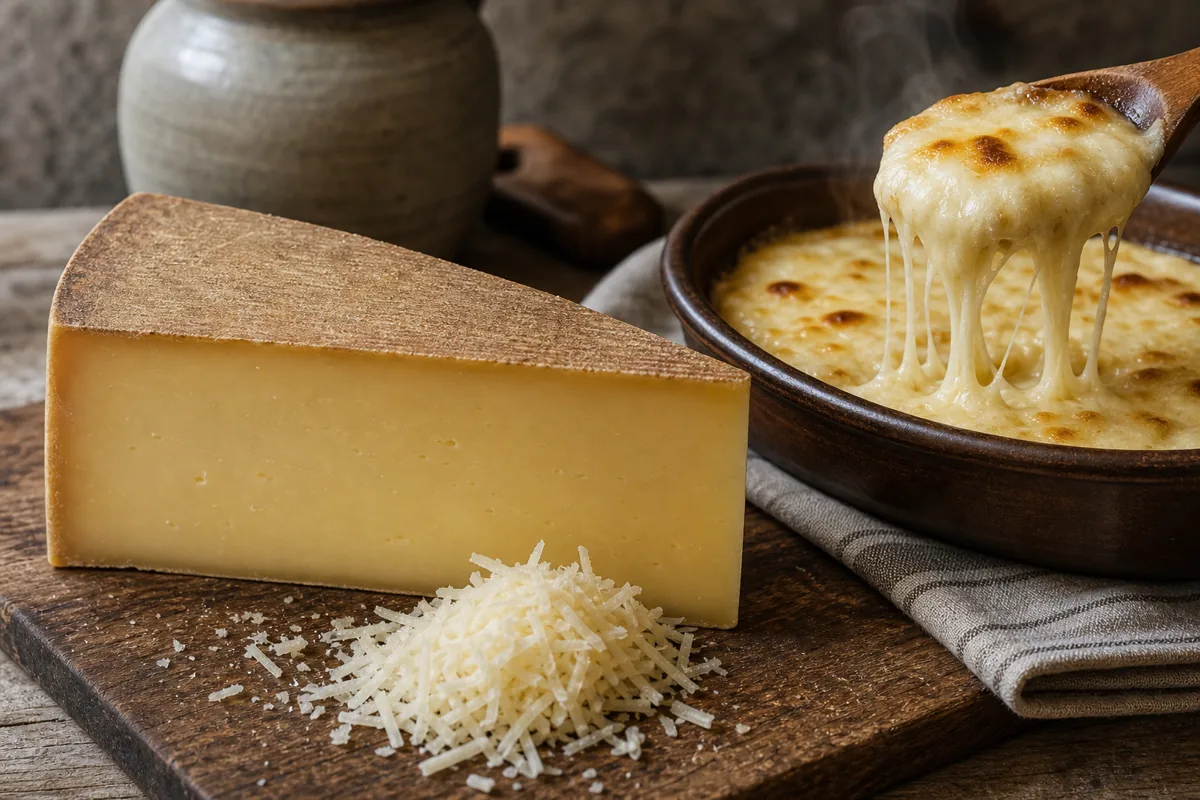
Brie pools rather than stretches. It melts well for sauces and baked applications but does not produce the ropey pull that Gruyere or mozzarella deliver.
Brie and Camembert texture breaks down the differences that actually matter at the table.
A loose center tells you about texture, not whether a dish has reached a safe temperature. Follow the pregnancy heating advice below when it applies.
A whole small wheel usually performs better than a wedge because the rind acts like a natural container.
What Goes Well With Brie?
The creamy, lightly tangy profile works best with accompaniments that bring acidity, sweetness, or textural contrast. The rind adds an earthy note that calls for something clean and bright alongside it.
Fruit is Brie's most reliable pairing partner. The natural acidity and sweetness cut through the fat without competing with the mushroomy character of the rind.
| Pairing | Type | Why It Works |
|---|---|---|
| Champagne or Cremant | Wine | Try a dry sparkling wine with a small bite of Brie, then compare how its acidity and bubbles feel with the creamy paste. |
| Chardonnay (unoaked) | Wine | Try an unoaked Chardonnay if you prefer a citrus-led wine alongside the creamy cheese. Check the bottle rather than assuming every white Burgundy is unoaked. |
| Honey | Food | Wildflower or acacia honey drizzled over the cut face. The sweetness directly offsets the tangy lactic note in the paste. |
| Sliced Pears or Apples | Food | Anjou pear and Pink Lady apple both work. The crunch provides textural contrast; the fruit acidity brightens the paste. |
| Fig Jam | Food | The caramelized sweetness and slight bitterness of fig jam is one of the best flavor matches for Brie. A small ramekin on the board. |
| Prosciutto or Jamon Serrano | Food | Cured pork's saltiness and funk play against the mild, creamy paste. Wrap a small piece of Brie in a thin slice for an easy canape. |
Pinot Noir or a fruity Beaujolais can work when you prefer red wine. Pairing is a matter of balance and preference, not a rule that excludes every other grape.
Beer pairing: try a Belgian witbier or a dry farmhouse saison if you prefer beer. The carbonation refreshes the palate between rich bites.
Champagne with ripe Brie works because acidity cuts fat while bubbles lift the creamy paste from the palate.
How Do You Store Brie?
This is a living cheese. The Penicillium candidum on the rind continues to act even after purchase, which means storage conditions matter more for Brie than for hard cheeses.
The goal is to slow the ripening process without stopping it entirely or suffocating the rind.
Keep Brie in its original wrapper or clean cheese paper and refrigerate at 40 F (4 C) or below. USDA gives about one week as an approximate refrigerator guide for soft cheeses, but follow a shorter use-by date or after-opening instruction on the pack.
For serving at home, FDA's limit for foods needing refrigeration is two hours out of the fridge, or one hour above 90 F (32 C). Bring out a small portion instead of repeatedly warming the whole wheel.
FSANZ's business rule separately counts total time between 5 C and 60 C: under two hours permits refrigeration again, two to four hours means use immediately, and more than four hours means discard. It does not extend the FDA household limit.
Discard Brie with unexpected mold, a slimy paste or a strong ammonia odor. A normal smell does not prove safety after warm storage, and trimming mold from a soft cheese does not make the rest safe.
Keep the wrapping and use-by date with any remaining wedge. The mold-trimming rule for some hard cheeses does not apply to soft Brie.
How Do You Pick a Good Brie at the Counter?
Most retail Brie in the United States is pasteurized and produced outside the AOC zone. That is not automatically a problem.
Good pasteurized Brie exists, and knowing what you are buying helps you set expectations.
A counter with clear product labels and reliable refrigeration is more useful than an impressive regional name alone. Ask when a wheel was cut if you are buying a loose wedge.
Look for a paste that suits the meal: firmer cheese cuts more neatly, while softer cheese spreads more easily. If the shop permits handling, gentle pressure through the wrapping can help you judge texture without touching the cheese.
A dry cut face may be less pleasant to eat, but its appearance cannot tell you exactly how long it has been stored or whether it stayed cold. Keep the product label and follow its use-by and after-opening instructions.
Buy a quantity you expect to finish, whether that is a small wheel or a freshly cut wedge. A whole wheel is not automatically fresher or safer than a portion from a well-managed counter.
What Can You Substitute for Brie?
When Brie is unavailable, Camembert is the most direct replacement. It uses the same mold-ripened logic and behaves similarly in baking, but the smaller wheel usually tastes earthier and ripens faster.
For milder boards, young Bucheron offers similar creaminess with a brighter, more citrus-forward flavor. Cream-enriched cheeses like Brillat-Savarin offer a richer board option, with a different make and texture.
- Use Camembert when you want the closest baked Brie behavior with a stronger rind.
- Use a smaller, thicker Coulommiers when you want a Brie-like cheese in a smaller wheel.
- Use triple-creme cheese when the board needs a cream-enriched option.
- Use young Bucheron when you want a brighter goat-milk contrast instead of a direct match.
For cooking, stay closest to Brie when the replacement has a bloomy rind and enough fat to loosen under gentle heat. For a cheese board, match ripeness and serving temperature first, then decide whether you want a milder spread or a stronger rind.
Can You Eat Brie While Pregnant?
Brie needs thorough heating during pregnancy. A pasteurized label and careful refrigeration do not remove the cooking condition for this soft-ripened cheese.
The CDC lists pasteurized soft cheeses heated to an internal temperature of 165 F (74 C), or until steaming hot, as a safer choice. The NHS says Brie made with either raw or pasteurized milk must be cooked until steaming hot throughout.
A softened or melted center is not proof that Brie is hot enough. Check the center, and do not use cooking to rescue cheese that has been left warm beyond its safe time limit.
Removing the rind does not replace thorough cooking. For a cold meal, the pregnancy cheese choices include alternatives such as pasteurized mozzarella and cottage cheese.
What Is in a Serving of Brie?
USDA FoodData Central record 172177, Cheese, brie provides the generic reference values below per 100 g. It is not a test of every Brie brand or a nutrition specification for Brie de Meaux.
For a 28 g portion, those values work out to about 94 calories, 5.8 g protein, 7.8 g fat, 52 mg calcium and 176 mg sodium. A measured portion gives a clearer comparison than a wedge whose weight changes with the cut.
Product labels can differ substantially: the U.S. President Brie Round lists 100 calories, 4 g protein and 121 mg calcium per 28 g. Use the label on your cheese when tracking intake rather than treating the generic record as a promise.
Fat in dry matter is a different measurement from grams of fat per 100 g of cheese: it excludes the water before calculating the percentage. A protected-cheese minimum of 45% FDM does not mean that 45 g of every 100 g wedge is fat.
Total carbohydrate is not a separate lactose measurement. Neither the generic carbohydrate figure nor a rounded product-label zero establishes that a Brie is lactose-free.
For lactose intolerance, look for product-specific information rather than using the cheese name alone. Milk allergy is a separate issue, and Brie still contains milk proteins.
SOURCES & REFERENCES
What Quick Answers Do Brie Buyers Need?
Ripeness causes more confusion than any other part of buying Brie, and the rind runs a close second.
The white rind is Penicillium candidum, a safe food-grade mold culture applied intentionally during production. It is fully edible and adds an earthy, slightly bitter flavor that contrasts with the creamy paste.
Edible rind does not mean every serving is safe: pregnancy cooking advice and refrigeration limits still apply. Trimming the rind does not make cold Brie suitable during pregnancy.
Press gently on the center of the wheel through the rind. A ripe Brie gives slightly under pressure, like pressing a ripe avocado.
The paste should feel soft and yielding, not chalky or resistant.
A strong ammonia odor or slimy paste is a reason to discard it. A normal smell cannot prove safety after poor temperature control.
No. Brie de Meaux AOP requires raw cow's milk, so pasteurized Brie cannot carry that protected identity.
Yes. A small whole wheel can be baked in an oven-safe dish, with the rind helping contain the softened paste.
Choose a recipe for the weight and shape of your wheel. Puff-pastry wrapping changes the bake, so use a complete pastry recipe rather than applying an uncovered wheel's timing.
A softened center does not prove thorough heating. For pregnancy, check that the center meets the thorough-heating advice above.
Serve immediately with bread, crackers, or fruit. Brie baked in its own rind holds its shape better than a wedge.
A product labeled triple-cream Brie has added cream, but its exact composition belongs to that product's label. Brie de Meaux has a minimum of 45% fat in dry matter, which is not the same as 45 g of fat per 100 g of cheese.
Brillat-Savarin is a separate cream-enriched cheese, not a protected Brie variety. It can offer a richer choice on a board, but a recipe developed for it is a better guide than assuming identical baking behavior.