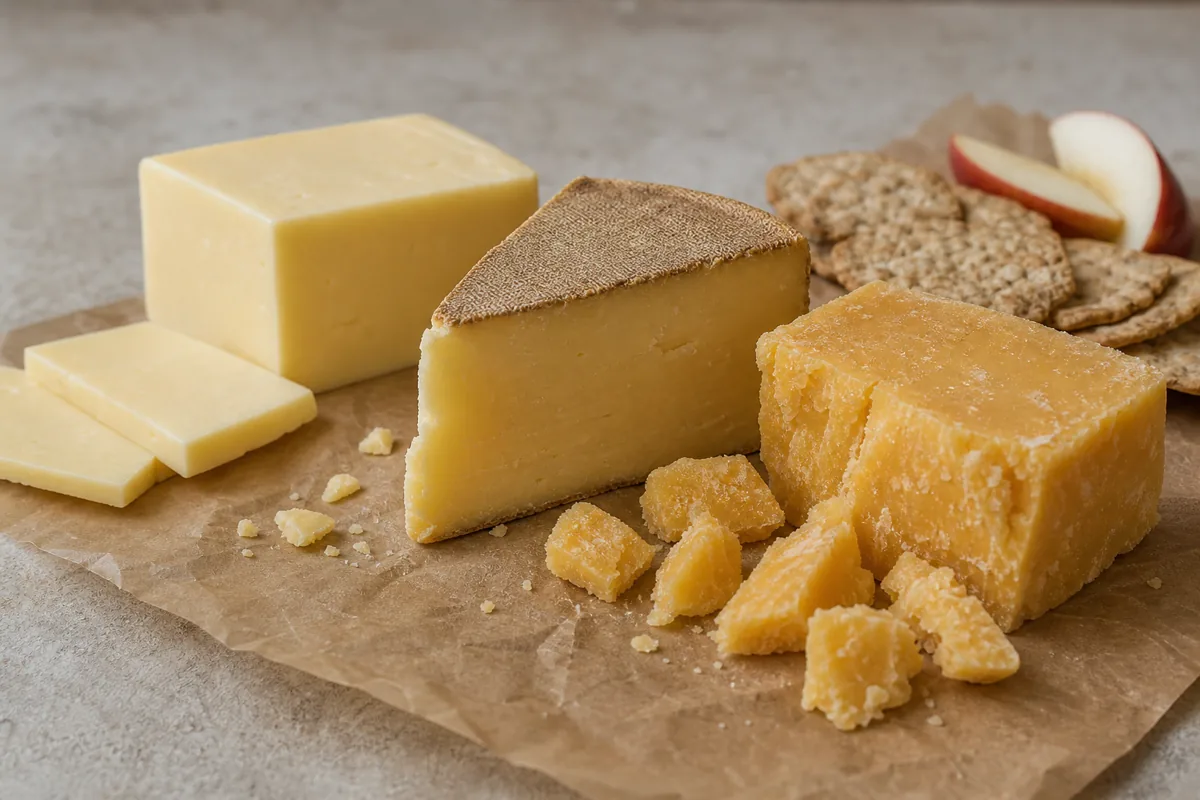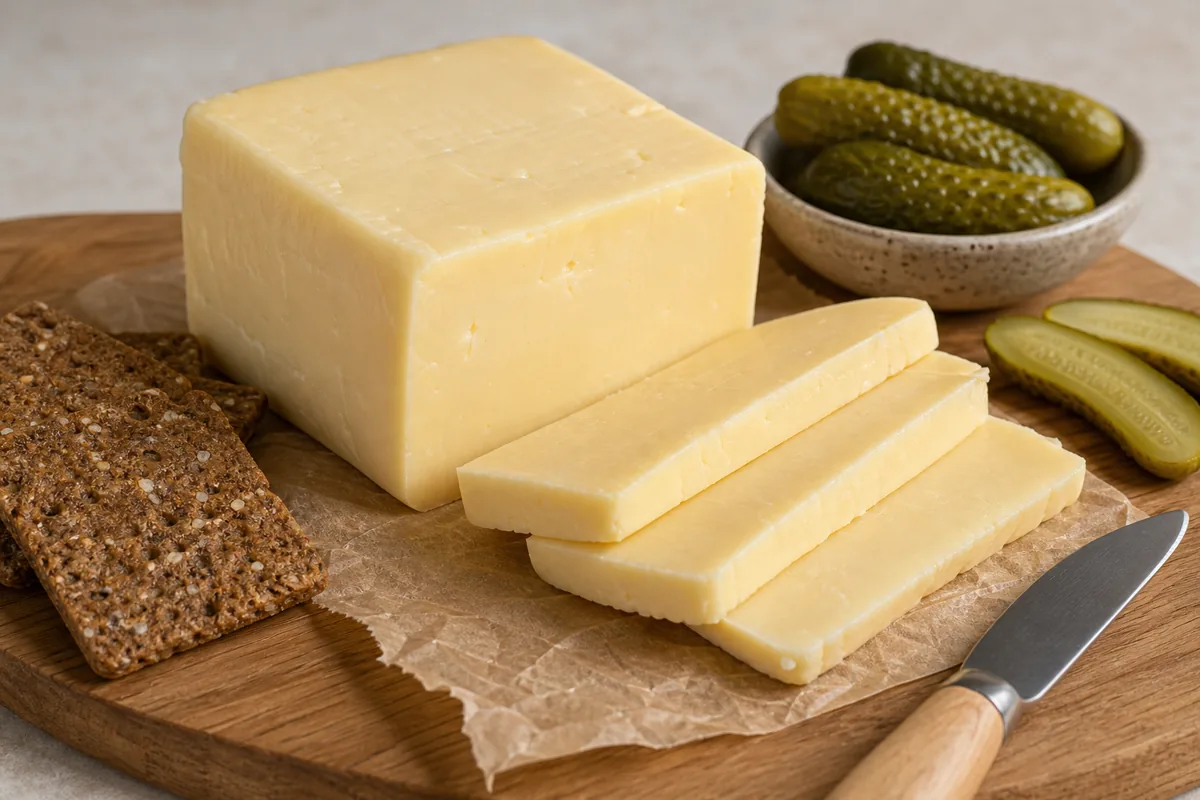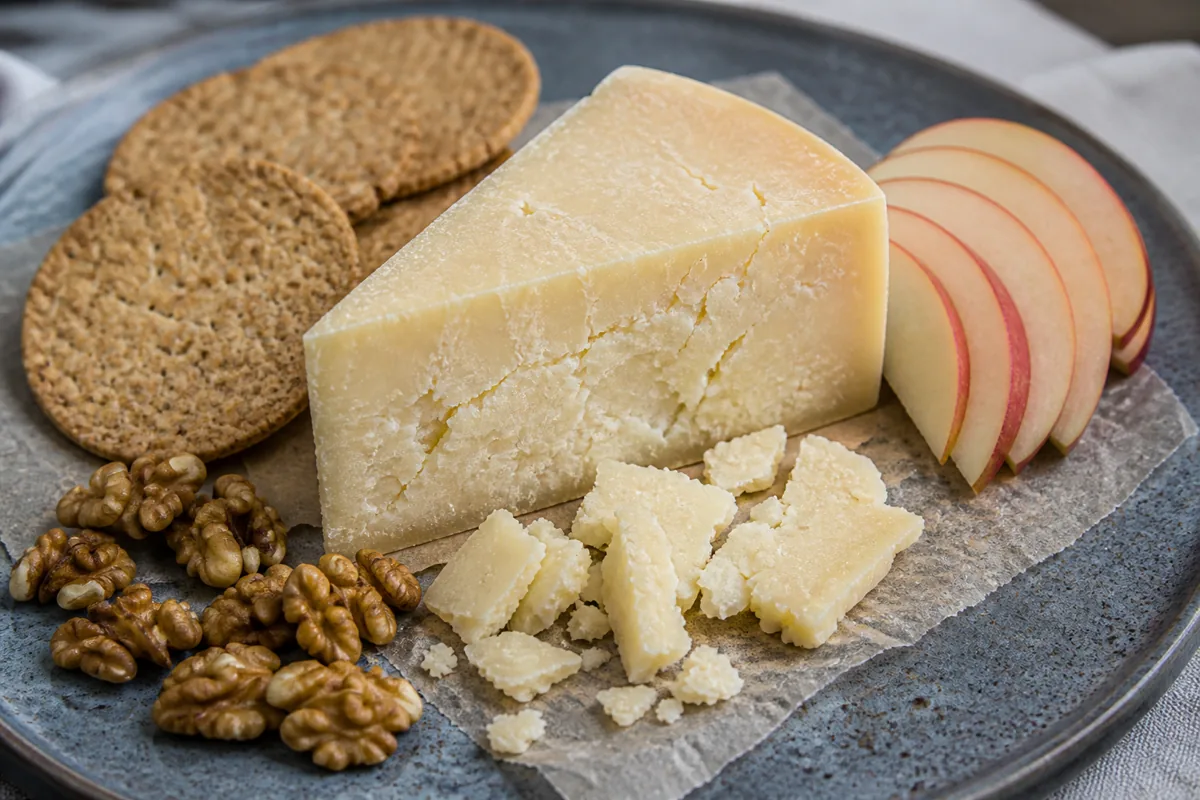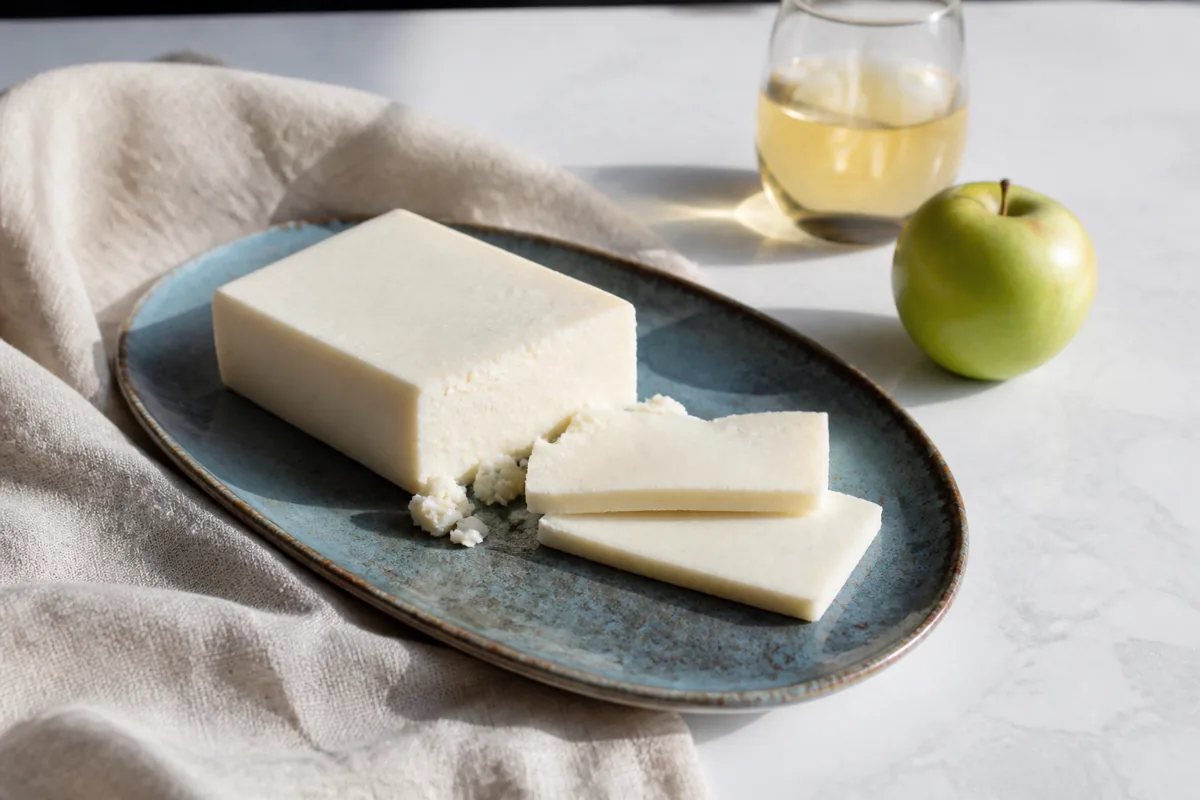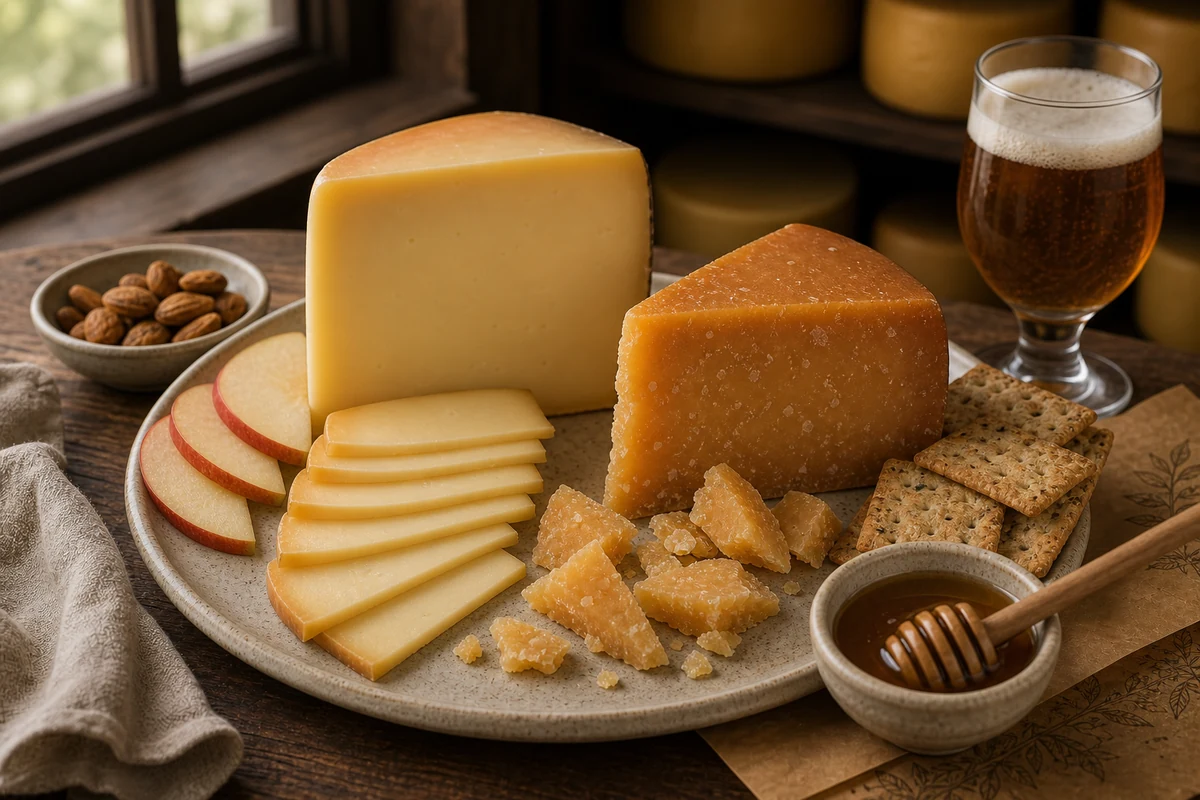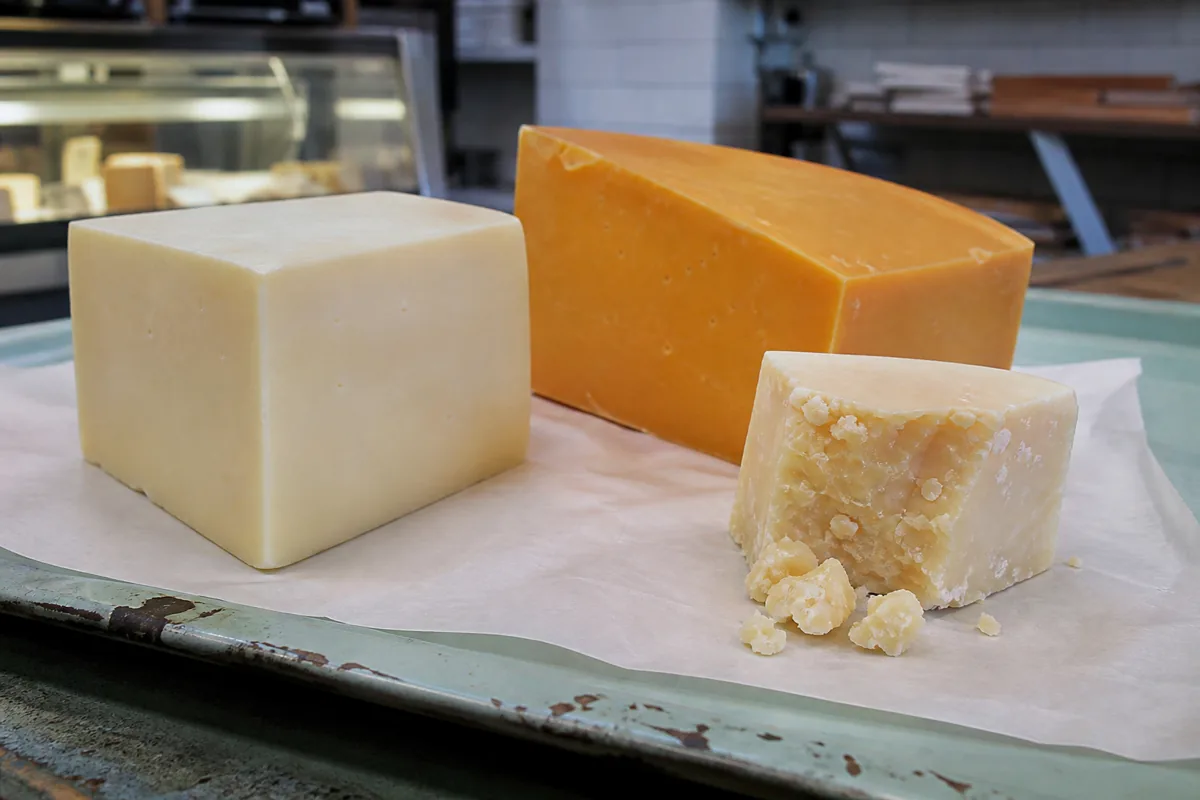
Canadian Cheddar is Cheddar made in Canada under federal composition rules. The standard fixes moisture and milk fat, while the age statement and origin wording on the label tell you how long a block aged and where it comes from.
The most useful clue is age, because Canada lets a producer call Cheddar "aged" only after nine months and requires the label to state the aging period. A dated one-year or five-year block says more than a loose word such as "sharp."
In This Article
What Do Canadian Rules Require for Cheddar?
Section 7.4.3 of the Canadian Food Compositional Standards defines Cheddar as cheese made from a curd that goes through the cheddar process, or through another process that gives the same physical, chemical, and sensory properties. The finished cheese holds no more than 39% moisture and at least 31% milk fat, unless a permitted reduced-fat claim appears on the label.
The same standard requires casein from milk, cream, or their skimmed and ultrafiltered forms to make up at least 83% of the cheese's total protein, or 78% when a permitted reduced-fat claim is on the label. The whey protein to casein ratio in the cheese also cannot exceed the ratio found in milk.
The Canadian Dairy Commission lists a typical Cheddar at 37% moisture, 33% fat, and 25% protein, so a typical block sits within 2 percentage points of both legal limits. The standard caps moisture and sets no floor, which leaves a crumbly aged block and a smooth young one under the same rule.
Those figures describe composition, not quality, so two blocks can pass the same standard and still differ in age, color, and texture.
A Cheddar made from the milk of an animal other than the cow must still meet every requirement that applies to the named variety, including the moisture, milk fat, and casein limits above.
How Do Cheddaring and Aging Build the Block?
The Canadian Dairy Commission calls cheddaring the step that is distinct to Cheddar: once the curd has been cut, warmed, and drained, the curds mat together into large blocks of cheese mass. The blocks are worked and turned to expel more whey, which gives Cheddar its characteristic fibrous texture.
While the curds mat, the starter culture keeps acting on the lactose left in them, so they become more acidic. The curd is then milled into smaller pieces, salted for flavor and as a preservative (Dairy Farmers of Canada specifies dry salting), pressed into blocks, and aged.
Stirred curd Cheddar skips the matting: the curds are stirred constantly until the desired acidity is reached, then salted and pressed. The Commission says the particles never form a cohesive mass, so the cheese may look more granular, though its composition is quite similar to regular Cheddar.
The shortcut is faster and easier, and the Commission notes that a notable amount of the Cheddar used for further processing is made this way, with processed Cheddar a major use.
Aging then builds the flavor: the Commission says it develops largely through the breakdown of some lipid and protein components, helped by microbial and enzyme activity. The same source attributes the range from mild to sharp to how long a block ages.
When Can Canadian Cheddar Be Called Aged?
The standard allows "aged" on Cheddar only when the cheese is made solely from milk and cream ingredients and has aged at least nine months. The package or advertising must state the aging period.
The standard sets no age for the words mild, medium, old, or extra old, so sources describe them as age bands, and the bands do not match.
| Source | Mild | Medium | Old | Extra old |
|---|---|---|---|---|
| Canadian Dairy Commission | 3 months | 4 to 9 months | 9 months to several years (one "strong" band) | Not separated |
| Dairy Farmers of Canada product card | 3 months | 4 to 9 months | 10 months to 1 year | 2 to 7 years |
The two ladders disagree most around nine months: a block of exactly 9 months is medium on the Dairy Farmers of Canada card, falls in the Commission's strong group, and is old enough to be called aged. The card's own ladder also stops old at 1 year and starts extra old at 2 years, so it names nothing in between.
Producers also print their own ages, such as Balderson's 5 Year Cheddar, so the printed number of months or years is the clearest comparison at the counter.
That 5 Year block fits the extra old band on the card and the Commission's strong group. Balderson calls its flavor extra sharp and describes a strong but pleasant sharp taste that developed with age, with a stronger aroma and acidity that stay clean to the senses.
Texture and flavor shift along the same ladder. Dairy Farmers of Canada describes young Cheddar as firm, smooth, and slightly elastic and aged Cheddar as crumbly, and the Canadian Dairy Commission says aged blocks become harder and more brittle.
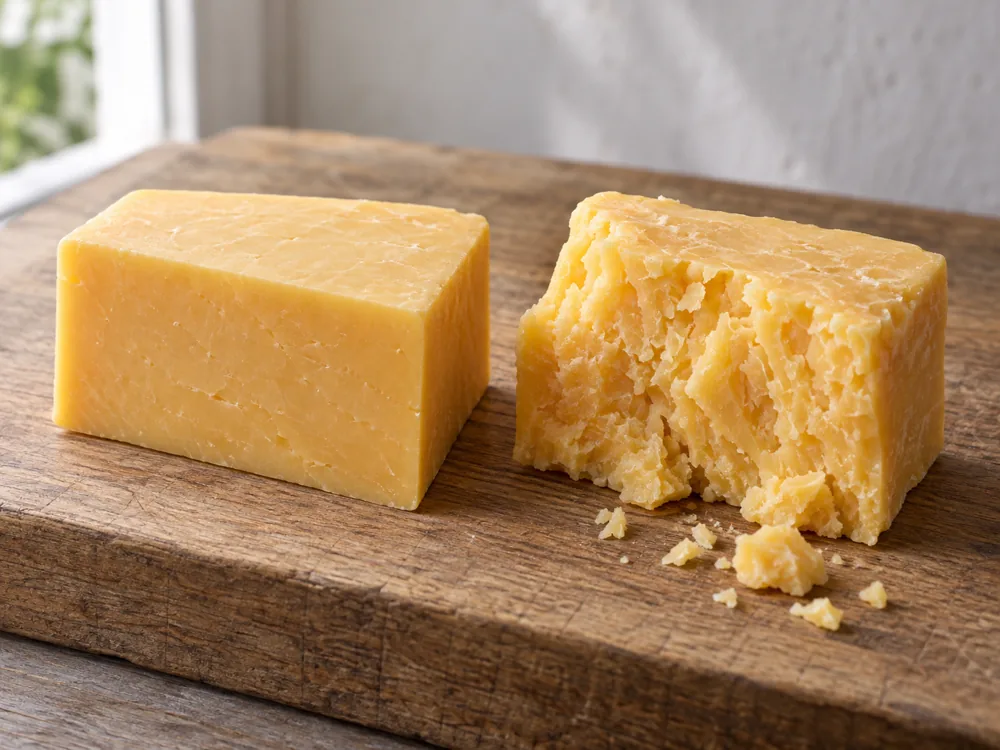
Compare printed ages, not age words. Aged guarantees only nine months, while mild, medium, old, and extra old shift from source to source.
What Does a Canada 1 Grade Mean?
The Canadian Grade Compendium names Canada 1 as the Cheddar grade. A Canada 1 Cheddar has typical and desirable flavor and aroma, a reasonably compact and firm body, a smooth texture, and a clean, smooth, unbroken surface.
It also has a characteristic uniform color unless it is marbled, and the block is uniform in size and regular in shape.
Nothing in that list mentions months of aging, so the grade cannot tell a three-month block from a five-year one. The age statement does that job.
Canada 1 is also the only grade name the compendium gives Cheddar, while dry milk products have both Canada 1 and Canada 2, so it works as a pass mark rather than a rung on a ladder.
What Does Canadian Mean on a Cheddar Label?
The Canadian Food Inspection Agency treats the claim "Canadian" as the same as "Product of Canada," so a Cheddar sold under either wording must have all or virtually all major ingredients, processing, and labour from Canada. "Made in Canada" asks for less.
- Product of Canada or Canadian: all or virtually all major ingredients, processing, and labour are Canadian.
- Made in Canada: the last substantial transformation happened in Canada, even if some ingredients come from other countries, and the label adds a statement such as "from domestic and imported ingredients."
A few foreign ingredients do not cost a food the Product of Canada wording. The agency says very low levels of ingredients not generally produced in Canada, including spices, food additives, vitamins, minerals, and flavoring preparations, do not disqualify the claim, and it generally treats less than a total of 2% of the product as very little.
The Made in Canada qualifier says less than it seems to, because "from domestic and imported ingredients" may be used regardless of the level of Canadian content. A pack also names one country of origin, since the agency does not accept a multi-country statement such as "Product of France and United States."
What Additives Can Go into Canadian Cheddar?
Beyond milk and cultures, the Canadian Dairy Commission's profile lists what may go into Canadian Cheddar: salt, flavoring other than cheese flavoring, coloring agents, calcium chloride as a firming agent up to 0.02% of the milk, wood smoke, and preservatives. Balderson's 5 Year ingredient list shows one of these, calcium chloride, after the bacterial culture.
Grated and shredded Cheddar has its own entries on that list: natamycin on the surface is capped at 10 ppm instead of 20 ppm, and anti-caking agents, namely calcium silicate, microcrystalline cellulose, or cellulose, may total up to 2%.
Cheddar made with a flavoring preparation must add the word "with" and the flavoring's name to its common name. Only Cheddar that has had wood smoke added under the permitted-preservative list may be called smoked, and the word must appear on the principal display panel.
Processed Cheddar and cold-pack Cheddar are separate products in the same standard, blended from Cheddar and related curd cheeses rather than made from fresh curd.
| Name | Made by | Moisture and milk fat | May add |
|---|---|---|---|
| Cheddar | Curd put through the cheddar process, or another process with the same properties | At most 39% moisture; at least 31% milk fat | Salt, flavoring preparations other than cheese flavoring, bacterial cultures |
| Processed Cheddar | Cheddar, stirred curd, granular curd, or washed curd cheeses blended with heat | More moisture and less milk fat than the cheese used: up to 5% and 3% when its moisture limit is under 40%, as Cheddar's 39% is | Water, milk fat, salt, vinegar, sweetening agents |
| Cold-pack Cheddar | The same cheeses blended without heat | No more moisture and no less milk fat than Cheddar allows | Water, milk fat, salt, vinegar, sweetening agents |
A shopper comparing a block with a processed package is therefore not comparing like with like: the processed one is allowed to be wetter and lower in fat, and stirred curd is among the cheeses it may be made from.
Does the Color of Canadian Cheddar Change the Flavor?
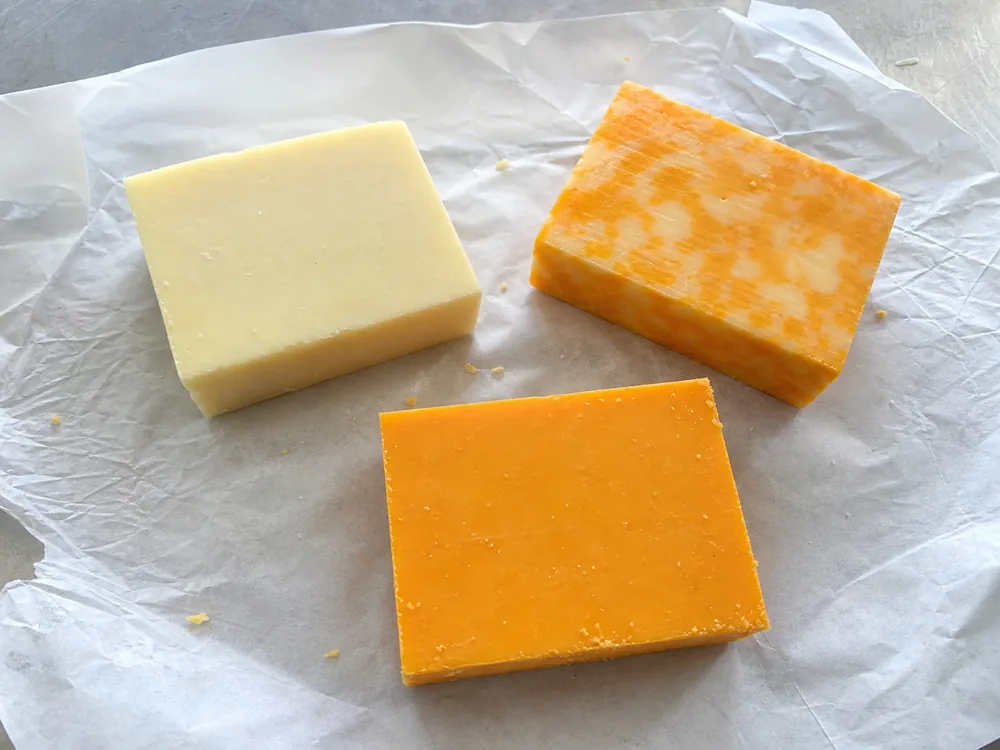
The Canadian Dairy Commission gives Cheddar a natural color of white to pale yellow. Orange Cheddar gets its color from a coloring agent added to the cheese milk, and the colors it lists as permitted include annatto, beta-carotene, chlorophyll, paprika, riboflavin, and turmeric.
Flavor, in the Commission's account, follows aging, while color enters only through those added agents, and Dairy Farmers of Canada names annatto as the natural orange coloring used for orange Cheddar.
Balderson makes a marbled Cheddar from a mixture of white and colored curds and describes it as smooth in flavor with a slightly firmer texture, comparable to a medium Cheddar. Its product page gives the age as 6 months, inside the 4-to-9-month medium band that both age sources use, so the two-color look sits on a medium flavor.
Which Age Suits Which Use?
Cheddar enhances omelettes, macaroni, sandwiches, soups, and casseroles of all kinds, according to the Dairy Farmers of Canada product card.
The Canadian Dairy Commission says aged Cheddars add flavor to soups and, because their flavor is strong, suit low-fat dishes that need little cheese to taste right. Young Cheddar is firm, and the Commission says it adds a characteristic texture to a dish while it stays solid.
| Use | How It Works |
|---|---|
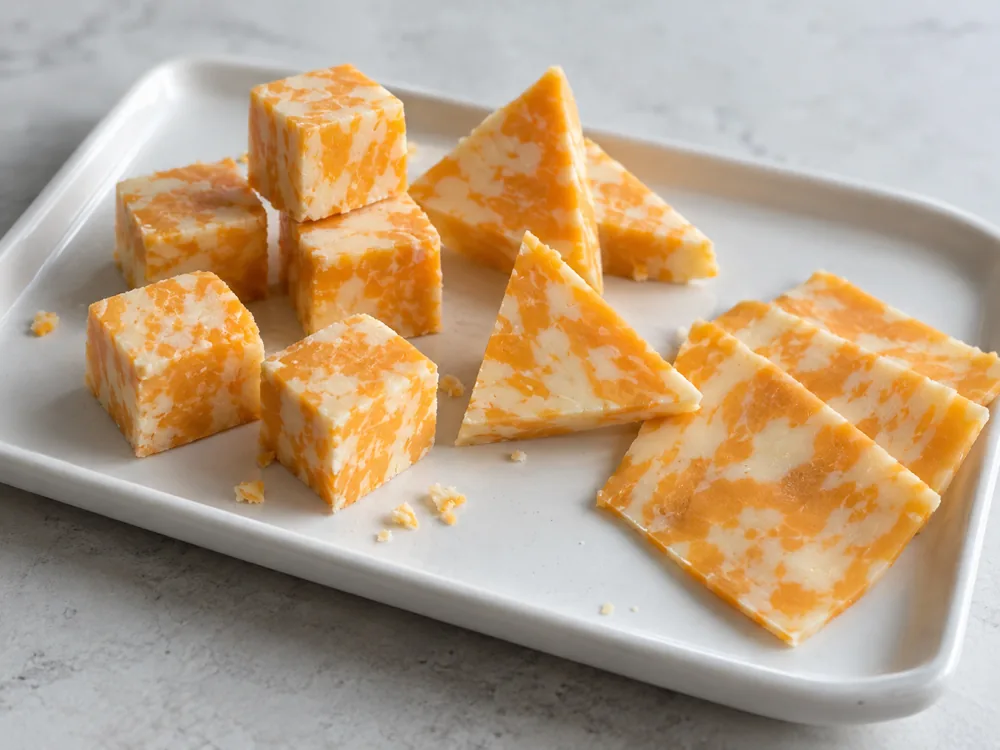
| Sandwich slices and trays | Balderson suggests its marble Cheddar as sandwich slices or as cubes, triangles, or fingers on a cheese tray. |
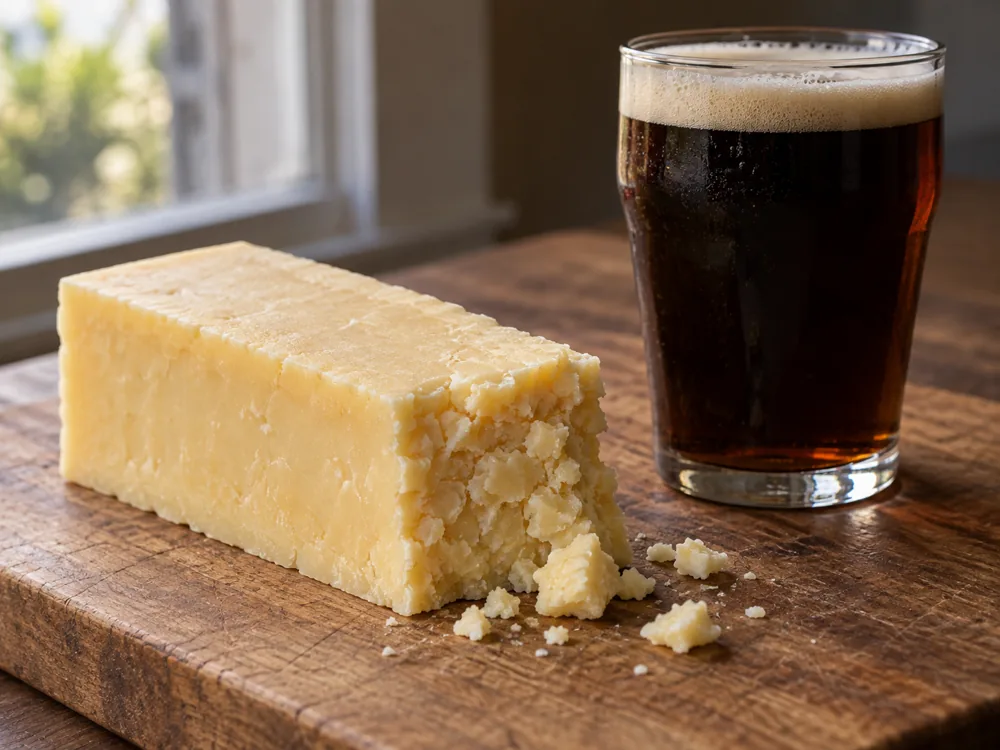
| Cheese plates | Balderson sells its 5 Year Cheddar, firm and slightly crumbly, for entertaining and cheese plates. |
The oldest block also has a drinks list. Balderson's 5 Year product page names wines, port, sherry, and beer.
| Pairing | Why It Works |
|---|---|
| Balderson 5 Year | Full-bodied red wines, port, sherry, or a dark beer, served close to room temperature. |
Balderson's own recipe for the 5 Year is a crostini that combines the cheese with sweet roasted grapes and salty prosciutto.
If a recipe calls for Cheddar, Dairy Farmers of Canada describes Canadian Monterey Jack as similar in taste and texture to Cheddar. It is a semi-soft, rindless cheese that runs from very pale yellow to pale orange.
Jack's curd is heated a second time to remove more whey, the card says, and the cheese is usually aged one month, though it can be aged as long as 6 months. The card describes a mild, slightly acidulous taste with a light hazelnut flavor and a supple, soft texture, where Cheddar is firm.
What Happens When You Melt, Brown, or Overheat Cheddar?
The Canadian Dairy Commission says melted Cheddar becomes smooth and creamy, and that Cheddar browns when baked, which improves the look of some foods.
Overheating is the failure the Commission names: overcooking causes fat separation and protein denaturation, which alters the texture and appearance of the cheese.
In sauces prepared with heat and high shear, the Commission says melted Cheddar or Cheddar powder adds viscosity, and an orange Cheddar also adds color to the dish.
What Should You Read on a Canadian Cheddar Label?
Because sources define the age words differently, the country name alone cannot predict the flavor. The age statement, the origin wording, the color, and the ingredient list carry the real information.
Dairy Farmers of Canada describes Canadian Cheddar as a firm, rindless cheese with a bright, smooth surface and a light yellow or orange color.
A Balderson 5 Year block is sold as firm and slightly crumbly with larger salt crystals, so crystals in an old block match what that producer describes.
Is Canadian Cheddar Safe During Pregnancy?
Health Canada says cheese made from unpasteurized milk can be sold in Canada if it is aged at least 60 days. The Canadian Dairy Commission says the vast majority of Cheddar is made from pasteurized milk.
The NHS lists pasteurised or unpasteurised hard cheeses such as Cheddar as safe to eat in pregnancy.
The CDC lists hard cheese made with pasteurized milk, including Cheddar, among safer choices. Separately, it says pregnant women are 10 times more likely to get a Listeria infection, a figure it does not tie to cheese.
Health Canada tells people who are pregnant, children 5 and under, people 60 and over, and people with weakened immune systems to avoid cheese made from unpasteurized milk.
How Should You Store Canadian Cheddar?
Refrigerate Cheddar at 4°C as soon as possible, the Dairy Farmers of Canada card says, and keep it on the lower shelf away from strong-smelling foods. The wrapping should be plastic wrap that adheres well to the cheese, protecting it from moisture, odors, and mold and keeping it from drying out.
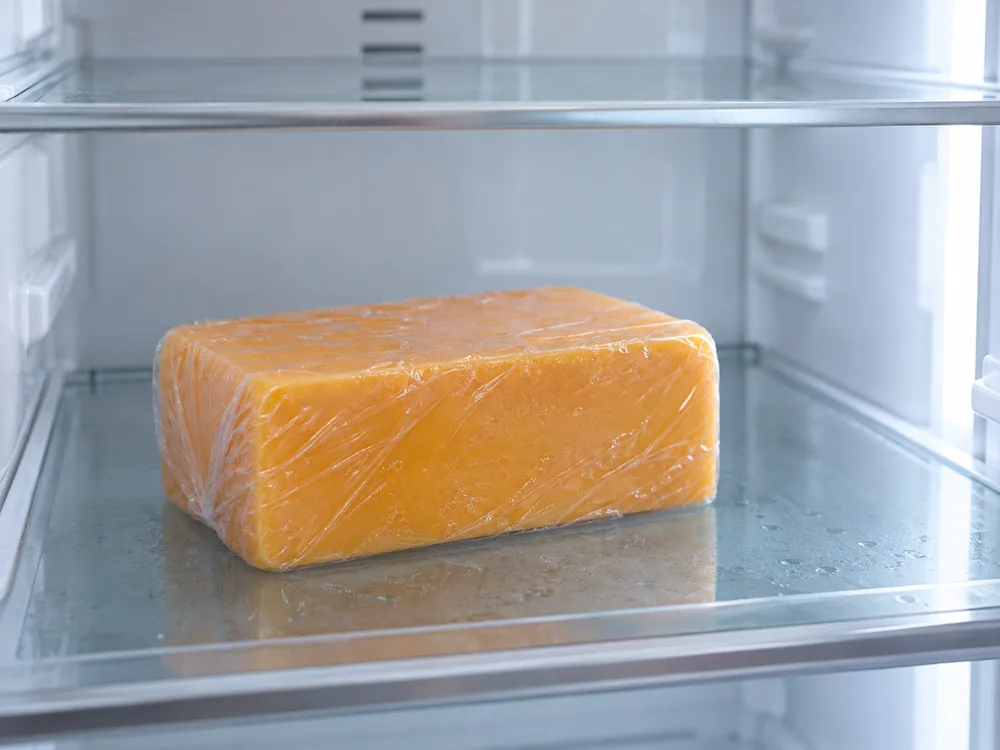
The card also says firm cheeses keep from a few weeks to several months and continue to ripen and develop their tastes in the refrigerator.
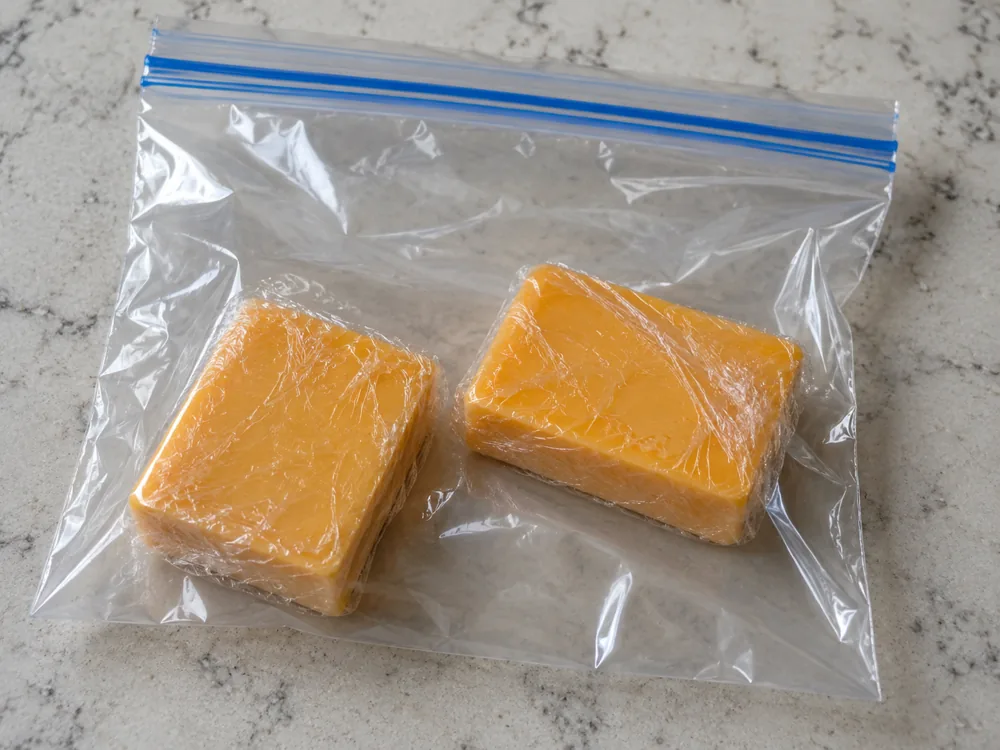
Dairy Farmers of Canada says freezing can affect the texture and character of cheese, which is why thawed cheese is best used for cooking. The Canadian Dairy Commission agrees that freezing preserves the flavor of Cheddar while the texture of thawed cheese may be diminished.
The card also says to buy the freshest cheese possible and to use it by the best before date.
What Are the Nutrition Values for Canadian Cheddar?
The values below come from a 2018 Dairy Farmers of Canada Cheddar card and apply per 30 g. The same card lists 5.8 g of saturated fat and 31 mg of cholesterol, and a package panel is the better guide for a specific brand.
On that card a 30 g serving of Cheddar supplies 13% of the daily value for fat, 31% for saturated fat, 8% for sodium, and 16% for calcium. Its Monterey Jack card lists 112 calories, 9.1 g of fat, and 180 mg of sodium for the same 30 g.
The Canadian Dairy Commission's general profile lists 621 mg of sodium and 721 mg of calcium per 100 g, which the card's figures scale to about 643 mg and 677 mg, so two Canadian profiles of Cheddar differ by roughly 3% to 6%.
Which Sources Support the Canadian Cheddar Standards?
Canadian Food Inspection Agency documents support the composition, aged-claim, grade, origin, and processed-cheese statements. Dairy Farmers of Canada, the Canadian Dairy Commission, and Balderson support age bands, the make, texture, color, additives, uses, storage, and nutrition, while the NHS, CDC, and Health Canada support the pregnancy statements.
SOURCES & REFERENCES
What Else Do People Ask About Canadian Cheddar?
No. Unpasteurized-milk Cheddar can be sold in Canada, and the pregnancy section above gives the 60-day aging rule and the Canadian Dairy Commission's pasteurized majority, so check the package.
It depends on the coagulant. Balderson's 5 Year ingredient list reads "rennet and/or microbial enzyme," which does not say which one a given block uses, so look for an explicit vegetarian claim.