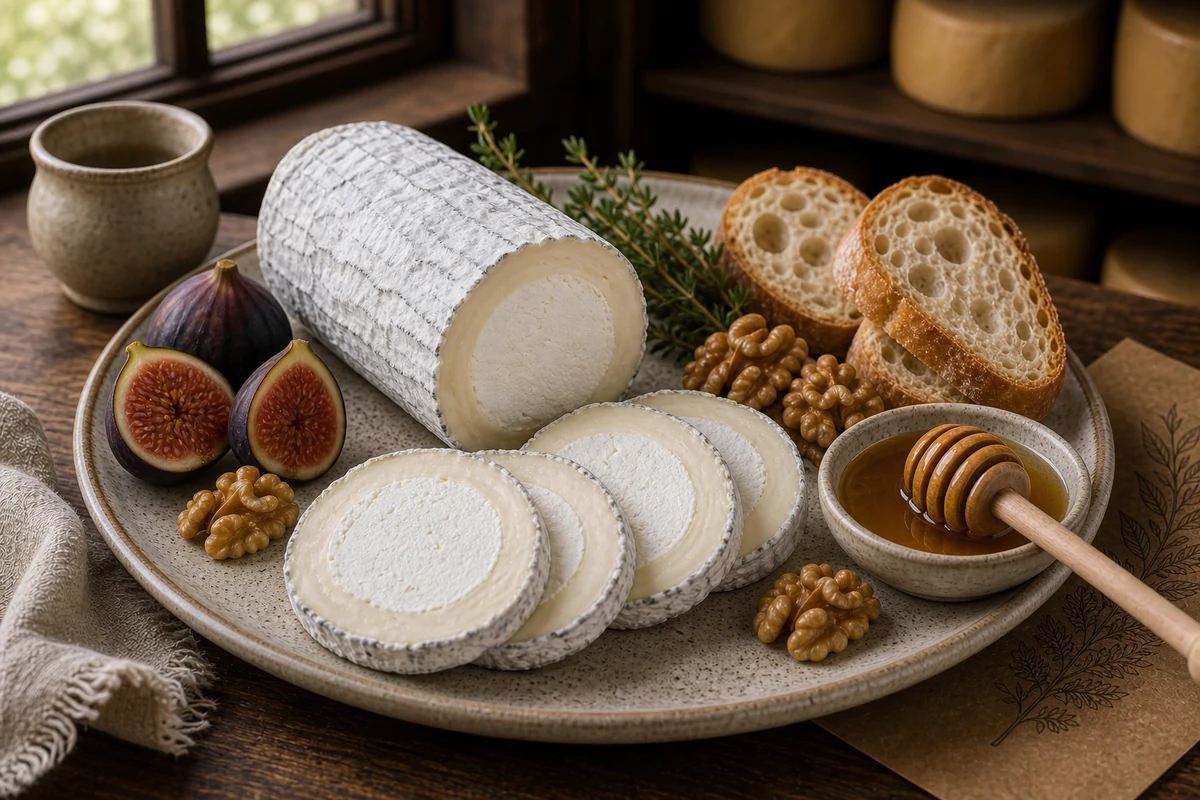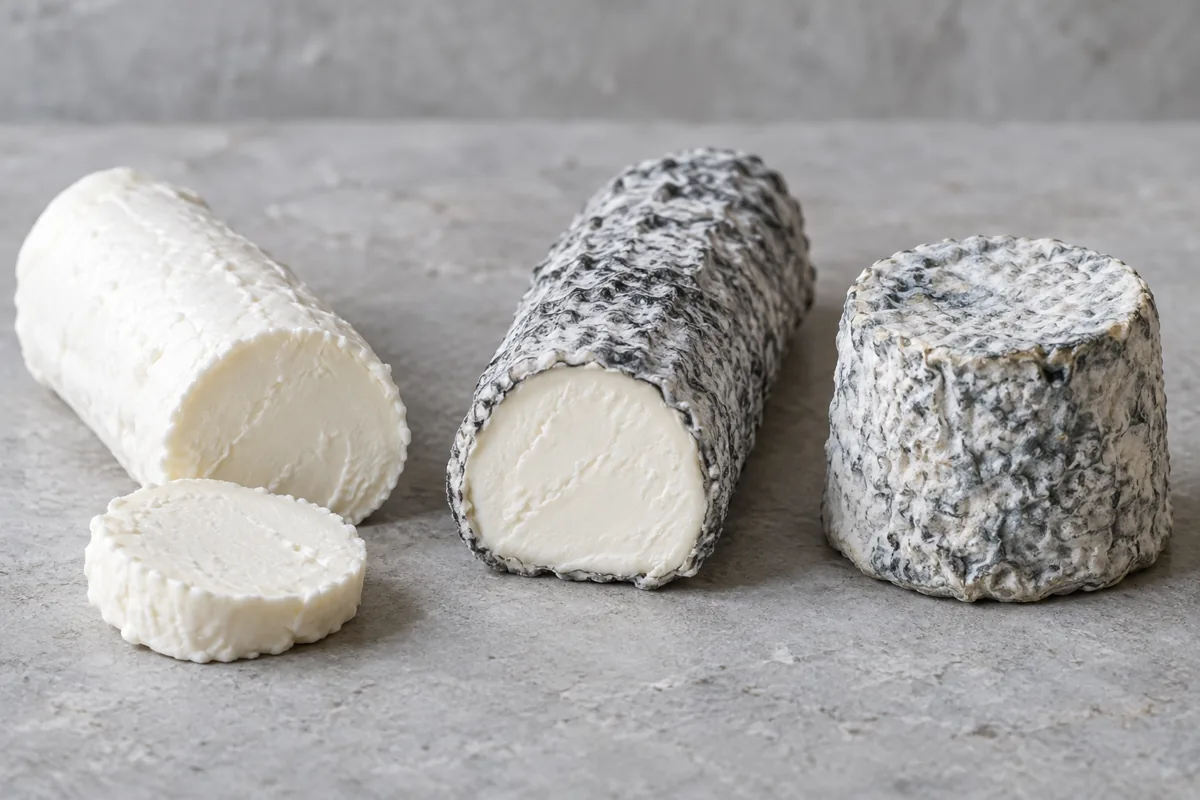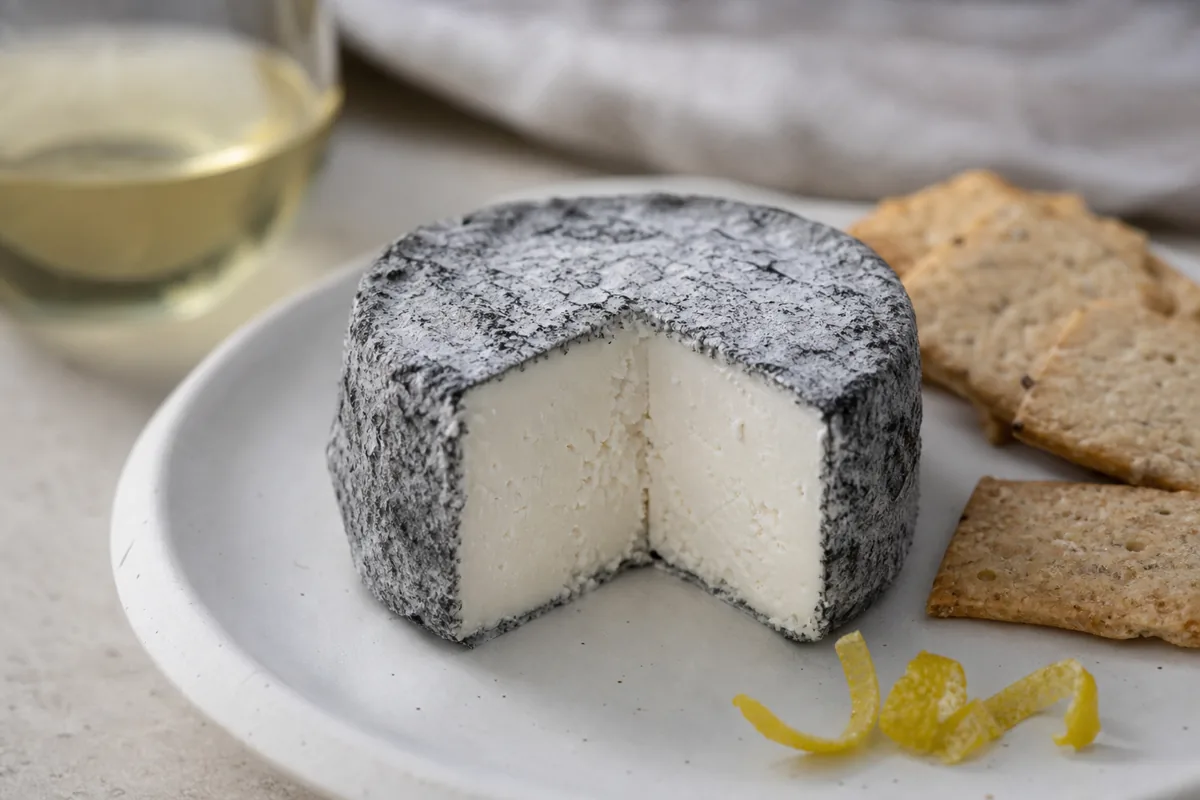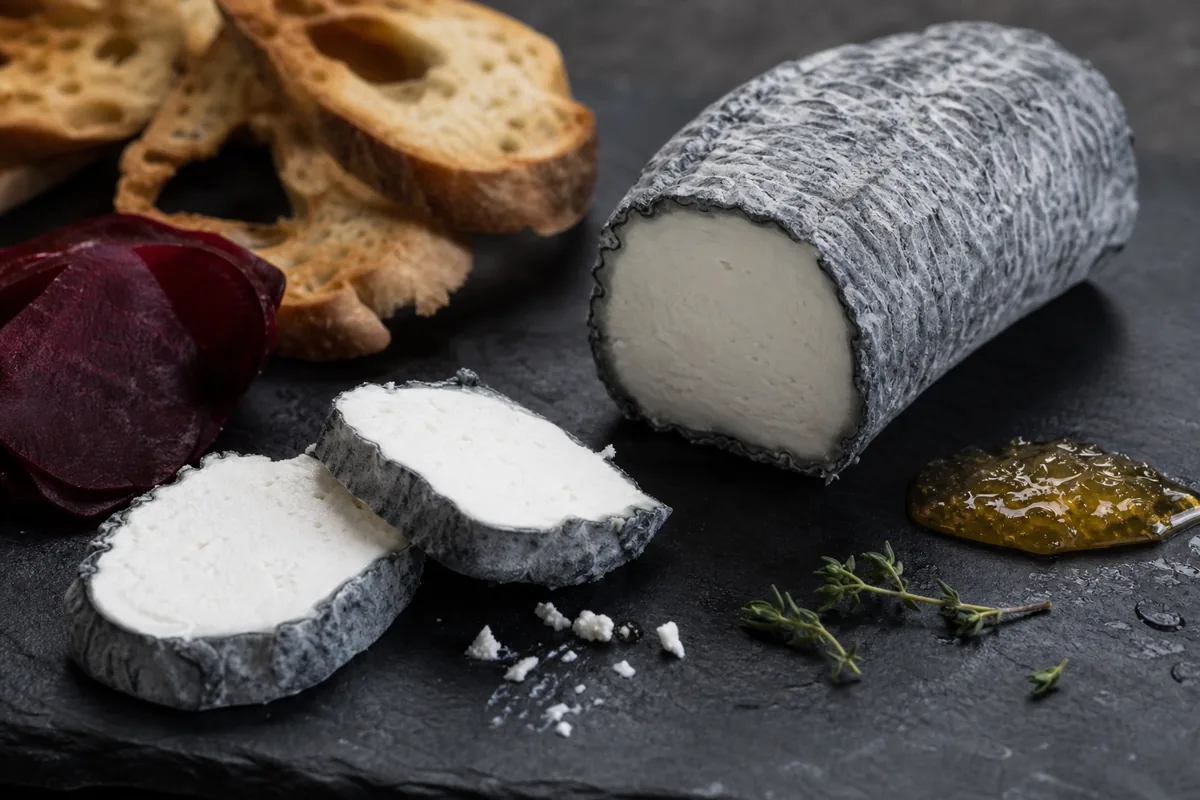
Driftwood is a soft log-shaped goat cheese that White Lake Cheese makes in Pylle, Somerset, and coats lightly in ash. White Lake lists its milk as unpasteurised and thermised, and the shop L'Affinage calls it raw.
Thermised or raw, the milk was not pasteurised, so if you are pregnant, Driftwood comes under the NHS and CDC rules for cheese made from unpasteurised milk.
In This Article
Who Makes Driftwood?
White Lake Cheese makes Driftwood with vegetarian rennet, from the milk of Roger Longman's own herd at Bagborough Farm in Pylle. The herd is a mix of Toggenburg, British Alpine and Saanen goats and numbers more than 700 goats.
White Lake also makes a pyramid-shaped version called Tor, so the log shape is what separates Driftwood from it.
Cheese.com credits a different producer, The Cheese Yard, and calls the cheese semi-soft where White Lake says soft. When you buy, look for White Lake named as the maker.
Is Driftwood Raw or Thermised?
Driftwood's milk is thermised on the maker's own page, which reads "Unpasteurised: Yes (Thermised)", and raw on L'Affinage's.
| Word | What it means | Used for Driftwood by |
|---|---|---|
| Thermised | A heat treatment not equivalent to pasteurisation, in practice 58 to 62°C for at least 15 seconds, with no legal definition | White Lake, the maker (“Unpasteurised: Yes (Thermised)”); The Cheese Lady (Thermised); Cheese Etc (Thermised milk) |
| Unpasteurised | Not pasteurised; all raw milk is unpasteurised, but not all unpasteurised milk is raw | White Lake; Cheese.com (Unpasteurized goat's milk); The Cheese Shed (Unpasteurised) |
| Raw | Not heated above 40°C | L'Affinage (Raw) |
The words differ by heat. Pasteurisation holds milk at 63°C for 30 minutes or 72°C for 15 seconds, thermising in practice means 58 to 62°C for at least 15 seconds, and raw milk is not heated above 40°C.
That explains White Lake's line: thermised milk is unpasteurised without being raw. It also puts L'Affinage's "raw" at odds with the maker's own wording.
If you shop by milk type, check where the shop files thermised cheese. The Cheese Lady's milk menu has one heading for Pasteurised/Thermised and another for Raw and gives Driftwood's milk as thermised, while White Lake's page marks the same cheese as unpasteurised.
Can You Eat Driftwood When Pregnant?
White Lake lists Driftwood's milk as unpasteurised and thermised, and the NHS says any foods made from unpasteurised milk, such as soft ripened goats' cheese with a white coating on the outside, must be thoroughly cooked.
The NHS says the same of pasteurised or unpasteurised mould-ripened soft cheeses with a white coating on the outside, such as brie, camembert and chèvre: these must be thoroughly cooked.
The CDC lists soft cheese made from unpasteurized (raw) milk, for example queso fresco, brie, camembert and blue-veined cheese, as a riskier choice. It adds that pregnant women are 10 times more likely to get a Listeria infection.
Cheese Etc's product panel marks Driftwood "Suitable for pregnancy: No". If you are pregnant, check the label for the milk treatment and ask a midwife or doctor before eating it uncooked.
What Do the Ash and the Geotrichum Rind Do for Driftwood?
The ash on Driftwood helps manage acidity at the surface and encourages the wrinkly rind of geotrichum, a subtle, yeast-like mould, to develop.
The geotrichum cannot work deep into the cheese, so it puckers the rind to give itself more surface area to act on the rind beneath. The name comes from that look: a wobbly, striated, bark-like rind on a log shape, like a piece of driftwood.
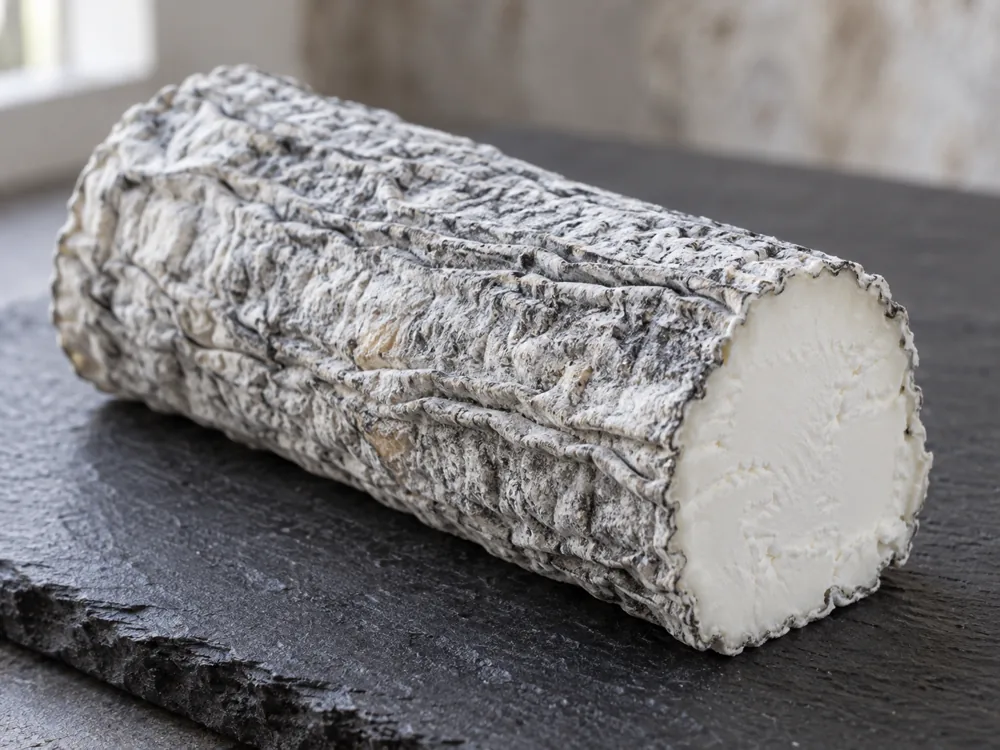
White Lake's product page tells you to expect "wrinkly and bloomy rinds" on its cheeses, and a bloomy rind is one where moulds are allowed to grow on the cheese.
How Does Driftwood's Texture Change as It Ripens?
Driftwood ripens from the outside in, so the layer under the rind softens first. In a young cheese, the geotrichum working inward leaves a creamy breakdown a few millimetres under the surface around a moist, chalky centre.
Descriptions split on the young centre: slightly chalky for Cheese Etc and L'Affinage, smooth and mousse-like for Cheese.com.
| Stage | Texture | Given by |
|---|---|---|
| Young centre | Bright white, fresh and slightly chalky; moist and chalky | Cheese Etc; L'Affinage |
| Young cheese as a whole | Smooth and mousse-like | Cheese.com |
| Under the rind | Softer and creamier, around a firmer centre; a creamy breakdown a few millimetres under the surface | Cheese Etc; L'Affinage |
| Later stage | Eventually mousse-like and silky; rich and creamy as it matures | Cheese Etc; Cheese.com |
| Overall | Beautifully creamy and soft textured; creaminess and a gentle moussey texture | White Lake; The Cheese Lady |
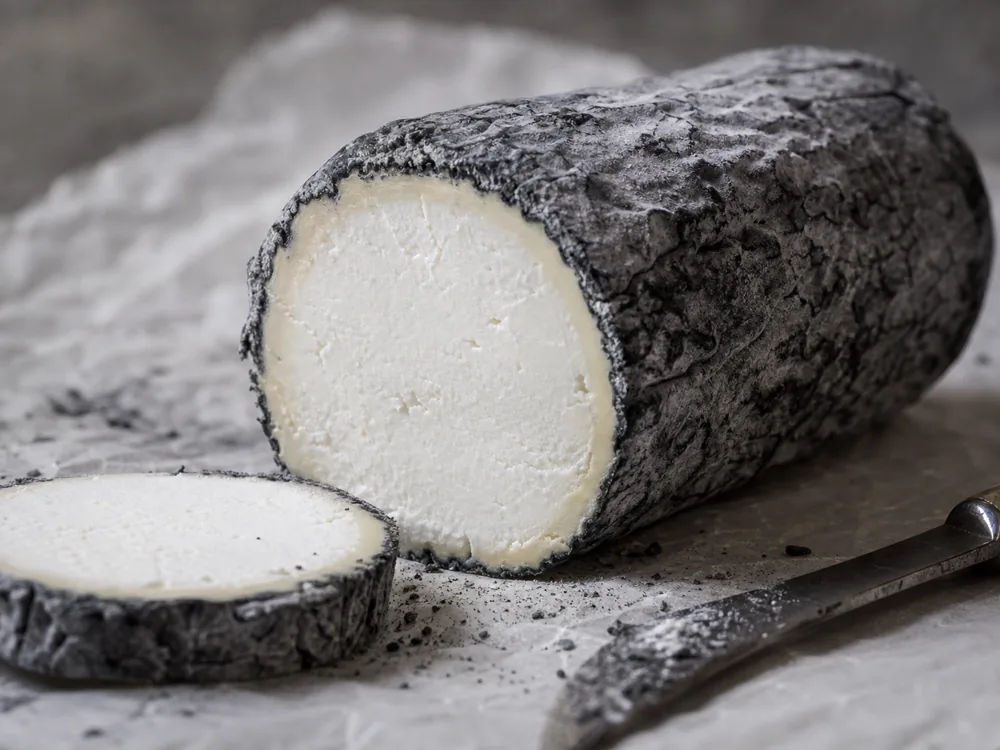
Driftwood is matured for 2 to 3 weeks, and White Lake says some of its cheeses go out ripe and others young enough to mature further at home.
Cut your log and look at the centre to judge which you have: in Cheese Etc's stages, a chalky white centre is the young cheese and a mousse-like, silky paste the later one.
What Does Driftwood Taste Like?
Driftwood's descriptions agree on citrus or lemon, and White Lake, Cheese Etc and The Cheese Lady add pepper and earth.
| Note | How each description puts it |
|---|---|
| Citrus | Citrus notes (White Lake); citrusy notes (Cheese.com); fresh lemony notes first (Cheese Etc); characteristic, citric tones (L'Affinage); citrus undertones and the headline word “Zesty” (The Cheese Lady) |
| Pepper and earth | Subtle peppery and earthy undertones (White Lake); earthier flavours and sometimes a little pepperiness from the rind (Cheese Etc); subtle hints of pepper and earth (The Cheese Lady) |
| Milk | A clean goat's milk tang (Cheese Etc); lactic tones (L'Affinage) |
| Salt | Saltiness (Cheese.com) |
| Yeast | Slightly yeasty flavours from the rind (Cheese Etc) |
| Herbs | “Velvety. Herbaceous. Zesty.” in the headline (The Cheese Lady) |
White Lake places the peppery, earthy undertones right after its mention of the ash coating, while Cheese Etc credits the rind with the earthier, slightly yeasty flavours and sometimes a little pepperiness.
How Do You Serve Driftwood?
White Lake suggests Driftwood on a salad, on pizza, on a shared cheese board or with chilli jam, and Cheese Etc and The Cheese Lady also name pizza and chilli jam.
| Use | How It Works |
|---|---|
| Salad | White Lake says it complements a salad perfectly. |
| Pizza | White Lake suggests adding it to a pizza, and Cheese Etc and The Cheese Lady also name pizza. |
| Cheese board | White Lake lists it for a cheese board. |
| Chilli jam | White Lake says it goes extremely well with chilli jam; Cheese Etc and The Cheese Lady also name it. |
| Sourdough or plain crackers | Cheese Etc serves it with either, plus a spoonful of chilli jam. |
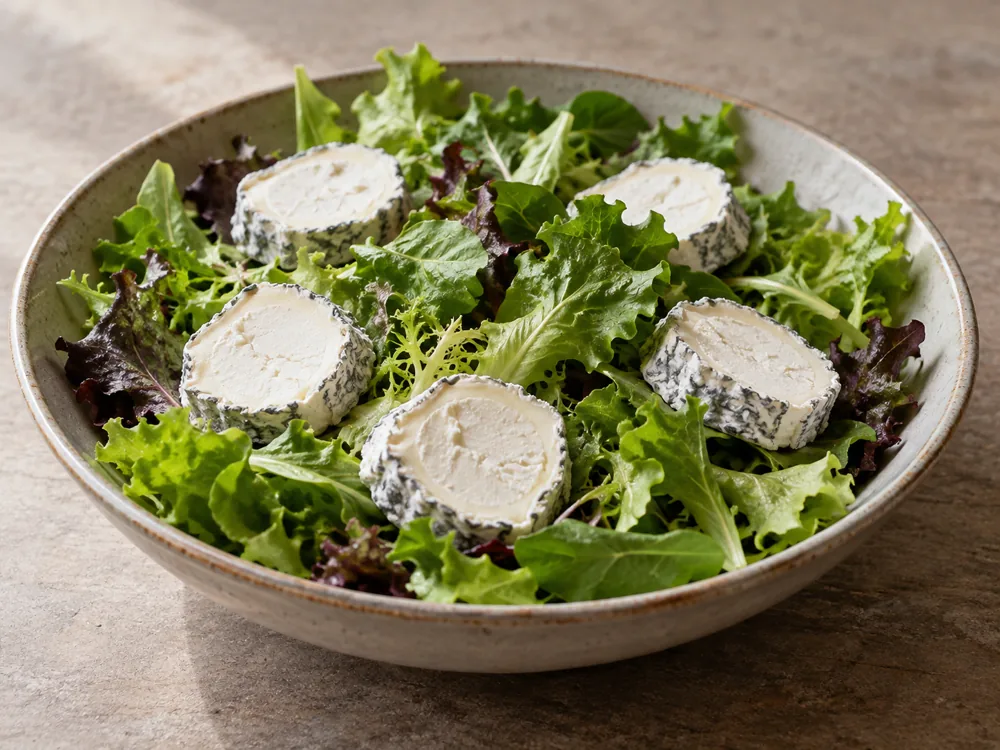
Cheese Etc gives two timings: take the cheese out of the fridge a good hour before you eat it so it comes up to room temperature, and for a pizza topping, add a few slices towards the end of cooking.
Which Drinks Go with Driftwood?
Cheese Etc suggests a crisp Sauvignon Blanc or dry Somerset cider, and The Cheese Lady names Sauvignon Blanc and cider too, along with Provence rosé, light-bodied reds and sparkling wines. If you want a drink both shops name, pour Sauvignon Blanc or cider.
| Pairing | Type | Why It Works |
|---|---|---|
| Crisp Sauvignon Blanc | Wine | Cheese Etc and The Cheese Lady both suggest Sauvignon Blanc. |
| Dry Somerset cider | Drink | Cheese Etc names dry Somerset cider; The Cheese Lady lists cider without a style. |
| Provence rosé | Wine | The Cheese Lady names Provence rosé. |
| Light-bodied red wine | Wine | The Cheese Lady lists rosé or light-bodied reds. |
| Sparkling wine | Wine | The Cheese Lady lists sparkling wines. |
How Does Driftwood Compare with Selles-sur-Cher?
Like Driftwood, the ash-coated Selles-sur-Cher is a goat cheese, but it comes from the Loire Valley in France, and Cheese.com calls its texture firm where it calls Driftwood's smooth.
| Cheese | Origin | Milk | Type and texture | Rind |
|---|---|---|---|---|
| Driftwood | Somerset, England | Unpasteurized goat | Semi-soft; smooth | Ash coated |
| Selles-sur-Cher | Loire Valley, France | Goat | Soft; firm | Ash coated, with vegetable ash and salt |
Selles-sur-Cher is coated with vegetable ash and salt and matured in caves. Cheese.com describes a slightly elastic interior with nutty flavours and a lactic, tangy aftertaste, where Driftwood's descriptions lead with citrus and a chalky-to-mousse paste.
In the glass the two overlap: Cheese.com pairs Selles-sur-Cher with a dry white wine, the same colour of wine as the Sauvignon Blanc that Cheese Etc and The Cheese Lady name for Driftwood.
How Should You Store Driftwood?
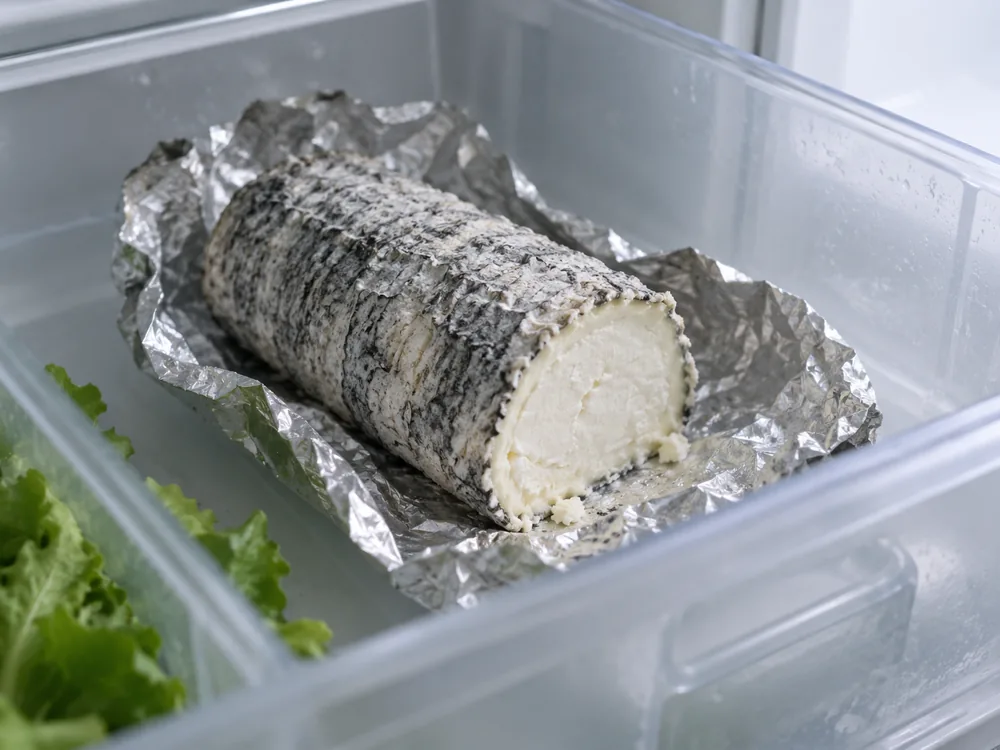
Keep it in the salad compartment of your fridge. In its advice on storing cheese, White Lake says soft, blue and cut cheeses fare best in the fridge, and that the salad compartment suits them because it is slightly warmer and more humid than the rest of the fridge.
White Lake wraps its cheeses in breathable wraps or vacuum-sealed portions, and if you will not eat Driftwood all in one go, it says to keep it in its original packaging or store it in foil. Cheese Etc suggests waxed paper or cling film in the fridge.
Once the pack is open, Cheese Etc says to use it within 10 to 14 days, while White Lake points you to the Best Before date on the pack.
Where Do You Buy Driftwood and What Does It Cost?
A log weighs 200g on White Lake's page, around 200g at The Cheese Shed, at least 200g at L'Affinage and 215g at Cheese Etc.
White Lake's own page lists Driftwood at £8.70, with next-day delivery at £7.00 on orders under £40 and free over £40, so if you order a single log alone, you pay £15.70. The Cheese Shed lists £11.99, Cheese Etc £11.00 and L'Affinage £12, each with its own delivery terms.
White Lake's page lists Silver at the British and Irish Cheese Awards 2025, the Artisan Cheese Awards 2025 and the Great Yorkshire Show 2025. It also lists two Golds at the International Cheese & Dairy Awards 2023, 3 Stars at the Great Taste Awards 2021 and Silver at the World Cheese Awards 2019/2020.
The Cheese Lady adds 1 Star at the Great Taste Awards 2020 and Silver at the Global Cheese Awards 2021, and Cheese.com lists silver medals at the World Cheese Awards 2019 and the British Cheese Awards 2018.
SOURCES & REFERENCES
Driftwood is a soft goat cheese log from White Lake Cheese in Somerset, lightly coated in ash and made with vegetarian rennet.
White Lake, the maker, lists the milk as unpasteurised and thermised, and L'Affinage calls it raw, so either way it is an unpasteurised cheese.
Thermised milk gets a heat treatment not equivalent to pasteurisation, in practice 58 to 62°C for at least 15 seconds, and thermisation has no legal definition.
Its descriptions lead with citrus or lemon, with goat tang, pepper and earthy notes, and Cheese Etc adds a slightly yeasty rind.
The geotrichum in the rind cannot work deep into the cheese, so it puckers the rind to give itself more surface area to act on the rind beneath.
White Lake lists the milk as unpasteurised and thermised, and the NHS says any foods made from unpasteurised milk must be thoroughly cooked. Cheese Etc marks Driftwood "Suitable for pregnancy: No", so check the label and ask a midwife or doctor.
White Lake says the refrigerator salad compartment, in its original packaging or foil, while Cheese Etc says waxed paper or cling film and use within 10 to 14 days of opening.
Cheese Etc and The Cheese Lady both name Sauvignon Blanc and cider, and The Cheese Lady also lists rosé, light-bodied red and sparkling wine.