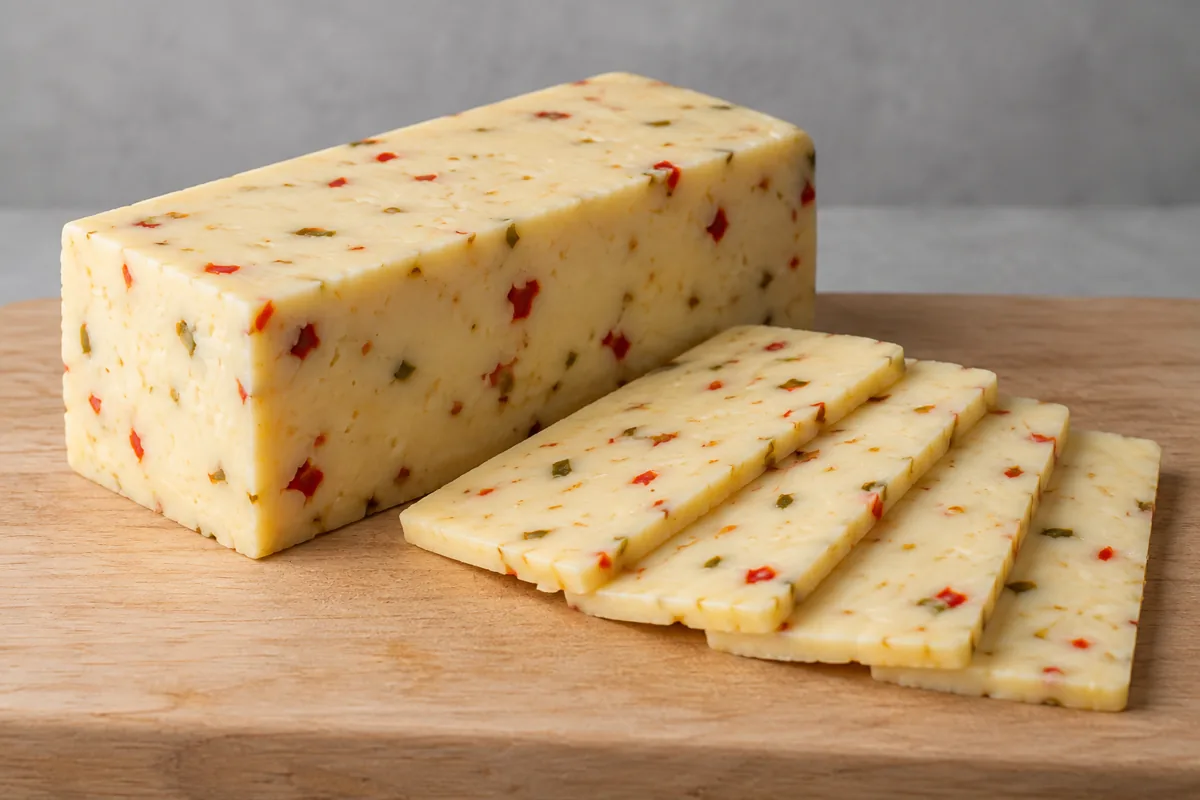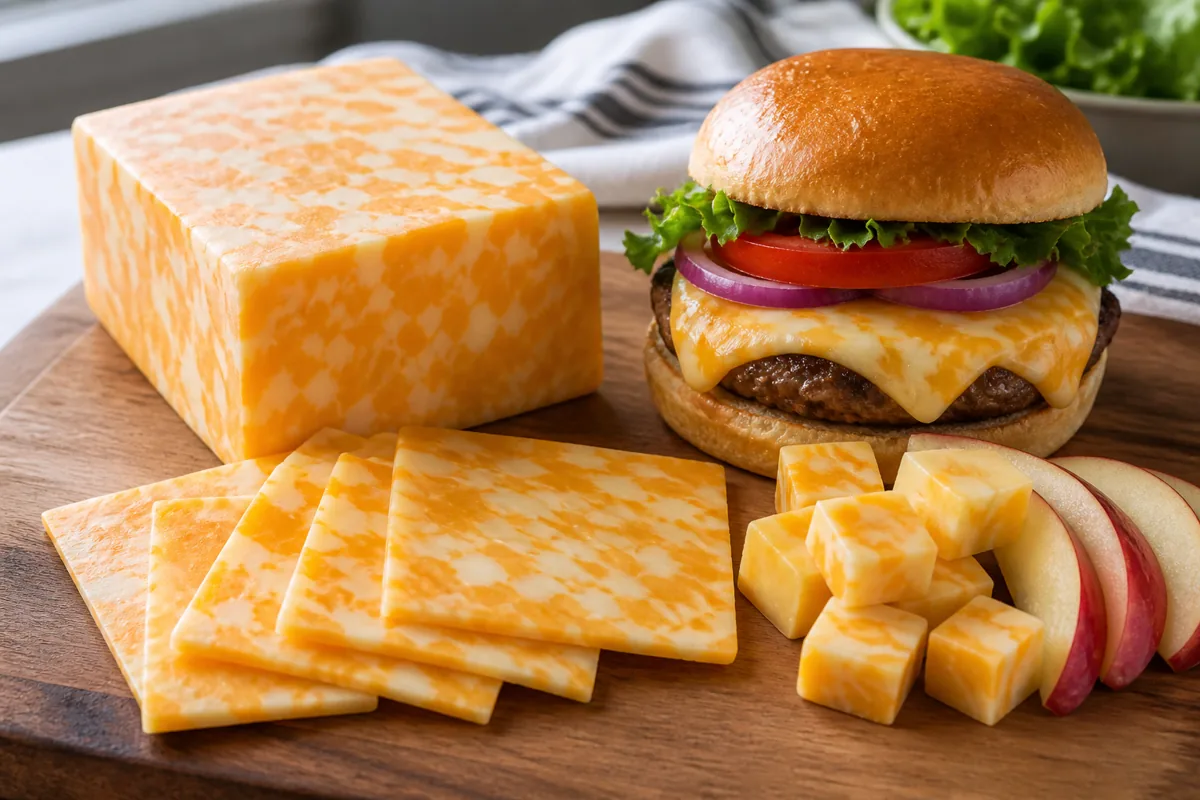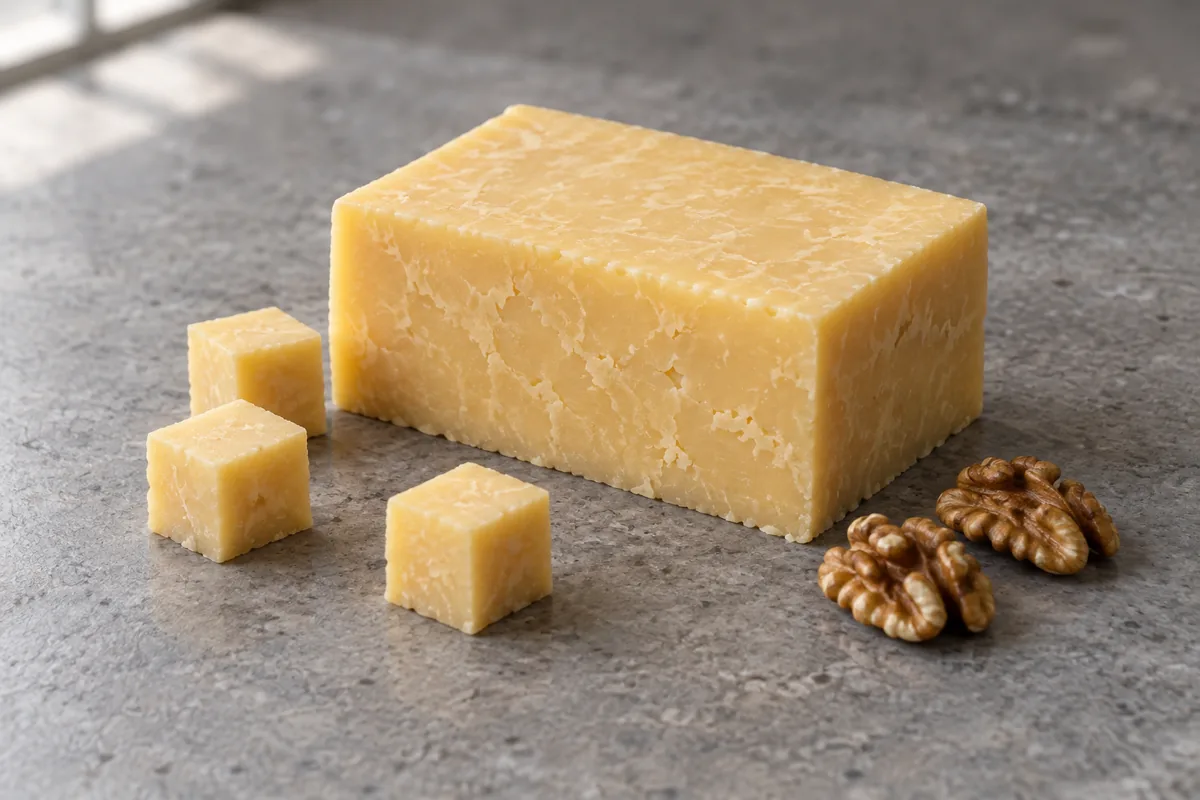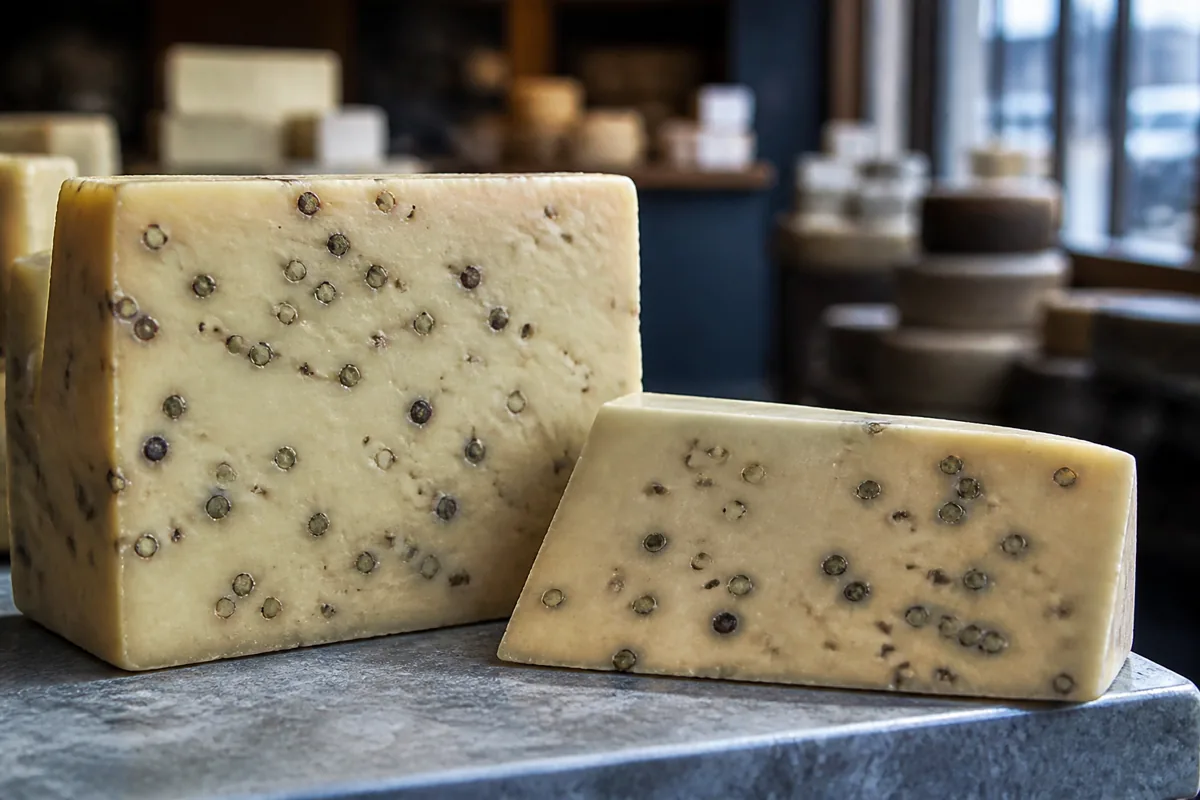
Marco Polo is a pasteurized cow's milk cheese from Beecher's Handmade Cheese in Seattle, made with cheddar and Gruyère cultures and blended with lightly milled and cracked green and black peppercorns.
If you see Marco Polo Reserve on the shelf, that is a separate clothbound cheese with its own age and its own awards.
In This Article
What Kind of Cheese Is Marco Polo?
Marco Polo competes as a cheddar with flavor added: Beecher's entered it in 2026 in the American Cheese Society category "Cheddar with Flavor Added (refer to category KH for intended hot flavors)." It is made with the same cheddar and Gruyère cultures and the same cheddaring technique as Beecher's Flagship.
Cheddaring means piling and turning slabs of cooked curd after the whey drains, so the curd firms up as the rest of the whey leaves.
Cheddar, Murray's adds, names both a style of cheese and the process used to make it, and for Marco Polo it points to the process.
Beecher's ingredient line reads pasteurized milk, salt, pepper, culture and enzymes. If you avoid animal rennet, Murray's listing fills in what "enzymes" leaves open: it lists the rennet as microbial.
Beecher's names the cheese for the thirteenth-century traveler Marco Polo, whom it credits with bringing pepper and other discoveries to Europe.
The maker is Beecher's Handmade Cheese, which Kurt Beecher Dammeier opened in Seattle's Pike Place Market in 2003. Murray's adds that the milk for Beecher's cheeses comes from local farms with no added rBST, and that the cheeses contain no artificial ingredients or colors.
What Does Marco Polo Taste Like?
Marco Polo tastes of sweet butter and nuts in Murray's description, the same base as Beecher's Flagship, with the cracked peppercorns adding a zippy bite and slight crunch. Beecher's own words are savory umami and butter notes, from a cheese it calls creamy.
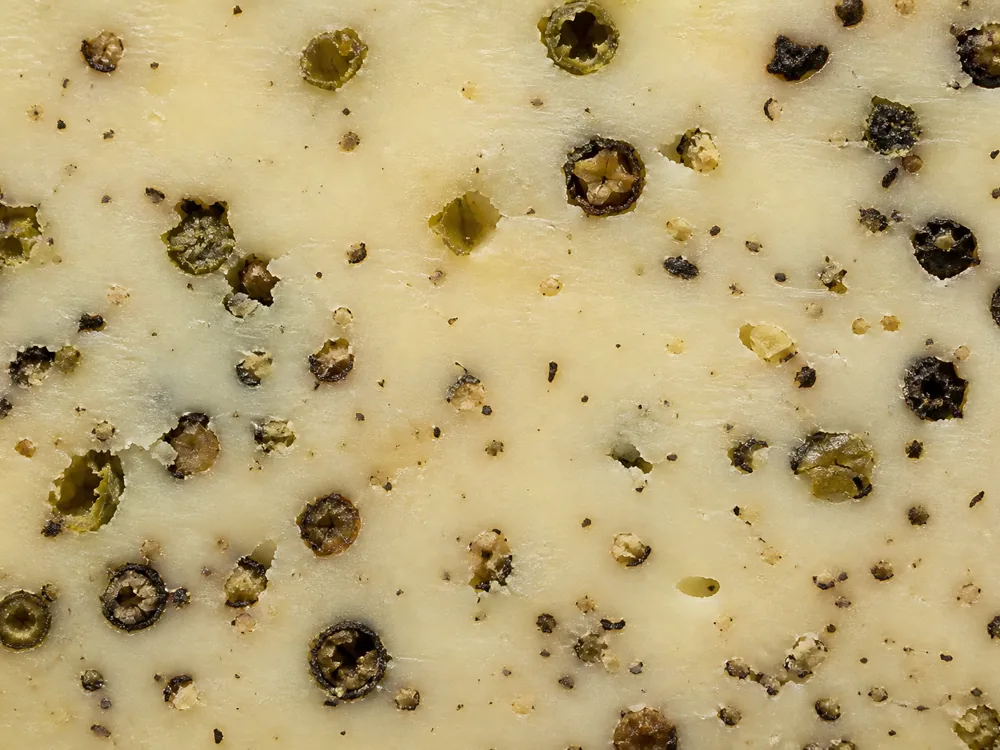
Two kinds of pepper go in: the familiar black peppercorns and green ones, which Murray's notes are harvested before they mature and have a fresher flavor.
The slight crunch Murray's mentions would come from those peppercorns: Beecher's says they are lightly milled and cracked, and pieces of different sizes would explain it.
Marco Polo vs Marco Polo Reserve
Reserve is its own product. Beecher's calls it a special version of Marco Polo made with both green and black cracked peppercorns, traditionally cloth-bound and open-air aged for slightly lower moisture, higher salt and a richer taste while keeping a clean, creamy finish.
| Detail | Marco Polo | Marco Polo Reserve |
|---|---|---|
| Age (Murray's listing) | 3 months | 10 months |
| Exterior | Not stated | Rubbed in butter and wrapped in cheesecloth, then develops a natural rind (Murray's) |
| Texture and flavor | Creamy; sweet butter and nuts with a peppercorn bite | "A bit drier and even richer," with roasted nuts and a pleasant tang (Murray's) |
| Serving suggestions from Beecher's | Melt on a burger or steak, grate into a baked potato | Cheese plate, thinly shaved over pasta |
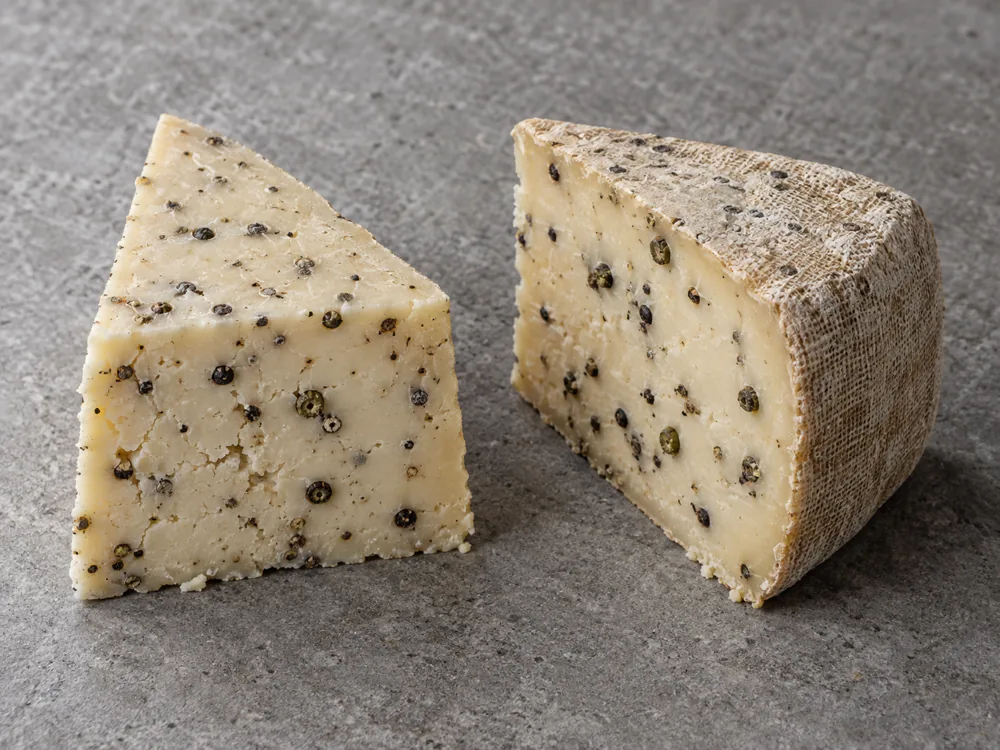
Between the two, expect a modest change in texture: Beecher's says slightly lower moisture and Murray's says a bit drier. The stronger language is about flavor, where Murray's calls the cheese punchy and peppery and the tang pleasant.
The ingredient list will not separate them, because Beecher's prints the same line for the standard cheese, Reserve and the sticks. The cloth, the open-air aging and the age do: Murray's lists the standard cheese at 3 months and Reserve at 10 months.
In October 2026 Murray's listed 7.2 oz of Marco Polo at $14.00 and 7.2 oz of Reserve at $18.00, which is about $1.94 and $2.50 an ounce, so Reserve cost about 29 percent more per ounce at that retailer.
How Does Marco Polo Differ from Beecher's Flagship?
Marco Polo differs from Flagship in its added peppercorns and in its listed age: Beecher's says Flagship is aged 15 months to develop its flavor and "ever-so-slight crumble," while Murray's lists Marco Polo at 3 months.
| Detail | Marco Polo | Flagship |
|---|---|---|
| Ingredient line (Beecher's) | Pasteurized milk, salt, pepper, culture, enzymes | Pasteurized milk, salt, culture, enzymes |
| Age | 3 months (Murray's) | 15 months (Beecher's) |
| Flavor and texture in Beecher's words | Savory umami and butter notes; creamy | Robust, nutty flavor with an ever-so-slight crumble |
| American Cheese Society category | Cheddar with Flavor Added | Aged Cheddars, All Milks, 13 to 23 months (2019 and 2022) |
| Serving suggestions from Beecher's | Melt on a burger or steak, grate into a baked potato | Crumble into an omelet or frittata, put on a cheese plate, add to macaroni and cheese |
| Drinks from Beecher's | Merlot | Pouilly-Fuissé or a Syrah; India pale ale or lager |
Murray's calls the base notes of the two cheeses the same, yet Beecher's describes them in different words. The gap of roughly 12 months between the listed ages is the measurable difference that could explain the stronger wording on Flagship.
Medals will not settle the choice either. The American Cheese Society judges them in different classes, one for age and one for added flavor, so a placing for one does not rank it against the other.
Beecher's own cabbage and cauliflower recipe shows how the maker splits the jobs: Marco Polo for the green and black peppercorns, regular Flagship for "sharp, complex flavor" and Smoked Flagship for pork chops.
Choose Marco Polo when the green and black peppercorns are the point and a creamy cheese suits the dish; choose Flagship for sharp, complex flavor from a cheese Beecher's ages 15 months.
Which Awards Has Marco Polo Won, and Which Belong to Reserve?
Beecher's product page credits the standard cheese with five awards: first place at the American Cheese Society in 2008 and 2026, and World Cheese Awards gold in 2005 and twice in 2007.
| Year | Competition and result | Category |
|---|---|---|
| 2026 | American Cheese Society, 1st place | Cheddar with Flavor Added, all milks |
| 2008 | American Cheese Society, 1st place | Cheddar Flavored with Sweet, Savory, Jalapeno, Chipotle, Red, Green Peppers; Black, White, Green Peppercorns; Garlic, Onions |
| 2007 | World Cheese Awards, gold | New Cheeses with Flavorings |
| 2007 | World Cheese Awards, gold | Hard Pressed or Repressed Cheddar with Savoury Additives |
| 2005 | World Cheese Awards, gold | New Cheeses with Flavorings |
Through 2012 the American Cheese Society's category title spelled out the flavorings, naming black, white and green peppercorns beside jalapeno, chipotle, red and green peppers, garlic and onions. From 2013 Beecher's wholesale list shows the shorter "Cheddar with Flavor Added."
Reserve has the longer record. Beecher's wholesale list shows 13 American Cheese Society placings from 2009 through 2025, with first places in 2011, 2012, 2014, 2016 and 2022, and its Reserve page adds World Cheese Awards silver in 2019 and gold in 2021 and 2024.
So a gold from 2021 or 2024 that you see beside the name Marco Polo belongs to Reserve. The latest World Cheese Awards gold on the standard cheese's page is from 2007.
Every award Beecher's lists for either cheese falls in a flavored class, so none of them rates the cheese as a plain cheddar or measures its heat.
Which Sizes and Formats Does Marco Polo Come In?
Marco Polo comes as exact-weight wedges, another wedge, sliced cheese and cheese sticks on Beecher's wholesale list, with Reserve as a separate item. That list is Beecher's trade page for retailers, restaurants and distributors, last updated April 2026, so it shows what the maker offers the trade and not what your shop carries.
| Format | What the sources state |
|---|---|
| Exact-weight wedge | 3.75 oz or 6 oz (Beecher's wholesale list) |
| Retail wedge | 7.2 oz (Murray's listing) |
| Cheese sticks | 0.75 oz each, sold in 8-packs or 24-packs (Beecher's product page) |
| Sliced cheese | Listed as Marco Polo Sliced Cheese; size not stated |
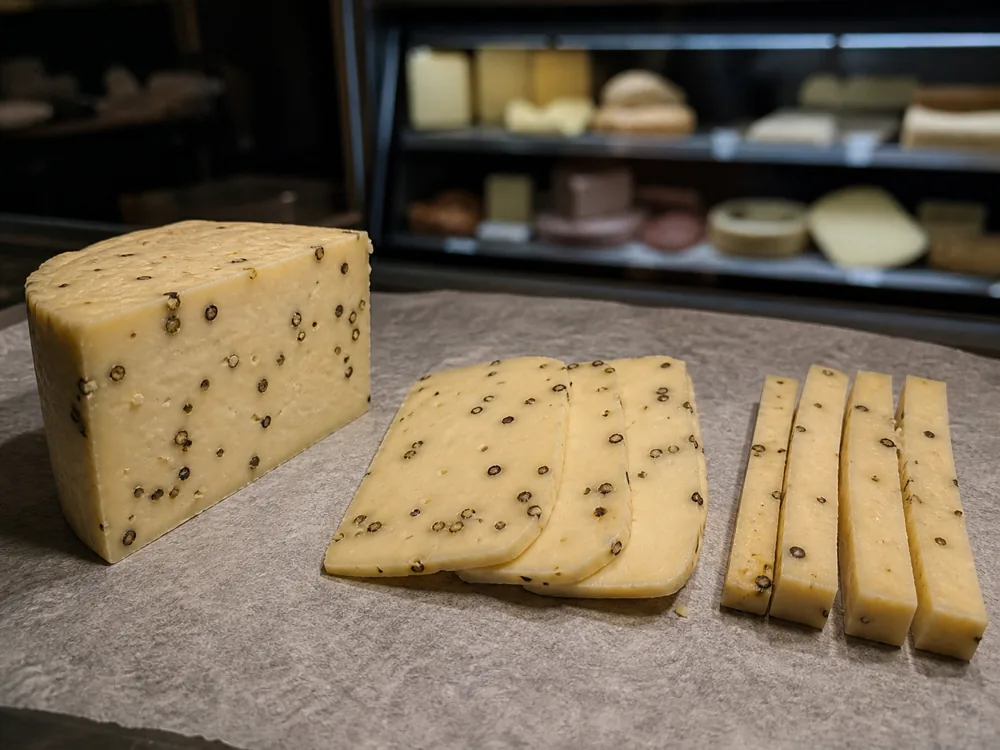
The sticks carry the same ingredients and peppercorn description, so the format changes portion and shape while the description stays the same.
At 0.75 oz a stick, an 8-pack adds up to 6 oz, the weight of Beecher's 6 oz exact-weight wedge, and a 24-pack to 18 oz.
Can You Cook with Marco Polo?
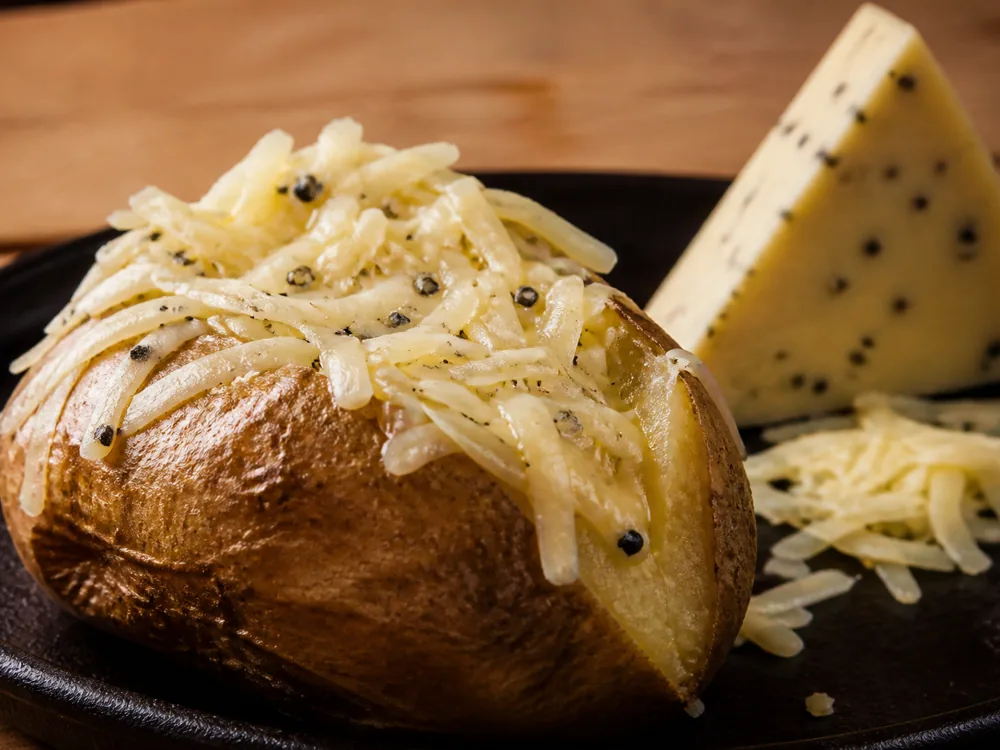
Yes, and Beecher's product page gives two ways: melt Marco Polo on a burger or steak, or grate it into a baked potato.
Beecher's own cabbage and cauliflower bake uses 4 ounces of grated Marco Polo, about 1 cup. You stir ⅓ cup into a hot cream, half-and-half and onion mixture, fold in blanched cabbage and cauliflower, sprinkle the rest on top and bake uncovered at 375°F for 35 minutes, or at 350°F in a Pyrex dish, until bubbling and golden brown.
Watch the cream, which Beecher's treats as the step that can fail. The mixture comes to a boil and then simmers for about 10 minutes until the onions soften, and if you let it over-reduce, it curdles into a gritty sauce.
The cabbage and cauliflower cook for only 3 ½ minutes each in salted boiling water, and Beecher's says the 35 minutes in the oven finishes any crunch that remains.
Since ⅓ cup of the roughly 1 cup goes into the sauce, about two-thirds of the cheese ends up on top, where Beecher's says nothing beats a crunchy, cheesy top layer on a side dish. The bake rests 5 minutes, takes 1 hour 15 minutes in all and serves 2 to 4.
The recipe says the cooks chose Marco Polo because they liked what the green and black peppercorns brought to the dish, and that Flagship or Smoked Flagship also work. So the peppercorns are your choice, and the dish does not depend on them.
The same sauce already holds ¼ teaspoon of cayenne, so in this recipe the cheese's pepper sits beside added chile heat and does not replace it.
Beecher's serves the bake beside a cut of Mishima Reserve American Wagyu and gives a peppery hit with steak as the reason, which matches the steak suggestion on the product page.
For Reserve, Beecher's suggests thin shavings over a pasta dish, and Murray's compares those shavings to cacio e pepe and describes the layer they add as briny and bold.
What Pairs with Marco Polo?
For a drink, Beecher's names Merlot for the standard cheese, and a Murray's merchandising note prefers the spicy bite of rye or a dry zinfandel.
| Pairing | Suggested by | For |
|---|---|---|
| Merlot | Beecher's product page | Marco Polo |
| Rye or a dry zinfandel | Murray's merchandising | Marco Polo |
| Savory fig and thyme crisps with dried Spanish figs | Murray's, to balance the umami | Marco Polo |
| Honeycomb on a thin cracker, or caramelized walnuts | Beecher's and Murray's | Reserve |
| Salad of apples and candied walnuts, or shredded Reserve over arugula with apples and caramelized walnuts | Beecher's Reserve page; a Murray's cheesemonger | Reserve |
If you are building a board around the standard wedge, leave out the last two rows, which were written for Reserve. That leaves the Merlot, the rye or zinfandel, and the fig suggestions.
Murray's gives a reason with each: the fig crisps and figs balance the umami, the rye or zinfandel plays off the creaminess, and for Reserve the punchy, peppery cheese "plays beautifully with sweet treats."
Is Marco Polo Cheese Safe During Pregnancy?
If you are pregnant, the answer turns on whether you count Marco Polo, a creamy, 3-month peppercorn cheese made with the cheddaring step, as a hard cheese.
Counted that way, it is covered by both agencies: the NHS lists pasteurised or unpasteurised hard cheeses such as cheddar as safe, and the CDC lists hard cheese made with pasteurized milk, such as Cheddar, as a safer choice.
The CDC lists unheated cheese sliced at a deli as a riskier choice, which would apply if you have a wedge sliced to order at a deli counter. The NHS treats any cheese cooked until steaming hot as safe, and the CDC lists deli-sliced cheese heated to 165°F or until steaming hot as a safer choice.