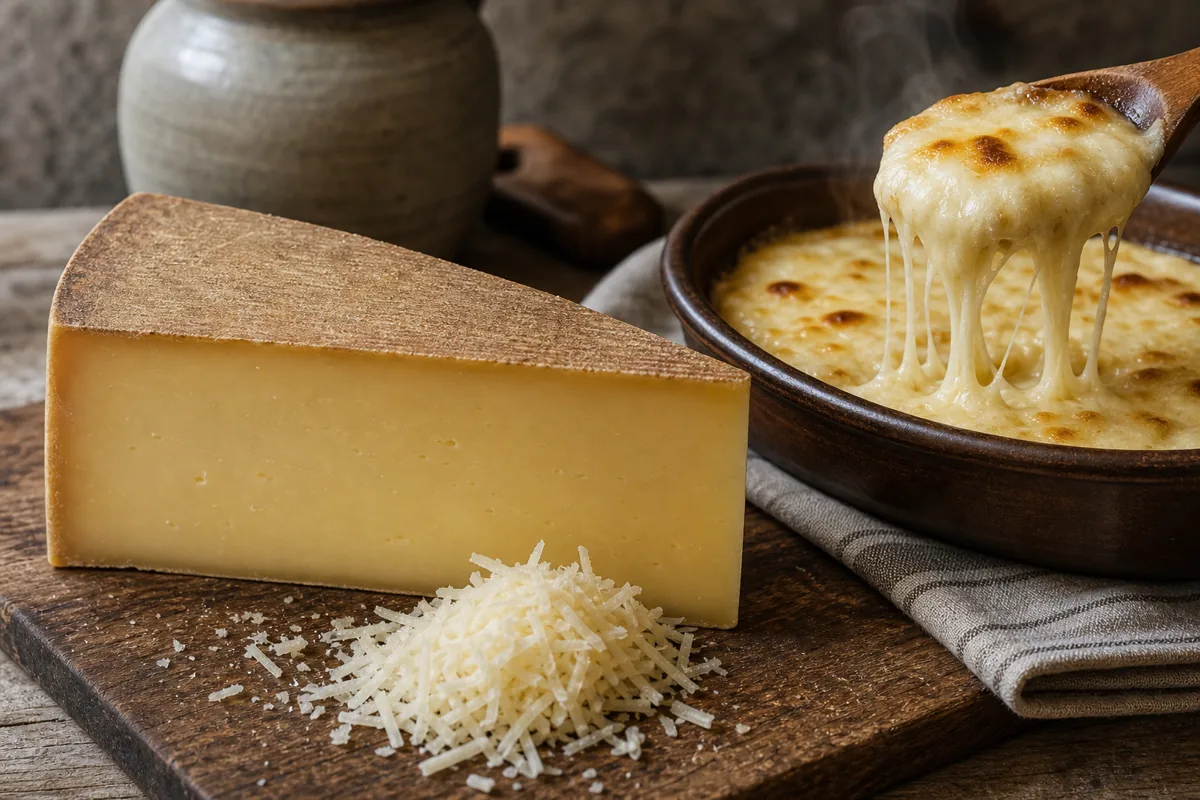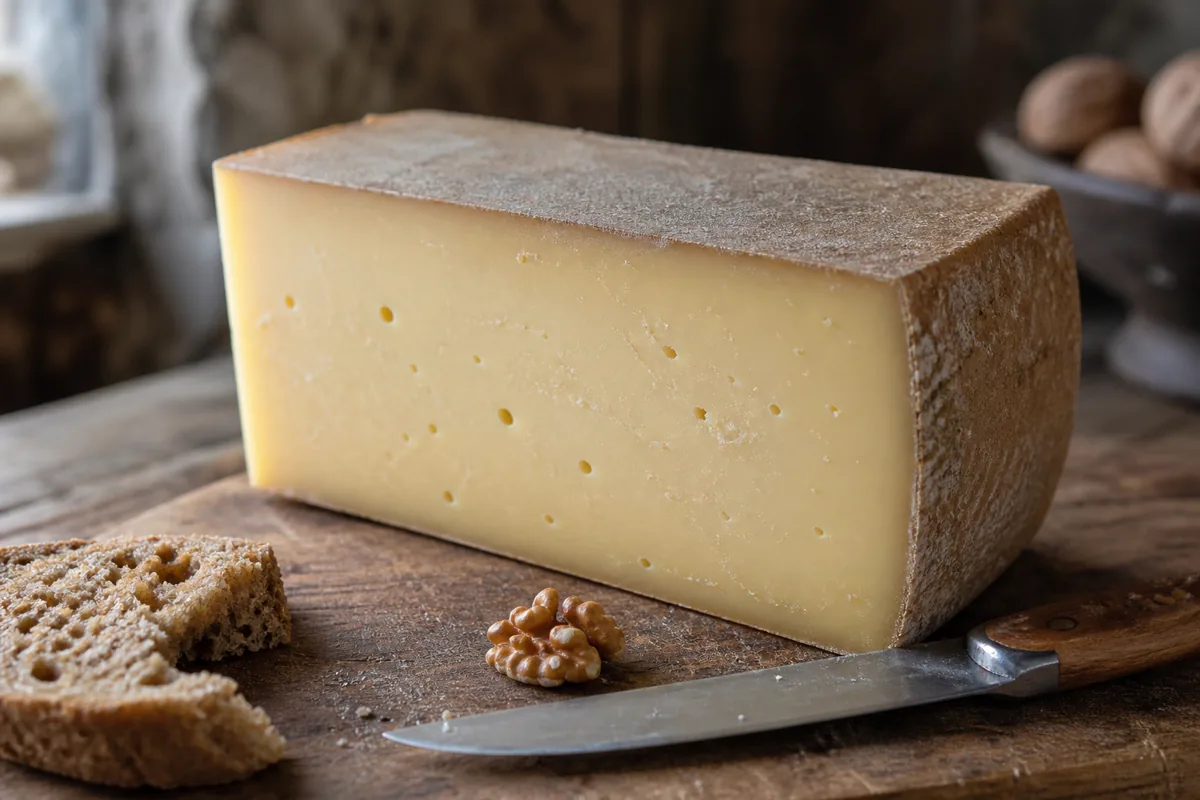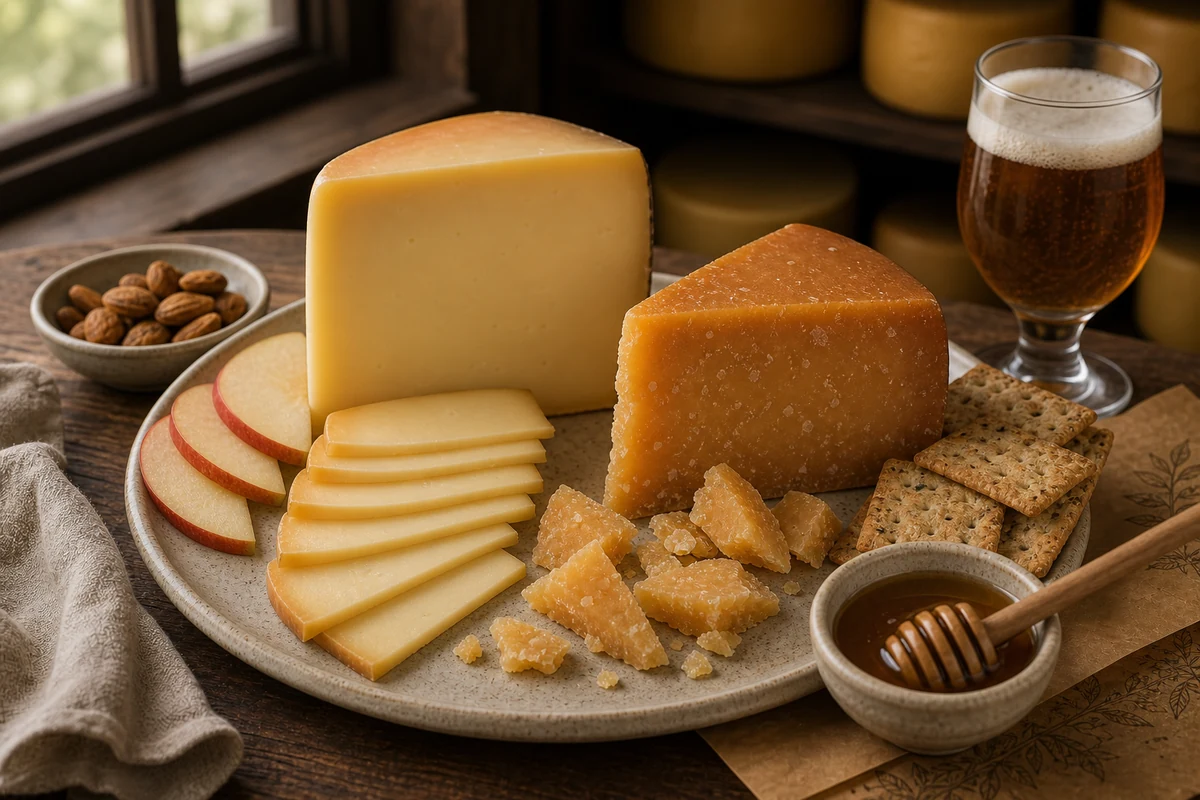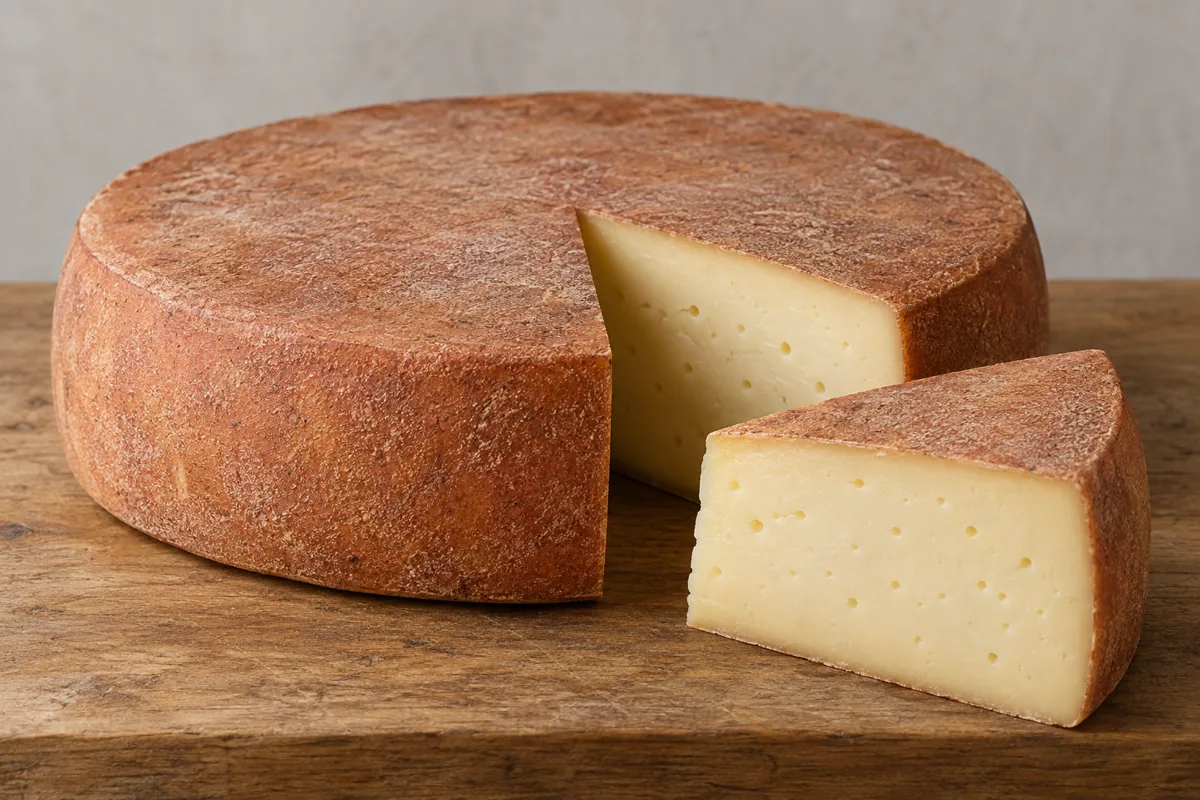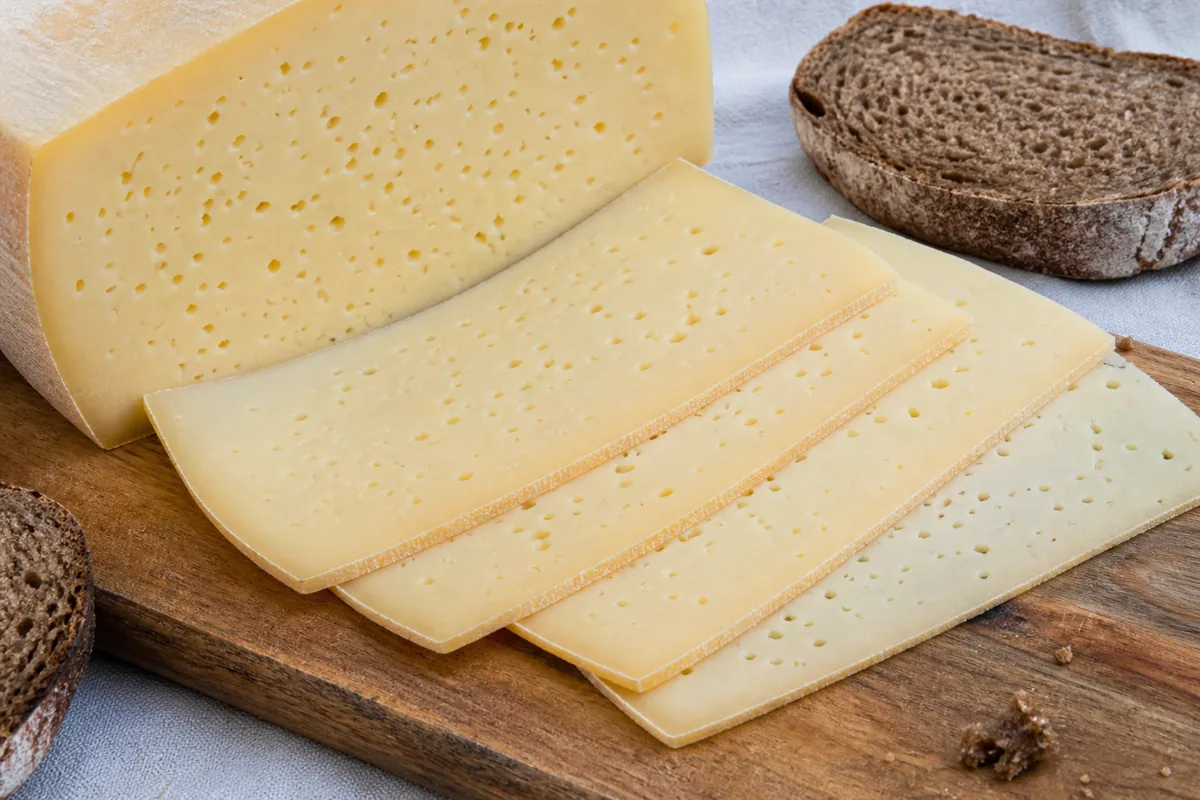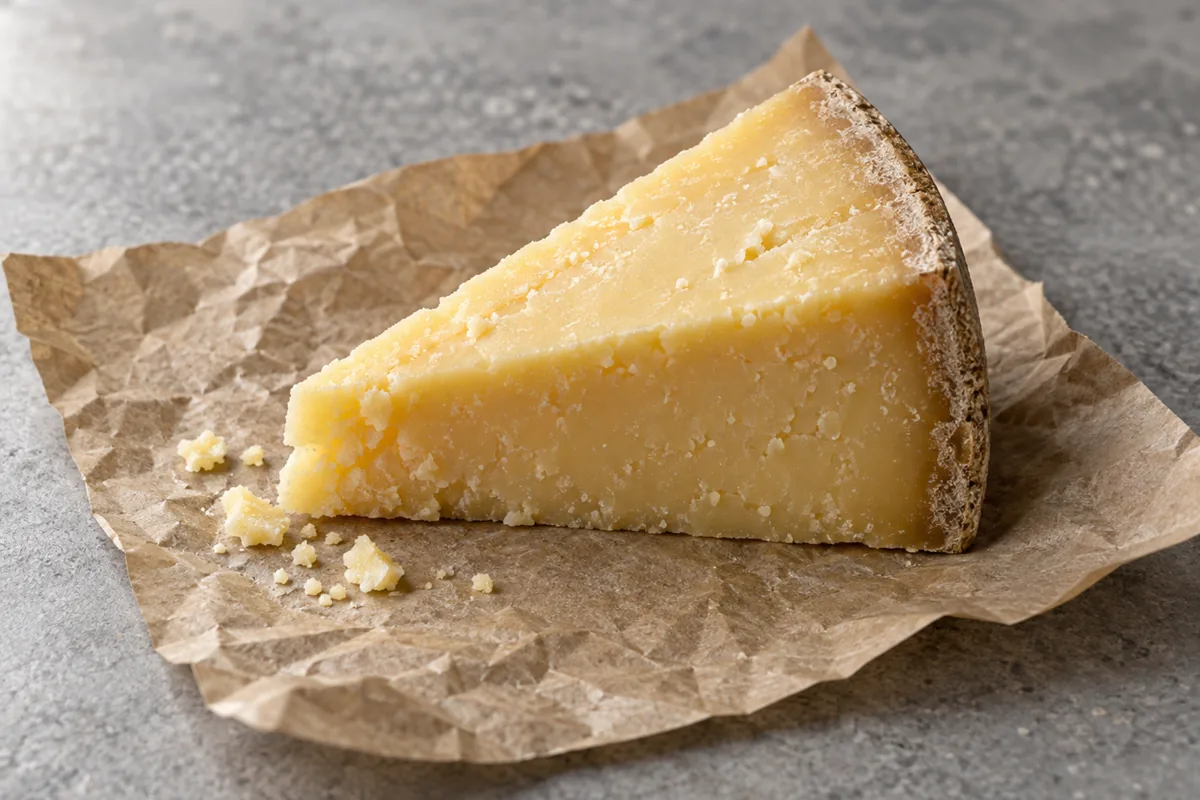
Himmelsraften Extra is an extra-aged version of Himmelsraften, a Swedish hard cheese made by Oviken Ost in Jämtland. Most written descriptions cover plain Himmelsraften rather than the Extra.
In This Article
What Is Himmelsraften Extra?
Cheese.com classes Himmelsraften Extra as a hard artisan cheese with a natural rind and a yellow paste, and it calls the original Himmelsraften a pressed hard cheese. The name comes from Himmelsraften, a mountain in Offerdal in northern Jämtland, and Cheese.com describes the Extra as an extra-aged variant of the cheese named after it.
Cheese.com gives the milk as unpasteurized cow's milk, while Martin & Servera's trade listing for the Extra gives only cow's milk.
Who Makes Himmelsraften at Oviken Ost?
Oviken Ost is a dairy farm a 23 km drive from Östersund, according to a 2011 visit report on the Nordinary UK blog, which says the farm has ancestry dating back to the 1300s. The same report says the dairy makes cheese from cow, sheep, and goat milk, mainly unpasteurized, and sells to delicatessens and restaurants.
The same writer adds that chefs name the dairy as a favourite producer and that its cheese was served at Noma in Copenhagen and at the Nobel Prize banquet in Stockholm, claims the report makes without naming a year or a source.
Cheese.com's page for standard Himmelsraften calls it a double medallist at the Swedish SM i Mathantverk food-craft competition, so those medals belong to the standard cheese, not to the Extra.
How Does Himmelsraften Extra Differ From Standard Himmelsraften?
Age is the documented difference: Cheese.com gives at least ten months for the Extra and at least five months for standard Himmelsraften.
| Detail | Himmelsraften | Himmelsraften Extra |
|---|---|---|
| Minimum ageing | 5 months | 10 months |
| Texture | Creamy and crumbly | Crumbly and grainy |
The two pages agree on milk and on about 30% fat, and they keep "crumbly" for both cheeses while swapping "creamy" for "grainy" in the Extra.
Both Cheese.com figures are minimums. The Nordinary UK writer, who watched Himmelsraften being made in 2011, wrote that it matures for at least five months and often longer, and tried one younger and one more mature piece and called both delicious.
A standard piece aged past ten months could therefore be hard to tell from the Extra by age alone.
What Does Himmelsraften Extra Taste Like?
Cheese.com describes the Extra as nutty and creamy with a nutty aroma, and says its flavours are well-rounded, with aromas of hazelnut and almond.
For plain Himmelsraften the descriptions are more detailed. Cheese.com lists it as acidic, fruity, nutty, and salty with a rustic character, and Martin & Servera's product text describes a long nutty flavour that develops in the mouth, with a balance of salt and acidity, notes of pear and a clear farmhouse-cheese character.
Two bloggers tasted Himmelsraften from Oviken without naming the Extra. The Nordinary UK visit report in 2011 called the samples "clean" and "grassy".
The Svenssonsmakaren blog, writing in 2012, described a hard cheese with a slightly creamy mouthfeel and some structure, very mild and slightly fruity, and good without being very rich in flavour. The same post says the writer had tasted the cheese in a shop and still could not say for sure how it tastes, because the impression shifts between an animal note and a hint of nuttiness.
The sources therefore describe one cheese in two ways: Cheese.com and Martin & Servera report a long nutty flavour with salt, acidity and fruit, while the 2012 blogger found little nuttiness and not much richness.
Two things could explain the difference. Nordinary UK says the cheese is matured for five months or longer, so pieces differ in age, and the blogger tasted a single shop piece that left the blogger unsure.
How Do Swedish Cooks and Writers Serve Himmelsraften?
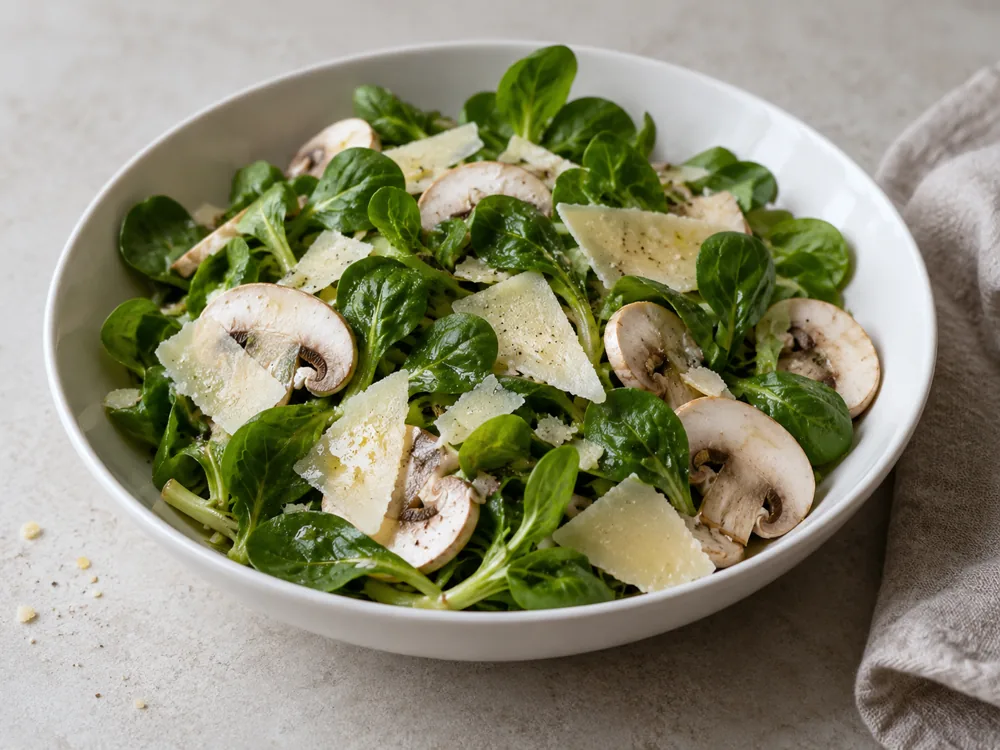
A recipe on the Swedish site Skogens Skönagröna layers 100 g of Himmelsraften, shaved leaf-thin without letting it crumble, with sliced mushrooms, mâche and a spruce-syrup dressing.
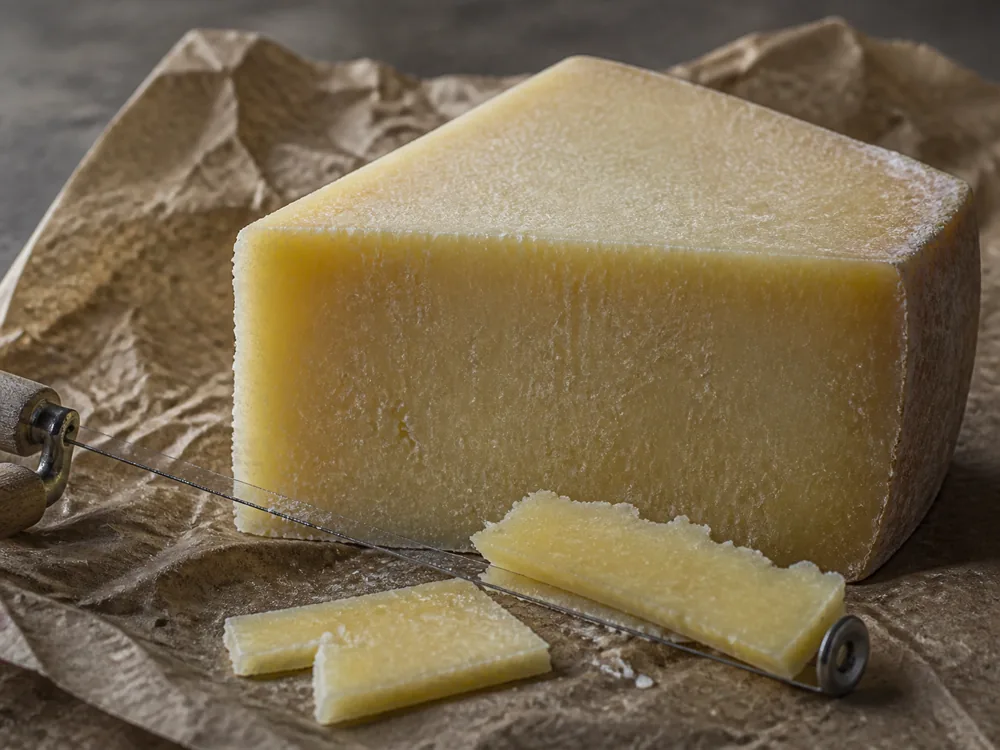
The recipe serves four, so the 100 g works out to about 25 g of cheese a portion, and the only salt it adds goes on the mushrooms. That leaves the cheese unsalted, which fits Cheese.com and Martin & Servera describing it as salty, and the instruction to shave it without letting it crumble fits Cheese.com's crumbly texture for the standard cheese.
In a 2012 post, the Svenssonsmakaren author found Oviken's Himmelsraften went really well, but not perfectly, with a 2010 Riesling from Maglock-Nagel, and suggested pieces of pear as a fruity bridge between wine and cheese.
The blogger described the Riesling as smelling more of grey pear than of tropical fruit, then tasting of apples and tart citrus with a fresh finish and a small bitter push at the end.
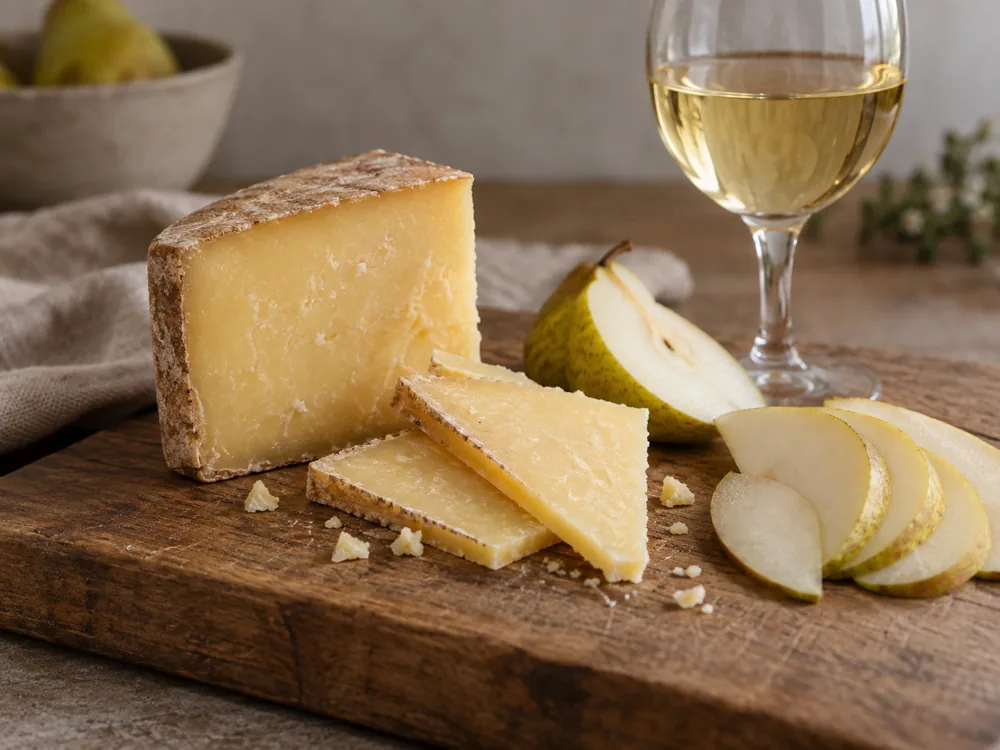
Pear also appears in Martin & Servera's flavour description of the standard cheese, so the fruit turns up in the wine's aroma, in the cheese's description and in the blogger's missing bridge.
| Pairing | Why It Works |
|---|---|
| Sliced mushrooms | Four large mushrooms for four portions, sliced thin and lightly salted, in the Skogens Skönagröna recipe. |
| Mâche | 2 dl of picked leaves layered between the cheese and the mushrooms. |
| Spruce-syrup dressing | 2 teaspoon Gran Zirup spruce syrup, 1 teaspoon apple cider vinegar and 1 tablespoon rapeseed oil, drizzled between the layers. |
Both the recipe and the wine note name Himmelsraften without the Extra, and both serve it shaved or sliced and uncooked rather than melted.
Is Himmelsraften Extra Safe During Pregnancy?
Himmelsraften Extra sits between two sets of agency wording, because Cheese.com lists it as a hard cheese made from unpasteurized cow's milk.
A raw-milk Extra therefore sits inside the NHS's safe group and outside the CDC's safer list. The CDC's wording is the stricter of the two here, and it says pregnant women are 10 times more likely to get a Listeria infection.
Martin & Servera's listing for standard Himmelsraften gives unpasteurized cow's milk, and its Extra listing gives only cow's milk, so check the label on the piece in hand for pasteurisation.
Where Can You Buy Himmelsraften Extra?
Martin & Servera, a Swedish foodservice wholesaler, lists "Himmelsraften extra bit 1,1kg" (article 416339) as a Swedish hard cheese from Oviken Ost, a 1.1 kg piece with a net weight of 1 kg. A visitor who is not logged in sees no price on it or on the standard cheese's listing.
The standard listing is also a 1 kg net piece sold by weight, but it counts eight pieces to a full pack where the Extra's counts one. Anyone avoiding animal rennet should ask the seller or the dairy which rennet goes into the Extra.
Outside wholesale, the Nordinary UK report says the dairy sells its full range at its own farm shop and that only a handful of its cheeses reach other shops.
The Svenssonsmakaren post bought Himmelsraften and Dura at a Swedish shop called Cajsas Skafferi, and both reports are more than a decade old, so ask either shop whether it stocks the Extra today.
Martin & Servera lists both the Extra and standard Himmelsraften as chilled products, so a piece belongs in a home refrigerator at 40°F (about 4°C) or below, the CDC's limit.
For a piece of Himmelsraften Extra, read the label or ask the seller for its age, its milk treatment and its rennet type.
What Is Similar to Himmelsraften Extra?
Gruyère is the comparison Swedish writers make. The Skogens Skönagröna recipe calls Himmelsraften a Jämtland variant of Gruyère, and the Nordinary UK report describes the Oviken samples as "Gruyere type" cheeses.
Both comparisons name Himmelsraften without the Extra, so Gruyère is a reference point for the family and not a tested replacement.
Cheese.com files both Himmelsraften pages with other Swedish hard cheeses, among them Almnäs Tegel and Dura.