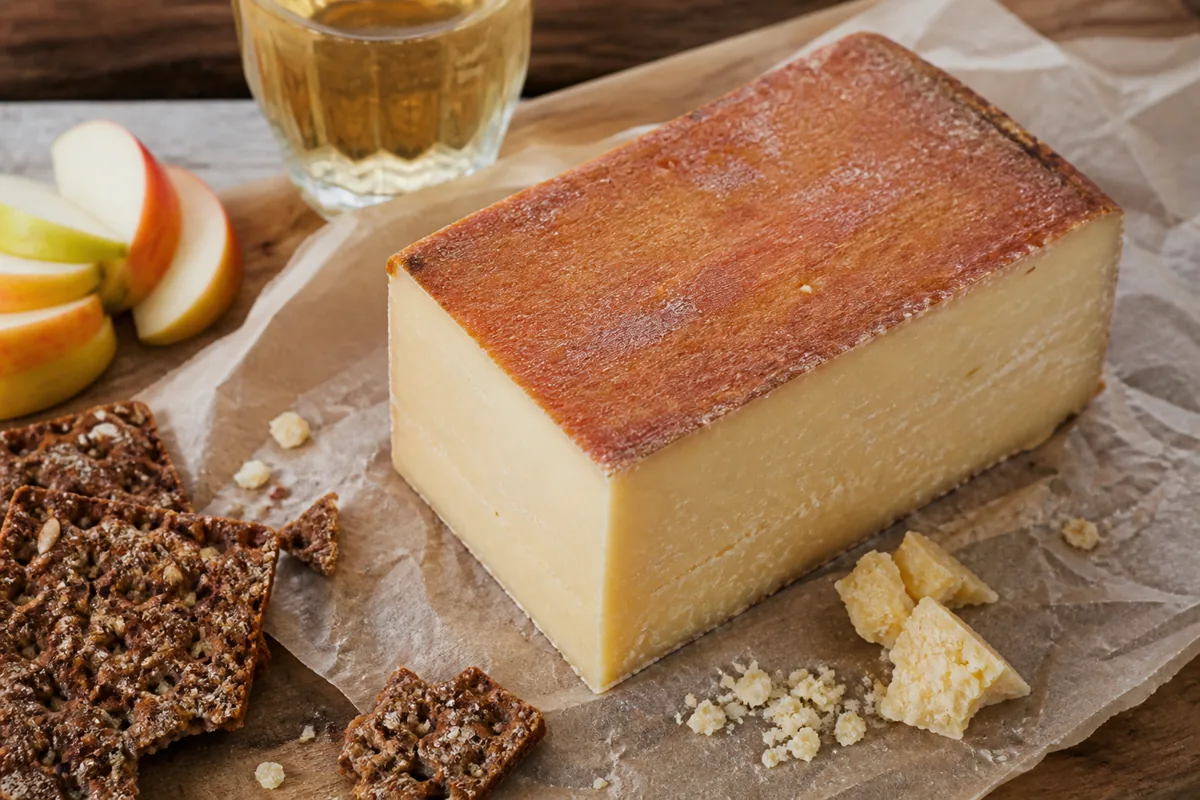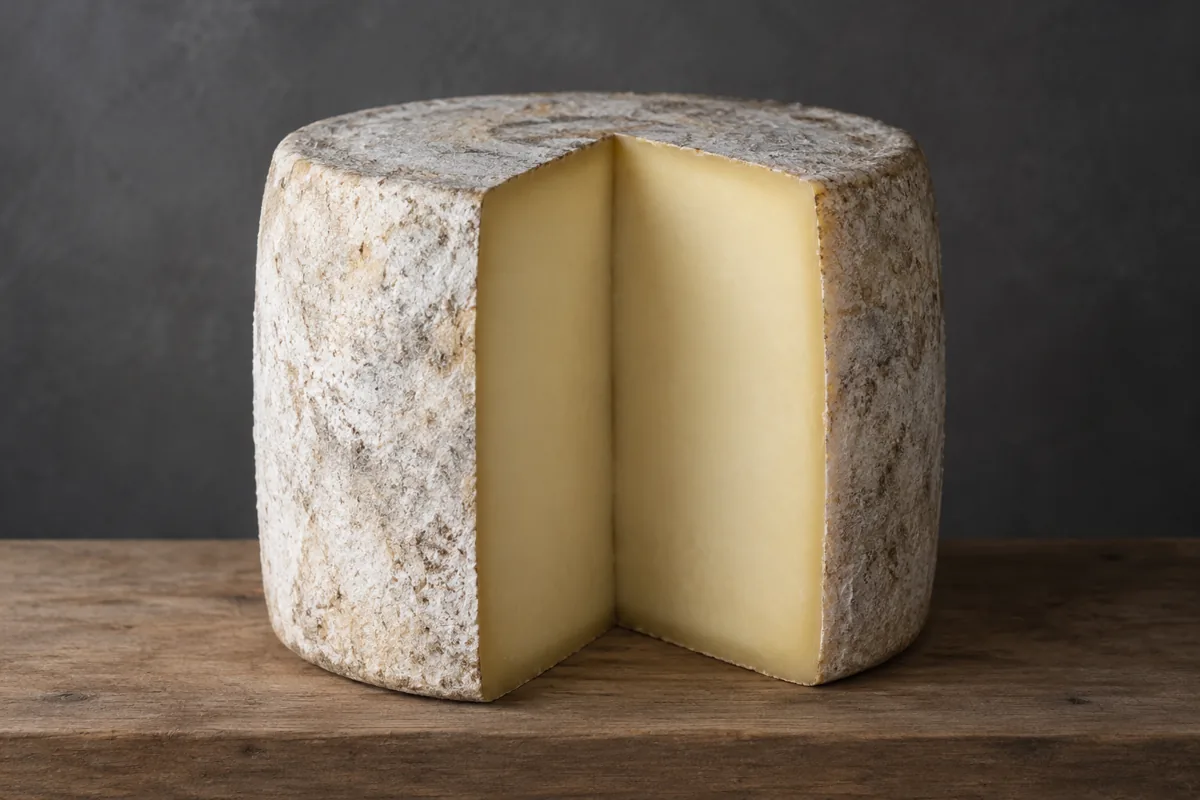
Laguiole is a raw-milk cow's cheese from the Aubrac plateau in south-central France, pressed into cylinders of 20 to 50 kg and sold under a protected name since 1961.
The INAO specification sets the rules a buyer can use: raw whole milk only, at least four months of ageing counted from renneting, and a dry rind that is rubbed and turned in cold, damp cellars.
Two details change what readers do with it. The milk is always raw, which matters in pregnancy, and the Aubrac dish aligot uses a fresh stage of the cheese instead of the aged wheel.
In This Article
Where Does Laguiole Come From?
The Aubrac is a block of mountains and plateaus in the south of the Massif Central, spread over the départements of Aveyron, Cantal and Lozère. The specification puts its average altitude at about 1,000 m and bounds it with the Truyère and Lot rivers on the north, west and south.
Milk production, cheesemaking and ageing must all take place inside that area, which includes the village of Laguiole in Aveyron.
The specification says monks of the Aubrac and Bonneval abbeys appear to have fixed the rules for the cheese from the 12th century, so that summer milk could become winter food for pilgrims walking to Santiago de Compostela.
The format follows from that job. Cow's milk was plentiful only while the pasture grew abundantly, so herders made a big cheese that would keep.
During the Revolution, monastery land was sold to new farming families, and stone burons replaced the huts of branches and turf where herders and cheesemakers lived on the summer pastures.
In 1897 the farmers of the mountains grouped at Laguiole in a syndicate to sell the cheese, and in 1939 the syndicate became one for its defence.
Output fell between 1940 and 1960 as people left the countryside, a small cooperative restarted it in 1960, and a decree recognised the AOC in 1961.
The seasonal rhythm that created a big keeping cheese has ended: the Laguiole syndicate says production was seasonal for a long time, and produits-laitiers-aop.fr says the cheese is now made all year round.
What Does the Laguiole AOP Require?
The specification fixes the cows, their feed, the milk and the ageing time, and it sets minimum dry-matter and fat levels for the finished cheese.
| Rule | What the specification requires |
|---|---|
| Cows | French Simmental or Aubrac, or crosses of the two with certified parentage; beyond the first generation, a cross must come from an Aubrac bull |
| Milk | Raw and whole, not standardised in protein or fat; any physical treatment is forbidden |
| Grazing | Grazed grass is the main ration for at least 120 days a year, with extra forage in that period capped at 3 kg of dry matter per cow per day on average |
| Banned feed | Maize silage, grass silage, wrapped bales and any other wet-preserved forage in the dairy herd's base ration |
| Yield | No more than 6,000 litres of milk per cow per year, averaged over the herd |
| Ageing | At least four months from the day of renneting, in cellars at 6 to 12°C |
The limits on feed and yield serve the paste. The specification says breed selection raised the protein in the milk at the expense of fat, and that the maize ban is meant to hold milk fat down.
Milk rich in protein and limited in fat drains intensely in the press and again in the mould, and that draining gives the high dry-matter paste the AOP asks for. The specification presents that paste as the reason a whole-milk cheese can keep at all, which was the job the herders gave it.
Analyses must show at least 58 g of dry matter per 100 g of cheese and at least 45 g of fat per 100 g after complete drying, so fat makes up at least 45 percent of the dry matter.
The specification credits the raw whole milk and the long, cold ageing for the cheese's character, which it traces to the lactic flora of the milk.
Several bans protect that character: the milk may not be concentrated by removing water before renneting, milk, curd and fresh cheese may not be held at below-zero temperatures, and fresh or ageing cheese may not be kept in a modified atmosphere. Besides rennet and salt, the only additions allowed are cultures of bacteria, yeasts and moulds shown to be harmless.
Is Laguiole Pasteurised, and Is It Safe in Pregnancy?
Laguiole is never pasteurised. The AOP milk rule leaves no pasteurised Laguiole to look for.
For pregnancy, the answer depends on which category the agencies would place a raw-milk pressed cheese in, and neither NHS nor the CDC names Laguiole.
Where the cheese sits decides the reading. Cheese.com lists Laguiole as semi-hard in its details and as a hard cheese in its description, and NHS clears unpasteurised hard cheese but only pasteurised semi-hard cheese, while the INAO product record says only that it is a pressed uncooked cheese.
Cooked until steaming hot, Laguiole falls under the NHS rule for any cheese; served raw, no agency page settles it by name.
How Is Laguiole Made?
Two rounds of pressing do most of the work. The specification describes a double draining, in the tome press and again in the mould, meant to raise the dry matter.
- Renneting: within 48 hours of the oldest milking, at 30 to 35°C, with rennet only.
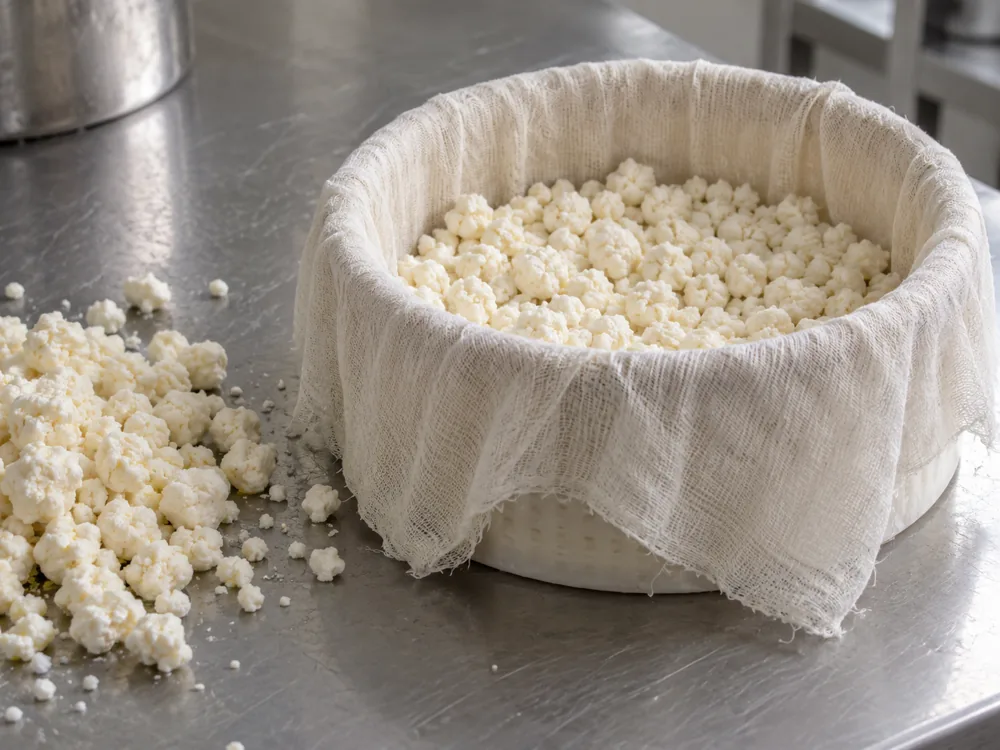
- First pressing: the cut and stirred curd is packed against the vat floor into one block called the tome, then pressed in cloth for at least one hour with at least five turns, being cut up and restacked between presses.
- Resting: the tome matures for at least 12 hours at 14 to 26°C, and never below 18°C in the first 8 hours.
- Breaking and salting: the tome is broken into hazelnut-sized pieces, with its core at least 18°C at that moment, and salted throughout at 18 to 24 g of salt per kg.
- Second pressing: after at least an hour's rest, the pieces go in layers into cloth-lined cylindrical moulds 28 to 38 cm wide, with a short press between layers, then spend at least 40 hours under presses, turned at least four times.
- Ageing: in the cellars, with relative humidity above 90 percent, where the cheeses are rubbed and turned regularly to form and keep the rind.
The specification names rennet (présure) as the only coagulant, and Cheese.com lists Laguiole as not vegetarian.
What Does Laguiole Look Like?
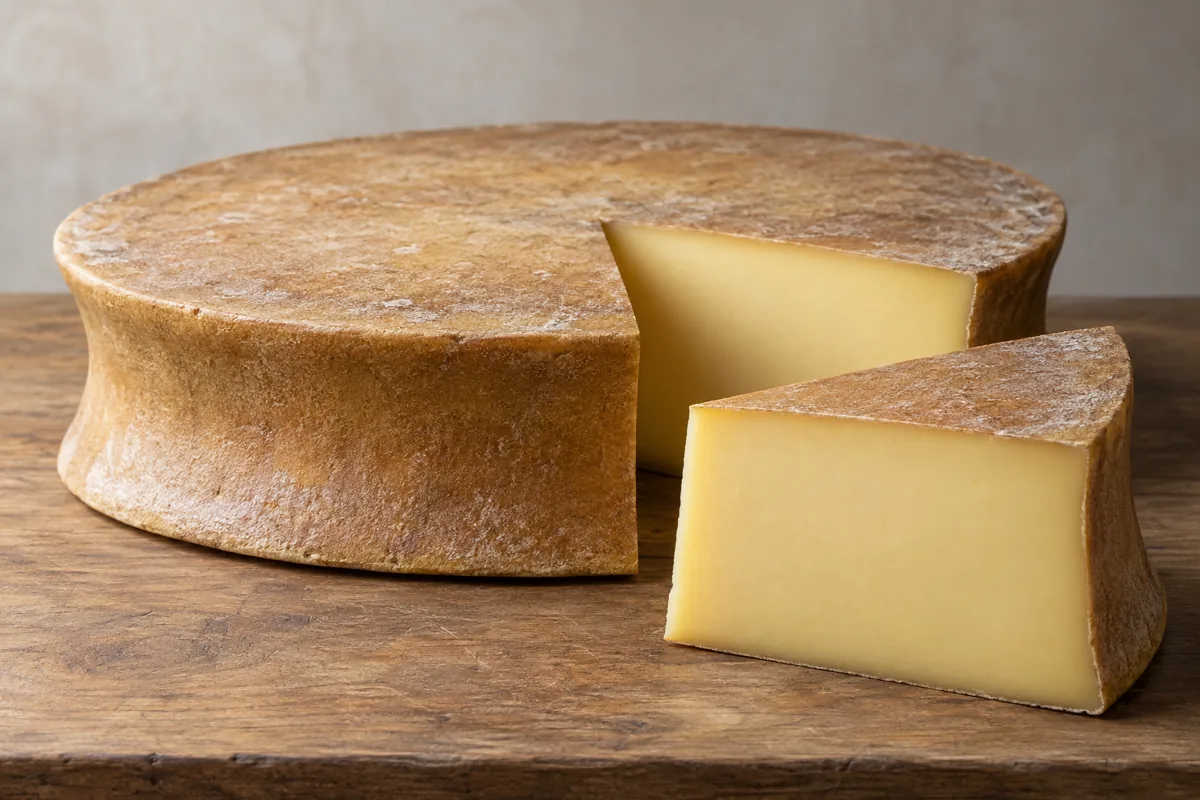
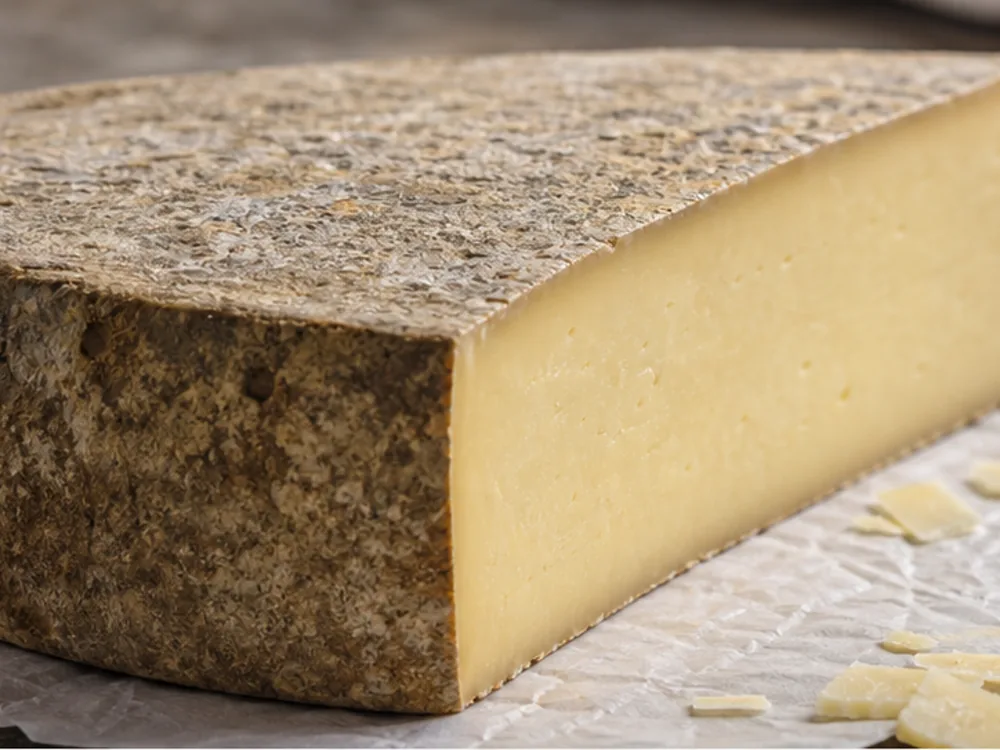
A wheel is a cylinder 30 to 40 cm across, with a height of 0.8 to 1 times its diameter and a weight of 20 to 50 kg, according to the specification. That ratio puts the height at roughly 24 to 40 cm, so a wheel stands nearly as tall as it is wide.
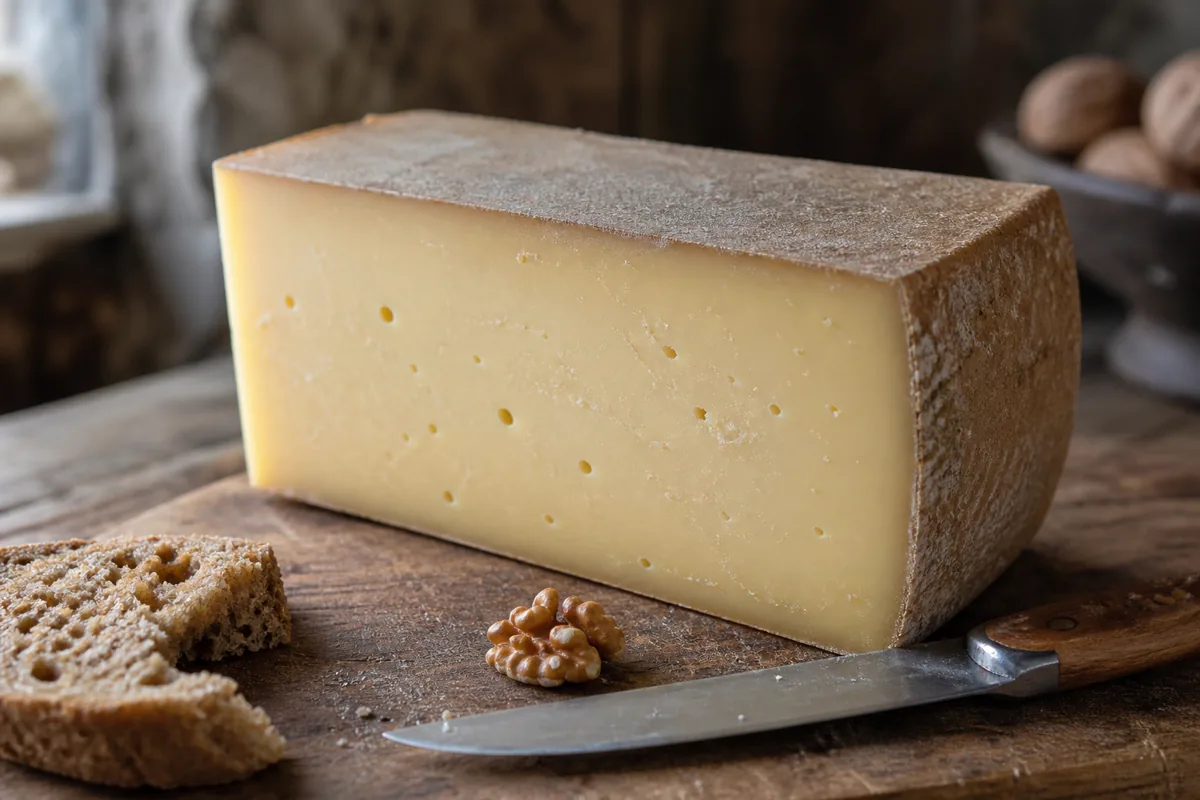
The paste runs from ivory to straw yellow. The dry rind starts whitish to light grey and can darken to amber brown or granite grey during ageing.
produits-laitiers-aop.fr describes a regular rind and a yellow paste on the cut cheese, and links that colour to the floral variety of the Aubrac.
How Does the Aubrac Pasture Shape Laguiole?
The specification starts with the ground: soils of basalt or granite, and a hard climate of long, cold, windy and often snowy winters, an average of 8°C a year at Laguiole and more than 1,000 mm of rain a year.
Soil, climate and altitude together give the pastures a rich, aromatic flora, it says, with far more plants than elsewhere that are rich in aromatic terpenes, among them cistre (Meum athamanticum), Geranium sylvaticum, Achillea, Centaurea, Prunella grandiflora and Thymus.

Those plants perfume the milk and, through it, the cheese, according to the specification, and the INAO product record says the same of the pasture and hay the cows eat.
In winter the control table sets the base ration at 100 percent hay, and all of the base ration must come from the production area.
Supplementary feed is capped at an average of 6 kg per lactating cow per day over the year, and the permitted list covers cereals including maize, peas and broad beans, oilseed cakes, dried lucerne, molasses as a binder, minerals and vitamins.
So the maize ban concerns silage in the base ration, not maize grain, which stays on that list, and genetically modified crops are banned on every surface of a farm that supplies the milk.
The breeds fit the same ground: the specification calls the French Simmental and Aubrac cows hardy enough to use the pasture fully and to bear a long, harsh winter.
What Does Laguiole Taste Like?
The specification calls the milky taste medium to intense depending on age, with shades from fresh hay to dried hazelnut and a long finish, and the INAO product record adds a paste that is supple but firm and creamy under the tongue.
The AOP dairy guide produits-laitiers-aop.fr and the Laguiole syndicate between them mark three points on the age scale, and the first, the four-month minimum, is the youngest cheese allowed, not the usual one.
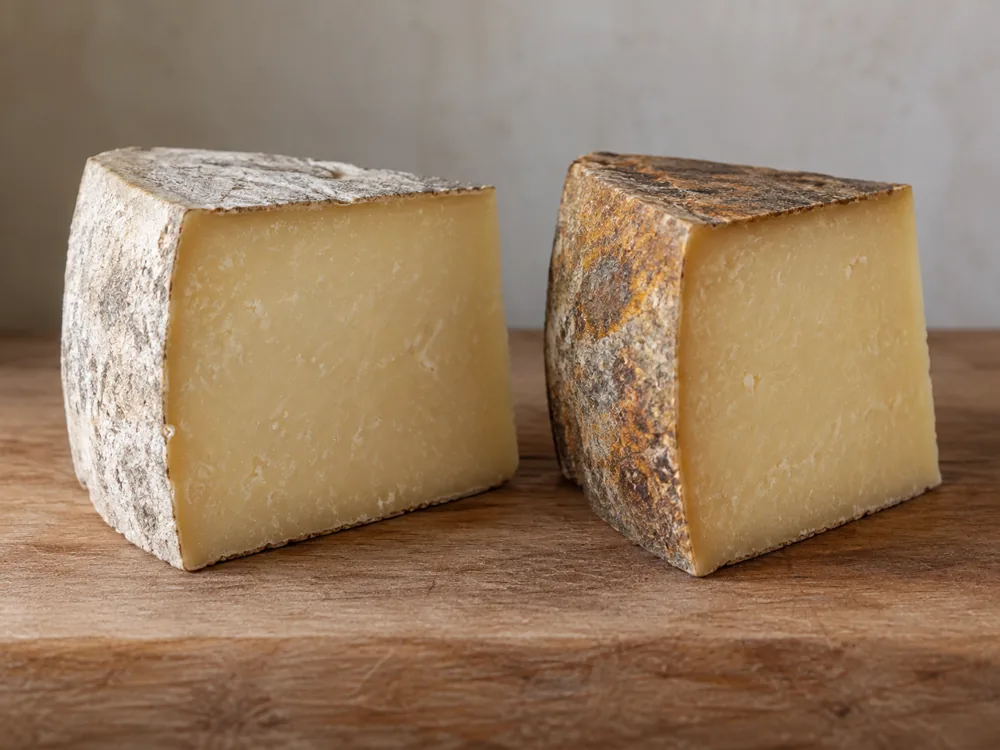
Taste of France agrees on the direction, saying a Laguiole can be sold after four months but develops a deeper, more complex flavour with prolonged ageing.
The markers are coarse, since the pages that describe age do not separate nine months from eighteen, which leaves the rind and paste cues as the visible check.
Cheese.com lists the flavour as sharp, sour and tangy, a harsher reading than the appellation's hay-and-hazelnut description.
It also describes a thick, greyish-orange rind rather than the specification's dry, pale one, and because the syndicate ties orange highlights to a well-aged cheese, the gap probably reflects the age of the wheel described.
How Does Laguiole Differ From Cantal and Salers?
Taste of France says Cantal and Salers come from the same region and look like Laguiole, but Cantal can be made from raw or pasteurised milk while Laguiole and Salers are raw only.
The syndicate frames the other difference as age: the Cantal AOP requires at least two months of ripening and the cheese can be eaten fairly young, while the Laguiole AOP requires four and treats Laguiole as an aged cheese.
Taste of France adds that all three are made by a method nearly identical to Cheddar's, in which curd blocks are cut into small pieces before the final moulding and pressing, which matches the specification's tome broken into hazelnut-sized pieces.
The same article places Laguiole between the two on flavour: much more robust and farmhouse in character than Cantal, but not as spicy on the tongue as an aged Salers. It calls the texture firm but not hard.
A reader who cannot find Laguiole therefore has neighbours on either side in flavour, though only Cantal also comes in a pasteurised version.
Is Aligot Made With Laguiole?
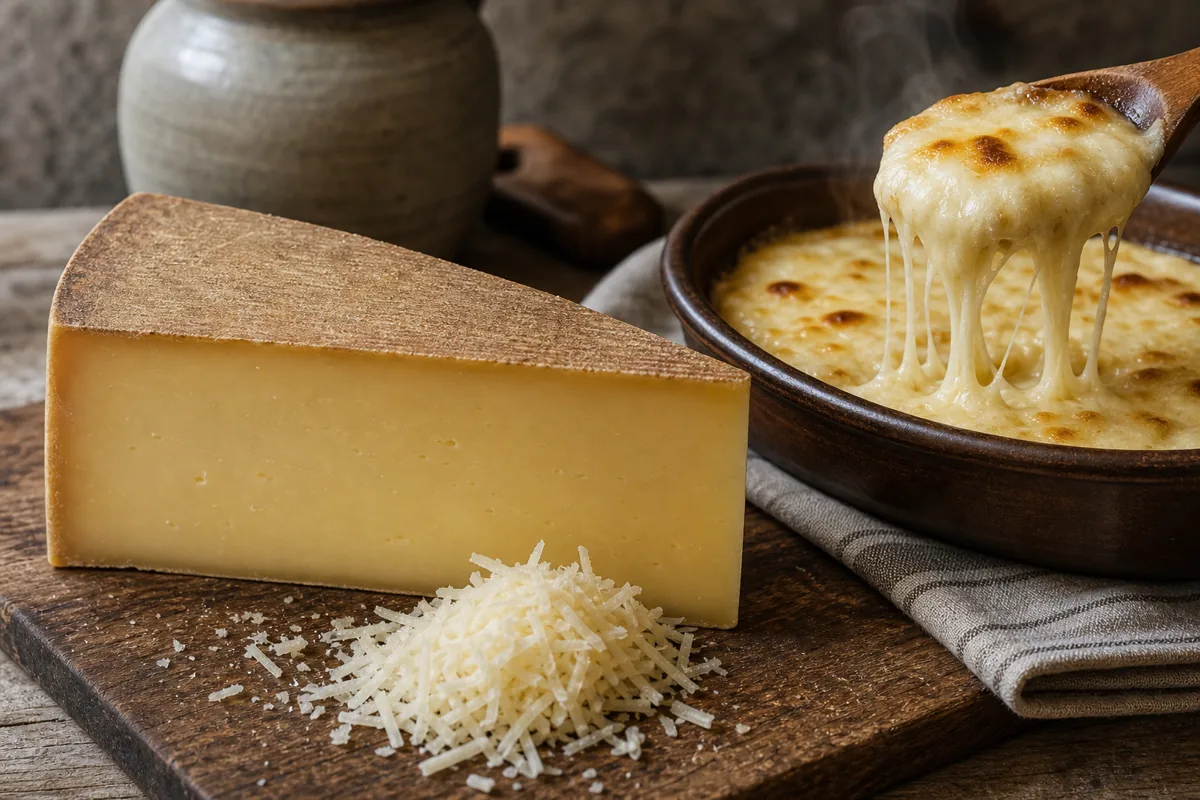
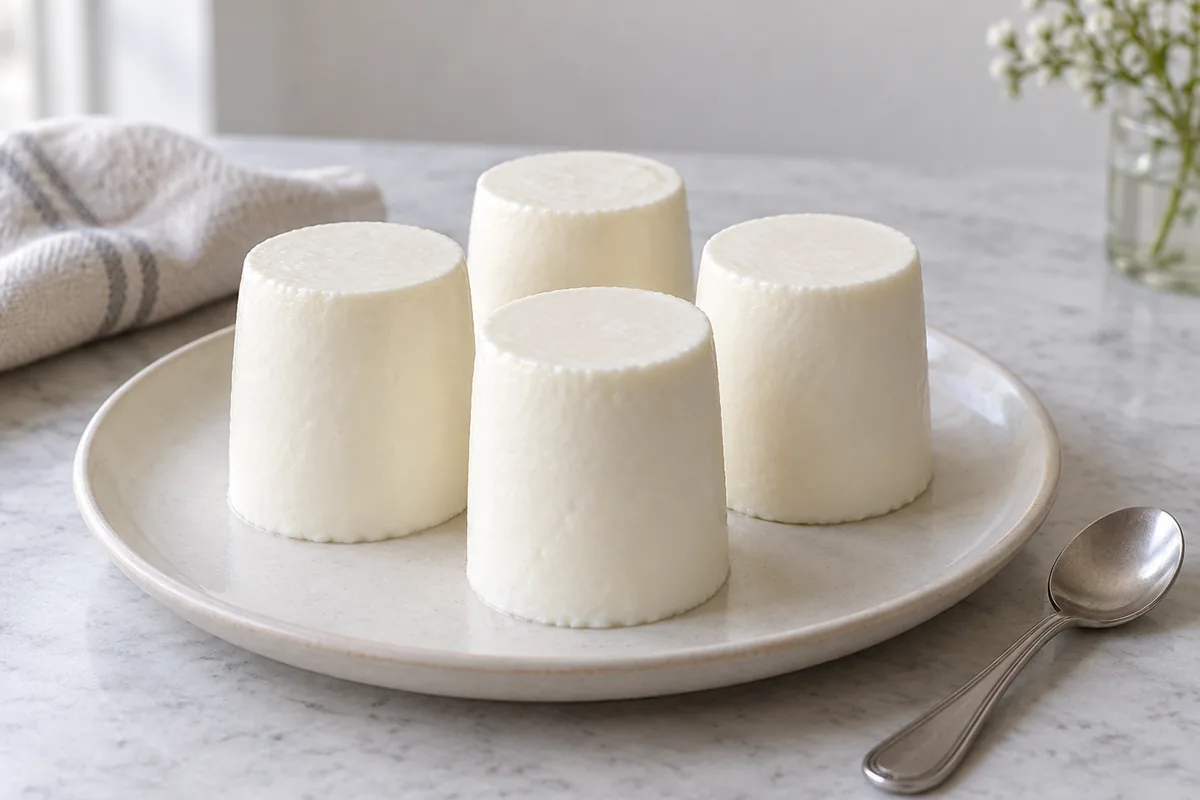
Aligot, the Aubrac dish of mashed potato and cheese, is made with fresh tome, which the Laguiole syndicate describes as an intermediate stage of production, not with aged Laguiole.
That fresh cheese has its own protected name. According to INAO, the European Commission registered Tome fraîche de l'Aubrac as an IGP on 23 October 2023.
The fresh tome is the Laguiole make stopped early: INAO says it is matured after the first pressing but neither aged nor salted, while the Laguiole specification breaks and salts the tome only after that rest.
| Point | Laguiole (AOP) | Tome fraîche de l'Aubrac (IGP) |
|---|---|---|
| Salt | Added to the broken tome, 18 to 24 g per kg | Not salted |
| Ageing | At least four months | Matured, not aged |
| Grazing | Mainly grazed grass for at least 120 days a year | Cows graze at least 170 days a year |
| Paste | Supple but firm and creamy, says the INAO product record | Supple and firm with a few openings, says INAO |
| After hot cooking | Not described by INAO or the syndicate | Markedly elastic, smooth and repeatable stretch, says INAO |
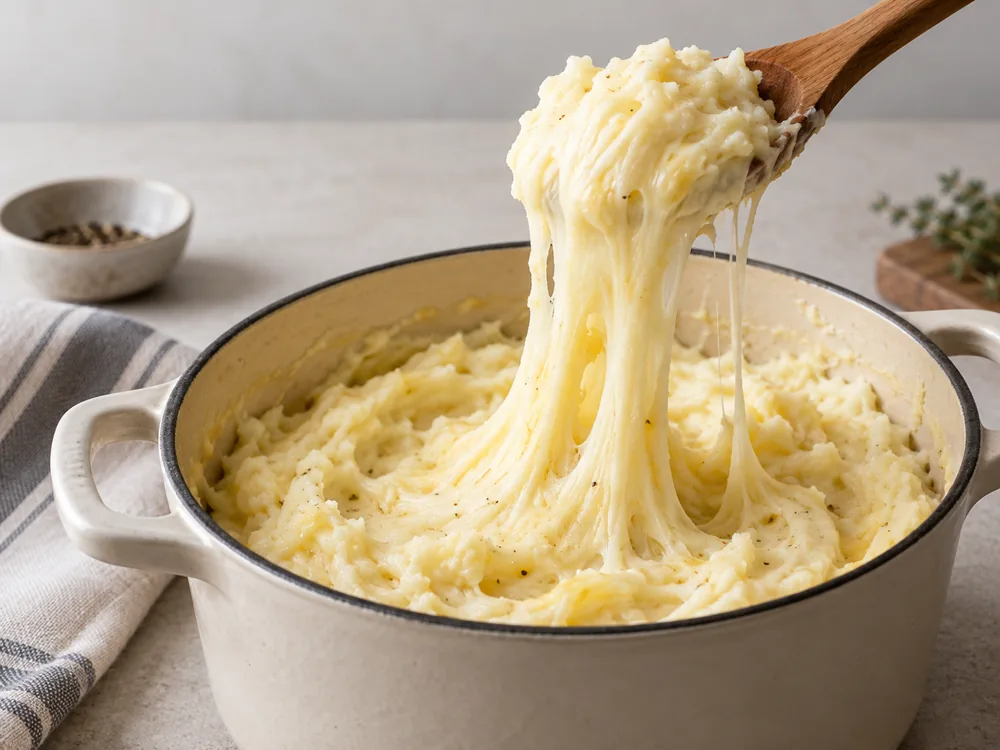
Cheese.com lists Laguiole as "one of the principal ingredients in Aligot", but the syndicate and INAO name the fresh tome and say nothing about aged Laguiole in the dish, so a cook after aligot should look for Tome fraîche de l'Aubrac.
INAO counts 840 tonnes of fresh tome made in 2022 from 6.9 million litres of milk, a larger volume than the 630 tonnes of Laguiole the AOP guide gives for 2020, although the two figures come from different years.
What Goes With Laguiole?
The Laguiole syndicate says the cheese is often eaten at the end of a meal, and also with before-dinner drinks or in mixed salads, and that it is highly sought after for cooking.
Its recipes include soufflés, gougères, potato pancakes and veal dishes.
The INAO product record agrees that it is most often eaten at the end of a meal, and Taste of France calls it suitable for a fine after-dinner cheese board.
None of the sources says how Laguiole behaves when heated; the syndicate and the AOP dairy guide say it melts in the mouth, which describes eating it, so the syndicate's dish list is the only cooking guidance.
| Pairing | Named by |
|---|---|
| Local red wines: Marcillac (well structured), Entraygues le Fel (aromatic and velvety) and Estaing (smooth and fruity) | Laguiole syndicate |
| A regional appellation red wine | INAO product record |
| Sturdy reds such as Bordeaux or Saint-Pourçain | Taste of France |
| Saucisson, jambon and rustic country bread, as a lunch cheese | Taste of France |
| Jura and Loire reds, Bordeaux, brut, demi-sec and rosé Champagne, dark beer, lager and peated Islay whisky | produits-laitiers-aop.fr |
Red wine appears on every list, and only produits-laitiers-aop.fr names Champagne.
That page is also the one source that goes beyond wine, to dark beer, lager and peated Islay whisky.
Who Checks That a Cheese Is Real Laguiole?
The syndicate that applied for the name, the Syndicat de Défense et de Promotion du fromage de Laguiole, hands out the identification marks and the oval relief stamp only to approved makers, in proportion to the conforming milk they put into production.
It keeps a register of every mark issued that inspectors can consult, and it takes the marks back from a maker whose approval is suspended or withdrawn. A downgraded cheese loses its name physically: the word Laguiole and the relief bull are scraped off and the identification mark is torn out.
The product itself is checked too, through an analytical and tasting examination of sampled cheeses that have reached the minimum ageing, carried out as close as possible to their sale.
The rules also leave a paper trail. Each workshop reports its saleable volume, its unfit volume and its stock by 28 February, milk producers keep a grazing calendar of the days the cows went out and monthly feed registers, and cellars log temperature and humidity.
That calendar is how the 120-day grazing rule can be checked rather than taken on trust.
How to Buy and Keep Laguiole
A whole wheel carries an oval relief on one flat face showing the Aubrac bull with the word Laguiole, and an identification plaque with the letters LA, the workshop number, the year and the day of renneting.
The renneting day is a number from 1 to 366, so the plaque lets a buyer work out how long the cheese has aged.
Most buyers meet a cut portion instead. The specification allows portions but requires every pre-packed piece to carry some rind, except individual portions under 70 g, and it forbids selling Laguiole grated.
The label must carry the name, in type at least two thirds the size of the largest lettering, and the EU AOP symbol. It may be printed directly on the rind or applied as pre-printed muslin.
| Term | What it requires |
|---|---|
| Fermier (or wording that implies a farm origin) | Milk from at most two consecutive milkings, with the uncooled morning milk making up more than half the volume |
| Buron | Milk from a single herd milked during the summer move to high pasture, 25 May to 13 October, grazing above 1,000 m, made in a fixed building on that pasture with one herd per workshop; light or mobile shelters do not qualify |
The general rule is looser: renneting may wait up to 48 hours after the oldest milking, which leaves room for several milkings in one vat, so fermier is the narrower promise. Taste of France describes the farmstead makers as working in burons, mountain huts, but on a label the word carries the stricter rules above.
At the counter, a genuine piece shows rind unless it is a portion under 70 g, is never grated, and carries the AOP symbol and the name, and the plaque on a whole wheel gives its renneting day from 1 to 366.
Taste of France says Laguiole can be a bit of a rarity outside its home region because production is far below Cantal and Salers, and produits-laitiers-aop.fr puts the 2020 volume at 630 tonnes.
The same page's key figures list 74 milk producers, 5 farmhouse producers and 2 production plants, so a fermier label points to a very small group of makers.
For keeping, the syndicate says Laguiole easily lasts in a cool, dry place in the paper the cheesemonger wrapped it in, without giving a temperature, and the CDC says to keep a refrigerator at 40°F or below.
The CDC adds that perishable food, dairy included, should go back into the refrigerator within 2 hours, or within 1 hour in temperatures above 90°F, which sets the clock for a piece left out on a board.