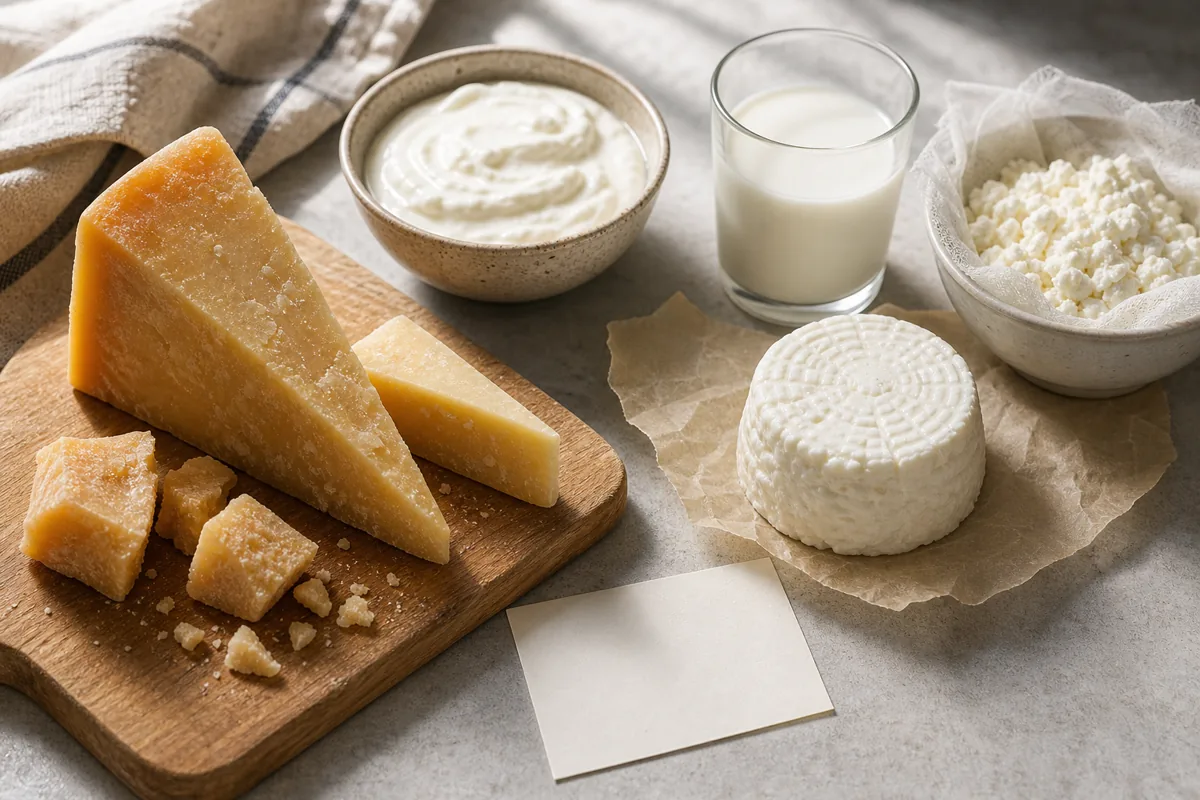
Hard cheeses such as cheddar and Swiss are lower-lactose options identified by the US National Institute of Diabetes and Digestive and Kidney Diseases (NIDDK). For a specific lactose limit, look for a lactose-free label or a manufacturer's measured value for the exact product, rather than judging a cheese by how dry it looks.
Lower lactose does not mean suitable for everyone. The amount you eat and your own tolerance matter, and lactose-free dairy cheese still contains proteins that can trigger a reaction in someone with a milk allergy.
In This Article
Which cheeses have less lactose?
Cheesemaking can remove lactose with the whey, and fermentation can break down more of what remains. That explains why some cheeses contain very little, but it does not give every cheese of a similar age or texture the same result.
| Choice | What the evidence supports | What to check |
|---|---|---|
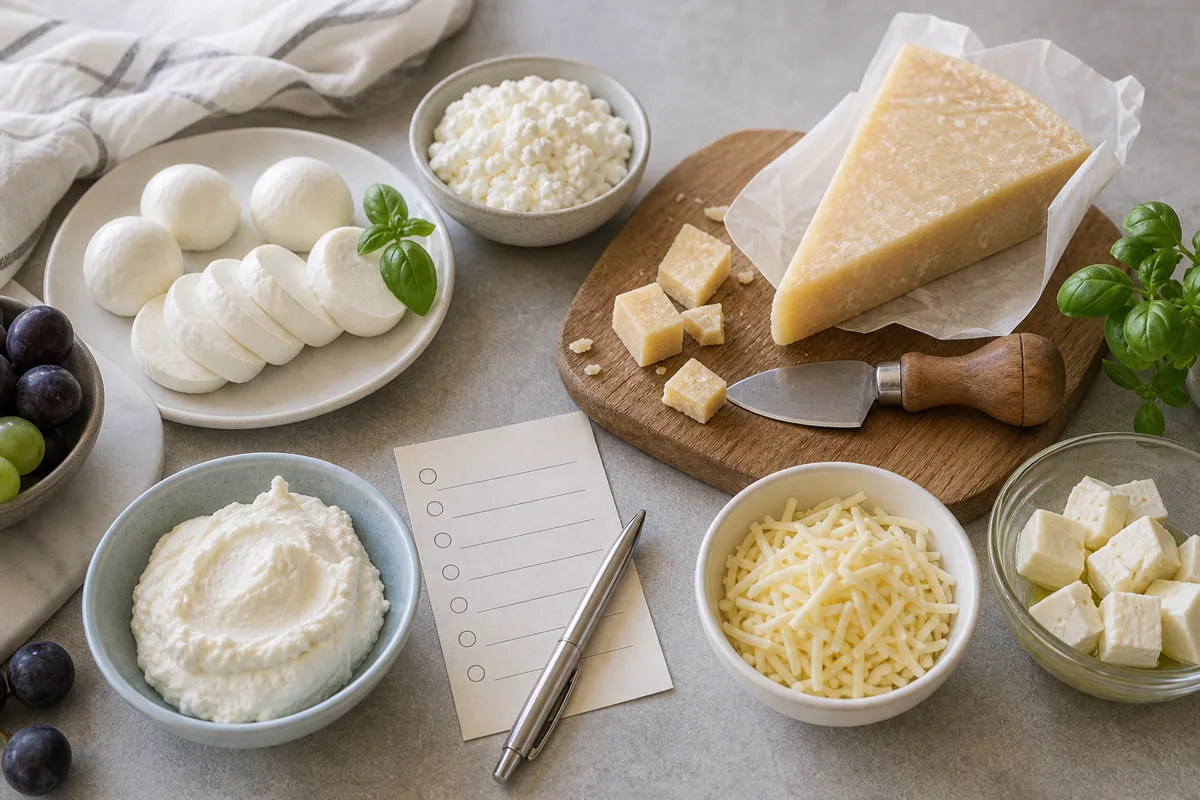
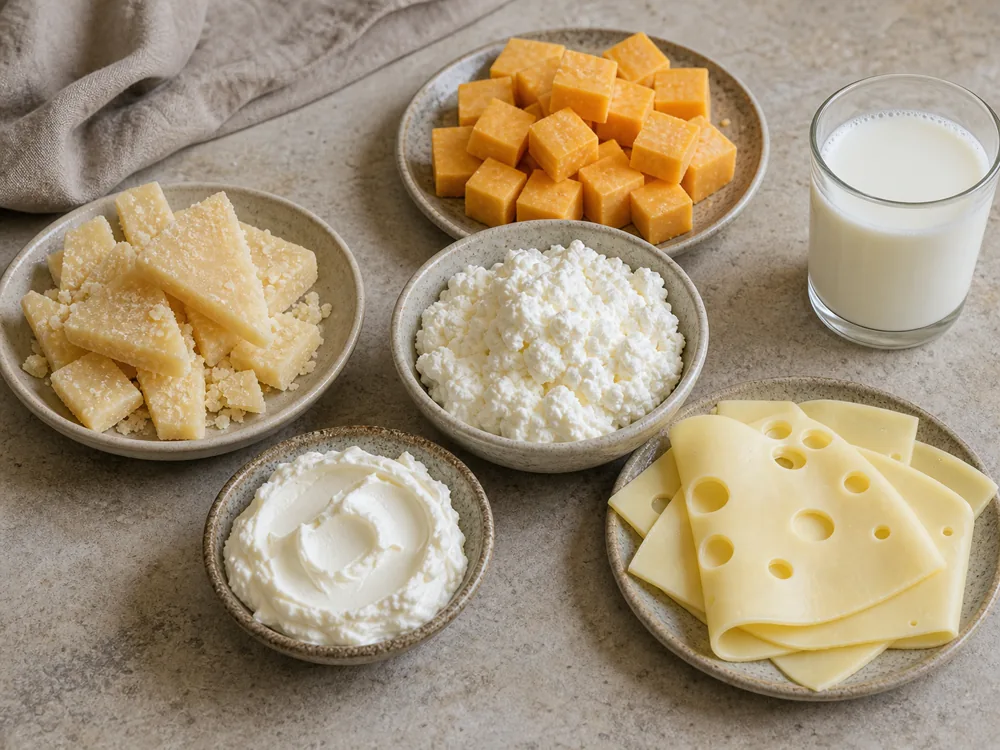
| Cheddar or Swiss | NIDDK names these as hard cheeses with less lactose than other milk products. USDA FoodData Central lists 0.18 g of lactose per 100 g for sharp cheddar and 0 g for Swiss. | Use the specific pack or manufacturer for a measured amount. A cheese name is not a personal tolerance guarantee. |
| Grana Padano PDO | The consortium reports residual lactose well below 0.1 g per 100 g after its minimum nine-month maturation. | That statement concerns Grana Padano PDO, not every cheese sold as Parmesan-style. |
| A product labelled lactose-free | The claim concerns that product, including versions of fresh cheeses where available. | Check the current pack and milk-allergen statement. Lactose-free does not mean dairy-free. |
| Fresh or processed cheese without a lactose claim | USDA FoodData Central lists more lactose per 100 g in fresh cheeses: 2.32 g for queso fresco, 2.67 g for creamed cottage cheese and 3.76 g for cream cheese. | Ask the manufacturer if a precise limit matters to you. |
The Grana Padano figure illustrates why the serving basis matters. Using 0.1 g per 100 g as an upper bound, a 30 g portion would contain less than 0.03 g of lactose, not 0.1 g.
That is a calculation from the consortium's product information, not a laboratory test by this website or a recommended portion for every person. If it suits your needs, Grana Padano for grating or serving gives you ways to use it beyond a bowl of pasta.
How Do You Read a Label Without Confusing Sugar and Lactose?
On a US Nutrition Facts label, total sugars include both naturally occurring and added sugars. The FDA explains that the added-sugars line excludes sugars naturally present in milk, so zero added sugar does not establish zero lactose.
Total carbohydrate is not a separate lactose measurement, so do not turn a carbohydrate or sugar number into an exact lactose result unless the label states one.
A lactose-free claim is more relevant than descriptions such as light, reduced-fat or extra mature. Read the current product information again when changing brands or buying a flavoured version, since you may be choosing a different formulation.
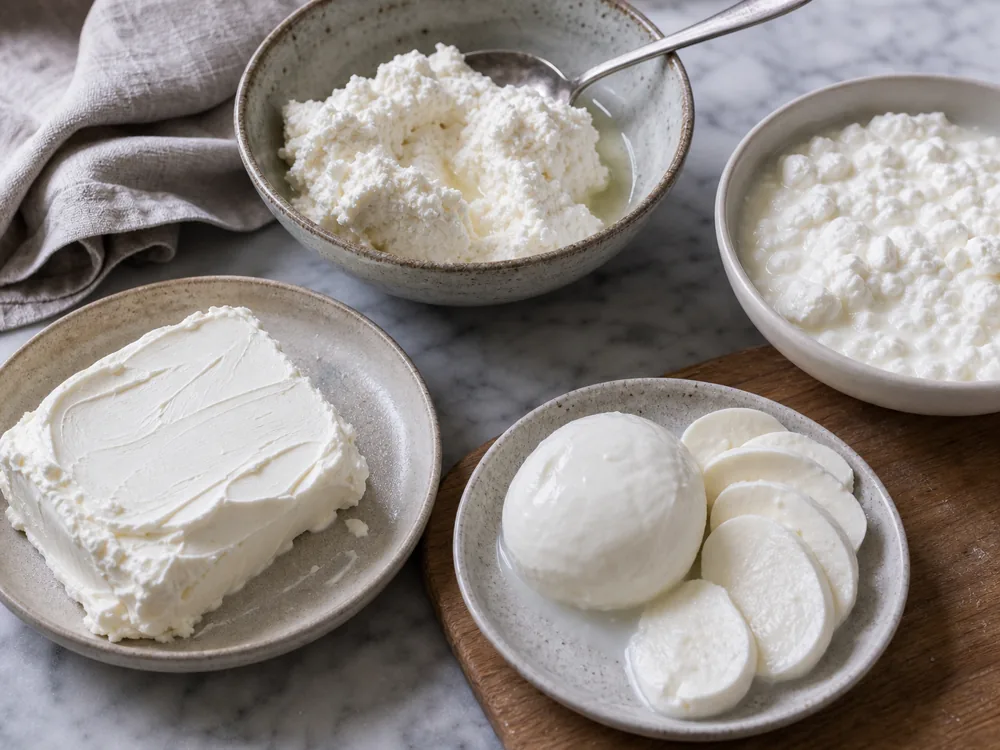
Goat's and sheep's milk also contain lactose, according to the NHS, so changing from cow's milk to goat cheese does not by itself solve a lactose problem.
How Do Portions and Meals Affect Lactose Tolerance?
If you have lactose intolerance, you may still tolerate some lactose. NIDDK suggests smaller amounts with meals, lower-lactose dairy choices or lactose-free products, rather than assuming that everyone needs to remove all dairy.
Use an actual portion weight when comparing products. A thin slice and a thick slice are not interchangeable units, and the amount in a cheese sauce depends on both its ingredients and how much sauce you eat.
Lactase products help some people digest lactose, but they do not make a milk allergen safe. A clinician or dietitian can help you decide whether they fit your needs and keep calcium and vitamin D intake adequate if you reduce dairy.
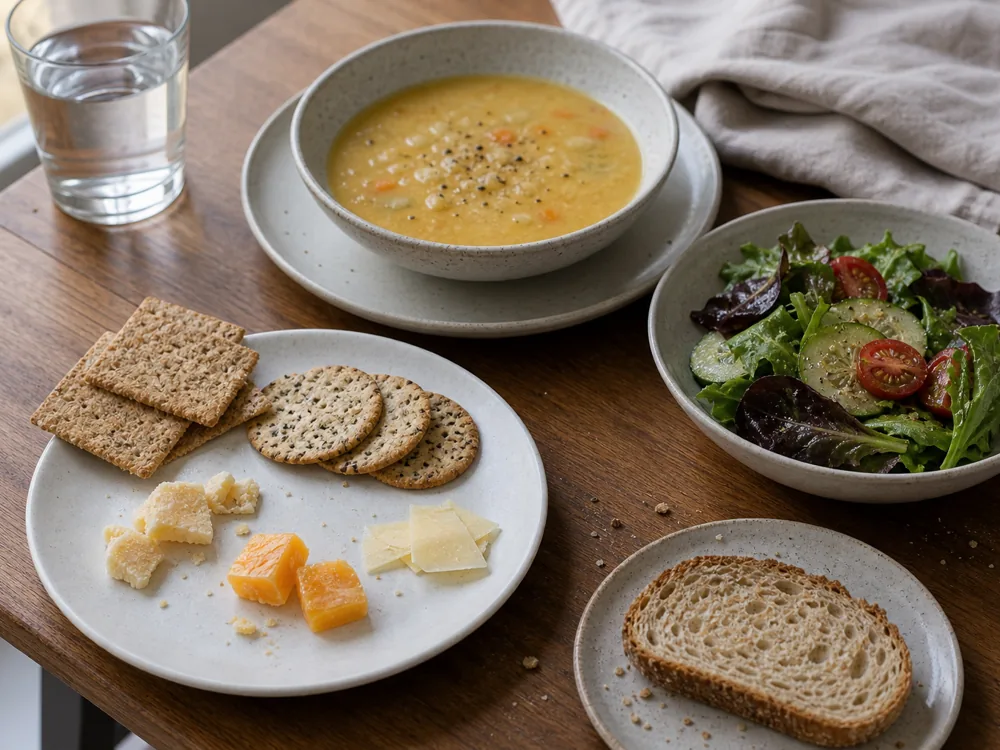
For a mixed dish, check other dairy ingredients such as milk in a sauce before relying on the cheese's lower-lactose status.
Is Lactose Intolerance the Same as a Milk Allergy?
Lactose intolerance involves difficulty digesting milk sugar and can cause bloating, gas or diarrhoea. A milk allergy involves the immune system reacting to milk proteins, so a lactose-free dairy product can still trigger an allergic reaction.
Do not use a cheese tasting at home to diagnose recurring symptoms. The NHS advises getting medical advice for symptoms that keep returning, and speaking to a clinician before removing foods from your or your child's diet.
Sudden swelling of the lips, mouth, tongue or throat, or difficulty breathing, can signal a serious allergic reaction. Call emergency services immediately, including 999 in the UK.