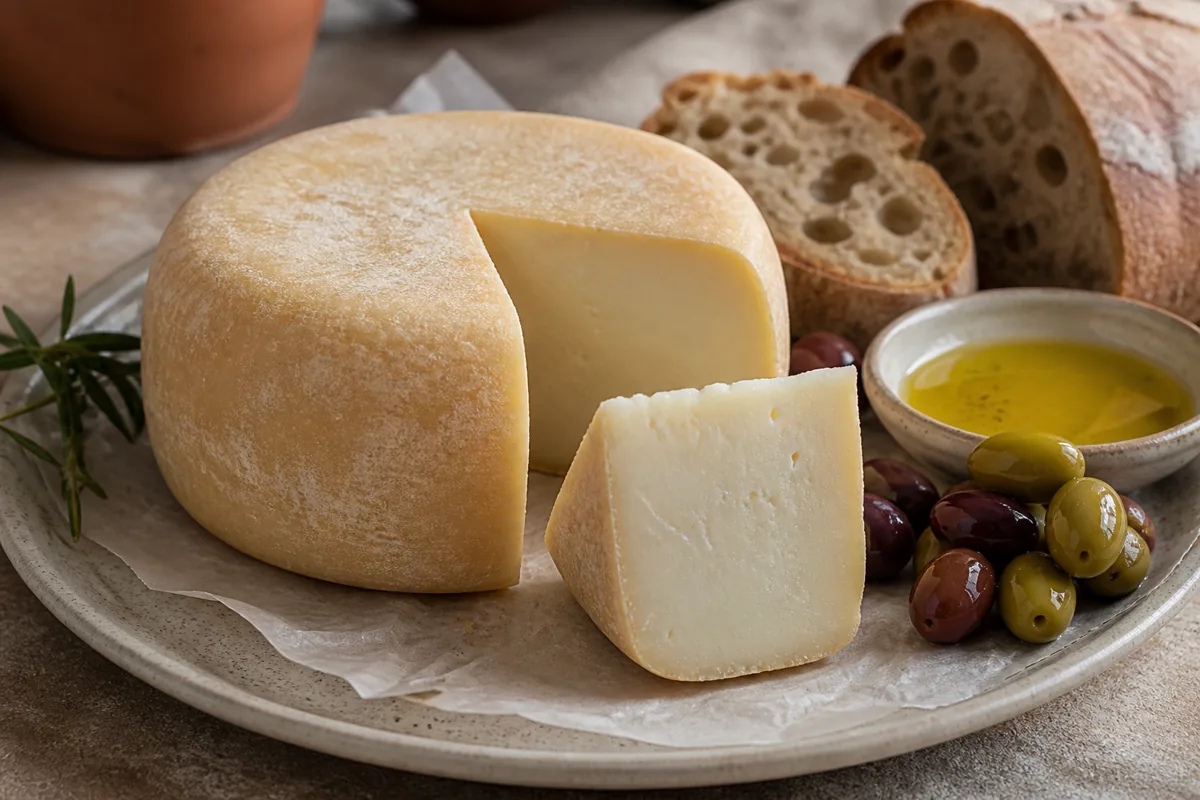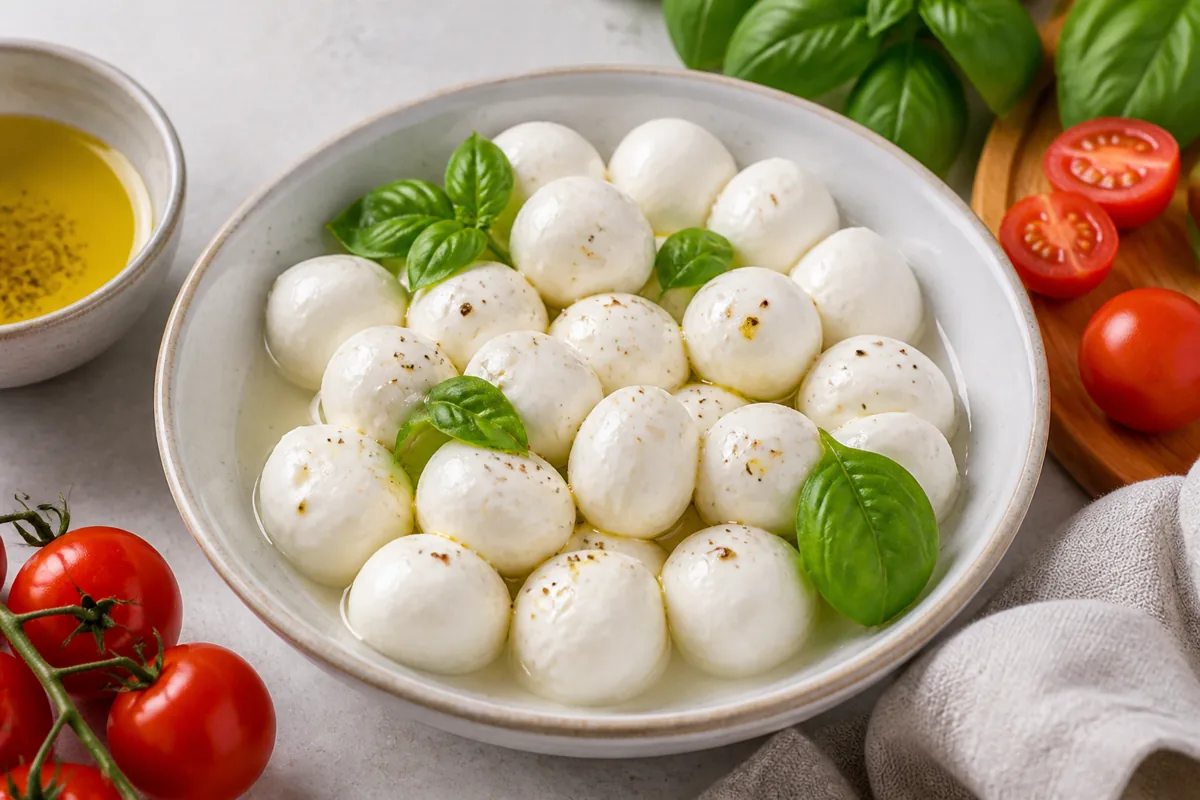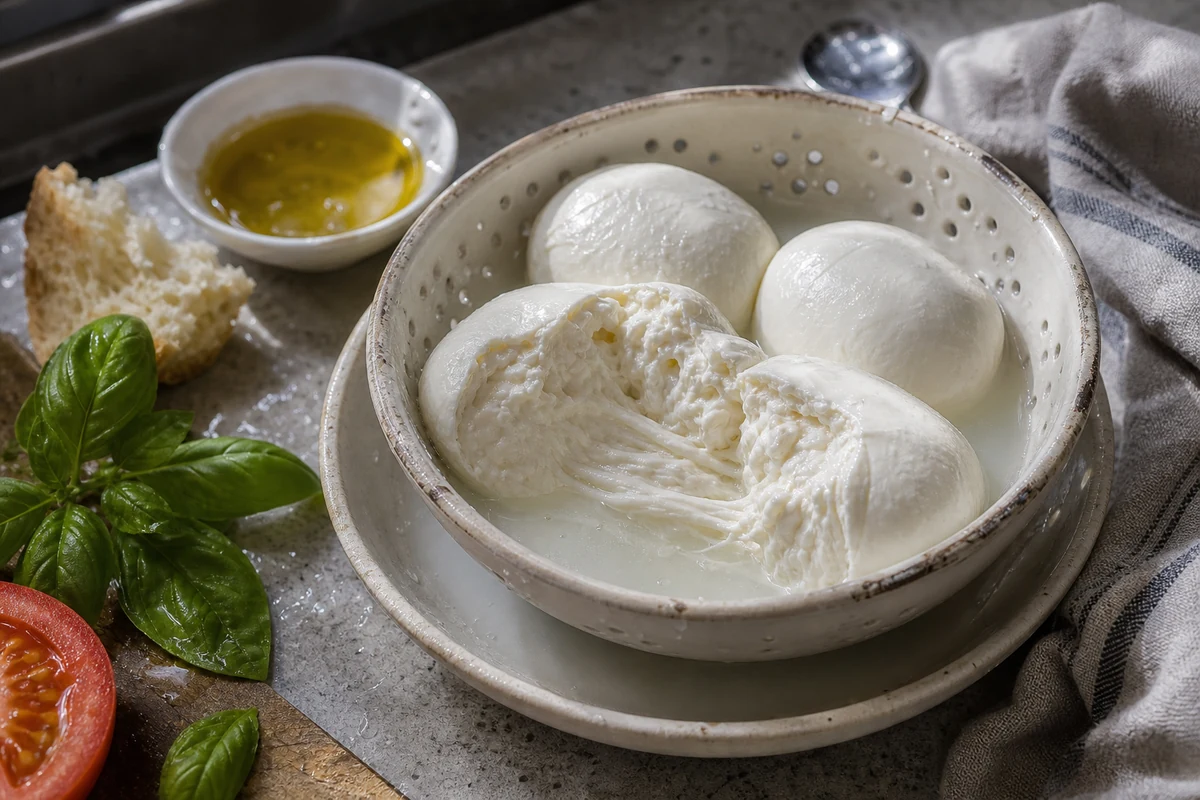
Fior di latte is a fresh cow's-milk stretched-curd cheese used in salads, sandwiches, baked dishes, and pizza. The name may appear as fiordilatte or as a cow's-milk mozzarella description, so the exact package controls milk treatment, ingredients, date, storage, and nutrition.
Water-packed balls and pizza blocks do different jobs. Choose the format for the dish, then follow that product's label instead of applying one draining time or opened-life rule to every package.
In This Article
What the name tells you
Current Latteria Sorrentina technical sheets describe both Fiordilatte in Acqua and Fiordilatte Filone as cow's-milk stretched-curd cheese made with pasteurized milk, salt, rennet, and lactic cultures. The Associazione Verace Pizza Napoletana also lists Fior di Latte as a fresh stretched-curd cheese and permits it on Margherita pizza.
Those records establish the product lane without making every package identical because a regional cheese, a supermarket tub, and a professional pizza block can differ in milk treatment, moisture, size, and instructions.
Which Fior di Latte Format Should You Choose?
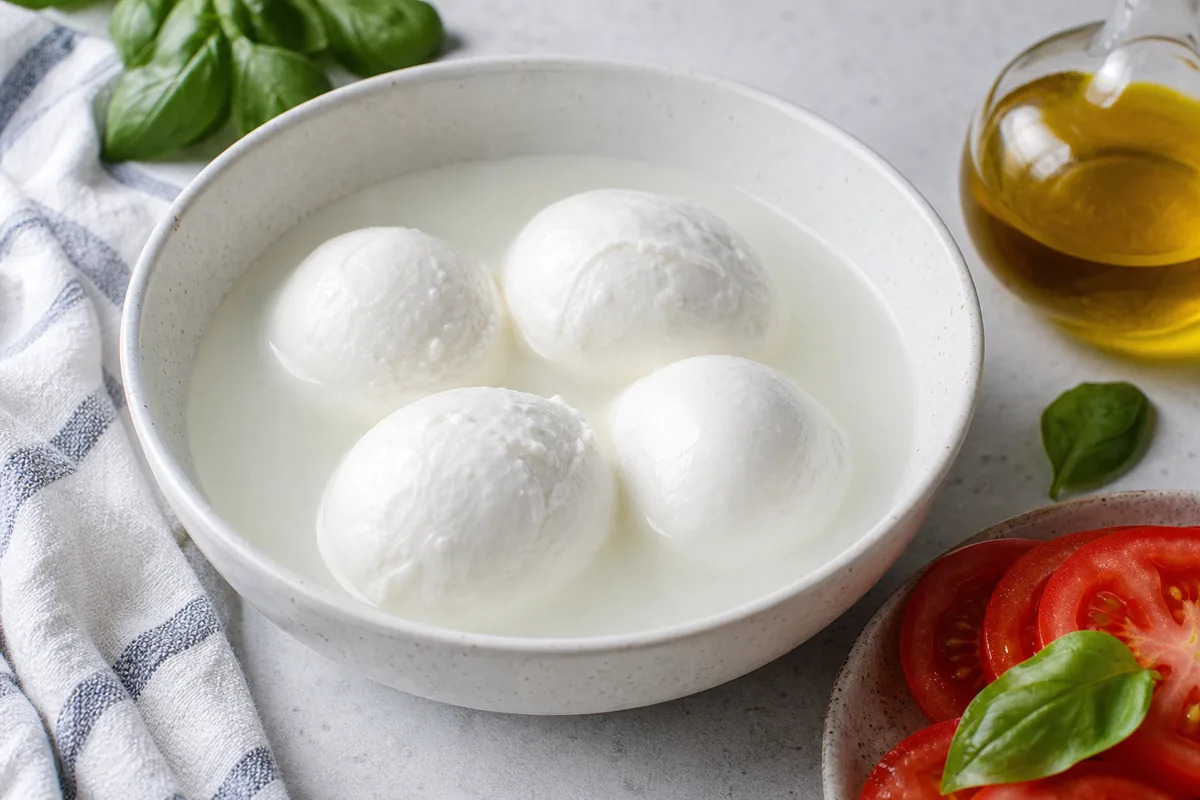
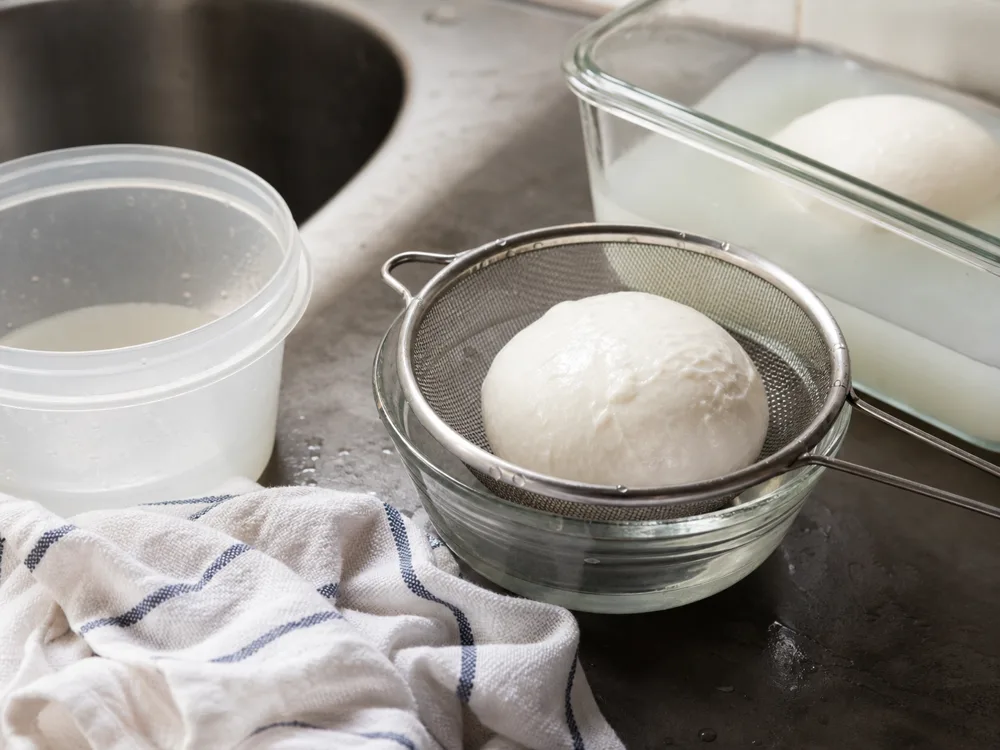
For Caprese and other uncooked dishes, a water-packed ball keeps the soft body and surface moisture people expect from fresh mozzarella. Lift it from the liquid shortly before serving, let the excess drip away, and cut it with a sharp knife.
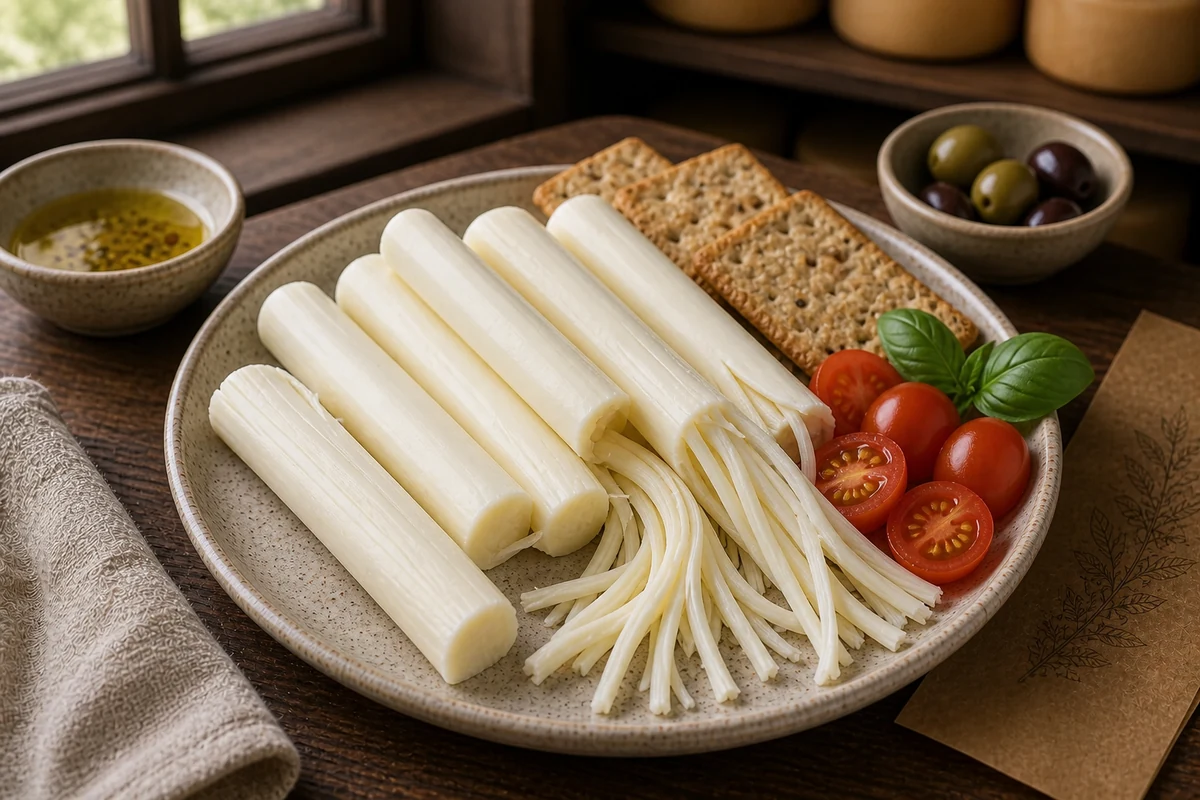
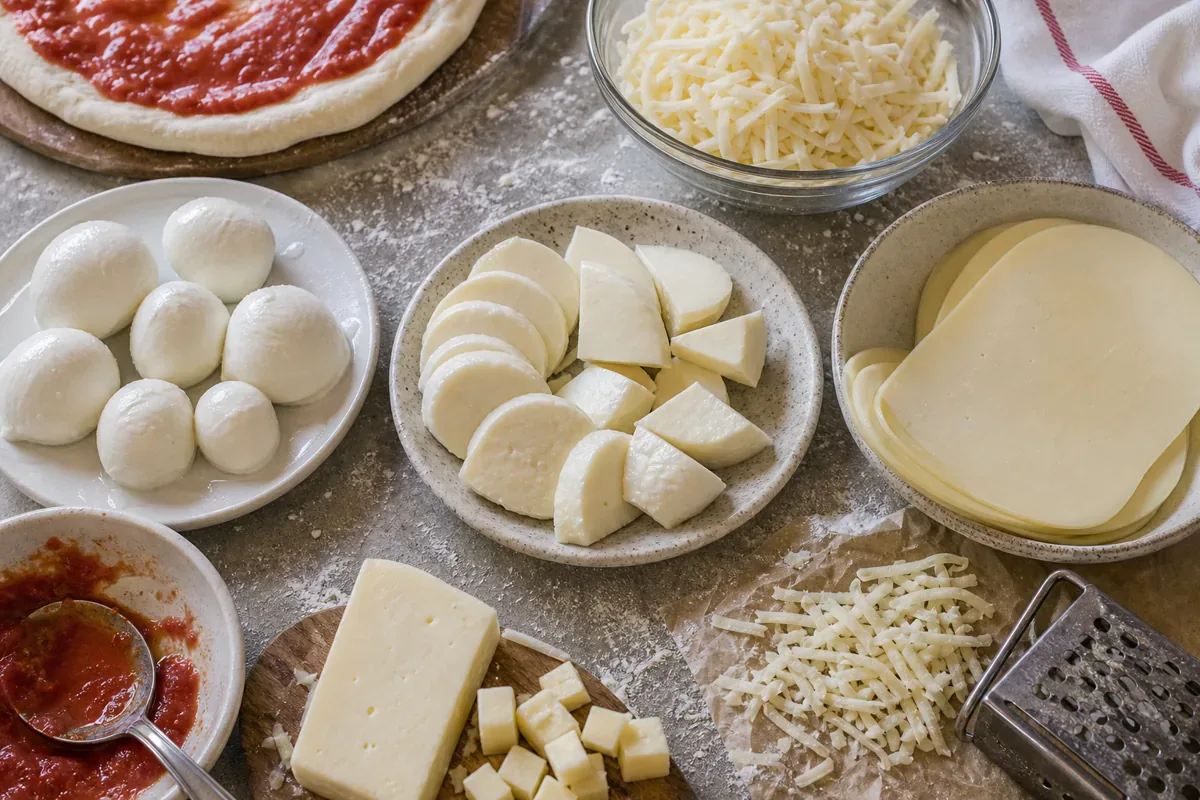
For pizza, look for a format sold for baking or a ball that can shed excess surface liquid before it reaches the dough, with professional ranges offering water-packed cheese, strips, cubes, matchstick cuts, and blocks for different kitchen jobs.
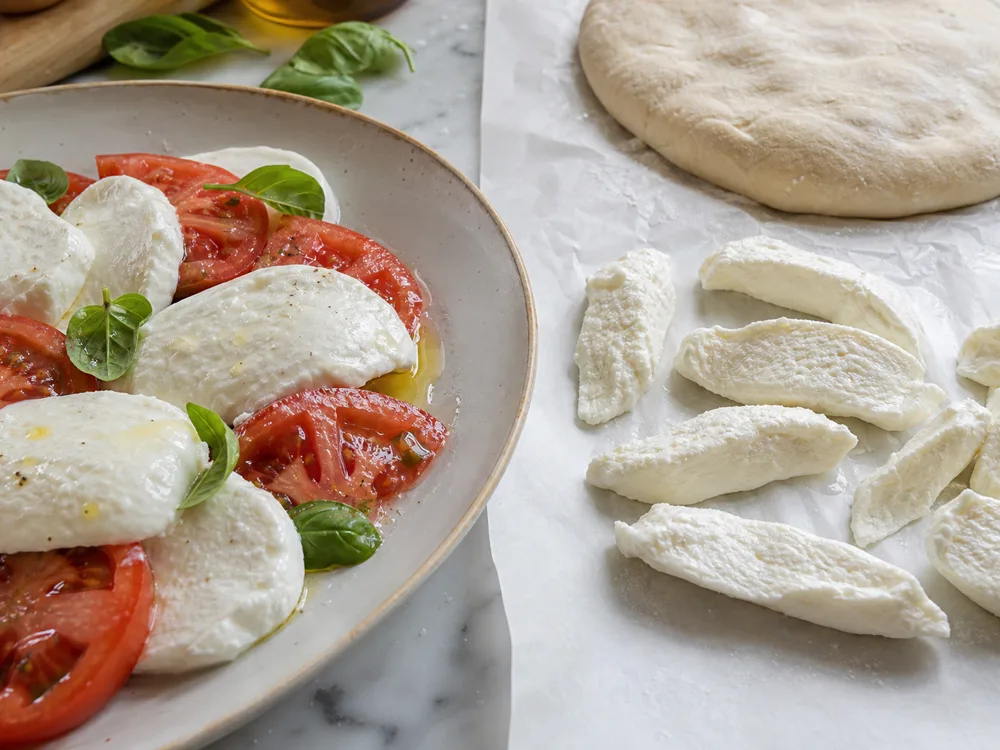
| Use | How It Works |
|---|---|
| Salads | Use a water-packed ball when a soft, moist slice belongs with tomato, herbs, or vegetables. |
| Pizza | Use a pizza format or drain and portion a fresh ball according to its condition and your oven. |
| Sandwiches | Blot the cut surfaces when excess liquid would soften the bread. |
| Baked dishes | Add measured pieces where fresh stretched curd should soften into the dish. |
How Do Two Current Fior di Latte Products Compare?
The following figures belong to two Latteria Sorrentina products. They show why a category-wide nutrition panel or shelf-life promise would be misleading.
| Exact product | Format and ingredients | Per 100 g | Unopened producer specification |
|---|---|---|---|
| Fiordilatte in Acqua, code 020130 | 500 g water-packed format. Pasteurized cow's milk, salt, rennet, and lactic cultures | 268 kcal, 19.3 g fat, 22.9 g protein, 1.0 g salt | 20 days from production at no more than 4°C |
| Fiordilatte Filone, code 020112 | 1 kg block. Pasteurized cow's milk, salt, rennet, and lactic cultures | 287 kcal, 20.8 g fat, 24.1 g protein, 1.2 g salt | 30 days from production at no more than 4°C |
These numbers are useful for comparing those two products on the same basis. Use the nutrition panel and date on the package in your hand for any other Fior di Latte.
How Do You Prepare Fior di Latte for Pizza?
The current AVPN rules use 80 to 100 g of cow's-milk mozzarella or qualifying Fior di Latte on a Margherita and direct the cook to cut larger cheese into strips that are not too thick, which gives even coverage without requiring thick wet rounds.
- Read the package to see whether the cheese is water-packed or prepared for pizza.
- Remove only the amount you need and cut or tear it into even pieces.
- Let visible preserving liquid drain, then blot wet cut surfaces if liquid still pools beneath the cheese.
- Keep the prepared cheese covered and refrigerated until the dough is ready.
- Spread the pieces evenly instead of placing one wet mound in the center.
There is no evidence-based universal 20-minute or 60-minute target because package format, piece size, starting moisture, crust, topping load, and oven all change how much liquid the pizza can handle.
Use the result as the stop cue. The cheese should remain supple, but it should not leave a puddle on the plate before it reaches the pizza.
How Does Fior di Latte Differ From Buffalo Mozzarella?
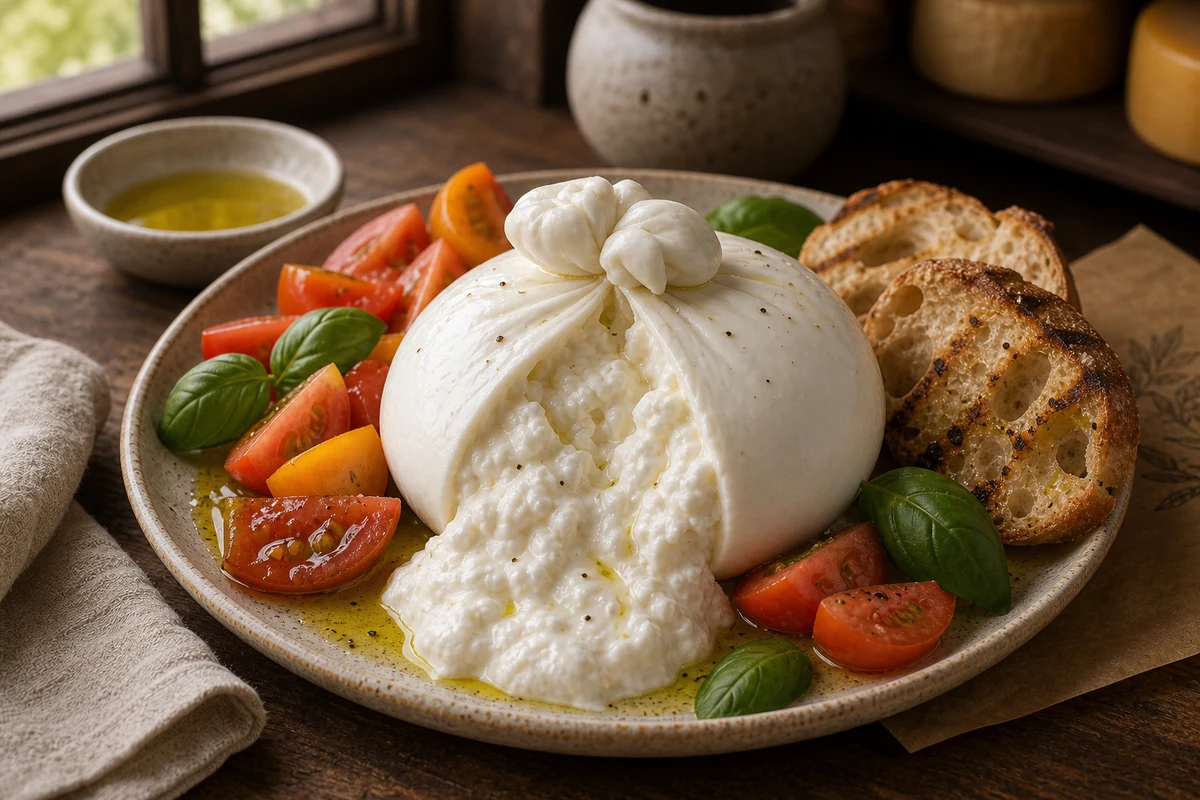
Fior di Latte uses cow's milk, while fresh mozzarella made from buffalo milk begins with a different ingredient. Choose between exact products by the dish, their moisture, and the label rather than assuming every cow's-milk cheese is drier or every buffalo cheese is richer.
For pizza, format can matter as much as milk source. A purpose-made block and a water-packed ball from the same producer already show different nutrition and unopened shelf-life specifications.
How Should You Store Fior di Latte?
Keep Fior di Latte at the temperature printed on its package, with both reviewed Latteria Sorrentina examples specifying no more than 4°C (40°F), which matches the FDA refrigerator limit.
The FDA says refrigerated food should not remain at room temperature for more than two hours, or one hour when the air is above 90°F (32°C).
An unopened producer shelf life does not become an opened-package promise, so retain the label and do not replace it with a generic one-to-two-day rule.
Can You Eat Fior di Latte During Pregnancy?
Current CDC guidance lists mozzarella made with pasteurized milk among the safer cheese choices during pregnancy, while it lists unheated deli-sliced cheese as riskier and advises heating deli-sliced cheese to 165°F (74°C) or until steaming hot.
Check the actual Fior di Latte package for pasteurized milk. A sealed package labeled pasteurized mozzarella fits the named CDC condition, while a deli-cut portion adds a handling condition that the word Fior di Latte does not answer.
What Should You Check Before Buying Fior di Latte?
- Dish: Choose water-packed cheese for moist uncooked service or a pizza format when the crust needs less surface liquid.
- Sales name: Read the full label instead of relying on Fior di Latte alone.
- Milk treatment: Read the exact milk-treatment statement on the package.
- Cold chain: Buy an intact cold package and follow its storage range.
- Date and quantity: Choose a size you can use within the printed directions.
- Nutrition: Use the exact panel because water-packed and block products can differ.
For a broader baking comparison, use the package's moisture and intended cooking method. For fresh service, compare Fior di Latte with cream-filled fresh cheese and buffalo-milk mozzarella by exact package and intended dish.