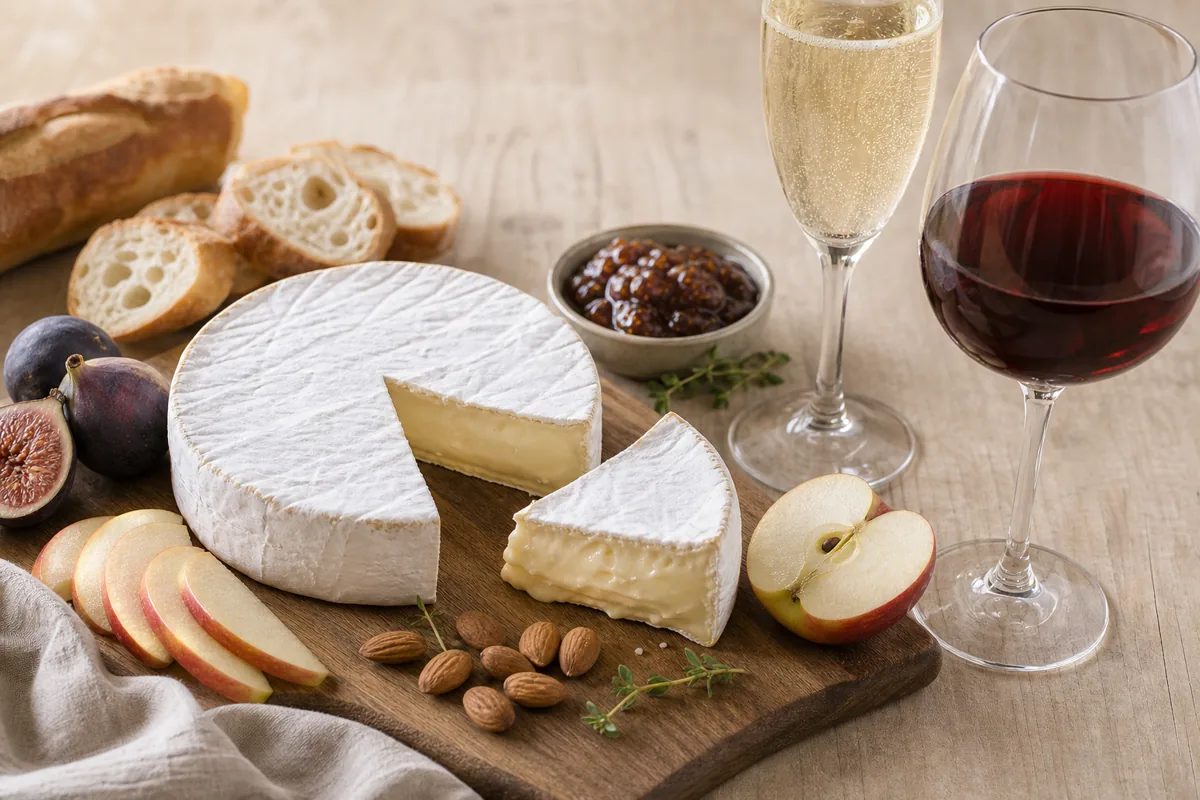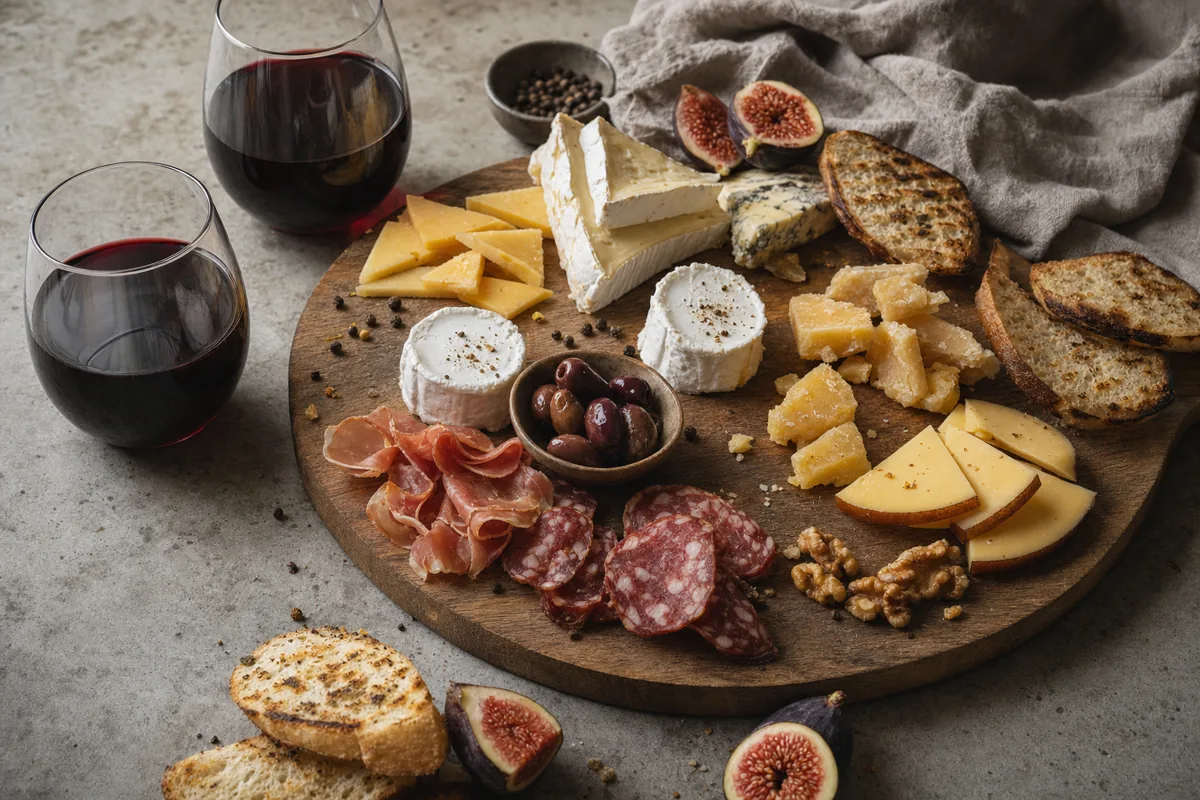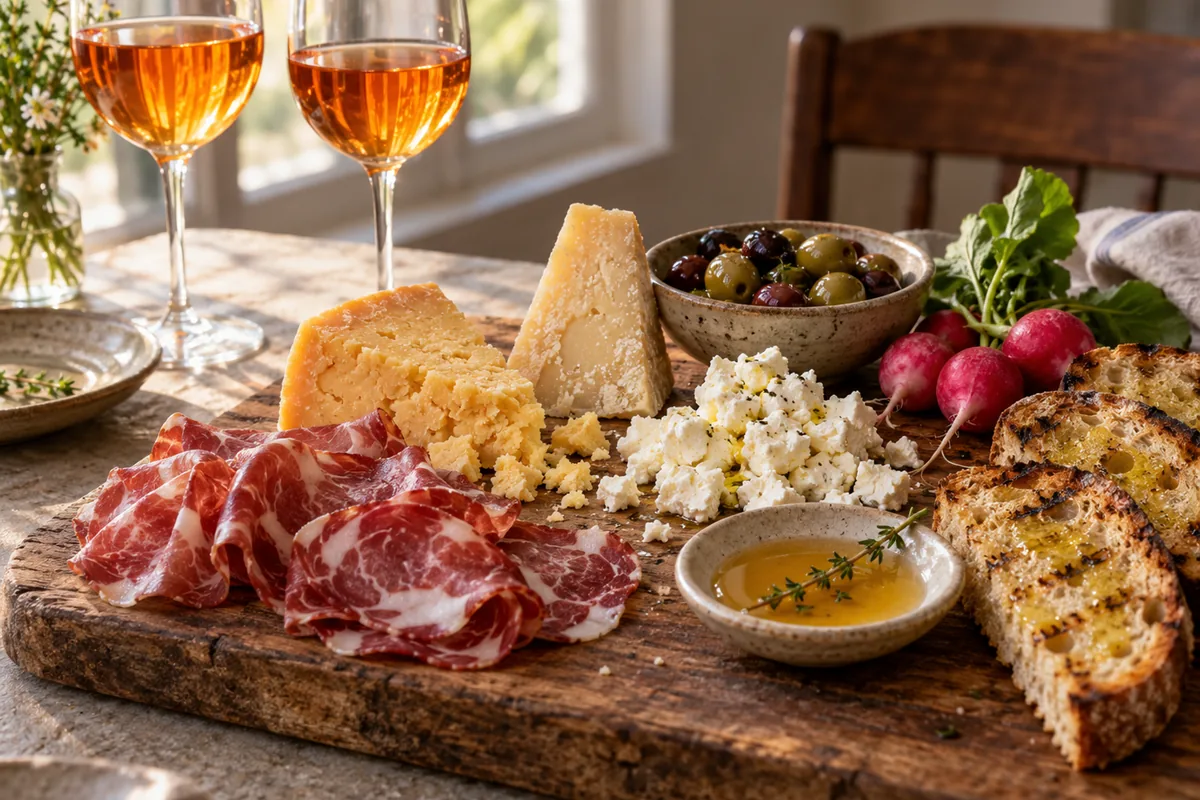
Culture magazine's Rebecca Haley-Park describes orange wines as astringent and a bit rough on their own, and says a fatty hunk of cheese strikes the balance.
Every pairing below starts from that grip, and the writers differ only on what to set against it: salt, matching funk, or a lighter touch for a lighter bottle.
In This Article
Why Does Orange Wine Need Cheese?
Orange wine is made from white grapes, but the skins stay in the fermenting juice instead of being pressed off, so the wine takes up the color pigment, phenols and tannins that conventional white winemaking leaves behind, according to Wikipedia's summary of the style.
Tara Thomas of Wine & Spirits, writing in Culture, says those tannins add breadth and texture and keep the wine fresher longer. She adds that on their own the tannins and strong flavors can be shocking, and that every orange wine shares one trait: it is best with food.
Her cheese point is specific. Thomas writes that the full-bodied flavors and tannic structure make orange wine versatile with hard cheeses, including salty, aged ones that normally put up a fight with whites.
Madeline Puckette of Wine Folly states the general rule behind this for any high-tannin wine: look to foods with fat, umami and salt for balance, and avoid bitter foods, because taste buds are very sensitive to bitterness and the two add up.
How Does Skin Contact Change an Orange Wine?
The reported skin-contact times run from a few days to months, and the one-month minimum in the International Organisation of Vine and Wine description is not what every bottle follows.
| Wine or method | Skin contact | Result reported | Reported by |
|---|---|---|---|
| International Organisation of Vine and Wine description | Minimum 1 month | White wine with maceration | Wikipedia |
| Kakhetian method, eastern Georgia | Often about 6 months | Usually deep amber | Wikipedia |
| Imeretian method, western Georgia | Often 15 to 30 days, with less pomace, usually a third | Lighter, usually orange or yellow | Wikipedia |
| Jolie-Laide Trousseau Gris, California | 7 to 9 days | Only a kiss of orange hue, with a weighted palate | Cathryn Haight, Culture |
| Lighter orange wines | Only a few days | Lighter in style | Simon Woolf, Decanter |
The spread decides how much grip the board has to answer. Haight says the longer the skins and juice macerate, the more amber the wine's hue, and Woolf places Radikon and Gravner among the heavier, more tannic examples.
That puts the salty, aged-cheese advice below closest to the months-long end of the table.
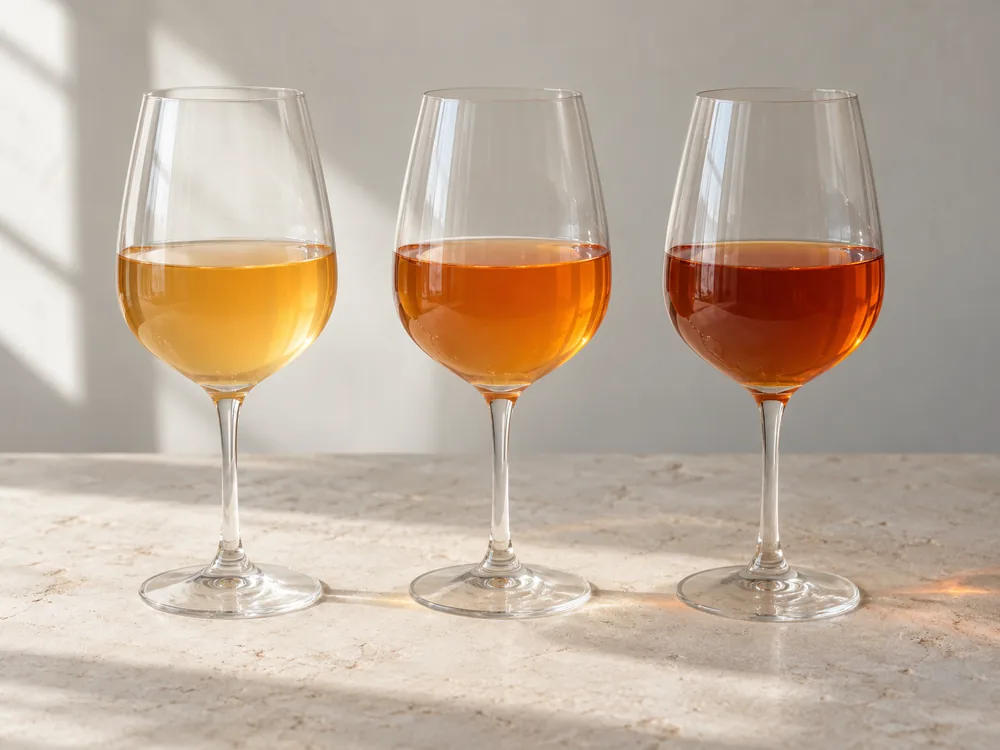
Color is only a loose guide to that. Madison Trapkin writes in Culture that orange wines can be made from any white grape and come in all shades, from baby orange to hues bordering on Cheeto.
The sommelier Lauren Friel, quoted by Trapkin, says that people asking her for a recommendation are usually after an unforgettable experience rather than a specific color.
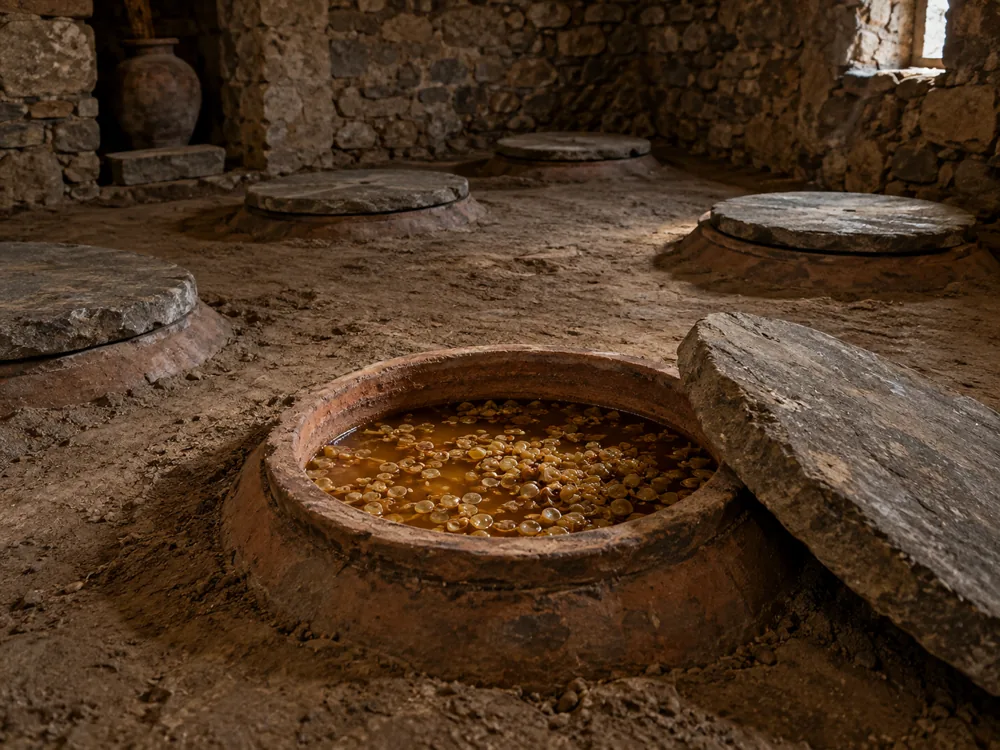
In Georgia the wine ferments in qvevri, clay vessels buried in the cellar, which Wikipedia says hold a constant underground temperature of around 14 to 15°C.
Thomas reports that the Friuli winemaker Josko Gravner traveled to Georgia in 2000, replaced his stainless-steel tanks with qvevri and left the skins on his white-wine grapes. His amber wines encouraged winemakers elsewhere to follow.
What Does Orange Wine Taste Like?
Thomas describes the flavor as more savory than fruity, with notes ranging from flowers and spice to beeswax, meat and herbal tea.
Haight puts the range from funky to tannic to tropical to floral, and says the skins and seeds give the wine a little body and bitterness. The notes McKee lists for the wines he paired include orange peel, dried apricots, orange blossom, green grass, lime peels and juicy stone fruit.
Trapkin's regional sketches, drawn from Friel, put Georgian bottles at the earthy end. Italian bottles show more citrus and bold aromatics, with Terra dei Preti, from Umbria, carrying notes of jasmine tea and honeysuckle.
American bottles can be funkier than imports, from the resinous, honeyed wines of Dirty & Rowdy in California to the downright earthy pours of La Garagista in Vermont.
Winkler explains the spread: the expression depends on the winemaker, the terroir, the grapes and the length of skin contact. The table in the next section groups the named cheeses by these styles.
Which Cheeses Go With Orange Wine?
The table sorts the named cheeses by the kind of bottle each writer describes.
| Wine style | Cheeses named | Reason given | Named by |
|---|---|---|---|
| Dark, earthy Georgian wine | Comté (Marcel Petit), Pecorino Sardo PDO Maturo | Saltier cheeses stand up to rich tannins | Madison Trapkin, Culture |
| Georgian Kisi (Pheasant's Tears 2011) | Pecorino, feta, kashkaval, aged Gouda | Full body and tannic structure cope with salty, aged cheese | Alice Feiring and Tara Q. Thomas, Culture |
| Italian wine with citrus and bold aromatics | Sartori Espresso BellaVitano Reserve, casArrigoni Nababbo | A cheese with plenty of personality, as potent as the wine | Madison Trapkin, Culture |
| US wine, funkier than imports | Vermont Creamery Bonne Bouche, Blue Ledge Farm Lake's Edge | Equally funky cheeses | Madison Trapkin, Culture |
| Funky wine with a slightly sweet quince undertone | Feta, halloumi | Salty Eastern Mediterranean and Middle Eastern cheeses suit the quince note | Marissa Mullen, Extra Sharp |
| Lighter-bodied orange wine | Goat cheese | Its funky flavor | Doreen Winkler, Chowhound |
| Orange wine "for structure and depth" with capocollo | Aged sharp cheddar | Crumbly, bold, salty and slightly crystalline | Niman Ranch |
Two logics sit side by side in the table. Trapkin's Georgian matches, Feiring's Kisi matches and Mullen's feta and halloumi match use salt to answer the wine, while Trapkin's Italian and domestic matches raise the cheese to the wine's own level of character.
Winkler's goat cheese is the light end of the same scale, chosen for bottles she describes as lighter-bodied.
In the wine's homeland the wine is not purposely matched with food. Thomas quotes Feiring saying Georgia is "so not a wine-and-food pairing culture," and that Georgians tend to layer seasonings on cheese, with fresh cheese typically showered in mint.
Thomas adds that the region's robust cuisine suits powerful bottles, citing khachapuri, boat-shaped breads brimming with molten cheese.
Tannic or long-skin-contact bottle: salty aged hard cheese such as Comté, pecorino or aged Gouda. Funky bottle: feta, halloumi or an equally funky cheese; light bottle: goat cheese.
What Did a Cheese Shop Find After Testing 33 Cheeses?
Colin McKee, store manager and wine buyer at the Charleston, South Carolina, cheese shop goat.sheep.cow., told Haight that the shop usually looks for what it calls a "grows with, goes with" pairing. Orange wine made that rule tricky, so his team broke the mold and tested 33 cheeses.
| Pairing | Why It Works |
|---|---|
| Fior d'Arancio with Gulp Hablo Orange | A rich blue cheese against a rich Spanish wine. |
| Castilla la Mancha Romao with Pullus Haložan Orange | A rosemary-rubbed sheep's milk cheese against a racy Slovenian wine. |
| 12-month Swiss Gruyère with Fio 'Glou Glou' Orange | Salty crystals against a delicate German wine; McKee's favorite. |
| Cheeseland Ewephoria with Jolie-Laide Trousseau Gris | A Dutch sheep's milk Gouda with butterscotch and caramel against a California wine. |
The first pairing doubles down on richness. McKee calls the Gulp Hablo Orange rich and aromatic, with notes of orange peel and dried apricots, and says it needed a cheese that could stand up to it.
Fior d'Arancio is a fudgy Italian cow's milk blue soaked in Moscato, with sweet floral notes, a pop of salt and a generous rind of candied orange peel, so the cheese rivals the wine in richness.
The second aims for balance. Castilla la Mancha Romao is a semi-firm, creamy Spanish sheep's milk cheese rubbed by hand in lard and rolled in rosemary, which tempers the dry minerality of the Slovenian wine and echoes its herbal and graphite notes.
McKee adds that the racy wine keeps the palate texture lighter and lifts the rosemary rind.
The Gruyère match was the team's favorite. McKee calls the German Fio 'Glou Glou' Orange delicate, with hints of orange blossom, green grass and lime peels, and says the cheese has just enough salty crystals to make the wine pop.
In return the wine sweetens the strong onion note that Gruyère often carries.
Cheeseland Ewephoria, a Dutch sheep's milk Gouda, brings butterscotch and caramel to the Jolie-Laide, a staff-favorite wine with a nose of juicy stone fruit and a hint of minerality.
Read together, the four answer a different trait of the wine each, from richness to dry minerality, delicacy and stone fruit, which matches McKee's aim of finding cheeses that "complete the flavor wheel."
Which Cured Meats Go With Orange Wine?
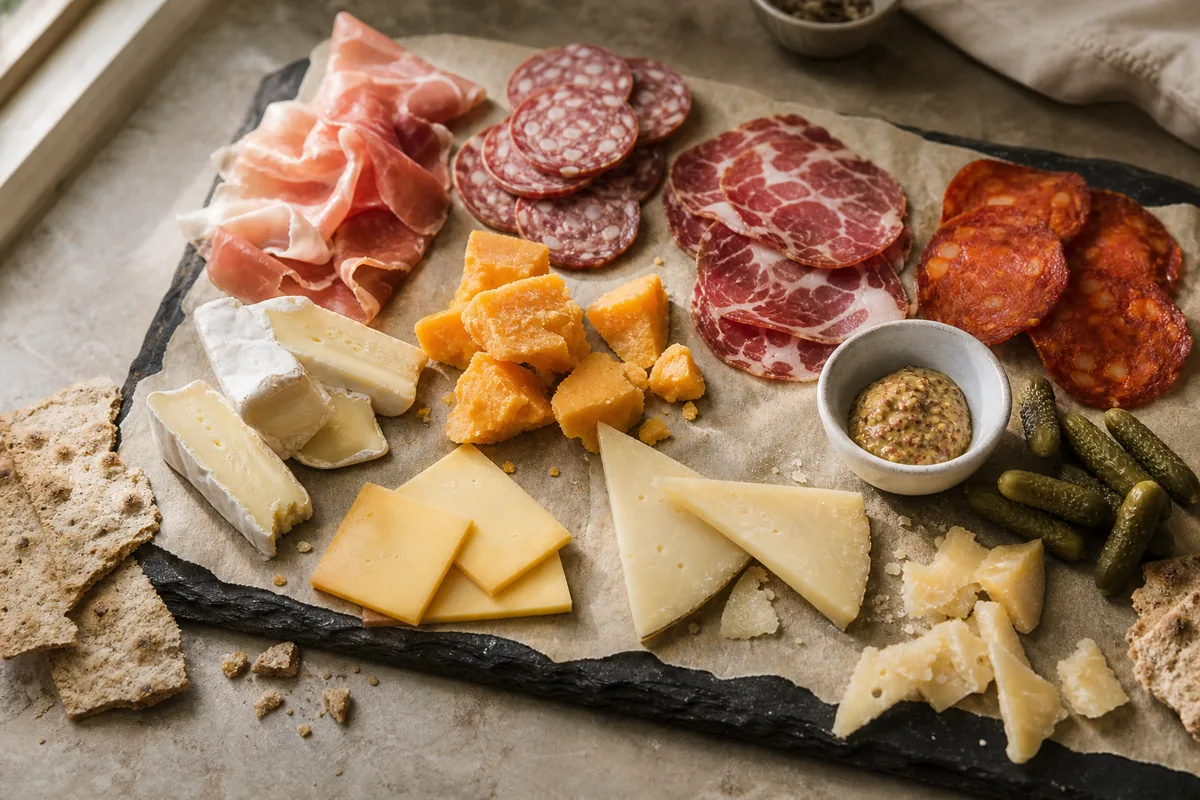
Niman Ranch's charcuterie guide pairs five cured meats with wines and cheeses. Niman Ranch sells the meats it pairs, so the advice reflects the producer's own view of its products.
| Meat | Wine | Cheese |
|---|---|---|
| Prosciutto | Aligoté or dry sparkling wine | Truffled or herbed firm cheese such as Sottocenere |
| Genoa salame | Chillable red low in tannin, such as Gamay or Blaufränkisch | Aged sheep's milk gouda-style cheese |
| Capocollo | Txakoli or orange wine | Aged sharp cheddar |
| Hot sopressata | California Pinot Noir or Lambrusco | Triple-cream brie or La Tur-style cheese |
| Uncured pepperoni | Grolleau or another juicy, low-tannin red | Coupole, an aged goat cheese |
Four of the five meats go to sparkling, white or low-tannin red wines. The guide's stated principle is that fruity, low-tannin wines soften the saltiness of cured meats and aged cheeses.
Orange wine appears only beside capocollo, where Niman Ranch recommends it for structure and depth.
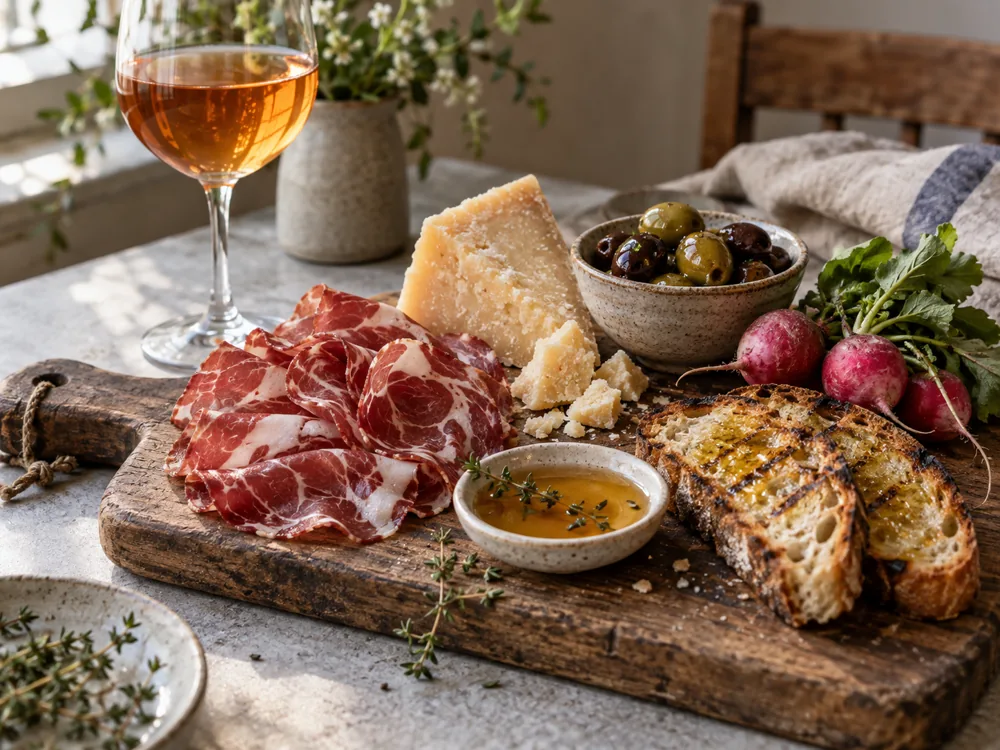
The guide describes the capocollo as savory, with pockets of cured fat, and says its mild smokiness holds its own against an aged sharp cheddar, whose slightly crystalline texture and salt make a complementary match. It adds olives, radishes and grilled bread with olive oil to the board.
Brie appears in the same guide, but beside hot sopressata and Pinot Noir or Lambrusco, not orange wine. Niman Ranch adds that a Brie that has not fully ripened will not deliver the mushroomy, grassy notes that suit the sopressata.
Doreen Winkler, founder of the orange-wine shop Orange Glou, tells Chowhound that still orange wines suit bold, savory flavors, spicy dishes and fermented, umami-rich foods such as kimchi.
The guide gives the other four meats no orange-wine match. Haley-Park reports that belly wine bar served rich house-made charcuterie, cheese accompaniments and two orange wines together, but did not say which meat went with which wine.
Do Jam, Honey and Fruit Work with Orange Wine?
Sweet accompaniments are where the cited advice conflicts. Puckette's rule is that a wine should be sweeter than the food it accompanies, because a wine less sweet than its food tends to taste bitter and tart.
Winkler applies the same logic to orange wine. Because of their dry finish, she says, orange wines do not always work with desserts, and the tannins counter sweet flavors, so for sweet dishes she suggests an orange wine vermouth or something else fortified.
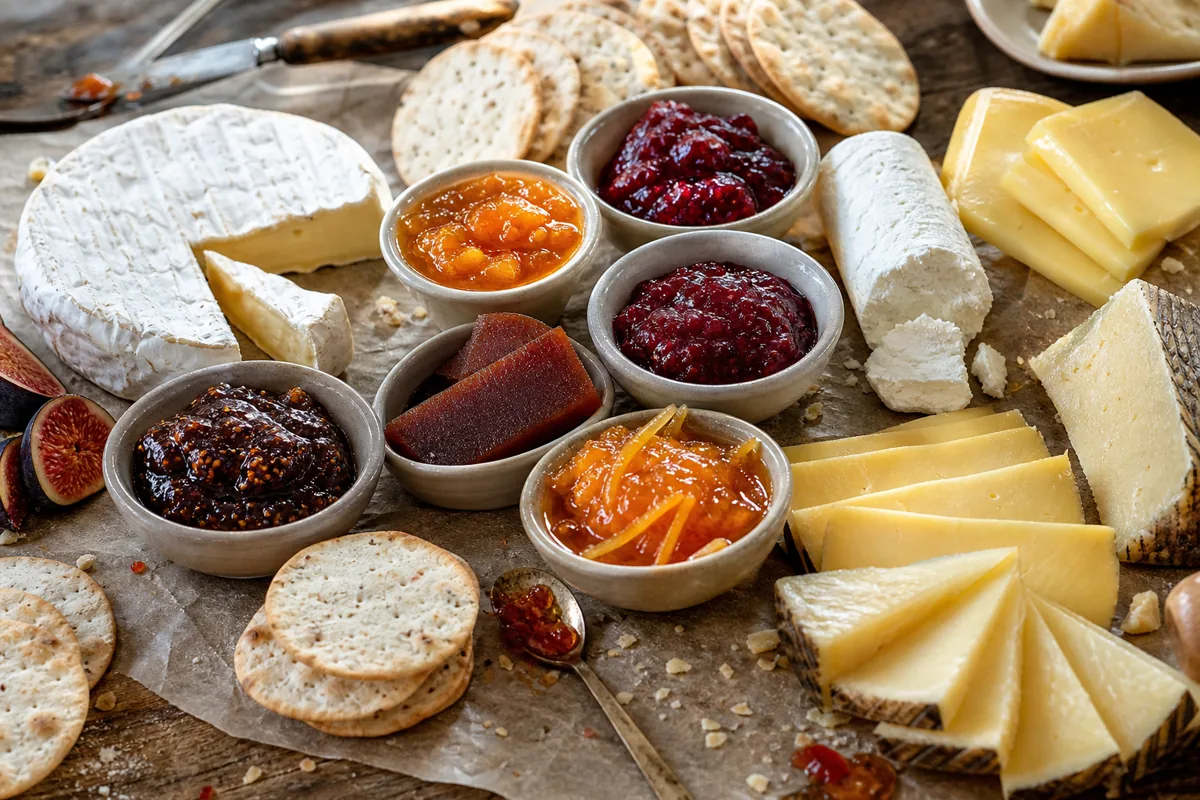
Yet two of the named orange-wine plates carry a sweet touch. McKee suggests Francis Miot Pear Caramel Jam on the Ewephoria and Jolie-Laide pairing for a "luscious" trifecta, and Niman Ranch ties its capocollo plate together with thyme-infused honey.
Both sweet notes sit beside savory cheese or meat rather than standing as dessert. McKee's wine is the lightly macerated bottle from the table above.
In both sourced cases sweetness is a small accent on a savory pairing.
How Cold Should Orange Wine Be on a Cheese Board?
Woolf ties the temperature to the style of the wine. For a heavier, more tannic orange wine he suggests serving it close to room temperature, tasting it at 12 to 14°C and warming it a little more if it does not seem expressive.
- Heavier, more tannic: taste at 12 to 14°C (about 54 to 57°F), and warm it further if it stays closed.
- Lighter, a few days on the skins: about 10 to 12°C (about 50 to 54°F).
He often compares orange wines structurally to light northern Italian reds such as Valpolicella or Bardolino, and says that on a summer day they can be delicious lightly chilled, but a mature example is better a little warmer.
Niman Ranch's board advice sorts wines into three groups, with whites and sparkling cold, chillable reds lightly chilled and full-bodied reds at cool room temperature, and it does not place orange wine in any of them.
For its own shelf-stable charcuterie, the guide says that if it has been stored in the fridge it should come out 15 to 20 minutes before serving.
Thomas adds a practical note for a long evening: the tannins protect an ocher-colored orange wine, which she says will probably last well over a week once opened, with its flavors developing continually.
How Many Cheeses Does an Orange Wine Board Need?
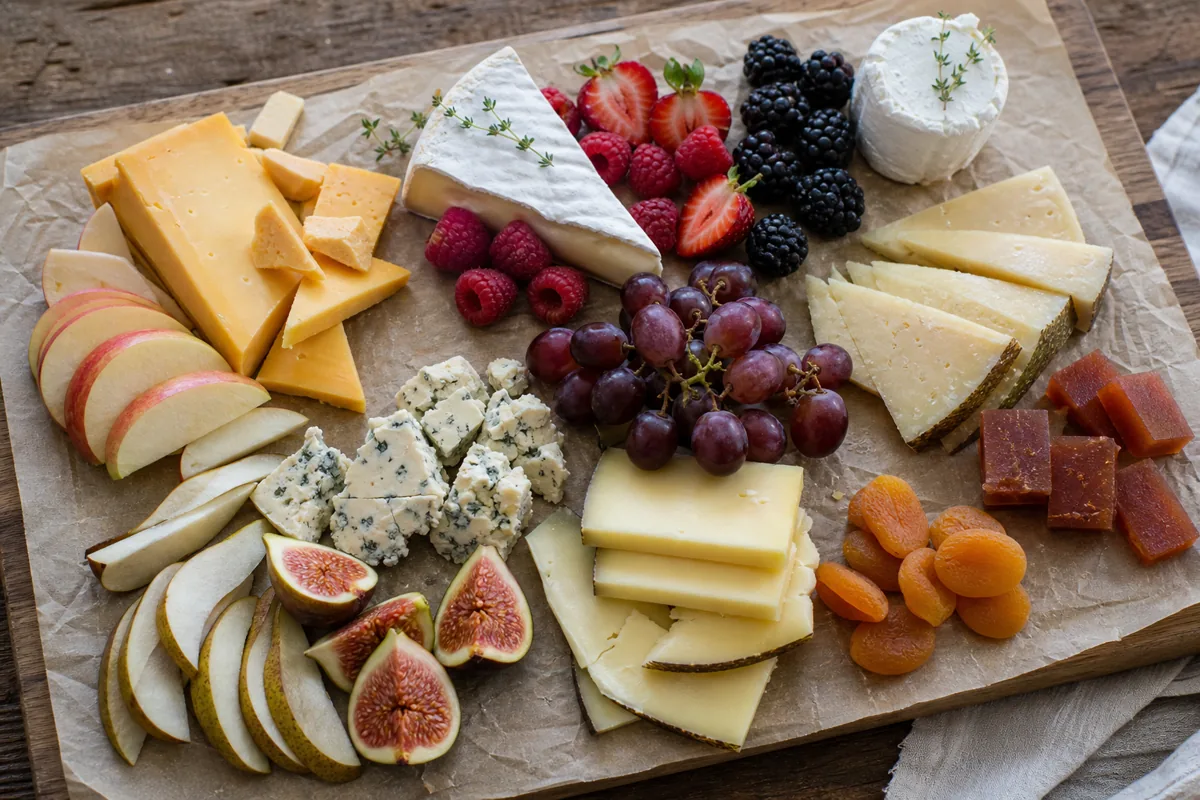
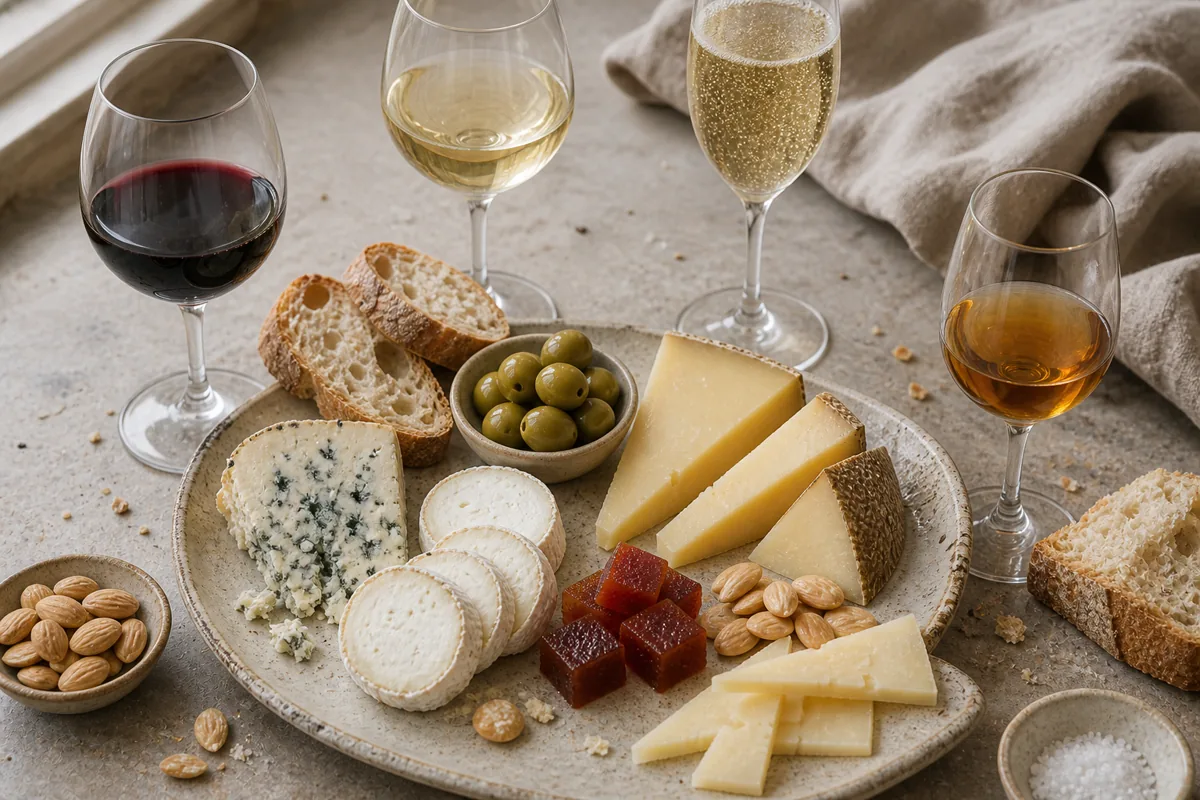
Niman Ranch's guide answers 2 to 4 cheeses, one soft, one firm and one tangy, and says smaller, more curated boards are in while overloaded ones are out.
One workable split from the pairings above is a salty aged hard cheese such as Comté or pecorino for the tannin, goat cheese or feta for tang, and one funkier cheese if the wine itself is funky. That is an editorial reading, not a recipe.
Haley-Park describes belly wine bar labeling its cheeses with descriptors in place of names, such as "Butter" for Delice de Bourgogne and "Funk" for Willoughby, so that guests choose by character.