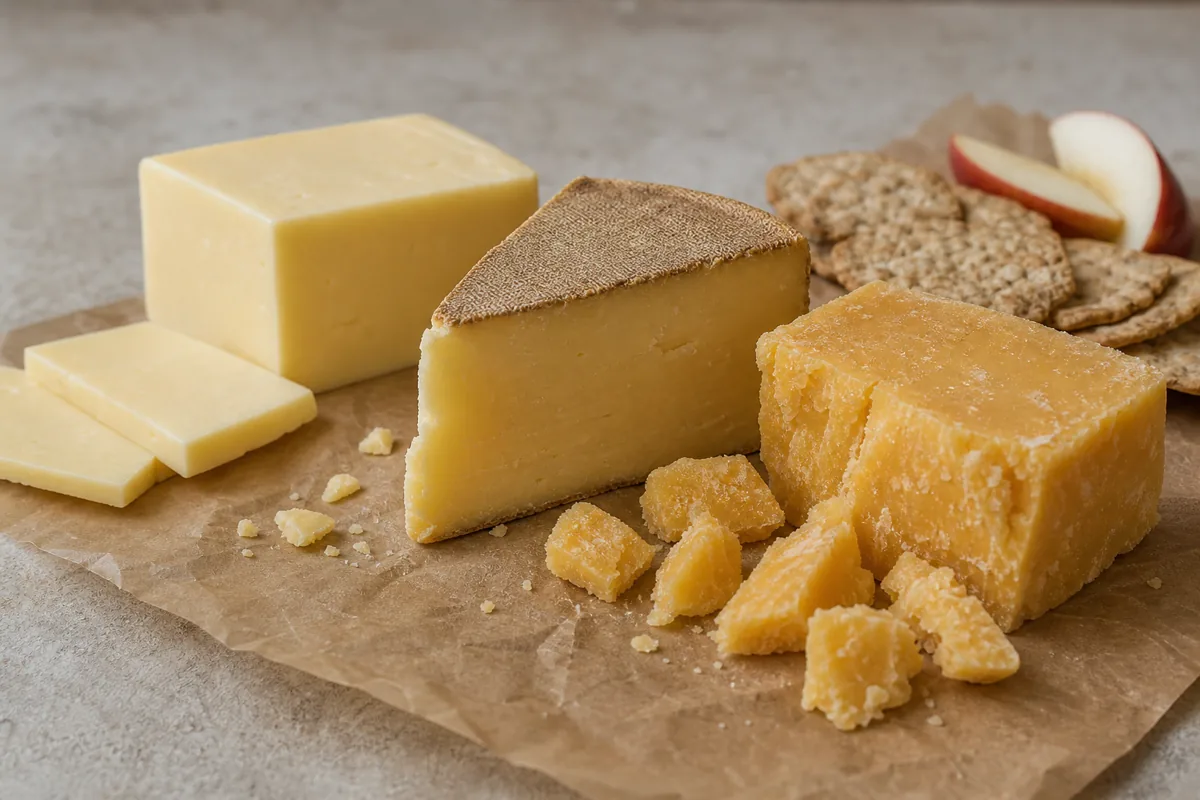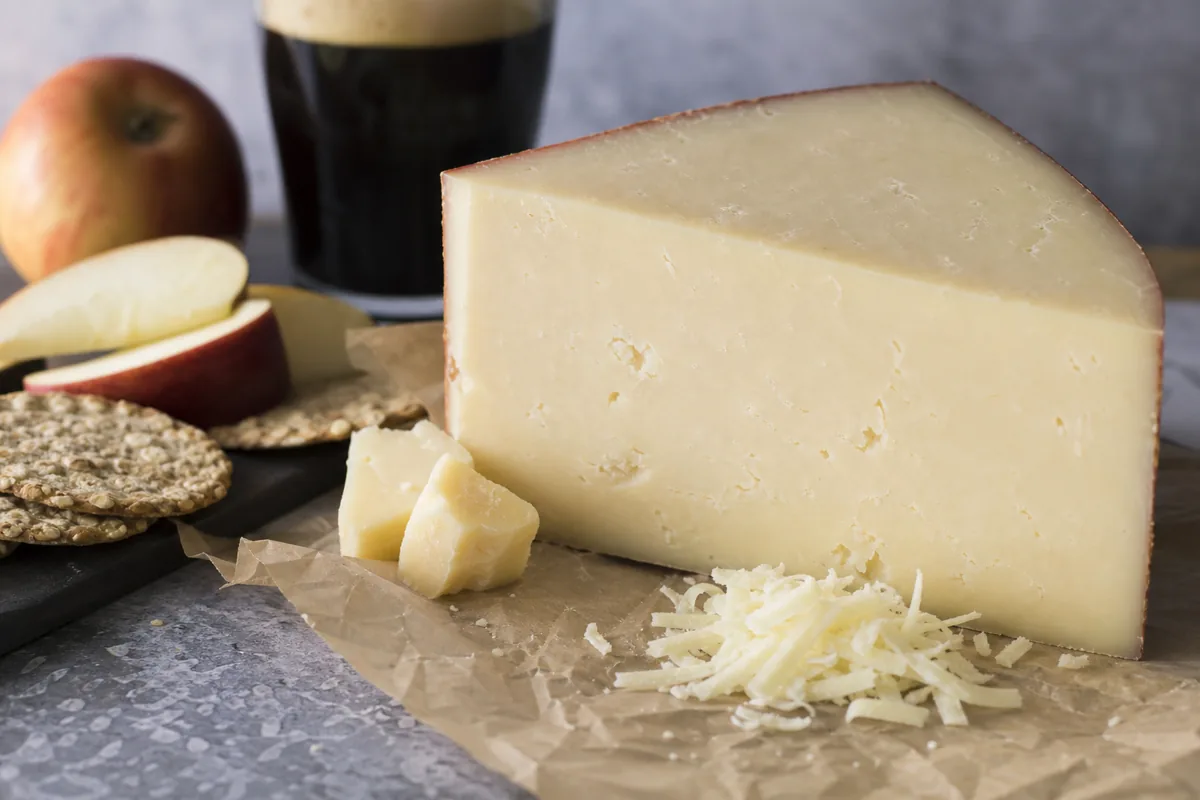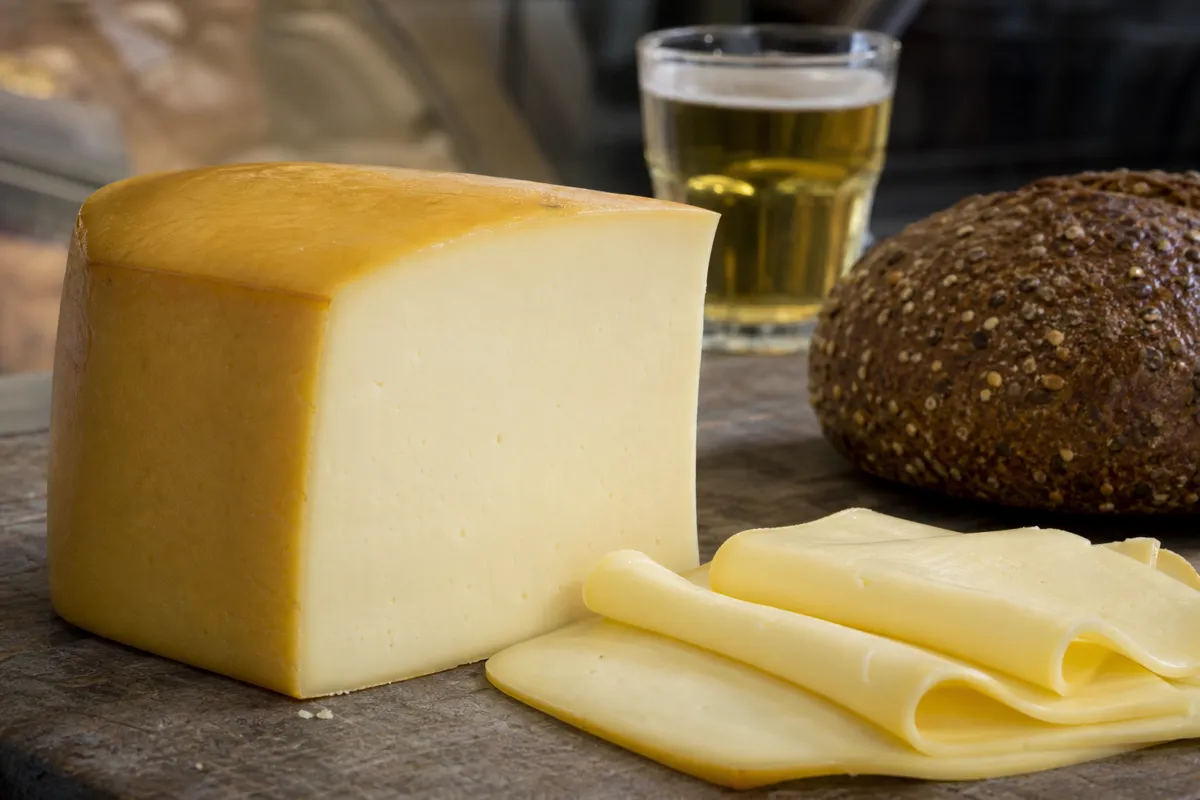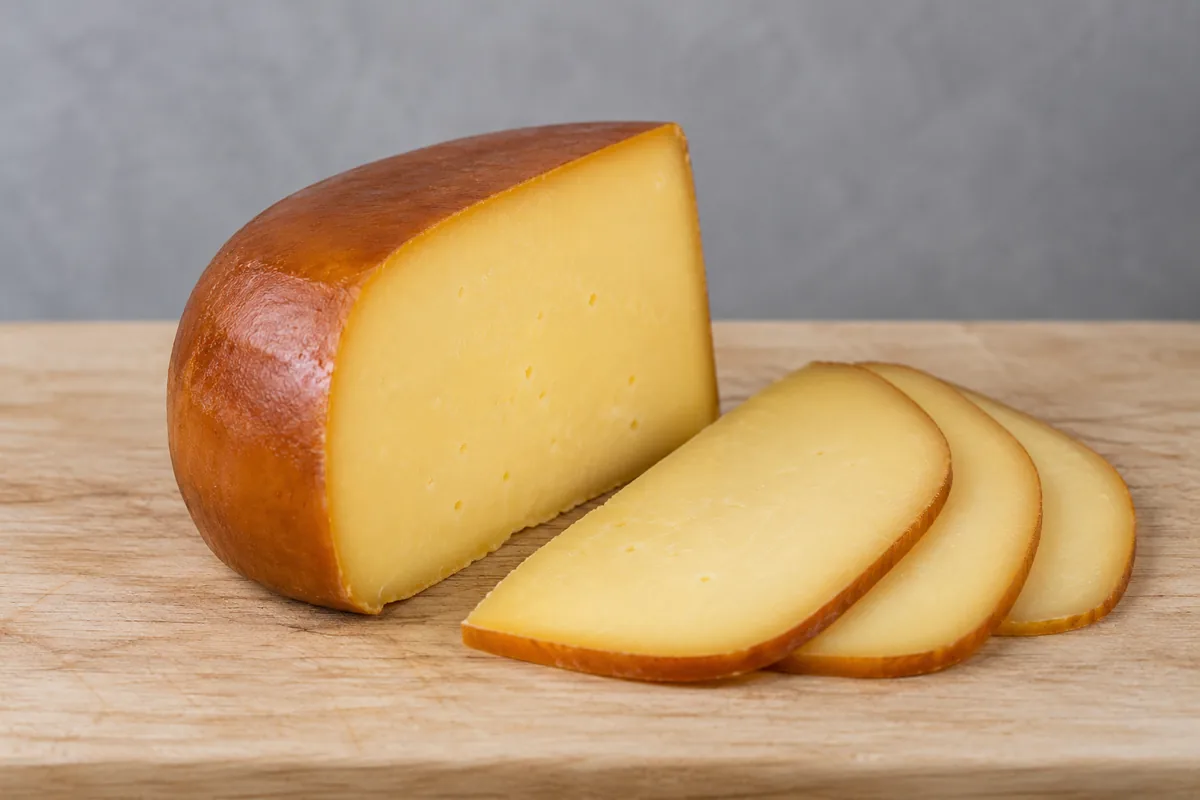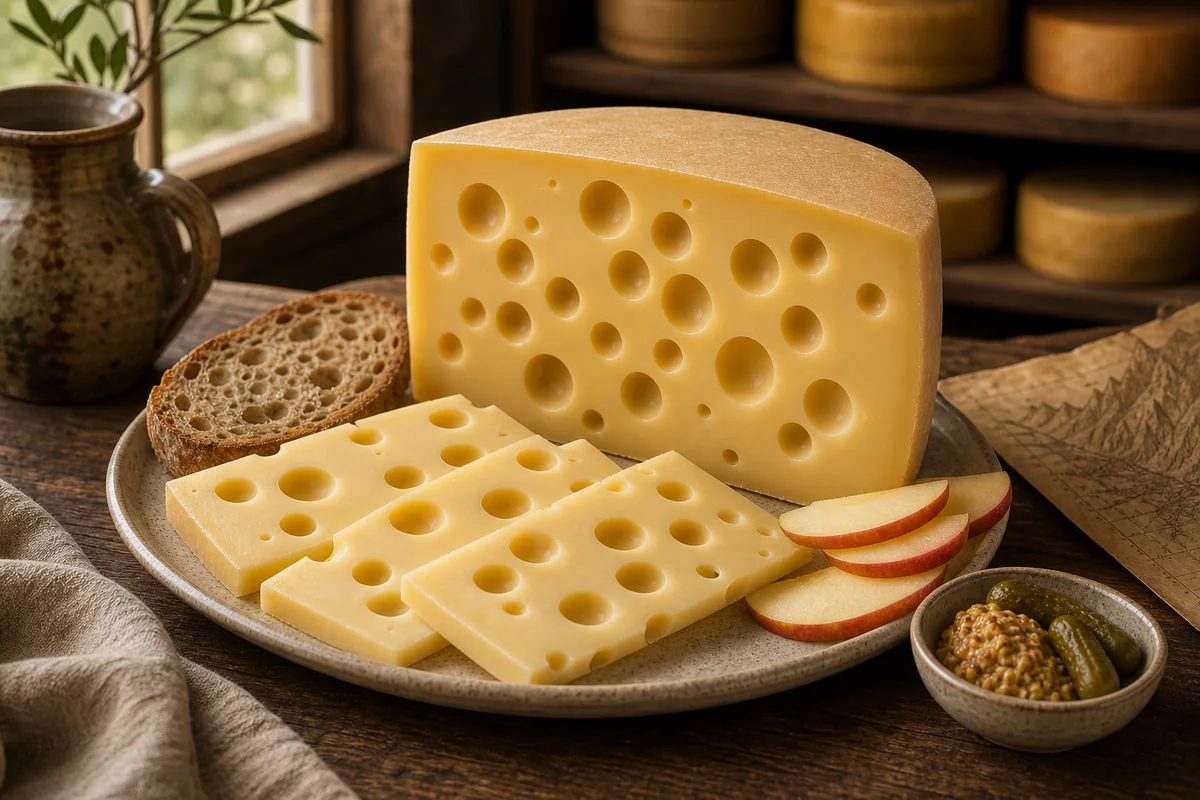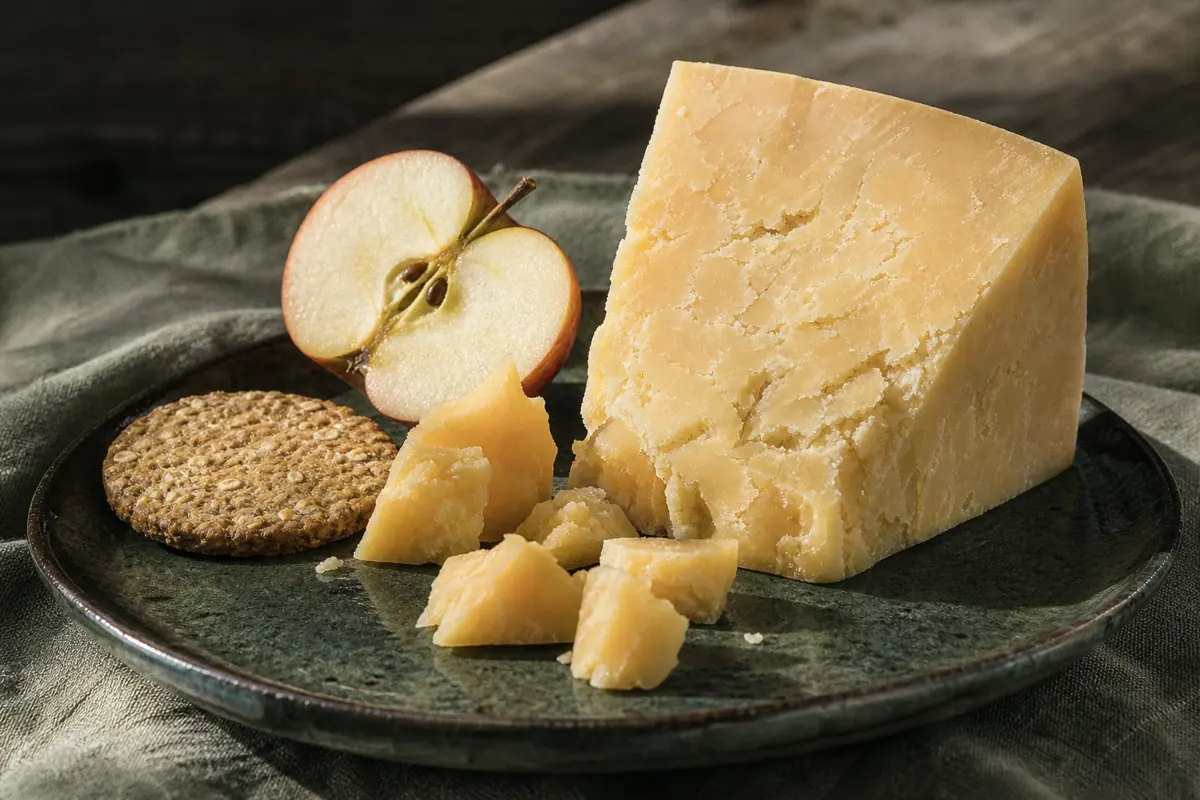
Coastal Cheddar is a mature Cheddar made by Ford Farm in Dorset, England, and its calling card is a crunch. Ford Farm says the crunch comes from calcium lactate crystals that form naturally as the cheese matures.
The coast in the name is a real setting, because Ford Farm says it matures the cheese in salty sea air on the Jurassic Coast. No page cited here links that air to the crystals, which the maker and dairy scientists explain through milk chemistry.
In This Article
What Is Coastal Cheddar?
Ford Farm launched Coastal in 2000 and describes it as a rich, rugged, mature Cheddar. The maker also says it has been told Coastal is now the biggest-selling branded Cheddar in the USA, a claim the page backs with no sales figures.
The maker says it developed Coastal to meet consumer demand for rich, rugged, and mature cheddars, and it lists gold medals for the cheese at the British Cheese Awards and the International Cheese Awards. It adds that Coastal's success in North America helped it win the Queen's Award for Enterprise in the Export category on two separate occasions.
The export specification lists the ingredients as pasteurised cow's milk, salt, microbial rennet, and starter culture.
Ford Farm's FAQ says all the milk for its cheddar comes from UK farms accredited to the Assured Dairy Farms Standard, from herds that are mostly pedigree Holstein Friesians with a growing share of Jersey, Guernsey, Brown Swiss, Danish and Swedish Red, and Fleckvieh breeding.
The FAQ gives the reason for the cross-breeding: the Channel Island and continental breeds turn grass and forage into the butterfat and protein that cheesemaking is built on.
It adds that the cows eat grass in summer and conserved forage such as silage or hay in winter, that growth hormones are not permitted in the UK, and that every milk delivery is tested for antibiotics before it is accepted.
Cheese.com files Coastal as a firm, rindless cheese in the Cheddar family, with a pale yellow colour, a nutty aroma, and a crunchy, sweet flavor. Food Republic, writing about the Kirkland Signature version Costco sells in the US, calls it crumbly and says it is aged at Ford Farm Dairy.
Each source gives a different age statement for Coastal Cheddar.
| Source | Age statement | Also states |
|---|---|---|
| Ford Farm product page | Aged for up to 15 months | The culture adds a subtle, sweet top note |
| Ford Farm export specification | Matured for 15-18 months | Sizes of 12 x 200 g, 20 x 490 g, and 2 x 2.5 kg |
| Cheese.com | About 15 months | Pasteurized cow's milk and vegetarian rennet |
| Food Republic (Kirkland Signature at Costco) | Up to 15 months | Pasteurized cow's milk, aged at Ford Farm Dairy |
The wording differs as well as the numbers: an age of up to 15 months sets a ceiling that leaves room for younger pieces, while 15-18 months reads as a range that starts at 15. Ford Farm does not explain why its product page and its export page give different ages.
Why Does Coastal Cheddar Crunch?
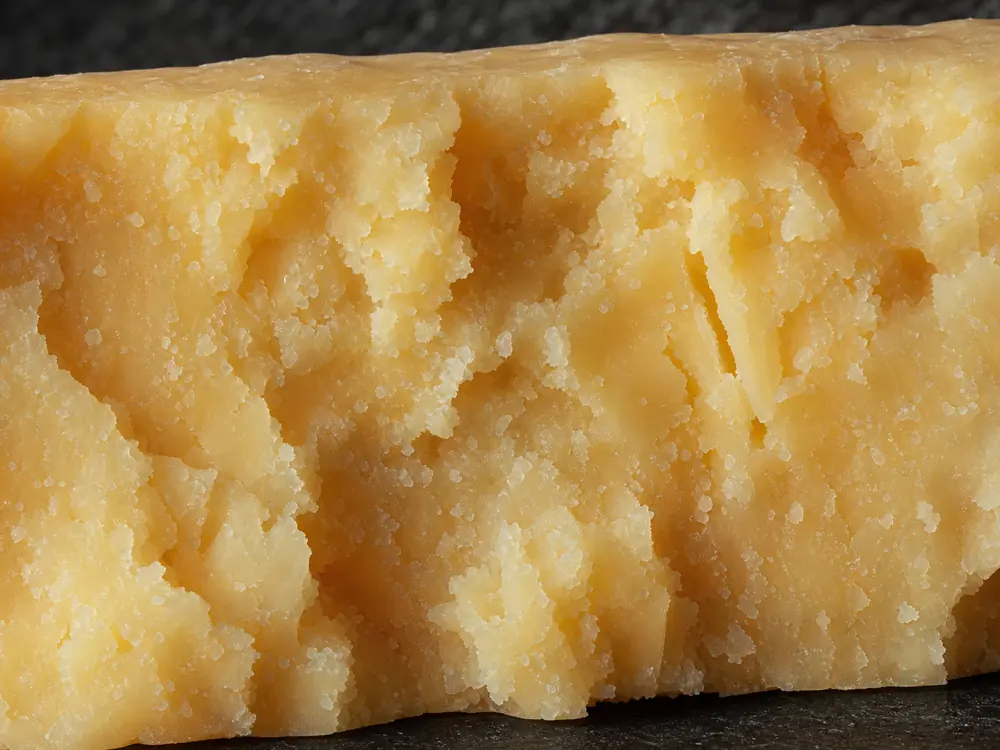
Ford Farm attributes the crunch to calcium lactate crystals that form naturally as the cheese matures, and it adds that you may meet the crunch only from time to time when you bite in.
MasterClass explains the chain: bacteria from the starter culture break lactose down into lactic acid, the lactic acid binds to calcium in the cheese, and the calcium lactate that results can crystallize.
MasterClass describes calcium lactate crystals as a white powder that gathers in clusters on top of sharp Cheddar, and says crystals as a group are bright white, slightly hard, and sugar-like in texture.
Kindstedt and Polowsky's 2021 review adds that crystals in cheese do not all sit in one place: some form preferentially at the surface of rindless or rinded cheeses, and others are embedded within the cheese matrix. Their abundance, size, shape, and hardness all shape the texture of the cheese.
That fits the two signs Ford Farm describes for Coastal, a crunch in the bite and, sometimes, a white film on the surface.
Cheese crystals are not all the same kind. MasterClass places tyrosine crystals, which come from broken-down protein, inside Gruyère and Swiss, while calcium lactate is the type that forms on Cheddar, and Ford Farm names calcium lactate for Coastal.
MasterClass adds that the two kinds can form side by side in cheeses such as Parmesan, aged Parmigiano-Reggiano, and aged Gouda.
The crystals are easy to mistake for mold. The 2021 review by Kindstedt and Polowsky in the Journal of Dairy Science says surface calcium lactate crystals on Cheddar came to be viewed negatively in some markets and were often mistaken for mold growth and spoilage.
Ford Farm's FAQ says a white film on the surface of Coastal is normally salt or calcium lactate crystals that have come out of the cheese.
Is the Crunch a Flaw or a Feature?
Kindstedt and Polowsky describe a bifurcated consumer response to cheese crystals. They say the negative view of Cheddar crystals triggered industry concern and considerable research into preventing them, while in the growing market for artisanal and traditional cheeses other crystals came to be viewed as a positive feature.
MasterClass sits on the positive side, calling the crystals a sign that a hard cheese is well aged and strongly flavored and adding that they bring a salty crunch.
Ford Farm sells the crunch as part of Coastal's character yet says a bite may meet it only from time to time, so a piece without it still fits the maker's own description.
Does the Dorset Coast Change the Cheese?
Ford Farm's Coastal page says the cheese is matured at its dairy on the World Heritage Jurassic Coast line, in the salty sea air, and the export page repeats that wording for its 15 to 18 month range.
No page cited here explains how sea air would act on a block of cheese, and every crystal explanation above runs through lactose, lactic acid, and calcium instead. Salt is a separate matter, because it appears on the ingredient list as an added ingredient.
Food Republic credits where and how the Kirkland Signature version is made for tasting like an authentically British Cheddar, but it names no mechanism either.
The sources give the coast as the place where Ford Farm matures its cheese and give no sign that it adds a flavor of the sea.
What Does Coastal Cheddar Taste Like?
Ford Farm describes a rich, intense flavor from its up-to-15-month maturation, plus a contrasting, subtle, sweet top note that the culture adds.
Cheese.com lists a crunchy, sweet flavor with a nutty aroma. Food Republic calls the Costco version nutty, sweet, crumbly, and sharp.
Shoppers quoted in that article disagree on details: one Reddit commenter tastes a hint of pineapple, another a dry, tangy, intense Cheddar. Food Republic adds that some people compare Coastal to a Parmesan and Cheddar hybrid.
How Do People Cook With Coastal Cheddar?
No page cited here gives melting temperatures or test results for Coastal, so this section sticks to the uses they name.
Cheese.com says Coastal goes with almost anything, such as sandwiches and toasties.
Food Republic's writer says the crumbly texture means thin slices do not hold together like a creamy American Cheddar, so thicker cuts make a heartier sandwich. For grilled cheese sandwiches, the article advises spreading the cheese all the way to the edges.
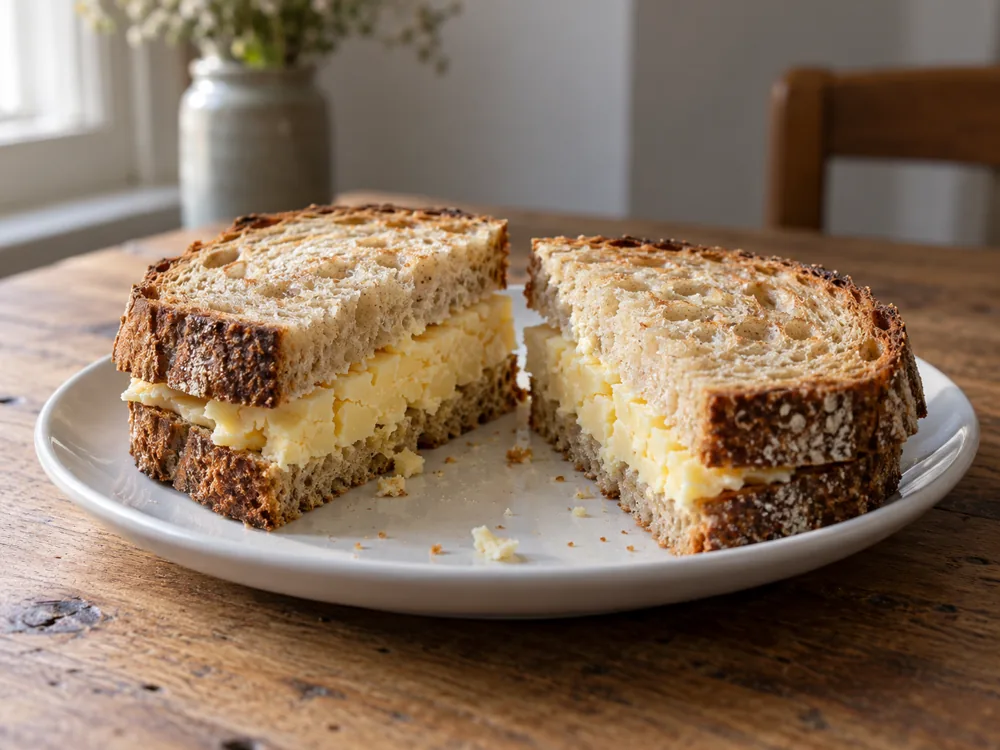
The same piece says fans blend Coastal with smoked Gouda or Gruyère for extra depth in mac and cheese recipes, and it adds pizza and burgers to the list.
The same crumble that makes thin slices fall apart suits other jobs, Food Republic says: it lends itself to salads and breaks apart easily to sprinkle over fried eggs or mix into scrambled eggs.
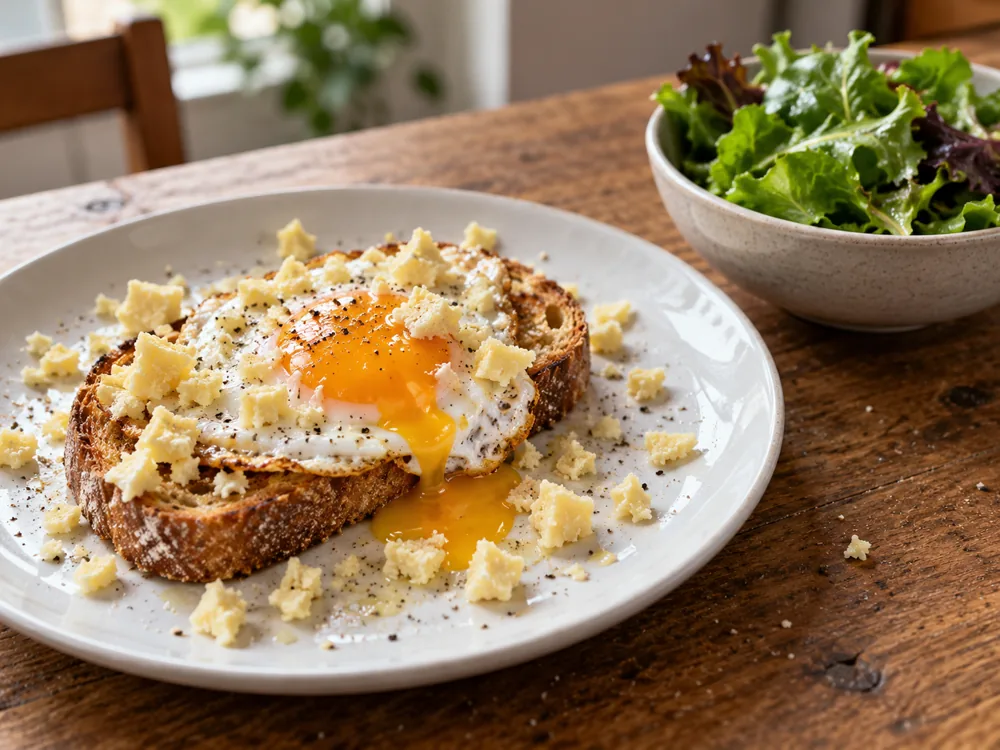
For grilled cheese, the piece suggests apple jam, bacon, or pulled pork as extras, and it reports home cooks smoking the cheese, with one Reddit user saying it smokes up nicely with plum, almond, and apple at different times.
How Should You Buy Coastal Cheddar?
Cheese.com lists Ford Farm as the producer of Coastal, and Food Republic says Costco's Kirkland Signature version is aged at Ford Farm Dairy. A block can therefore carry either the Ford Farm name or a store label.
Cheese.com also lists Mature Coastal Cheddar as another name for the cheese, so a deli sign with that longer name is not necessarily a different product.
What Should You Serve With Coastal Cheddar?
Every pairing here comes from a named source, and the maker's own picks lean on cider and a Languedoc red.
| Pairing | Type | Why It Works |
|---|---|---|
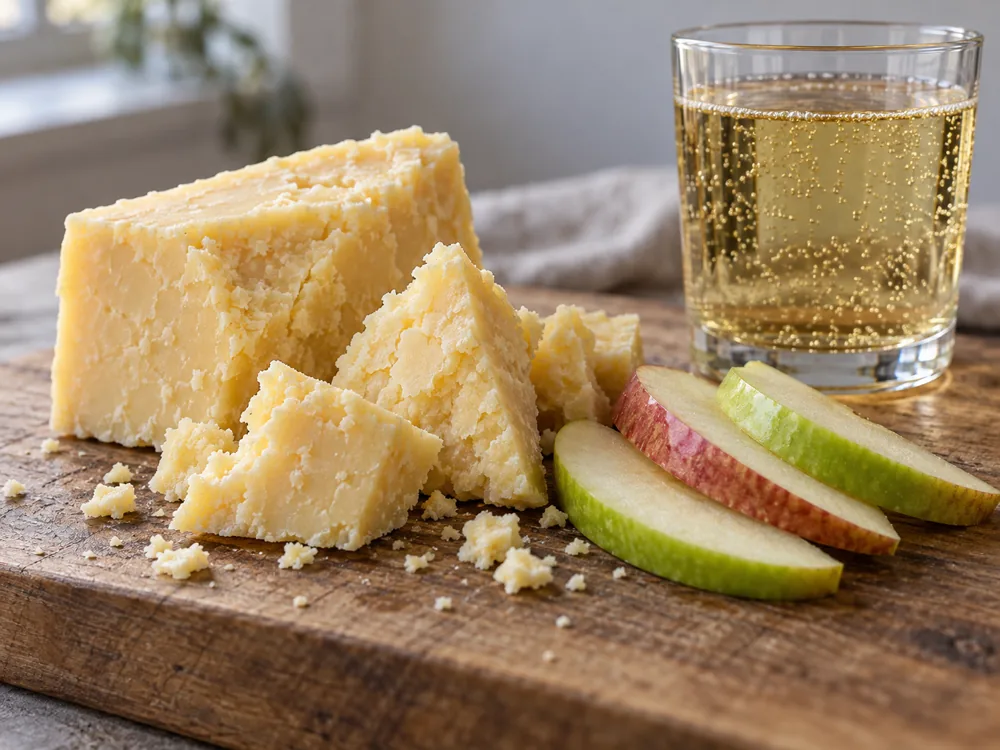
| Traditional Dorset cider | Drink | Ford Farm calls it a common local choice and names the naturally sparkling Lancombe Rising Cider from The West Milton Cider Company; the export page lists traditional cider. |
| Corbières | Wine | A Dorchester wine merchant quoted by Ford Farm drinks Château La Bastide Corbières from the Languedoc with a Coastal ploughman's, and the export page also lists Corbières. |
| Fruity red wine | Wine | Cheese.com says Coastal pairs well with Dorset cider or fruity red wines. |
| Bourbon or sparkling cider | Drink | Food Republic suggests either to balance the flavors. |
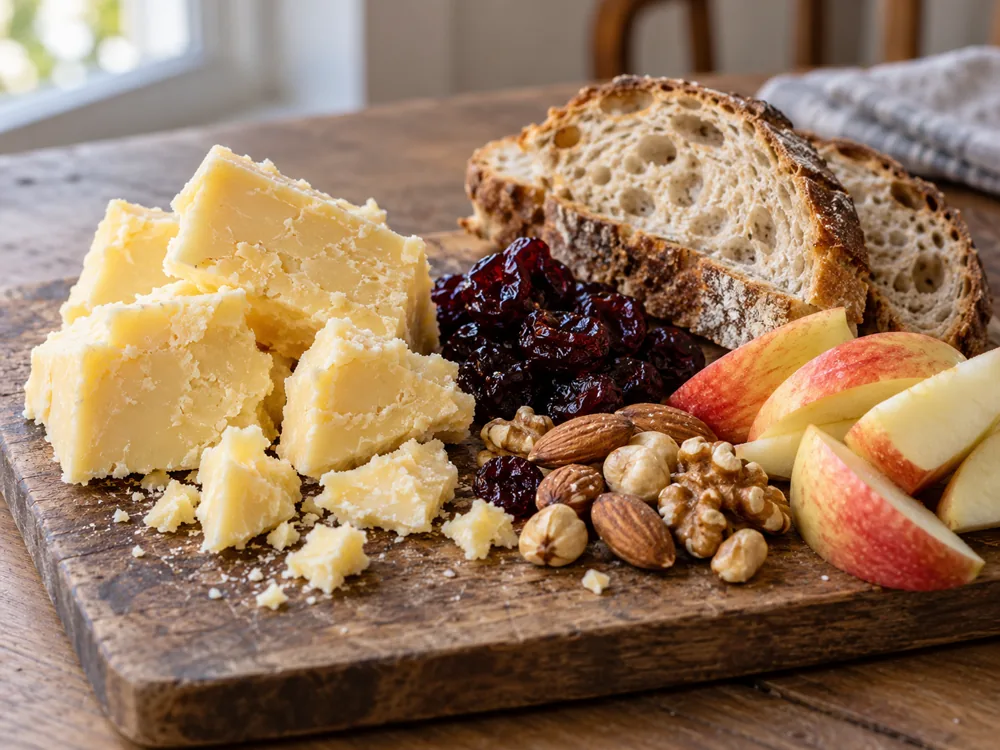
| Apples, dried cherries, or nuts | Food | Food Republic says the salty-sweetness suits Honeycrisp apples, dried cherries, and nuts, and it suggests freshly baked sourdough bread alongside. |
The most repeated suggestion is cider, which Ford Farm, its export page, Cheese.com, and Food Republic each name in some form.
How Should You Store Coastal Cheddar?
The Ford Farm and export pages give no storage times, so the best sourced guide is The Food Keeper, a storage chart developed by the Food Marketing Institute with Cornell University. It lists hard cheese such as Cheddar at 6 months unopened and 3 to 4 weeks once opened in the refrigerator, and it sets the refrigerator at 40°F or below.
The chart calls its times guidelines rather than hard and fast rules, and it covers hard cheese in general, not Coastal in particular.
For long keeping, The Food Keeper allows freezing hard cheese for up to 6 months.
What About Nutrition, Allergens, and Pregnancy?
Ford Farm's export specification gives these values per 100 g.
A portion is easier to picture than 100 g: the bilingual label panel on the export page sets a serving at a 3 cm cube of 30 g, which it lists at 120 kcal, 10 g of fat, and 220 mg of sodium. The same specification lists only 0.1 g of carbohydrate per 100 g, and that 0.1 g is sugars.
Milk is the allergen, since the export ingredient list begins with pasteurised cow's milk. Ford Farm's FAQ says all its cheese is gluten free except Cheddar with Mustard and Ale, and Coastal is not that flavor.
Ford Farm's FAQ names the cheeses that are not suitable for vegetarians, and Coastal is not on that list, which fits the microbial rennet in the export ingredients and the vegetarian rennet Cheese.com reports.
The FAQ lists Cave Aged Cheddar, Cave Aged Goat Cheese, and Traditional Crofter Sheep because an animal fat coating forms their rind, and it lists the Port and Truffles flavored cheddars too without giving a reason. Cheese.com files Coastal as rindless, which fits its absence from that list.
NHS says pasteurised or unpasteurised hard cheeses such as cheddar are safe to eat in pregnancy, and the CDC lists hard cheese made with pasteurized milk, such as Cheddar, among its safer choices.
Sources for Coastal Cheddar
Ford Farm supplies the identity, age, milk, crystal, coast, taste, vegetarian and gluten statements, and its export page supplies ingredients, the 15 to 18 month range, and nutrition. MasterClass and a dairy science review cover the crystals, The Food Keeper covers storage, and NHS and the CDC cover pregnancy scope.
SOURCES & REFERENCES
Coastal Cheddar FAQ
Ford Farm identifies them as calcium lactate crystals that form naturally as the cheese matures.
Ford Farm's product page says up to 15 months, and its export page says 15 to 18 months. The age printed on your package applies to your piece.
Ford Farm's FAQ lists the cheeses unsuitable for vegetarians, and Coastal is not on that list. The export ingredients name microbial rennet.
NHS says pasteurised or unpasteurised hard cheeses such as cheddar are safe, and the CDC lists hard cheese made with pasteurized milk as safer. Ford Farm's export specification names pasteurised cow's milk.
No page cited here says sea air salts the cheese. Salt is a listed ingredient, and Ford Farm credits the crunch to calcium lactate crystals.
Ford Farm says you may meet the crunch only from time to time when you bite in, because the calcium lactate crystals form naturally as the cheese matures.
Food Republic says Costco's Kirkland Signature version is aged at Ford Farm Dairy, and no page cited here compares it with the Ford Farm-branded cheese.