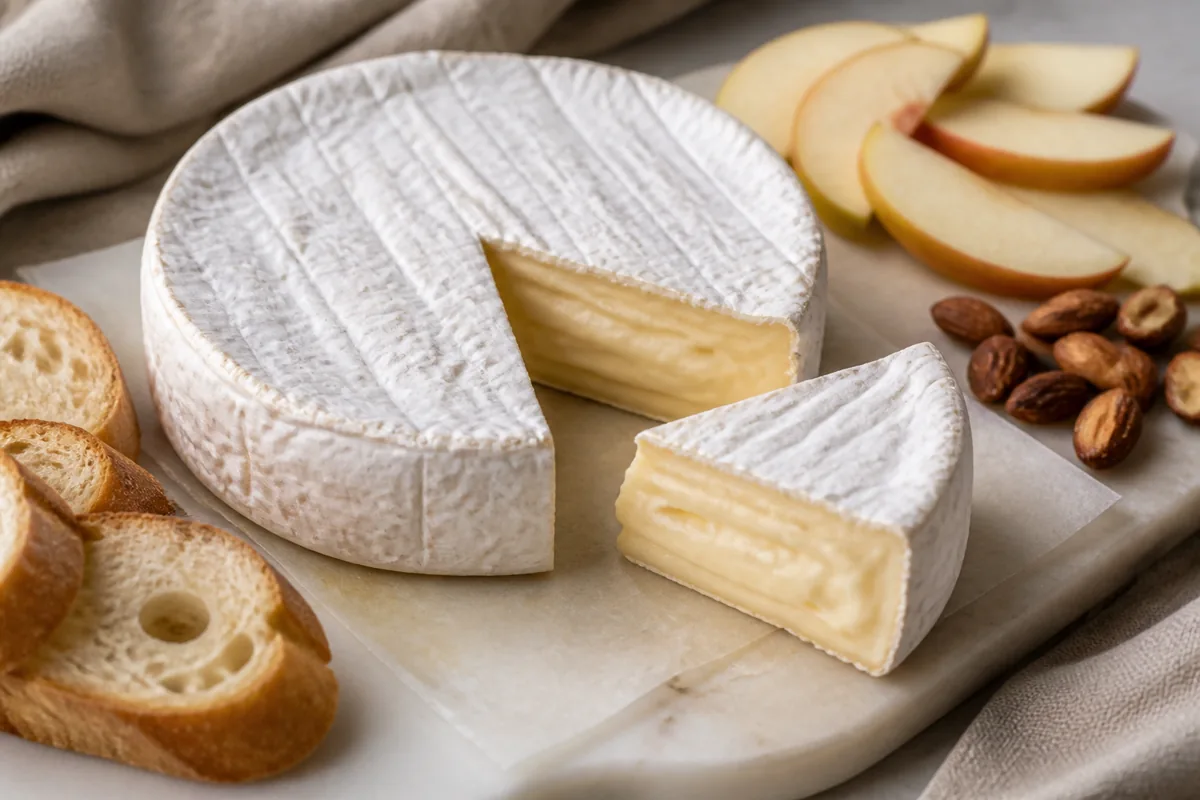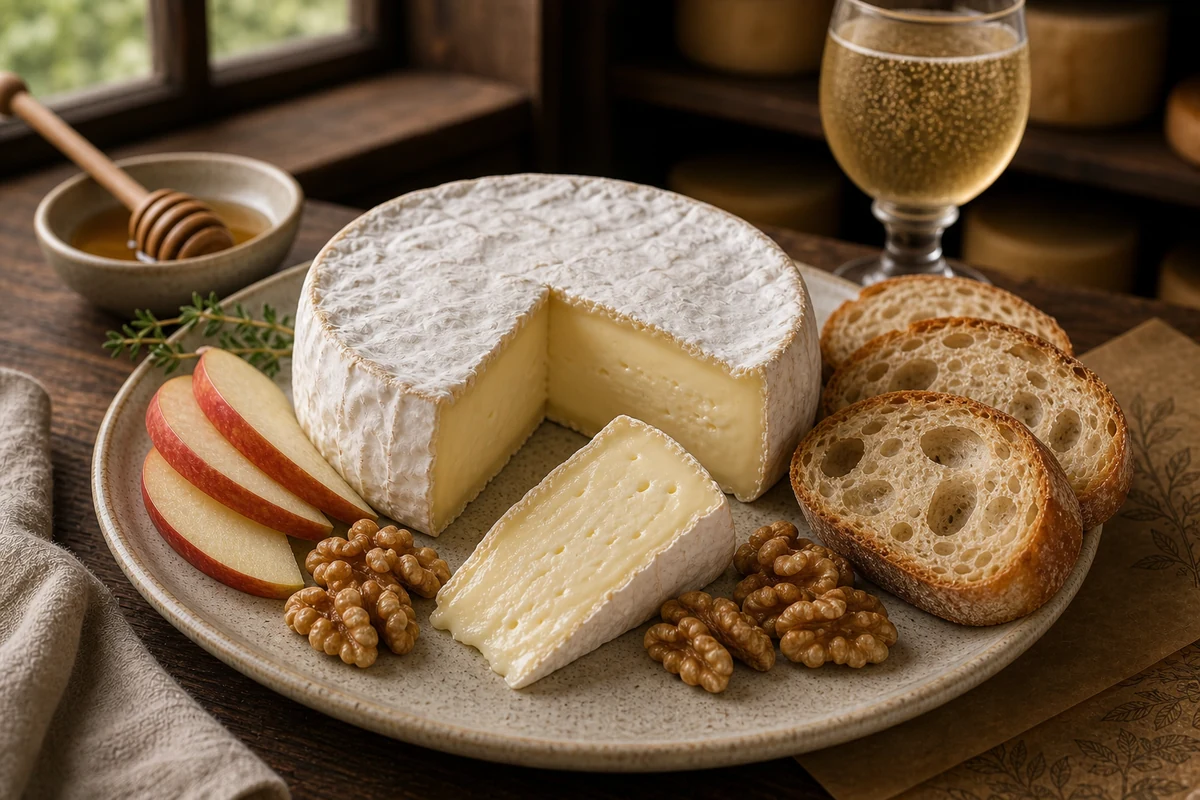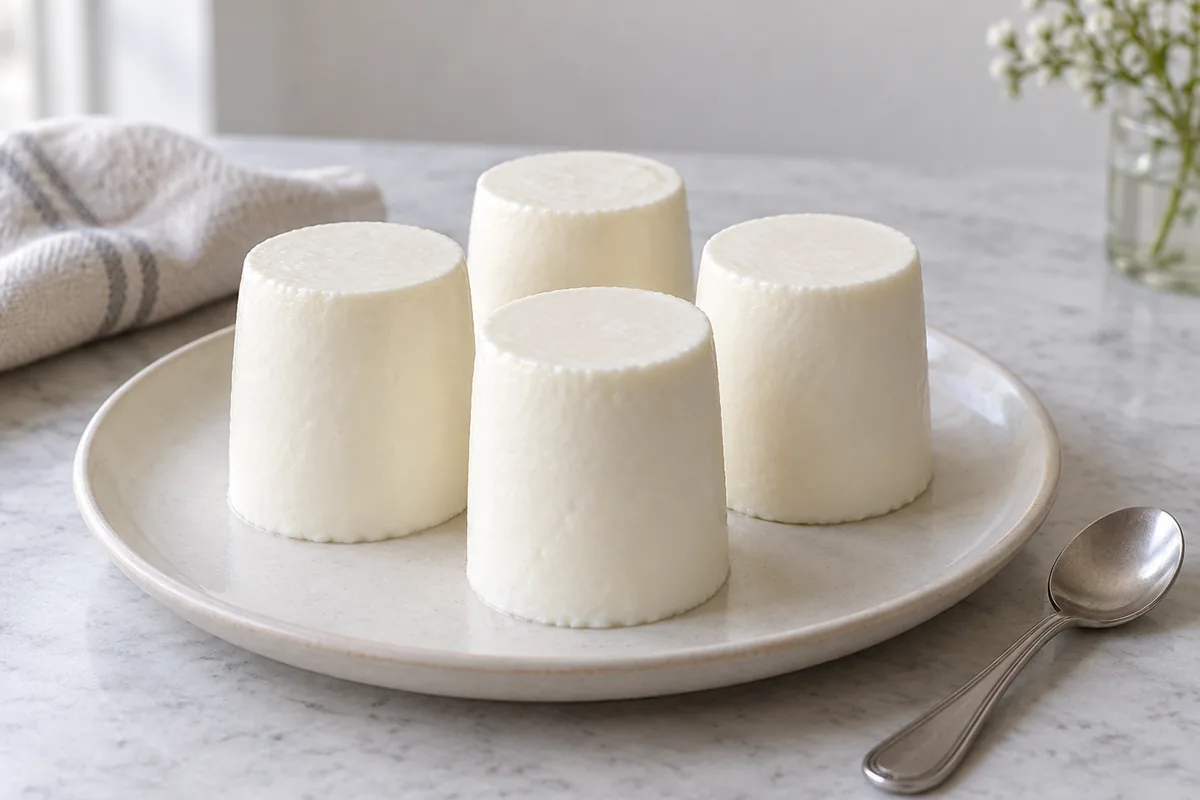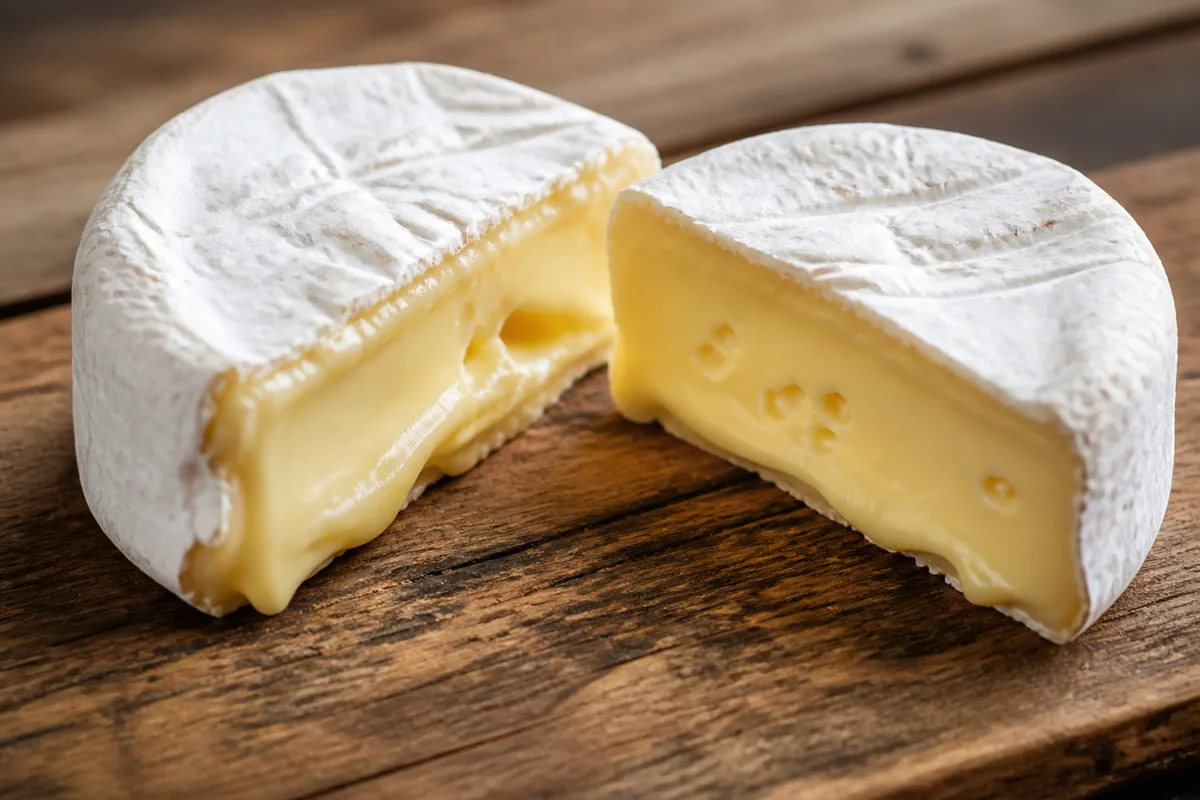
Green Hill is a pasteurized, double-cream, soft-ripened cow's-milk cheese that Sweet Grass Dairy in Thomasville, Georgia makes in the style of camembert. The dairy calls it its most popular cheese.
Each wheel weighs about 7.5 ounces and ripens for two weeks before it is hand-wrapped, and Culture magazine describes a golden-yellow paste under a thin rind.
In This Article
What Kind of Cheese Is Green Hill?
Sweet Grass Dairy describes it as "a pasteurized, soft-ripened, double-cream cow's milk cheese handcrafted in a camembert style." Culture files it with the soft-ripened, Brie-like cheeses and lists its rind as mold ripened.
The dairy's trade sheet gives the ingredients as pasteurized grass-based cow's milk, cultures, Atlantic sea salt, and traditional rennet. Culture lists the rennet as animal, which matters to anyone avoiding it.
The sources round the size differently. Sweet Grass gives "approximately 7.5 oz," while Culture lists 8 oz and 3.75 by 1.25 inches.
Marcella the Cheesemonger's 2020 write-up also gives 8 ounces, while the 7.5-ounce figure appears only on the dairy's own pages, so a handcrafted wheel can be expected somewhere between 7.5 and 8 ounces.
Why Is It Called Green Hill?
In Culture's library entry, in the dairy's own words, the cheese is "named after the first rotational-grazing dairy in our family." David Phillips of The Cheese Professor gives the same explanation in his profile of Al and Desiree Wehner's conversion to grazing, and they are the parents of co-owner Jessica Little.
The family's grazing herds, which Phillips puts at 1,500 cows, supply all of the milk for Sweet Grass cheeses.
The dairy names other cheeses from family history as well: Phillips says Asher Blue was named for the Littles' second son.
How Did a Grazing Farm Become a Cheese Company?
Before grazing, Al and Desiree Wehner spent more than a decade in Florida milking Holsteins in barns, according to Phillips's 2021 profile. Jessica Little told him her father was working 80 to 90 hours a week and that the land was not healthy.
Little also described waste management as a constant problem, and her father thought of what his grandfather, from an Upstate New York farming family, would have said: a sick cow put on grass would get healthier.
Her mother sent him to a 1992 conference in Wisconsin, where a New Zealand farm organization explained grazing. Tallahassee Magazine dates the family's switch to 1993, when they chose a system that would "let cows be cows."
The Wehners' business partners would not convert the Florida dairy, so the Wehners sold out and bought inexpensive land in Georgia. The Holsteins they brought did not take well to grazing, and after they switched to Jerseys, Little says, three people could run 500 cows.
Desiree launched the cheesemaking in 2000, which Culture calls one of the very first cheese operations in the Southeast.
Tallahassee Magazine says Desiree took her high-quality milk a step further by making cheese, and that Jessica, still in college, carried samples of her mother's cheese to chefs, who were excited about it.
Jessica and her husband Jeremy joined in 2002 according to Phillips, although Culture's "three years later" implies 2003. Jeremy became head cheesemaker per Phillips, and Tallahassee Magazine says the couple bought the company in 2005.
By March 2021 the company was moving into a new creamery, and Little told Phillips the dairy had become "too small to be big but too big to be small." Phillips says the new building triples production capacity, and Tallahassee Magazine describes it as three times the size of the old site.
Little added that the dairy had been in "scarcity management mode for some time" and was confident the demand would justify the move.
In 2023, Tallahassee Magazine counted nearly 70 employees and about 350,000 pounds of cheese a year.
How Is Green Hill Made?
Culture describes a five-hour make that includes hand-ladling the curds into molds, followed by two weeks of aging for the disks. Sweet Grass says the wheels are hand-wrapped after those two weeks.
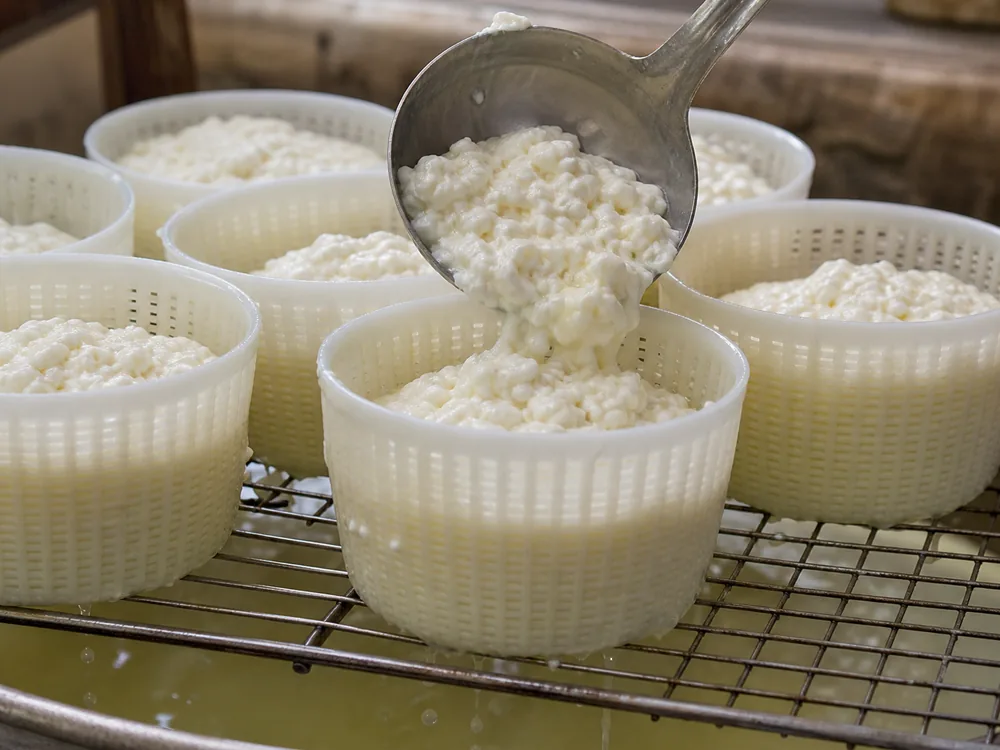
Only four ingredients go in: milk, cultures, salt and rennet. Little told Tallahassee Magazine that those four make hundreds of different cheeses, with the shape of the molds, the aging, the amount of salt and the timing of the brine changing the result.
Sweet Grass says Green Hill highlights the grass-based milk more than any other cheese in its line, and credits that milk for the buttery flavor, silky texture and thin bloomy rind. Little's own view in the same profile is that the better the milk, the more flavorful the cheese.
Phillips lists an HTST (high-temperature short time) pasteurizing system among the new creamery's upgrades, along with a French-built finishing-room air handling system that Little said allows more precise quality control during aging.
Aging is where the sources split: the dairy that makes the cheese and Culture say two weeks, while Marcella's 2020 write-up says 60 days.
Two weeks is the steadier figure, since Culture gave it in 2017 and the dairy gives it now, on either side of Marcella's 2020 note. One reading the sources allow is that the dairy's two weeks end when the wheel is hand-wrapped, while ripening carries on afterward, since the trade sheet describes the paste softening as the cheese ripens and gives it a shelf life.
A wheel at the counter is therefore older than the two weeks the dairy counts.
Is Green Hill Made With Grass-Fed Milk?
The dairy's own ingredient line says grass-based cow's milk, while Culture and Tallahassee Magazine call the milk grass-fed.
The milk comes from cows that are about 50 percent Jersey, crossed with Friesian, Norwegian red, shorthorn, senepol, and Limousin, which Tallahassee Magazine describes as smaller than Holsteins and better suited to the walking and heat.
The herd grazes outdoors year-round and moves to a new pasture every 12 hours. Marcella the Cheesemonger's 2020 write-up puts supplemental feed (organic non-GMO corn, cottonseed hull, citrus pulp, and hay) at about 10 percent of the diet.
That figure fits the label's "grass-based" wording better than a flat grass-fed claim.
Culture describes the herd as barn-free and grazing on grass grown year-round under the Georgia sun, and Marcella says the cows graze outdoors 365 days. Phillips reports that Sweet Grass uses "Barn-Free" as its label for this system, though Little told him the phrase will not tell the whole story but starts the conversation.
Phillips writes that grazing gives cows their natural diet of mostly grasses and legumes and lets them produce their highest-quality milk. Tallahassee Magazine says the 12-hour moves let the vegetation in grazed pastures regenerate and mean the cows need less milking.
Culture's profile describes a single 350-acre farm, while Marcella and Phillips describe three family farms, which Phillips says produce much more milk than the creamery needs. Tallahassee Magazine says the creamery gets its milk directly from the Wehners' cows several times a week.
What Does Green Hill Taste Like?
Culture's tasting notes describe "a sweet butter and popcorn backbone with notes of grass and cream," with "a pleasant touch of cellar and funk" for umami. On the nose, it adds, expect "lingering aromas of cream and sauteed mushrooms."
Culture's entry, in the dairy's words, calls the mushroom flavor subtle. It also describes "an unctuous flavor and a silky, mouth-coating texture, with a thin rind that adds a toothsome quality," so the rind counts as part of the texture.
Marcella, whose write-up gives 60 days of aging, describes the finish as lactic and mushroomy.
Sweet Grass's trade sheet says a young Green Hill is firm, "with a texture similar to cold butter." As it ripens it becomes softer and creamier immediately under the bloomy rind, until the paste turns uniformly honey-like.
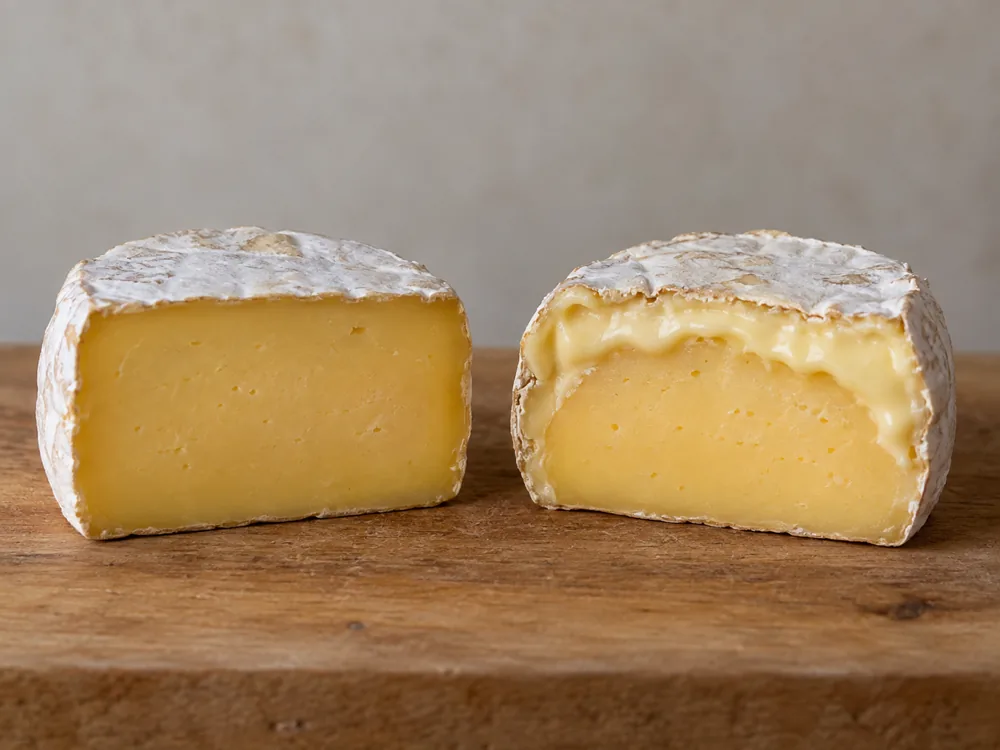
A wheel with a runny band under the rind and a firmer centre is therefore partway through ripening.
Firm like cold butter means a young wheel, a softer band just under the rind means one partway through ripening, and a uniform honey-like paste ends that progression.
What Awards Has Green Hill Won?
Sweet Grass lists four dated awards for Green Hill and calls it an eight-time winner at the American Cheese Society's annual conference.
| Year | Competition | Result |
|---|---|---|
| 2007 | American Cheese Society | 1st place |
| 2008 | American Cheese Society | 1st place |
| 2015 | American Cheese Society | 1st place |
| 2015 | World Cheese Awards | Gold Medal |
Three of the eight American Cheese Society wins carry a year on that page.
Of the four dated awards, Phillips's profile also names the 2015 American Cheese Society first place, and Tallahassee Magazine counts more than 40 international and national awards across the whole Sweet Grass line without breaking them down by cheese.
How Do You Serve Green Hill?
Sweet Grass says the cheese "is at its peak when allowed to warm up to room temperature," and its trade sheet adds that the dairy likes to serve it at room temperature.
The product page gives the reason for warming: it lets the buttery paste soften and brings out the cheese's natural flavors.
The CDC says perishable food such as dairy should go back in the refrigerator within 2 hours, or within 1 hour above 90°F, which sets the limit for a wheel left out to warm.
Culture suggests letting the cheese warm and then smearing it on baguette, with sparkling wine alongside. The table lists what each source names.
| Suggested by | Drinks | Foods |
|---|---|---|
| Sweet Grass Dairy | Champagne or sparkling wine; a white wine; crisp apple cider; Belgian Trippel ale | Honey drizzled over a slightly warm wheel; crunchy French bread; a cheese board with jams, nuts, and crisp apples |
| Culture | Sparkling wine such as Champagne, or a light white; Belgian trippel ale | Baguette, perhaps with a drizzle of honey; sweet preserves; dried figs; mild salami; bright fruit such as watermelon |
Both sources give the same reason for sparkling wine: Sweet Grass says the bubbles cut through the rich double cream, and Culture says they cut through the richness of the paste. For beer, both name a Belgian trippel, which Sweet Grass says refreshes the palate.
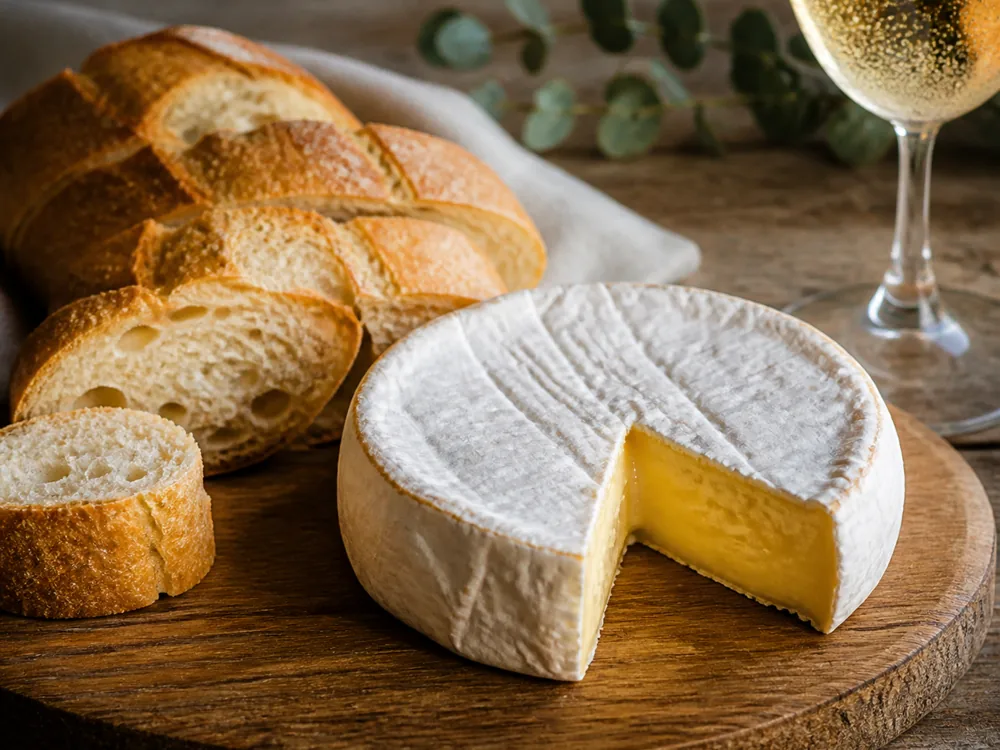
Sweet Grass also says Green Hill "is very easily melted so it is well suited to any dish needing some gooey deliciousness." Heating changes the pregnancy answer below, which turns on the cheese reaching steaming hot rather than just melting.
Is Green Hill Safe During Pregnancy?
Green Hill is made with pasteurized milk, but the NHS says pasteurised or unpasteurised mould-ripened soft cheeses with a white coating on the outside, such as brie and camembert, "must be thoroughly cooked."
Green Hill is a camembert-style, mould-ripened soft cheese with a bloomy rind, so it sits in that group, although no agency page names Green Hill itself. On the NHS wording, a pasteurized wheel eaten cold is not on the safe list, while one cooked until steaming hot is.
The CDC lists soft cheese made from unpasteurized milk, with brie and camembert as examples, among the riskier choices. For a pasteurized soft cheese like Green Hill, its safer option is heating to an internal temperature of 165°F or until steaming hot.
The CDC's safer list includes cottage cheese, cream cheese, string cheese, feta and mozzarella made with pasteurized milk, but no brie or camembert-style cheese eaten cold.
The room-temperature serving the dairy recommends does not meet the steaming-hot condition in either agency's wording, and the CDC says pregnant women are 10 times more likely to get a Listeria infection.
Marcella the Cheesemonger's 2020 write-up says the rest of the Sweet Grass line was raw milk, so the pasteurized label belongs to Green Hill and not to every cheese from the dairy.
What Is on Green Hill's Nutrition Label?
The nutrition panel on Sweet Grass's trade sheet is based on a 1-ounce serving, with 7.5 servings per container.
- 120 calories
- 11 g total fat (14% of the daily value), of which 7 g is saturated fat (35% of the daily value)
- 40 mg cholesterol (13% of the daily value)
- 190 mg sodium (8% of the daily value)
- 0 g carbohydrate
- 4 g protein
Using the sheet's own 7.5 servings per container, a whole 7.5-ounce wheel works out to about 900 calories and 52 g of saturated fat.
On the sheet's 2,000-calorie basis, a whole wheel would carry roughly 260 percent of the saturated-fat daily value and 60 percent of the sodium value, about 1,425 mg.
Where Can You Buy Green Hill?
Sweet Grass sells the wheel directly for $14.00, and Tallahassee Magazine's 2023 profile says its cheeses are sold in all 50 states. The trade sheet lists a case of eight 7.5-ounce wheels for retailers.
At about 7.5 ounces, $14.00 works out to roughly $1.87 an ounce, and the dairy hand-wraps each wheel before it ships.
Phillips reported in 2021 that Sweet Grass worked with distributors in major markets coast to coast and had taken part in Whole Foods' 12 Days of Cheese promotion.
Tallahassee Magazine says the cheeses sell in the home region through supermarkets, small food and wine shops, and the Red Hills Online Farmers Market.
What Can You Buy Instead of Green Hill?
Sweet Grass, Culture, and the trade sheet all place it in one style group: double cream, soft-ripened, camembert style, with a bloomy rind, and Culture calls it Brie-like. Those are the labels to look for when a wheel is out of stock.
When a Camembert or Brie stands in, check its milk treatment: a raw-milk camembert-style wheel would fall in the CDC's riskier group.
How Long Does Green Hill Keep?
The trade sheet says to store Green Hill refrigerated, gives a storage temperature of 35 to 37.5°F, and lists a shelf life of 55 days.
The dairy's 35 to 37.5°F range sits under the CDC's 40°F ceiling for a home refrigerator.