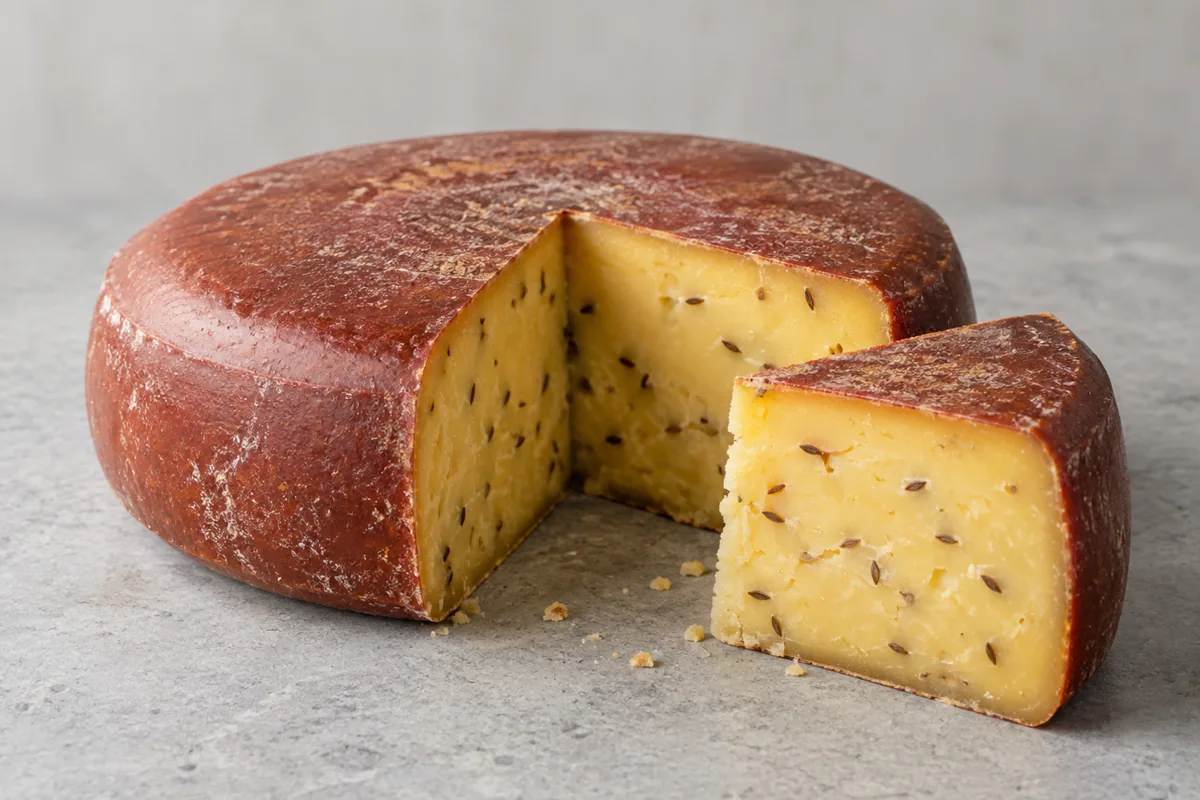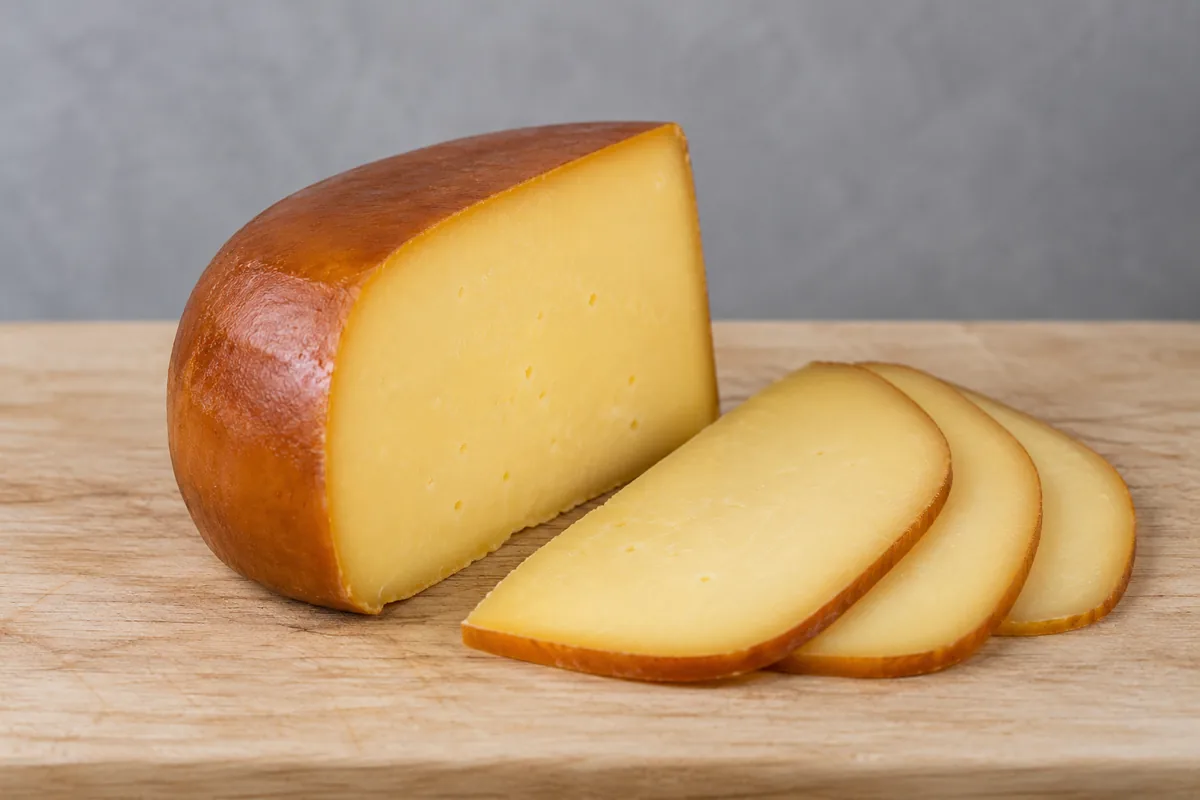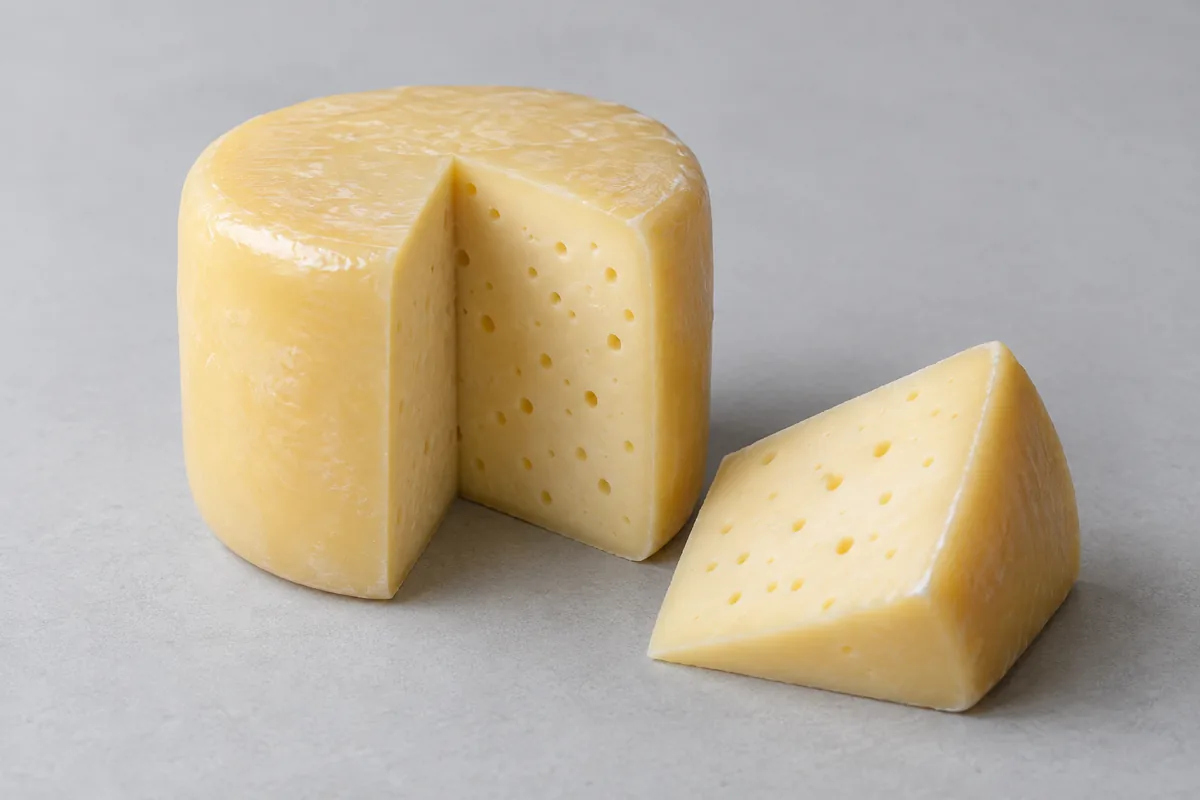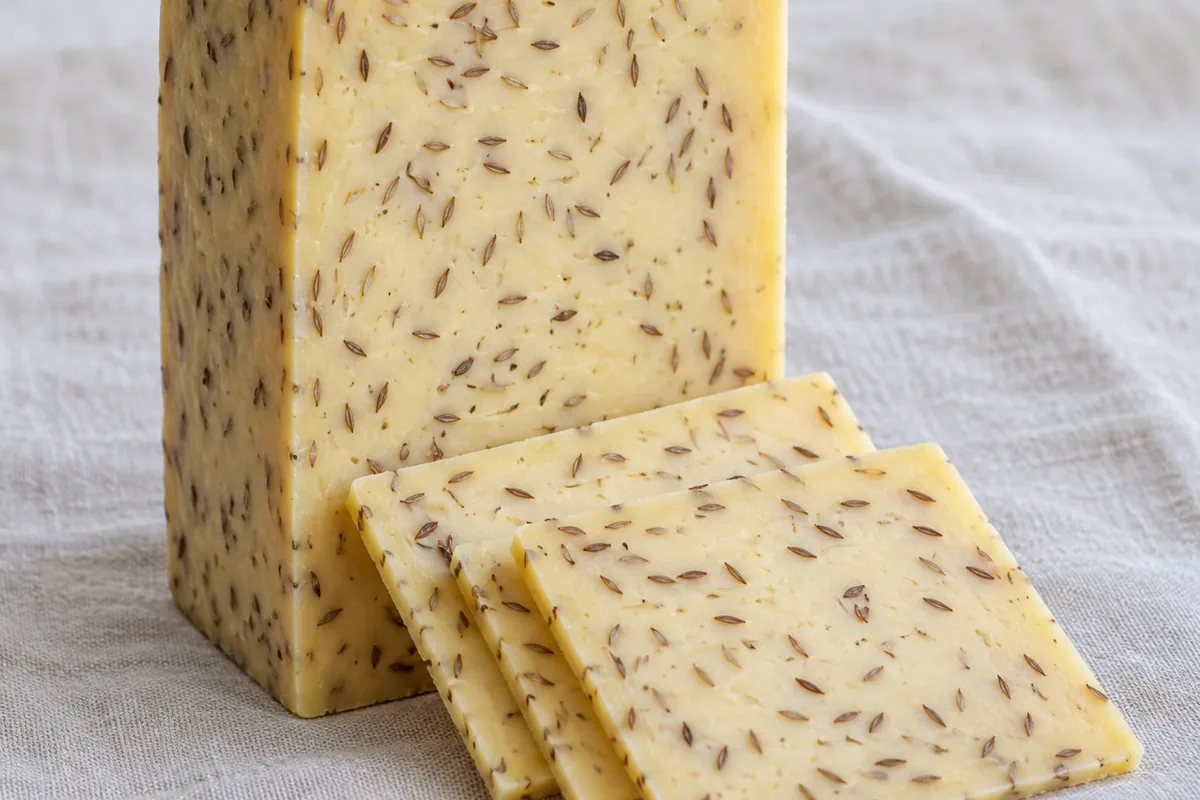
Nøkkelost is a Norwegian cow's-milk cheese seasoned with whole seeds and clove. It has a mild, lightly tangy paste, but the spice is not fixed: the block in front of you may contain cumin or caraway.
That difference is part of the cheese rather than a translation mistake. If you are choosing between products, look for spisskummen for cumin or karve for caraway, then check the maker and maturity before you decide what the name promises.
English-language shops often write the name as Nokkelost because they drop the Norwegian ø. Both spellings refer to the same cheese, so using both will give you a better chance of finding it.
In This Article
Cumin or Caraway? The Label Decides
Two current Norwegian products give you a clear answer. Tine Nøkkel is flavoured with cumin and clove, while the RørosOst cheese from Galåvolden Gård uses caraway and clove.
| Version | Seed | Norwegian label word |
|---|---|---|
| Tine Nøkkel | Cumin with clove | Spisskummen |
| RørosOst farm version | Caraway with clove | Karve |
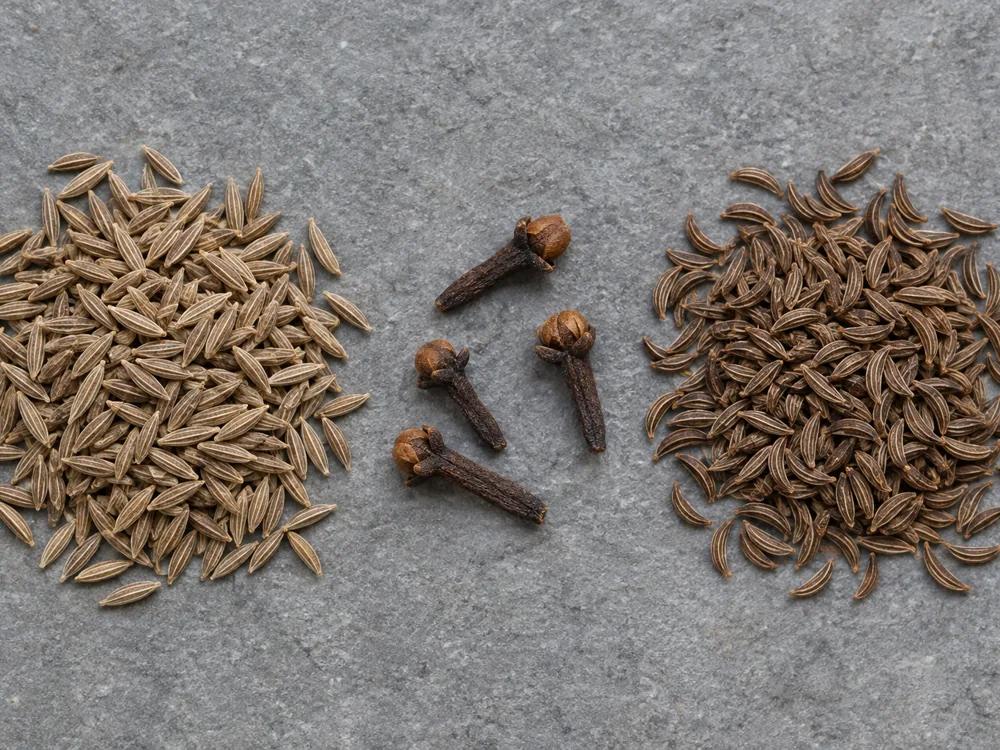
The label matters because the two seeds are not interchangeable, even though clove supplies a common thread. A seller who describes every nøkkelost as “cumin cheese” is describing the Tine version, not the whole category.
When the front of the pack tells you little, turn it over. The maker's name and one Norwegian ingredient word usually settle the question faster than an English product description.
A pre-cut piece may no longer carry the original ingredient panel. In that case, ask the seller which maker supplied it or request a photograph of the label; colour and seed shape can help, but they are a weaker basis for buying than the actual product information.
What Does Nøkkelost Taste Like?
The first impression is warm spice over a lightly sour cheese. Clove gives both versions a sweet aromatic lift, while cumin or caraway pulls the flavour in a different direction.
Texture depends on the product as well as the name. Tine describes its cheese as semi-firm, and the imported version is sold as a creamy, springy slicing cheese; RørosOst is listed as a hard cheese matured for three to nine months. You should therefore expect a younger Tine block and a longer-aged farm block to feel different on the knife and in the mouth.
Maturation also changes the balance. Nøkkelost develops a gradually fuller flavour as it ages, so the dairy tang and savoury depth catch up with the spices over time.
Whole spices make the experience less uniform than a cheese flavoured with a smooth paste or wash. One bite may carry a pronounced clove fragment while the next leans on the seed, which is part of the appeal but also a reason to slice the cheese thinly when you want a balanced serving.
Choose the seed first and maturity second. A mild, younger block makes an easy bread cheese; a firmer, longer-aged version gives you more flavour in a smaller piece.
Why Does the Name Mean “Key Cheese”?
Nøkkel means key in Norwegian, but the name points to Leiden in the Netherlands. Two crossed keys appear on the city's coat of arms and on traditional forms of Leyden cheese, one of the Dutch models behind nøkkelost.
Norwegian makers adapted that seeded-cheese tradition rather than copying one recipe intact. Commercial production in Norway dates to the 1860s, with Leidenost and Nagel-kaas named as predecessors, while the addition of clove became part of the Norwegian identity.
The history explains two things you can still see in the cheese: whole spice distributed through a pressed paste, and a family resemblance to Leyden that stops short of making the cheeses identical.
How the Mild Paste Is Built Around the Spice
Nøkkelost begins with pasteurised cow's milk, lactic cultures and rennet, but its character takes shape after the curd is cut. Part of the whey is drained and replaced with hot water, causing the small curd grains to shrink and release more moisture.
The washed-curd step removes some lactose and limits later acid development. The finished cheese can therefore stay mild enough for the clove and seed to remain distinct instead of fighting a sharply acidic base.
In the documented Norwegian process, the spices are mixed through the drained curd before pressing. A cut therefore reveals seeds throughout the paste rather than a flavoured outer layer.
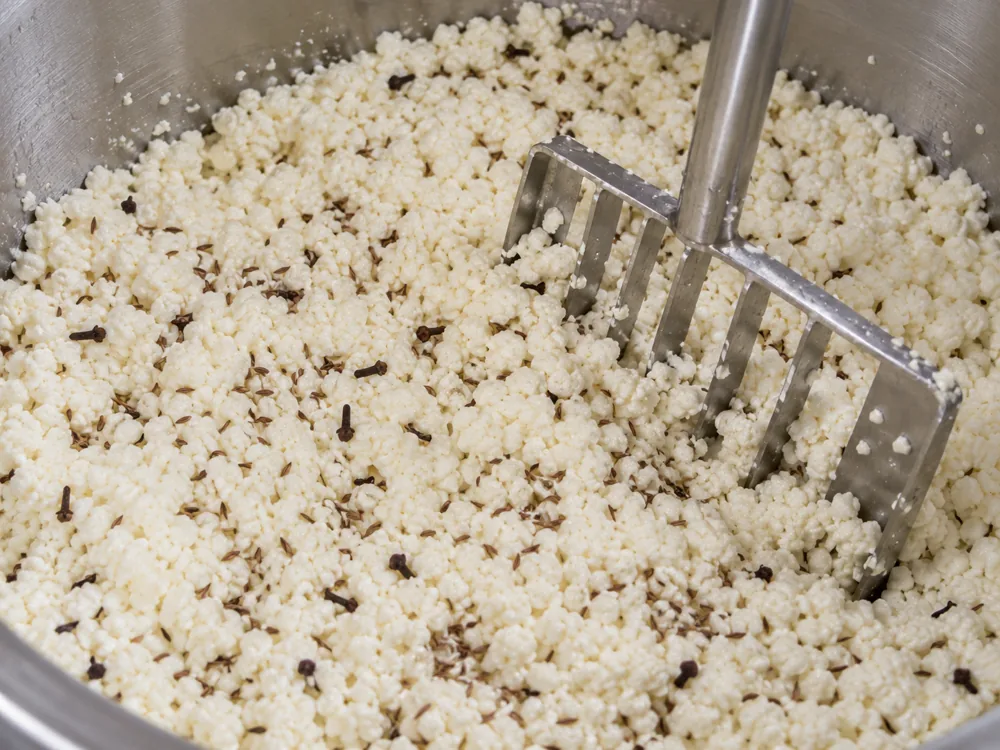
The seasoned curd is pre-pressed, divided among perforated moulds and pressed into even blocks. It then spends the night in brine before being wrapped in film for maturation, so the wrapper is packaging rather than an edible rind.
Pressing brings the curd grains into one sliceable body, while the brine seasons the block before it is sealed. Because the flavouring is already inside the curd, the film can protect the surface during maturation without needing to develop a rind that changes the taste at the edge.
A standard version can be ready for sale after about eight weeks. The RørosOst farm cheese matures for three to nine months, giving you a much wider range of firmness and flavour than the single name suggests.
Buying Nøkkelost When You Are Outside Norway
Start with the names sellers actually use: Nøkkelost, Nokkelost and Tine Nøkkel. “Key cheese” may appear in a description, but it is a weak search term on its own.
Availability can be sporadic. When checked on 8 October 2026, ScanSpecialties still listed Tine's version at $29.99 per pound, but the product was sold out. The page also warns that perishables ship at the customer's risk and recommends expedited delivery during warm weather.
That listing is useful as a dated example, not a promise of current stock or a universal price. Before you pay, compare the complete order rather than the headline number:
- Maker and seed: Tine means cumin and clove; RørosOst means caraway and clove.
- Cut and price basis: confirm the actual weight and whether the price is per pound or per piece.
- Maturity: use a stated age when available; a best-before date is not an aging declaration.
- Cold delivery: check the dispatch day, service level and responsibility for a delayed perishable order.
If a seller carries the RørosOst farm version, you are still buying genuine nøkkelost, though not a direct replacement for the familiar Tine block. Its caraway seasoning and longer maturation change both the flavour and the texture, so the maker deserves as much attention as the product name.
For an expensive refrigerated order, the landed cost is the cheese, insulated shipping and any minimum-order requirement combined. A cheaper price per pound can become the worse purchase when the cut is larger than you need or the delivery service leaves little margin for delay.
How to Serve It
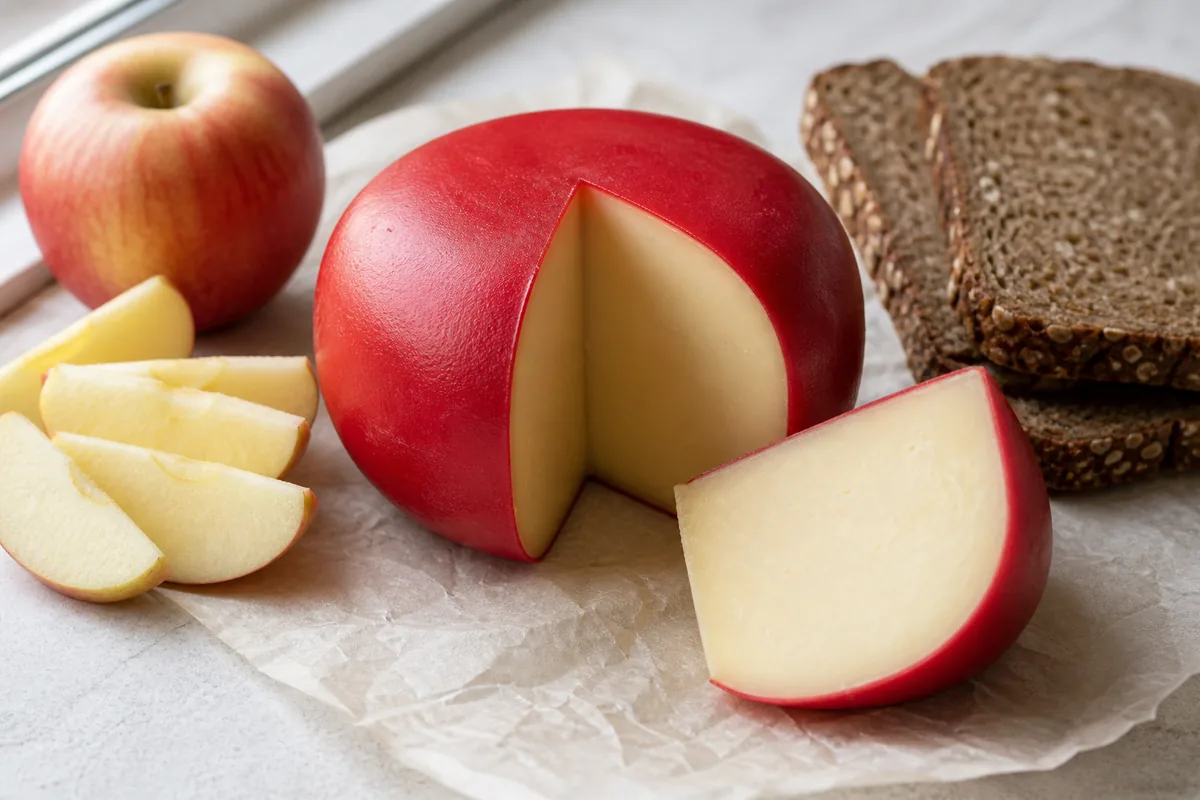
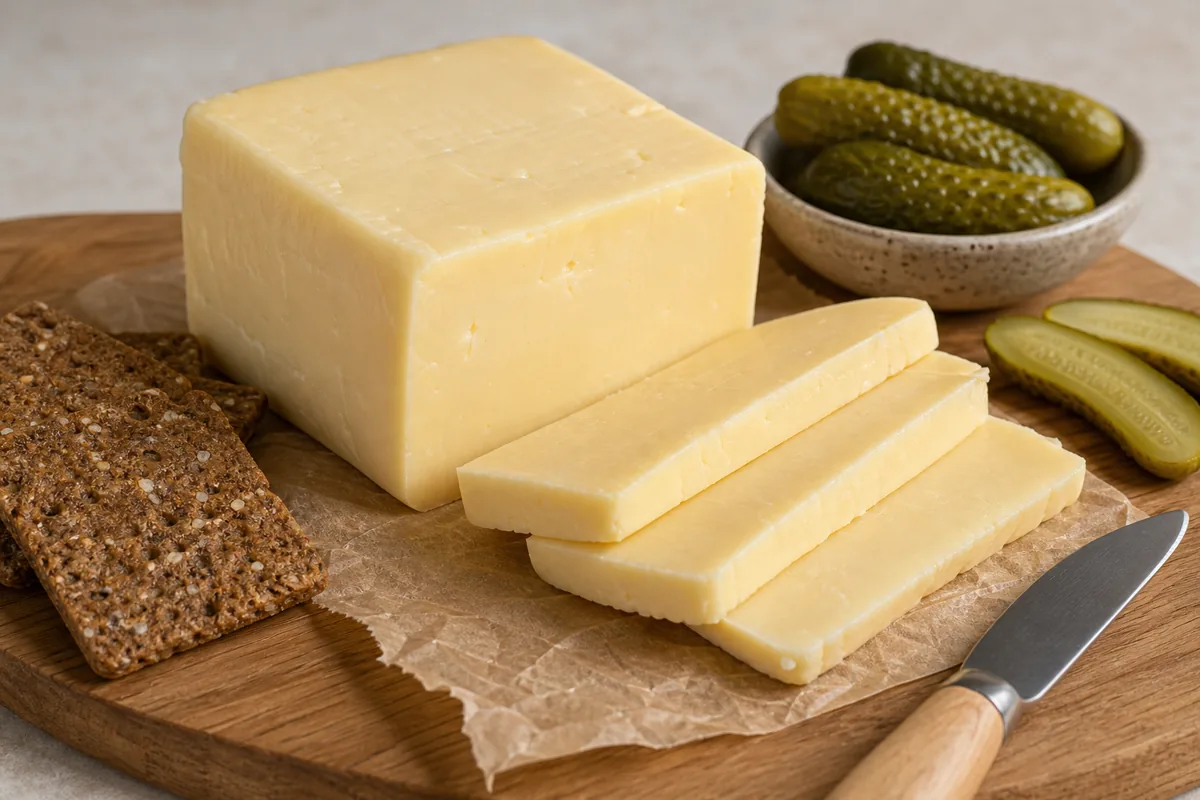
The everyday Norwegian use is pålegg: thin slices laid on bread as an open-faced sandwich topping. Dark bread works especially well because its plain, slightly bitter base gives the clove and whole seeds something firm to push against.
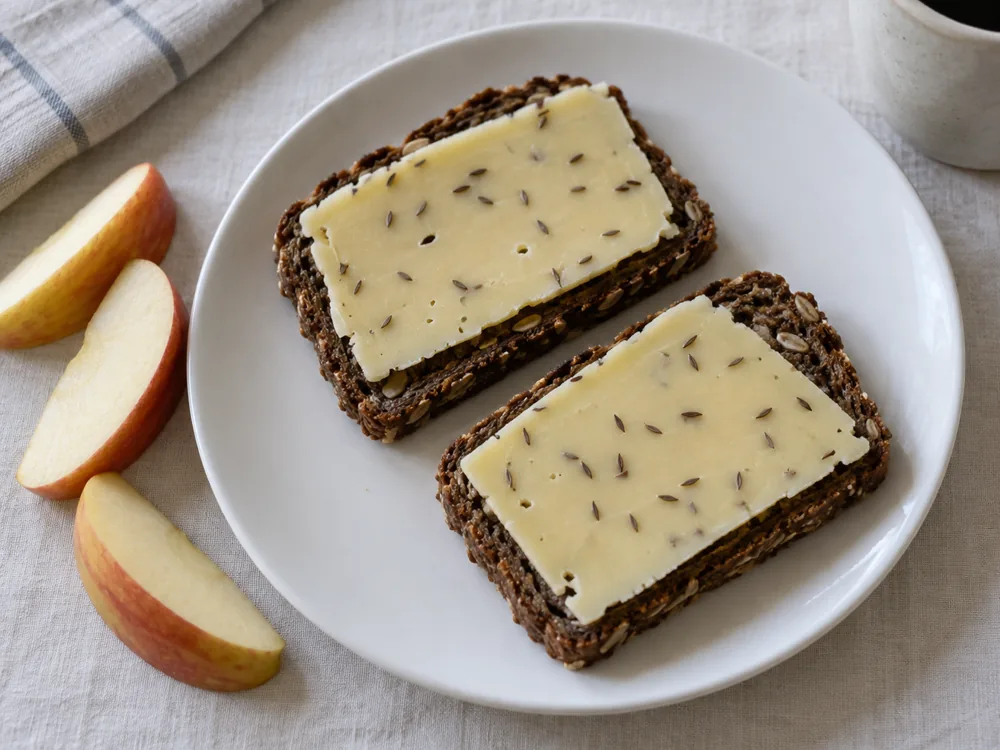
Slices keep the identity of the cheese obvious. Cubes or coarse shreds spread the spice more widely, which makes them better suited to the salads, soups, cheese pies and tortillas listed among traditional uses for nøkkelost.
Thin slices give you more mild paste around each seed, which softens an especially clove-heavy bite. Cubes do the opposite: they concentrate the cheese and spice into smaller bursts, a useful effect when nøkkelost is one element among several on a plate.
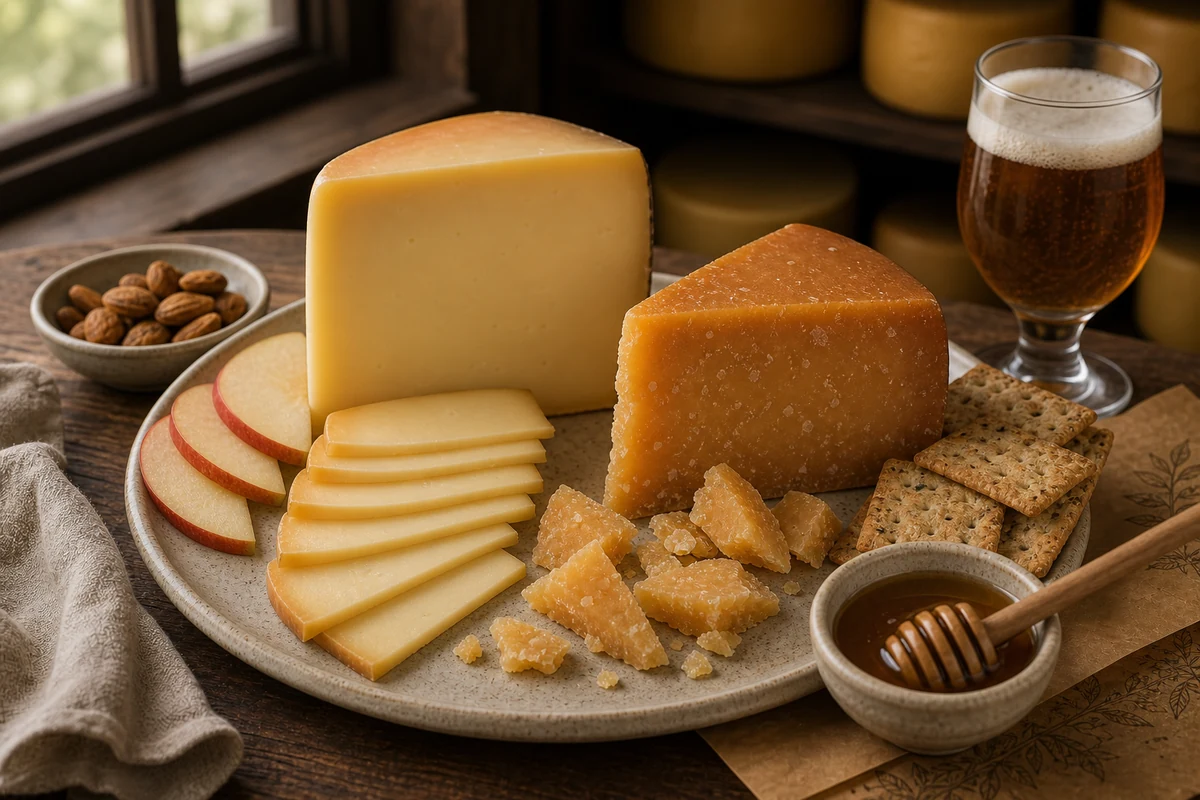
On a cheese board, start with bread and apple or pear rather than several strongly aromatic accompaniments. The cheese already brings clove and seed; too many competing flavours can make an unusual cheese taste merely busy.
A malty beer pairing can meet the warm spice without sharpening it, while a fruit-led wine offers a softer contrast. Choose one and keep the rest of the plate restrained enough for the seeded cheese to remain recognisable.
Keeping an Imported Block in Good Condition
Nøkkelost keeps its sliceable texture best at 0 to 4°C (32 to 39°F). Wrap each cut piece separately and keep it away from strongly scented food, since the mild paste can absorb neighbouring odours even though the cheese has a forceful aroma of its own.
Once you cut the block, press clean wrapping against the exposed face to slow drying. The film used during maturation is packaging, so replace it with fresh wrapping rather than treating it as a rind.
If you bought a large imported cut, dividing it into a working piece and a reserve piece reduces repeated exposure to warm air. Keep both refrigerated and wrapped separately, then open the reserve only after the first portion is finished.
A best-before date describes the expected quality of a properly stored original pack; it does not tell you exactly how long the cheese was matured. After opening, the condition and storage history of your piece matter more than a date viewed in isolation.
If a firm piece develops a small patch of surface mould, Norwegian food guidance calls for removing at least one centimetre around and beneath it. Discard the piece instead when growth runs through cracks or the interior is no longer recognisably firm.
You can freeze the cheese, but thawing often leaves it shorter and harder to slice. Grating it first makes better use of the changed texture in soup, a gratin or pizza.
Pasteurisation and Pregnancy
The current Norwegian products covered here use pasteurised cow's milk. If you are buying a pre-cut imported piece, confirm those words on the original label or ask the seller, because the name Nøkkelost alone does not establish the milk treatment of every possible version.
UK NHS pregnancy guidance permits pasteurised semi-hard cheeses such as Edam. It does not name nøkkelost specifically, so our cheese-during-pregnancy guidance still comes back to the pack: if the milk treatment or style is unclear, ask your midwife or doctor before eating it.
Nutrition in a Typical Portion
The standard cheese provides 351 kilocalories, 27 grams of protein and 27 grams of fat per 100 grams, including 17.1 grams of saturated fat. The same reference lists 800 milligrams of calcium and 30 micrograms of iodine.
A 30-gram serving works out to about 105 kilocalories, 8.1 grams of protein and 8.1 grams of fat. Use that calculation for scale, then rely on your own pack when you need an exact figure because recipes and reduced-fat versions differ.
What Works as a Substitute?
Leyden is the closest practical substitute when the whole-seed character matters. It belongs to the Dutch cheese family that inspired nøkkelost, although the body may be less springy and the spice blend may not include clove.
That makes Leyden a strong choice for bread, cold plates and savoury baking. You keep the seeded character, but the aroma will not be an exact match.
If texture matters more than seasoning, a young Gouda can supply a mild, sliceable body. For a cooked dish, a little toasted cumin or caraway and a very small pinch of clove will move it in the right direction, though the result is still a seasoned substitute rather than matured nøkkelost.
Use those options differently. Leyden belongs in a cold sandwich or on a plate where its own seeds can carry the comparison; young Gouda is more useful in a pie, soup or gratin where you can add the missing spice and let the cheese provide the body.
No replacement gives you all three parts automatically: a mild washed-curd paste, whole seed and clove. We would choose Leyden for the spice-led role and young Gouda for the body-led role.
Kuminost is an older name associated with nøkkelost, including a version Kraft sold in the United States in the 1960s. When you shop today, Nøkkelost, Nokkelost and Tine Nøkkel are the more useful names.
The cheese name does not settle the rennet question, so the maker still matters. TINE states that its current cheeses use microbial rennet, while the RørosOst product information identifies microbial and vegetable rennet; those versions suit vegetarians who eat dairy.
Yes, although it is an intermediate cheesemaking project rather than a quick fresh cheese. A documented two-gallon method cultures and sets the milk, washes the curd, adds caraway and cracked clove, presses and brines the wheel, then ages it under wax for about three months.